
Category: Arts (other)
Ninette de Valois

British ballerina, 1898-2001.
Tamara Karsavina

Russian ballerina, 1885-1978.
Anna Pavlova
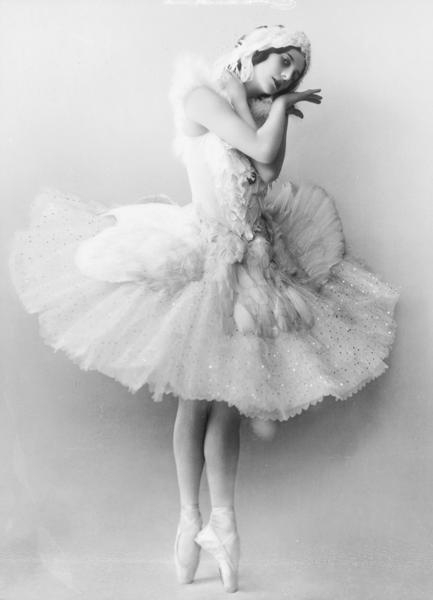
Russian ballerina, 1881-1931.
Giorgio Vasari
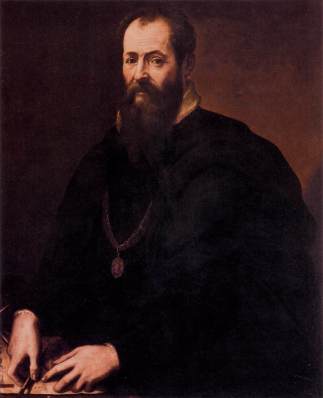
Autoritratto
Gustave Doré: Merlin Advising King Arthur
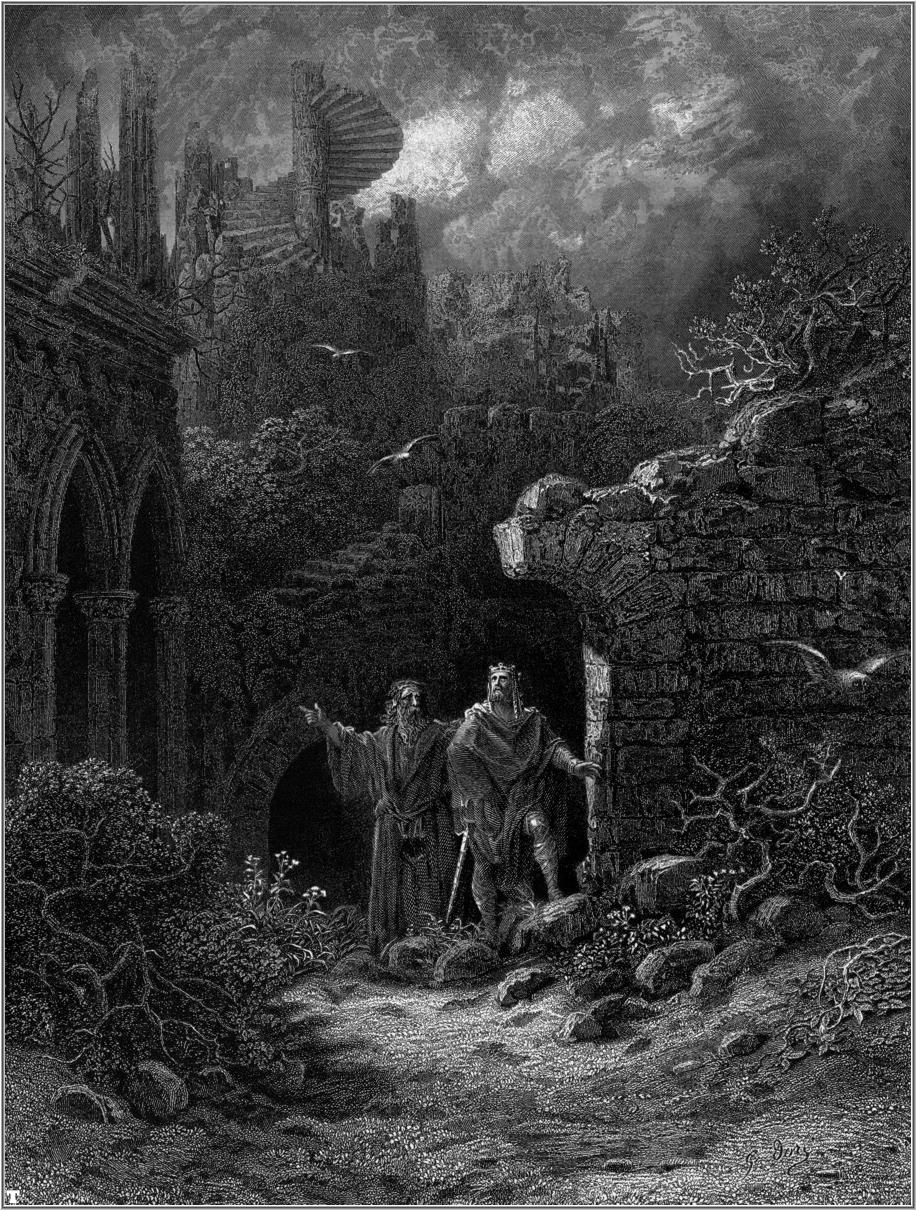
Click to enlarge
Pierina Legnani
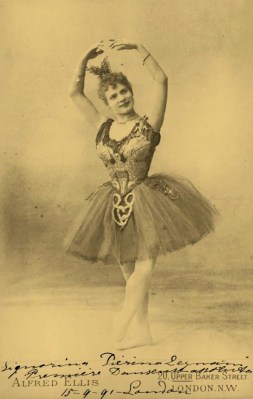
Italian ballerina, 1863-1930.
Roger Kimball: Art’s Prospect
The Challenge of Tradition in an Age of Celebrity
Ivan R. Dee, 2004 Amazon.com
Back Cover:
 Most of the really invigorating action in the art world today is a quiet affair, Roger Kimball observes. It takes place not at the Tate Modern in London or at the Museum of Modern Art in New York, not in the Chelsea of TriBeCa galleries but off to one side, out of the limelight. It usually involves not the latest thing but the permanent things. They can be new or old, but their relevance is measured not by the buzz they create but by the silences they inspire. In brilliant reviews and essays, Art’s Prospect illuminates some of the chief spiritual itineraries of modern art.
“Kimball’s art reviews are lucid mini-educations in the exercise of taste…If you find most of today’s art establishment pretentious, ideologically silly, and largely devoid of taste and talent, you will love this collection of forty sharp-witted articles.” Brian J. Buchanan, Nashville Tennessean
“Roger Kimball is one of the few critics writing in art today who combines an acute visual sense of beauty with historical knowledge, a coherent philosophy of art, and an ability to write clean, vigorous, and accurate English. To these virtues he ads refreshing common sense. So there is much to be learned and enjoyed in these stimulating, provocative and elegant essays.” Paul Johnson
“Far from being just another polemical rant, Art’s Prospect takes us inside the heads of those who execute and market contemporary art, helping us understand what they think they are doing, and why doing it is such a profitable business.” First Things
Reviews cited by Amazon:
“Kimball knows his business…His reviews make me hungry to see what I’ve missed.” The Weekly Standard
“One of the ablest and most philosophically skilled critics on the current scene.” Frederick Morgan
“A trenchant and courageous critic…his positive values and his historical grasp make him far more than a mere polemicist.” John Gross
“One of the most candid and perceptive critics of American culture.” Gertrude Himmelfarb
“A scathing critic but one whose tirades are usually justified…his intellectual rigor is refreshing.” Catherine Saint Louis, The New York Times
“Roger Kimball of the New Criterion is at it again, for which throughtful readers should be grateful.” First Things
“His positions are not always predictable but are consistently well argued.” Cybereditions Critics Series
“Witty, insightful, and inciting compilation of twenty years of art reviews…Kimball’s opinions have an appealing candor, and, delivered in a lively colloquial style, make for engaging, intelligent reading.” Art Scope
“An approach that, in many ways, I very much enjoy.” Keith Russell, Artschuttlebutt.com
“In a penetrating and often hilarious series of articles he takes on what he considers the ‘hucksterism’ of both artists and museum directors. Kimball never tries to hide his stripes. The result is lively and informative.” Nancy Chaplin, Kliatt
About the Author:
Roger Kimball is managing editor of the New Criterion and an art critic for the London Spectator. His other books include Lives of the Mind, Experiments Against Reality, The Long March, and Tenured Radicals. He lives in South Norwalk, Connecticut.
JOB’s Comment:
This is one of the books, or compilations, published by Kimball after my essay on him in 2001. I should perhaps return to him and say something about these more recent books too; this far, I have only read this one, which I found especially interesting since little or nothing of his art criticism was represented in the books I focused on.
Tamara Karsavina

Russian ballerina, 1885-1978.
Roger Kimball: Experiments Against Reality
The Fate of Culture in the Postmodern Age
Ivan R. Dee, 2000 Amazon.com
Blurb:
 Is everything possible and nothing true? According to Roger Kimball, this belief, with its “mixture of gullibility and cynicism”, characterizes much of our modern culture. Thus his new collection of essays, Experiments Against Reality, is “largely a chronicle of spiritual disillusionment”. No one who is seriously concerned with the fate of our culture can afford to ignore it.
In confronting the dilemmas of modernist and postmodernist thought, Mr Kimball explores the literary and philosophical underpinnings of modernity as well as the state of our culture. In the book’s title essay, he sets the stage by considering the fate of philosophical inquiry at a time when truth is widely considered to be no more than a “social construct”. “Enlightenment”, he writes, “sought to emancipate man by liberating reason and battling against superstition. But reason liberated entirely from tradition has turned out to be rancorous and hybristic- in short, something irrational.” Mr Kimball goes on to discuss the immensely influential Victorian aesthete Walter Pater, then turns to the work of T. E. Hulme, Eliot, Auden, Wallace Steves, Robert Musil, and others to chart the modernist response to the intellectual and spiritual desolations of the age.
In Part Two of Experiments Against Reality, Mr Kimball suggests how figures from Mill and Nietzsche to Bertrand Russell, Wittgenstein, Sartre, Foucault, and E. M. Cioran have addressed – and in many cases evaded – the defining moral imperatives of modernity. In Part Three he steps back to consider more generally the career of contemporary culture – the trivializing nature of the contemporary art world, the fate of the “two cultures” controversy, and the controversy over Francis Fukuyama’s famous declaration that we have reached “the end of history”. He concludes with a meditation on the imperiled place of leisure in a society that, in Eliot’s phrase, seems ever more “distracted from distraction by distraction”.
Experiments Against Reality displays the sophistication, breadth of knowledge, and clarity of argument that have made Mr Kimball one of our most important cultural critics.
About the Author:
Roger Kimball is managing editor of The New Criterion and a frequent contributor to the Wall Street Journal, the London Spectator, and other magazines. His other books include The Long March, a perspective on the 1960s, and Tenured Radicals, an investigation of the influence of politics in higher education. Mr Kimball has also edited collections of the writings of David Stove and Walter Bagehot, and with Hilton Kramer has edited Against the Grain, The Future of the European Past, and The Betrayal of Liberalism.
JOB’s Comment:
See my essay on Kimball in Humanitas: Left and Right Eclecticism: Roger Kimball’s Cultural Criticism.
 Jan Olof Bengtsson