Det avancerade, socialistiska samhället 1930-talsväxer fram. För att futuralarkistiskt fyllas och ordnas, som post-klassisk-humanistiskt, post-abrahamitiskt och post-fysikalistisk-scientistiskt, av den Enda esotraditionens sofi. En process under många tusentals år.
Det kommer inte leda till något utopiskt “mål” – vi talar ju bara om den begränsade och ständigt flyktiga fenomenvärlden eller apparensen. Livets egentliga utveckling är, nu som då, här som där, strikt “vertikal” och dess högsta verklighet transcendent. Men det historiska skeendet kommer öka och sprida denna sanna upplysning.
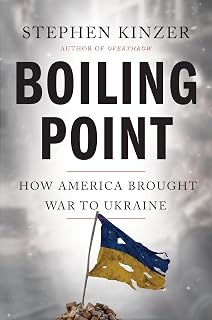
From bestselling author Stephen Kinzer, the untold story of the secret 75-year American campaign that set the stage for war in Ukraine
Until the Russian invasion in 2022, few Americans could find Ukraine on a map. Once the fighting began, however, support for its cause surged. The reason was clear: Russia was the aggressor, Ukraine its victim.
Yet this war did not explode out of nowhere. For seventy-five years, Moscow and Washington have fought over Ukraine. It is the most sustained covert conflict in modern history. Both sides sought to keep this story secret. They succeeded – until now.
In his groundbreaking new book, Stephen Kinzer tells this long-hidden story. Beginning in the refugee camps of postwar Europe, where CIA officers recruited their first Ukrainian agents, it follows generations of rebels, exiles, traitors, and covert operatives through decades of clandestine missions. Although nearly all of the guerrilla warriors that the CIA sent into Ukraine were captured or killed, it never gave up. From the late 1940s through the end of the Cold War, American leaders saw Ukrainians as their most effective weapon against Moscow. They continued to press that strategy after Ukraine’s independence and the eastward expansion of the US-dominated NATO alliance.
Richly detailed and plot-driven, Boiling Point shows how the United States made Ukraine its most important European project of the twenty-first century, culminating in the escalation that led to war. From battlefields in the Carpathians to smoke-filled offices in New York to the Olympic Games, it is full of the wild stories and improbable characters that made All the Shah’s Men a classic. This is the last great untold spy-versus-spy story of our time.
Reviews:
“Through scrupulous research and an investigator’s nose for the telling detail, Kinzer has penned a history of America’s long – and at times, sordid – involvement with Ukraine that carries with it the force of revelation. It is a fascinating tale of opportunities missed, paths not taken, and it casts a brilliant and much-needed new light on how that nation has been a perennial victim in the US-Russia duel for primacy. For those hoping to grasp the true complexities of the current war in Ukraine, this is the place to start.”
Scott Anderson, New York Times bestselling author of King of Kings and Lawrence in Arabia
“A provocative and penetrating exploration of the fraught underpinnings of the Ukraine conflict. Impressively researched, Boiling Point sheds new light on the all-but-forgotten history of decades of U.S. covert activity in Ukraine during the Cold War, and spotlights the missed opportunities and neglected off-ramps that might have prevented the 2022 Russian invasion that sparked Europe’s most destructive land war in a generation. Even those who differ with Kinzer’s analysis will find much to ponder.”
Joby Warrick, author of The Jackal and Black Flags, winner of the 2016 Pulitzer Prize for general nonfiction
“A brilliant, thoroughly researched study that demonstrates how the United States failed to take advantage of the end of the Cold War to create a more peaceful world. Should be read by every American concerned with the rising violence in the world and the heightened danger of a nuclear conflict.”
Jack F. Matlock Jr., former US ambassador to the USSR
“The United States and Europe have supported Ukraine in its long, bloody struggle with Russia. Historian Stephen Kinzer gives a fascinating account in this splendid book of the bloody relations between these countries and explains why it has not proven possible to bring peace to the region.”
John M. Deutch, former Undersecretary of Energy, Deputy Secretary of Defense, and Director of Central Intelligence
“While not excusing Russia’s invasion of Ukraine, Kinzer’s narrative does put the lie to the Biden administration’s assertion that it was ‘totally unprovoked’ … A damning, well-argued case study in war by proxy.”
Kirkus
About the Author:
Stephen Kinzer is an award-winning writer and correspondent who has reported from more than 50 countries on five continents. His articles and books have led The Washington Post to place him “among the best in popular foreign policy storytelling.” Kinzer spent more than 20 years working for The New York Times, most of it as a foreign correspondent. His postings placed him at the center of historic events and, at times, in the line of fire. His ten books seek to uncover the roots of global conflicts. Most are accounts of American interventions abroad – how they were carried out and what their long-term effects have been. He is a Senior Fellow at the Watson School of International and Public Affairs at Brown University and writes a world affairs column for The Boston Globe.
Ännu ett utmärkt pedagogiskt föredrag från RKP, på ett möte med Marxistiska studenter på Stockholms universitet i september. Liksom de tidigare jag uppmärksammat är det fokuserat på de historiska och s.a.s. tekniska ekonomiska och politiska analyser av kapitalismens (idag främst den liberala demokratin) irrationalitet och destruktivitet som är marxismens styrka, och som i stor utträckning är lösgörbara från modernitetens allmänna idé- och kulturströmningar. Och även fritt från wokeistiska inslag och andra ensidiga och felaktiga kulturradikala slutsatser av historiematerialismen. Några småfel förmår inte störa.
Överhuvudtaget saknar det på fördelaktigt sätt hänvisningar till den även som dialektisk anmärkningsvärt primitiva, allmänna filosofiska materialism som de annars (man måste påminna om detta, för det finns hopplösa separata videos om den på deras kanal) med hela marxismen envisas med att insistera på som en nödvändig förutsättning för sina analyser – eller sanningen och förståelsen av sina analyser – av vad som sker i samhället, historien och hela den fenomenvärld de uppfattar som den “materiella”. Den allmänåskådningsmässiga materialism som i hög grad bidrar till att socialisterna inte kan övervinna kapitalismen och till problemen med de postrevolutionära samhällen de uppnått.
Såväl i sig, som ytlig spekulativ teori, som genom sina existentiella implikationers idioti stöter den helt enkelt bort en alltför stor del av mänskligheten, och låter den parallellt med de partiella materiella och t.o.m. humanitära framstegen sjunka ned i ett allt tätare mörker av fenomenell begränsning, illusion och förirring. En hållbar politik och ideologi måste vara förenlig med den samtidigt högre och djupare verkligheten.
En även bland marxister kontroversiell fråga som adresseras av föredragshållaren, denna gång Karl Kjellin, är den som rör imperialismens (i leninistisk mening) natur idag jämfört med den period efter Sovjetunionens upplösning då den unipolära atlantordningen nådde sin hegemoniska höjdpunkt.
RKP/RKI är här av uppfattningen att både Ryssland och Kina idag är imperialistiska stater i samma mening som USA eller den atlanticistiska alliansen, även om Kjellin verkligen betonar att i Kinas fall denna imperialism åtminstone hittills tar sig andra och mycket mildare uttryck, att atlantimperialismen är det överlägset största problemet och hotet i dagens värld, den största ondskan. Är denna förståelse av motsatta imperialismer av samma slag riktig, skulle vi befinna oss i en situation liknande den som ledde fram till första världskriget.
På den icke-trotskistiska sidan delas denna åsikt av Europeisk Kommunistisk Aktion (EKA), där svenska SKP ingår, medan den riktning som Mckay och hans parti CPGB-ML tillhör på grundval av ganska detaljerade studier av bl.a. Rysslands utlandsinvesteringar och av Kinas faktiska agerande i andra delar av världen hävdar att – av olika skäl – dessa länders politik åtminstone ännu inte bestäms av sådan av kapitalismen i allmänhet följande imperialism. Till detta läger som i det aktuella avseendet försvarar Kina hör också bl.a. den mot västmarxismen kritiska riktning som representerades av Losurdo och idag blivit känd inte minst genom Rockhill och hans krets.
Framför allt är det givetvis just Kina som väcker frågan om en annan utvecklingsväg än den vanliga kapitalismens. President Xis successivt framlagda alternativglobala “initiativ”, the Global Development Initiative, the Global Security Initiative och the Global Civilization Initiative, senast, förra året, följda av the Global Governance Initiative, indikerar humana, kvalificerat universalistiska politiska och ideologiska visioner i linje med en ny, måttfullt kulturkonservativ socialistisk internationalism. Åtminstone retoriskt ligger detta ljusår före USA med dess av nästan hela den västerländska högern direkt – och vänstern ibland något mer indirekt – stödda och nu närmast officiellt promulgerade terrormilitära gangsterism på världsscenen.
Alla marxistiska riktningar är överens om att multipolariteten i sig, multipolariteten som egenvärde, oavsett de respektive polernas ideologiska inriktning och politik, inte är något “slutmål”. Mest omedelbart är förstås för RKI världsrevolutionen lösningen på och alternativet till den nuvarande uni- såväl som multipolära imperialismen.
Här måste man givetvis insistera att det är den verkliga konservativa världsrevolutionen som behöver kunna tänkas – konservativ i betydelsen avvisande det materialistiska vilseledandet och bevarande och förnyande mänsklighetens överordnade värden. De värden av vilka det främsta är den idag på historiskt helt nytt sätt ständigt allt lättare tillgängliga egentliga andligt-sofiska traditionen, som allena kan tillhandahålla, manifestera och s.a.s. operationalisera den prioriska, universella mänskliga enhetens metafysiska verklighet. Och som därför allena kan göra världsrevolutionen till en inte bara ekonomisk, politisk och social utan även en ekologisk, högre kulturell, evolutionell och framför allt egentligt andlig revolution.
Åsiktsskillnaderna ifråga om multipolariteten handlar om vad som idag är mest gynnsamt från det revolutionära perspektivet. Bör Ryssland och Kina fördömas i lika hög grad som eller, som i den liberaldemokratiska vänstern (den socialdemokratiska eller “demokratisk-socialistiska” som det heter i USA, där den representeras av det demokratiska partiets vänsterfalang), rentav mer än USA eller atlantalliansen och vad som kvarstår av dess världsordning? Eller bör de i stället trots sina brister stödjas som motvikter, för att balansera och reducera atlantimperiets makt? Är multipolariteten ett inte bara nödvändigt utan stödvärt övergångstillstånd?
Kan en eventuell förnyad, krigskonsoliderad eller krigsrestaurerad atlanthegemoni av sig själv, s.a.s. enbart inifrån sig själv, upplösa och avskaffa sitt eget globala system? På längre sikt kommer det under alla omständigheter kollapsa p.g.a. imperialismens egna, även oaktat yttre motstånd givna principiella gränser och de missförhållanden av olika slag som de kommer ställa också den överväldigande majoriteten av västs egen befolkning inför.
Men redan den barbariska militära terrorkonsolidering som oligo-plutokratin för närvarande i blindo försöker genomföra och förbereder en vidareutveckling av framstår som helt orealistisk. Den blir snarare en katastrof, och den mer upplysta delen av det borgerliga väst som knappast själv tror på den borde för sin egen skull, i sitt eget intresse, välja en annan väg. Men systemtvångets objektiva logik håller den fast i sitt dödsgrepp.
Ett avsnitt från Mckay från maj är upplagt som en diskussion om problemen med termen “globalism”. Jag har tidigare förklarat hur jag ibland har använt den; givetvis är detta en definitionsfråga. Mckay förbiser behovet att diskutera dess relation till termen “globalisering”, och förstår den, på ett sätt som för mig ingalunda varit en självklarhet, i en begreppslig mening som starkt skiljer sig från denna senare, sedan mycket länge allmänt vedertagna deskriptiva och analytiska.
Men bortser vi från detta och begränsar oss till Mckays definition, ger han här en vid och djup överblick av termens användning såväl som dess begreppsliga förhistoria. I lika hög grad blir det hela rentav till en analys av den s.k. “tredje positionen”.
Detta är också relevant för den diskussion jag tentativt försökt föra om den äldre socialkonservatismen och dess historia, och behovet av att revidera och utveckla den: att tvinga dagens populistnationalism med dess legitima moment (och, om överhuvudtaget möjligt, radikalnationalismen) in på en annan väg än den gamla vanliga regressivt-fascistiska.
Trådarna kunde dras ännu längre tillbaka – Mckay gör det kanske på någon punkt – i vad som kan sammanfattas som den europeiska kontrarevolutionens historia, genom hela 1800-talet och ända till franska revolutionen.
Det illusionistiska i den allmänfascistiska tredjepositionismens anspråk på att gå bortom höger och vänster uppvisas tydligt: det som gjort att jag, när jag i försvaret för en ny socialkonservatism, en socialistisk konservatism eller konservativ socialism, alltid insisterat på att bortomgåendet, som också kan förstås som en partiell, selektiv syntes, inte får likställas och identifieras med denna positions och dess historiska linjes.
Men varför är det ändå viktigt att tala om detta bortomgående? Därför att det handlar om mycket mer än förhållningssättet till kapitalismen, som marxisten Mckay uteslutande fokuserar på. Både högern, idag främst i form av kapitalismen, och vänstern, i betydelsen den filosofiska och kulturella förståelse som följer av eller helt enkelt definierar en mer helhetligt bejakad marxistisk historiematerlism, måste fortfarande gås bortom.
Tredjepositionismen kan sägas representera den overkliga konservativa revolutionen, den konservativa revolution som allmänt sätt bara är en av de många versioner av kontrarevolutionens försök att hantera moderniteten som vi sett under de senaste århundradena. Den har oundvikligen, p.g.a. sitt grundläggande väsen, den principiella begränsning Mckay lätt identifierar, misslyckats med att rädda de överordnade värden som är det väsentliga i den meningsfulla typen av konservatism – och ofta är ju dess värden inte ens dessa överordnade.
Vad vi behöver idag är därför den verkliga konservativa revolutionen, med dess nödvändiga i vid mening ideologiska, eller politisk-filosofiska, nytänkande.
Med anledning av den av forskningen om CIA-vänstern mycket uppmärksammade Gloria Steinems bortgång gjorde viktiga kanalen Due Dissidence ett avsnitt om hur CIA enligt deras uppfattning fortsätter styra vänstern i USA idag. Diskussionen fokuserar på en bisarr socialismkonferens i Chicago, som de i rubriken betecknar som en “CIA-Coded Clown Show”.
Det kanske är litet oklart i vilken utsträckning och på vilket sätt just CIA ligger bakom och stöder även dagens märkliga, specifika former av kulturvänster; dess påverkan mer antas än bevisas. Man rör sig här inte på samma fasta historiska kallakrigsmark som Rockhill och hans brittiska föregångare, den nyligen bortgångna Frances Stonor Saunders.
Men avsnittet diskuterar också alternativet till denna vänster, representerat av en parallell konferens om marxism, även den i Chicago, men också, mer allmänt, av det ACP som utvecklades ur MAGA-kommunismen, och andra manifestationer av denna riktning.
En av presentatörerna omfattar Yanis Varoufakis’ och andras teori om teknofeodalismen, och menar att den alternativa, paleosocialistiska och mer konservativa vänstern inte rätt uppfattat eller bedömt detta fenomen. Det system altvänstern vill störta har, hävdas det, i stället redan störtats av techoligarkin, som upprättat sin egen nya, långt mer svårövervinneliga och totalitära ordning. Mot detta bör, kan nämnas, Mckays kritik av Varoufakis ställas.
Due Dissidence gjorde i februari också ett intressant avsnitt (som jag bara delade på fb men glömde posta här; tack för tips till viktige politiske kommentatorn Joakim Eng) om förmodat samarbete mellan Bannon och Epstein i skapandet av populistnationalismen i syfte att lura, oskadliggöra och kontrollera de missnöjda klasserna.
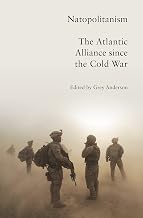
Following the Russian invasion of Ukraine, the fortunes of NATO – pronounced “braindead” only a few years prior – have been miraculously revived. The alliance, buoyed by surging European military budgets and inflows of combat-ready troops and cutting-edge hardware, looks forward to welcoming additional member states. Originally conceived as a bulwark against the Soviet Union, NATO has outlasted its ostensible foe by over three decades. Its geostrategic remit is limited to the North Atlantic in name only. Treaty obligations range from the Andes to the Gulf of Aden and the Khyber Pass, and allied commanders now prepare for battle in the South China Sea.
Natopolitanism takes an in-depth look at the evolution and aggrandizement of NATO since the turn of the 1990s. What purposes does NATO serve in the post-Cold War world? What is the balance sheet of a quarter century of alliance expansion, and what part did it play in the eruption of conflict on Europe’s eastern marches?
Contributors to the volume, including John J. Mearsheimer, Mary Elise Sarotte, Susan Watkins, Wolfgang Streeck, and Volodymyr Ishchenko, revisit this this history as it unfolded. Varying in viewpoint and judgment, all share a critical perspective at odds with wartime pieties.
Reviews:
“After Donald Trump brazenly doubted NATO’s necessity, the Ukraine war reanimated the zombie. This indispensable collection sets sanctimony to one side, gathering diverse reflections on the alliance’s functions and trajectory since the Cold War – including in the coming of the Ukraine war itself.”
Samuel Moyn, Yale University
“A bracing critical review of the ‘most successful alliance’ in history. An essential primer for the new era of Natopolitanism.”
Adam Tooze, author of Crashed
“This collection of essays and documents regarding NATO’s role as the military wing of US capitalism and its increasingly aggressive approach to that role is important and (obviously) timely.”
Ron Jacobs, Counterpunch
About the Editor:
Grey Anderson is the author of La Guerre civile en France, 1958-1962. He holds a doctorate in history from Yale University.
“For more than a thousand years, Istanbul has been regarded as a bridge between East and West at the junction of two continents, at the crossroads of the cultures. We wish to make use of this symbol to conduct an open dialogue between the different civilizations of the world.
Harici Media and the new European think tank ‘European Transcontinental Initiative’ (ETI) have launched the East-West Forum (EWF) in Istanbul – a high-level forum of international experts to discuss, analyse and shape this transition.
We want to offer those political thinkers and actors, who represent wisdom in a time of delusion and reason in a time of brinkmanship, a platform for the exchange of critical analysis, hopes and ideas. In doing so, we aim to create an opportunity to jointly develop alternative proposals for a reconfiguration of the global systems that would move beyond the prevailing doxa of a unipolar neoliberal order. Especially we want to prevent the establishment of new bloc confrontation between ‘the West’, the BRICS-countries and the Global South.
The East-West Forum will take place in Istanbul on 26 September 2026. We expect to welcome more than twenty distinguished speakers from over fifteen countries, representing a broad geography ranging from the United States and the Middle East to Asia and Europe.
To attend the East-West Forum, please register online via our website: east-west-forum.com”
En lång rad av de många talarna är sådana som figurerat frekvent här på min sida genom åren.
“The unipolar world order that emerged after the end of the Cold War has come to an end, and the world is now seeking a redesign of the global system.
The quest for a multipolar world and a balanced world system is accompanied by multiple paradigm shifts: resources shortage, climate stress, overpopulation, trade wars, global rearmament, the AI revolution, the rise of regional wars, the break-down of the UN-system, to just name a few.
The G7/ G20 world tries to find ‘classical’ answers to all of that. Progress is attached to technology only, power assigned exclusively to states and capitalism remains unquestioned.
The East-West Forum (EWF) wants to search for heterodox answers, find new solutions, develop alternative societal & political concepts and think differently. It wants to become, over time, the leading platform for innovative ideas for the global system, thinking the unthinkable and discussing the impossible. We think of citizens and humanity, of soul and history, of traditions and the future. We believe in an economy that serves man and respects nature. We value cultural heritage and the roots of history.
The EWF wants to design a realistic utopia for the world in the 21ˢᵗ century, lifting it outside of the paradigms of the 20ᵗʰ century: Join us in putting everything we know on the table! Help us in designing the peaceful & just world of tomorrow! Dare to leave the thought system…
The EWF brings together distinguished experts, intellectuals, and thought leaders. Istanbul, a city that has long symbolized the bridge between East and West, offers a unique vantage to contribute to a constructive reimagining of relations between the Western countries, the BRICS countries and the Global South. EWF is committed to advancing critical dialogue on an inclusive and sustainable international security architecture, one that complements existing structures while encouraging a broader, more balanced framework for international cooperation. In the long term, the EWF envisions a Europe beyond the EU that is more self-confident, strategically autonomous, and capable of assuming a mediating role within a multipolar world.
The EWF aspires to position itself as a forward-looking counterpart to traditional security conferences typically held in European capitals and sticking to a ‘Western-centric framework’ of interpretation of the world. The initiators of EWF draw inspiration from the oldest known map of Europe, dating to 1534, which looks toward the Orient while standing firmly on Eurasian ground, an emblem of the perspective the Forum seeks to revive and reinterpret for the present era.”
Thomas Fazi informerar om en ny tänktank, European Transcontinental Initiative, grundad av bl.a. Ulrike Guérot, och bjuder in till dess första konferens, East-West Forum:
“We are delighted to invite you to the first Europe-BRICS conference – the East-West Forum (EWF) – which will take place in Istanbul on September 26, organised by the newly founded think tank European Transcontinental Initiative and the Turkish media platform Harici (@haricinews).
The think tank was founded this year by the famous German political scientist Ulrike Guérot (@ulrikeguerot) and the German Philosopher Hauke Ritz together with a team of experts and actors form different spheres, representing crucial expressions of European society thinking Europe beyond the EU. We already serve as the outward face of a different, new Europe – one that upholds its foundational values of diplomacy. We work constructively and operationally in the real world, already acting as a point of contact for non-European partners regarding a new Europe that exists beyond the EU within a multipolar world.
We see Europe as pivotal in the transition to multipolarity, which will only be complete once it reaches Europe; otherwise, we risk merely having a divided world. Thus we plan to dedicate the first EWF to the theme of ‘Designing the 21st century: navigating the multi paradigm shift in the global system and the crucial role of old civilizations’. We strive to co-create a new and more just and balanced multipolar world order peacefully.
On the conference’s website you can find the mission statement and programme: https://east-west-forum.com. I will be speaking on a panel on ‘Europe Beyond the EU and its Philosophical Foundation – Atlanticism, Eurasia and Strategic Autonomy’.
Should our inaugural conference prove successful, it could serve as the starting point for an annual conference series – one that we hope will offer an alternative to the neoliberal, transatlantic agenda of the traditional conferences held in Davos and Munich.