by Wu Tao-tzu

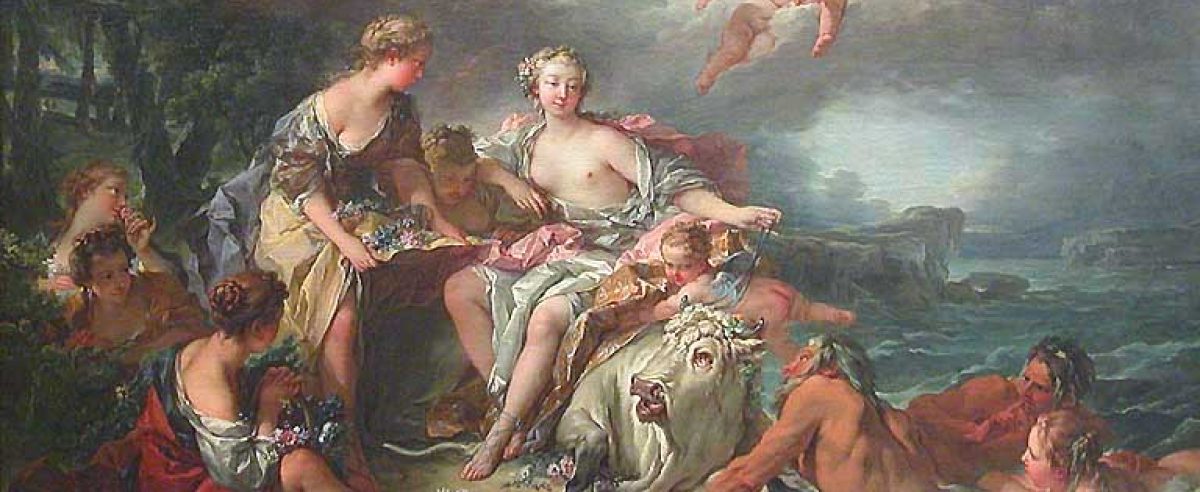
by Wu Tao-tzu
September 13
I comment briefly on the Fourth Political Theory here.

Pantheism, Postmodernism, Pop, 1
Pantheism, Postmodernism, Pop, 2
Pantheism, Postmodernism, Pop, 3
As quintessentially expressed in the imaginative universe of rock music, the popular avant-garde, all the vague resentments towards organized religion, hierarchy, and privilege, all the secular cravings and dreams of earthly paradise that had been planted and fermented in the depth of Michelet’s People for centuries and perhaps millennia, are brought together.
The Beatles’ hippie anthem ‘All You Need Is Love’ may certainly have an undercurrent of cynicism, but no cynical rebounds of the often inevitable kind described in the romantic dialectic by Babbitt could stop the Rousseauan mission, and the basic message of the sixties’ neoromanticism was in a sense, in its own way, seriously meant. This is the kind of seriousness which rock shares with all romanticism. Few poems or other expressions of élite art or philosophy capture the whole credo of the empty, secular, immanentist, and utopian pantheism described by Pattison better than John Lennon’s ‘Imagine’ – and no forced ironic quirks following his own vague perception of simplistic naiveté prevented his dreaming in this song from being accompanied by the most palpable activism.
But we have also seen that Pattison shows how among the traditional cultural categories and distinctions that pantheism dissolves is that of tragedy, [This is of course implied also in Lasserre’s criticism.] and that Peckham argues that with Nietzsche, romantic modernism moves “beyond the tragic vision”. In this state, which was the postmodern one where all objective distinctions of reality were suspended or dissolved in the pantheistic process, the whole content and meaning of art, which previously depended on these distinctions, is ultimately reduced, if not to sheer nonsense, at the very least to triviality.
Pattison argues that the efforts of middle-brow modernist avant-garde critics to “ennoble rock by discovering in it the direct influence of art music” is sabotaged by the deliberate, provocatively vulgar stance of the rock musicians themselves. The romantic origins are the same; “In its love of technological noise as in everything else, rock follows the Romantic avant-garde, and it is no accident that the appearance of rock coincided with the great age of experimental music in America, the 1950s. The theories of the experimentalists are shot through with a love of the primitive, with oriental mysticism, with insistence on feeling, and with a desire to relocate performance in self – the hallmarks of rock mythology as well. The experimentalists are the linear descendents of European Romanticism, and not only do they share a 1950s art geist with rock, but a common ancestry in Romantic theory.” Yet rock is a mirror image of art music, “identical but transposed…identical in makeup but opposite in charge. What reverses the two is vulgarity.” [Op.cit. 130-1.]
Thus Frank Zappa, the pupil of Varèse, insists, to the horror of some critics, on undercutting “any refined suggestion in his work by a crudity as evident in the titles as in the substance of his music”. But even this situation soon probably belongs to history. The avant-garde is itself being submerged in the waves of the pantheism which it promotes, and significantly, in Ben Watson’s Frank Zappa: The Negative Dialectics of Poodle Play (1995), Adorno’s critical aesthetics is forced, with what is already perhaps only seemingly an ostentatious incongruity, into the service of the argument for the cultural relevance precisely of Zappa’s vulgarity.
Does it work? Is it not rather that today the remaining avant-garde, like romantic satanism, is reduced to mere entertainment? David Bowie says that “‘[p]eople like Lou Reed and I are probably predicting the end of an era…and I mean that catastrophically. Any society that allows people like Lou and I to become rampant is really pretty well lost.’” [Buckley, 214.] This may be true, but one has to ask what kind of revolution this is in reality. How serious is it? Does it really matter what Bowie says? Does anything matter in a thoroughly relativistic and nihilistic universe? Like Bowie, Mick Jagger and other surviving heroes of the sixties are shrewd businessmen. Rockers Mott the Hoople cite the romantic D. H. Lawrence: “If you make a revolution, make it for fun / Don’t make it in ghastly seriousness / Don’t do it in deadly earnest / Do it for fun.” [On the cover of the album Mott from 1973.]
Pantheism triumphs and takes Western culture beyond the tragic vision: “[R]ock chooses pantheism and says what Chuck Berry taught it to say: ‘Roll over, Beethoven…’”. Thus “the highest achievement of a rigorous pantheism like Whitman’s or rock’s is simply – ‘fun’”. Pattison shows how this difference between non-vulgar and vulgar romanticism is brought out in the – relatively complex – rock of Bob Dylan. “Fun” is
“the pleasure derived from a universe which is ourselves and which we cannot transcend because to know it is to be it…Chuck Berry’s is a universe that pivots on an untranscendent celebration of the energy I can extract from the present moment without recourse to anything but myself…The great rock song does not aim for permanence, insight, or rapture. Its virtues are transience, action, and feeling. Christopher Ricks cites Bob Dylan as evidence that ‘the best American poets convey the poignancy of there being nothing final’. He is right that Dylan’s rock stands in a vulgar American tradition of transience, but wrong that the effect of this tradition is poignancy, a word only a European would apply to American rock. Poignancy suggests a transcendent perch from which to mourn the impermanence of human existence. It is an emotion that high-toned poets deal in, not Bob Dylan, one of whose lyrical characters sings, ‘I might look like Robert Frost, but I feel just like Jesse James’. After the religious imagery of ‘I Dreamed I Saw St. Augustine’ and the mystic allegory of ‘All Along the Watchtower’, Dylan ended his John Wesley Harding album with the apparently incongruous country-rock ballad, ‘I’ll Be Your Baby Tonight’…The troubles of the world enumerated in the lyrics of John Wesley Harding vanish in the rocker’s final commitment to the sensible present of tonight, and what Dylan tells his lover is what rock has to say to transcendental observers everywhere:
Close your eyes, close the door,
You don’t have to worry any more,
I’ll be your baby tonight.” [Op.cit. 197-8.]
Essai sur l’anti-humanisme contemporain
Gallimard, 1988 (1985) Amazon.fr
Quatrième de couverture:
 Ce livre, qui fut au coeur d’une large polémique, témoigne d’un changement de génération intellectuelle. Comme le mouvement de Mai, les principaux courants de la philosophie française contemporaine s’enracinaient dans le traumatisme de l’après-guerre: puisque les valeurs occidentales n’avaient empêché ni le colonialisme ni le totalitarisme nazi, il fallait inventer un avenir tout autre que celui des sociétés libérales. Mettant en question l’humanisme et la culture démocratique, les pensées issues de Nietzsche, de Heidegger, de Marx et de Freud, dont cet essai démêle et identifie les apports chez Foucault, Derrida, Bourdieu et Lacan, occupèrent le devant de la scène.
Beaucoup mesurent aujourd’hui, y compris parmi les acteurs de Mai qui s’interrogent à nouveau sur les chances de la démocratie, que la philosophie des structures et de la “mort de l’homme” est désuète. L'”affaire Heidegger” vient de manifester les difficultés auxquelles se trouve confrontée la tradition anti-humaniste: raison supplémentaire, et impérieuse, d’en comprendre la genèse et d’en repérer les impasses.
Biographies des auteurs:
Agrégé de philosophie et de sciences politiques, docteur d’Etat en sciences politiques, Luc Ferry mène d’abord une carrière d’enseignant et de philosophe. Entre 1984 et 1985, il publie les trois tomes de sa ‘Philosophie politique’, dont il écrit le dernier avec Alain Renaut. Cette collaboration se poursuit notamment avec, ‘La pensée 68 – Essai sur l’antihumanisme’ et ‘Système et critique’ en 1985, et avec ‘Heidegger et les modernes’, en 1988. En 1992 paraît ‘Le nouvel ordre écologique – l’arbre, l’animal et l’homme’, traduit en plus de quinze langues, qui lui vaut le prix Médicis essais ainsi que le prix Jean-Jacques Rousseau. Intellectuel très médiatisé, il mène en parallèle une carrière politique discrète avant d’entrer au gouvernement en mai 2002, à cinquante et un ans, en tant que ministre de la Jeunesse, de l’Education et de la Recherche. Il préside en effet depuis 1994 le Conseil national des programmes et participe en 1997 à la commission présidée par Pierre Truche pour la réforme de la justice. Après la refonte ministérielle de mars 2004, lors de laquelle il quitte ses fonctions, il est nommé président délégué du conseil d’analyse de la société (CAS) et entre au Conseil économique et social.
Alain Renaut est professeur de philosophie politique et d’éthique à l’université de Paris IV Sorbonne et à l’Institut d’études politiques de Paris, ainsi que directeur de l’Observatoire européen des politiques universitaires (OEPU). Il a publié de nombreux ouvrages de philosophie, notamment avec Luc Ferry. Sa pensée, dans le domaine de la philosophie pratique, s’inscrit dans la tradition du libéralisme politique et moral.
Pantheism, Postmodernism, Pop, 1
Pantheism, Postmodernism, Pop, 2
Making a case for the vulgarity that has already triumphed (and possibly simply because it has already triumphed, considering it inevitable), Pattison endeavours to see its strenghts: “Vulgar pantheism is abysmally indiscriminate – or said another way, it is infinitely tolerant. The vulgar pantheist finds room in his universe for the atheist and the witchdoctor as well as the Pope and the rabbi. Professing no one religion, he accepts and rejects them all.” [The Triumph of Vulgarity, 27.]
This unqualified pluralism and tolerance is part of what Babbitt analysed as the “sham spirituality” of romanticism and modernity, and what orthodox Christians criticized as the sentimental watering down of the truths of their religion by liberal theology. [There is no implication here that I accept a literalist position of orthodox Christianity.] It is a phenomenon which through the subtle reinterpretations of countless leading thinkers, novelists and political ideologists gradually guided Western culture away from the objective dualisms of classicism and Christianity. It was supported by progressivist adaptations of ancient wisdom in the form of theosophy and of monistic vedanta in the streamlined form of the pop-gurus of the sixties, issuing today in the combined individualism and metaphysical impersonalism of New Age spirituality, to which I will return shortly. It can hardly be doubted that its love and its oneness were often as vague and as thin as – empty space.
To use Lasserre’s words about pantheism, postmodernism displayed an “insouciance supérieure de s’accorder avec soi-même, de s’astreindre à la conséquence, incapacité d’opter entre deux contradictoires, bien plus, complaisance satisfaite à prêter également à l’un et à l’autre son sentiment et son jugement, délices de penser dans une région si indéterminée et si fluide qu’il ne s’y saurait, à vrai dire, rencontrer de contradictions.” There was in postmodernism no longer any cooperative quest for the infinite, yet once again, shelter from the destruction threatened by the self-aggrandizement of desire was sought in a regressive state of alternating narcissism and self-extinction. And the experience of the irreducible irrationality and difference, of the resistance of the opaque, intractable elements of reality, and the resulting acceptance of ultimate irrationality, now had as a consequence that philosophy itself was given up. Like romanticism, postmodernism was “le plus profond dissolvant intellectuel. [Il donnait] une mystérieuse valeur métaphysique à toutes les libertés, à tous les relâchements, au bout desquels la pensée trouve sa propre décomposition.” [See the note about Lasserre’s book and page numbers above.] Its subjectless subjectivity no longer aspired to or claimed to be objective. The common world dissolved, there were many conflicting realities with no shared, underlying deep structure. In this multiverse, all relations were reduced to power.
Postmodernism’s subjectivism without a subject emerged in the wake of avant-garde modernist literature and art, which, ever since Proust and Joyce, under the influence of changing perceptions of space and time, dissolved the “bourgeois” subject and its character development, but nonetheless retained the subject in new distorted forms. In postmodernism, as for Heraclitus, men are really “flames” and things are really “processes”, there are “no transcendent values”, “all ideas are equally valid”; “the truth is infinite and comprehensive, not narrow and exclusive. The best religion is eclecticism taken to its limit.” Pattison’s description of pantheism holds in almost every detail for postmodernism. Postmodernism was indeed
“a garbage-pail philosophy, indiscriminately mixing scraps of everything. Fine distinctions between right and wrong, high and low, true and false, the worthy and unworthy, disappear in [postmodernism’s] tolerant and eclectic one that refuses to scorn any particular of the many. The [postmodernist] may be fascinated or bemused by the castes, religions, and ethics of a various world, but he denies to each in turn transcendent validity. There is no transcendent validity. There is only the swarming many…[Postmodernism] is necessarily vulgar because it rejects the transcendence from which refinement springs, because it delights in the noisy confusion of life, and because it sacrifices discrimination to eclecticism…it professes to include all philosophies, religions, and ideologies…[Postmodernism] naturally encompasses all the disparate energies loosed by the Romantic revolution. It embraces the mass…makes room for all paradoxical contraries, and reveres the energy of process.” [Op.cit., 23-5.]
Postmodernism, in short, was a further secularized pantheism which no longer endeavoured to elevate or refine itself to monism, and it was evidence of the extent of the failure of such attempts under the circumstances of the modern world.
That postmodernism has produced extreme subjectivism without a subject is only seemingly paradoxical. In the contemporary fragmented mass-culture, the avant-garde of modernist literature and art which systematically sought to dissolve everything “bourgeois” was gradually reduced to nonsense as postmodernism programmatically removed the final barrier against the trivial and the popular. Yet many intellectuals tried hard to find ways to defend it all as the adequate contemporary form of cultural criticism.
Many rock musicians have drawn inspiration directly from Blake, the romantic arch-equivocator, and some have made recordings of his poems. The British trajectory from the culture of classicism and Christianity in its nineteenth-century version to the anti-essentialist, romantic kitsch satanism of today, from, say, Matthew Arnold, who upheld some objective values of classicism and Christianity in a Victorianized form based on a general liberal understanding of religion, over his pupil Walter Pater and Pater’s pupil Oscar Wilde, to Wilde’s pupil David Bowie, is clear and unambiguous. David Buckley’s Strange Fascination. David Bowie: The Definitive Story (1999) was in many respects a representative, 600-page mise au point on the state Western culture as shaped by postmodernism and radical modernism. Pattison, and, for instance, the British philosopher Anthony O’Hear, express the increasingly common insight that popular culture is today the dominant culture – in America, it has even been considered the only culture. More interestingly, Pattison and O’Hear both claim that it is today also the most significant and original culture. [See O’Hear, After Progress: Finding the Old Way Forward (1999).] By the analysis of the pantheistic revolution, it is possible to see also much of the dominant rational bourgeois culture as not only dialectically related to the romantic counterculture, but as itself largely defined by romanticism, not least in the optimistic shallowness of the understanding of man and his motives that has shaped classical liberal economic theory from Adam Smith to this day.
Almost all leading intellectuals, novelists, and artists are now themselves shaped by what was once the isolated subculture, and share a single imaginative and emotional universe. The trend in the postmodern and post-postmodern academia of yesterday and today (which has reached its fullest development in the United States, although it has there also produced a sometimes rather consistent reaction) to extol what is held to be some original and primitive pantheism and compare it unfavourably to the dualistic, patriarcal, exploiting, hierarchical, white, repressive, unequal, logocentric worldview of the Greeks, the Bible, and modern rationalism, can be analysed as a typical product of that exclusively modern phenomenon that is romantic pantheism. Deconstruction seems to have been at least partly driven by the yearning for the primitive sensual unity of romanticism, and this and other specifically philosophical formulations of poststructuralism and postmodernism in France, a mere continuation of the French romanticism as analysed by Lasserre, have been systematically and precisely traced to German sources by Luc Ferry and Alain Renaut, although they of course do not share Lasserre’s deeper analysis from a more strictly “classicist” perspective but are part of much of the underlying modern dynamic that he criticizes. [La pensée ’68. Essai sur l’anti-humanisme contemporain (1986).]
When seen as developed from its logical and historical roots in romantic pantheism, it is clear that all this is a worldview, precisely in its fragmented, kaleidoscopically changing, and inconsistent quality. For these characteristics are all ultimately “meaningful”, no matter how unconsciously they are manifested, as the actualization of what from the positions of classical reason can be seen to be the timeless potentiality of dissolution in chaos and of sophistry’s termination of thought. This potentiality could only be actualized in a dominant movement under the unique conditions provided by modern romantic pantheism.
Even if we can seemingly change worldviews every day – as the Protean personalities of postmodern culture changes identities, clothes, sex, and lifestyles – this very state of affairs can be shown logically and historically to be an expression or a consequence of the worldview of romanticized pantheism taken to the extreme of sophistic self-dissolution. This is not only a worldview; as Pattison insists, it is increasingly the worldview of contemporary liberal democracy. This worldview stands opposed in principle not only to original classicism, Christianity, and, mutatis mutandis, the other major cultural traditions of humanity properly understood, but also to an alternative understanding of modernity itself that affirms the partial truths of rationalism and romanticism as congruent with a discerning, creative form of traditionalism.
University of Chicago Press, 1997 (1990) Amazon.com
Back Cover:
 Leszek Kolakowski delves into some of the most intellectually vigorous questions of our time in this remarkable collection of essays garnished with his characteristic wit. His writings cover nature and the limits of modernity, Christianity in the modern world, politics and ideology, and the question of the claim to knowledge of the human science. Taken together, these essays represent an overview of the problems and dilemmas facing modern reason and modern man.
Edited with a Commentary by Waller R. Newell
Harper Paperbacks, 2001 (2000) Amazon.com
Book Description:
 At a time when all of America is debating the wayward course of contemporary manhood comes this rich and eye-opening anthology of 3,000 years of the most profound and inspiring writing on the subject of manliness. A source of guidance and inspiration, this wisdom-filled collection also reflects on the confusions of modern manhood by addressing contemporary issues through voices as diverse as James Dean, David Foster Wallace, and Kurt Cobain. Reminding us all of the relevance of the manly tradition, What Is a Man? offers a readable and revelatory guide to the virtues of men at their best.
Blurbs:
“What Is a Man? violates all of the norms of political correctness by reminding us that men have specific virtues – virtues that are neither the watered-down qualities of niceness and compassion nor aimless and violent aggression. This rich anthology will be an eye-opener for many, but particularly for the young men who are most confused about how they are to act in life.” Francis Fukuyama, George Mason University
“Newell’s anthology covers an astonishing range and is a constant source of ideas about a neglected, almost a suppressed, virtue.” Kenneth Minogue, London School of Economics
“What Is a Man?…is an asteroid hurtling toward our planet – and, if I am not mistaken, it is headed straight for the Tower of Babel, the construction that produced the babble about sexual matters that we all now speak. Brilliantly timed, conceived, edited, and introduced by Professor Newell, What Is a Man? is an anthology of buried treasures. It is unlike any recent book for the general reader I know of on the relations between the sexes. Newell’s inspiring book is about how to build manly virtue – which sounds antiquated because manly virtue is all but forgotten or remembered only in parody. But manly virtue, he argues, is our best hope of bringing men and women together with respect and dignity.” Norman Doidge, Department of Psychiatry, Columbia University
“What Is a Man? is that rare sort of book that rewards serious study while delighting and inspiring the casual reader. The meanings and the perplexities of manhood are illuminated by an assemblage of literary gems culled from the greatest writers at their most incandescent.” Thomas Pangle, University of Toronto
From the Introduction:
“Honor tempered by prudence, ambition tempered by compassion for the suffering and the oppressed, love restrained by delicacy and honor toward the beloved – from Plato to the twentieth century, there is a common store of richly textured observations, maxims, illustrations, and confirmations of this enduringly noble standard of conduct. Thus, although that tradition can be easily parodied and ridiculed today as something hopelessly outmoded and far away, in fact it is very close…We don’t need to reinvent manliness. We only need to will ourselves to wake up from the bad dream of the last few generations and reclaim it, in order to extend and enrich that tradition under the formidable demands of the present.”
“How might we recover an understanding of what it means to be a man in the positive sense – brave, self-restrained, dignified, zealous on behalf of a good cause, imbued with sentiments of delicacy and respect for one’s loved ones?…[A]mong the cases made consistently throughout [the book’s] pages is that the surest way of convincing men to treat women with respect is to expose them to those traditional virtues of manly character that make it a disgrace to treat anyone basely. Reclaiming the positive tradition of manly refinement and civility is the surest antidote to the much-decried balikanization of the sexes that has characterized the last thirty years.”
“…we need a return to the highest fulfillment of which all people are capable – moral and intellectual virtues that are the same for men and women at their peaks – while recognizing the diverse qualities that men and women contribute to this common endeavor for excellence. We need a sympathetic reengagement with traditional teachings that stress that men and women share what is highest, while accepting that their passions, temperaments, and sentiments can differ, resulting in different paths to those high standards shared in common.”
“In the absence of a clear idea from their distant, distracted fathers of what it means to be a man…bored and frustrated youths react…by reverting to the crudest stereotype of ‘macho’ violence…”
“[S]ome hold that we should try to abolish ideals of manliness altogether and make more rigorous efforts to create a genderless pesonality free of male violence…But it is not so simple. The last thirty years have in fact witnessed a prolonged effort at social engineering throughout our public and educational institutions. Its purpose is to eradicate any psychological and emotional differences between men and women, on the grounds that any concept of manliness inevitably leads to arrogance and violence toward women, and to rigid hierarchies that exclude the marginalized and powerless. This experiment was meant to reduce violence and tensions between the sexes. And yet, during this same period, ‘macho’ violence and stress between men and women may well have increased.”
“[T]he absence of a father is one of the strongest predictors of violence among young men…at least as important as poverty, lack of education, or minority status…The casualties of [feminism’s and the sexual revolution’s] hard, bright credo of selfishness are today’s underfathered young men, many of them from broken homes, prone to identify their maleness with aggression because they have no better model to imitate.”
“A strong case can be made that manly honor, and shame at failing to live up to it, are the surest means of promoting respect for women. Moreover, manly anger and combativeness can provide energy for a just cause…The point is not to eradicate honor and pride from the male character, but to rechannel those energies…to some constructive moral purpose.”
“[T]he first step…is to rescue the positive tradition of manliness from three decades of stereotyping that conflates masculinity with violence, hegemony, and aggression. We have to recognize that men and women are moral and intellectual equals, that decent and worthy men have always known this, and that, while men and women share the most important human virtues, vices, and aptitudes, they also have different psychological traits that incline them toward different activities.”
“Again, the point is to channel these energies into the development of character. Boys and young men still want to be heroes, and the way to teach them to treat girls and women with respect is to appeal to their heroism, not to try to blot it out.”
“Having failed to find an authority they can respect, someone to guide them from boyish impetuosity to a mature and manly vigor of judgment, [young men] confuse authority with oppression.”
“It is precisely in traditional understandings of manly pride and honor that we will find the only sure basis for respect between men and women. The best way of convincing young men to treat women with respect is to educate them in those traditional virtues of character that make it a disgrace to treat anyone basely, dishonestly, or exploitively. Moreover, the surest way of raising young men to treat young women as friends rather than as objects for sexual exploitation is to appeal to their natural longing to be honored and esteemed by the young women to whom they are attracted.”
“[I]f anything impresses us about our forebears, judging from their lives, letters, and diaries, it is the refinement of their affections for one another, and of men’s esteem for women in particular…boys and young men today need to be reintroduced to the tradition of manly civility, to supplement our contemporary insistence that all romantic stress between men and women can be solved by the adjudication of rights and the stigmatization of exclusively male traits of character.”
About Newell:
Waller R. Newell is professor of political science and philosophy at Carleton University in Ottawa, Canada. He was educated at the University of Toronto and Yale University. The author of numerous books and articles on Classical, Renaissance, and Modern European political philosophy and literature, he is a contributor to the Weekly Standard and other publications. He has been a fellow of the Woodrow Wilson International Center for Scholars in Washington, D.C., and the National Humanities Center in Research Triangel Park, North Carolina, and a John Adams Fellow at the Institute of United States Studies at the University of London.
JOB’s Comment:
I will discuss the book and the passages cited from the introduction asap.
 Jan Olof Bengtsson