Gresham College 2008, 1-6
Category: Philosophy (other)
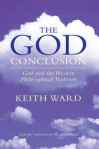
Keith Ward: The God Conclusion
God and the Western Philosophical Tradition
Darton, Longman and Todd, 2009 Amazon.co.uk
Back Cover:
 Discover why…
…Plato was not a world-hating totalitarian
…Aquinas’s Five Ways are not so bad after all
…Kicking stones cannot refute Bishop Berkeley
…Schopenhauer was not quite an atheist
…and other refreshing new perspectives on spiritual thinking in western philosophy
This entertaining book posits the theory that philosophy, far from being the enemy of religion, has more often than not supported a non-materialist view of the universe. Keith Ward re-examines the works of western philosophy’s greatest thinkers – from Plato to Aquinas to Kant and Hegel – and suggests that the majority accepted “the God conclusion”: that there is a supreme spiritual reality which is the cause or underlying nature of the physical universe.
Keith Ward was Professor of the History and Philosophy of Religion in the University of London, and Regius Professor of Divinity at Oxford. He is a Fellow of the British Academy, and a member of the council of the Royal Institute of Philosophy. The God Conclusion is a revised and expanded version of his 2008 Sarum Lectures and 2007-8 Gresham College Lectures.
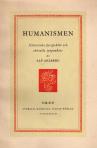
Alf Ahlberg: Humanismen
Historiska perspektiv och aktuella synpunkter
Dualis, 1992 (Sveriges Kyrkliga Studieförlag, 1951)
Dualis’ beskrivning:
Alf Ahlberg sätter i denna klassiska bok in den västerländska humanismen i ett större historiskt perspektiv och försöker därmed belysa dess egenart och situation i modern tid. Den bygger på övertygelsen att den humanistiska kulturtraditionen, sedan den utformats genom en syntes av det antika arvet med kristendomen, är den stora linjen i vår kultur, på vars bestånd och livskraft hela dess framtid beror. Humanismen företer många skiftningar och nyanser, men gemensamt för dem alla är tron på människan – inte på människans naturliga godhet men på hennes möjligheter till ett liv med förnuft och mening och där ord som rätt och orätt får en bestämd innebörd.
Ahlbergs förord:
 Huvudsyftet med denna skrift är att sätta in den västerländska humanismen i ett större historiskt sammanhang och därmed söka belysa dess egenart och dess situation i dagens läge. Den bäres upp av den övertygelsen, att den humanistiska kulturtraditionen, sådan denna utformats i främsta rummet genom en syntes av det antika arvet med kristendomen, är den stora linjen i vår kultur, på vars bestånd och livskraft hela dess framtid beror. Någon “humanismens historia” vill boken däremot icke vara. Jag har i den del, som jag kallat “historiska perspektiv”, blott dröjt vid de andliga makter, som jag anser mer än andra ha byggt upp den västerländska humanismen, men förbigår mycket, som i en sådan historik borde haft sin givna plats. Större uppmärksamhet skulle jag ha velat ägna den svenska humanismen, ty ehuru den naturligtvis är blott ett skott på den allmänna västerländska humanismens vittförgrenade träd, företer den likväl vissa bestämda och karaktäristiska drag. Men en särskild framställning av den skulle ha sprängt skriftens ram.
En “stridsskrift” är boken blott såtillvida, som den för humanismens talan men icke i den meningen, att den söker sak med den s.k. “profana” humanismen. I det beträngda läge, i vari humanismen i våra dagar befinner sig, har det förefallit förf. mera angeläget att ta sikte på vad som förenar dess olika riktningar än vad som skiljer dem åt. Däremot har jag icke gjort någon hemlighet av att det enligt min mening icke finns någon “profan” humanism i ordets konsekventa mening, som skulle innebära, att människan blott betraktades som “ett stycke natur”. Även den humanism, som kallas profan, är i grunden en “religiös” humanism, såtillvida som dess anhängare blott kan hävda sin position genom att idealisera “människan” eller “det mänskliga” och ge detta begrepp en religiöst-metafysisk innebörd. Detta förhållande uttryckes i det ord av Thomas Mann, som jag valt som motto [In der Idee der Menschenwürde, des Wertes der Einzelseele, transcendiert das Humane ins Religiöse].
Att humanismen lika litet som någon annan på värderingar byggd livsåskådning kan vetenskapligt bevisa sin hållbarhet ligger i sakens natur. De yttersta värden, efter vilka vi vill inrätta vårt liv, är varken tillgängliga för vetenskaplig bevisning eller vederläggning. Det kan tyckas vara att slå in öppna dörrar att så pass utförligt som skett i boken dröja vid denna punkt. Men erfarenheten visar nogsamt, att denna insikt långt ifrån är allmän egendom varken bland den bildade allmänheten eller representanterna för specialvetenskaperna. I sitt anförande i UNESCO generalförsamling 1946, på svenska utgivet under titeln “Människornas rike på jorden”, talar Julian Huxley om en “vetenskaplig humanism”, som tydligen skall skilja sig från den äldre religiösa humanismen därigenom, att den är tillgänglig för vetenskaplig bevisning. Men någon vetenskaplig humanism finns icke och kan heller icke finnas.
Då jag tillägnat denna bok minnet av en av vårt lands finaste humanister [Albert Nilsson] vill jag därmed blott ge ett fattigt uttryck åt min tacksamhet för en mångårig vänskap, som för mig är oförgätlig.
Brunnsvik i augusti 1950
JOBs kommentar:
Man måste skilja mellan vetenskapen (i betydelsen naturvetenskapen) och dess bevis, å ena sidan, och filosofins (i dess rätt förstådda, fullständiga mening) analyser och argument rörande såväl livsåskådningar som de värden Ahlberg talar om, å den andra.
Keith Ward: More than Matter?
What Humans Really Are
Lion Hudson, 2010 Amazon.com
Book Description:
 “The question of what it is to be a human person is the biggest intellectual question of our day.” Keith Ward has taught philosophy and theology in British universities for the past 40 years, and he is now weighing in on a major intellectual battle: whether human persons are purely materialistic – nothing but matter – or whether there is another, deeply valuable part of us, which transcends our bodies in nature and moral worth: the soul. For centuries philosophers have debated the question, but the battle has taken the limelight through the works of the New Atheists. In this book Professor Ward guides the reader through a panoply of thinkers and traditions, arguing that there is more to humanity than bodies. In fact, he argues, there is more to the entire universe than the naked eye perceives. (And contrary to the New Atheist assertions, there are good philosophical arguments to back this up.)
About the Author:
Keith Ward is Regius Professor of Divinity Emeritus at the University of Oxford and a Fellow of the British Academy. A well-known broadcaster and presenter, his work straddles the boundaries between science, religion and philosophy, while his career has addressed topics from materialism to medical ethics. His work in these fields is internationally respected, and he is today known as one of Britain’s foremost philosopher-theologians.
JOB’s Comment:
See my discussion of Keith Ward’s analysis of materialism in the Idealism category. Ward will be the keynote speaker at the 12th International Conference on Persons in Lund, Sweden, August 6-12.
12th ICP: Conference Fee
The conference fee is 400 SEK (currently approx. 60 USD, 45 EUR, 40 GBP), and payable
– in advance by direct bank transfer to the conference account in Handelsbanken; those who register and indicate that they wish to pay by this method will receive by email the requisite information;
or
– on August 6, the first day of the conference, at a Handelsbanken branch in Lund (just two blocks from Hotel Concordia) or at the conference venue. More information about this option will be added on the conference website shortly.
–
See other posts about the 12th International Conference on Persons in Lund, Sweden, August 6-10 under Uncategorized, or visit the the conference website.
György Lukács
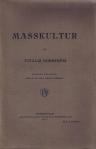
Vitalis Norström: Masskultur
Andra upplagan, med svar till Hans Larsson
Hiertas bokförlag, 1910
Baksida:
 Pressuttalanden om Masskultur:
Stockholms Dagbl. 18/10 1910.
Prof. Vitalis Norströms djuptänkta och snillrika bok om “Masskultur”…Det länder till hälsosam upptuktelse, att alla dylika sanningar ordentligen betonas och inskärpas, på det att vi ej må förhäfva oss öfver våra ofantliga framsteg inom alla områden, utan tillbörligen besinnna hvad som är väsentligt eller ej i de mänskliga lifsvillkoren… Harald Hjärne
Prof. Höffding kaller i en fransk facktidskrift förf. “den mest framstående af de nuvarande svenska tänkarne”.
Aftonbladet skrifver:
“Här behandlas det moderna själslifvet med en fasthet i greppet och ett djup i perspektivet, hvilka torde vara det bästa, som svensk tankekraft hittills åstadkommit i den frågan.”
Svenska Dagbl. 17/10 1910.
Då prof. Norström icke blott är en tänkare utan äfven skriftställare af rang, är man redan på förhand öfvertygad om värdet och betydelsen af hans bok… Olof Rabenius
Stockholms Dagbl. 21 aug. 1910.
…I vissa delar når förf. en sådan tänkandets höjd och blir hans framställning klädd i en så medryckande form, att han osökt påminner om en af det gamla Israels profeter…Det är som om han till hela vårt folk ville på gammaltestamentligt språk rikta den allvarliga maningen: Se till, mitt folk, på hvilka vägar du vandrar! Stanna och se! Du är på dåliga vägar, som kunna leda dig till undergång, stanna i tid och uppsök de goda vägarna…Man känner sig i godt sällskap, när man läser ett arbete af Vitalis Norström. Man liksom andas renare och bättre luft än man brukar finna i nutidens böcker. Och endast detta gör att man bör vara honom tacksam.
Innehåll:
1 Masskultur
2 Kultur och frihet
3 Några sidor af den s.k. sociala frågan
4 Modernt själslif
5 Massmoral
6 Lidande och njutning
7 Hvad jag menar. Ett ord med anledning af Hans Larssons kritik
Eric Voegelin: The New Science of Politics
An Introduction
With a new Foreword by Dante Germino
The University of Chicago Press, 1987 (1952)
Back Cover:
“Thirty-five years ago few could have predicted that The New Science of Politics would be a best-seller by political theory standards. Compressed within the Draconian economy of the six Walgreen lectures is a complete theory of man, society, and history, presented at the most profound and intellectual level…Voegelin’s [work] stands out in bold relief from much of what has passed under the name of political science in recent decades…The New Science is aptly titled, for Voegelin makes clear at the outset that a ‘return to the specific content’ of premodern political theory is out of the question…The subtitle of the book, An Introduction, clearly indicates that The New Science of Politics is an invitation to join the search for the recovery of our full humanity.”
From the new Foreword by Dante Germino
“This book must be considered one of the most enlightening essays on the character of European politics that has appeared in half a century…This is a book powerful and vivid enough to make agreement or disagreement with even its main thesis relatively unimportant.”
Times Literary Supplement
“Voegelin…is one of the most distinguished interpreters to Americans of the non-liberal streams of European thought…He brings a remarkable breadth of knowledge, and a historical imagination that ranges frequently into brilliant insights and generalizations.”
Francis G. Wilson, American Political Science Review
“This book is beautifully constructed…his erudition constantly brings a startling illumination.”
Martin Wright, International Affairs
“A lodestar to thinking men who seek a restoration of political science on the classic and Christian basis…a significant accomplishment in the retheorization of our age.”
Anthony Harrigan, Christian Century
Eric Voegelin (1901-1985) was Senior Research Fellow at the Hoover Institution at the time of his death. He is the author of numerous books in addition to his major five-volume work Order and History.
Ward on Personal Idealism
His worldview in twenty minutes.
Meet Ward at the 12th International Conference on Persons, Lund, Sweden, August 6-10, 2013, where he will be the keynote speaker.
Wm. Curtis Holtzen & Roberto Sirvent, eds: By Faith and Reason
The Essential Keith Ward
Darton, Longman and Todd, 2012 Amazon.co.uk
Book Description:
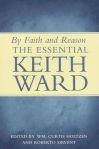 Philosopher and theologian Keith Ward is one of the most prolific scholars alive. For over forty years Ward has been a respected voice in many ongoing theological and philosophical discussions. Ward has the rare ability to seamlessly articulate careful thinking and creative insights on issues such as the nature of God, faith and science, and the value of religion in contemporary society. The mixture of intellect, imagination, passion and wit make Wards writings a must read for all those interested in philosophy or theology, whether a professional or a layman. This reader offers a distillation of Ward s most incisive pieces collected together for the first time. It will be an invaluable resource for students of philosophy of religion, apologetics, contemporary theology, religion and science and philosophy of science, for any general reader interested in comparative theology and the interplay between science and faith. Sections include: The Concept of God, Faith and Science, The Bible and its Interpretation, In Defence of Religion, and Inter-Faith Dialogue and Disagreement.
–
 Jan Olof Bengtsson