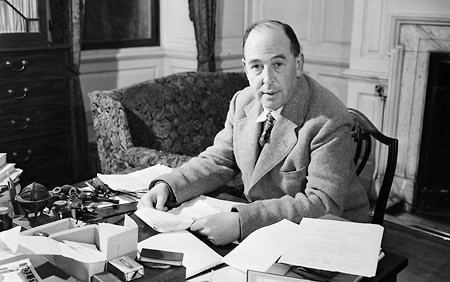
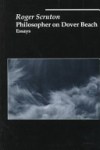
Roger Scruton: Philosopher on Dover Beach

Essays

St. Augustine’s Press, 1998 (1990)

Back Cover:

Scruton“The range is impressive, but un-nerving and episodic. His best piece is his long analysis of ‘Man’s Second Disobedience,’, his moralist’s assessment of the significance of the French Revolution…In Part III of the Collection…he is more outspoken and more lucid than elsewhere and, in places, savage.”  Esmond Wright, Contemporary Review

“Each essay has been constructed with considerable care, and the positions taken are clearly stated and soundly argued…He shows…that the philosopher-critic is alive and well…Recommended for all academic libraries.”  Library Journal

“[Scruton] writes eloquently of the way in which social bonds, if refashioned in contractual form, ‘become profane, a system of facade, a Disneyland version of what was formerly dignified and monumental.'”  Peter Clarke, London Review of Books

Scruton“It is a great pity that we in the United States do not have our own Roger Scruton. As his new collection of essays reminds us, he is an accomplished philosopher who writes trenchantly about many important political, social and religious issues, who cares passionately about art and culture and who is also a brilliant conservative polemicist…

Mr. Scruton has two great virtues as a critic. One is his ability to combine a delicate appreciation fo culture with the robust intellectual skills of a trained philosopher…

Mr. Scruton’s other great virtue is his habit of assessing things from the inside, taking them on their own terms. If his judgments are often harsh, one nevertheless comes away feeling that he has made the best case possible for his subject. This makes his criticism more devastating yet also more generous than the criticism of most other commentators.”  Roger Kimball, New York Times Book Review

The Essays:

I  PHILOSOPHY AND CULTURE

1  The philosopher on Dover Beach

2  Spengler’s Decline of the West

3  Understanding Hegel

4  Hegel as a Conservative Thinker

5  Gierke and the corporate person

6  Masaryk, Patocka and the care of the soul

7  Analytical philosophy and emotion

8  Modern philosophy and the neglect of aesthetics

9  Aesthetic experience and culture

II  CRITICAL ASIDES

10  Playwrights in performance: Pinter, Stoppard and Beckett

11  Peter Fuller as critic

12  Picasso and the women

13  Beastly bad taste: the work of Gilbert and George

14  Who owns art?

15  Radical critics: Harold Rosenberg and T. J. Clark

16  The photographic surrogate

17  In search of an audience

III  THE POLITICAL DIMENSION

18  The idea of progress

19  Man’s second disobedience: reflections on the French Revolution

20  Two enlightened Irishmen: G. B. Shaw and Conor Cruise O’Brien

21  The red and the green

22  A note on Bloch

23  The liturgy of the left

24  Ideologically speaking

25  Sexual morality and the liberal consensus

26  The usurpation of Australia

27  The left establishment

28  In defence of the nation

JOB’s Comment:

An extraordinarily rich and substantial collection of essays. The essays’ titles give an idea of Scruton’s versatility, and I list them since he should be carefully studied. But for all the deep and well-formulated insights in the fields of culture, politics, and society – Scruton is an essential thinker in our time – I suggest (and I have said this before) he must in fact be read with some discernment primarily in his own main field, philosophy, and in his other fields too, to the considerable extent that his problematic philosophical positions shape his understanding of them too.

His fundamental philosophical position depends on a certain understanding of the Lebenswelt, in terms of phenomenology, and of the scientific “worldview”, in terms of – well, science. I find his understanding of these things as well as of the relation between them to be basically mistaken, even as the intention to rescue the Lebenswelt in the face of scientific rationalism is a good one and many of his points are valid for those who accept or postulate that there is an objective reality corresponding to the ever-shifting theories and models that are the scientific “worldview”. The analysis and the arguments probably work, as it were, in a world where people actually believe this. The problem is that Scruton seems to ignore the philosophical reasons why this belief must be questioned (which is not at all to deny the value and validity of science, differently understood).

The Lebenswelt, I submit, is not what Scruton thinks it is, and not least because the scientific “worldview” is not what he thinks it is. The Lebenswelt is for Scruton a superficial yet precious phenomenon, and science a deep reality, the onesided modern emphasis on which threatens the values of the former. For me, the Lebenswelt is a comparatively deep – and indeed precious – phenomenon behind which and in which is hidden a still deeper, ultimate reality of spiritual nature; science is, in the respects Scruton has in mind, not really a worldview but a pragmatic fiction that threatens the values of the Lebenswelt primarily because it is thought to be something more than this. Scruton says he cannot bring himself to believe that, and he seems to regard it exclusively as a matter of religious faith.

But ultimately, only this understanding can save the values of the Lebenswelt from the illusions of scientific rationalism and its various misplaced applications. The traditional values of the Lebenswelt – and here we are talking of the whole edifice of culture, the arts, morality, society and religion, i.e., Scruton’s other fields – cannot be saved within and by means of this distinctly modern philosophical framework, disregarding the positions which traditionally underpinned the threatened values he cherishes and the defence of which, in their general worldview outline, is easily renewable and indeed continuously renewed by many philosophers.

Scruton explains his position in these regards not primarily in these essays, but, at greater length, in other works. But it is necessary to understand, and, so to speak, be on one’s guard against this central position when reading most of these essays, for his many valuable truths often, and quite unnecessarily, rest on this weak foundation of twentieth-century philosophy, combining its analytical and phenomenological strands. This is why discernment is needed: the many truths of his analyses need to be distinguished and separated from this philosophical context and inserted into the broadly idealist framework where they really belong.

Roger Kimball, cited above from the back cover, takes the same position with regard to these things as Scruton, and I have briefly set forth my argument against it in my essay on him in Humanitas.

C.S. Lewis: The Abolition of Man

or Reflections on education with special reference to the teaching of English in the upper forms of schools

Wikipedia

Back Cover of the out-of-print 1999 Harper/Font edition:

Earlier edition, probably Scribner.

“If someone were to come to me and say that, excepting the Bible, everyone on earth was going to be required to read one and the same book, and then ask what it should be, I would with no hesitation say The Abolition of Man. It is the most perfectly reasoned defence of Natural Law (Morality) I have ever seen, or believe to exist. If any book is able to save us from future excesses of folly and evil, it is this book.”  Walter Hooper

“No review can do justice to C.S. Lewis: his writing has a clarity and authority that are impossible to convey. He must be read.”  Church of England Newspaper

“It is a real triumph. There may be a piece of contemporary writing in which precision of thought, liveliness of expression and depth of meaning unite with the same felicity, but I have not come across it.”  Owen Barfield

Amazon.com Review:

“C.S. Lewis’s The Abolition of Man purports to be a book specifically about public education, but its central concerns are broadly political, religious, and philosophical. In the best of the book’s three essays, ‘Men Without Chests’, Lewis trains his laser-sharp wit on a mid-century English high school text, considering the ramifications of teaching British students to believe in idle relativism, and to reject ‘the doctrine of objective value, the belief that certain attitudes are really true, and others really false, to the kind of thing the universe is and the kinds of things we are’. Lewis calls this doctrine the ‘Tao’, and he spends much of the book explaining why society needs a sense of objective values. The Abolition of Man speaks with astonishing freshness to contemporary debates about morality…”  Michael Joseph Gross

About the Author:

Wikipedia

Keith Ward: In Defence of the Soul

Oneworld, 1998 (1992)     Amazon.co.uk

Back Cover:

WardIs there such a thing as the human soul?

Are we tiny cogs in a vast cosmos, or do we have special value?

In the modern scientific age, questions such as these become more and more difficult to answer. In this book, Keith Ward presents a balanced, strongly argued and convincing case for the existence of the human soul in the context of scientific discovery.

Drawing on a range of disciplines and writers, from Nietzsche, through Darwin, Freud and Marx, to contemporary philosophers and scientists, Ward’s study of the key protagonists in the debate on the soul is authoritative and comprehensive. Covering such thorny issues as individual freedom, morality, the role of religion and the limits of scientific investigation, In Defence of the Soul builds rational bridges between apparent contradictions to shed light on an area we would all like to understand more fully.

Keith Ward

JOB’s Comment:

Many of my comments on Ward’s arguments against materialism as set forth in his book The God Conclusion apply to this defence of the soul too. I am inclined to question in important respects, or rather in important areas, the claim accepted by Ward that science is a worldview, and to put forward a more basic argument against the position that the cosmos could be of such a kind as has cogs and in which we are among those cogs. Both positions seem to me to be chimeras, of a closely related kind. But Ward’s argument is important in the major part of the debate on the issues of spirit and matter etc. in which it is accepted, as basic assumptions, that science is a worldview and that it is possible that the universe is a coggy one. And much of it can be retained with only minor conceptual modifications and adjustments in a defence of the soul from a position that does not accept these assumptions.

Theodicy

Keith Ward on Materialism, 15     1  2  3  4  5  6  7  8  9  10  11  12  13  14

Ward thus begins to refute the argument directly produced by what he rightly finds to be the main drive behind materialism, the rage at the injustice, suffering and evil we find in the universe. This really requires a whole theodicy, and this is also what he proceeds to set forth in outline in the next few paragraphs. It contains several classical themes.

“In a universe generated in such a way, chance and necessity, the conditions of open creativity and intelligible structure respectively, may be bound together in a complex way. Perhaps the general structure of the universe has to be the way it is, because the forms of its being are necessarily laid down in the basic mathematical array of possible worlds.”

As I have already tried to argue, the basic array of possible worlds, in which the forms of the universe’s being, of its being the way it is, cannot possibly be conceived as exclusively mathematical. It is not clear how closely the conception of the necessity of the general structure of the universe is for Ward tied to the mathematical nature of the array of possible worlds. If it depends on it, the argument would, it seems, be untenable. It then has to be rethought so as to make possible the conception of the necessity in terms of non-formal forms, as it were, in the basic array determining the general structure of the universe.

“And the selection of actual universes”, he continues, “may be determined by goals that are worthwhile but hard to achieve and unavoidably susceptible to failure.” This introduces the question of the nature of the goals. And this is a vast issue, involving problems of the philosophy of history and of eschatology. Depending on how the goals are conceived – in terms of a secular futurology of wholly immanent, desirable states of affairs in human society, or in terms of a spiritual culture open to the transcendent dimension – the argument may be acceptable or not.

“Plato and Aristotle struggled with this problem at the beginning of the European philosophical tradition. Their proposal (or one of them) was that the cosmic mind does not create matter, but shapes it to imitate and participate in the divine perfection as far as such a thing is possible. The material realm is one in which chance and necessity combine to form a structure with definite limits but also with possibilities for a certain amount of free creativity. The divine mind shapes the material in accordance with the intrinsic values of beauty and perfection that are inherent in its own being. But even the divine mind cannot annul the elements of chance and necessity that are inseparable from any material universe.”

Plato’s and Aristotle’s teachings on matter are complex. What is translated as matter is not the same as the matter of classical materialism. But it is possible to isolate and identify to an extent that is sufficient for this argument that which is comparable with it. If “elements of chance and necessity” are to be ascribed to this matter as such, however, we must again raise questions about its nature and indeed about whether such a thing exists at all. And, in general, rather than speaking in philosophical analyses of a material realm or universe, with the tacit assumptions or implications of such a concept, what we should perhaps say, and what we can safely say, is that there is a phenomenon, something that we as finite beings experience as matter, and to which elements of chance and necessity may be ascribed. But of course, Ward here speaks of a Platonic and Aristotelian conception.

“What seems to be cosmic injustice or indifference to suffering may be in fact”, Ward suggests, “an unavoidable consequence of the interplay of chance and necessity, inseparable from any material world, influenced but not wholly determined by the attraction of a divine mind that seeks to draw all things towards itself.” Via Plato and Aristotle, we have moved here from the basic (mathematical) array of possible worlds to an actual world of “matter”. But it is the former that determined the latter, inasmuch as the forms of its being are necessarily laid down in it. Yet is is not wholly determined by the divine mind. The latter must thus be more than the basic array, although the array must be conceived as part of it. While the basic array of possibility determines the interplay of chance and necessity in actual “material” universes, the part of the divine mind that is not identical with the array seeks to draw the actual universe (“all things”) to itself, an influence which cannot be a complete determination because of the nature of the array. Again, it is clear that the divine mind must be more than the basic array if the latter is conceived purely in terms of mathematics. But even if it is not, even if it is conceived in terms of “non-formal forms”, the divine mind must be something more than it.

And again, there arises the question of what the drawing of all things to the divine mind means more precisely, with regard to the worthwhile goals and intrinsic values, the state of the realized goals and values. Is “matter” going to be somehow perfected in itself by the imitation of and participation in the divine perfection, by the closeness to the divine mind in a future scenario, or will that which lives in matter, that which experiences matter, the finite beings, transcend matter altogether through this drawing? There are important differences of worldview implied in the different answers to these questions. Either the “material” realm becomes translucent with the intrinsic values, and the worthwhile goal is a state of matter itself as thus perfected. Or the intrinsic values are merely guiding and ever imperfectly realized ones in a “material” universe – any “material” universe – which knows no such definite goal but remains finite and ever to some extent imperfect, so that the orientation of the finite beings that is indicated by the intrinsic values is primarily and ultimately the purely transcendent one towards the divine mind itself and as such (the divine mind that has more dimensions than that of the basic array of possibilities of universes), quite regardless of any accidental relation to phenomenal universes.

“In general, this philosophical approach does provide a robust theoretical response to the reproach that good and bad fortune are wholly accidental, or that no alleged cosmic consciousness could seriously intend to create a universe containing so much suffering. A universe in which free creativity and genuine personal relationships are important has to be a world in which chance (undirectedness by some determining force) has to play a part – though chance always works within the limits of a more general determinate structure.”

Again, chance and necessity are “bound together in a complex way”, since it seems chance cannot be explained by reference to “matter” itself but must somehow be part of the basic array of possibilities which determines any actual universe. Good and bad fortune are not wholly accidental but they are partly accidental, and the cosmic consciousness intended to create the actual universe as it is, as partly determined and partly accidental, since the basic array of possible universes in its own mind is the way it is. Free creativity and genuine personal relationships are part of the goals and intrinsic values, and they require chance in the sense of “undirectedness by some determining force” (a discussion of freedom could be added here). But given the premises with regard to the original source and nature of chance and necessity, the meaning of the creation in terms of an actuality of “matter” would seem somewhat unclear if the source and nature are not exclusively conceived in mathematical terms. There arises the question of the distinctive properties of the experienced materiality as a defining part of actual universes. There are of course many kinds of actual universes or phenomenal worlds that can arise within the divine mind or the cosmic consciousness from its basic array of possibilities.

“And the primordial creative mind does not intend to create suffering. Suffering is a possibility that cannot be eliminated from the necessary set of possibilities in the divine mind. Some suffering is unavoidably necessary in any universe that generates personally created values by beings that are an integral part of a developing, creative, dynamic and interconnected physical system. And much suffering is intensified in kind and degree by the self-centered choices of finite, free intelligences.”

While Ward seeks to refute materialism, I have asked some further questions about the nature of matter or the “physical system” mentioned here. I have also asked some questions about the nature of the goal, and thus the purpose, of creation as Ward loosely conceives it in the Biblical tradition, questions which I have discussed at greater length elsewhere in direct connection with Biblical theology and eschatology. It seems to me these questions are important for the precise understanding of the “personally created values”, the beings that are the persons creating them, and the nature of the “system” of which they are parts. The residues of Biblical theology in terms of “material” creation produce some philosophical difficulties. But on a general level which can be identified apart from the worldview differentiation introduced by these questions, I think I agree with this formulation of Ward’s.

But Ward says “some suffering” is “unavoidably necessary” in “any universe” with the specified intrinsic qualities. It would seem this suffering must then be part not only of the process leading to what Ward considers the “goal” of “creation”, but of that goal itself, of the universe as already drawn to the divine mind etc., if the goal is indeed the goal of the universe itself. It is then a matter of the definition of this suffering. But if the goal is that of the finite beings only and not wholly of the universe itself, the transcendent goal of the finite beings as distinguishable from the universe, the transcendent goal that is not reducible to the universe’s determinating structure, there would be no unavoidable necessity in it of the kind of suffering Ward has in mind.

Ward says that philosophy “cannot take us much further than this”. With regard to the specific questions I have raised, I would be so bold as to suggest that philosophy, as distinct from Biblical theology, can take us a little further. But these are not the questions that are central to Ward’s position, and his answers can be reformulated as applicable within the framework of a philosophy that takes us a little further with regard to my questions.

“But it may suggest that if there is a cosmic mind that is inherently perfect, yet has knowledge of every actual event, knowledge of suffering will be transmuted in the divine mind by its conscious inclusion within a wider and deeper experience. Since the divine mind has infinite time at its disposal, and intends the existence of distinctive values, there is some reason to hope that evil can eventually be overcome and eliminated, and might even be used to generate distinctive sorts of values – so that, while evil can never be justified by its consequences, all evil may nevertheless be turned to some otherwise non-existent good.

Here it seems to me that “evil”, if there is reason to hope it can be overcome and eliminated, must be distinguished from “some suffering” in the preceding paragraph. The main question that arises here is, again, the one about where and when precisely, in terms of Ward’s ontological categories, or rather, metaphysical levels, the eventual overcoming and elimination takes place, especially if we continue to speak of a matter that still, after the refutation of materialism’s view of matter, is still somehow distinctive enough to define a particular kind of “created” universe.

Ward further explains his position: “Finally, it seems possible that the divine mind could enable finite intelligences to share in this divine experience of ‘redeemed’ evil. If that could be, materialist objections to the pointlessness and injustice of life would be overcome by giving all sentient beings a share in a supremely valuable reality, to the precise nature of which they had made an important contribution.” It certainly seems possible that the divine mind could enable finite intelligences to share this experience. But does it imply that, as a result of a temporal processes, the whole of the actual “material” universe, i.e. the universe of or with finite intelligences, will at one point be without as yet unredeemed evil (but only  with some suffering), that such evil will then be forever a thing of the universe’s and the finite intelligences’ past alone? That there will be in the totality of reality, i.e. in the divine mind conceived as all-inclusive cosmic consciousness, a state where there is no longer any as yet unredeemeed evil in the (or any) actual universe? And is the acceptance of such a state necessary for the tenability of Ward’s theodicy? Elements of a Biblical eschatology and the historical mode of thinking that it leads to seem to produce here a position that is not really needed for the validity of the general argument.

It also seems there are other positions, having to do with the freedom – and the meaning of the freedom – of the finite intelligences (Ward only briefly mentions one aspect of this above), that could be adduced here in order to account for the existence, without any such cosmic history, in the totality of reality of such parts of it in which at least periodically the injustice, suffering and evil which produce the primarily psychological reaction that produces materialism are indeed experienced. But sufficient stress should certainly be placed, with regard to the finite intelligences that primarily experience this, on what Ward here says about the general possibility of their being enabled to share in the divine experience of it as “redeemed”, and their contribution, through their experience and their way of dealing with it, to a supremely valuable reality.
Pantheism, Postmodernism, Pop, 5

Pantheism, Postmodernism, Pop, 1

Pantheism, Postmodernism, Pop, 2

Pantheism, Postmodernism, Pop, 3

Pantheism, Postmodernism, Pop, 4

All of the following Pattison theses about the nature of romantic pantheism and popular culture are convincing, in need of merely a few minor adjustments: “Ours is a more homogeneous culture than we generally allow, in which elite and popular cultures subscribe to a single set of ideas”; “Prominent among these ideas is Romantic pantheism”; “In its pure form, Romantic pantheism encourages vulgarity”; “American democracy provides an ideal setting for the growth of romantic pantheism” (this clearly depends on how American democracy is defined); “Poe’s Eureka and the Velvet Underground are products of a single cultural force”; “What separates elite from popular culture is its unwillingness to embrace the vulgarity inherent in its own premises”; “There is more ideological vigor and consistency in the music of the Talking Heads than in the paradoxes of the academy”; “Nineteenth-century Romanticism lives on in the mass culture of the twentieth century, and the Sex Pistols come to fulfill the prophecies of Shelley”; “Vulgarity is no better and no worse than the pantheism and the democracy out of which it grows” (the latter certainly imply the sanctioning of the former, but neither has to be accepted or sanctioned); “Believing in Whitman, the democrat should also glory in the Ramones” (the democrat does not have to believe in Whitman). [Op.cit. xi-xii.]

What is being described is increasingly the fate of the whole of radical modernist and postmodernist culture. Again, there is really no distinction between the new élites and the masses. Rock “recognizes no class boundaries. Rich and poor, well-bred and lumpenproletariat alike listen to rock, and in the age of vulgarity, Harvard Square shares its musical tastes with Peoria.” [Ibid. 9.] The institution of the romantic secular bard is sublated in the popular culture of romanticism. Judging from sales statistics, almost all citizens of the leading rocking country, the United States, from which the new cult has spread across the globe, must own copies of the records and CDs of at least some of the leading bards of democracy. Rock stars flock to the White House (and Downing Street), and presidents accede to the office cheered by 120-decibel court jesters.

Yet arguing that we should now accept the vulgarity that has already triumphed, it is in a new, desperate attempt at sophistication that Pattison, probably considering all of the previous ones of radical modernism and postmodernism to be by now hopelessly trite, takes his point of departure in classicist humanism’s definition of vulgarity, finds it still standing, and bluntly analyses his subject-matter in its terms:

“The romantic revolution has made vulgarity an ineluctable issue for this century as well as the last. In politics, the vulgar mob has wrested power from its genteel rulers. Youth, which is noisy and uncontemplative, has usurped the cultural privileges of maturity. The heroes of Romantic civilization are no longer the disciplined patriots of Horace’s odes but unrefined primitives who pledge allegiance to self or the universe. In the West, the masses now have the leisure to indulge their vulgarity, and they have done so.” [Ibid. 13-14.]

Pattison follows the same strategy in his book on Newman, The Great Dissent: John Henry Newman and the Liberal Heresy (1991). Having devoted the major part of it to demonstrating the possible validity of at least some aspects of Newman’s criticism of modernity, he simply asserts, without arguments, in one short sentence on one of the last pages that ”as [Newman] presents them, heresy is in every way superior to truth”. [Op.cit., 215.] One suspects that it is in fact not necessary to side with Newman in the more specific theological controversies and to accept his identification of truth with orthodox dogma  in order to feel that, together with the celebration of Newman in the previous chapters (on Pattison’s own showing, much more was involved than the content of the Athanasian trinitology), this studied, defiant gesture signals a more general attitude on the part of some contemporary radical liberals, namely that they are now prepared to face, and deeply understand, any argument, any analysis, and perhaps even to admit that it is true, but that still they are never ever going to change their minds. But if so, it is of course just another version of the nihilistic end of academic discourse, brought about by the pantheistic revolution.

The aspect of the challenge against a non-pantheistic understanding of the person, inspired by classicism and Christianity, that on a superficial view stands at the opposite end from romanticism is the direct philosophical criticism produced today by the scientistically motivated physicalist materialism within the philosophy of mind – represented by the Churchlands and similar thinkers – which denies either the reality or the distinct quality of intentional agency, purposiveness, and nonphysical states of consciousness. Positivism having long since collapsed as a philosophy, this form of scientistic materialism has not only proved impervious to postmodern criticism, but, as in the work of Richard Rorty, compatible with it. [See my article ‘Richard Rortys filosofihistoriska program: Fysikalism och romantik i den amerikanska postmodernismen’ (‘Richard Rorty’s Program for the History of Philosophy: Physicalism and Romanticism in American Postmodernism’), in Att skriva filosofihistoria [Writing the History of Philosophy], Ugglan. Lund Studies in the History of Science and Ideas, VIII, 1998.]

Babbitt shows that it is a mistake to consider romanticism and naturalism to be opposites; in reality, they are mutually dependent and reinforce and support each other in countless subtle ways. Romanticism provides emotional “elevation” (Babbitt analysed an earlier historical period, but even then the elevation was merely that of romantic dreaming) and release for the hard-nosed technologist, while at the same time the latter provides the technologies for the former’s enhanced expression. [The interdependence is clearly – if indirectly – brought out also, for instance, in some of Neil Postman’s books.]

These currents in turn display central ingredient parts both of the psychological makeup and the ideological expression of what Eric Voegelin terms “gnosticism”. But I would add that this whole complex also tends inexorably in the direction of impersonalism. Christopher Lash analysed central aspects of contemporary culture in terms of “narcissism”. Personality, in this culture, tends to be reduced to a powerless escapist diversion as vicariously experienced in the stars of popular culture and sport – democracy’s version of the morally ambiguous personalism of romantic hero-worship. Or perhaps, stardom is democratically disseminated, as predicted by Andy Warhol, to everyone for fifteen minutes each.

For the rest of their lives, people are, as Rorty prescribes, to be allowed to dream in totally unrestrained relativistic subjectivism, but only in the strictest privacy that does not interfere with the workings of the public technological machinery. Today’s uncompromising scientistic reductionism can be shown to have been reached by the same concerted influence of lower romanticism, rationalism, empiricism, and a psychological disposition favouring “gnosticism” – all of which are not only inimical to the classical and Christian traditions in the general aspects that are relevant here, but also to the qualified modern understanding of the person and personal consciousness which is in harmony with these traditions not least in its retention, at least to some extent and in some form, of a spiritual dimension.

It is a commonplace in contemporary intellectual history that the individualism proclaimed by romanticism and liberalism was accompanied by an ever increasing social conformity and rational regimentation of man. In the connection here discussed, the partial truths of this perspective, introduced in the works of Michel Foucault, Norbert Elias, and others, are certainly relevant as a part of the historical and cultural perspective I try to introduce. But in recent scholarship it has unduly overshadowed other perspectives that are equally necessary for a deeper understanding. The common explanation of romanticism as a mere escapist reaction, powerless in the long run against the new historical realities of industrialism, true as it certainly is in many cases, also disastrously ignores the factual readiness of romanticism to accept and join the modernist forces of rationalism and technology, and the extent to which the whole of modernity, and postmodernity, are quintessentially if sometimes obliquely romantic phenomena. The specific romantic combination of pantheism and narcissism in what Pattison calls a vulgarized form, with no qualms about embracing the ever new marvels of rational technology, and enthusiastically surrendered to by the rational technologists themselves in leisure hours, is what determines what has been analysed by several critics as the conformity of the globalized mass-culture of liberal capitalist democracy. The nature of globalization makes my references to American literature increasingly relevant in other parts of the world, and not least of course in Europe.

Romantic pantheism which issued, not only in unison with but as including the forces of a renewed rationalism, in radical modernism and postmodernism, is, I suggest, the central underlying dynamic factor in the decline of the traditional Western culture that was shaped by the general aspects of the traditions of Christian theism and classical idealism and humanism that I have indicated loosely yet with sufficient precision for the limited purposes of the present argument. This decline has today assumed crisis-like forms and symptoms more acute and decisive than anything previously seen in the long undermining process in some respects philosophically and imaginatively set in motion centuries ago. But it is this same process that is being brought to a culmination. In a “physicalist” postmodernist like Rorty, the Babbittian analysis of the confluence of Rousseauism and Baconianism is irrefutably confirmed on all levels.

Alain Renaut: L’ère de l’individu

Contribution à une histoire de la subjectivité

Gallimard, 1989     Amazon.fr

Quatrième de couverture:

L'ère de l'individuLa culture moderne n’en a jamais fini de dissiper le mystère qu’elle constitue pour elle-même. Deux schémas principaux in spirent aujourd’hui cette autoréflexion de la modernité. Dans la mouvance de Heidegger, les Temps modernes assurent le règne sans partage du sujet au sein d’un univers réduit à être objet de maîtrise et de possession. Selon une inspiration tocquevillienne comme celle, en particulier, de Louis Dumont, c’est l’individualisme qui, rompant avec la domination traditionelle du collectif, sert de fil conducteur omni-interprétatif. Ces lectures ont pour point commun de rendre la modernité homogène, assimilée au “tout-sujet” our au “tout-individu”. Et surtout, elles occultent la césure qui brise l’histoire du sujet moderne en infléchissant l’humanisme vers l’une de ses figures possibles, problématique et évanouissante: l’individualisme.

L’archéologie de cet énigmatique déplacement conduit Alain Renaut jusqu’à Leibniz. Là s’est décidée une profonde mutation: l’affirmation de l’individualité devient soudain compatible, au prix d’un dispositif intellectuel inédit, avec celle d’une rationalité du réel. Une culture de l’indépendance où chaque être, ne se souciant que d’accomplir sa nature, contribue à manifester l’ordre du monde, se greffe sur la valorisation de la raison. Invention géniale qui, répétée à sa manière par l’empirisme de Berkeley ou de Hume, parachevée par Hegel, a marqué la fin du rationalisme ascétique: l’individualité n’était plus contrainte de se sacrifier sur l’autel de la rationalité et pouvait se déployer librement; au point, chez Nietzsche, d’anéantir tout principe de limitation.

Ainsi débarrassée des fausses linéarités, la logique de la modernité apparaît sous un jour neuf: loin d’avoir sans cesse consolidé le pouvoir de la subjectivité, elle a été aussi le lieu de son éclipse. Dynamique de la modernité qui, à l’âge de l’individualisme absolu, nous lèque la tâche de fair resurgir l’exigence d’autonomie qu’exprime, si elle se peut encore assumer, l’idée du sujet.

Biographie de l’auteur:

Wikipédia

Roger J. Sullivan: Immanuel Kant’s Moral Theory

Cambridge University Press, 1989     Amazon.com

Book Description:

This comprehensive, lucid, and systematic commentary on Kant’s practical (or moral) philosophy is sure to become a standard reference work. Kant is arguably the most important moral philosopher of the modern period, yet, prior to this detailed study, there have been no attempts to treat all of his work in this area in a single volume. Using as nontechnical a language as possible, the author offers a detailed, authoritative account of Kant’s moral philosophy, including his ethical theory, his philosophy of history, his political philosophy, his philosophy of religion, and his philosophy of education. He also demonstrates the historical, Kantian origins of such important notions as “autonomy,” “respect for others,” “rights,” and “duties.” An invaluable resource, this book will be extremely useful to advanced undergraduates, graduate students, and professional philosophers alike.
Reviews:
“…it provides a framework within which individual works can be located and some helpful guidance through their complexities. One might wish that it could be a reader’s first introduction to Kant’s moral theory.”  Mary Gregor, San Diego State University, in Review of Metaphysics
“Perhaps even more effectively than Kant himself, Roger J, Sullivan attempts to carry out Kant’s project of moral self-understanding…Kant seems to have found a new voice in this extraordinarily lucid commentary…a fairly comprehensive account of the whole of Kant’s practical philosophy which is both readable and intellectually challenging. Sullivan’s expository style successfully illuminates aspects of Kant’s moral philosophy that would typically be overshadowed by excessive criticism and well intentioned attempts to reconstruct a more acceptable reading. This is a remarkable achievement and one suspects that this work will become a standard reference for students of Kant’s moral theory for some time to come.”  Peter P. Cvek, The Review of Politics
‘Sullivan writes in the light of Kant’s entire writings on action, reason and morality and includes accounts of the philosophy of religion, of history and of politics. He does so in a way that is clear and definite with a sequence and balance of topics that seems to me very good … there is no other book in English that offers such a comprehensive, broadly accurate yet accessible treatment.’  Onora O’Neill, University of Essex
JOB’s Comment:
I said last year that I would not normally include in the References category and on the References page the scholarly works I cite and discuss in the historical posts in the Philosophy category, but only such that are more directly relevant to my own positions. But perhaps I should reconsider this; the historical works are often more than indirectly relevant, and I now tend to think that at least the most important should probably be added.

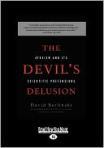
David Berlinski: The Devil’s Delusion

Atheism and its Scientific Pretensions

Basic Books, 2009 (2008)     Amazon.com

Book Description:

Militant atheism is on the rise. In recent years Richard Dawkins, Sam Harris, Daniel Dennett, and Christopher Hitchens have produced a steady stream of best-selling books denigrating religious belief. These authors are merely the leading edge of a larger movement that includes much of the scientific community.
In response, mathematician David Berlinski, himself a secular Jew, delivers a biting defense of religious thought. The Devil’s Delusion is a brilliant, incisive, and funny book that explores the limits of science and the pretensions of those who insist it is the ultimate touchstone for understanding our world.
Reviews:
“Berlinski knows his science and wields his rapier deftly. He makes great sport with his opponents, and his readers will surely enjoy it.”  Tom Bethell, bestselling author of The Politically Incorrect Guide to Science
“A powerful riposte to atheist mockery and cocksure science, and to the sort of philosophy that surrenders to them. David Berlinski proceeds reasonably and calmly to challenge recent scientific theorizing and to expose the unreason from which it presumes to criticize religion.”  Harvey Mansfield, Professor of Government, Harvard University
“Berlinski’s book is everything desirable: it is idiomatic, profound, brilliantly polemical, amusing, and of course vastly learned. I congratulate him.”  William F. Buckley Jr.
“With high style and light-hearted disdain, David Berlinski deflates the intellectual pretensions of the scientific atheist crowd. Maybe they can recite the Periodic Table by heart, but the secular Berlinski shows that this doesn’t get them very far in reasoning about much weightier matters.”  Michael J. Behe, Professor of Biological Sciences, Lehigh University, bestselling author of Darwin’s Black Box and The Edge of Evolution
“David Berlinski plus any topic equals an extraordinary book.”  Chicago Tribune
About the Author:
David Berlinski has a Ph.D. from Princeton University and has taught mathematics and philosophy at universities in the United States and in France. He is the bestselling author of such books as A Tour of the Calculus, The Advent of the Algorithm, and Newton’s Gift. A senior fellow at the Discovery Institute in Seattle and a former fellow at the Institute for Applied Systems Analysis and the Institut des Hautes Études Scientifiques, Berlinski writes frequently for Commentary, among other journals. He lives in Paris.