Läsarfråga om Platon

Flitige nätdebattören “Den Väldige” har inkommit med en fråga om Platon, som jag besvarar här.

Fråga:

”De flesta kännare  av filosofi återkommer till Platon som grunden för filosofisk (allmän)bildning har jag kunnat konstatera. Jag har därför värmt upp med lite enklare saker som Sokrates försvarstal, Kriton, Gästabudet och Faidon. Så långt tycker jag att jag hänger med ganska bra. Men när jag ska avancera, exempelvis genom Den mindre Hippias, så blir jag brydd, och börjar famla efter vad som egentligen är avsikten med texten.

Vill därför fråga: Kan du föreslå rimliga och vettiga analysförslag eller introduktioner till Platons lite mer avancerade saker? Säg att ambitionen, förutom att greppa Den mindre Hippias, är att åtminstone läsa Staten och Lagarna och kanske något mer. En anmälan av en sådan skrift, om den finns i sinnevärlden, skulle vara fint. Man kan ju också hoppas att någon mer kunde ha användning för en sådan postning.”

JOB:s svar:

Till att börja med måste jag säga att jag själv inte är någon Platonforskare och inte är rätt person att ge råd om den aktuella Platonlitteraturen.

Jag brukade ibland titta i A. E. Taylors gamla Plato: The Man and His Work från 1926, som fortfarande fanns i tryck när jag började på universitetet (och jag upptäcker nu att Routledge faktiskt planerar ännu en utgåva senare i år), eftersom Taylor som filosof i egen rätt tillhörde de tanketraditioner på hans tid som jag främst ägnade mig åt. Taylor var en s.k. “personal idealist” (jag nämner honom i denna egenskap några gånger i The Worldview of Personalism) och uppmärksammade av detta skäl ofta sådana temata hos Platon som var av särskild betydelse för mig.

Taylors Plato anses naturligtvis föråldrad i flera avseenden, men jag insåg snart att det inte var självklart att detta var avseenden som alltid var så väsentliga för mig. När nya fakta kommer fram, som nödvändiggör nya tolkningar, är det självklart viktigt. Men nya tolkningar i sig, och allmänna förändringar i forskningens inriktning, är ju långtifrån alltid sådana att de automatiskt och legitimt kan sägas göra äldre forskning föråldrad. Än mindre är så fallet när dessa tolkningar och nya inriktningar i allt högre grad bestäms av helt andra faktorer än sådana som har direkt med ämnet eller forskningsföremålet att göra, såsom ideologiska förändringar eller en filosofisk eller teoretisk utveckling som i sig delvis kan visas vara problematisk. Allt oftare finner jag nya introduktioner till gamla tänkare undermåliga i förhållande till äldre. Undantag finns självfallet, men jag måste erkänna – och detta har givetvis i högsta grad att göra just med att jag inte är någon Platonspecialist – att jag inte på rak arm kommer på någon till Platon.

Exempelvis har såvitt jag minns Taylors Sokratesbild och uppfattning av förhållandet mellan Sokrates och Platon ifrågasatts. Här kan förvisso finnas poänger. Men situationen är en helt annan ifråga om den allmänna överblick av Platonforskningen som Mats Persson gav i Lychnos i slutet av nittiotalet tror jag (minns ej exakt år nu). Snarare är det idag så att äldre verk tar upp mycket som nyare av från mitt perspektiv tvivelaktiga skäl väljer att utelämna.

Själv är jag vidare påverkad exempelvis av vissa aspekter av Eric Voegelins Platontolkning. Denna hör visserligen knappast till kategorin “rimliga och vettiga…introduktioner till Platons lite mer avancerade saker”. Men å andra sidan verkar såväl din ambition som din förmåga i dessa (och andra) studier redan placera dig på en högre nivå än den elementära introduktionens. Vad som är mer och vad som är mindre avancerat hos Platon är, tycker jag, inte alltid någon självklart enkel fråga. Voegelin behandlar både de verk du redan läst och dem du planerar att läsa härnäst, men utifrån sin övergripande teori om “differentiering” som jag diskuterat i några blogginlägg (och, kort, i min introduktion till Vetenskap, politik och gnosticism).

Detta perspektiv måste anses i vissa avseenden gå utöver en grundläggande introduktion. För detta syfte är Taylor bättre. Som komplement till denne rekommenderar jag därför i stället Richard Kraut (utg.), The Cambridge Companion to Plato från 1992, en samling väsentlighetsorienterade uppsatser som någorlunda allsidigt belyser Platon ur senare forsknings perspektiv.

Du skriver att “de flesta kännare av filosofi återkommer till Platon som grunden för filosofisk (allmän)bildning”. Det gör de utan tvekan i mycket med rätta. Dock brukar jag, som du kanske sett, peka på Plotinos som lika viktig, ja viktigare, för förståelsen av platonismens vidare tradition under antiken såväl som av dess historiska fortverkan under “medeltiden” och “nya tiden”.

Pantheism, Postmodernism, Pop, 2

Pantheism, Postmodernism, Pop, 1

A romantic counterculture has existed since the early nineteenth-century Parisian Bohemia. Its continued relation to the dominant bourgeois culture was analysed by Daniel Bell in The Cultural Contradictions of Capitalism (1976), and Gertrude Himmelfarb showed how its sensibilities have today largely conquered the establishment and what used to be polite society. Analysis in terms of the pantheistic revolution makes it easier to understand this dialectic between the counterculture and the establishment. Under the influence of a single blurred ideology of rights and enjoyment, and a uniform imaginative and emotional universe, not only what C.S. Lewis called the “large, well-meant statements” of popular pantheism, but an ever-intensifying, renewed romanticism of the outcast and a growing fascination for evil shapes graduate seminars, art galleries, and novels to the same extent that they control the world of pure entertainment.

In the secular revolution of immanent utopianism, guided by radical Enlightenment and radical Romanticism, the traditional differential structure of Western order, and especially the relation and balance between them, are finally abandoned altogether. The distinction between spiritual and secular power, as well as the distinction between the independent learned community of the university and the power of the state and the Church – and, we could add, the bourgeois world of commerce – are, for instance, replaced by the distinction between the evil, repressive forces of the past, deceiving the People, or rather, increasingly, the oppressed minorities by masking its selfish exercise of power behind false, hypocritical moralism and religiosity, on the one hand, and the radical, progressive intellectual on the other. But the role of the intellectual is really obsolete too. Today, the ranks of politicians, academics, artists, Churchmen and -women, business tycoons and popular entertainers become indistinguishable. In the terms of my analysis, it could be said that all people of all classes and walks of life are ever more closely joined in the ubiquitous pantheistic cult.

In the dominance of electronic media, computers, and technology in general, the interdependence of romanticism on the one hand and scientific rationalism and empiricism on the other reappears. The romantic, narcissistic ego, ever torn between self-assertion and self-annihilation, which, weakened by pseudo-idealism, was an easy prey of the brutal outer forces of the emerging new external world, which in the nihilism of its self-exaltation was only seemingly paradoxically never far from self-extinction in the bosom of nature or in the void, and which in its unavoidable bitter disillusion readily accepted cynical and extreme versions of the naturalistic worldview, today reasserts itself in the mode of a popular culture unquestioningly adopting all the new wonders of technology.

It is hard to see any decisive difference between the practices of Michel Foucault – at his death, according to James Miller, “perhaps the single most famous intellectual in the world” – and the messages conveyed by the grosser and more violent films and music of today’s popular culture, except that Foucault still took his practices far more seriously and invested them more portentously with philosophical, cultural, and political meaning. Foucault

“joined…in the orgies of torture, trembling with ‘the most exquisite agonies’, voluntarily effacing himself, exploding the limits of consciousness, letting real, corporeal pain insensibly melt into pleasure through the alchemy of eroticism…Through intoxication, reverie, the Dionysian abandon of the artist, the most punishing of ascetic practices, and an uninhibited exploration of sadomasochistic eroticism, it seemed possible to breach, however briefly, the boundaries separating the conscious and unconscious, reason and unreason, pleasure and pain – and, at the ultimate limit, life and death – thus starkly revealing how distinctions central to the play of true and false are pliable, uncertain, contingent.” [Cited in Roger Kimball, Experiments Against Reality (2000), 248.]

But the serious revolutionary satanism of the pantheistic revolution has long been transformed by the tendency of its expression in the remaining forms of the  avant-garde to be increasingly reduced to mere entertainment. Art and literature are merged with advertisement and fashion. Politics is reduced to a manipulation of images and phrases by the media. Historical revolts were earnest enough to the extent that they were the products of real material destitution which to some extent interacted with ideological convictions that were earnestly held. Not that this was the whole explanation of historical revolutions, but there often was at least one factor of this kind. In the postmodern age, a revolutionary ideology was, as it were, earnestly held only as far as earnestness is at all possible in a pantheistic universe. At our stage in the history of the romantic revolution, earnestness tends to dissolve in the inherent nonsensicality of its fully realized pantheism.

For pantheism itself necessarily disintegrates in its triumph. Traditionalists argue that however legitimate the revolts against the corruption of the government of favour and the religion of grace may have been, in the long run, turning against the order of reality itself, revolutions of empty space cannot succeed. The process of pantheism swallows up all critical vantage-points, including those of radical modernism. Were it not for the implicit tendency towards nonsensicality, some rock concerts today resemble the radical political mass meeting, which in turn can be seen as a further development of the ceremonies on the Champs de Mars and the hysteria of Jacobin decapitations. The rebellious punk movement was ever close to more or less anarchic political activism. Perhaps the new religion could be said to be the religion of what J. L. Talmon in the title of his best-known book called “totalitarian democracy”, the dictatorship based not only on ideology but on popular enthusiasm.

Of course, postmodern “fun” and entertainment could be sinister enough. If they couldn’t reach the suprapersonal ecstacy of joy, they could at least sink to the subpersonal ecstacy of the Dionysian orgy. In one aspect, the recent trends of our culture would seem to land us in endless triviality and banality, with, in Allan Bloom’s words, some “[a]nti-bourgeois ire” as “the opiate of the last man”. [The Closing of the American Mind (1987), 78.] In reality, it simply weakens the discernment of evil and the resistance against it.

As we have seen, in its seemingly disparate currents the pantheistic revolution is intelligible as a single movement of interrelated forces. In the postmodern carnival of micronarratives, objective theoretical and moral truth was replaced by consent alone, [Dennis McCallum, ed, The Death of Truth (1996); Robert H. Knight, The Age of Consent: The Rise of Relativism and the Corruption of Popular Culture (1998).] but the aim and direction of the whole movement was unambiguous, and its meaning, even as it rejects meaning as such, was clear. It is highly significant that so much in Lasserre’s formulations precisely describes postmodern criticism:

“C’est la destruction de la critique…un art équivoque de délayer tout dans tout, de parler de tout à faux, de faire dire aux philosophies, aux religions l’opposé de ce qu’elles disent, de ramener l’affirmation à une négation, et plus encore de hausser la négation à la dignité d’affirmation, d’apprécier les positions intellectuelles et morales le plus nettement prises par les hommes du passé, selon l’indécision d’une pensée qui se croit la plus grande, parce qu’elle ne s’arrête nulle part.” [See the note about Lasserre’s book and page numbers above.]

In postmodernism’s non-hierarchical, differential play, all forces and perspectives were relative to each other, but of course no longer parts of a whole in relation to which they had to be understood. Identities were fractured, ephemeral, contingent, ever-changing, insubstantial constructs and fictions. It was a carnival of fluctuating “appearences” alone, with nothing of which it was appearances. But this situation too was the ultimate consequence of pantheistic monism and of the nihilism that is never far from it, for an empty principle disappears easier than a principle full of spiritual content. Postmodernism was the ultimate blurring of distinctions: everything was indiscriminately included, everything of a lower character was legitimized – not any longer in the dialectical movement of the World-Spirit, but in the multivalent process of chaotic play.

As already in the early romantics, pantheistic “love” was all-inclusive, yet intrinsically linked to the hate of the rebel-heroes whose satanistic excess, notorious in entertainment in a spectacular form which, in accord with the evaporation of seriousness in postmodernism, ever verges on self-parody, was embraced as just and legitimate in the face of the oppression of the only enemy, non-pantheist differentiationalism. At least to some extent, the latter, however faded and diffuse it may have become, must somehow be mythically retained and its injustices ceremonially rehearsed for the indiscriminate cult of liberation, a central ingredient of the pantheistic revolution, to preserve credibility and motivation.

Pattison argues that democracy is pantheism’s political form. “The refined seek to rise above the ubiquitous democracy of the grass, but Whitman answers: ‘I exist as I am, that is enough’. Pantheistic democracy’s ‘common language’ is ‘sensation’, and ‘its boundaries are the universe’”: “There is no evil in the pantheist democracy because the transcendent vantage to distinguish good and evil has been gobbled up in the whole. Every act, no matter how loathsome by traditional standards, is valid, since the one knows itself by assuming the infinite forms of the many. To understand this process is ‘to live beyond the difference’ between good and evil, refinement and vulgarity.” [The Triumph of Vulgarity, 26-7.]

For this reason, even the enemy would, it seems, ultimately have to be included in the pantheistic universe. But that is impossible as long as the enemy preserves his own identity and refuses to accept his redefinition in pantheist terms.

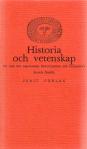
Svante Nordin: Historia och vetenskap

En essä om marxismen, historicismen och humaniora

Zenit, 1981

Baksida:

NordinHistoria och vetenskap handlar om de humanistiska vetenskaperna, deras egenart och uppgifter. Den handlar också om marxismen i dess egenskap av humanvetenskaplig teori.

I en historisk exposé tecknar Svante Nordin den klassiska historiefilosofiska traditionen vars idag viktigaste avläggare är marxismen. I ett systematiskt avsnitt gör han ett försök att ge konturerna av en filosofi om historien där de trådar följs som knyter samman konsten, filosofin, politiken och den sociala strukturen. Därvid genomför Nordin vad som både är en tolkning och i vissa avseenden en kritik av marxismen utifrån ett historicistiskt perspektiv.

Syftet med denna bok står att finna i ett försvar för ett klassiskt kulturideal och för en teoretisk tradition där historiefilosofiskt tänkande betraktas som både respektabelt och nödvändigt.

JOBs kommentar:

Nordins viktigaste filosofiska bok – i den meningen att medan hans senare verk är filosofihistoriskt viktiga, filosoferar han själv i denna, även om det i stor utsträckning formuleras i termer av teori. Vid denna tid var Nordin fortfarande verksam som filosof, vid filosofiska institutionen i Lund. Han hade ännu inte flyttat över till idé- och lärdomshistoria.

Den uppgörelse han här företar med åtminstone de mest ohållbara riktningarna inom marxismen – främst den delvis strukturalistiskt influerade Althusser-skolan med dess antihumanism och dess typ av vetenskaplighetsanspråk å marxismens vägnar – var av historisk betydelse i den svenska vänstern vid denna tid och därmed för det intellektuella klimatet i Sverige överhuvudtaget. Jag läste den med största intresse när den kom ut, som alldeles färsk recentior i Uppsala men medförande andliga och rudimentära filosofiska övertygelser av ett slag som gjorde det omöjligt för mig att acceptera den alltfort vitt utbredda marxismen.

Den humanistiska bredden och perspektivrikedomen, den formella och stilistiska friheten från de marxistiska esoterismernas krampaktiga jargonger som ofta bara dolde kulturlöshet, försvaret av det klassiska kulturidealet – allt detta imponerade. Men det fanns också mycket jag inte höll med om, och som jag omedelbart började brottas med. Nordin kvarstannade ännu i ett allmänt marxistiskt influerat tänkande, liksom inom ett mer allmänt kulturradikalt paradigm.

Samtidigt pekade hans immanenta kritik av marxismen i själva verket långt utöver marxismen som sådan, något som inom kort bekräftades av hans egen fortsatta utveckling. Hans grundliga tillägnelse av ännu idag i Sverige otillräckligt absorberade tanketraditioner långt bortom marxismen, huvudsakligen med anknytning till den i boken dominerande historicistiska tematiken, den tillägnelse som är vad som framtvingade uppgörelsen, var redan här uppenbar, och skänker boken bestående värde och relevans.

Historia och vetenskap erbjöd en möjlighet till den sanna humanistiska filosofins frigörelse inte bara inom marxismen, där Althusser förstört den, utan i väsentliga avseenden även från marxismen som sådan – en möjlighet till humanioras återupprättelse i Sverige i andra filosofiska termer. Men fastän den på ett självständigt och nyskapande sätt lyfte fram nödvändiga och av marxismen undanträngda tänkare och traditioner och från dem hämtade insikter av största betydelse för den humanistiska filosofins och den humanvetenskapliga teorins nyformulering, utgjorde den inte själv denna nyformulering som ett fullt, positivt alternativ.

För det första var den – och gjorde på intet sätt anspråk på att vara något annat än – fragmentarisk och essäistisk (undertiteln säger att den är en essä; mer exakt är den en sammanställning och tematisk gruppering av en mängd korta fragment, man kanske kunde tillåtas kalla dem “essäetter”), på intet sätt en utförlig, systematisk framställning.

För det andra skulle krävts för den kompletta nyformuleringen både en mer fullständig frigörelse från de allmänna marxistiska tankelinjerna och det kulturradikala paradigmet, och en djupare och utvidgad tillägnelse av den nämnda ickemarxistiska tankevärlden. Begränsningen som sådan, i marxistisk, ja althusseriansk anda, till humanvetenskapernas teori, om än i högre grad filosofiskt förstådd, hade behövt överges till förmån för filosofin i sig i fullaste traditionella mening.

Alltunder det jag under de kommande åren fortsatte följa Nordins författarskap, som nu alltså övergick till att ägnas filosofihistorien, sökte jag förstå mer exakt detta som krävdes. Under åttiotalets lopp mognade gradvis de slutsatser fram i enlighet med vilka jag sedan dess försökt utveckla min verklighetsförståelse. Jag började tänka i termer av idealism, personalism, och värdecentrerad historicism.

Nordins fortsatta arbete hade stor betydelse för mig även i detta sammanhang. Han slutade förvisso inte att själv bedriva filosofi. Med den historiefilosofiska förståelse och uppfattning av historievetenskapen som han ådagalade redan i Historia och vetenskap var det naturligtvis oundvikligt och självklart för honom att göra det också som historiker: filosofin kan inte skiljas från den medvetet reflekterade historieskrivningen, historiemedvetandet inte från filosofin. Och några senare uppsatser och artiklar är också av samma typ som texterna i Historia och vetenskap, och avspeglar Nordins fortsatta rent filosofiska utveckling.

Men Historia och vetenskap förblir alltså än idag Nordins enda bok som i sin helhet uttrycker enbart eller i första hand hans eget tänkande.

Pantheism, Postmodernism, Pop, 1

For many years, postmodernism, in the broad and loose American sense which includes also the main thinkers of poststructuralism, has come under attack in academia from various quarters, and some of its influence should be described in the past tense. But if it is receding, it has of course, like all the successive movements in the shifting pageant of modern intellectual and academic life, left a permanent legacy which is taken up in more or less recognizable forms in subsequent thought. Not only is it still a relevant analytical category in the effort to understand contemporary culture, but as a product of what I call the pantheistic revolution, it stands in an indissoluble relation to some of the movements which have recently supplanted it and which are also products of this same revolution.

This is one of the things which can best be seen by applying the analytical concept of a pantheistic revolution that comprises both modern romanticism and modern rationalism. Derridean deconstruction and similar strategies were Americanized postmodernism’s new attempt to break down what the prominent scholar of romanticism Morse Peckham described in terms of “orientation”, the fixed, dualistic, hierarchical and of course allegedly unreal constructs of order of Platonism and Christian theology as well as of Enlightenment rationalism. In a sense, postmodernism still constructed the world out of the self and the self out of the world, but there was no longer any explanation or deduction from an empty, unitary principle behind this process. All first principles, comprehensive systems, supreme propositions, and overarching theories were now rejected, and considered possible to reject. There could be no ontotheology, no centre, no master narrative. The hierarchical, vertical, “arborescent” structure of knowledge with clearly classifiable branches stemming from an original unitary principle was abandoned by Deleuze in favour of a horizontal or subterranean, “rhizomatic” knowledge. The use of a vague, poetical, allusive, metaphorical and analogical language in Ahrimanic opposition to the – always caricatured – limitations of the clear and distinct Ohrmazdic conceptuality of Descartes, the “idées claires”, “règles”, and “forme” defended by French classicist critics of romanticism like Pierre Lasserre, was taken to new extremes.

Modern rational exploitation, domination and control of nature, and traditional spiritual transcendence of it, became ever more indistinguishable. Postmodernism opposed mainly the rationalistic, epistemological subjectivity of modernity, but failing increasingly to perceive the difference between such subjectivity and the subjectivity of moral and religious consciousness in the Platonic and Christian traditions, it tended to reduce the latter to the former and to and reject all subjective identity based on the qualities of consciousness as an imperialistic metaphysics of presence and logocentrism.

This is one of the reasons why postmodernism must be seen as a chapter in the long story of modern romanticism, restating some of its oldest and most basic themes in terms the newness of which can delude us only if we do not grasp the depth and pervasiveness of the romantic movement as quintessentially defining Western culture at present no less than two hundred years ago. For the postmodernist, the rationalist, abstract straitjacket of the logocentric metaphysics of presence stifles the play of  dualities and binary opposites that the earlier romantics sought in various ways to reunite, but which were now even more fluid, unstable, and ambiguous, and the indeterminate play of which was now – also largely in line with Adorno’s negative dialectic – simply to be set free without even an ideal of synthesis.

In Lasserre’s words about romantic thought, “la Définition est la mort de la pensée”; we stand before a “laisser-aller infini”, and “le caractère indéterminé des représentations” is indeed, and again, “mêlé d’une sorte d’enthousiasme”. The effect of the new wave of release was of course, as ever, revolutionary, guided in the new, indirect fashion by “l’esprit de nivellement par en bas dans l’ordre de la culture”. [Le romantisme français (1907) – page number missing in my notes, but will be added when I next consult this book in the library.] But after Heidegger there were no longer any claims either to human divinity or to the spontaneous harmony consequent upon its liberation. With deconstruction, postmodern culture finally passed unambiguously beyond even the distorted remnants of what Peckham analysed in terms of the tragic vision that were still cultivated or manipulated by modernism. In this state, where all objective distinctions of reality were suspended or dissolved in the directionless process of what was originally pantheism, the whole content and meaning of art, which previously depended on these distinctions, were ultimately reduced, if not to sheer nonsense, at least to triviality.

For the distinction between romanticism before and after the complete loss of the tragic vision can be linked to a distinction Robert Pattison makes in The Triumph of Vulgarity: Rock Music in the Mirror of Romanticism (1987) between vulgar and non-vulgar romanticism. Even rapture, ecstasy and joy, which were still goals of romantic aesthetics, are “states impossible for the vulgar pantheist. To be rapt is to be snatched from the toil of common existence and lifted to a transcendent sphere from which to view perfection. To be ecstatic is literally to stand outside of one’s self, an incomprehensible position to the solipsist.” [Op.cit. 197.]

Already Coleridge realized that these states were incompatible with pantheism: “Pantheism, Coleridge says, is ‘the inevitable result of all consequent Reasoning in which the Intellect refuses to acknowledge a higher or deeper ground than it can itself supply’. And so pantheism is for Coleridge ‘practically atheistic’ – a belief that gives us a universe in which there is no joy because there is nowhere from which it flows or toward which we can move to find it.” It is clear to Coleridge that “we cannot have the joy of Beethoven’s Ninth and the vulgarities of pantheism together”. [Ibid.] But as pantheism triumphs and takes Western culture beyond the tragic vision, mere entertainment, “fun”, is all it can reach.

Although, as Pattison shows, the same case about the pantheistic revolution could as easily be made with reference to modernist and postmodernist art, literature, and non-popular music, it is popular music that reveals most clearly, through its “vulgar” directness and simplicity, the underlying moods, attitudes and motivations of the revolution of romantic pantheism, the momentum of the deeper cultural dynamic which encompasses also the intellectual élites or pseudo-élites of radical modernism and postmodernism.

The Triumph of Vulgarity is an analysis of rock music as a quintessential product of the pantheistic revolution, where pantheism comes completely into its own. Pattison shows how the “classical moorings” of vulgarity and refinement were dislodged by the industrial and democratic world revolutions, which were “only different names for a single upheaval” that “continues today with unabated vigor”, and which Pattison chooses “for the sake of convenience” to call “by the name of its literary incarnation, Romanticism”. [Ibid. 13.] The analysis is simplified of course, but serves, as such, to reveal some essential truths inevitably obscured by the very process that is laid bare. We recognize, as had Lasserre, the “empty principle” of one main current of romantic, radical idealism:

“Fifty years after the proclamation of the First Republic, the Romantic historian Jules Michelet still wrote of the French Revolution in the present tense, translating it from the deathbed of history to the vitality of myth. ‘The revolution is nothing but a tardy reaction of justice against the government of favor and the religion of grace.’ The Empire had memorialized itself in the friezes of the Arc de Triomphe, royalty in the palaces of the Louvre, religion in the masonry of Notre Dame. And the revolotion? ‘The revolution has for her monument – empty space.’ Michelet was thinking of the Champs de Mars, where the French nation celebrated the first Quatorze Juillet in 1790 and four years later gathered under the leadership of Robespierre to solemnize the Republic in rites now directed to a new deity, the Supreme Being, who had ousted the Christian divinity of the ancien régime. But Michelet’s ‘empty space’, where the people once assembled to celebrate the overthrow of favor and grace, is also a memorial to vulgarity and Romanticism. Refinement, the mode in which favor and grace have apprehended the world, has always made a point of filling the imagined vacuum of vulgarity with reasoned civilization. The Romantic revolution proclaims that the apparent emptiness is in fact infinite energy that needs no refined tinkering. Two hundred years after the Revolution, rock, celebrating this energy, is the liturgy of a new religion of vacant monuments, the fulfillment of a devotion begun on the Champs de Mars.” [Ibid.]

Postmodernism, like the pantheism analysed by Lasserre, “ne distingue pas entre une sensibilité cultivée et une sensibilité barbare”, it is “[le] règne de la facilité”. [See my note about Lasserre’s work and page numbers above.] Pattison shows that the sophistication of the avant-garde culture of aesthetic modernism that was considered the prime vehicle of imageless Messianic utopia under twentieth century conditions, was, despite being until recently contemptuous of the “vulgar” expression of romanticism, ultimately but a different mode of articulation of the same credo of romantic pantheism, narcissism, relativism, and democratism that defined popular culture. The bearers of the élite, avant-garde culture of aesthetic modernism looked with utter disdain on the expressions of popular culture, but the vehemence of the attack could, as Pattison almost implies, to some extent have been due to embarrasment at the vulgar versions of the romantic pantheism that was really also at the heart of their own convictions.

Today, the remaining distinctions between popular culture and the intellectual élites of radical modernism that shunned the vulgar expressions of their own positions have largely collapsed. Until recently, the postmodernist thinkers, effecting the transition to the new state of subjectless subjectivism, had in the eyes of the unparalleled quantity of students in what has been termed today’s mass university, ever more completely cut off from traditional classical and Christian culture, much of the kudos of the modernist avant-garde, and preserved through the cultivation of an esoteric, jargon-laden idiom their distance from popular culture. But the import of their theories consistently contributed to the breakdown of all such residually traditional distinctions, even as the jargon itself epitomized the distance from the foundational traditions of the West.

Thus the thinkers could be seen to become themselves mere stars in the entertainment culture, seemingly setting up increasingly spectacular and shocking intellectual or pseudointellectual shows in order to attract and retain attention. The phenomenon is both chronicled and exemplified in grotesque products of this state of affairs like James Miller’s The Passion of Michel Foucault from 1993. In the progressing pantheistic universe’s dissolution of distinctions, what popular culture staged as identity experiments and gender-bending to mass audiences, the remaining, self-dissolving avant-garde preached as deconstructionist anti-essentialism. But even the distinction in form between the two substantially identical strategies was increasingly blurred.

Kognitivism, realism, idealism, 5

Kognitivism, realism, idealism, 1

Kognitivism, realism, idealism, 2

Kognitivism, realism, idealism, 3

Kognitivism, realism, idealism, 4

Ingenstans finner vi några tecken på att Cupitt ens skulle vara medveten om att hans argument kräver att undantag från perspektivismen och relativismen görs för deras egna föregivna sanningar, att de satser som uttrycker dessa hänförs till en annan logisk klass eller ett metaspråk, och att han kan förklara varför ett sådant undantag skall göras, varför dessa sanningar skall gälla som absoluta framför andra med samma anspråk, hur han kan veta att de är absoluta.

Hur är det möjligt att vara omedveten om detta, att fortsätta att formulera sig såsom Cupitt gör utan någon som helst hänvisning till till den behandling av dessa centrala frågor som vi finner på annat håll i den moderna filosofin? På lättvindigt sätt undviker Cupitt den verkliga filosofiska konfrontationen med kognitivismen och realismen, exempelvis i den idealistiska version jag föreslår bör kunna försvaras.

Tvärtemot de intentioner Cupitt själv anger är hans uppsats fylld av pretentiösa “dogmatiska” och “absoluta” påståenden om verklighetens natur. Cupitt uppräknar “perspektivismens” huvudsakliga “doktriner”, av vilka den första lyder: “There isn’t any pure or quite neutral experience or knowledge of reality.” [Det tycks saknas noter med sidhänvisningar här och i följande stycke.] Vad denna utsaga gör anspråk på är ju emellertid just att förmedla en “quite neutral experience or knowledge of reality”. Cupitt måste implicit göra anspråk på att ha tillgång till ett perspektiv på all erfarenhet och kunskap om verkligheten som tillåter honom att rent och helt neutralt veta att ingen sådan erfarenhet eller kunskap är ren eller helt neutral. Antingen refererar hans formulering också till sig själv, och upphäver därmed sig själv, eller så refererar den bara till alla andra anspråk på ren och neutral kunskap, och är då i behov av ett tillägg som förklarar hur Cupitt kan ha ren och helt neutral kunskap om dessa. Hur förklarar han tillgången till det perspektiv som allena möjliggör sådan kunskap?

Detsamma gäller fortsättningen: “There are infinitely many…perspectives…upon the world – and they are all of them historically occasioned, human and contingent…and subject to future revision.” Är då också den ståndpunkt som säger just detta “historically occasioned, human and contingent” och “subject to future revision”? [Det tycks saknas noter här och i föregående stycke.] I så fall är den meningslös. Cupitts ståndpunkt kräver att man erkänner åtminstone möjligheten av en privilegierad position, en “cosmic advantage”, eftersom dess sanning endast skulle kunna etableras utifrån en sådan. Men i och med detta är också hans utsagor helt enkelt i sig själva falska: “Since there cannot be any unchanging meaning, there cannot be any timeless truths.” Detta måste äga oföränderlig mening och tidlös sanning, och Cupitt måste kunna förklara hur han kan veta att det gör det.

Cupitt tillgriper kapitalistisk-populistiska analogier: “The whole world of meaning, which is the true starting point for philosophy, is by its very nature shifting all the time like the prices in a stock market”; [Runzo, 47.] “All truths, beliefs, theories, faiths, perspectives become just individual stocks in the market. They rise and fall relative to each other as conditions change.” [Ibid. 48.]

Men naturligtvis är det inte meningen att vi skall förstå att detta gäller också just denna sanning utan blott alla andra sanningar. Vad Cupitt gör när han säger att “just as there is no sense in asking for the absolute price of something, so there is no sense in trying to step outside the changing human debate and fix realities, meanings and truths absolutely”, [Ibid.] är just det som denna mening talar om: han försöker ställa sig “outside the changing human debate and fix realities, meanings and truths absolutely” – och den sanning han här vill fixera är sanningen att “there is no sense in trying to step outside the changing human debate and fix realities, meanings and truths absolutely”. Om han inte försökte etablera denna sanning absolut, vore hans argumentation meningslös. Men att klart beskriva vad det i verkligheten är han gör anspråk på skulle leda till att den position han på icketeoretiska grunder vill inta med nödvändighet skulle behöva uppges och ersättas med en annan, som dock oundvikligen leder till följdfrågor han från sina utgångspunkter inte kan besvara.

När han säger att “No vision of things can any longer be compulsory”, [Ibid. 51.] säger han antingen att inte heller denna uppfattning är “compulsory”, eller så måste han flytta just detta påstående till en annan semantisk nivå eller logisk klass så att det endast gäller alla andra visioner – varvid dock formuleringen i sig blir falsk, och han ställs inför den omöjliga uppgiften att förklara på vilka grunder den “vision of things” som meningen i sig uttrycker ska kunna accepteras som ett undantag.

“In this shifting relativistic world of ours”, heter det, “we can still choose our values and fight for them, but our beliefs won’t have the old kind of permanent anchorage in an unchanging ideal order.” [Ibid.] Men har de enligt Cupitt någon anchorage överhuvudtaget? Vilken är den i så fall? På vilka grunder väljer vi beliefs och values? Finns för Cupitt överhuvudtaget något sådant som mer och mindre sanning, mer och mindre kunskap, mer och mindre insikt, mer och mindre visdom? Om så, på vilka grunder? Vilka är kriterierna? Varför skall vi tro på just Cupitt? Varför inte slänga hans uppsats i papperskorgen och nyckfullt läsa något annat nonsens som vi hittar i det stora marknadstältet och leka med nya idéer som barn i sandlådan?

Anledningen till att vi inte bara ska läsa godtyckligt nonsens är förstås att livet inte bara är en lek, utan också i hög grad allvar. Cupitt måste kritiseras, innan vi kan ta fram de värdefullare texter som snarare återfinns i bibliotekens dammiga magasin än i marknadstältet. För Cupitt finns dock inget av särskilt värde att finna där. Det går inte att med någon säkerhet avgöra vad ett sådant värde är, eftersom “There is no single grand overarching truth any longer”, [Ibid. 48.] ingen objektiv verklighet om vilken vi kan äga approximativt objektiv kunskap, och som därigenom tillhandahåller en bedömningsgrund för graden av relativitet i våra beliefs och values.

Problemet för Cupitt är alltså att detta ju då också måste gälla den utomordentligt stora och “overarching” postmodernistiska sanning som han här presenterar – eller, om vi genomför den semantiska eller logiska operation vars nödvändighet han själv ignorerar, att det helt enkelt inte är sant, eftersom det bara annan “overarching truth” och inte denna, hans egen, och att han måste kunna beskriva hur han kan vara i besittning av denna senare sanning.

Cupitts argument presenteras i ordalag som verkligen inte präglas av någon odogmatisk och antiauktoritär anda. Snarare ter sig hans framställning som ett uttryck för ett nytt slags totalitarism. Man skulle kanske också kunna säga att den uttrycker ett slags den världsliga, liberal-kapitalistiska masskulturens tyranni. För Cupitt antyder att den människa som upplever verkligheten så som han och många av postmodernisterna beskriver den är detta samhälles och denna kulturs människa: “I am merely describing the world as it has been these past two centuries. It is the world as ordinary people experience it in their political and economic life and represent it to themselves in the novel, the newspapers and the cinema.” [Ibid. 51.]

Postmodernismens relativism kan synas vara demokratisk, men detta är bedrägligt. Inte bara en Cupitt utan också – som jag försökt förklara på annat håll – en Rorty framstår som naiva i sitt förbiseende av hur den i själva verket innebär en urholkning av den sanna, högre, frihetliga och humanistiska demokratin (om vi nu begränsar oss till att tala om den). Med karaktäristisk, problematisk ensidighet insisterar Cupitt på att vår moral är “ever-changing”, att historisk förändring kräver “a continuous reinterpreting and recreating of our standards”. [Ibid.]

Cupitts formuleringar andas tyvärr en intolerant, konformistisk inskränkthet med ressentimentsfylld udd mot allt det som blir synligt i de sprickbildningar i den postmoderna ståndpunkt som sökt dekonstruera idealismen o.s.v. utifrån vad den uppfattade som dennas egna sprickbildningar, men som i själva verket var dess eller snarare den enklare religiösa lärans urartningar och förvrängningar (kritiken mot den moderna rationalismen och positivismen hade ju idealismen själv redan långt tidigare fört fram). Vad som kvarlever oberört av postmodernismen är de sanningar och det tänkande som påvisar den förment totala relativismens självupplösning och dekonstruerar den omöjliga dekonstruktionen av det okonstruerade och odekonstruerbara: allt det som på olika sätt uttrycks i historiskt varierande former, ja även med invägande av det nödvändiga historicistiska momentet, som värdeobjektivism, den moraliska ordningen, den klassiska humanismen, idealismen, den sanna andligheten, den obekväma närvaron av logos.

Därför måste allt detta förträngas, och Cupitt tar i med dogmatisk-auktoritära krafttag: “…consider how completely we have reversed the traditional outlook of Christian Platonism. The world above and all the absolutes are gone.” [Ibid. 49, min kursiv.] “For us [min kursiv] there is only one world, and it is this world, the manifest world, the world of language, the world of everyday life, of politics and economics. And this world has no outside. It doesn’t depend in any way on anything higher…”. [Ibid. 50.]

Cupitt vill liksom de gamla materialisterna från antiken och artonhundratalet ge sken av att man nu, när all transcendens är avskaffad, därigenom äntligen på allvar kan börja verka för en bättre värld. Eftersom Cupitt vill framstå som en from anti-realist återkommer hos honom ekon av de gamla sekulära utopiernas alltför enkla slagord.

Cupitts uppsats argumenterar inte filosofiskt, utan radar endast dogmatiskt upp påståenden, historiska exposéer och beskrivningar av den egna självmotsägande ståndpunkten. Stundom vill han ge sken av att bygga på en vetenskaplig konsensus som i själva verket inte alls existerar (exempelvis inom lingvistiken). Som avslutning bjuder han på ett praktexempel på vad den icke-realistiska, derridistiska tolkningsfriheten kan innebära. Han säger sig följa Kristus i det att han, som präst, saknar “spiritual authority” och “moral standing” i förhållande till andra – och vi har ju blivit upplysta om att dessa andra bara är sådana som liksom han själv uteslutande lever i politikens, ekonomins, biografens och romanernas värld, och som har fått kategoriskt förklarat för sig av denne präst, som saknar all “cosmic advantage”, att ingen annan verklighet än denna existerar.

Det är groteskt ohistoriskt. Och Cupitt skickar med välberäknade politiskt-korrekta klyschor av tommaste slag: “We must become radically…free”; “world-changing…Christian action”. [Ibid. 55.] (Det förvånar inte att Cupitt för titeln på en av sina senare böcker lånat en rad från en av John Lennons enligt min mening svagare sånger, den litet tomt, kallt och ödsligt utopiska ‘Imagine’: Above Us Only Sky.) Och med vad som nästan framstår som enfaldens orubbliga självförtroende förkunnar han utan att blinka att den anti-realistiska positionen möjliggör för den västerländska religionen att äntligen bli “a little more sophisticated than it has been in the past”. [Ibid. 54, min kursiv.]

Cupitt är bara en i den långa raden av kuriösa neoteriska präster och teologer som vill att deras egen religion, som i själva verket generar och besvärar dem, ska vara lika radikal som de radikala sekulära intellektuella som de avundas och själva skulle vilja vara – ja, för säkerhets skull ännu litet radikalare. Cupitt är, tror jag man ska förstå det som, en uttalad, militant ateist. Han är en av de otaliga som åstadkommit den Zweckwandlung genom vilken de kristna kyrkorna, på det hela taget (naturligtvis finns fortfarande undantag inom dem), sedan länge faktiskt kommit att tillhöra de mer destruktiva krafterna i det västerländska samhället.

Den cupittska, postmoderna icke-kognitivismens anspråk ger förstås genom den förbluffande naiva enkelheten i deras teoretiska formulering ett svagt intryck. Men det verkligt allvarliga är att de också är praktiskt, moraliskt anstötliga. Som klassisk sofism är de förstås problematiska nog. Men de banar också indirekt väg för den rena fideistisk-auktoritära, uppenbarade religion som utan förnuftsmässiga kontrollinstanser så ofta förfaller till fanatisk-fundamentalistiskt missbruk. Andligheten ges inget alternativ. Och ska human- såväl som naturvetenskapens teori utlämnas åt postmodernismen, faller hela denna teori, och vetenskapen som sådan utlämnas på falska grunder eller icke-grunder, eller åtminstone så långt som sådana grunder eller icke-grunder förmår utlämna den, till krafter som måste komma att hota den själv.

Vi finner här, föreslår jag, en tydlig illustration till de olika farorna med överhoppandet och ignorerandet av den idealistiska vetenskapsteorin sådan jag vill förstå den, faror som vid det här laget borde vara historiskt välkända.
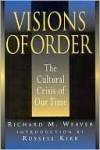
Richard M. Weaver: Visions of Order

The Cultural Crisis of Our Time

ISI Books, 1995 (1964)     Amazon.com

Book Description:

This classic work by the author of Ideas Have Consequences boldly examines the intellectual roots of our current cultural crisis.
JOB’s Comment:
The too exclusive focus on Ideas Have Consequences does not, in my view, do full justice to this conservative and classical idealist thinker. There is a significant development in his work, both with regard to his general philosophy and his view of rhetoric, and the resulting revised positions can be clearly seen in Visions of Order. In some respects, this book can be defended as containing deepened and more nuanced insight. Platonism has been supplemented and modified by an element of historicism.

Charles Taliaferro: Consciousness and the Mind of God

Cambridge University Press, 2005 (1994)     Amazon.com

Book Description:

Contemporary materialist accounts of consciousness and subjectivity challenge how we think of ourselves and of ultimate reality. This book defends a nonmaterialistic view of persons and subjectivity and the intelligibility of thinking of God as a nonphysical, spiritual reality. It endeavors to articulate in a related way the integral relationship between ourselves and our material bodies and between God and the cosmos. Different versions of materialism are assessed, as are alternative, post-dualist concepts of God.
Book Description 2:
A book which introduces readers to substantive terrain in both the philosophy of mind and the philosophy of religion in a clear, not overtly-technical, fashion. It defends with great sophistication the intelligibility of thinking about God as a non-physical and spiritual reality, and challenges popular post-dualist theology.

Front Flap of First Edition:

Consciousness and the Mind of God is especially concerned with the central metaphysical claims about the nature of persons and the implications of these claims for the philosophy of God. Charles Tagliaferro shows that in the contemporary climate there is a widespread view that the insights gained from a philosophy of human persons lead either to a total abandonment of traditional theistic claims about God or to a radical revision of theistic claims about how God relates to the world. Thus, the preponderance of physicalism has led a wide range of philosophers and theologians to reconsider the traditional conception of God as a nonphysical person or person-like reality, ideas about the afterlife, and the Christian doctrine of the incarnation. Some have taken the plausibility of physicalism to be a sufficient ground for embracing philosophical atheism, and thereby rejecting wholesale the fundamental claims of Christianity, Judaism, and Islam. Others have taken the success of a physicalist philosophy to justify treating religion along noncognitive lines. Taliaferro critically examines these oiptions, and defends a nonphysicalist understanding of the God-world relation. He maintains that, while persons are not identical with their bodies, and God is not identical with the cosmos, it remains the case that persons and bodies, God and the cosmos, “exist in a profoundly integral union”. His notions of “integrative dualism” and “integrative theism” seek to avoid some of the extremes of Cartesian and Platonic dualism.

Blurbs on Back Cover of First Edition:

“Charles Taliaferro’s comprehensive treatise, Consciousness and the Mind of God, is baseed upon a sophisticated critique of materialism, particularly in its most developed contemporary forms. That critique would be of use to students of metaphysics and of contemporary philosophy, whatever their interests in theism might be. The author’s positive views on the subject are suggestive and original, making it clear that a devastating critic may also be a highly constructive thinker. This is a significant philosophical work.” – Roderick M. Chisholm, Professor of Philosophy, Brown University

“Taliaferro’s project to examine the significance of recent philosophy of mind for philosophical theism is ‘an idea whose time has come’. His own positions, integrative dualism and integrative theism, are sensitive, intelligent, well-argued attempts to move dialectically beyond the thesis-antithesis that has characterised the debate between materialists, on the one hand, and dualists and/or theists, on the other hand, for the last half-century.” – Richard E. Creel, Professor of Philosophy and Religion, Ithaca College, New York

“Taking on one of the most liberally used and abused theological terms of contemporary theological discourse – dualism – Taliaferro argues cogently for a more precise understanding, one which can alleviate the curent disenchantment with dualism. His alternative to materialist naturalism focuses and defends what others have dismissed as ‘the blurry folk notion of ourselves’ as spirit and matter. Writing for the educated nonexpert, Taliaferro disputes contemporary arguments that a nonphysical personal God is incoherent. He developes and elucidates and ‘integrative theistic philosophy which avoids the atomism, cosmic-denigration, ad isolationism often associated with traditional theism’. This clear-headed and thoughtfully argued book goes to the heart of current issues in philosophical theology.” – Margaret R. Miles, Bussey Professor of Theology, Harvard University

Reviews:

“This work should attract wide attention. Its extensive learning and careful formulations of arguments advances a position often not taken seriously enough, plus it offers ways to save the central dogmas of Christian incarnation and supports a new way of understanding the Trinity. Highly recommended.” – The Reader’s Review

“He has lucidly and thoroughly explored the issues within the mind/body-God/world analogy. For anyone wishing to investigate the analogy and needing a strong, obvious case for it, this is an excellent book.” – Choice

“…a delight to read…clear, elegant, and compelling…this is a vitally important book.” – The Expository Times

“At present, leadership in the philosophy of mind is largely, if not exclusively, in the hands of naturalists and materialists. There is need and, I believe, also a genuine opportunity for serious, constructive work by Christian philosophers in this vital field of philosophyu. An excellent (and extremely readable) book on the subject is Charles Taliaferro’s Consciousness and the Mind of God.” – William Hasker, Books and Culture

“…an interesting and significant contribution to philosophical anthropology, philosophical theology and Christian apologetics….a first-rate piece of work. It is clearly argued, succinctly written, takes full measure of recent discussions of the topics raised and considers important counter-arguments to the positions taken…both engaging and accessible to anyone who thinks about human nature and God.” – Christian Scholar’s Review

“On balance, this is a highly suggestive book discussing some of the most challenging questions put to the Christian understanding of personhood and the doctrine of God in today’s world.” – Arthur Vogel, Anglican Theological Review

“What we have here, then, is a serious constructive project in philosophical theology. It is carried through with energy, care, and precision; it shows acquaintance with the best recent work in philosophy of mind (and its close materialist cousin, cognitive science), and in philosophical theology; and it is marked throughout by a care for and attention ro the strictly philosophical (principally ontological and metaphysical) import of traditional Christian claims about the matters with which it deals. These are considerable virtues. Taliaferro’s work provides more evidence that the most interesting work in philosophical theology today is being done by those with philosophical rather than theological training…this is a very important book that deserves close and careful reading by philosophers and theologians and that ought to provoke much discussion.” – Paul Griffiths, Journal of Religion

“…demonstrates remarkable boldness…The scope of this book is staggering….this is a well-written and engaging book. Taliaferro has a good grasp of the literature and is engaging the right opponents. He also keeps the reader interested with a brisk pace and frequent subject changes.” – Thomas D. Senor, Canadian Philosophical Review

“His goal is twofold: First, to catalogue the arguments of the various proponents of such scientific materialism…I would say that Taliaferro admirably achieves his first goal. I do not know of any similar catalogue of the various contemporary arguments of scientific materialism.” – Commonweal

About the Author (from Wikipedia):

Charles Taliaferro is an American Philosopher specializing in Theology and Philosophy of Religion. He is a Professor of Philosophy at St. Olaf College, a Senior Research Fellow at the Institute for Faithful Research. and a member of the Royal Institute of Philosophy. He is the author or co-author, editor or co-editor of fifteen books, most recently The Image in Mind: Theism, Naturalism and the Imagination (Continuum), co-authored with the American artist Jil Evans.

JOB’s Comment:

Some terminological confusion, but an important book. The author and I once planned to meet in Philadelphia but some obstacle appeared. It was an APA conference of the size and kind where it was quite possible for both to be present and yet not meet. I hope there will be some other opportunity in the future.

The Meaning of Materialism

Keith Ward on Materialism, 14     1  2  3  4  5  6  7  8  9  10  11  12  13

Having dismissed the theoretical arguments for materialism, Ward turns to what he is inclined to see as its real causes and underlying motivation, “the raw nerve and the emotional powerhouse of materialism”: What really drives much materialist philosophy is rage at the injustice and indifference of the universe. Things happen to people by chance; the innocent suffer and the evil flourish. There is too much suffering and pain in the universe for it to be designed by any half-way benevolent being. Better, then, to postulate unconscious laws operating without benevolent purpose, than to think of there being a great intelligence that has intentionally planned such pain and pointlessness.”

Theory remains, however, also when Ward focuses on the materialists argument from evil and suffering against the “great intelligence”, rather than on the question of the existence of matter as conceived by classical materialism. This is partly because materialism for Ward means primarily the rejection of the position that reality is ultimately spiritual, even though that position may also accept that there is some such a thing as matter as conceived by classical materialism. This is Ward’s broad category of idealism: any position that accepts the ultimacy of spirit is idealism, regardless of whether or not it accepts non-ultimate classical-materialist matter, i.e. their matter without their materialism (difficult as that may be).

I would prefer to define idealism more narrowly, as excluding also non-materialist, non-ultimate, classical-materialist matter. A distinction should be made between on the one hand materialism, the affirmation of classical materialist matter and the concomitant rejection of ultimate spiritual reality or even any spiritual reality, and on the other what could perhaps be called “matterism”, the mere affirmation of classical-materialist matter as such or indeed of any matter which shares at least some of the characteristics of classical-materialist matter, regardless of the position with regard to ultimate spirituality.

Of course, “matterism” is not a very felicitous term. First of all, it seems to signify precisely the same thing as “materialism”. But what I intend it to mean is simply the affirmation of the existence of matter in any form that is incompatible with the kind of idealism I think might be defended – which, I add, does not include classical idealist conceptions of matter, which are quite different from the classical materialist one. It would be better to speak of this not as an “ism”, and instead only of materialism as an “ism” that takes such affirmation so far as to assert such matter as the ultimately and perhaps exclusively real.

But it is inconvenient to have to repeat “the affirmation of the existence of matter in any form that is incompatible with the kind of idealism I think might be defended” each time this is referred to. A separate term signifying this is needed in order to avoid it, as well as avoiding the loose usage of “materialism” about any affirmation of the reality of matter regardless of the larger philosophical context. And it is impossible to take consistently the position that all “isms” are extreme exaggerations: “ism”-words must be used for all kinds of positions that are not of this kind at all. Thus matterism in itself is not an extreme and unusual position like materialism. It is compatible with Ward’s broadly defined idealism, which is not extreme either. Idealism more narrowly defined may be less common and is certainly viewed as extreme by many who have not studied it deeply yet are certainly not materialists. But positions that from some perspectives appear extreme cannot of course for that reason be rejected in philosophy. This holds for materialism too. Its extremism and unusualness in the perspective of the history of philosophy as well as contemporary philosophy which Ward has discussed is not, as Ward is of course aware, in itself a sufficient argument against it. For these reasons, “matterism” might perhaps be an admissible and useful term in discussions like this one. But other and better suggestions are welcome.

The argument against the “great intelligence”, remains, as I said, theoretical. But it is non-theoretical and based on the motives Ward is here beginning to describe and analyse inasmuch as it implies the affirmation of materialism in the sense of the position that what exists instead of that intelligence is matter. Even though the ultimate spiritual reality is rejected on the basis of experienced evil and suffering, this does not in itself imply that classical materialist matter takes it place in being made ultimate.

Thus something like classical-materialist matter is commonly brought in despite the weaknesses of the distinct arguments in favour of it as such. Perhaps the position resulting from the simultaneous rejection of ultimate spirituality and classical-materialist matter would still seem to resemble too much some other kind of idealism: the “unconscious laws” mentioned by Ward must be the laws of classical-materialist matter. But in view of the theoretical difficulties of such materialism, this affirmation cannot be accounted for except by the emotional factors involved, alongside the theoretical argument from evil, in the rejection of ultimate spirituality.

“These are entirely serious points”, Ward notes. “If the universe is morally unjust and indifferent to suffering, that counts strongly against the existence of a just and compassionate God. But perhaps part of the trouble is that we think of a cosmic mind as able and wanting to avoid all suffering, and as immediately and directly rewarding the good and punishing the wicked. For a moment, set such an overtly religious but basically naïve picture to one side, and think just of a consciousness that conceives all possibilities and generates a universe directed to evolving other intelligent information-processing intelligences.”

As we have already seen, Ward thinks in terms of Christian or Biblical creation, and we have also seen that although he certainly rejects “matterism” as the affirmation of classical-materialist matter, he accepts as congruent with his broader idealism (i.e., in his case, the affirmation of God as ultimate spirituality) some other form of matter more congruent with contemporary physics. Although it is unclear what that matter is, not least as Ward himself in fact, as I have pointed out, adduces arguments which would seem to be in favour of the rejection of any and all matterism, it is necessary to stress that matterism should be defined as including also the affirmation of modified, contemporary versions of matter which still, if this is possible, retain some of the metaphysical characteristics of classical-materialist matter that are relevant here.

Because of his acceptance of such non-ultimate and modified matter, Ward speaks of a generation and evolution of “other intelligent information-processing intelligences”, which involves and presupposes that alternative matter. This is a very different idealist position from the one I think could be defended. The broader idealism is somewhat hampered by the religious image-thinking of exoteric Biblical creation-theology, notwithstanding the expression of the latter in terms of evolution.

But what we are concerned with here is the analysis of materialism, and although the difference has to be pointed out for the sake of clarity, it is less important than the specific arguments Ward presents for the purposes of that particular analysis, arguments which are of importance for idealism in general, including the one I would try to defend. My point about materialism and matterism, or the proper meaning of materialism, is a minor one in this connection.

Ward is moving on here to the important analysis of what “really drives” materialism as the affirmation of matter, classical-materialist or modified, as ultimate or even exclusive. And this turns out to be the theoretical arguments for the rejection of spirit or God as ultimate that are not the specific theoretical arguments for materialism themselves, and that, as Ward will show and signals by his use of the words “raw nerve”, “emotional powerhouse”, and “rage”, are almost always combined with the motives that, without theory, reach for materialism as a replacement.