Category: Spirituality
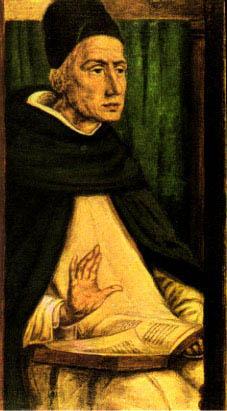
Albertus Magnus

Annie Besant

Besant (1847-1933) skrev bl.a Why I Am a Socialist (1896), Why I Became a Theosophist (1889), Annie Besant: An Autobiography (1893), Karma (1895), In the Outer Court (1895), Man and His Bodies (1896), The Ancient Wisdom (1897), Dharma (1898), Evolution of Life and Form (1898), Avataras (1900), The Religious Problem in India (1901), Esoteric Christianity (1901), Thought Power: Its Control and Culture (1901), A Study in Consciousness: A Contribution to the Science of Psychology (1904), Theosophy and the New Psychology: A Course of Six Lectures (1904), Death – and After? (1906), An Introduction to Yoga (1908), Elementary Lessons on Karma (1912), A Study in Karma (1912), Initiation: The Perfecting of Man (1912), Giordano Bruno (1913), Man’s Life in This and Other Worlds (1913), Theosophy and Life’s Deeper Problems (1916), The Doctrine of the Heart (1920), The Future of Indian Politics (1922), The Life and Teaching of Muhammad (1932).
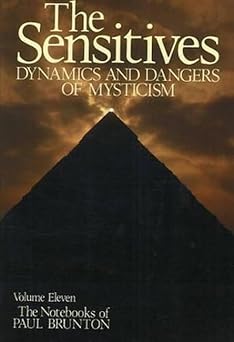
Paul Brunton: The Sensitives
Dynamics and Dangers of Mysticism
The Notebooks of Paul Brunton
Volume Eleven

Larson, 1987
Back Cover:
The psychical is concerned with imaginations, visions, voices, thoughts, and feelings which originate beneath the surface of the ego’s mind, whereas the spiritual is concerned with the higher self. The two are not the same but utterly different in quality and character…the mediumistic…is the same as the psychical but influenced or possessed by what purports to be someone else’s ego, often someon unknnown and usually unseen, or even by what purports to be from the realm of the spiritual itself.
– Paul Brunton
The Sensitives is a timely, informed evaluation of mysticism, “paranormal” experience, sects and cults. Grounded in a clear distinction between productive spiritual practice and dangerous fascination with the occult, it reports on
– How to distinguish self-flattering illusion and spiritual intuition.
– What draws people (leaders and followers) to religio-mystical cults and practices.
– How to distinguish authentic spiritual teachers from self-deluded cult leaders and dogmatic religionists.
– How to incorporate the mystical and the rational in creative harmony.
The Sensitives is the eleventh volume in The Notebooks of Paul Brunton.
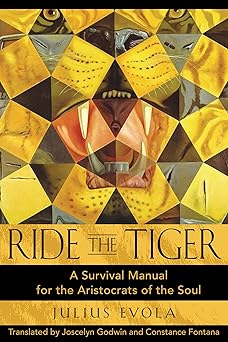
Julius Evola: Ride the Tiger
A Survival Manual for the Aristocrats of the Soul

Inner Traditions, 2003
Back cover:
“A dazzling and interesting, but very dangerous author…”
Hermann Hesse, author of Siddhartha
“One of the most difficult and ambiguous figures in modern esotericism.”
Richard Smoley, in Parabola
“Evola looks beyond man-made systems to the eternal principles in creation and human society. The truth, as he sees it, is so totally at odds with the present way of thinking that it shocks the modern mind.”
John Michell, author of The New View Over Atlantis
Front flap:
“It is one of Evola’s greatest merits that he combines a prodigious wealth of erudite detail with the gift of isolating from their local conditioning the ideas or disciplines that are of value to us.”
Marguerite Yourcenar, author of Memoirs of Hadrian
“Evola rises above the usual dichotomies of left and right, liberal and conservative, challenging us to reconnect our lives and our institutions to the timeless spiritual standard that guided our ancestors.”
Glenn A. Magee, author of Hegel and the Hermetic Tradition
The organizations and institutions that, in a traditional civilization and society, would have allowed an individual to realize himself completely, to defend the principal values he recognizes as his own, and to structure his life in a clear and unambiguous way, no longer exist in the contemporary world. Everything that has come to predominate in the modern world is the direct antithesis of the world of Tradition, in which a society is ruled by principles that transcend the merely human and transitory.
Ride the Tiger presents an implacable criticism of the idols, structures, theories, and illusions of our dissolute age examined in the light of the inner teachings of indestructible Tradition. Evola identifies the type of human capable of “riding the tiger,” who may transform destructive processes into inner liberation. He offers hope for those who wish to reembrace Traditionalism.
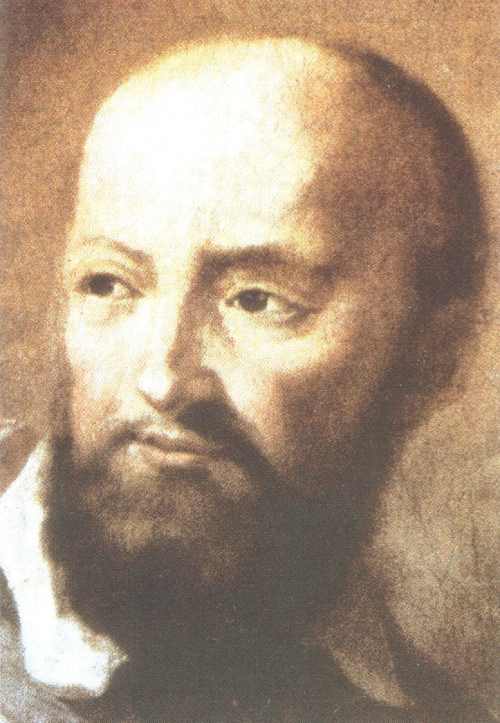
François de Sales

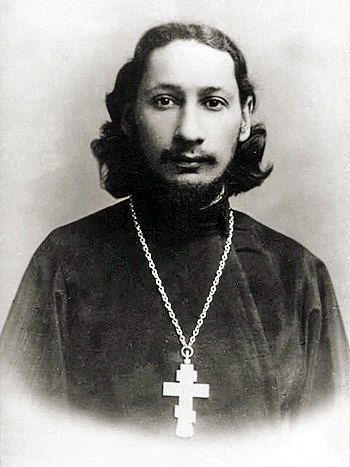
Pavel Florensky

Walter Hilton

Pseudo-Dionysius

Madame Acarie