Category: Spirituality
Tauler
Joscelyn Godwin: The Golden Thread
The Ageless Wisdom of the Western Mystery Traditions

Quest Books, 2007
Publisher’s description:
The Golden Thread traces the interconnectedness of esoteric wisdom in the Western world, from classical antiquity to contemporary Europe and America. Joscelyn Godwin lends personal perspective to an arrangement of text that is historical and wisdom that is timeless, creating a source of inspiration that calls us to action in our everyday spiritual practice. Every chapter, therefore, makes reference to some aspect of contemporary life and issues of immediate concern. Elegantly written and not without irony and humor, readers will appreciate the non-threatening tone of Godwin’s writing, which is not meant to preach or convert but rather inform the public on an often baffling field. Educated readers who are curious about the esoteric and mystery traditions and interested in finding surprising, new approaches to subjects that veer away from the trends of current thought will be particularly drawn to this book.
Back cover:
Godwin is a modern psychopomp, leading us into the secret chambers of the ancient world.
Gary Lachman, author of In Search of P. D. Ouspensky
The ancient sages of the Western Mystery Traditions passed on a knowledge beyond reason, allowing us to access transcendent states that reveal our own nature and that of the cosmos. Such sages exist in every age and elevate all of humanity, says Joscelyn Godwin, whether we realize it or not. Among those whose wisdom he traces from antiquity to the present include [sic]:
– Hermes Trismegistus
– Zoroaster
– Orpheus
– Pythagoras
– Plato
– the Gnostics, the alchemists
– and the Rosicrucians, Freemasons, and Theosophists
Each stage is always with us, Godwin emphasizes, and so each offers a potential source of inspiration and action for today.
“Joscelyn Godwin’s clear voice guides and expands our understanding in unexpected and rewarding ways, illuminating fascinating and little explored areas of the perennial philosophy.”
John Major Jenkins, author of Unlocking the Secrets of 2012
“Thoughtful and thought provoking, this is a delightful and erudite collectio of gently subversive essays – a book to savor.”
Arthur Versluis, author of Magic and Mysticism
Joscelyn Godwin, Ph.D., a widely respected authority of Western esotericism, is professor of music at Colgate University and author of The Theosophical Enlightenment. His translation of the Renaissance allegory Hypnerotomachia Poliphili was featured in the best-selling mystery, The Rule of Four.
Miguel de Molinos
Sadhu Sundar Singh

Perennialistiskt minimum
Begreppet philosophia perennis, lancerat av den kristne platonisten Agostino Steuco med hänvisning till Ficino, upptaget av Leibniz, välkomnat i den esoteriska traditionen, upptaget även av nythomismen, förstärkt av den traditionalistiska skolan, och nående en större läsande allmänhet genom Aldous Huxley, bär på grund av denna historia vad som kan uppfattas som en tung last av betydelser som långtifrån alltid är lätta att tillägna sig och heller inte alltid är uppenbart och självklart giltiga och sanna.
Därför kan det vara lämpligt att initialt betona den mer elementära innebörden av detta begrepp, ett minimum som är oberoende av de olika utformningar och bestämningar vi finner hos dessa tänkare och skolor.
Man kunde säga att den mest grundläggande betydelsen helt enkelt är att det är som det är, och med detta mena att den yttersta verkligheten, den som västerlandets distinkta akademiska skapelse, filosofin, försöker behandla inom metafysiken, existerar och är beskaffad på ett visst bestämt sätt och inte på ett annat. Detta är ett absolut minimum, så litet att den enda ståndpunkt som inte är förenlig med den är ett slags extrem irrationalistisk nihilism av ett slag som nödvändigt innefattar eller kanske är reducerbar till en blott semantisk irrationalistisk nihilism som omöjliggör all språkligt kommunicerad filosofi.
Varken skepticismen, agnosticismen, subjektivismen, relativismen eller solipsismen motsäger nämligen såvitt jag kan se detta. Att säga att vi inte kan veta något om den yttersta verkligheten är naturligtvis inte detsamma som att säga att den inte finns och inte är beskaffad på ett bestämt sätt och inte på ett annat: det är att säga att den yttersta verkligheten är beskaffad på det bestämda sättet att vi inte kan veta något om den. Men detta är självmotsägande: man säger sig veta om den yttersta verkligheten att den är beskaffad på sådant sätt att vi inte kan veta något om den.
Här bör parentetiskt tilläggas att agnosticismen historiskt också har visat sig självmotsägande på en lägre logisk nivå. Den har såvitt jag förstår exempelvis hävdat att det kan finnas en allsmäktig Gud, men att vi inte kan veta något om det. Men om agnosticismen accepterar att det kan finnas en allsmäktig Gud, måste av allmaktens definition följa att denna Gud kan ge oss kunskap om sin existens. Skulle det förhålla sig så att denna Gud finns, är det således principiellt möjligt för oss att veta det, och agnosticismen faller.
Det vaga allmaktsbegreppet är naturligtvis religiöst snarare än filosofiskt, och har givits problematiska filosofiska definitioner. Men argumentet mot agnosticismen är egentligen inte beroende av det. Agnosticismen tvingas helt enkelt säga att den inte accepterar att det kan finnas en Gud som kan ge oss kunskap om sig själv; att, vad denna Gud än i övrigt kan eller inte kan göra, kan han inte göra detta. Men på vilka grunder kan agnosticismen hävda detta? Den kan ju inte säga att den vet det.
Att säga att det inte finns någon yttersta verklighet eller att vi inte kan veta om det finns någon yttersta verklighet är självmotsägande – det är påståenden om den yttersta verkligheten. Att säga att den yttersta verkligheten är beskaffad på ett sätt vid en tid och på en plats och på andra sätt vid andra tider och på andra platser, eller att den förändras av oss, vår kunskap, vårt perspektiv, vår spatiotemporala situeradhet, våra mänskliga egenskaper, vår kulturella betingelse, vår vilja eller vår verksamhet – allt detta utsäger också på en s.a.s. högsta – yttersta – betydelsenivå att den yttersta verkligheten existerar och är beskaffad på ett visst sätt och inte på ett annat. För alla dessa ståndpunkter gäller faktiskt, förefaller det mig, på denna nivå att den yttersta verkligheten är objektivt given och kan upptäckas av eller avhöljas för oss.
Att förstå alla de ovan nämnda tankeriktningarnas nödvändiga affirmation av denna sanning är kanske i sig ett icke oväsentligt filosofiskt och i vid mening rationellt minimum, eftersom deras självmotsägande eller, i de flesta av fallen, s.k. självrefererande innebörd, såväl som innebörden av självreferentialiteten i sig, ännu ofta ser ut att vara otillräckligt förstådda. Det innebär redan ett erkännande av sanningen och dess objektivitet, och även ett mått av delaktighet i den. Logos visar sig närvarande även där man försöker förneka det.
Ett perennialistiskt minimum måste således innefatta sanningen att det är som det är. Men eftersom denna sanning på de sätt jag beskrivit också bejakas av alla de ovan nämnda riktningarna, liksom naturligtvis även av materialismen o.s.v., måste ett perennialistiskt minimum för att vara meningsfullt och användbart omfatta mer. Det räcker inte att säga att den yttersta verkligheten är och att den är som den är. Åtminstone något för perennialismen specifikt måste också utsägas om hur den är.
Här kan man dock för många syften fortfarande hålla kriteriet mycket begränsat och allmänt, så att det verkligen förblir en fråga om, och är meningsfullt att tala om, just ett minimum. Den traditionalistiska skolan, d.v.s. den inledningsvis nämnda specifika riktningen i den vidare perennialistiska strömning som generellt måste sägas vara traditionalistisk i en likaledes bestämd men dock vidare mening, ställde sig ofta – i synnerhet Guénon – avvisande till begreppet idealism. Guénon förknippade det med det allmänna filosofiska “skol”-väsendet och -fenomenet, inte bara i den moderna akademiska världen utan redan hos grekerna. Ja, för Guénon är det karaktäristiskt för filosofin som sådan, som i sig är en del av och konstitutiv för en distinkt antitraditionalistisk dynamik i västerlandet.
Till detta kommer Guénons uppfattning av en specifik typ av dualitet av idealism och materialism som en karaktäristisk produkt av denna antitraditionalistiska, relativistiskt skolproducerande filosofi. Sannolikt måste denna uppfattning ifrågasättas, och såväl idealismen som filosofin i allmänhet definieras på sätt som undviker dessa begränsningar. Både perennialismen som traditionalismen är i viss mening nödvändigt implicita i idealismen förstådd på detta sätt, oavsett vilka invändningar man av historiska eller andra skäl må ha mot dessa termer såväl som mot idealismen.
Även Coomaraswamy avvisade Guénons uppfattning på dessa punkter, och lyfte fram aspekter av västerlandets klassiska tänkare som Guénon överhuvudtaget inte berörde. På denna punkt är Coomaraswamy en mer typisk representant för den vidare perennialistiska störmningen i vad som trots Guénon fortsatt kallas den traditionalistiska “skolan”. Det måste sägas att även utvecklingen inom den guénonska traditionalismen visar att i synnerhet i det samtida västerlandet skoldifferentieringen och därmed skolbegreppet är nästan omöjliga att undvika. Också andra avvikelser från Guénon inom traditionalismen gör detta uppenbart.
Till det perennialistiska minimum hör således, vill jag här föreslå, uppfattningen att den verklighet som är som den är också är på det sätt som idealismen i dess mest allmänna definition, innefattande inte bara den moderna idealismen utan den platonska traditionen, aspekter av vissa högtstående delar av den västerländska esoterismen och mystiken, Vedanta, och motsvarande sanningar i jämförbara icke-västerländska traditioner, anger att den är. Minimum kan således sägas utgöras av allmän rationalitet i vid mening, allmän objektivism, d.v.s. objektivism på den högsta logiska nivån, och allmän idealism (som ger en mer specifik, högre innebörd också åt rationaliteten och objektivismen).
På detta sätt kan vi, tror jag, erhålla ett minimum som med undantag för den irrationalistiska nihilismen, skepticismen, agnosticismen, subjektivismen, relativismen, solipsismen och materialismen och dess varianter kan förstås som liggande bortom den filosofiska skolmångfalden såväl som bortom vad moderniteten förstår som religionerna och de religiösa konfessionerna, men som likafullt är tillräckligt innehållsligt bestämt för att vara inte bara meningsfullt utan i hög grad nödvändigt i dagens filosofiska, allmänintellektuella och kulturella klimat.
Att föredra att hålla sig till filosofin och tala om idealism, och även fördjupa sig i de västerländska skolskillnaderna inom den allmänt definierade idealismen, är givetvis naturligt för västerlänningar som är formade av och arbetar i en specifik, konkret, av den västerländska kulturen bestämd historisk situation. Det är lätt att se problemen med vissa av de associationer som philosophia perennis-begreppet av historiska skäl kan ge, såväl som med de ensidigheter det perennialistiska traditionalismbegreppet kan uppfattas som representerande i just den historiska situation där det nyskapande i en mer allmän traditionalism – men innefattande också den specifika traditionalistiska skolans metafysiska sanningars fenomenella manifestationsformer – måste betonas i sådan utsträckning att denna traditionalism kan definieras som konvergerande mot vad som kan kallas en alternativ modernitet.
Men att av dessa skäl föredra att tala om idealism behöver alltså inte innebära att den försvarade ståndpunkten är oförenlig med de perennialistiska strömningarnas allmänna sanningar och metafysiska essens. Dessa kan tvärtom betraktas som en del redan av idealismens definition.
Da Free John: “I” is the Body of Life
Talks and Essays on the Art and Science of Equanimity and the Self-Transcending Process of Radical Understanding
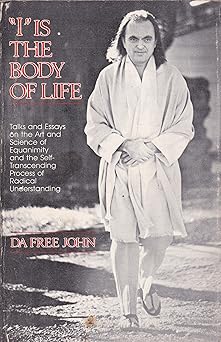
Dawn Horse Press, 1981
Publisher’s Presentation:
Consider the “I” and understand. “I” is Narcissus, the self-contraction, or the avoidance of relationship. “I” does not know what anything is. “I” is not an observer that is utterly separate from anything. “I” is, therefore, incapable of ultimate knowledge. “I” is the body. “I” is the context of ordinary association with phenomena. “I” is itself part of the total world of phenomena. “I” is the activity of contraction, separation, and independence. “I” is the effort to be different from and immune to the limitations of phenomenal existence. “I” seeks independent self-satisfaction via forms of knowledge and experience. “I” cannot be satisfied, fulfilled, or released. “I” is itself and inherently a problem. “I” is an inappropriate and futile action in relation to the conditions of phenomenal existence. There is no ultimate option except to understand the “I.” Such understanding, made operative in the context of every moment of phenomenal existence, is free of the dilemma or inherent problem of Narcissus, or the futile effort of “I” to achieve independence, immunity, ultimate satisfaction, perfect fulfillment, complete knowledge, total experience, or permanent release. In every moment the “I” is understood and directly transcended, the body is released from the illusion, the problem, and the activity of “I.” Therefore, in every moment of active understanding, the independent “I” dissolves – by becoming identical to the body. Apart from present understanding, “I” is not transcended, and the bodily Realization of the Radiant Spiritual Divine is impossible. Apart from understanding, the “I” is the basis of all knowledge and experience. Understanding is the Wisdom of the seventh or free stage of life. Therefore, consider the “I” and understand.
JOB’s Comment:
The titles of Jones’s books are not always easy to understand in themselves, without familiarity with his teaching. Some are hard to understand even with such familiarity.
Paul Brunton: Practices for the Quest/Relax and Retreat
The Notebooks of Paul Brunton
Volume Three

Larson, 1986
Back Cover:
Intellectual definitions of transcendental states merely leave us in the dark. We must practice walking on the divine path, and not merely talk about it, if we would know what these states really are.
The world clamours for attention and participation. God alone is silent, undemanding, and unaggressive.
– Paul Brunton
The third volume of The Notebooks of Paul Brunton is of immediate practical use.
Part 1, Practices for the Quest, goes directly to the heart of exercises, techniques, and mental attitudes useful at various stages of spiritual self-discovery and self-development. It explains what qualities must be developed, why they must be developed, how they can be developed, and how their development will be tested and proved by life itself.
Part 2, Relax and Retreat, lays the cornerstone for amodern life of inspired sanity. It offers simple, effective and viable antidotes for the tensions produced by excessive outer activity and over-attachment to the personal ego.
Hugues de Saint-Victor

Bonaventura

 Olle Bengtsson