Live 1991. From The Yes Album (1971).
Their first and best-known antiwar anthem (see Martin, 67-8).
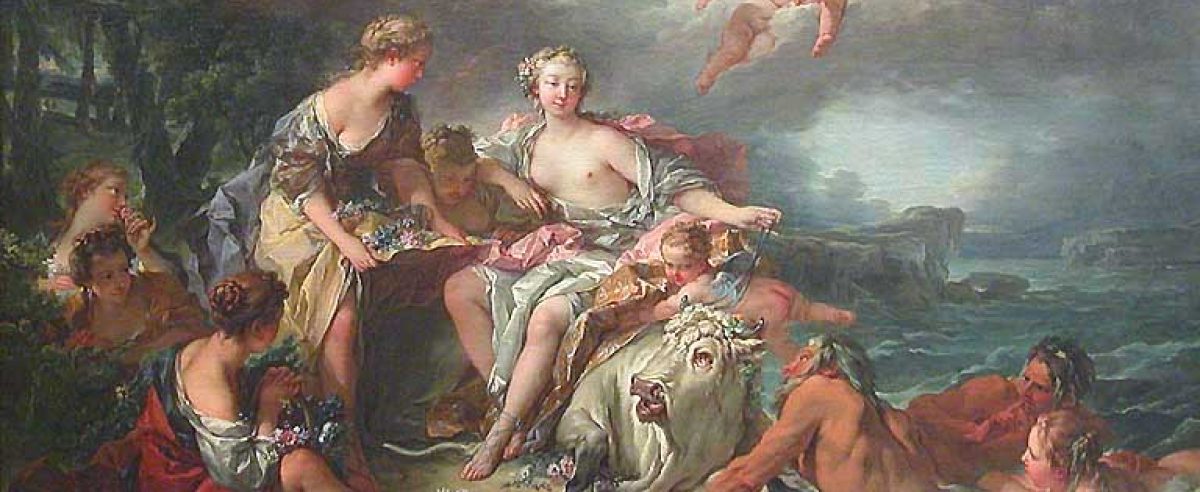
From their album Animals (1977).
The full, one-song album (1972).
In an important interview with Prog, Ian Anderson explained the meaning of and the intentions behind this album, one of prog’s truly classic masterpieces, which had always been more or less misunderstood.
But characteristically, he still to some extent seems to misunderstand the nature and significance of the emerging new genre of progressive rock. Indeed, not least through the to a considerable extent irrelevant comparisons with Weather Report and Mahavishnu Orchestra, he underplays what it was all about, what it was developing into in the early 70s. This is unwarranted also with regard to his own and Tull’s brief, more purely prog period, of which this album is the pinnacle. He short-sells himself, the band, and the remarkable achievement that this period represents.
At the same time his misconception must clearly have to do with the fact that even at this time, Jethro Tull did not quite represent the fully distinctive, independent and deliberately and consciously developed prog of the kind that Genesis, for instance, had by then already attained. Only this album – considered as an objective result, irrespective of Anderson’s own understanding and intentions – reaches the same level. I.e., only on this album is it possible to hear clearly what this genre could be further developed into.
Från deras album Nursery Cryme (1971).
Genesis’ imaginativa orientering måste, som jag flera gånger nämnt, diskuteras, och i prog-sammanhanget gärna, för tydlighetens skull, i jämförelse med Yes’. Den är givetvis ett centralt moment i deras helhetliga artistiska vision. Men liksom i fallet Pink Floyd reducerar den inte den musikaliska kvaliteten. Detta är s.a.s. “seriös” musik i jämförelse med det myckna lättviktiga – inte därmed oviktiga, och naturligtvis inte heller ointressanta eller värdelösa, men just lättviktiga – inom den s.k. “klassiska” musiken, tidigare epokers pop.
Det här är en av de saker som är så viktiga att förstå. Musik blir inte bra, för att inte tala om “klassisk” i en av de två egentliga betydelserna, bara för att den blir äldre, blir kulturhistoria. Den banalaste och trivialaste pop av olika slag från 1900-talet har idag blivit vad som uppfattas och behandlas som s.k. “finkultur”. Men just detta är vad som också hänt, utan urskillning eller åtminstone tillräcklig urskillning, med hela den äldre s.k. “klassiska” musiken.
Därför finns ofta, ja nästan alltid, i musikkritiska sammanhang anledning att peka på och påminna sig om det som förblir lättviktigt, ja det som förblir mediokert i äldre tids musik, och vars felaktiga värdering förskevar receptionen av det viktiga nya. Och detta handlar om mer än modernistens gamla predikament.
Inte heller all tidig prog är viktig, intressant, tungviktig, “bra”, bara för att den tidiga proggen generellt, som genre, var det. Men problemet skärps i dess fall p.g.a. den ofta delvis giltiga men lika ofta malplacerade eller felanvända distinktionen mellan det seriösa och det populära och deras olika definierande genremässsiga och övriga kännetecken och deras allmänna kulturella konnotationer. Demarkationslinjerna utgör här alltför ofta hinder för den egentliga och djupare musikaliska förståelsen, och fastän det ignoreras i den allmänna oreflekterade uppfattningen är den rent genre- och epokmässiga determinationen av musikalisk kvalitet givetvis en högst begränsad faktor.
From their album Red (1974).
This was originally intended to be the title track of their previous album, Starless and Bible Black, which was released earlier the same year, but was considered insufficiently developed at that time and hence included instead, with a shortened title, on Red.
Title and opening track of their 1978 album.
The album also ends with a shorter, second part of the song.
In a comment on YouTube, @m.m.898 writes:
“Ich erinnere mich immer noch emotional sehr genau, als ich den Song ‘Age of Madness’ zum ersten Mal hörte: Es war auf dem Jane Konzert im April 1978 vor ca. 4000 Fans in der Stadthalle Bremen. Es war der Opening-Song. Die Halle ganz dunkel und nur ein Spot auf [keyboardist] Manfred Wieczorke gerichtet – er wirkte in seinem weissen Gewand cool und völlig abgespaced. Die hatten damals mit Quadrophonie P.A. gearbeitet, daher dröhnten die Synthies aus alle vier Hallenecken. Dieses Intro hat mich total geflashed. Dann ging der Song los und die Band erschien in Nebel und spacigem Bühnenlicht. Die LP kam erst eine Woche später in die Plattenläden, daher kannte noch niemand den Song auf dem Konzert. Ein Wahnsinns-Opening und nie wieder hatte die Band eine so große Bühnentechnik. Die 78er Tour war der Höhepunkt von Jane – unvergesslich!”
Playing the Fool – The Official Live (1977)
The Complete Live Experience
“Triple Vinyl LP / 2-CD Set / 2-CD + Blu-ray Set
Available in 96/24 Stereo, 5.1 Surround Sound & Dolby Atmos
The iconic 1977 live album, now fully reimagined, mixed, and mastered for an immersive experience!
Originally released in January 1977, Playing The Fool captured Gentle Giant at the peak of their live performance prowess. Now, over 45 years later, the beloved live album has been re-imagined, mixed and mastered, bringing a fresh level of clarity and depth to the Gentle Giant live experience.
Produced by Dan Bornemark, who has worked extensively with the band on archival projects, The Complete Live Experience captures the full scope of the band’s artistry as they were meant to be heard, including restored in-between-song commentary, band introductions and authentic venue ambience. It features the complete full original setlist, plus three unreleased tracks – Interview, Timing and Ray Shulman’s solo violin feature.
Available as a triple LP, double CD and triple CD/Blu-ray in Dolby Atmos, 5.1 surround sound and 96/24 Stereo, this release gives fans the ultimate Gentle Giant experience as never before, with stunning clarity and spatial audio that places the listener right in the middle of the show. It’s the definitive version of a legendary live performance from one of progressive rock’s most unique and influential bands.”
Live 1991. From their album Close to the Edge (1972).
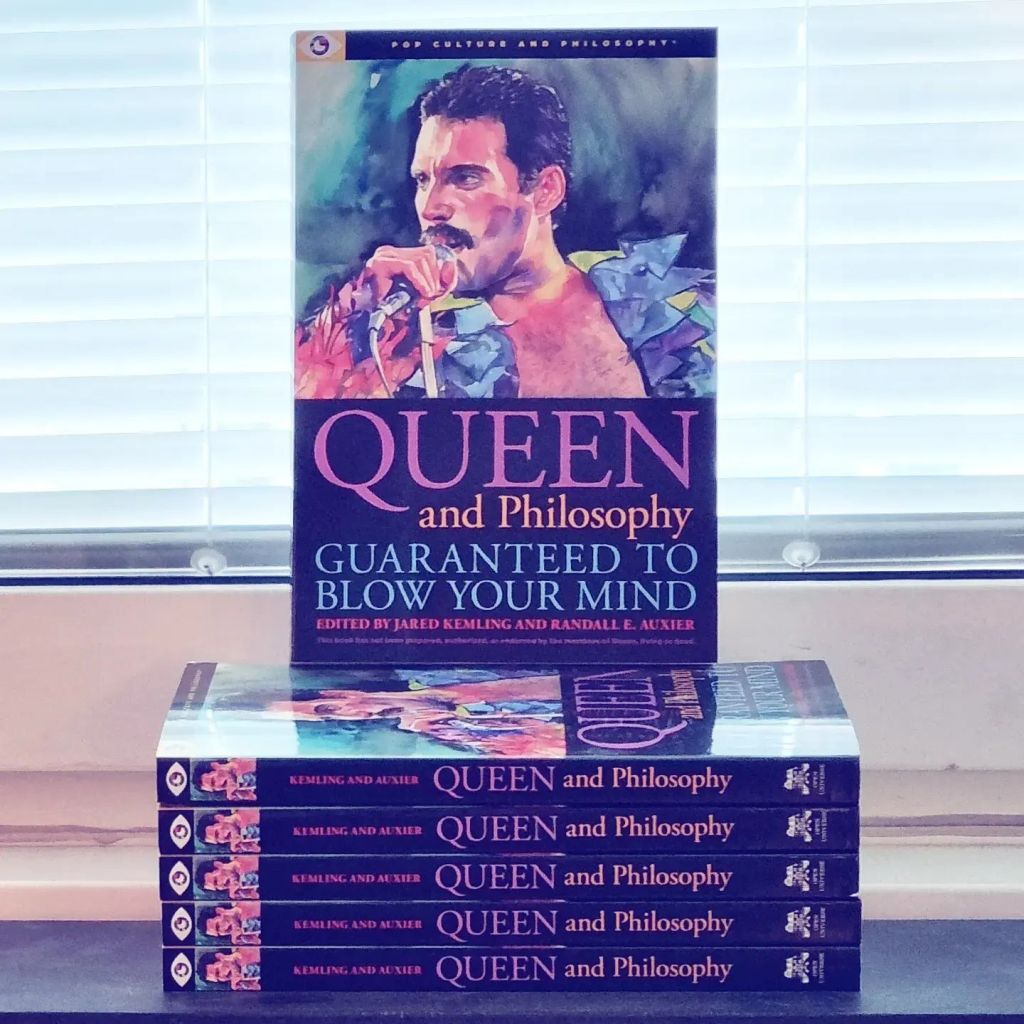
My essay ‘Queen, Prog and Vulgar Romanticism’ will be published in May in Queen and Philosophy: Guaranteed to Blow Your Mind, edited by Jared Kemling and Randall E. Auxier for the Popular Culture and Philosophy series, long published by Open Court but now by Carus Books. The volume is available for pre-order from all major online booksellers. Among them, uniquely this far it seems, Barnes & Noble show the full table of contents. The blurbs are still missing.
 Olle Bengtsson