Category: Arts
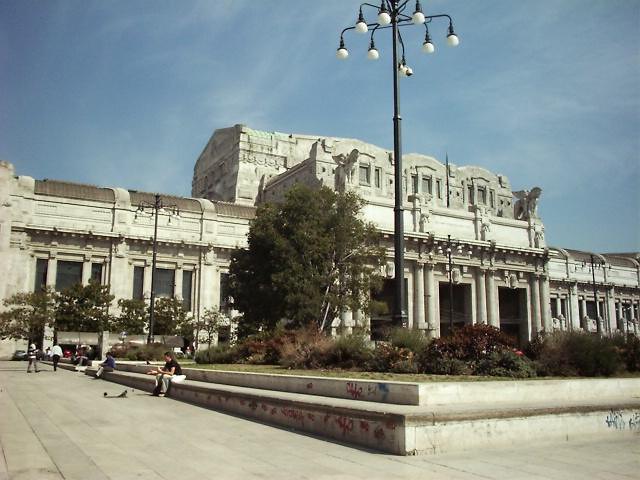
Milano Centrale
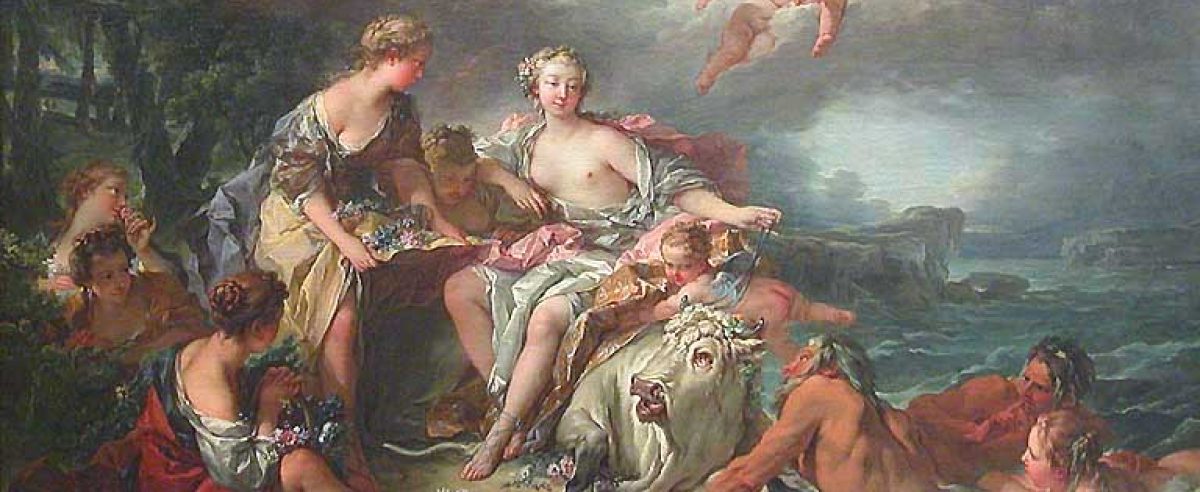
François Boucher: L’enlèvement d’Europe
debitae nymphis opifex coronae
nocte sublustri nihil astra praeter
vidit et undas.
…
Uxor invicti Iovis esse nescis.
Mitte singultus, bene ferre magnam
disce fortunam; tua sectus orbis
nomina ducet.

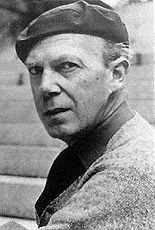
Gunnar Ekelöf
—
http://en.wikipedia.org/wiki/Gunnar_Ekel%C3%B6f
This is a poor Wikipedia article. Ekelöf began as an ordinary, wild, young, radical modernist and surrealist, and this early phase was of course quite as much an expression of romanticism as his later development, although in a different version. He was certainly ill at ease with the established upper and middle classes. But Ekelöf’s poetry increasingly expressed the alienation of the artist from the radical, modernist, and rationalist social engineers and ideologues who during his lifetime came to dominate those classes completely.
The quote from Anders Olsson may or may not express a truth about Ekelöf, but perhaps it represents his application of contemporary literary theory rather than any deep, original grasp of Ekelöf’s poetry (I was present when Olsson defended his thesis on Ekelöf at Stockholm University in 1981). The category of “modernist” poetry is often simplistic and misleading, and should perhaps in some respects be questioned.
Much more needs to be said about Ekelöf’s later work; he became in some respects a kind of mystic. His later collections of poems are endlessly fascinating as artefacts. Admittedly, his mysticism is of the distinctly modern, lower romantic, pantheistic, and erotic kind. But it is hard to find mystical poets of not just the last hundred but the last two hundred years who are not, so one has to work from within this predicament, as it were. And in Swedish twentieth-century poetry, Ekelöf is a good place to start.

Alexander Roslin: Gustav III

1772
Haga: Gustav III’s Pavilion
Haga: The Park
T.S. Eliot Reads Burnt Norton and East Coker from Four Quartets
—
Leonardo Coccorante: Capriccio of Classical Ruins with Figures

De ständigt meningsfulla ruinerna. Rom var ett imperium som förföll, präglat av deras arkitektoniska stil.
Italo Nunes-Vais: Dance of the Butterflies