John Singer Sargent: Lady Agnew


1972


From their album Animals (1977).

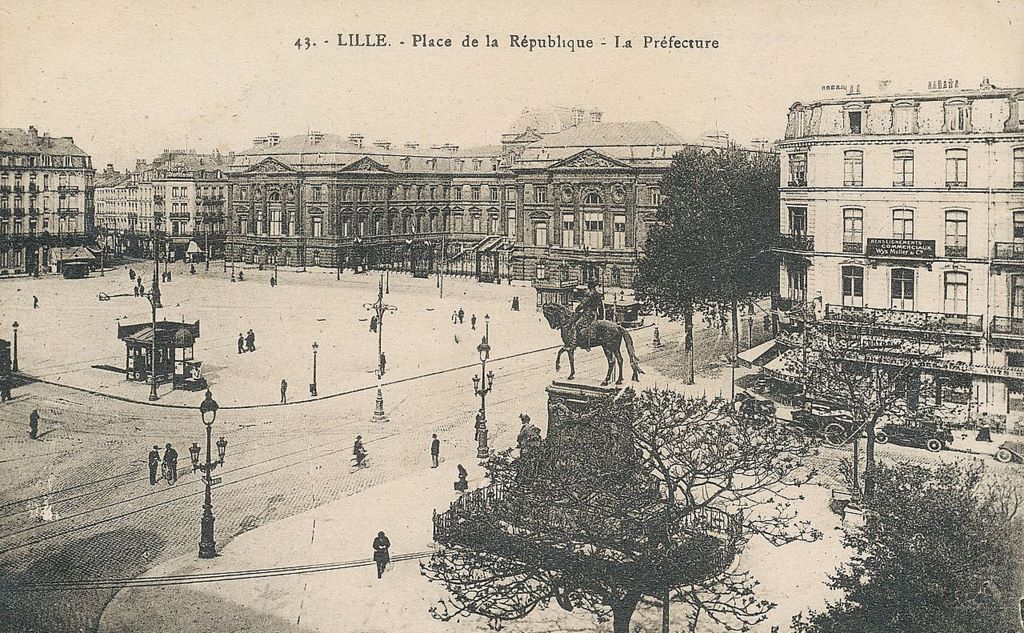
Sedan 1948 Avenue de Stalingrad

The Image-Art of Egoless Coincidence with Reality Itself

The Dawn Horse Press, 2010 expanded edition (2008)
Back Cover:
Right and true art egolessly Coincides with Reality (Itself), Truth (Itself), and The Beautiful (Itself).
Adi Da Samraj
It is a rare artist who can convey, convincingly, the sense of being face to face with the source of being. Adi Da can clearly live in the depths without succumbing to their pressure, bringing back pearls of art to prove it.
Donald Kuspit
Critic, Professor of Art History and Philosophy, State University of New York at Stony Brook
I believe that art should always be a surprise. It must create, even in the critic, not emotion, but a sense of insecurity. When one views Adi Da’s art, it is easy to see “pop art”, “op art”, all the possible linguistic, ethnological, and iconographic references but, in the end, the final work is always a surprise. With Adi Da’s work, I did not simply find myself in front of a new personal iconographic universe but rather in front of images that returned me to an experience of “epiphany”.
Achille Bonito Oliva
Critic, Historian, past Director of the Venice Biennale
That Adi Da challenges our culture to return art to its original, sacred purpose without merely recreating a long lost past makes Transcendental Realism a significant work, not only for artists but anyone who senses the limitations of contemporary culture and strives to create a more vivid way of being.
Celia Rabinovitch
Professor, School of Art, University of Manitoba, Author, Surrealism and the Sacred
[Adi Da’s] pursuit of the spiritual paths found in early abstraction, from Kandinsky to Mondrian, and [his] translation of that pursuit into the digital age, restore a transcendental spirituality to the materialism of the machine aesthetic.
Peter Weibel, Director, ZKM | Center for Art and Media, Karlsruhe
The full, one-song album (1972).
In an important interview with Prog, Ian Anderson explained the meaning of and the intentions behind this album, one of prog’s truly classic masterpieces, which had always been more or less misunderstood.
But characteristically, he still to some extent seems to misunderstand the nature and significance of the emerging new genre of progressive rock. Indeed, not least through the to a considerable extent irrelevant comparisons with Weather Report and Mahavishnu Orchestra, he underplays what it was all about, what it was developing into in the early 70s. This is unwarranted also with regard to his own and Tull’s brief, more purely prog period, of which this album is the pinnacle. He short-sells himself, the band, and the remarkable achievement that this period represents.
At the same time his misconception must clearly have to do with the fact that even at this time, Jethro Tull did not quite represent the fully distinctive, independent and deliberately and consciously developed prog of the kind that Genesis, for instance, had by then already attained. Only this album – considered as an objective result, irrespective of Anderson’s own understanding and intentions – reaches the same level. I.e., only on this album is it possible to hear clearly what this genre could be further developed into.