–
Tuesday, August 6
1:00-3:00
Registration, Tea and Coffee
Room 227
3:00-3:30
Welcome and Conference Information
Jan Olof Bengtsson, Lund University (Sweden)
Gunnar Broberg, Lund University (Sweden)
Room 201
3:30-4:15
Opening Panel on the History and Purpose of the ICP
Thomas O. Buford, Furman University (USA)
Responses:
Randall E. Auxier, Southern Illinois University Carbondale (USA)
Jan Olof Bengtsson, Lund University (Sweden)
Room 201
4:15-4:30
Break
4:30-5:30
Keynote Address
Keith Ward, Oxford University (UK)
Absolute and Personalist Idealism
Room 201
5:30-8:00
Welcome Reception
Room 227
Wednesday, August 7
9:00-10:20
Session A:
O. A. Oyowe, University of KwaZulu-Natal (South Africa)
Velleman and the Dis-guises of Self
Geraldine Ng, University of Reading (UK)
Persons, Agency, and the Operations of Blame
Commentator: Richard C. Prust
Room 202
Session B:
Anthony L. Cashio, Manchester University (USA)
Embracing a Personalist Approach to Environmental Philosophy
Jason M. Bell, University of New Brunswick and Mt. Allison University (Canada)
Toward a Methodology Against Genocide
Commentator: Federico Lauria
Room 109
10:20-10:40
Tea and Coffee
10:40-12:00
Session A:
Robert F. DeVall, Jr., West Chester University of Pennsylvania (USA)
Keeping the “I” in the “I-Thou” Relationship: Pringle-Pattison’s Rejection of an Impersonal Absolute
Douglas McDermid, Trent University (Canada)
Are Selves Sui Generis? McTaggart on Immortality and the Argument from Impermanence
Commentator: Jan Olof Bengtsson
Room 202
Session B1 (10:40-11:20):
Anne Runehov, Copenhagen University (Denmark)
The Process of Believing
Commentator: Eike-Henner W. Kluge
Session B2 (11:20-12:00):
Janne Kontala, Åbo Akademi (Finland)
Eastern Spirituality in Sweden: Identifying Emerging Worldview Patterns Amongst Practitioners
Commentator: Ferdinando Sardella
Room 109
12:00-2:00
Lunch
2:00-3:45
Plenary Panel on Hindu Personalism
Kenneth R. Valpey, Oxford University (UK)
Personhood as Multivalent Reality in Premodern Indian Theography
Ithamar Theodor, University of Haifa (Israel)
Resorting to Aesthetics: The Articulation of Divine Personhood in the Vaishnava Vedanta Tradition
Ferdinando Sardella, Uppsala University (Sweden)
Modern Hindu Personalism
Room 201
3:45-4:30
Tea and Coffee
4:30-5:50
Session A:
Lucian Delescu, Berkeley College (USA)
On Darwin’s Account of Consciousness and its Implications for a General Theory of Person
Victoria Höög, Lund University (Sweden)
Persona and Ethos in Contemporary Technoscientific Cultures
Commentator: Anthony L. Cashio
Room 202
Session B:
Soyoung Park, Independent Scholar, Vancouver, BC (Canada)
Suspended Subjectivity: Artistic Intention in Making Art
Jonnie Eriksson, Lund University and Halmstad University (Sweden)
Realist by Nature, by Nature Abstract: Personalist Aesthetics in Mounier and Henry
Commentator: James McLachlan
Room 109
5:50-6:00
Break
6:00-7:00
Plenary
Juan Manuel Burgos, CEU San Pablo University (Spain)
A New Personalist Proposal: Modern Ontological Personalism
Room 201
Thursday, August 8
9:00-10:20
Session A:
Bogumił Gacka, Cardinal Stefan Wyszyński University (Poland)
Personalism in Brazil
Andris Sevels, John Paul II Catholic University of Lublin (Poland)
Personalistic Mariology of John Paul II
Room 202
Session B:
James Beauregard, Independent Scholar, Manchester, NH (USA)
Neuroethics: A Personalist Approach
Eike-Henner W. Kluge, University of Victoria (Canada)
Personhood, Brain Death and Resource Allocation: The Implications of Aquinas’ Conception of Human Persons
Commentator: Juan Manuel Burgos
Room 109
10:20-10:40
Tea and Coffee
10:40-11:40
Plenary
Fredrik Ullén, Karolinska Institutet (Sweden)
The Creative Person: Neuropsychological Perspectives
Room 201
AFTERNOON FREE
7:00
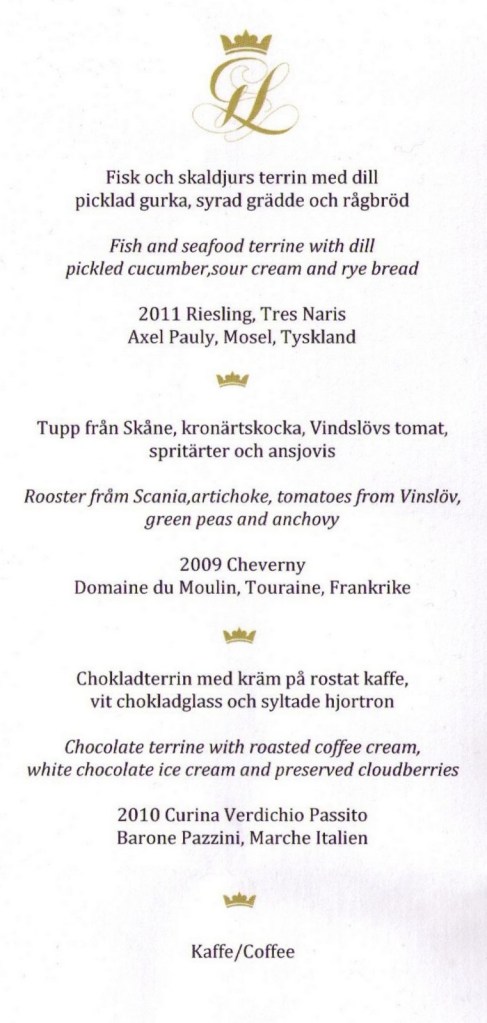
Conference Dinner
Friday, August 9
9:00-10:20
Session A:
Randall E. Auxier, Southern Illinois University Carbondale (USA)
Scheler and the Existence of the Impersonal
James McLachlan, Western Carolina University (USA)
Levinas, the Person, and Eschatology
Commentator: Philip Cronce
Room 202
Session B:
Jerzy Król, State University of Higher Education in Chełm (Poland)
Upbringing and Education from the Personalist Perspective
Inger Enkvist, Lund University (Sweden)
Personalism: Identifying Two Opposite Views of the Teaching Profession
Commentator: Thomas O. Buford
Room 109
Session C:
Agnieszka Gąsior-Mazur, Independent Scholar, Lublin (Poland)
The Development of Person vs. Building the Value of a Company
Ewa Smołka, John Paul II Catholic University of Lublin (Poland)
Openness to Others as a Way of Personal Development
Room 022
10:20-10:40
Tea and Coffee
10:40-12:00
Session A:
Richard C. Prust, St. Andrews University (USA)
The Ragged Edge of our Personal Past
Federico Lauria and Alain Pé-Curto, University of Geneva (Switzerland)
The Situationist Boomerang
Commentator: Michael Thompson
Room 202
Session B:
J. J. MacIntosh, University of Calgary (Canada)
Persons, Identity, and Irenaean Theodicies
Joseph Diekemper, Queen’s University Belfast (Northern Ireland)
Temporality, Creation, and Divine Personhood
Commentator: Eoin O’Connell
Room 109
12:00-2:00
Lunch
2:00- 3:45
Plenary Panel on the Roots of the Philosophical Problem of the Person
Lorenzo Greco, Oxford University (UK)
Hume and the Narrative of the Self
Michael Thompson, University of North Texas (USA)
The Antinomy of Identity: Personal Identity and Time in Modern Philosophy
Daryl L. Hale, Western Carolina University (USA)
Persons as Supra Pretium: Kant’s Neglected Argument for Personalism?
Room 201
3:45-4:30
Tea and Coffee
4:30-5:50
Session A:
Argun Abrek Canbolat, Middle East Technical University (Turkey)
Personhood: From Physical to Social
Simon Smith, Independent Scholar, Haslemere, Surrey (UK)
A Convergence of Cosmologies: Personal Analogies in Modern Physics and Modern Metaphysics
Commentator: Daryl L. Hale
Room 202
Session B:
Ian Winchester, University of Calgary (Canada)
Collingwood’s Conception of Personhood and its Relation to Language Use
Giusy Gallo, University of Calabria (Italy)
Dialogue and Language: The Way to Be a Person
Commentator: Randall E. Auxier
Room 109
5:50-6:00
Break
6:00-7:00
Plenary
Claes G. Ryn, Catholic University of America (USA)
“Idealistic” Dreaming: The Imagination of Unbounded Egotism
Room 201
Saturday, August 10
9:00-10:20
Session A1 (9:00-9:40):
Erik Persson, Independent Scholar, Harlösa (Sweden)
The Catholic Critics of Personalism: Before and After Father Meinvielle
Commentator: Jerzy Król
Session A2 (9:40-10:20):
Philip Cronce, Chicago State University (USA)
Dewey, Rorty, and Honors Education after the Fall of the Academy
Room 202
Session B1 (9:00-9:40):
Susanna Åkerman-Hjern, Independent Scholar, Stockholm (Sweden)
Swedenborg and the Grand Human
Commentator: James McLachlan
Session B2 (9:40-10:20):
Kerstin Maria Pahl, Humboldt University (Germany)
Timing Life: Portraiture and Biography in 18th Century England
Commentator: Jonnie Eriksson
Room 109
Session C1 (9:00-9:40):
Guillermo Barron, Red Deer College (Canada)
Gender and Personhood
Commentator: Giusy Gallo
Room 022
10:20-10:40
Tea and Coffee
10:40-12:00
Session A:
Christina Conroy, Morehead State University (USA)
Branch-Relative Identity
Eoin O’Connell, Manhattan College (USA)
Inferences to Personhood
Commentator: Randall E. Auxier
Room 202
Session B:
Kenny Siu Sing Huen, Universiti Brunei Darussalam (Brunei)
The Crux of Living a Human Life: From Heidegger to Wittgenstein
Alastair Beattie, University of the Andes (Venezuela)
Person as Platonic Idea Form
Commentator: Douglas McDermid
Room 109
12:00-12:10
Break
12:10-12:40
Closing Panel: Conference Overview and the State of the Person
Randall E. Auxier, Southern Illinois University Carbondale (USA)
Jan Olof Bengtsson, Lund University (Sweden)
Thomas O. Buford, Furman University (USA)
Room 201
–
Read more about the 12th International Conference on Persons under Uncategorized or on the conference website.


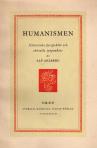 Huvudsyftet med denna skrift är att sätta in den västerländska humanismen i ett större historiskt sammanhang och därmed söka belysa dess egenart och dess situation i dagens läge. Den bäres upp av den övertygelsen, att den humanistiska kulturtraditionen, sådan denna utformats i främsta rummet genom en syntes av det antika arvet med kristendomen, är den stora linjen i vår kultur, på vars bestånd och livskraft hela dess framtid beror. Någon “humanismens historia” vill boken däremot icke vara. Jag har i den del, som jag kallat “historiska perspektiv”, blott dröjt vid de andliga makter, som jag anser mer än andra ha byggt upp den västerländska humanismen, men förbigår mycket, som i en sådan historik borde haft sin givna plats. Större uppmärksamhet skulle jag ha velat ägna den svenska humanismen, ty ehuru den naturligtvis är blott ett skott på den allmänna västerländska humanismens vittförgrenade träd, företer den likväl vissa bestämda och karaktäristiska drag. Men en särskild framställning av den skulle ha sprängt skriftens ram.
 After the one in the




 “The question of what it is to be a human person is the biggest intellectual question of our day.” Keith Ward has taught philosophy and theology in British universities for the past 40 years, and he is now weighing in on a major intellectual battle: whether human persons are purely materialistic – nothing but matter – or whether there is another, deeply valuable part of us, which transcends our bodies in nature and moral worth: the soul. For centuries philosophers have debated the question, but the battle has taken the limelight through the works of the New Atheists. In this book Professor Ward guides the reader through a panoply of thinkers and traditions, arguing that there is more to humanity than bodies. In fact, he argues, there is more to the entire universe than the naked eye perceives. (And contrary to the New Atheist assertions, there are good philosophical arguments to back this up.)
 Olle Bengtsson