Leander och Ryn går långt i omfamnandet av den croceanska hegelianismen och dess uppfattning av självförståelsen. “The first book in which a thinker formulates his self-knowledge systematically as a structure of historical forces related to one another in intrinsically necessary oppositions and sequences, so as to be aware of himself as as a summary and conspectus of the past, is Hegel’s Phänomenologie des Geistes (1807)”. [Will, Imagination and Reason, 110.] Men en hel del finns att säga om Croces absoluta historicism. Det karaktäristiskt moderna i Phänomenologie des Geistes är även enligt Leander och Ryn att den förenar historia och filosofi så intimt att skillnaden mellan dem försvinner. Hegel förenar förvisso historia och filosofi, och detta är utan tvekan karaktäristiskt modernt; men att säga att skillnaden mellan dem helt enkelt försvinner är en filosofiskt problematisk position som vi ska återkomma till.
Viktigare ståndpunkter från ett idealistiskt perspektiv berörs i Leanders och Ryns försvar för Hegel mot anglohegelianerna, som ses som förvanskande därigenom att de aldrig på allvar accepterar dialektiken utan blott monismen. [Ibid. 106. Här förbises dock de många andra idealistiska sanningar som återfinns hos dem och kan sägas komplettera och ibland på andra områden modifiera Hegel och Croce.] “The decisive step…was taken by Hegel – the real Hegel and not the Hegel of the Anglo-Hegelians”;[Ibid. 101.] till skillnad från Bradley, heter det,
“Hegel did not separate concrete thought from man to make it the monopoly of an Absolute Experience, corresponding to Kant’s intellectus archetypus (divine knowledge), leaving men with the intellectus ectypus. Hegel was groping his way towards the conclusion, later expressed more lucidly by Croce, that human thought – yours and mine and at every moment – is absolute thought and absolute experience. This idea brings obvious dangers, but as will be shown here it is quite compatible with humility in the religious sense, provided certain qualifications concerning the fallibiltity of human thought are insisted upon.” [Ibid. 106.]
Leander och Ryn försöker genomföra denna tolkning utan tillgång till den personalistiska idealismens distinktioner, och fokus förläggs helt till det som också motiverar tolkningen, nödvändigheten av räddningen av det dialektiska förnuftet sådant Croce framställt det, i förhållande till de imaginativa helheterna. Såväl den strömning som representerades av namn som Bradley, Bosanquet och i USA Royce, som den allmänna inspiration som förmedlades av Coleridge, förklingade och försvann eftersom dessa substantiella nya, dynamiska idealistiska insikter hos dem inte kunde tillvaratas, kvarhållas och integreras. Det angloamerikanska tänkandet återföll i sin gamla empirism, och kan nu, menar Leander och Ryn, endast höja sig ur den genom en ny tillägnelse av den partiella idealism som representeras av en nyformulering av dessa insikter.
I syfte att åskådliggöra hur dialektiken löser problemet med hur den samtidiga enheten och mångfalden, hur den omedelbart upplevda samtidiga enheten och mångfalden, en irreducibel paradox, likafullt kan förstås av det dialektiska, filosofiska förnuftet går Leander och Ryn in på en granskning av Bradleys formuleringar kring den klassiska aristoteliska logikens grundläggande princip, motsägelselagen (A är A och icke icke-A), vilka visar varför han inte kan betecknas som hegelian. Det förtjänstfulla med denna granskning ligger i det balanserade och försiktiga i dialektikens försvar. Den visas vara en fundamental aspekt av det filosofiska förnuftets sätt att verka såväl som hos verkligheten, historien och kunskapen själv, men den frikopplas från såväl Hegels egna, ofta långtgående spekulativa tillämpningar och exemplifieringar som från en del av det problematiska i hans monistisk-panteistiska tendenser.
Dialektiken förenas, åtminstone i etiskt avseende, med den nödvändiga dualitet som, återigen, kännetecknar den “klassisk-kristna traditionens” etos. Motsägelselagen tillerkänns en partiell giltighet. I de hegelska spekulativa excessernas ställe fastslås mer måttfulla sanningar om dialektikens bidrag och innebörd, såsom att “The true import of Hegel’s jettisoning of the law of contradition…was getting rid of reifications”, och att “The act of synthesis is seeing things in relation to one another”. [Ibid. 101.] Reifikationen präglar endast den pragmatiska rationalitetens fiktiva begrepp, den abstrakta förståndsidentitetens, icke det filosofiska förnuftets kategoriska:
“Dialectical logic accepts the mutual implication of unity and diversity. Croce agrees that the abstract unities set up by the pragmatic understanding are fictional and unreal. But the categorial structures of experience do not lose their reality when they are formulated in philosophical concepts, for such concepts do not emanate from reifying reason. A philosophical perception of a category of experience can always become richer, but from the first it is a perception of reality…The categorial unities are implicated in diversity in a different manner thatn the unities of pragmatic thought. Babbitt’s inner check may serve as an example. As an ethical imperative demanding a certain quality of action the higher will is the same in all men, but because of the uniqueness of particular circumstances its specific content is never twice the same. The linguistic function illustrates the same point. As a symbolic function distinctive to human consciousness language is always the same, yet it is constantly changing, even within the same individual. It is hard to see why this kind of implication of unity in diversity should have to by the ‘scandal of reason’. Only if one arbitrarily reifies relations and says, here is the One (the linguistic function) as one static ‘solid’ and there are the Many (various languages) as other ‘solids’, does it become impossible to understand how the One can participate in the Many.” [Ibid. 102.]
Syntesen innebär – det blir slutsatsen av analysen av Bradleys logik, som jag här inte ska närmare gå in på – helt enkelt att A omöjligen kan förstås i isolering från B och vice versa, eller att ingen av dessa heller kan förstås skilda från C, D, E o.s.v.: de är “inconceivable in separation”, “the thought of either of them involves the entire situation”. [Ibid. 105.]
För kunskapsteorin innebär denna förståelse av reifikationen och syntesen alltså för det första att verklighetens outtömliga mångfald av konkret individualitet, som aldrig kan förstås genom det pragmatiska förståndets abstrakta découpages, endast kan uppfattas genom det dialektiska filosofiska förnuftet: Croce hade övervunnit Hegels kvardröjande – trots att han alltså var det konkreta tänkandets och det konkreta universellas tänkare – vid ståndpunkten att individuum est ineffabile och att därav följer de individuis nulla scientia. För det andra innebär det att denna mångfald genom samma förnuft kan teoretiskt förstås som reellt samexisterande med enheten. Och för det tredje att den epistemologiska realismen, förstådd som speglingsteorin, gemensam för thomismen och marxismen, måste uppges till förmån för den förståelse som ser “the process of knowledge as creating the object of knowledge out of the ‘given'”, [Leander och Ryn menar att det också innebär att renodlad epistemologisk idealism, som förnekar den extramentala verklighetens realitet, måste uppges; här finns givetvis helt centrala frågetecken som jag dock inte ska ta upp ännu.] att sanningen om tillvaron inte (med Eric Voegelins ord) är “an information about reality”, vilket blott skulle innebära ett passivt tillägnande av de overkliga découperade och reifierade fiktionerna, och att subjekt-objekt-dikotomin inte är tillämpbar på (återigen med Voegelins ord) “an experience-articulating-itself”. [Ibid. 103.]
Leander och Ryn sammanfattar:
“Croce’s logic is still combined with the old Weltgeist, the spirito assoluto, but his logical insights can be separated from this particular setting and made acceptable to dualism in Babbitt’s and More’s sense of the word. In Croce as in Hegel dualism is absorbed, as an inferior truth, into an ultimate monism. Babbitt and More objekct to giving ultimate priority to the One. This dissent need not preclude acceptance of the distinction between Reason and Understanding, philosophical and pragmatic thought. The self-contradition at the heart of the dualism of Babbitt and More is ‘illogical’ only to the reifying Bradleyan logic of the Understanding, which is permitted to make ‘solids’ of what is not such in experience. Philosophical reson is precisely that perception of the duality of human nature to which Babbitt and More are constantly appealing. They call it an ‘intuition’, but mere intuitionism can be left behind once it is understood that the organon for observing immediate, intuitive experience is a kind of reason.” [Ibid. 107.]
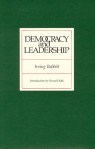
Även i Democracy and the Ethical Life hade ett avsnitt ägnats den dialektiska logiken; denna knyts där närmare till Platons (för Voegelin centrala) föreställning om methexis – ett tydligt uttryck för strävan att förena dialektiken med den “klassiska traditionens” dualism istället för med den moderna monismen. Även här har formuleringarna särskild udd mot den angloamerikanska empiristiskt-reifierande mentalitet som ofta hindrar förståelsen av den tyska filosofin i allmänhet och Hegel i synnerhet. Föreställningen om självet som på samma gång föränderligt och identiskt, “an ordered unity and a locus of disorder”, framstår, heter det, som obegriplig för denna mentalitet, men är i själva verket
”perfectly reasonable to another type of thought, the kind we use when we recognize our own enduring identity as moral subjects in the midst of a perpetually changing inner and outer life. Every new moment in a person’s life is unique, and he is therefore never the same, yet he knows himself to be the same as he has always been. In grasping this fact about ourselves and others we use a type of logic which is suited to spiritual experience as we are conscious of it, not indirectly through mechanistic, quantitative analogies, but directly in our immediate awareness of reality. It is a dialectical, humanistic logic which does not try to explain away, but simply reflects, the existential tension in man between immanent and transcendent.”
Här ser vi tydligt hur vi rör oss på vad Babbitt kallar det humanistiska planet, nivån för den mänskliga erfarenheten, inre och yttre. Här måste därför tilläggas att när den fulla erfarenheten av Babbitts högsta nivå, nivån för meditation, också tas i beaktande, självet på annat sätt borde ha skilts från sitt föränderliga medvetandeinnehåll. Men Babbitt uppfattar inte nivån för meditation på detta sätt, och vill inte riktigt gå in på detta. Det är också detta förhållande som liger bakom hans begränsning till buddhismen, och dessutom buddhismen som huvudsakligen etik, till skillnad från Mores fördjupning i “hinduismen” och Upanishaderna. Idealismen i vid mening rymmer här positioner som måste komplettera analysen på den humanistiska nivån – även, och inte minst, med avseende på förståelsen av den platonska uppfattningen om delaktighet i det oändliga, som det följande stycket faktiskt berör; detta komplement gör dock inte analysen ogiltig på dess eget plan:
”Only if reifying thought processes are set aside from humanistic philosophy, is it possible to grasp the idea of participation (methexis) by which Plato gives conceptual form to the paradox of dualism. According to this idea, finite man participates in, shares in the infinite. The person who acts with a view to realizing the goal of ethical conscience becomes a part of the transcendent purpose of existence. By striving to embody it in his personal life he brings into the finite world a measure of harmony and order. Human activity always remains in the realm of the imperfect, but in individuals, peoples, and civilizations inspired by the universal good it is enlisted in a higher cause and raised to a new dignity. Through dialectical logic, philosophy is able to give an account of this moral synthesis.” [Op.cit. 61 f.]
Framställningen i Will, Imagination and Reason kan, här som på andra områden, ses som en utveckling och fördjupning av de kunskapsteoretiska, logiska och värdefilosofiska resonemang som Democracy and the Ethical Life bygger på men som där endast kortfattat presenteras som bakgrund till analysen av de två skilda moraluppfattningarna och demokratityperna.
Med Babbitt hävdas alltså att vi i vår omedelbara upplevelse förnimmer såväl enheten och mångfalden som den högre och den lägre viljan. Utifrån denna tillgång till människans upplevelse, direkt, inifrån, given med de symboliska och imaginativa syntetiska helheterna, kan scientistiska, empiristiska, positivistiska och behavioristiska intrång på humanioras och samhällsvetenskapernas domäner framgångsrikt rullas tillbaka. De visar sig ofta arbiträrt och utan rimlig funktionell legitimitet ha découperat verkligheten och otillbörligt inskränkt erfarenheten, varför deras vetenskapliga värde och teoretiska relevans är begränsade. Det filosofiska förnuftet tillhandahåller inte bara ett nödvändigt komplement till erfarenhetens modaliteter utan också ofta ett nödvändigt korrektiv. I sig tillhörande den omedelbara, inre upplevelsens sfär, visas det vara de humanistiska och i viss mån samhällsvetenskapliga disciplinernas förnämsta kunskapsorgan.
Emellertid arbetar det enligt Leander och Ryn uteslutande med material tillhandahållet av den förnumna yttre verkligheten via viljans och fantasins/symbolskapandets formande förmedling. Den yttre verklighet som alltid täcks av “illusionens slöja”, och av vilken därför ingen direkt realistisk återspegling i medvetandet är möjlig; av vilken varje ny “intuition” i stället alltid redan är präglad av såväl tidigare intryck som viljans omedelbara värdering och fantasins och förnuftets synteser och kategorier.
Utan att förneka att detta är det “material” som det filosofiska förnuftet – som alltså även står i direkt kontakt med själva den omedelbara intuitionen – bearbetar, belyser och förstår medels sina egna dialektiska begrepp, måste man här insistera på att i verkligheten mer än vad Leander och Ryn antar är omedelbart givet för vår inre upplevelse. I en vidare och högre mening som går utöver såväl den diskursiva rationaliteten som dialektiken har den också ett eget, immanent, högre innehåll som likaledes tillhandahåller, eller kan och bör tillhandahålla, sådant material för deras verksamhet. En erfarenhet för vilken metvetandet självt s.a.s. är både subjekt och objekt.
Att begränsa sig till att tala endast om enbart förnuftet i detta sammanhang är en ensidig kvarleva från den klassiska filosofin. Vi går i verkligheten utöver det till självets egen natur av bevetenhet, på ett sätt som i väst snarare, med en annan missvisande ensidighet, företrädesvis förståtts inom “mystiken” och vad som, i motsats till Mores brahmanism, p.g.a. den religiösa exoterismens dominans kommit att förstås som den esoteriska traditionen. För den fulla förståelsen av vad det här handlar om måste vi i själva verket gå vidare, med More, till Vedanta. Vi måste med nödvändighet gå djupare i frågan om det högre erfarenhetsmässiga förhållandet mellan självet i sig och dess fenomenella innehåll, en fråga som tillför en helt ny dimension till dualiteten inom den enhet och helhet som det filosofiska förnuftet uppfattar. Endast i detta perspektiv och sammanhang kan vi med tillräcklig tydlighet se hur även den värdecentrerade historicismen, liksom den babbittska humanismen och den croceanska hegelianismen och historicismen, är en alltför begränsad filosofi för den helhetliga verklighetsförståelsens syfte.
 “…one of the few truly important works of political thought.” Russell Kirk
![12-icp-program-bild[1]](https://janolofbengtsson.com/wp-content/uploads/2013/09/12-icp-program-bild1.jpg?w=840)



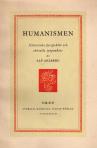 Huvudsyftet med denna skrift är att sätta in den västerländska humanismen i ett större historiskt sammanhang och därmed söka belysa dess egenart och dess situation i dagens läge. Den bäres upp av den övertygelsen, att den humanistiska kulturtraditionen, sådan denna utformats i främsta rummet genom en syntes av det antika arvet med kristendomen, är den stora linjen i vår kultur, på vars bestånd och livskraft hela dess framtid beror. Någon “humanismens historia” vill boken däremot icke vara. Jag har i den del, som jag kallat “historiska perspektiv”, blott dröjt vid de andliga makter, som jag anser mer än andra ha byggt upp den västerländska humanismen, men förbigår mycket, som i en sådan historik borde haft sin givna plats. Större uppmärksamhet skulle jag ha velat ägna den svenska humanismen, ty ehuru den naturligtvis är blott ett skott på den allmänna västerländska humanismens vittförgrenade träd, företer den likväl vissa bestämda och karaktäristiska drag. Men en särskild framställning av den skulle ha sprängt skriftens ram.

