”The fourth political theory”, Alexander Dugin explains in his new book with this title, is a collaborative project involving also the French intellectual leader of la nouvelle droite, Alain de Benoist, with whom Dugin has apparently reestablished his former close relation. The two thinkers seem to have met for a prolonged period in Moscow to discuss the concept, and in connection with this, Dugin also published a Russian translation of a collection of essays by de Benoist, the title of which, in English, is Against Liberalism: Towards the Fourth Political Theory – a title which could be said to be simply a more precise indication of the content of Dugin’s own book.
This indicates that what we have to do with here is an attempt on the part of Dugin and de Benoist to launch the concept of the fourth political theory as the most adequate designation of their shared positions. But this in turn raises the question if this is all simply a matter of renaming the New Right. If that is the case, there are, to begin with, two things that must be said about it.
First, there is the obvious advantage that the fourth political theory is for several reasons a better designation than the New Right. de Benoist and other New Rightists themselves have always complained about the latter, inasmuch as it was first used by the French media and in no way indicated the ambitions of GRECE to reject and transcend the left-right distinction. Although it was indeed clear they often did try to do this, the objections were sometimes hard to understand in view of the fact that de Benoist was, and, I think, to this day remains best known for his early book Vu de droite. Anthologie critique des idées contemporaines (1977), awarded by the French Academy with its grand prix de l’essai, and his thinking seemed to incorporate or overlap more obviously with various strands in what had always correctly been classified as rightist thought than with leftist thought. He also seems to have finally accepted the term New Right.
Still, the categorization of his intellectual groupement as simply beloning to the right is insufficient and partly misleading in view of the distinct whole of its philosophical position and interpretation of history. The right, and the term right, are too closely associated with conservatism in the forms in which it has historically existed in Europe, and it is, I believe (I have discussed this elsewhere), a correct insight of de Benoist’s that those conservatisms are not only insufficient in various respects in the present, but have shown themselves to be so in the past as well. The fourth political theory is a much better term, which, while purely formal and abstract, does greater justice to the ambitious GRECE project and communicates better its true nature.
On a general level, it must be said that both the term conservatism and the term right are philosophically and historically inadequate. Insofar as the term right is ever associated with the French National Assembly during the revolution, there is, at the very least, something disproportionate even in Evola’s use of the term “the true Right” for the uncompromising, integral “traditionalist” position as he conceives it.
Now, some will probably think that inasmuch as in the shallow and propagandistic discourse of the Left (including liberalism), the third political theory as described by Dugin and, I suppose, de Benoist, namely fascism broadly and, it must be said, somewhat imprecisely conceived, is almost always simplistically associated with the Right, described as a “right wing extremism” or “radicalism”, serving the interests of or behind the Right in a new historical situation etc., de Benoist regards the use of the term the fourth political theory as particularly suited to serving the need of marking and signaling the differences between this theory and the third, which have been deliberately obscured and downplayed by ideological opponents. But in this connection, it must perhaps be kept in mind that his objections to fascism are such as in substance are in fact rather associated with the historical European right and not new or specifically New Right ones, so that contrary to other parts of the fourth political theory where there is some substantial agreement with the (socialist) left, in this particular respect the need to disown the term right would at least not seem to have to be paramount. Needless to say, this does not imply that de Benoist shares all of the historical right’s objections to fascism.
The advantages of the new designation are, as I have indicated, much more general. The introduction of it, and the consensus regarding it between de Benoist and Dugin, are to be welcomed. But the second thing that must initially be said about it as amounting simply to a renaming of the New Right is that it inevitably raises again the question of the problems and limitations of the New Right as it has historically existed. If the fourth political theory is in substanc simply the New Right, it does not represent any advance in relation to it. The term would connote and express not only the same strengths but also the same weaknesses. I have briefly indicated elsewhere what I find those weaknesses to be, and will not develop or even repeat this here, but I hope to return to it shortly. The weaknesses are, from my position, serious. As I have had to emphasize, the New Right has in central respects always been quite far from my own positions, especially with regard to what I include as defining the concept of the alternative modernity (which, I add, is not the same as that with which all others who may also use it prefer to define it). I have found this regrettable, since there are also several strengths, valuable parts of a body of work that is by now enormous, which I would have liked to be able to support.
One obvious thing that must be asked here is whether the renewed collaboration between Dugin and de Benoist implies that the former has simply accepted all the New Right’s positions. The fact that this is unlikely speaks against interpreting the forth political theory as simply a new name for an old thing. Dugin is much closer to the traditionalist school than de Benoist, and he has related traditionalism to Russian identity in a way that makes it hard to see how he could relinquish it. For me as partly a Lindbomian, this is, prima facie, in some central respects a strength in Dugin’s thinking in comparison with de Benoist’s, and signifies, in the perspective of the resumed collaboration, at least a potential for one needed modification and development of the New Right legacy. On the other hand, it is of course not clear to what extent de Benoist has been prepared to adapt to Dugin.
But that the fourth political theory is not intended as a mere new name also is suggested by the way Dugin describes it in terms of “a correctly posed question” rather than a set of ready answers, and invites us to a constructive dialogue instead of awaiting a response to an already elaborated theory as a finished result. For many, this is undoubtedly promising, after decades of the New Right’s consistent alienation of large groups of important potential supporters by their insistence on its more outlandish elements as essential and fundamental programmatic points (in the sense in which things can for them be essential and fundamental). By this, they seem unnecessarily to have marginalized themselves in a way that sometimes went so far as to border on sectarian irrelevance.
On the other hand, it might seem a little far-fetched to hope that Dugin, known for a number of rather extreme and problematic positions of his own, different from those of the New Right, will be able to correct and improve on the New Right positions in these respects. But with the new name and some of the new formulations, they – he and de Benoist together – now at least to some extent appear to be signalling a new openness. It seems it is not impossible that this could finally hold out the promise of another rapprochement, namely with the kinds of positions and traditions I have tried to point to as necessary to uphold and defend. This would mark a decisive, historic shift. We certainly need a fourth political theory, but we also need this theory to go beyond the New Right. The new name should signal a new philosophy, or a philosophy in some important respects different from that of the New Right. I will come back to the question of the extent to which Dugin’s book bears out as reasonable the hopes for such a development.

 Décilivilisation est le livre frère de La Grande Déculturation. Comme il faut espérer que tous les lecteurs du nouveau volume n’auront pas lu le précédent, il commence par le reprendre, sous des angles nouveaux, avant de le prolonger, mais vers l’amont, si l’on peut dire, d’aller en deçà, de s’interroger sur des problèmes qui sont antérieurs et, si l’on veut, plus fondamentaux encore que ceux qui étaient abordés dans le premier de ces deux essais.
 Spawned by the Cold War, the North Atlantic Treaty Organization’s existence was justified as a guarantee against any Soviet threats towards Western Europe. That raison d’être is long gone with the collapse of the Soviet Union and the end of the Cold War. Nevertheless NATO has expanded relentlessly eastward towards its former enemy, even though Communism has disappeared. Yugoslavia marked a turning point for the Atlantic Alliance and its mandate. The organization moved from a defensive posture to an offensive one under the pretexts of humanitarianism. Starting from Yugoslavia, NATO began its journey towards globalization, taking on a broader area of operations outside of the European continent, leading to NATO missions in East Africa, Afghanistan, Pakistan, and most strikingly, Libya. Increasingly symbolic of U.S. militarism and missile diplomacy, NATO has acted as an arm of the Pentagon and formally or informally moved into combat zones where the US and its allies have been combatants, as the world increasingly militarizes through the globalization of NATO and the formation of new military counter-alliance.
 What do Eastern Europe’s booming sex trade, America’s subprime mortgage lending scandal, China’s fake goods industry, and celebrity philanthropy in Africa have in common? With biopirates trolling the blood industry, fish-farming bandits ravaging the high seas, pornography developing virtually in Second Life, and games like World of Warcraft spawning online sweatshops, how are rogue industries transmuting into global empires? And will the entire system be transformed by the advent of sharia economics? With the precision of an economist and the narrative deftness of a storyteller, syndicated journalist Loretta Napoleoni examines how the world is being reshaped by dark economic forces, creating victims out of millions of ordinary people whose lives have become trapped inside a fantasy world of consumerism. Napoleoni reveals the architecture of our world, and in doing so provides fresh insight into many of the most insoluble problems of our era.
 Idée séduisante après les crimes massifs du XXe siècle, la justice internationale ne trouve pas de légitimité théorique, en tout cas au regard de nos propres références. Faire justice, est-ce toujours prioritaire pour restaurer le vivre-ensemble après une catastrophe? Pouvons-nous imposer à tous les peuples la même hiérarchie des malheurs et la même hiérarchie des priorités? Aucune justice ne peut s’exercer sans la reconnaissance. Il faudrait donc, auparavant, convaincre. Peut-on juger de loin et hors contexte? Peut-on faire si bon marché de l’autorité politique, en plaçant directement les citoyens sous une loi mondiale? La loi naturelle, qui préside à la justice internationale, peut-elle s’instaurer en loi positive? Et, dans ce cas, dans quel recoin peut encore se loger l’esprit d’Antigone? La justice internationale ne pourra exister que sous un gouvernement mondial. Elle porte en elle la tare rédhibitoire de l’uniformité et du despotisme. En invoquant Montesquieu, Grotius, Kant, on défendra ici, face aux crimes d’État, la guerre d’ingérence comme décision politique.
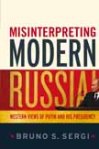 When President Vladimir Putin ascended to the Kremlin at the end of the 1990s, he had to struggle with the after-effects of Boris Yeltsin’s political agenda: outrageous corruption, endless social injustice, and deeply entrenched interests dating back to Gorbachev and beyond. From the outset, Putin saw his task as leveling out the political scenery. Discontent had been building up among ordinary Russians on these consequences of the dramatically unstable 1990s. Stabilization of the political system and cleaning up the widespread corruption were Putin’s aims, and the Russian people supported him wholeheartedly. Many observers in the West were quick to condemn Putin and depict him as an authoritarian, dishonest leader who was still linked to the KGB. When asked why Russians were supporting the new Kremlin, many experts explained that it was a paradox that combined the country’s supposed history of tyranny and its people’s inclination towards it. These explanations shaped the West’s understanding of modern Russia and they appear to be unshakeable in cultural circles today. Bruno Sergi argues, in this new study, that the way to know the complete story behind how Putin’s presidency has been viewed in Russia, is to examine closely the hard realities that conditioned Putin’s policies and responses. Misinterpreting Modern Russia: Western Views of Putin and his Presidency looks beyond the stereotypes to the hard logic of the 1990s, and asks a range of provocative questions about the disintegration of the old Soviet empire and the extraordinary riches that have caused so much opportunity and turmoil in recent years.
 Avec contributions de Arnaud Guyot-Jeannin, Philippe d’Hugues, Philippe Conrad, Charles Champetier, Manuel Rici, Jean-Paul Lippi, Jean Mabire, Alain de Benoist, Philippe Lamarque, Pierre Le Vigan, Luc-Olivier d’Algange, Claude Polin, Jean-Jacques Mourreau, Claude Rousseau, Xavier Saint-Delphin, Luc Saint-Etienne
 Olle Bengtsson