Julius Evola: The Path of Cinnabar

An Intellectual Autobiography of Julius Evola
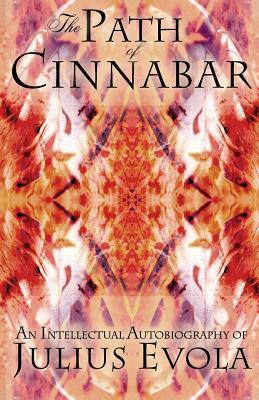
Integral Tradition Publishing, 2009 (Il cammino del cinabro, 1963)

Amazon.com

Back cover:

Julius Evola was a renowned Dadaist artist, Idealist philosopher, critic of politics and Fascism, ‘mystic,’ anti-modernist, and scholar of world religions. Evola was all of these things, but he saw each of them as no more than stops along the path to life’s true goal: the realisation of oneself as a truly absolute and free individual living one’s life in accordance with the eternal doctrines of the Primordial Tradition.

Much more than an autobiography, The Path of Cinnabar, in describing the course of Evola’s life, illuminates how the traditionally-oriented individual might avoid the many pitfalls awaiting him in the modern world. More a record of Evola’s thought process than a recitation of biographical facts, one will here find the distilled essence of a lifetime spent in pursuit of wisdom, in what is surely one of his most important works.

Roelof van den Broek & Wouter J. Hanegraaff, eds: Gnosis and Hermeticism from Antiquity to Modern Times

State University of New York Press, 1998

Amazon.com

Back cover:

“This collection presents in a clear and concise way a series of critical distinctions that collectively map the field: Hermetism, Gnosticism, gnosis, Manichaeism, Hermeticism, Catharism, Esotericism, Romanticism, and the New Age. These often confused and misperceived phenomena have been delineated crisply, in a way that permits this collection to serve nicely as a general introduction to the field. This book articulates a new standard of precision and clarity.”

Dan Merkur, author of Gnosis: An Esoteric Tradition of Mystical Visions and Unions

This volume introduces what has sometimes been called “the third component of western culture.” It traces the historical development of those religious traditions which have rejected a world view based on the primacy of pure rationality or doctrinal faith, emphasizing instead the importance of inner enlightenment or gnosis: a revelatory experience which was typically believed to entail an encounter with one’s true self as well as with the ground of being, God.

The contributors to this book demonstrate this perspective as fundamental to a variety of interconnected traditions. In Antiquity, one finds the gnostics and hermetics; in the Middle Ages several Christian sects. The medieval Cathars can, to a certain extent, be considered part of the same tradition. Starting with the Italian humanist Renaissance, hermetic philosophy became of central importance to a new religious synthesis that can be referred to as Western Esotericism.” The development of this tradition is described from Renaissance hermeticists and practitioners of spiritual alchemy to the emergence of Rosicrucianism and Christian theosophy in the seventeenth century, and from post-enlightenment aspects of Romanticism and occultism to the present-day New Age movement.

“This work meets the current demand for scholarly, empirico-historical research in what editors rightly denominate the ‘third current’ (the others are biblical faith and Greek rationality) of Occidental thought, i.e., Western Esotericism.”

Ralph Slotten, Dickinson College

Roelof van den Broek is Emeritus Professor of the History of Christianity at the University of Utrecht, The Netherlands. He has also written The Myth of the Phoenix: According to Clasical and Early Christian Traditions and Studies in Gnosticism and Alexandrian Christianity. Also at the University of Utrecht, Wouter J. Hanegraaff is a Research Fellow in the Study of Religions. He is author of New Age Religion and Western Culture: Esotericism in the Mirror of Secular Thought.

Roelof van den Broek

Wouter J. Hanegraaff

Franklin Jones: The Knee of Listening

The Early Life and Radical Spiritual Teachings of Franklin Jones

The Dawn Horse Press, 1972 (second printing, 1973)

Foreword by Alan Watts

From the rear cover and the inside of rear cover:

The Knee of Listening contains Franklin’s essential wisdom regarding the ordinary dilemma and search which nearly all human beings are living. He teaches that seeking by any means, even traditional spiritual, philosophic, religious and yogic means, is an inappropriate and fruitless approach to Truth. Truth is not realized as a result of any action. Truth is always already the case. He says: “All seeking is unnecessary. Only understand your own search. Bodies and worlds are only full. All power is at the Heart. Joyous Light surrounds your head. Truth is consciousness itself. The one who was to come is always already here.”

Hidden in The Knee of Listening, like a symbol in a childbook illustration, is an image of That which I have come to show and teach to those who will resort to me.

Franklin Jones

Franklin Jones, known to his devotees as Bubba Free John, is one of those rare beings who descend into the material and human planes of existence already conscious of spiritual illumination, and with the destiny of rapid evolution for the sake of the spiritual service of mankind. In his own words, he is a “man of understanding”. He has described his own human spiritual adventure in The Knee of Listening. He has said that his early life was a manifestation of the lesson he has come to teach mankind about the fruitlessness of seeking in any form. He says that the years of trial were a means of transforming the psycho-physical functions he is animating, so they could be an instrument for the conscious communication of Truth: “The man of understanding is the Truth of mankind. He is not merely the evolutionary goal and fulfillment of man. He is already Truth, prior to man. He is Truth alive, drawing men into the prior Truth and real functions that are their nature in Reality.”

“It is obvious, from all sorts of subtle details, that he knows what IT’s all about…a rare being.”

“What he says, and says very well, is something that I have been trying to express for thirty-five years, but which most people seem quite reluctant to understand. He has simply realized that he himself as he is…is a perfect and authentic manifestation of eternal energy of the universe, and thus is no longer disposed to be in conflict with himself.”

Alan Watts [not from the his foreword]

Dear Franklin,

Chiti Shakti, the Kundalini, which brings about Siddha Yoga, is activated in you. The Inner Self which is the secret of Vedanta, the basis of religion, the realization of which is the ultimate object of human life, is awakened in you.

Swami Muktananda

A great teacher with a dynamic ability to awaken in his listeners something of the Divine Reality in which he is grounded, with which he is identified and which in fact he is. He is a man of both the East and the West; perhaps in him they merge and are organized as the One that he is.

Israel Regardie

JOB’s Comment:

Jones’s first and still best known book.

The Significance of Franklin Jones

The Aletheon

The Divine Avataric Self-Revelation of His Divine Presence, Avatar Adi Da Samraj

The Dawn Horse Press, 2009

Amazon.com

Publisher’s Description:

The Aletheon is a fathomless gift to the world immense in both its scope and profundity. It is a supreme masterpiece of wisdom, instruction, and Divine Self-Revelation.

During the final three years of his life, Avatar Adi Da created this scripture moved by his indefatigable impulse to ‘say everything’ to everyone. His work on The Aletheon ended on the very day of his passing when he called for the title page of The Aletheon and finalized the wording on that page, thereby forever bringing to a close his final great writing-labor of love.

Adi Da had written many extraordinary and comprehensive books before The Aletheon. The early years of Avatar Adi Da’s active Teaching-Work were an astounding demonstration of his willingness to submit himself to ordinary egos, and to work by reflecting egos to themselves and calling egos to true esoteric practice. What is unique about The Aletheon is that it was written after that time of submission to ordinary beings had been completed, when Avatar Adi Da was demonstrating the culminating phase of his outshining revelation. In writing The Aletheon, Avatar Adi Da had utterly relinquished his previous modes of self-submission and teaching, and expressed only his own purest communication of Truth.

In summary The Aletheon includes:

– Penetrating consideration of true and false understandings of God, religion, and human existence altogether.

– Adi Da’s unique revelation of the Divinely Enlightened condition

– His confession of his own purpose and work

– A description of the practice he offers to all who are moved to become his devotees.

The softcover edition of The Aletheon scriptural text is divided into seven volumes:

Volume One opens with Avatar Adi Da’s Self-Disclosing statements relative to who he is and what the purpose of his word is. He also presents his fundamental arguments relative to conventional religion versus the true esoteric process, the primacy of devotion, and the seven stages of life.

Volume Two presents Avatar Adi Da’s ‘overview’ statements about and definitions of the Reality-Way of Adidam including the essential essay Atma Nadi Shakti Yoga.

Volume Three includes his more extended and detailed statements about the Reality-Way of Adidam including fundamental summary statements relative to devotion, right life, and ‘Perfect Knowledge’.

Volume Four includes two essential texts relating to the beginnings of the Transcendental Spiritual process; The Teaching Manual of Perfect Summaries and Hridaya Rosary.

Volume Five is devoted entirely to essays on Perfect Philosophy.

Volume Six contains many of Avatar Adi Da’s most fundamental and ecstatic Communications about the ‘Perfect Practice’ of Adidam.

Volume Seven is the concluding volume of The Aletheon scriptural text, with a completely astounding series of Self-Confessional Divine Statements by Avatar Adi Da including The Boundless Self-Confession, and a great many more.

Over 2300 pages, The Aletheon is available in two editions: a single-volume hardcover edition and an eight-volume softcover edition (including the volume of reference materials). The contents of the two editions are identical including the full text of The Aletheon, over one hundred photographs of Avatar Adi, a full biography, and extensive reference materials. Both editions come in a beautiful slipcase adorned with a stunning logo-image, created by Avatar Adi Da Samraj.

JOB’s Comment:

The Significance of Franklin Jones