Norman E. Rosenthal: Super Mind

How to Boost Performance and Live a Richer and Happier Life Through Transcendental Meditation

TarcherPerigee, 2016 (There are at the moment problems with the Insert Links function, but I will add the links asap; meanwhile, visit the Publisher’s website, amazon, or some other bookseller anyway, and, as always, order the book!)

Book Description:
RosenthalThe noted research psychiatrist and New York Times-bestselling author explores how Transcendental Meditation permanently alters your daily consciousness, resulting in greater productivity, emotional resilience, and aptitude for success.

Most of us believe that we live in only three states of consciousness: wakefulness, sleep, and dreaming. But there is so much more.

In Super Mind, clinical psychiatrist and bestselling author Norman E. Rosenthal, M.D., shows how the incredibly simple daily practice of Transcendental Meditation (TM) can permanently improve your state of mind during the routine hours of waking life–placing you into a super-mind state of  consciousness where you consistently perform at peak aptitude.

In his most ambitious and practical book yet, Rosenthal shows how TM is more than a tool for destressing or for general wellness. It is a gateway to functioning physically, emotionally, and intellectually at levels we never knew we could attain. Written in Rosenthal’s trademark style of restraint and intellectual carefulness, Super Mind explores how we can aspire to so much more than we ever thought possible.

Reviews:

Super Mind is a wonderfully practical exploration of the benefits of Transcendental Meditation that reveals how the technique is not a belief or faith but a simple tool that, in my experience, can improve your life in ways you never thought possible.”  Hugh Jackman

“In Super Mind, Norman E. Rosenthal has written a vibrant, practical, and persuasive guide to all the ways in which mediation can profoundly affect every aspect of our lives – from our emotional and spiritual well-being to our intellectual and creative abilities.”  Arianna Huffington

Super Mind opens new doors to thinking about consciousness, and new possibilities about how consciousness can grow and change a person’s life forever. Transcendental Meditation has been found to improve physical and psychological health in hundreds of published studies and Norman E. Rosenthal weaves this evidence together with powerful stories of transformation – a must-read for anyone wanting to develop a Super Mind.”  Maria Shriver

“Dr. Rosenthal’s Super Mind is a thoroughly engaging, scientifically sound testament to the immediate and long-term benefits of Transcendental Meditation – a technique I have been practicing for nearly two years. TM has made me more mentally and physically energetic, sharper, less stressed and more positive. If I could write a prescription for TM to all my patients, I would.”  Dr. Jennifer Ashton, ABC News Chief Women’s Health Correspondent, Ob-Gyn

“Norman E. Rosenthal, renowned scientist and researcher, reveals the powerful, life-enhancing effects of Transcendental Meditation in this acutely observed and poetic book.  In Transcendence, Rosenthal gave us the science behind TM; in Super Mind he does that and more, showing us the broad applications and transformative stories of real people using this simple technique.”  Richard A. Friedman, M.D., contributing Op-Ed writer for The New York Times and Professor of Clinical Psychiatry at Weill Cornell Medical College

About the Author:

Norman E. Rosenthal, M.D., is a clinical professor of psychiatry at Georgetown Medical School and the New York Times-bestselling author of books including Transcendence: Healing and Transformation Through Transcendental Meditation and The Gift of Adversity: The Unexpected Benefits of Life’s Difficulties, Setbacks, and Imperfections. He conducted research at the National Institute of Mental Health as a research fellow, researcher, and senior researcher for more than twenty years and was the first psychiatrist to describe and diagnose Seasonal Affective Disorder (SAD).
Bernardo Kastrup: Dreamed up Reality

Diving Into Mind to Uncover the Astonishing Hidden Tale of Nature

Iff Books, 2011

Back Cover:

KastrupA strong and growing intuition in society today is the idea that our thoughts create our own reality. Yet it seems obvious that, try as we might, our lives are not quite what we fantasize. Is the intuition thus wrong? Through a rational, methodic interpretation of meditative insights, the validity of which is substantiated with a compelling scientific literature review, the author constructs hypotheses that reconcile facts with intuition. Mesmerizing narratives of his expeditions into the unconscious suggest an amazing possibility: just as dreams are seemingly autonomous manifestations of our psyche, reality may be an externalized combination of the subconscious dreams of us all, mixed as they are projected onto the fabric of space-time. Perhaps the laws of physics are an emergent by-product of such synchronization of thoughts. Through computer simulations, the author explores the implications of these hypotheses, with conclusions uncannily reminiscent of observed phenomena.
About the Author:

Bernardo Kastrup has a Ph.D. in computer engineering and has been a scientist in some of the world’s foremost scientific laboratories. He researches and writes about metaphysics and philosophy of mind.

Carl David af Wirsén: Recension av Fadren

Man kunde stundom förut vid läsningen av Strindbergs arbeten känna sig uppkallad till allvarlig strid mot hans brutala blasfemier och manad att uppvisa det ihåliga och tarvliga i hela den anspråksfulla och hätska framställningen; saken var så mycket mera nödvändig, som många organ med en besynnerlig hänförelse tog hans parti.

Förhållandet är nu  i viss mån ett annat. Hans senaste arbete ‘Fadern’ röjer en desorganisation i den poetiska fantasin, och man intages vid genomläsningen av detta stycke visserligen av ovilja men kanske än mera av vemod. Där framträder nog såsom ofta förut den sällsamma föreställningen, att man kan bli en stor “verklighetsskildrare” endast genom att använda råa uttryck eller omnämna saker som den allra vanligaste anständighet förtiger; där framträder jämväl det bittra kvinnohat, vilket långt mer än Strindbergs många hädelser mot den kristna religionen och mot sedligheten – hädelser mot vilka de s.k. frisinnade organen haft föga, stundom intet att invända – omstämt dagsopinionen till hans nackdel. Detta kvinnohat är också lika oresonligt som obehagligt, och man pinas därav så mycket mer, som även i detta avseende författaren tycks göra anspråk på att paradoxalitet skulle vara detsamma som genialitet.

Men oaktat allt detta blir den känsla, som Strindbergs ‘Fadern’ uppväcker, snarare beklagande än harm, och detta beror kanske mest därpå, att denna skapelse förråder – vanmakt, vanmakten i en sjuklig inbillning, vanmakten i en på allt positivt så gott som utblottad åskådning. Då emellertid Strindbergs övriga arbeten av mig brukat omnämnas – något som åter berott på litteraturgranskarens skyldighet att redogöra för saker, som på något sätt väckt uppseende, och att lämna en så vitt möjligt fullständig översikt över samtidslitteraturens vitt skilda företeelser – så må några ord i största korthet ägnas även hans sista, besynnerliga alster.

Förhållandet mellan ryttmästaren och hans hustru är icke det bästa. Hon synes vara honom överlägsen i viljekraft, hon tyranniserar honom och ådagalägger därvid en kyla och ett lugn, som står i stark motsats till hans uppbrusning och svaghet. Ryttmästaren är en lärd naturforskare och är sysselsatt med ett arbete, som skall bliva epokgörande; men hustrun, som tycker att hans bokräkningar blir för stora samt för övrigt vant sig att betrakta alla hans förehavanden som dåraktiga, kontramanderar i hemlighet hans bokrekvisitioner. Det oupphörliga gnatet, de små chikanerna i hemmet tär på hans lynne, gör honom nervös, lockar honom till överilningar och stör hans inre jämvikt på ett sätt som slutligen kan bli och blir betänkligt för hans annars rediga förstånd.

Just detta resultat synes vara avsett av hans fru, vilken mot honom är rent av fientlig och gärna vill få honom ställd under förmyndare, avlägsnad från familjen samt helst insatt på ett dårhus. Hur hennes ovilja mot sin man kunnat nå en sådan höjd, därom svävar man emellertid i ovisshet; anledningarna till all denna överlagda förföljelse är okända, och hela skildringen gör därför ett intryck av djup osannolikhet. Hela teckningen av ryttmästaren är också nästan löjlig; han borde enligt författarens avsikt väcka en viss sympati, men han förefaller oss som en kruka, och vi kan ej värja oss från ett medömkande löje, då vi hör honom för sin gamla amma beklaga sig över sin frus obeskedlighet. Frun å sin sida förtalar systematiskt sin man; hon har i hela orten utspritt ryktet om hans sinnesförvirring och försöker genom hela sitt förfaringssätt mot honom till den grad reta honom, att ryktet måtte kunna bli sanning. Hon intalar husläkaren, att mannen är på väg att bli rubbad, hon beljuger honom, sprider löje över honom, men alltid på det listiga sätt, att hon ej låter sig ertappas med osanningar eller, om så sker, påstår, att man hört galet och att hon sagt något helt annat.

Mest avskyvärd och vidrig är hon, då hon, kort sedan doktorn bett henne att med anledning av mannens nervositet och själsoro vara försiktig samt undvika allt, som kunde plåga hans misstänksamma och retliga lynne, framkastar en antydning att hon varit honom otrogen och att dottern i huset ej är hans barn. Därmed har hon tänt en outsläcklig brand i den stackars Otellos sinne, han går och grubblar över dessa antydningar, vilka för övrigt måhända ej var ogrundade, och nu är han på god väg till sinnesrubbning, till mental otillräknelighet. Det var just dit hon ville komma. Med sin vanliga lögnaktighet berättar hon sedan för läkaren, att hennes stackars man alldeles av sig själv kommit på dessa olycksaliga funderingar; förhållandet är tvärtom, att hon just själv väckt dem till liv. Ryttmästaren behärskas nu av denna enda fixa idé och blir under dess inflytande vild, häftig och nyckfull; hans vredesutbrott anses nu som indicier på vansinne, man narrar honom att ikläda sig tvångströja o.s.v. Lyckligtvis får han ett slaganfall och befriar därmed såväl sig som läsaren från vidare obehag; dessförinnan har han dock hunnit utbrista i följande vackra utrop, vari författaren samlat hela sin vrede mot fruntimmerna: “Tvi vare dig, satans kvinna, och förbannelse över ditt kön!”

Boken innehåller en mängd råheter; vi bryr oss ej om att anföra dem. Ett och annat drag har nog natursanning, och Lauras system av nödlögner saknar visst ej motsvarighet hos en del kvinnor; likaså är Lauras förmåga att ge små skarpa nålstyng eller tala verkliga “dolkar” en egenskap, som nog återfinnes hos åtskilliga av Evas döttrar. Ty kvinnan är lika litet som mannen någon ängel; hon är icke av naturen idealisk och behöver lika väl som mannen förädlas, renas, helgas. Men icke är hon heller den sammanfattning av elakthet och lögn, till vilken herr Strindberg vill göra henne. För övrigt borde dessa båda, för varandra oumbärliga följeslagare på den betydelsefulla vandringen genom livet kunna företaga sig något bättre än detta oupphörliga litterära gräl, vilket för övrigt nu fått den fördelning, att herr Strindberg utmålar kvinnor som odjur, våra dussinförfattarinnor åter utmålar alla män som lastbara bovar och alla fruntimmer som oskuldsfulla martyrer.

1887. Språkligt lätt moderniserad.

Douglas Wilson: Standing on the Promises

A Handbook of Biblical Childrearing

Canon Press, 1997

Book Description:

WilsonAs parents, our greatest calling is the raising of our children in the nurture and admonition of the Lord. God has designed each family to be a culture – with a language, customs, traditions, and countless unspoken assumptions. The culture of the family intimately shapes the children who grow up in it. It is the duty of the father to ensure that the shaping takes place according to biblical wisdom.
Some fathers establish a rebellious culture for their children and bring upon their children the wrath of God, sometimes for generations. Other fathers fail to establish any distinct culture, and outside cultures rush to fill the void.

Through the Messiah, God promised blessing to His people, “their children, and their children’s children forever.” The norm for faithful members of the covenant is that their children will follow them in their faithfulness. The oddity should be children who fall away. Unless we reestablish faithful Christian culture in countless homes, we will never reestablish it anywhere.

Standing on the Promises brings clarity, providing parents with an insightful handbook on biblical childrearing, that avoids another paint-by-numbers method for parenting.

Look inside on Amazon

About the Author:

Douglas Wilson is the minister of Christ Church in Moscow, Idaho, which is a member of the Communion of Reformed Evangelical Churches (CREC). As one of its founders, he has served on the board of Logos School, a classical and Christian school (K-12), since its inception, and he is a Senior Fellow of theology at New St. Andrews College. He is also the editor of Credenda/Agenda Magazine, the editor for the Omnibus textbook series, and the author of many books, including Reforming Marriage, Recovering the Lost Tools of LearningThe Case for Classical Christian Education, Angels in the Architecture (with Douglas Jones), and a biography of John Knox. His blog can be found here.

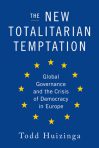
Todd Huizinga: The New Totalitarian Temptation

Global Governance and the Crisis of Democracy in Europe

Encounter Books, 2016

Book Description:

HuizingaWhat caused the eurozone debacle and the chaos in Greece? Why has Europe’s migrant crisis spun out of control, over the heads of national governments? Why is Great Britain calling a vote on whether to leave the European Union? Why are established political parties declining across the continent while protest parties rise? All this is part of the whirlwind that EU elites are reaping from their efforts to create a unified Europe without meaningful accountability to average voters.

The New Totalitarian Temptation: Global Governance and the Crisis of Democracy in Europe is a must-read if you want to understand how the European Union got to this point and what the European project fundamentally is. This is the first book to identify the essence of the EU in a utopian vision of a supranationally governed world, an aspiration to achieve universal peace through a global legal order.

The ambitions of the global governancers are unlimited. They seek to transform not just the world’s political order, but the social order as well – discarding basic truths about human nature and the social importance of tradition in favor of a human rights policy defined by radical autonomy and unfettered individual choice. And the global governance ideology at the heart of the EU is inherently antidemocratic. EU true believers are not swayed by the common sense of voters, nor by reality itself.

Because the global governancers aim to transfer core powers of all nations to supranational organizations, the EU is on a collision course with the United States. But the utopian ideas of global governance are taking root here too, even as the European project flames into rancor and turmoil. America and Europe are still cultural cousins; we stand or fall together. The EU can yet be reformed, and a commitment to democratic sovereignty can be renewed on both sides of the Atlantic.

Reviews:

“The ‘European project’ is unraveling – not a moment too soon – because its soft authoritarianism is becoming too obvious to disguise or ignore. Todd Huizinga demonstrates how the European Union’s multiplying misadventures are reminding us of what EU elites want us to forget: the indissoluble link between rights-based self-government and the nation-state, which is not an anachronism after all.”  George F. Will

“If the European Union prefigures one possible future of the global order, as Todd Huizinga argues, globally concerned citizens cannot afford to ignore the questions he raises in this book. Wise in tone and even prophetic, it is seasoned with personal experience and shows a solid grasp of practical policies as well as ideas. This is essential reading for all who care about the course on which humanity is sailing.”  Os Guinness, author of The Global Public Square

“This is the best book ever written about the European Union. Having spent years in Brussels as an American diplomat, Huizinga knows European politics and culture as few statesmen or scholars do. He deftly dissects the powerful vision of global governance behind the endless directives from the EU bureaucracy. This lucidly argued text is indispensable to understanding Europe’s current crises – of democracy and sovereignty, immigration and national identity – as well as America’s relationship with Europe.”  John Fonte, director of the Center for American Common Culture at the Hudson Institute, author of Sovereignty or Submission: Will Americans Rule Themselves or Be Ruled by Others?

“This brilliant book is the single best volume on the European Union from a conservative viewpoint that I have read. The insights sparkle on every page. What makes it so compelling is that Huizinga understands both the American society and the European project from personal and professional experience. He offers a lucid perspective on the friction between Europe’s relativistic postmodernism and the strong fiber of Christian conviction that runs through American culture and democracy.”  David Aikman, award-winning journalist, author of The Mirage of Peace: Understanding the Never-Ending Conflict in the Middle East

About the Author:

Todd Huizinga is director of International Outreach at the Acton Institute for the Study of Religion and Liberty in Grand Rapids, Michigan. He is a cofounder of the Transatlantic Christian Council and a research fellow of Calvin College’s Paul B. Henry Institute for the Study of Christianity and Politics.

As a U.S. diplomat from 1992 until 2012, Mr. Huizinga served as deputy chief of mission at the U.S. embassy in Luxembourg, political counselor at the U.S. mission to the European Union in Brussels, consul for political and economic affairs at the U.S. consulates in Hamburg and Munich, and consul for public affairs at the U.S. consulate in Monterrey, Mexico. He has also served in Dublin, Frankfurt, and Costa Rica, as well as on the European Union Desk at the State Department in Washington, D.C. He speaks German, Dutch, Spanish, and French.