
Alan P. F. Sell: Philosophical Idealism and Christian Belief
University of Wales Press, 1995
Back Cover:
There is now renewed and growing interest in post-Hegelian idealism, which was in its heyday at the end of the nineteenth century. This book is concerned with the religious and socio-ethical aspects in the writings of selected idealists. It addresses the question: was post-Hegelian philosophical idealism, in its friendliest guise, more a help than a hindrance to the expression of Christian convictions and the articulation of Christian doctrine?
 In pursuit of an answer, the author discusses the writings of seven British idealists who, if not in every case entirely doctrinally orthodox, were by no means unkindly disposed towards the Christian faith: T.H. Green, Edward Caird, J.R. Illingworth, Henry Jones, A.S. Pringle-Pattison, C.C.J. Webb, and A.E. Taylor.
The book opens with an account of the fomrative intellectual influences upon the seven idealists and their consequent philosophical positions. There follow chapters on God, ethics and society, and Christian doctrine. The conclusion passes some positive and negative judgements upon post-Hegelian idealism in so far as it bears upon, or expresses, Christian belief. It also broaches the underlying question of the method of Christian thought vis à vis the general intellectual environment.
About the Author (Back Flap):
Alan P.F. Sell is Professor of Christian Doctrine and Philosophy of Religion and Director of the Centre for the Study of British Christian Thought at the United Theological College, within the Aberystwyth and Lampeter School of Theology of the University of Wales.
His academic career has included periods as Theological Secretary of the World Alliance of Reformed Churches (Presbyterian adn Congregational), Geneva, and incumbent of the Chair of Christian Thought at the University of Calgary.
His prolific output of publications includes pamphlets, many academic articles, reviews and books. Of his books the most recent include Defending and Declaring the Faith: Some Scottish Examples, 1860-1920 (Exeter and Colorado Springs, 1987); The Philosophy of Religion 1875-1980 (London and New York, 1980); Dissenting Thought and the Life of the Churches: Studies in an English Tradition (San Francisco, 1990); and Commemorations: Studies in Christian Thought and History (Calgary and UWP, Cardiff, 1993).
JOB’s Comment:
Valuable discussion by a distinguished Christian scholar of some British idealists, most of whom I too have written about, from a different perspective.
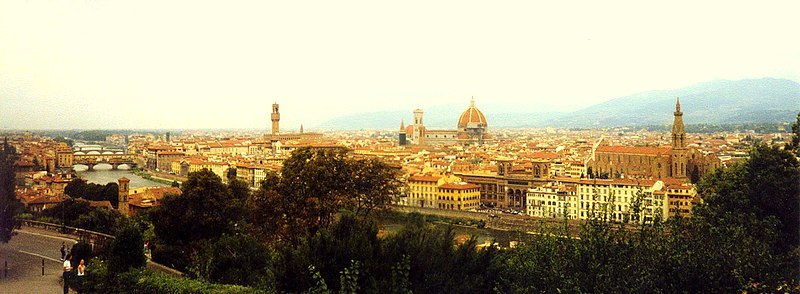
Firenze
Renässansen och personligheten
“Mot slutet av 1200-talet börjar Italien plötsligt vimla av personligheter”, utbrast faktiskt Burckhardt. Under renässansen skingras den medeltida slöjan, och det objektiva betraktelsesättet av staten och världen möjliggör också det subjektivas utveckling: “Människan blir en själslig individ och är medveten om sig själv som sådan. Så hade en gång greken höjt sig över barbarerna, den individualistiske araben över de övriga asiaterna”. [Renässanskulturen i Italien (1965 (1860)), 93.]
Dantes betydelse beror på hans “personlighets fullhet”. När de gynnsamma lokala omständigheterna blir mindre gynnsamma för honom, visar sig individualismen också som kosmopolitism: “Mitt fädernesland är hela världen” [Ibid. 94, 96.] – något som dock i praktiken naturligtvis i hans fall inte betyder mer än andra delar av Italien; inom kort skulle dock ”världen” åtminstone i någon mån komma att vidgas.
13- och 1400-talens nya samhälleliga instabilitet, otillräckligheten av de äldre normerna och idealen, den samtida kollapsen av den medeltida ordningen och de rollidentiteter som denna tilldelade människan, tvingade henne nu, samtidigt som hon lockades av de nya livsmöjligheterna, att förlita sig på sina egna resurser, att, med Goethes av Karl Weintraub citerade ord, bli “eine auf sich selbst gestellte Persönlichkeit”. [Weintraub, The Value of the Individual: Self and Circumstance in Autobiography (1978), 120.] Som Dupré uttrycker det: “After the traditional source of meaning dried up, the self had no choice but to function as a ‘subject’. The role of meaning-giver was inflicted on it in the wake of a profound spiritual crisis.” [Passage to Modernity (1993), 114.]
På så sätt utvecklades, som Burckhardt visade, under den samtida försvagning av kyrkan och staten som möjliggjorde renässanskulturens blomstring, vid sidan av dem som fastklamrade sig vid de äldre modellerna en rad nya människo- och personlighetstyper. “Experten” odlar sin ensidiga, partikulära läggning, exempelvis Machiavelli som levde helt i politiken. Den nya individualismen kunde urarta i ren godtycklig subjektivism hos vissa humanister och tyranner. Men individen kunde också ålägga sig själv restriktioner genom hängivelse till en objektiv sak, eller som den “autonoma” individen frivilligt underkasta sig objektiva normer.
Humanisterna utvecklar i förlängningen av Dante en egen, ny typ av universalitet, men även den visar sig ofta oskiljaktig från den individualistiska självkänslan. Lorenzo Ghiberti hävdar att “Endast den som lärt allt…är ingenstädes ute i världen en främling” och “medborgare i varje stad”, och en landsflyktig humanist att “Var helst en lärd man slår sig ned, där är ett gott hem”. [Burckhardt, 95 f.] Under 1400-talet tilllväxer antalet “fullt utvecklade människor” med harmonisk avrundning av sin inre och yttre varelse. Exempel är här Pico della Mirandola och Lorenzo de’ Medici.
Driften till “personlighetens högsta utveckling” i förening med “en mäktig och därjämte mångsidig natur, som genast tillägnade sig den dåtida bildningens alla element”, tillät så i Italien slutligen också “expertens” motsats, l’uomo universale, den universella eller allsidiga människan, att uppstå. [Ibid. 96.] Här var individualiteten icke utplånad av universaliteten; universaliteten var allsidighet, och denna allsidighet var individuellt manifesterad, förankrad, uppburen, gestaltad. Vi möter “enstaka konstnärer, vilka samtidigt skapar något nytt och i sitt slag fulländat på alla områden och som därtill gör det starkaste intryck som människor”. [Ibid. 97.] Privatlivets nya betydelse, ståndsskillnadernas utjämning till förmån för en bildad klass i modern mening, sällskapslivets utveckling, kvinnans förändrade ställning framlyfts. Det är den allmänna borgerliga revolutionen som rullar fram.
Allsidighetsuniversaliteten gör att vi under renässansen också finner en bildning som mer närmar sig Terentius’ maxim humani nil alienum. Redan Dantes gudomliga komedi kan synas på sitt sätt peka i denna riktning, men den nya tidens litterära visioner av mänskligheten beskriver under århundradenas lopp en utveckling över ytterligare rik variation av karaktärernas mångfald, förenad med distinkt fördjupning hos Shakespeare, fram till en vision som förlorat den gudiga dimensionen hos Dante – som i Balzacs comedie humaine.
Någon motsvarighet till Shakespeare hann den italienska teatern enligt Burckhardt icke utveckla innan “motreformationen inbröt och tillsammans med det spanska herraväldet…bröt den italienska andens vackraste blommor och lät dem vissna”. [Ibid. 208.] Franskklassicismen lutade förstås ensidigt åt ett förnyat generalistiskt decorum. Och Balzac utgör en ensidig illustration av Terentius’ maxim, och motsvarar såtillvida inte dess humanism i egentlig mening. Därför är det väl i stället den tyska romantiken och nyklassicismen, åter förenande allsidigheten med en idealt riktad bildningstanke som också vill bevara individualiteten och låta den komma till sin rätt, som måste betraktas som den fullständigaste vidareföraren av den nytida personlighetsförståelsen i litteraturen. Konsten och litteraturen är organ som med sina rika, mångfacetterade resurser ofta bättre än filosofin kan fånga den undanglidande och begreppsligt svårbestämda verklighet som utgörs av personligheten, och det är inledningen till den nya utvecklingen på detta område som Burckhardt ville lyfta fram i renässansen. Renässanskulturen är för honom rentav “den första som upptäcker och avslöjar människans natur och innersta väsen”. [Ibid. 201.]
De antika bildningsidealen – som alltså inte är helt liktydiga med Terentius’ – kunde vara ett stöd i den nya situationen, men de kunde också vara ett hinder för den av sig själv beroende fria personlighetens utveckling enligt sina egna, inre krav. Naturligtvis är det främst mot den medeltida generalismen, prioriteten för das Allgemeine på alla plan och områden, som den nya individualismen enligt Burckhardt i första hand är en reaktion, och i denna kan de antika mönstren assistera. Men fastän dessa är andra är de medeltida, förblir ju också de allmänna och därmed åtminstone otillräckliga för den framväxande moderna människa som vill lägga av sig masken, vars personlighet icke längre är en roll. Detta var förstås en huvudinnebörd av Rousseaus och romantikens revolt mot den franska klassicismens regim sådan den, i modifierad form, fortlevde internationellt under 1700-talet och upplysningen.
Renässansen präglas av “det ivrigaste och mångsidigaste uppskattande av det individuella i dess olika skiftningar”. [Ibid. 201.] För Burckhardt var det den konkreta upplevelsen av den mänskliga individualiteten, människans upplevelse av sig själv som “geistiges Individuum”, som medförde också känslan för det individuella på andra områden. Och den nya förståelsen av människans individuella andliga väsen var beroende av den nya “förmågan att iaktta och skildra”. 1300-talets diktare för os in i “den fria själsskildringens rike”. [Ibid. 201 f.]
Burckhardt förbluffades av hur astrologin och läran om de fyra elementen fortfarande används som trubbiga instrument i inringningen av det individuella “i en tid då ej endast den exakta skildringen utan också en oförgänglig konst och poesi redan förmådde framställa hela den mänskliga personligheten såväl i dess djupaste innersta som i dess karaktäristiska yttringar”. [Ibid. 202.] Biografin såväl som porträttkonsten framhävdes av honom.
Weintraub uttrycker väl Burckhardts uppfattning av den “characteristically ‘modern’ European personality” som nu växer fram:
“Burckhardt expressed the most crucial mark of this personality in a difficult notion: der Mensch wird geistiges Individuum und erkennt sich als solches; that is to say, man recognizes himself as an individual being whose coherence lies in the dimensions of his mind or spirit. With growing self-consciousness man is aware that his distinctive quality as an individual personality rests on the unified conception he has of himself. He is not a coherence simply because the world around makes him so; he is a unity only insofar as he himself makes a coherent personality out of his individual experience of an objective world. It thus is important for a man to understand that his knowledge of himself is conditioned by his very own circumstances, that he himself creates a mental coherence of his experience of the world, and that in thought and action he gives expression to his unified view of experience.” [The Value of the Individual: Self and Circumstance in Autobiography (1978), 95.]
Människan odlar sin personlighet och etablerar en livsstil som motsvarar dess egenarts krav. Det samhälle som består av sådana människor blir därför också en fri skapelse, ett Gesellschaft, i motsats till det organiska Gemeinschaft, där individens organiska plats, såväl som samhällets och statens helheter, är färdiga och givna i förhand.
Allt detta är väl dock i flera avseenden en ensidig och förenklad historieskrivning. Är inte tonvikten på det radikala brottet med det medeltida åskådningsmässiga universum alltför stark? En som distinkt renässanstänkare ansedd författare som Pico della Mirandola kan i stora stycken läsas som distinkt medeltida. Men förvisso motsvarar historieskrivningen naturligtvis också ensidigheter i tidens nya ideal. Kyrkoorganisationens och därmed den kristna ortodoxins makt kunde förvisso begränsas, tills den momentant åter hävdades av motreformationen. Men samtidigt som personlighetskärnans på nytt sätt betonades, präglades frigörelsen av en sekularisering som kunde röra sig bort from hela den traditionella och även förkristna föreställningen om det ontiska logos och den därmed sammanhängande moraliska ordningen. Och med samma sekularisering var förstås personlighetskärnans andlighet av en ny typ, alltmer begränsad till den psykiska delen av den mänskliga psykofysiska apparaten.
Ett hävdande av den mänskliga personligheten i ett av denna logocentricitet icke längre sammanhållet universum måste, även när personligheten definieras av den egna väsenskärnan som andlighet i psykisk mening och dess organiserande kraft, i längden leda ut i excentricitet, relativism, och förr eller senare nihilism, och därmed låta personlighetens frigörelse upphäva sig själv. Även den sociala verklighetens tilltagande Gesellschaft-drag kunde, i den mån de började helt ersätta dess Gemeinschaft-karaktär (som inte var reducerbar till den i flera viktiga avseenden i sig, om än på annat sätt, Gesellschaft-artade kyrkoorganisationen), redan från början på en viss nivå underminera förutsättningarna för just personligheten.
En viktig fråga blir därför i vilken mån renässansens förnyade platonism, förenad eller ofta identisk med den samtidiga förnyelsen och inte minst systematiseringen av den esoteriska traditionen, förmådde nyformulera den klassiska idealismens logocentrism på ett sätt som undvek den egenhet som var den ohållbart ensidiga idégeneralismen och gav plats för individualiteten på det sätt som redan föregripits inom medel- och nyplatonismen, men ändå kunde motverkade den sekulära normlösheten genom bejakandet av ett ontiskt logos i den utsträckning detta var nödvändigt för tingens allmänna objektiva ordning, s.a.s. Kunde den nya idealismen motverka det radikalt nominalistiska brott som vi tittat på och som låg bakom flera viktiga aspekter av renässansen, eller skulle den komma att uppgå i den distinkt moderna romantik och rationalism som detta brott med tiden möjliggjorde?
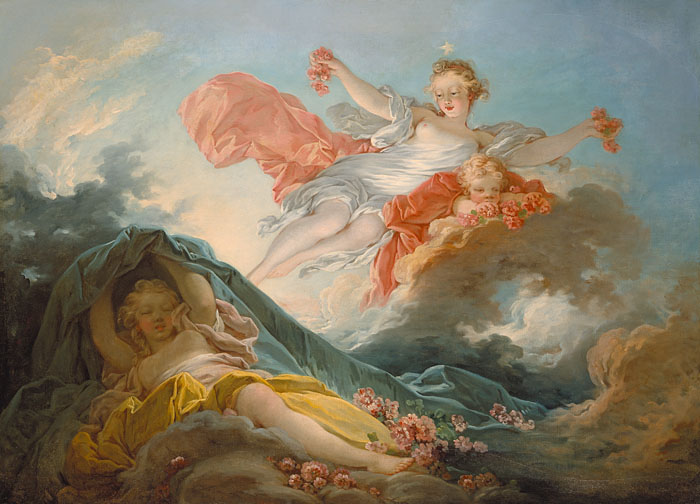
Jean-Honoré Fragonard: L’aurore
Perennialistiskt minimum
Begreppet philosophia perennis, lancerat av den kristne platonisten Agostino Steuco med hänvisning till Ficino, upptaget av Leibniz, välkomnat i den esoteriska traditionen, upptaget även av nythomismen, förstärkt av den traditionalistiska skolan, och nående en större läsande allmänhet genom Aldous Huxley, bär på grund av denna historia vad som kan uppfattas som en tung last av betydelser som långtifrån alltid är lätta att tillägna sig och heller inte alltid är uppenbart och självklart giltiga och sanna.
Därför kan det vara lämpligt att initialt betona den mer elementära innebörden av detta begrepp, ett minimum som är oberoende av de olika utformningar och bestämningar vi finner hos dessa tänkare och skolor.
Man kunde säga att den mest grundläggande betydelsen helt enkelt är att det är som det är, och med detta mena att den yttersta verkligheten, den som västerlandets distinkta akademiska skapelse, filosofin, försöker behandla inom metafysiken, existerar och är beskaffad på ett visst bestämt sätt och inte på ett annat. Detta är ett absolut minimum, så litet att den enda ståndpunkt som inte är förenlig med den är ett slags extrem irrationalistisk nihilism av ett slag som nödvändigt innefattar eller kanske är reducerbar till en blott semantisk irrationalistisk nihilism som omöjliggör all språkligt kommunicerad filosofi.
Varken skepticismen, agnosticismen, subjektivismen, relativismen eller solipsismen motsäger nämligen såvitt jag kan se detta. Att säga att vi inte kan veta något om den yttersta verkligheten är naturligtvis inte detsamma som att säga att den inte finns och inte är beskaffad på ett bestämt sätt och inte på ett annat: det är att säga att den yttersta verkligheten är beskaffad på det bestämda sättet att vi inte kan veta något om den. Men detta är självmotsägande: man säger sig veta om den yttersta verkligheten att den är beskaffad på sådant sätt att vi inte kan veta något om den.
Här bör parentetiskt tilläggas att agnosticismen historiskt också har visat sig självmotsägande på en lägre logisk nivå. Den har såvitt jag förstår exempelvis hävdat att det kan finnas en allsmäktig Gud, men att vi inte kan veta något om det. Men om agnosticismen accepterar att det kan finnas en allsmäktig Gud, måste av allmaktens definition följa att denna Gud kan ge oss kunskap om sin existens. Skulle det förhålla sig så att denna Gud finns, är det således principiellt möjligt för oss att veta det, och agnosticismen faller.
Det vaga allmaktsbegreppet är naturligtvis religiöst snarare än filosofiskt, och har givits problematiska filosofiska definitioner. Men argumentet mot agnosticismen är egentligen inte beroende av det. Agnosticismen tvingas helt enkelt säga att den inte accepterar att det kan finnas en Gud som kan ge oss kunskap om sig själv; att, vad denna Gud än i övrigt kan eller inte kan göra, kan han inte göra detta. Men på vilka grunder kan agnosticismen hävda detta? Den kan ju inte säga att den vet det.
Att säga att det inte finns någon yttersta verklighet eller att vi inte kan veta om det finns någon yttersta verklighet är självmotsägande – det är påståenden om den yttersta verkligheten. Att säga att den yttersta verkligheten är beskaffad på ett sätt vid en tid och på en plats och på andra sätt vid andra tider och på andra platser, eller att den förändras av oss, vår kunskap, vårt perspektiv, vår spatiotemporala situeradhet, våra mänskliga egenskaper, vår kulturella betingelse, vår vilja eller vår verksamhet – allt detta utsäger också på en s.a.s. högsta – yttersta – betydelsenivå att den yttersta verkligheten existerar och är beskaffad på ett visst sätt och inte på ett annat. För alla dessa ståndpunkter gäller faktiskt, förefaller det mig, på denna nivå att den yttersta verkligheten är objektivt given och kan upptäckas av eller avhöljas för oss.
Att förstå alla de ovan nämnda tankeriktningarnas nödvändiga affirmation av denna sanning är kanske i sig ett icke oväsentligt filosofiskt och i vid mening rationellt minimum, eftersom deras självmotsägande eller, i de flesta av fallen, s.k. självrefererande innebörd, såväl som innebörden av självreferentialiteten i sig, ännu ofta ser ut att vara otillräckligt förstådda. Det innebär redan ett erkännande av sanningen och dess objektivitet, och även ett mått av delaktighet i den. Logos visar sig närvarande även där man försöker förneka det.
Ett perennialistiskt minimum måste således innefatta sanningen att det är som det är. Men eftersom denna sanning på de sätt jag beskrivit också bejakas av alla de ovan nämnda riktningarna, liksom naturligtvis även av materialismen o.s.v., måste ett perennialistiskt minimum för att vara meningsfullt och användbart omfatta mer. Det räcker inte att säga att den yttersta verkligheten är och att den är som den är. Åtminstone något för perennialismen specifikt måste också utsägas om hur den är.
Här kan man dock för många syften fortfarande hålla kriteriet mycket begränsat och allmänt, så att det verkligen förblir en fråga om, och är meningsfullt att tala om, just ett minimum. Den traditionalistiska skolan, d.v.s. den inledningsvis nämnda specifika riktningen i den vidare perennialistiska strömning som generellt måste sägas vara traditionalistisk i en likaledes bestämd men dock vidare mening, ställde sig ofta – i synnerhet Guénon – avvisande till begreppet idealism. Guénon förknippade det med det allmänna filosofiska “skol”-väsendet och -fenomenet, inte bara i den moderna akademiska världen utan redan hos grekerna. Ja, för Guénon är det karaktäristiskt för filosofin som sådan, som i sig är en del av och konstitutiv för en distinkt antitraditionalistisk dynamik i västerlandet.
Till detta kommer Guénons uppfattning av en specifik typ av dualitet av idealism och materialism som en karaktäristisk produkt av denna antitraditionalistiska, relativistiskt skolproducerande filosofi. Sannolikt måste denna uppfattning ifrågasättas, och såväl idealismen som filosofin i allmänhet definieras på sätt som undviker dessa begränsningar. Både perennialismen som traditionalismen är i viss mening nödvändigt implicita i idealismen förstådd på detta sätt, oavsett vilka invändningar man av historiska eller andra skäl må ha mot dessa termer såväl som mot idealismen.
Även Coomaraswamy avvisade Guénons uppfattning på dessa punkter, och lyfte fram aspekter av västerlandets klassiska tänkare som Guénon överhuvudtaget inte berörde. På denna punkt är Coomaraswamy en mer typisk representant för den vidare perennialistiska störmningen i vad som trots Guénon fortsatt kallas den traditionalistiska “skolan”. Det måste sägas att även utvecklingen inom den guénonska traditionalismen visar att i synnerhet i det samtida västerlandet skoldifferentieringen och därmed skolbegreppet är nästan omöjliga att undvika. Också andra avvikelser från Guénon inom traditionalismen gör detta uppenbart.
Till det perennialistiska minimum hör således, vill jag här föreslå, uppfattningen att den verklighet som är som den är också är på det sätt som idealismen i dess mest allmänna definition, innefattande inte bara den moderna idealismen utan den platonska traditionen, aspekter av vissa högtstående delar av den västerländska esoterismen och mystiken, Vedanta, och motsvarande sanningar i jämförbara icke-västerländska traditioner, anger att den är. Minimum kan således sägas utgöras av allmän rationalitet i vid mening, allmän objektivism, d.v.s. objektivism på den högsta logiska nivån, och allmän idealism (som ger en mer specifik, högre innebörd också åt rationaliteten och objektivismen).
På detta sätt kan vi, tror jag, erhålla ett minimum som med undantag för den irrationalistiska nihilismen, skepticismen, agnosticismen, subjektivismen, relativismen, solipsismen och materialismen och dess varianter kan förstås som liggande bortom den filosofiska skolmångfalden såväl som bortom vad moderniteten förstår som religionerna och de religiösa konfessionerna, men som likafullt är tillräckligt innehållsligt bestämt för att vara inte bara meningsfullt utan i hög grad nödvändigt i dagens filosofiska, allmänintellektuella och kulturella klimat.
Att föredra att hålla sig till filosofin och tala om idealism, och även fördjupa sig i de västerländska skolskillnaderna inom den allmänt definierade idealismen, är givetvis naturligt för västerlänningar som är formade av och arbetar i en specifik, konkret, av den västerländska kulturen bestämd historisk situation. Det är lätt att se problemen med vissa av de associationer som philosophia perennis-begreppet av historiska skäl kan ge, såväl som med de ensidigheter det perennialistiska traditionalismbegreppet kan uppfattas som representerande i just den historiska situation där det nyskapande i en mer allmän traditionalism – men innefattande också den specifika traditionalistiska skolans metafysiska sanningars fenomenella manifestationsformer – måste betonas i sådan utsträckning att denna traditionalism kan definieras som konvergerande mot vad som kan kallas en alternativ modernitet.
Men att av dessa skäl föredra att tala om idealism behöver alltså inte innebära att den försvarade ståndpunkten är oförenlig med de perennialistiska strömningarnas allmänna sanningar och metafysiska essens. Dessa kan tvärtom betraktas som en del redan av idealismens definition.
Joseph Poelaert: Le Palais de Justice, Bruxelles

Stig Strömholm: Sverige 1972
Försök till en lidelsefri betraktelse
Norstedts, 1972
Baksidestext:
 “Det är alltigenom möjligt, att socialismen eller svensk socialdemokrati trots alla invändningar dock i grova drag utgör den rimligaste ordning man kan nå fram till i en värld som i övrigt är så orimlig som vår. En enskild bedömare har inte rätt att med tvärsäkerhet utesluta den möjligheten. Har emellertid en sådan bedömare gjort sig mödan att arbeta sig igenom ett urval av frågor som förefaller honom väsentliga, så har han också skyldighet att redovisa sina slutsatser. Mina, som må vara välgrundade, tvivelaktiga eller befängda, tvingar mig att avvisa socialismens anspråk.” Det är den lågmälda och tveksamma slutsats, eller med författarens ord “tillfälliga vilopunkt”, till vilken Uppsalaprofessorn Stig Strömholm når efter en högst personlig men samtidigt allmängiltig analys av en rad svenska samhällsproblem med tyngdpunkt på dem som rör “människoproduktion och människohantering”.
Innehåll:
Förord
Inledning: Sverige och världen
I. GRUNDELEMENT
1. Underlaget
2. Mönster och idéer
3. Förändringsfaktorerna
4. Låsningsfaktorerna
5. Korrigeringar och konkretiseringar
6. Idéerna som handlingsmotiv
7. Idébildningen. Elitens censur.
8. Debatten – de explicita idéernas torg
9. De explicita idéerna: det svenska sortimentet
10. De implicita idéerna
11. De tysta idéerna
12. Konkretisering: Det mördande samhället
II. BESLUTEN I SAMHÄLLET
13. Ideologier och beslutsprocesser. Inledning
14. Olika beslutsmodeller. Den “sakliga”
15. En beslutsram: lagen
16. Utbildningsväsendet och beslutsprocesserna
17. Åter till beslutsmodellerna. Den “folkliga” modellen
18. Den “fackliga” beslutsmodellen
19. Modellerna konfronterade: företagsdemokrati
20. Beslutsprocesserna: krav och möjligheter
III. GRUPPER OCH GRUPPINTRESSEN
21. Eliterna – problem och funktioner
22. Svenska eliter – finns de?
23. En specialelit: politikerna. Slutsatser
24. Elit och antielit. Konkretisering och korrektion
25. Frihet, jämlikhet och äganderätt. Inledning: friheten
26. Den absoluta frihetssfären
27. Frihet och ägande
IV. STYRNINGEN
28. De praktiska styrningsmöjligheterna
29. Samhällsstyrning och moral
30. Samhällsstyrning och kriminalpolitik
31. Samhällsstyrningens resultat. Korrektioner och konkretiseringar
V. GISSNINGAR
32. Hur skall det gå?
33. Tillfällig vilopunkt
JOB:s kommentar:
Strömholms enda utförliga, mångsidiga och systematiska analys av sin samtids Sverige. Väl värd att uppmärksamma fyrtio år efter dess utgivning, främst som tidsdokument, för vad den säger om den tidens Sverige och inte minst dess konservativas horisont, men också som uttryckande mer allmänt giltiga insikter och värden.
Canova: Amore e Psiche

Axess: Varför?
En av mina kommentatorer tycker att jag i inlägget ‘Farväl till Axess’ försummar att svara på frågan varför tidskriften utvecklats på det sätt den nu definitivt visat sig ha gjort.
Det är onekligen en viktig fråga. Svaret är, tror jag, följande. Axess’ liberalkonservatism framstår som historiskt och filosofiskt ytlig. Redaktionen tycks inte ha något djupare grepp om 1900-talshistorien, och inte på allvar ha studerat de centrala, relevanta konservativa tänkarna (uppenbarligen inte ens Scruton, trots att de själva introducerar honom). Därför verkar de sakna tillräckliga intellektuella resurser inte bara för att motstå den liberalsocialistiska ideologin och utvecklingen mot globalistisk centralisering, åsiktslikriktning, kontroll och förtryck, utan för att överhuvudtaget förstå den.
Följden blir att de inte kan annat än acceptera dem. Deras kulturkonservatism begränsas därmed till en liten ensam förstaklassvagn i det stora globalistiska, förenat postmarxistiska och masskulturella tåget, en vagn som trafikledningen av allt att döma avser att förr eller senare vid någon station koppla av.
Detta är bara ett uttryck för borgerlighetens mer allmänna, gradvisa försvagning och urholkning. När den bildningsborgerlighet som en gång kunde bidra med allt det som gick utöver klass- och egenintresse och materialism är borta, återstår bara den kontinuerliga anpassningen, kapitulationen, förvandlingen.
Här tillkommer också ett moment av karaktärssvaghet. Man orkar helt enkelt inte stå emot mediabombardemanget, även när man skulle vilja. I synnerhet blir det svårt för männen när de hela tiden är omgivna av närstående kvinnor som tar till sig dess budskap (för att inte tala om alla romaners, som bara de läser) mycket snabbare än de själva. För kvinnor är det i allmänhet centralt i livet att passa in och vara socialt accepterad, oavsett sammanhang, och sedan länge lär ju dessutom feminismen att egen karriär och glastaksproblematik är avgörande i sig, oavsett arbetets karaktär och innehåll.
Kvinnor som under hela sin uppväxt, för några årtionden sedan, förblivit i en distinkt borgerlig miljö och förställningsvärld och engagerat sig i MUF, kunde efter bara några år inom humaniora och samhällsvetenskap på universitetet via de där dominerande teoretiska riktningarna förvandlas till gapiga militanta radikaler med brinnande hat mot det mesta av det deras manliga jämnåriga från samma miljö åtminstone till viss del fortfarande skulle ha velat försvara.
För männen i dagens borgerlighet är dessa kvinnor ofta deras egna mödrar. Och allteftersom den kulturella utarmningen forskrider, när egna kunskaper, insikter och övertygelser som man eventuellt fortfarande övertagit från fäder eller far- och morföräldrar och andra i äldre generationer ytterligare tunnas ut och förbleknar, när mer typiskt manliga egenskaper går slutligt förlorade i den allmänna feminiseringen, och när inte bara de kvinnliga cheferna utan mödrarna, systrarna, flickvännerna/fruarna och döttrarna överhuvudtaget inte går att påverka med argument, tystnar man, förvandlas man personlighetspsykologiskt till vad Motpol skulle kalla tönt-mesar eller något liknande, som resten av livet driver apatiskt lallande med strömmen, pysslande med småsaker, yttrande endast sådant som accepteras av den kvinnliga regimen.
Självklart utsätts många dessutom i den egna yrkesverksamheten hela tiden för det mer direkta trycket från den ekonomiska och organiserade intressepolitiska maktens ideologer och åsikts- och opinionsdirigenter. Det gäller utan tvekan i eminent grad för Axess-redaktionen. Det kulturkonservativa engagemanget reduceras till harmlösa marginalanteckningar till globalistplutokraternas radikala agenda.
Alternativet till allt detta, den enda intellektuella motrörelsen, har skapats av sådana som lyckats förbli oberörda av och fristående från hela denna utveckling eller tidigt genomskådat den, och som kunnat nå inte bara yngre män och även kvinnor inom borgerligheten utan också besvikna socialdemokrater och arbetare med sin introduktion och återintroduktion av glömda, eller snarare bortträngda, tänkare, idétraditioner, konstriktningar, historiska fakta och allmänna större utblickar och perspektiv.
Många har hoppats att Axess skulle tillhöra dessa introduktörer. De känner sig nu, som många av reaktionerna här och på annat håll visar, inte bara besvikna, utan lurade, ja nästan chikanerade: de finner det i ljuset av den nu aktuella programförklaringen och den utveckling på vilken den utgör en kulmen genant att ha försvarat tidskriften.
Men reaktionernas omfattning och karaktär visar samtidigt att de inte har någon anledning att förtvivla. Motrörelsen är redan stark.
 Olle Bengtsson