Live in Philadelphia, 1979. From the album The Yes Album (1971). Wikipedia
Category: Music
Geraldine Farrar: L’air des bijoux
1913
E. Michael Jones: Dionysos Rising
The Birth of Cultural Revolution Out of the Spirit of Music
Ignatius Press, 1994 Amazon.com Liberty Press
Back Cover:
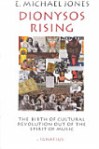 Following up his best-seller, Degenerate Moderns, Jones reveals how major figures connected with modern music projected their own immorality into the field of music which has been the main vehicle of cultural revolution in the West. For the first time ever, a unified theory of music and cultural revolution links the work of figures like Wagner, Nietzsche, Schönberg, Jagger and others to show the connection between the demise of classical music and the rise of rock ‘n’ roll.
Beginning with Nietzsche’s appropriation of Wagner’s opera Tristan and Isolde, music became the instrument for cultural upheaval. What began at the barricades of Dresden in 1849 found its culmination at Woodstock and Altamont and the other Dionysian festivals of 1969. Jones shows the connection between the death of classical music and the rise of the African sensibility which Nietzsche saw as the antidote to Wagner prostrating himself before the cross in Parsifal. Nietzsche prophesied the end of the age of Christ/Socrates and the return of the spirit of music to philosophy. That return took place at the end of 1969 at an abandoned racetrack outside of San Francisco, and the world has never been the same.
“And a man who has not ‘music’ in him is apt to disintegrate states since music is equally suggestive of personal love or political concord.” G. Wilson Knight, The Shakespearean Tempest
Chapters:
1 Richard Wagner: Chromaticism, Adultery, and the Beginning of Our Cultural Revolution
2 Friedrich Nietzsche: Transvaluation of All Values as the Prosecution of the Cultural War
3 Arnold Schönberg: Craving the Law and the Totalitarian Reaction
4 Sympathy for the Devil: Theodor Adorno, Aleister Crowley, Mick Jagger
Reviews:
“It hits many a nail on the head and names many a problem that needs a name.” VROON, American Record Guide
“E. Michael Jones posits the highly povocative thesis that the roots of cultural upheavel that culminated in the sixties can be traced back to Richard Wagner’s revolt against classical rational ideals in musical composition coupled with his ‘revolutionary’ sexual ethics. The book is gripping in its story line – Nietzsche, Schonberg, and Mick Jagger form the rest of Jones’s main cast…Jones puts his finger on a notion that is at least as old as Plato’s Republic. Music, he contends, acts directly on the soul. Disordered music leads to disordered lives, which lead to disorder in the state…The idea deserves thoughtful consideration.” E.W.C., The Religion and Society Report
“E. Michael Jones takes a meat axe to Wagner’s Tristan und Isolde in his provocative Dionysos Rising. Great book…” Douglas Wilson, Agenda Magazine
“…well-written and lucid. Catholics engaged in the Culture of Life will find the book indispensible.” Michael Chapman, HLI Reports
“For a first hand account of how the Western musical tradition was deconstructed, there is no better place to begin than with E. Michael Jones’ eminently readable book.” Social Justice Review
“Music can help a person develop an ordered and virtuous soul, or it can tend to disrupt a person’s soul. This fact was extensively illustrated by E. Michael Jones in Dionysos Rising.” Eric J. Scheske, New Covenant
“…highly acclaimed trilogy on modernity: Degenerate Modems, Dionysos Rising, and Living Machines.” Reformation & Revival Journal
About the Author:
E. Michael Jones is editor of Culture Wars and author of many books.
JOB’s Comment:
Jones makes some extreme interpretations on specific points, and ignores complexifying exceptions, but on the whole presents a convincing general picture of modern music and its effects.
Jane: Moonstone
From their album Sign No. 9 (1979).
Céline Dion: Je sais pas
Official Music Video 1995
Beniamino Gigli: Di’ tu se fedele
1943
Anna Netrebko: D’Oreste, d’Aiace
When and where? Not of decisive importance perhaps.
Genesis: Eleventh Earl of Mar
From the album Wind and Wuthering (1976).
This song is about John Erskine, Earl of Mar and the Jacobite rising of 1715.
David Bowie: Warszawa
From his album Low (1977).
Understanding Roxy Music
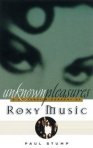
I should perhaps translate my Swedish post on Bryan Ferry. Most books about Roxy Music are stuck in the general understanding I there questioned. The most extreme is the British novelist Michael Bracewell’s Re-make/Re-model: Art, Pop, Fashion and the Making of Roxy Music, 1953-1972 (2007), published, like several similar books in recent decades (as I remember it), by Faber & Faber; but the general interpretation is not very different from Paul Stump’s in Unknown Pleasures: A Cultural History of Roxy Music (1998). Bracewell is also the author of Roxyism (2004).
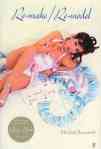 1972 was the year of Roxy’s debut album, so what the Bracewell’s 2007 book deals with is their prehistory only. “Re-make/Re-model“, Amazon advertises, “tells the extraordinary and largely unknown story of the individuals and circumstances that would lead over a period of almost twenty years to the formation of Roxy Music – a group in which art, fashion and music would combine to create in the words of its inventor, Bryan Ferry, ‘above all, a state of mind’…Written with the assistance, for the first time, of all of those involved, including Bryan Ferry, Brian Eno, Andy Mackay and Phil Manzanera; the fashion designer Antony Price, the founding guru of Pop art, and Bryan Ferry’s tutor, Richard Hamilton, and many more, Re-make/Re-model is also the account of how Pop art, the avant garde underground of the 1960s, and the heady slipstream of London in the Sixties was transformed into the fashion cults of revivalism, nostalgia and pop futurism in the early 1970s.”
 Although the author exaggerates, it is true of course that Roxy did develop to some extent out of the currents and the general milieu he describes. It is also true that they themselves still sometimes reconnect to them for various reasons. And I am not saying that murk is unimportant or insignificant in this context. But as all those defending the Bracewellian image of Roxy are well aware, this is not the whole story. Although there remains much that I disapprove of, there is also an alternative, immanent telos present in their – and particularly Ferry’s – development, a different side clearly discernible as a potentiality even on the fist, 1972 album, and pointing in a different direction. My argument (the post dealt with both Ferry and Roxy) was that this other side, even if imperfectly fruitioned, is misunderstood and wrongly dismissed, and that in reality it accounts for the strength also of the earliest Roxy albums.
The transformation into “the fashion cults of revivalism, nostalgia and pop futurism in the early 1970s” which Bracewell speaks about is at least one key to understanding this. Revivalism, nostalgia and pop futurism is not a full and adequate description of the alternative telos, but the progression towards the latter, or the continued realization of the alternative potentialitity, the next major step (after the eponymous debut album) in which was taken with the Stranded album (1973), could be conceived as a further development of what began as this transformation. The studied tastelessness of the early albums, and not least the album covers, gradually gives way to something that at least to some extent aspires to be taste (to what extent it succeeds is, admittedly, an open question).
I have several times explained that I find a more proper kind of criticism of these genres of music important, criticism with some other perspectives and with different criteria from the ones this far dominant. But it could certainly be argued that the subject is not important enough to devote time to a translation of the Ferry post, which was written in response to some critical comments on the presence of YouTube-clips with Ferry in this blog. And keeping things in perspective, with a proper sense of the relative weight of what we are dealing with here, it might be considered enough, at least for now, to simply signal that there is a critical rationale of this relatively complex kind behind my continuing to post Roxy and Ferry posts now and then. The rationale is complex relative to the ones behind my posting of music in other genres – like progressive rock, or opera – which are not such as to require the complexity. If Roxy’s genre should be represented here at all, they should be represented.
 Olle Bengtsson