

Category: Arts
Antonio López Aguado, Custodio Teodoro Moreno & Francisco Cabezuelo: Teatro Real, Madrid

Nikolay Kasatkin: Torfyanka

Handke, Serbien och akademien
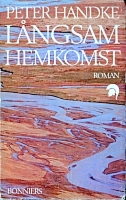
Nobelpriset till Peter Handke är överraskande. Det enda verk av honom som jag är förtrogen med, och bara delvis, är romanen Långsam hemkomst (Langsame Heimkehr), som jag åtminstone började läsa när den utkom i svensk översättning 1981. Men han har med all säkerhet gjort sig förtjänt av priset.
Vad som gör tilldelningen överraskande är att den sker trots Handkes kontroversiella försvar för Serbien under krigen i Jugoslavien på 90-talet, som ledde till en utdragen, skandalbetonad debatt.
Och det faktum att Svenska Akademien, som man kunde tro nu mindre än någonsin ville framstå som politiskt inkorrekt, kunnat bortse från och inte låtit sig påverkas av detta, utan i stället vederbörligen sett till Handkes litterära meriter, gör överraskningen glädjande.
Tolkningen har till och med framförts att det skulle vara ett avsiktligt provokativt val från akademiens sida, ett svar på vad Katarina Frostenson menar vara DN:s försök att genom sina angrepp på ledamöter styra dess inriktning, ett demonstrativt uttryck för att akademien tänker fortsätta värna sin integritet.
Den ibland utmärkte tidigare ständige sekreteraren Horace Engdahl, som nästan ensam stod emot den politisk-opportunistiska mediahetsen och allra mest fick klä skott för allt akademien anklagades för, är dock NATO-vurmare, och skulle därmed kunna tänkas vara obenägen att sympatisera med Handke. Engdahl har gett intryck av att felaktigt uppfatta sitt ställningstagande för NATO som en del av den politiska obekvämhet som han började utveckla redan långt före Arnault-krisen.
Men det är svårt att se hur de andra ledamöterna, som alltså inte uppvisar Engdahls allmänna självständighet, skulle ha vågat fatta detta beslut om årets pris, ja mot hans vilja. Det mest sannolika är därför att Engdahl för Handkes litterära förtjänsters skull höjt sig över sitt märkliga och inkonsekventa NATO-försvar. Och kanske alltså rentav för att möjliggöra valet som en fullt medveten ripost till DN och andra media, där han visste att det skulle väcka skandal. Det är i så fall storartat och imponerande.
Handkes kraftfulla fördömande av den “västliga” bombpropagandan gör honom ovanligt intressant och viktig som europeisk intellektuell även bortom skönlitteraturen. Här är en artikel om honom i serbiska Telegraf. Simon O. Pettersson skriver om honom i Ny Tid, och på Twitter tipsar Urban Lindström om Kurt Gritschs bok Peter Handke und “Gerechtigkeit für Serbien”: Eine Rezeptionsgeschichte från 2009.
–
Diana Johnstone: Fools’ Crusade
Le Orme: Sguardo verso il cielo
From their album Collage (1971).
Pietro Bellotti: Capriccio architettonico

Donaustraße, Ingolstadt

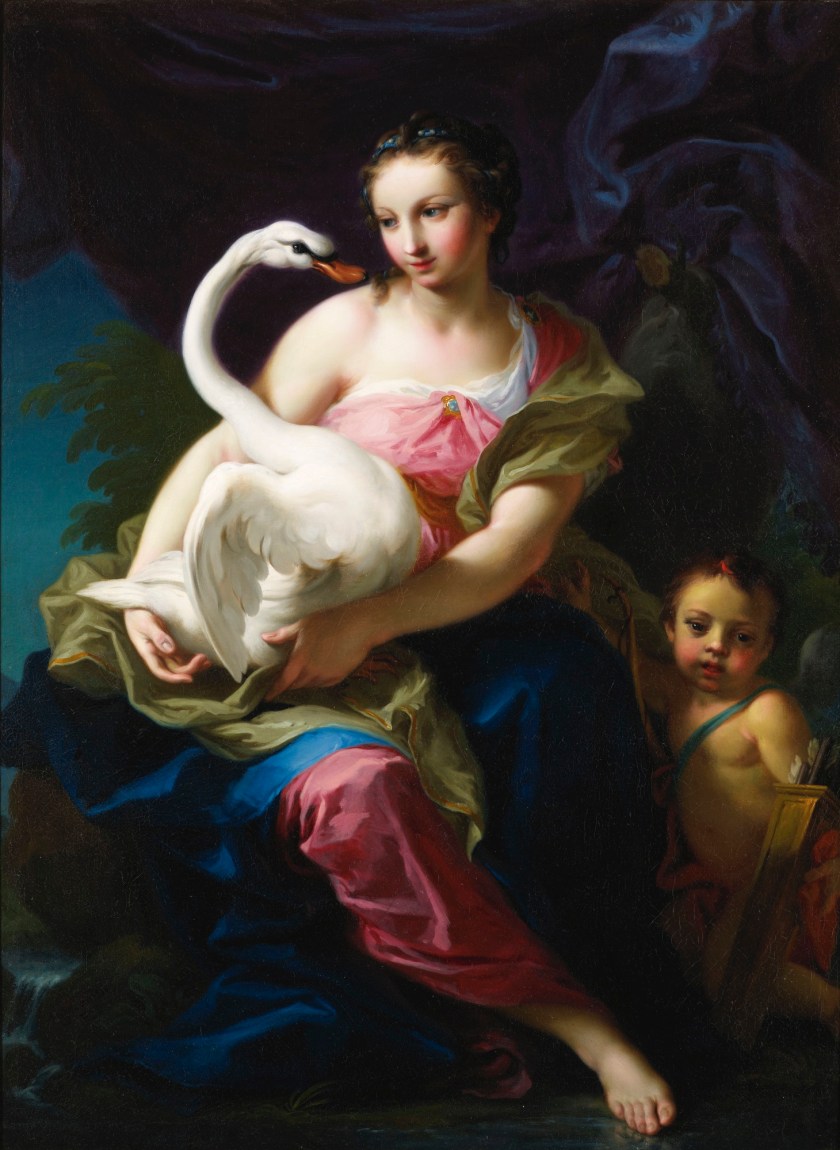
Giambettino Cignaroli: Leda e il cigno
Anna Johansson
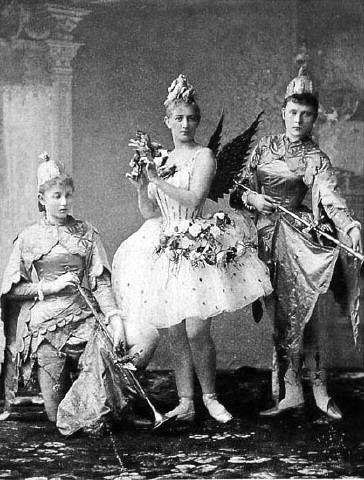
Russian ballerina, 1860-1917.
Genesis: Supper’s Ready
From their album Foxtrot (1972); Supper’s Ready.
This is considered by many of the best prog connoisseurs to be the greatest of all prog songs. The reason why I do not agree really has little to do with the qualities of the song itself, in its own category, and almost only with the very special factors that place Yes in a category of their own. That category is such that comparison with Genesis, beyond noting the general categorial differences, is seldom meaningful.
On my analysis, i.e., primarily in terms of the direction in which Yes were moving, nothing comes even close to what the philosopher and critic Bill Martin, the author of the best book on Yes, calls their “main sequence” of albums in the 1970s. Yes must simply be left out of most comparative discussions. But Genesis, in their corresponding main sequence, are very clearly the second greatest prog band. There is some considerable distance to the rest of the great prog bands, which, among themselves, are not quite as easily ranked. And it must be said that Supper’s Ready does have the structure of a major Yes song, in fact even the hymnic quality in the concluding section. If, despite what I just said, anything does come close to Yes, it is this.
Ranking of this kind does have a place in criticism, if done in a careful and serious way, but must never be exaggerated, never downplay uniqueness and a plurality that makes hierarchization irrelevant, and it must also avoid undue generalization of the kind that obscures the fact that individual songs of these last mentioned bands are sometimes on the same level as Genesis.
It seems to me we still await the further development of the genre of progressive rock, beyond what was achieved by these bands in the 70s – the further development, the further progression, which is what I am primarily interested in, because of the enormous artistic potential that has, in principle, already been revealed. Prog has of course developed, in a sense, but not, in my view, in the direction I always hoped for, i.e. further beyond rock, away from rock. Instead, there have in some cases been admixtures with the new problematic form of rock called “metal”. But I am not familiar with everything that has happened in prog in recent decades, and it is possible that I have missed things that match the criteria I have suggested.
 Olle Bengtsson