From his album Low (1977).
Category: Arts
Vörösmarty Square with Café Gerbeaud, Budapest
Roger Kimball: Art’s Prospect
The Challenge of Tradition in an Age of Celebrity
Ivan R. Dee, 2004 Amazon.com
Back Cover:
 Most of the really invigorating action in the art world today is a quiet affair, Roger Kimball observes. It takes place not at the Tate Modern in London or at the Museum of Modern Art in New York, not in the Chelsea of TriBeCa galleries but off to one side, out of the limelight. It usually involves not the latest thing but the permanent things. They can be new or old, but their relevance is measured not by the buzz they create but by the silences they inspire. In brilliant reviews and essays, Art’s Prospect illuminates some of the chief spiritual itineraries of modern art.
“Kimball’s art reviews are lucid mini-educations in the exercise of taste…If you find most of today’s art establishment pretentious, ideologically silly, and largely devoid of taste and talent, you will love this collection of forty sharp-witted articles.” Brian J. Buchanan, Nashville Tennessean
“Roger Kimball is one of the few critics writing in art today who combines an acute visual sense of beauty with historical knowledge, a coherent philosophy of art, and an ability to write clean, vigorous, and accurate English. To these virtues he ads refreshing common sense. So there is much to be learned and enjoyed in these stimulating, provocative and elegant essays.” Paul Johnson
“Far from being just another polemical rant, Art’s Prospect takes us inside the heads of those who execute and market contemporary art, helping us understand what they think they are doing, and why doing it is such a profitable business.” First Things
Reviews cited by Amazon:
“Kimball knows his business…His reviews make me hungry to see what I’ve missed.” The Weekly Standard
“One of the ablest and most philosophically skilled critics on the current scene.” Frederick Morgan
“A trenchant and courageous critic…his positive values and his historical grasp make him far more than a mere polemicist.” John Gross
“One of the most candid and perceptive critics of American culture.” Gertrude Himmelfarb
“A scathing critic but one whose tirades are usually justified…his intellectual rigor is refreshing.” Catherine Saint Louis, The New York Times
“Roger Kimball of the New Criterion is at it again, for which throughtful readers should be grateful.” First Things
“His positions are not always predictable but are consistently well argued.” Cybereditions Critics Series
“Witty, insightful, and inciting compilation of twenty years of art reviews…Kimball’s opinions have an appealing candor, and, delivered in a lively colloquial style, make for engaging, intelligent reading.” Art Scope
“An approach that, in many ways, I very much enjoy.” Keith Russell, Artschuttlebutt.com
“In a penetrating and often hilarious series of articles he takes on what he considers the ‘hucksterism’ of both artists and museum directors. Kimball never tries to hide his stripes. The result is lively and informative.” Nancy Chaplin, Kliatt
About the Author:
Roger Kimball is managing editor of the New Criterion and an art critic for the London Spectator. His other books include Lives of the Mind, Experiments Against Reality, The Long March, and Tenured Radicals. He lives in South Norwalk, Connecticut.
JOB’s Comment:
This is one of the books, or compilations, published by Kimball after my essay on him in 2001. I should perhaps return to him and say something about these more recent books too; this far, I have only read this one, which I found especially interesting since little or nothing of his art criticism was represented in the books I focused on.
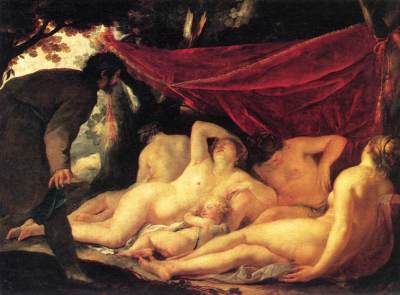
Jacques Blanchard: Vénus et les Grâces surprises par un mortel
Understanding Roxy Music
I should perhaps translate my Swedish post on Bryan Ferry. Most books about Roxy Music are stuck in the general understanding I there questioned. The most extreme is the British novelist Michael Bracewell’s Re-make/Re-model: Art, Pop, Fashion and the Making of Roxy Music, 1953-1972 (2007), published, like several similar books in recent decades (as I remember it), by Faber & Faber; but the general interpretation is not very different from Paul Stump’s in Unknown Pleasures: A Cultural History of Roxy Music (1998). Bracewell is also the author of Roxyism (2004).
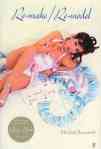 1972 was the year of Roxy’s debut album, so what the Bracewell’s 2007 book deals with is their prehistory only. “Re-make/Re-model“, Amazon advertises, “tells the extraordinary and largely unknown story of the individuals and circumstances that would lead over a period of almost twenty years to the formation of Roxy Music – a group in which art, fashion and music would combine to create in the words of its inventor, Bryan Ferry, ‘above all, a state of mind’…Written with the assistance, for the first time, of all of those involved, including Bryan Ferry, Brian Eno, Andy Mackay and Phil Manzanera; the fashion designer Antony Price, the founding guru of Pop art, and Bryan Ferry’s tutor, Richard Hamilton, and many more, Re-make/Re-model is also the account of how Pop art, the avant garde underground of the 1960s, and the heady slipstream of London in the Sixties was transformed into the fashion cults of revivalism, nostalgia and pop futurism in the early 1970s.”
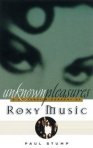 Although the author exaggerates, it is true of course that Roxy did develop to some extent out of the currents and the general milieu he describes. It is also true that they themselves still sometimes reconnect to them for various reasons. And I am not saying that murk is unimportant or insignificant in this context. But as all those defending the Bracewellian image of Roxy are well aware, this is not the whole story. Although there remains much that I disapprove of, there is also an alternative, immanent telos present in their – and particularly Ferry’s – development, a different side clearly discernible as a potentiality even on the fist, 1972 album, and pointing in a different direction. My argument (the post dealt with both Ferry and Roxy) was that this other side, even if imperfectly fruitioned, is misunderstood and wrongly dismissed, and that in reality it accounts for the strength also of the earliest Roxy albums.
The transformation into “the fashion cults of revivalism, nostalgia and pop futurism in the early 1970s” which Bracewell speaks about is at least one key to understanding this. Revivalism, nostalgia and pop futurism is not a full and adequate description of the alternative telos, but the progression towards the latter, or the continued realization of the alternative potentialitity, the next major step (after the eponymous debut album) in which was taken with the Stranded album (1973), could be conceived as a further development of what began as this transformation. The studied tastelessness of the early albums, and not least the album covers, gradually gives way to something that at least to some extent aspires to be taste (to what extent it succeeds is, admittedly, an open question).
I have several times explained that I find a more proper kind of criticism of these genres of music important, criticism with some other perspectives and with different criteria from the ones this far dominant. But it could certainly be argued that the subject is not important enough to devote time to a translation of the Ferry post, which was written in response to some critical comments on the presence of YouTube-clips with Ferry in this blog. And keeping things in perspective, with a proper sense of the relative weight of what we are dealing with here, it might be considered enough, at least for now, to simply signal that there is a critical rationale of this relatively complex kind behind my continuing to post Roxy and Ferry posts now and then. The rationale is complex relative to the ones behind my posting of music in other genres – like progressive rock, or opera – which are not such as to require the complexity. If Roxy’s genre should be represented here at all, they should be represented.
Roxy Music: Sentimental Fool
From the album Siren (1975).
Charles Joshua Chaplin – Academic Paintings
Kindle Book by Daniel Ankele and Denise Ankele
Ankele Publishing, 2011 Amazon.com
Book Description:
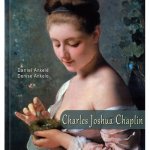 CHARLES JOSHUA CHAPLIN Art Book contains 30+ Reproductions of portraits and genre scenes with title,date and interesting facts page below. Book includes Table of Contents, thumbnail gallery and is formatted for all Kindle readers and Tablets (use rotate and/or zoom feature on landscape/horizontal images for optimal viewing).
BORN: June 8, 1825 in Les Andelys, Eure, France. DIED: January 30, 1891 in Paris, France.
MOVEMENT: Academic
INTERESTING FACTS: § In 1840, Chaplin studied at the Ecole des Beaux-Arts in Paris. § Chaplin often visited the studio of fellow Academic painter, Martin Drolling. § In 1845, he entered the salon with his Portrait of the Artist’s Mother. § Chaplin taught art classes exclusively for women at his studio. Among his students were Mary Cassatt and Louis Jopling.
NOTABLE WORKS: A Beauty with Doves, Girl with a Nest, Reverie, The Big Sister, The Soap Bubbles, A Song Silenced.
–
See also:
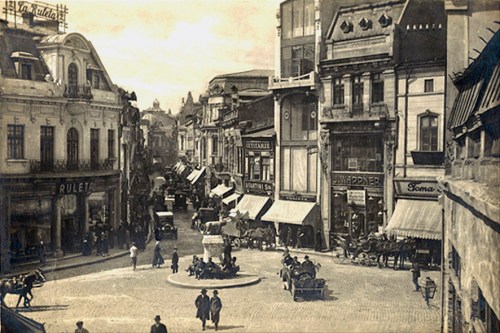
Lipscani, Bucharest
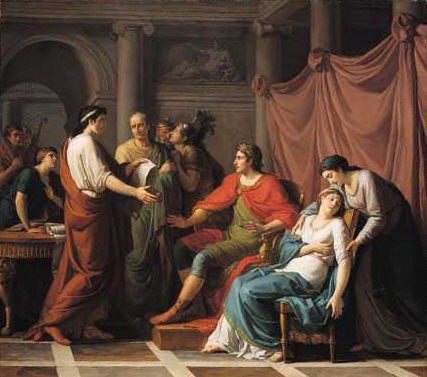
Jean-Joseph Taillasson: Virgile lisant l’Énéide à Auguste et Octavie
 Olle Bengtsson