Claes G. Ryn & Bertil Häggman: Nykonservatismen i USA

Gebers, 1971

Baksida:

RynVart går USA?

I USA upplever konservatismen som ideologi en renässans!

Alltfler universitetslärare, studenter och författare sluter upp kring denna ideologi och stöder Nixon-administrationen. Den amerikanska nykonservatismen har blivit en makt att räkna med!

Claes G. Ryn och Bertil Häggman har grundligt studerat den amerikanska nykonservatismen och dess förutsättningar och presenterar den här för svensk publik.

En central bok för den som ställer sig frågan – Vart går USA?

Claes G. Ryn, f. 1943, fil. kand. i statskunskap och nationalekonomi, doktorerar i statskunskap, statsvetenskapliga studier i USA som Rotary-stipendiat 1968-69.

Bertil Häggman, f. 1940, jur. kand., utrikesexpert med Sydostasien som specialitet, medarbetare i Sveriges Radios kulturprogram OBS!

Kapitel (vart och ett har många underrubriker):

1  Från laissez-faire till kulturkonservatism (Ryn)

2  Det konservativa uppvaknandet (Ryn)

3  Den nykonservativa litteraturvågen (Ryn)

4  Nykonservatismens politiska filosofi: Russell Kirk (Ryn)

5  Kritiken av liberalismen: James Burnham (Häggman)

6  En ny strategi för väst (Häggman)

7  Den libertarianska nationalekonomin och kritiken av Keynes (Ryn)

8  Den antiradikala ungdomsrevolten (Häggman)

9  Nixon-administrationen och den konservativa strömkantringen (Ryn)

JOBs kommentar:

“Nykonservatismen” åsyftar inte “neokonservatismen”, som vid denna tid ännu inte riktigt kunde urskiljas som en distinkt strömning (inte ens George H. Nash gör det i första upplagan av sitt kända arbete The Conservative Intellectual Movement in America Since 1945 som utkom fem år senare!), utan den äldre men vid denna tid ändå fortfarande nya konservativa rörelse som formerades under efterkrigstiden och nu började få politiskt genomslag (även i USA kallades den ofta “the new conservatism”); Häggman, som här bidrar med ett kapitel om James Burnham, blev dock senare utpräglad neokonservativ.

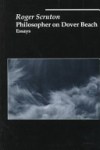
Roger Scruton: Philosopher on Dover Beach

Essays

St. Augustine’s Press, 1998 (1990)

Back Cover:
Scruton“The range is impressive, but un-nerving and episodic. His best piece is his long analysis of ‘Man’s Second Disobedience,’, his moralist’s assessment of the significance of the French Revolution…In Part III of the Collection…he is more outspoken and more lucid than elsewhere and, in places, savage.”  Esmond Wright, Contemporary Review

“Each essay has been constructed with considerable care, and the positions taken are clearly stated and soundly argued…He shows…that the philosopher-critic is alive and well…Recommended for all academic libraries.”  Library Journal

“[Scruton] writes eloquently of the way in which social bonds, if refashioned in contractual form, ‘become profane, a system of facade, a Disneyland version of what was formerly dignified and monumental.'”  Peter Clarke, London Review of Books
Scruton“It is a great pity that we in the United States do not have our own Roger Scruton. As his new collection of essays reminds us, he is an accomplished philosopher who writes trenchantly about many important political, social and religious issues, who cares passionately about art and culture and who is also a brilliant conservative polemicist…

Mr. Scruton has two great virtues as a critic. One is his ability to combine a delicate appreciation fo culture with the robust intellectual skills of a trained philosopher…

Mr. Scruton’s other great virtue is his habit of assessing things from the inside, taking them on their own terms. If his judgments are often harsh, one nevertheless comes away feeling that he has made the best case possible for his subject. This makes his criticism more devastating yet also more generous than the criticism of most other commentators.”  Roger Kimball, New York Times Book Review

The Essays:

I  PHILOSOPHY AND CULTURE

1  The philosopher on Dover Beach

2  Spengler’s Decline of the West

3  Understanding Hegel

4  Hegel as a Conservative Thinker

5  Gierke and the corporate person

6  Masaryk, Patocka and the care of the soul

7  Analytical philosophy and emotion

8  Modern philosophy and the neglect of aesthetics

9  Aesthetic experience and culture

II  CRITICAL ASIDES

10  Playwrights in performance: Pinter, Stoppard and Beckett

11  Peter Fuller as critic

12  Picasso and the women

13  Beastly bad taste: the work of Gilbert and George

14  Who owns art?

15  Radical critics: Harold Rosenberg and T. J. Clark

16  The photographic surrogate

17  In search of an audience

III  THE POLITICAL DIMENSION

18  The idea of progress

19  Man’s second disobedience: reflections on the French Revolution

20  Two enlightened Irishmen: G. B. Shaw and Conor Cruise O’Brien

21  The red and the green

22  A note on Bloch

23  The liturgy of the left

24  Ideologically speaking

25  Sexual morality and the liberal consensus

26  The usurpation of Australia

27  The left establishment

28  In defence of the nation

JOB’s Comment:

An extraordinarily rich and substantial collection of essays. The essays’ titles give an idea of Scruton’s versatility, and I list them since he should be carefully studied. But for all the deep and well-formulated insights in the fields of culture, politics, and society – Scruton is an essential thinker in our time – I suggest (and I have said this before) he must in fact be read with some discernment primarily in his own main field, philosophy, and in his other fields too, to the considerable extent that his problematic philosophical positions shape his understanding of them too.

His fundamental philosophical position depends on a certain understanding of the Lebenswelt, in terms of phenomenology, and of the scientific “worldview”, in terms of – well, science. I find his understanding of these things as well as of the relation between them to be basically mistaken, even as the intention to rescue the Lebenswelt in the face of scientific rationalism is a good one and many of his points are valid for those who accept or postulate that there is an objective reality corresponding to the ever-shifting theories and models that are the scientific “worldview”. The analysis and the arguments probably work, as it were, in a world where people actually believe this. The problem is that Scruton seems to ignore the philosophical reasons why this belief must be questioned (which is not at all to deny the value and validity of science, differently understood).

The Lebenswelt, I submit, is not what Scruton thinks it is, and not least because the scientific “worldview” is not what he thinks it is. The Lebenswelt is for Scruton a superficial yet precious phenomenon, and science a deep reality, the onesided modern emphasis on which threatens the values of the former. For me, the Lebenswelt is a comparatively deep – and indeed precious – phenomenon behind which and in which is hidden a still deeper, ultimate reality of spiritual nature; science is, in the respects Scruton has in mind, not really a worldview but a pragmatic fiction that threatens the values of the Lebenswelt primarily because it is thought to be something more than this. Scruton says he cannot bring himself to believe that, and he seems to regard it exclusively as a matter of religious faith.

But ultimately, only this understanding can save the values of the Lebenswelt from the illusions of scientific rationalism and its various misplaced applications. The traditional values of the Lebenswelt – and here we are talking of the whole edifice of culture, the arts, morality, society and religion, i.e., Scruton’s other fields – cannot be saved within and by means of this distinctly modern philosophical framework, disregarding the positions which traditionally underpinned the threatened values he cherishes and the defence of which, in their general worldview outline, is easily renewable and indeed continuously renewed by many philosophers.

Scruton explains his position in these regards not primarily in these essays, but, at greater length, in other works. But it is necessary to understand, and, so to speak, be on one’s guard against this central position when reading most of these essays, for his many valuable truths often, and quite unnecessarily, rest on this weak foundation of twentieth-century philosophy, combining its analytical and phenomenological strands. This is why discernment is needed: the many truths of his analyses need to be distinguished and separated from this philosophical context and inserted into the broadly idealist framework where they really belong.

Roger Kimball, cited above from the back cover, takes the same position with regard to these things as Scruton, and I have briefly set forth my argument against it in my essay on him in Humanitas.
St Andrews

St Andrews

Photo: Peter Gordon

Russell Kirk wrote the first version of The Conservative Mind here, as a doctoral thesis. The university conferred on him the degree of Doctor of Letters; as far as I understand he is still the only American who has been awarded this degree by St Andrews. While there, he also wrote an illustrated book about the town, St. Andrews (1954). Charming sections about St Andrews and the writing of The Conservative Mind are found in The Sword of Imagination (1995).

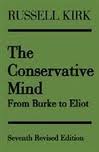
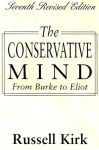
Russell Kirk: The Conservative Mind

From Burke to Eliot

Regnery Gateway, Seventh Revised Edition 1986 (1953; original subtitle: From Burke to Santayana)

Amazon.com, 2001 printing     Amazon.com, 2008 ed.

Back Cover:

KirkOne of the most widely reviewed and discussed books of our era, The Conservative Mind is an essay in the history of ideas that has produced great political consequences. For this study often is said to have worked a revival of conservative thought and policy in the United States.
“Kirk tells his story of the conservative stream with the warmth that belongs to it,” Time wrote of the first edition of this book, published thirty-three years ago. “Even Americans who do not agree may feel the warmth – and feel, perhaps, the wonder of conservative intuition and prophecy, speaking resonantly across the disappointing decades.”

Historian, critic, educational writer, political thinker, and master of the mystical tale, Dr. Kirk writes in his new Foreword about the early reception of this powerful study: “The dangerous thing about this particular book was its relative lucidity; conceivably some readers might understand it; and at that prospect there shivered the people whom Gordon Chalmers, in those years, called the ‘disintegrated liberals.'”

Commencing with Edmund Burke and John Adams, this is a history and a criticism of conservative thought and policy in America and Britain, down to the present hour. It has to do with statesmen, poets, judges, theologians, journalists, novelists, philosophers, all in the setting of their times. “Aphorisms burst like bombs from Kirk’s pen,” wrote a socialist reviewer of the book.

Kirk’s method and style often are called “evocative”; he makes dry bones speak to the living. Declining any political office, Dr. Kirk nevertheless is a mover and a shaker near the end of the twentieth century.

Reviews:

Kirk”[It] is inconceivable even to imagine, let alone hope for, a dominant conservative movement in America without [Kirk’s] labor.”  William F. Buckley, Jr.

”Kirk is assured a place of prominence in the intellectual histories for helping to define the ethical basis of conservatism. He has tried to pull conservatism away from the utilitarian premises of liberalism, toward which conservatism often veers, toward a philosophy rooted in ethics and culture.”  Wall Street Journal

About the Author:

Russell Kirk (1918-1994), historian of ideas, critic, essayist, editor, and novelist, was the author of thirty-two books. Among them are The Roots of American Order, The Politics of Prudence, Enemies of the Permanent Things, and six works of fiction. He received twelve honorary doctorates from American universities and many awards, including the Presidential Citizens Medal.

JOB’s Comment:

The most important book in American conservatism, at least in terms of historical influence.

It is in the new foreword to the seventh revised edition that we find Kirk’s praise for and lengthy quotations from Tage Lindbom:

“The egalitarian dystopias of Jacquetta Hawkes, Robert Graves, Aldous Huxley, and George Orwell have taken on flesh. The world’s evanescent liberal era, in fulfillment of Santayana’s predictions, is giving up the ghost. The outer order of the state falls into the clutch of merciless ideologues or squalid oligarchs: the inner order of the soul is broken by the ‘reductionism’ of fashionable recent notions and by the triumph of destructive appetites.

But this Foreword is no place for disquisition upon the character of our woes. For an account of what ails mankind today, we can listen to the nobly prophetic voices of our generation: to the Russian Alexander Solzhenitsyn, to the Englishman Malcolm Muggeridge, to eh Swiss Max Picard, to the Frenchman Gustave Thibon, to yet others endowed with the moral imagination and the tragic sense of life. There comes to mind, for eminent instance, the book entitled The Tares and the Good Grain, by the Swedish philosopher Tage Lindbom – once a Marxist, today a subject of the Kingdom of God.

Lindbom tells us movingly that, deserting the Kingdom of God, mankind has descended into its own Kingdom of Man; and that the Kingdom of Man will suffer destruction. Enslaved by our readily-gratified lusts, reduced to fatuity by our own ingenious toys, we ignore the mene, mene, tekel, upharsin upon our wall.

‘It is only since World War II that we have entered the time of the great harvest of the Kingdom of Man,’ Lindbom writes. ‘We have now to deal with a secular generation for which material existence is everything and spiritual life is nothing. It is a generation for whidch all that is symbolic becomes ever more incomprehensible…It is a generation which is in the process of eliminating from its consciousness the notion of the family…

The chaos from which we have for so long been preserved arises as a menace before us. And this menace cannot be turned aside by secular guidance except in a certain manner: by a dictatorship, a technocaratic dictatorship. In reality this dictatorship has already begun to make its entrance step by step.

The exterior chaos and this exterior menace of dictatorship are nevertheless not the essential. They are but the projection of something incomparably more serious and more dangerous – interior chaos, the confusion that reigns in the hearts of men. It is now an affair of a generation which, in its ensemble, is incapable of discerning truth from lies, the true from the false, the good from the bad. The time of harvest is come for the Kingdom of Man.’

Lindbom’s voice echoes that of Edmund Burke, two centuries ago. Those who, impossibly demanding, revolt against law and nature do work their own ruin, Burke cried: “and the rebellious are outlawed, cast forth, and exiled, from this world of reason, and order, and peace, and virtue, and fruitful penitence, into the antagonist world of madness, discord, vice, confusion, and unavailing sorrow.”

Lindbom reciprocated by dedicating The Myth of Democracy (1996) to Kirk’s memory.

Konstitutionell och plebiscitär demokrati, 4

Den konstitutionella demokratin blir alltså den politisk-filosofiska konsekvensen och tillämpningen av den värdecentrerade historicismens allmänna etik och människo-, kunskaps- och historiesyn. I grunden är det den av Babbitt filosofiskt vidareutvecklade förståelsen av Burkes insikter som konceptualiseras i termer av denna form av demokrati, liksom den plebiscitära demokratin på motsvarande sätt förstås som en produkt av vad Babbitt analyserar som Burkes motsats, rousseauismen och den lägre romantiken.

Romantikens organismtanke, den idealistiska uppfattningen av fantasin och syntesen, dialektiken – de är således alla för den värdecentrerade historicismen förenliga, i vissa former, med den klassisk-kristna traditionens etiska dualism och dess betonande av människans sociala natur. Rätt förstådda kan de rentav ses som förstärkande denna grundläggande insikt. Den lägre romantikens urskillningslösa monism och panteism däremot, dess tro på människans naturliga godhet o.s.v., ingår en ödesdiger förening med den moderna rationalismens ofta pseudouniversella abstraktioner, med kollektivismen och med den atomistiska individualismen.

I kapitlen om Rousseau i Democracy and the Ethical Life går Ryn på djupet i analysen av grundvalarna för de radikala argument som, på olika sätt utvecklande denna förening, vill skylla missförhållanden ensidigt på yttre sociala faktorer. Den mer eller mindre konservativa litteraturen innehåller  många exempel på att och hur den lägre romantiska och plebiscitärdemokratiska verklighetsuppfattningen skapar individuell och social misär. Den mest uppmärksammade författaren som fokuserat just på dessa samband idag är kanske Theodore Dalrymple. Men han står i en tradition som oförändrad sträcker sig århundraden tillbaka. Som jag nämnt lade också Ryn själv till ett nytt kapitel i den andra upplagan av Democracy and the Ethical Life som kort illustrerade denna verklighetsuppfattnings sociala och kulturella effekter i samtiden.

Det följer av dessa insikter att individuell och social moral respektive omoral är oskiljaktiga, å det närmaste sammanhängande. I linje med det allmänna konservativa förkastandet av Mills individualism, vänder sig Ryn mot det vanliga skarpa liberala åtskiljandet mellan privat och offentligt:

“The ‘private’ habits by which the individual tries to lift himself out of the ever-present inclination to yield to morally unexamined impulse cannot be sharply distinguished from those of his habits which he tries to follow for the same purpose in his ‘public’ or ‘political’ life. They are, in fact, only two aspects of one and the same attempt to achieve the moral end. Since the end itself is social but its attainment dependent on individual effort, the prerequisites are both ‘private’ and ‘public’.” [Democracy and the Ethical Life, 173.]

Detta är av betydelse för analysen av hur den konstitutionella demokratin till skillnad från den plebiscitära kan upprätthålla den moraliska ordningen och befrämja uppnåendet av dess mål. Det är inte så att den konstitutionella demokratin kräver någon absolut moralisk osjälviskhet och något exklusivt beaktande av helhetens intresse hos samhällets alla agenter. Orealistisk moralisk idealism av sådant slag kan i själva verket hindra förverkligandet av moralens krav. Abstrakt idealistisk absolutism är en av Ryns anklagelsepunkter mot Strauss och hans skola: den blir lätt en konsekvens av Strauss’ teoretiska rationalism.

Den konstitutionella demokratin förmår istället på olika sätt böja de skilda egenintressena till att tjäna de övergripande, för hela samhället gemensamma etiska målen genom att de, för att överhuvud kunna uppnå sina egna mål, tvingas respektera också andras legitima intressen, och därmed upprätthålla en fredlig samexistens av mångfald – en de samhälleliga intressenas motsvarighet till det filosofiska tänkandets och verklighetens egen samtidiga enhet och mångfald.

“Interest” är en av de många ord som används av Ryn för beskrivningen av den ursprungliga livskraft, före uppdelningen i högre och lägre, som huvudsakligen benämns “vilja”. Därför är det naturligt att viljans roll i den värdecentrerade historicismens etik och epistemologi i Ryns samhällsfilosofi motsvaras av intresset. Medborgarna i en demokrati kan visserligen handla mer eller mindre för helhetens intresse, men i stort sett alla drivs av någon form av egenintresse, antingen rent s.a.s. omedelbart och kortsiktigt egoistiskt eller i varierande grad upplyst och välförstått. Det allmänna moraliska syftet kan endast uppnås genom realistiskt erkännande och hanterande av detta egenintresse. [Ibid. 170 f, 176.]

Den filosofiskt rätt förstådda konstitutionella demokratins syfte är förvisso att motverka den destruktiva egoismen och så långt som möjligt ersätta även det upplysta egenintresset med det etiska samvetet som politikens ordnande princip. [Ibid. 166 ff.] Och för att den konstitutionella ordningen skall vara förmögen till detta krävs ett särskilt mått av osjälviskhet och en särskilt hög moralisk nivå just hos de politiska representanterna, den konstitutionella ordningens konkret personliga förvaltare och upprätthållare.

Men det upplysta egenintresset kan emellertid alltså även i sig bringas att tjäna den konstitutionella samhällsordningens gemensamma, långsiktiga moraliska inriktning och mål. Det kan uttryckas på sådant sätt att det snäva partikularism som vill göra sig gällande på bekostnad av såväl denna högre inriktning som andras krav minimeras. Ryn åberopar här den kontroversielle John C. Calhouns allmänna insikter om nödvändigheten och möjligheten av detta. Konstitutionella restriktioner är nödvändiga för att tygla strävan efter blott privat fördel. Men “the only way that these checks can be made effective…is for the provisions of the constitution to give power to, and thereby become aligned with, various major interests which can help to enforce them in practice. The self-interest of each portion of the community which is recognized by the constitution can be counted upon to restrain the self-interest of other groups.” [Ibid. 168.]

Det är inte fråga om att försvara de specifika institutionella förslag Calhoun framförde. Den historiskt etablerade amerikanska konstitutionen med dess checks and balances uppvisar redan i någon mån de allmänna dragen hos den ordning Calhoun förespråkade:

“The Constitution makes a consideration of the needs and wishes of numerous groups a requirement for a majority that wishes to achieve any part of its program. The approximation of a consensus is needed before government policy can be made. Competing groups, whether in the majority or the minority, are induced from the very start to adopt a politically inclusive perspective. To further their own cause, the same cause must be defined with a view to making it acceptable to other groups that might otherwise veto it.” [Ibid. 169.]

Detta leder naturligtvis vanligen inte till något restlöst underordnande av det privata intresset under det gemensamma goda, d.v.s. en genuint moralisk hållning. Men

“it does tend to reduce the element of blatant self-seeking and thus to give some support to the moral aspirations also present in the people and its representatives. The self-restraints suggested by mere enlightened self-interest…do not in themselves have any moral worth. But paradoxically they greatly facilitate the task of those who are striving to give politics a higher direction. These citizens can to some extent enlist the selfishly inspired restraints of others in support of the moral end. They may even be able to transform it by an appeal to ethical conscience.” [Ibid.]

På detta sätt blir egenintresset potentiellt ett stöd för moralisk strävan. Dock krävs självklart för att detta ska fungera att moraliska kvaliteter, den högre viljan, också är i avsevärd utsträckning närvarande hos samhällsbärarna (och som Ryn betonar, i synnerhet hos det politiska ledarskapet, på vilket den konstitutionella demokratin måste ställa särskilda krav): “The extent to which a constitution will actually promote such aspirations…will depend entirely on the extent to which the perpetual conflict of interests is leavened by the motive of community among the political participants. To serve the higher goal the constitution must be sustained by considerable moral culture.” [Ibid. 170-1.]

Konstitutionen blir därigenom

“an attempt to purge politics of the kind of egotism which would crush everything in its way. Insofar as it is inspired by the moral motive, it aims even further, to the substitution of ethical conscience for enlightened self-interest as the ordering principle of politics. It then becomes the institutional embodiment of the rejection, not only of the kind of arbitrariness which threatens the peaceful balancing of group interests, but of every form of arbitrariness. Its provisions become a means of lifting politics in the direction of fulfillment of a higher law.” [Ibid. 171.]

Konstitutionen är alltså som sådan aldrig skild från de individuella medborgare som uppbär och förkroppsligar den; “strictly speaking”, skriver Ryn, ”the constitution as a practical force is identical with the political activity of the individuals who assent to its provisions and supply or withhold the spirit of constitutionalism.” Därför är konstitutionalismen “in one special sense…just another term for man’s moral will applied to the organization of society”. Denna moraliska vilja, människans högre vilja, kan i sin politiska aspekt helt enkelt kallas “the spirit of constitutionalism”. [Ibid. 172. Det vore möjligt att här utvidga redogörelsen för analysen av den konstitutionella och plebiscitära demokratin för att få fram fler av dess nyanser och subtiliteter, och även en del om dess konkret institutionella aspekter.]

Den värdecentrerade historicismens kanske framväxande skola har i någon mån vidareutvecklat och på mer specialiserade områden tillämpat den grundläggande analysen av den konstitutionella och plebiscitära demokratin; några tidigare studenter till Ryn som nu finns utspridda vid olika amerikanska universitet kunde nämnas. Ett arbete som dock tyvärr förblivit okänt men som förtjänar att nämnas inte minst därför att det direkt återknyter analysen till Burke och därmed till historiska förhållanden som skiljer sig från den amerikanska, är, återigen, Carl Johan Ljungbergs otryckta avhandling, The Liberalism of Edmund Burke: The Idea of the Constitution (Catholic University of America, 1983), som tillämpar en stor del av den fullt utvecklade värdecentrerade historicismens filosofiska resurser i en fortsatt och vidareutvecklad Burketolkning. Den borde bearbetas, uppdateras med viss diskussion av nyare forskning, och utges i bokform.

Det är viktigt att komma ihåg att giltigheten av diskussionen om de olika demokratiformerna inte är begränsad till det amerikanska politiska systemet. Som exemplet Storbritannien kanske visar är det inte ens nödvändigt med en skriven konstitution för att konstitutionalismen i Ryns mening ska kunna vara förhanden eller förverkligas. Det är, som Ljungbergs titel framhåller, en särskild, filosofisk förståelse av konstitutionens eller konstitutionalismens idé som det handlar om. Ryns, såväl som de amerikanska grundlagsfädernas och Burkes diskussion är ju också, som det själva ser det, inskriven i en obruten tradition av politiskt tänkande alltifrån antiken, där flera grundläggande temata vi här berört finns med redan från början, inte bara i den politiska filosofin utan också som igenkännbara från den politiska historien, såväl i Grekland som i Rom. Platon och Aristoteles och deras analyser av olika författningar är återkommande referenser i Democracy and the Ethical Life och andra av Ryns verk, såväl som hos Babbitt. De av modernitetens romantisk-rationalistiska huvudströmning fördunklade klassiska insikternas giltighet och relevans blir i deras i enlighet med den värdecentrerade historicismens nyskapande traditionalism anpassade och varierade form tydliga.

Den här diskuterade politiska filosofin och demokratiteorin är givetvis också relaterad till en viss allmän uppfattning av ekonomin. Joseph Baldacchino har närmare utvecklat Ryns ståndpunkt rörande egenintresset och konstitutionalismen med särskild hänsyn till detta område i Economics and the Moral Order (1985). Här kan möjligen den värdecentrerade historicismen sägas i något avseende faktiskt närma sig den samtidigt historicistiska och värdecentrerade ekonomiska vetenskap som dominerade i Tyskland före den österrikiska skolans, med Menger och Böhm-Bawerk i spetsen, dominans.