Taylor benämner det residuala själv som hos Locke består i det avskilda, tomma medvetandet och som icke minst, om än icke endast, genom substantialitetens bortfall innebär en tillspetsning av Descartes’ ståndpunkt, the punctual self. Detta själv saknar eget innehåll, och dess uppgift består i att genom “disengagement” objektivera inte blott yttervärlden utan även den egna kroppen och de egna tankarna, som därmed, liksom den yttre naturen, berövas den normativa giltighet som antikens kosmos ägde som del i och uttryck för det ontiska logos. Om den antika positionen var problematisk till följd av den generalistiska idéläran som ytterst låg till grund för det kosmoskonstituerande ontiska logos, i förening med det ändliga “subjektets” konstitutivt begränsade relativa, rationella perspektiv, var Lockes objektivering i likhet med Descartes’ illusorisk till följd av det senare.
Det punktuella självets uppgift är en instrumentell rekonstruktion av det empiriska materialet medels den proceduralt-metodiska rationaliteten såväl som självdisciplinen, och i enlighet med vad som uppfattas som den moraliska ordningens krav. Den senare ordningen förstås liksom hos Pufendorf i occamismens efterföljd som moralisk blott därför att den är ett uttryck för Guds vilja, men, fortfarande liksom hos Pufendorf, i motsats till occamismen dock också som begriplig genom det nya icke-kontemplativa mänskliga förnuft som uppfattar självbevarelsen som naturens lag och Guds vilja.
Detta själv som, som vi sett även Dupré framhålla i bl. a. Webers efterföljd, till skillnad från Augustinus’ själ saknar egen identitet och andligt innehåll, skapar fritt såväl en personlighet, en karaktär, som en ordnad, vetenskaplig kunskap (genom “representation”) av det empiriskt givna. Augustinus’ variant av interioritet, förstapersons-perspektiv och radikal reflexivitet är i grunden förvandlade. Taylor skriver:
“The subject who can take this kind of radical stance of disengagement to himself or herself with a view to remaking, is what I want to call the ‘punctual’ self. To take this stance is to identify oneself with the power to objectify and remake, and by this act to distance oneself from all the particular features which are objects of potential change. What we are essentially is none of the latter, but what finds itself capable of fixing them and working on them…It is assumed that something we call consciousness or self-consciousness could be clearly distinguished from its embodiment…The stance of detachment generates the picture of ourselves as pure independent consciousness, which underpins and justifies this stance and is the basis of the radical promise of self-control and -remaking it holds out.” [Sources of the Self, 171 ff.]
Här bör påminnas om att interioriteten, förstapersons-perspektivet och den radikala reflexiviteten är förändrade i lika hög grad, och i mycket t. o. m. på samma sätt, i den empiristiska och i den rationalistiska förgreningen av moderniteten. Men här handlar det inte primärt om syftet att kontrollera och förvandla den yttre naturen. Vi ser redan hur Taylor i motsats till Ayers lutar mot den “moraliska” tolkningen av Lockes personskap:
”The close connection between Locke’s subjectivist doctrine of the person and the prospect of self-making emerges in the discussion…where Locke tells us that ‘person’, which is our name for the self, ‘is a forensic term [o.s.v. enligt citatet i föregående avsnitt i denna serie]’…Locke is acknowledging…the close connection between our notion of the self and our moral self-understanding. Locke’s person is the moral agent who takes responsibility for his acts in the light of future retribution. The abstracted picture of the self faithfully reflects his ideal of responsible agency.” [Ibid. 173.]
Självet som substanslöst medvetande eller självmedvetande är alltså för Taylor i sig ett oklart “something”, och detta själv kompletteras enligt denna tolkning med “self-making” genom moralisk appropriation av empiriska egenskaper och handlingar, i linje med det renässansens projekt vi kort tittat på. Men Taylor påminner också om att med Lockes “ideal of responsible agency” även är förenat ett ideal för subjektets oberoende och, liksom hos Descartes, och med Husserls ord, “självansvar” i tänkandet och kunskapen, för frihet från traditionens, vanans och auktoritetens slaveri. Här går vi utöver det punktuella självets moraliska personlighetsskapande till dess övriga agerande, inklusive dess naturfilosofiska – vetenskapliga – kunskaps- och handlingsuppgift. Ansatsen liknar förvisso till en viss gräns en allmän kunskapsmässig aspekt av den platonska och aristoteliska, men skiljer sig genom den radikalitet som följer av bortfallet av den yttre kosmiska ordningens logosrestriktion och, framför allt, genom uppfattningen av rationalitetens nya procedurala metodiskhet.
För Platon kan vi ledas till insikt av någon som till skillnad från opinionen äger sann visdom. För Locke är förvisso målet, liksom för Descartes, alltfort insikt i sanningen om verkligheten. Men det är i tänkandets process, inte i dess innehåll, som rationaliteten ligger: “What we are called upon to do…is to think it out ourselves. As with Descartes, knowledge…isn’t genuine unless you develop it yourself…We are not just independent once we have achieved science; our whole path there must be radically independent, if the result is to be science.” [Ibid. 167 f.]
Det rationella handlandet befrämjar dock, i enlighet med puritanismens kriterium för varje giltig kallelse, samtidigt den egna självbevarelsen och det allmännas, samfundets helhets eller mänsklighetens väl. Locke lägger en grund för upplysningens och den klassiska liberalismens nya lära om möjligheten av egen- och allmänintressets harmoniska förening. I det den endast är inriktad på egen nytto- eller lyckomaximering, om än i teologiskt evighetsperspektiv, skiljer sig Lockes uppfattning om den legitima självkärleken förvisso från Augustinus’, men liksom denne räknar han dock också, trots sitt förnekande av arvsynden, med en illegitim, oförnuftig och förvrängd självkärlek. Det procedurala, lösgjorda förnuftet befriar oss från denna böjelse, samtidigt som det befriar oss till den legitima självkärleken och dess potential som i sin tur befrämjar såväl egen- som allmänintresset. [Ibid. 241 ff.]
Icke endast genom tron, lovprisandet och det tjänande arbetet i den egna kallelsen, utan i första hand genom denna förnuftets utövning fullgör vi nu Guds vilja och vår uppgift i Guds plan. Det nya förnuftet förstår Guds godhet som människans väl och självbevarelse, och evigheten, förstådd som blott en förlängning av denna existens (återigen noga taget helt i överensstämmelse med Bibeln och ortodoxin, och i motsats till platonismen), tjänar att befrämja den förnuftiga världsliga ordningen genom att med sina belöningar och straff tillhandahålla den nödvändiga motivationen för det förnuftiga och moraliska mänskliga handlande som befrämjar den individuella och kollektiva självbevarelsen. [Ibid. 244.]
Men grunddragen av en deistisk världsbild är därmed etablerade: “the universe as a vast interlocking order of beings, mutually subserving each other’s flourishing, for whose design the architect of nature deserves our praise and thanks and admiration”. [Ibid.] Uppenbarelsen kan ännu behövas – för att stödja förnuftet. Men nådens betydelse förminskas och försvinner. De varelser som ingår i den nya ordningen äger i kraft av sitt disengagerade förnuft en självständig värdighet, de är autonoma, självansvariga, fria från auktoriteters band. Därför blir det snart för deismen en central tanke att “God relates to humans as rational beings”, att “God’s purposes fully respect humans’ autonomous reason”. [Ibid. 245.] Teologin släpas med eller kan rentav sägas pietetsfullt förnyas som legitimeringsgrund för en ny, alltmer distinkt modern förståelse och gestaltning av det Mänskliga mandatet att Råda över den Goda Skapelsen.
 The political history of the American experience in World War I is a story of conflict and bungled intentions that begins in an era dedicated to progressive social reform and ends in the Red Scare and Prohibition. Thomas Fleming tells this story through the complex figure of Woodrow Wilson, the contradictory president who wept after declaring war, devastated because he knew it would destroy the tolerance of the American people, but who then suppressed freedom of speech and used propaganda to excite America into a Hun-hating mob. This is tragic history: inexperienced American military leaders drove their troops into gruesome slaughters; progressive politics were put on hold in America; an idealistic president’s dreams were crushed because of his own negligence. Wilson’s inability to convince Congress to ratify U.S. membership in the League of Nations was one of the most poignant failures in the history of the American presidency, but even more heartrending were Wilson’s concessions to his bitter allies in the Treaty of Versailles. In exchange for Allied support of the League of Nations, he allowed an unfair peace treaty to be signed, a treaty that played no small role in the rise of National Socialism and the outbreak of World War II. Thomas Fleming has once again created a masterpiece of narrative American history. This incomparable portrait shows how Wilson sacrificed his noble vision to megalomania and single-mindedness, while paying homage to him as a visionary whose honorable spirit continues to influence Western politics.
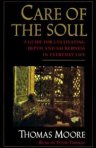 The book for our troubled times – a path-breaking lifestyle handbook that shows how to add spirituality, depth, and meaning to modern day life by nurturing the soul. Care of the Soul offers a new way of thinking about everyday life – its problems and its creative opportunities. It proposes a therapeutic way of life that is not a self-improvement project. Instead, its focus is on looking more deeply into emotional problems and sensing sacredness in ordinary things. The ancient model of “care of the soul” was rooted in religion and provided a sacred context for viewing the ordinary moments of everyday life. This new books brings “care of the soul” into the twentieth century and promises to deepen and broaden the reader’s perspective on his or her own life experiences. The author draws on his own life as a therapist practicing “care of the soul”, his studies of the world’s religions, his teaching of Jungian psychology and art therapy, and his work in music and art to create this inspirational guide that examines the connections between spirituality and the problems of individuals and society.
 The Israel Lobby, by John J. Mearsheimer of the University of Chicago and Stephen M. Walt of Harvard’s John F. Kennedy School of Government, was one of the most controversial articles in recent memory. Originally published in the London Review of Books in March 2006, it provoked both howls of outrage and cheers of gratitude for challenging what had been a taboo issue in America: the impact of the Israel lobby on U.S. foreign policy.
 Olle Bengtsson