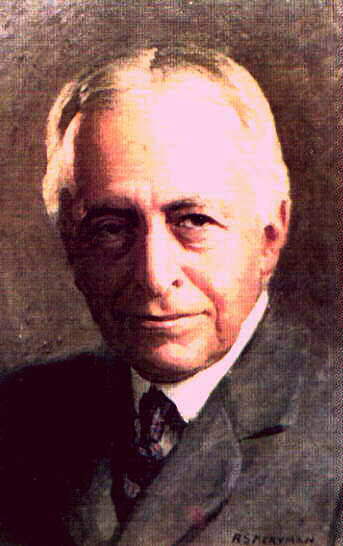
Folke Leander: Romantik och moral
CETE, 1980 (1944)
Baksida:
 Denna lilla skrift utgavs första gången 1944 under titeln Nya synpunkter på romantiken, men den är ännu idag, trettiosex år senare, lika aktuell. Den utges nu med en inledning av professor Claes G. Ryn, en efterskrift av författaren och en bibliografi över dennes skrifter.
På vilken sida författaren har sina sympatier går inte att ta miste. En stor del av innehållet ägnas åt en kritisk genomgång av vad Leander själv kallar “den lägre romantiken”, sådan den visat sig alltsedan upplysningstiden, illustrerad med bl. a. talrika exempel ur den svenska litteraturhistorien. Mot primitivistiskt återvändande till Naturen ställer Leander strävan till civilisation, mot frihetsraseriet nödvändigheten av inre tygling och gentemot Känslans och Spontanitetens evangelium invänds att den ohämmade sentimentalitetens skugga alltid är det ohämmade barbariet.
Ändå är boken ingen reaktionär litania, och det är kanske just detta som gör den så speciell. Författaren ser också en annan sida av romantiken – den “högre” romantiken – som i sig innefattar och med ny klarhet uttrycker någonting av det mest värdefulla som det västerländska tänkandet frambringat, nämligen tanken om personlighetens “fulla och självbestämda utveckling”. Härigenom slås en bro mellan klassicism och romantik och motsättningen mellan dem på det lägre planet övervinns. Men att övervinna är att förstå, och i förståelsen av såväl de högre som lägre sidorna av romantiken och klassicismen utgör Leanders skrift en källa till inspiration och insikt för var och en som vill ägna uppmärksamhet åt människolivets villkor. Vad det hela till sist handlar om är nämligen inte en exkursion i historiens kuriosakabinett, utan ett bidrag till förståelsen av oss själva.
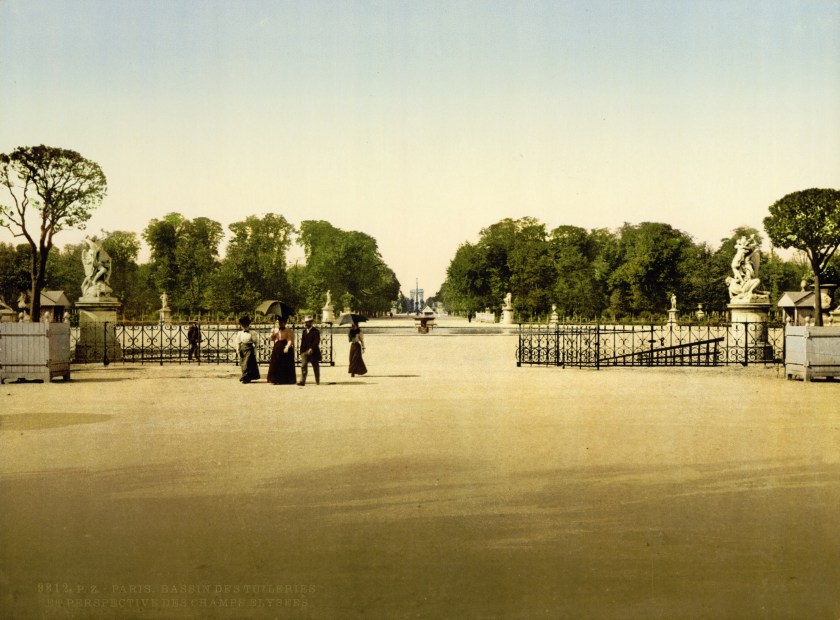
Bassin des Tuileries et perspective des Champs-Élysées
The Roman Contribution
The concept of the person to a considerable extent and in several respects developed out of reflection on the Incarnation and its implications. This, I suppose, is the main reason why, as it seems, there is no real counterpart in Islam of the Western philosophical concept of the person. [That there is no such counterpart, or, more precisely, that there is no term for such a counterpart in Arabic, was remarked in a conversation with me by Dr F. W. Zimmermann of St Cross College, Oxford; I am grateful to him for the observation but also have to rely on him for its veracity.]
The distinct conceptual development took place through a long and slow process in the West, through a series of conceptual and terminological twists and turns, an account of which cannot be given here. [See J. Daniélou, ‘La notion de personne chez les Pères grecs’, and P. Hadot, ‘De Tertullien à Boèce: Le développement de la notion de personne dans les controverses théologiques’, in I. Meyerson (ed.), Problèmes de la personne (1973), and M. Fuhrmann, ‘Persona, ein römischer Rollenbegriff’, in O. Marquard and K. Stierle (eds.), Identität (1979).] But in this development of the understanding of personhood before the application of the term to the human individual as a conscious, rational subject with free will, as it finally emerged through the differentiational experiences, it is important to stress the Roman contribution. This was a contribution both to the theoretical development of the concept and to the practical opening of the necessary space for a new flourishing of personhood.
The meaning of the mask and the dramatic role had come to be expanded to the social role and station of an individual, and thence the Latin term, persona, entered not only the definitions of the nature of the Trinity and the Incarnation, but also Roman law as signifying the legal subject. And in addition to this technical use in law, the characteristic application of natural law philosophy in Roman jurisprudence with its philosophical presuppositions regarding an objective, higher moral order, the idea of the rule of law, the principle of equal treatment of all citizens under the law, and the notion of limited government through its division in three branches and the limited terms of elected officials, were all quintessential, mature fruits and further applications of the differentiational experiences as passed on and elaborated in the wider culture of Hellenism as a distinctive civilizational legacy. They prefigured in antiquity the opening of the moral space of personhood which modernity, at its best, has sought to consolidate and expand.
With the decline of the Roman empire, however, it took a new historical power to withstand the ever looming threat of retrogression to cosmological closedness, to safeguard the space for the exercise of freedom that is essential to the realization of the practical implications of the metaxical existence of the person. The pull of the cosmological weight of historically existing societies remained strong in imperial Rome and beyond, and the Roman Church, with its claims of wordly power, was often seen to succumb to it, especially after the fall of Rome. In time, Protestant critics came to see it as representing a return to the Egyptian and Babylonian fleshpots: an organic, authoritatian, hierarchical order of the pagan, cosmological kind, immanentizing the transcendent through its collective ritualism, restoring polytheism in the cult of saints and pantheism in the symbolization of the cycles of nature in the liturgical calendar. More or less secular reactionaries, perceiving the problematic revolutionary potential of increasingly predominant interpretations of differentiation in its Christian form, would even approve of all of this.
Yet by and large, the Western Church, both by bringing its own differential teaching and by absorbing and transmitting some and in some respects even much of the mentioned legacy of pre-Christian Rome, indeed by institutionalizing its differentiential teaching with the help of this still at least partly differentiational legacy, did succeed in fulfilling the function of balancing and restraining to some extent both the Christian emperors and the monarchs of the rising nation states, who were all equally susceptible to yielding to the cosmological pull in a way that could have had as its consequence the loss of most of the values of differentiation.
The distinction and tension between Church and state, as well as the feudal order’s aspect of decentralization, were characteristic products of the de-divinization of the immanent sphere of power that followed from the experience of differentiation. And they are among the most important historical sources and preconditions of the social realization of the ordered yet free personal life or personal life of freedom. They opened a space for the practical, institutional recognition of the individual person as the main link between transcendent perfection and worldly imperfection, as the central locus of value, as the pivotal moral agent, and, as responsible for his spiritual destiny within a given, objective, dual order, the ultimate referent of the meaning of the events of history.
Hans Forssell
Svante Nordins avsnitt om Hans Forssell (1843-1901) i Den Boströmska skolan och den svenska idealismens fall ger kanske en något överdriven bild av Forssells boströmianism, i det att den helt förbigår både de allmänna spänningarna mellan liberalismen och boströmianismen som kvarstod även efter att Boströms närmaste efterföljare börjat revidera statsläran, och den tidige Forssells egen kritik. Men avsnittet visar i alla fall att boströmianism och liberalism på visst sätt kunde förenas vid denna tid, och Forssell blev väl mer konservativ med tiden. Avsnittet återfinns på s. 43:
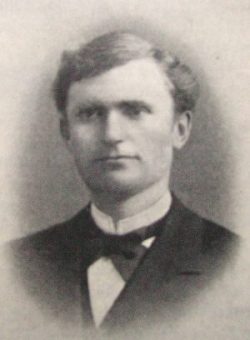 “Hans Forssell var något av oscarianskt underbarn. En man med mångsidiga intellektuella intressen gjorde han viktiga insatser särskilt på den ekonomiska historiens område. Föga mer än 30 år gammal blev han finansminister i De Geers andra ministär. Till sin politiska åskådning framstod han, särskilt under senare delen av sitt liv, som konservativ. Han deltog energiskt i kampen mot materialism, positivism och naturalism. 1881 uppträdde Forssell så för att förhindra kommunala bidrag till Anton Nyströms arbetarinstitut. Som ledarskribent i Stockholms Dagblad bekämpade han Strindberg, Verdandi och andra samhället upplösande kulturkrafter.
Forssell tillhörde Boströms personliga lärjungar, men graden av hans Boströmtrohet har bedömts olika. Torgny Segerstedt har hävdat att det inte torde ‘råda något tvivel om att han själv räknade sig som boströmian’. Mot detta har Nils Elvander gjort gällande att ‘Forssells inställning till den boströmska filosofien var…från början självständig och kritisk’.
Det finns ingen anledning att gå djupare in på detta spörsmål. Det räcker med att Forssell allmänt framstod som en av boströmianismens allierade. 1875 rycker han t.ex. ut till försvar för Boström gentemot Waldemar Dons i en anmälan i Svensk Tidskrift av norrmannens Boströmkritik. Inom det boströmska lägret förefaller man ha varit utomordentligt nöjd med hans insats. Sahlin sade sig t.ex. inte ha ‘ett ord att ändra eller tillägga’ i det Forssell skrivit.
Till andra talanger var Forssell en ypperlig stilist och en man med kulturella intressen. Han hedrades också vederbörligen med en plats i Svenska akademin.”
Michel Chossudovsky on Iran etc.
Italian translation
Michel Chossudovsky: America’s “War on Terrorism”
Global Research, 2nd ed. 2005 Amazon.com
Book Description:
 In this new and expanded edition of Michel Chossudovsky’s 2002 best seller, the author blows away the smokescreen put up by the mainstream media, that 9/11 was an attack on America by “Islamic terrorists”. The expanded edition, which includes twelve new chapters focuses on the use of 9/11 as a pretext for the invasion and illegal occupation of Iraq, the militarisation of justice and law enforcement and the repeal of democracy. According to Chossudovsky, the “war on terrorism” is a complete fabrication based on the illusion that one man, Osama bin Laden, outwitted the $40 billion-a-year American intelligence apparatus. The “war on terrorism” is a war of conquest. Globalisation is the final march to the “New World Order”, dominated by Wall Street and the U.S. military-industrial complex. September 11, 2001 provides a justification for waging a war without borders. Washington’s agenda consists in extending the frontiers of the American Empire to facilitate complete U.S. corporate control, while installing within America the institutions of the Homeland Security State. Chossudovsky peels back layers of rhetoric to reveal a complex web of deceit aimed at luring the American people and the rest of the world into accepting a military solution which threatens the future of humanity.
About the Author:
Award winning writer Michel Chossudovsky is Professor of Economics at the University of Ottawa and Director of the Center for Research on Globalization which hosts the critically acclaimed website: http://www.globalresearch.ca/. He is also a contributor to the Encyclopaedia Britannica. His writings have been translated into more than twenty languages.
JOB’s Comment:
Chossudovsky is in my view an author in the same category as F. William Engdahl. The overall picture they present seems correct, but they sometimes go too far and are too onesided. There is of course some real Islamic terrorism. And this is not just blowback terrorism, but also terrorism inspired by real fundamentalist fanaticism. The “New World Order” is as far as I can see not just a matter of an American empire, of U.S. corporate control, although it is certainly to a considerable extent dominated by Wall Street. The goal is new, wholly supra- and ultimately postnational governance. The American military is being used, but the “military-industrial complex” is hardly specifically American any longer inasmuch as the infrastructure is being dismantled and the industry is outsourced. The use of the American military serves globalist purposes also in the sense that it weakens America. Chossudovsky seems to me an important scholar of the radical left. But his ideology leads to some inconsistencies and other weaknesses in his understanding and analyses. In other respects he is clearly beginning to see through problematic aspects of the left, as he discovers that in reality most of it supports – albeit sometimes indirectly – so much of what he criticizes and thought they were against too. But he should go much deeper in that analysis. Chossudovsky also writes for – or at least used to write for – Le Monde diplomatique.
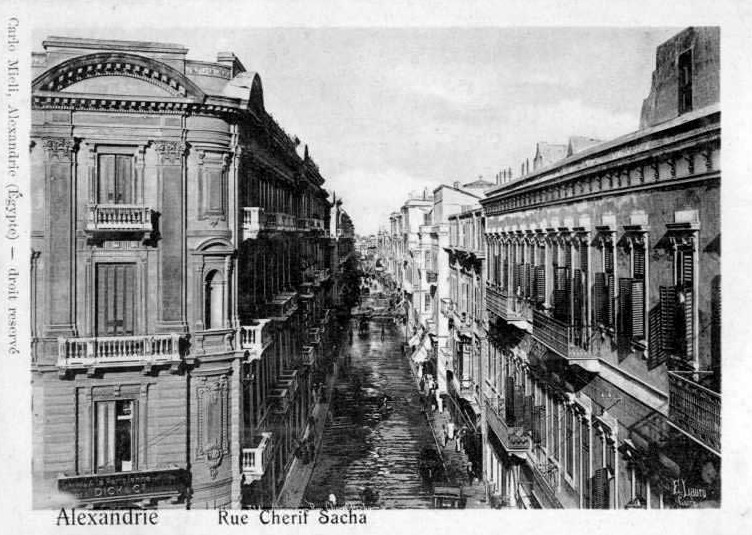
Rue Cherif Pasha, Alexandria
Michael Haag: Vintage Alexandria
Photographs of the City, 1860-1960
American University in Cairo Press, 2008 Amazon.com
Book Description:
 This is an intriguing collection of archival photographs that reveals the forgotten heart of a great cosmopolitan city. Using vintage photographs from the second half of the nineteenth century and first half of the twentieth, many of them from private family albums, this book brings to life the world of that vanished Alexandria, a vibrant, stylish, and cosmopolitan city, the largest port in the Mediterranean, that was the prosperous gateway between Egypt and the world. Seen here in the setting of their homes and gardens, and on the city’s streets and beaches, the faces of those forgotten Alexandrians come to life: the Greeks, Italians, Jews, and all those others from around the Mediterranean whose energy and expertise helped modernize and develop Egypt, and who planted their family roots in the city. This was the luxuriant and evocative city celebrated by Constantine Cavafy, E. M. Forster, and Lawrence Durrell, and they too are included in these pages along with photographs of scenes and people that were familiar to them. Vintage Alexandria traces the development and growth of the city, follows its story through the dramatic events of two world wars, and above all provides a background to the city’s place in twentieth-century cultural history, through the eyes of Alexandria’s cosmopolitan citizens themselves.
About the Author:
Michael Haag is a writer and photographer based in London. He has photographed and written Alexandria Illustrated (AUC Press, 2004) and Cairo Illustrated (AUC Press, 2006), and he is the author of Alexandria: City of Memory.
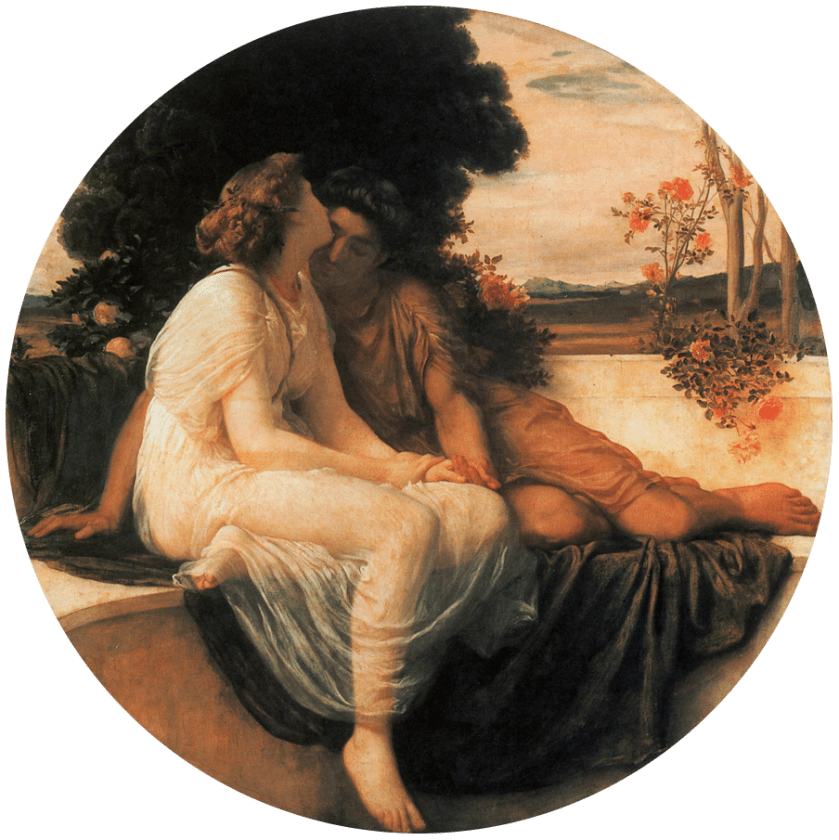
Frederic Leighton: Acme and Septimius
 Olle Bengtsson