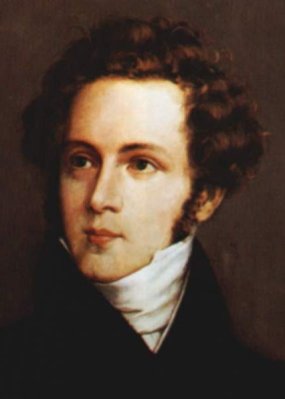
restored by Becchetti
Paul Brunton: Perspectives, 2
The Timeless Way of Wisdom
Volume One
The Notebooks of Paul Brunton
A Creative Synthesis of Eastern and Western Ideas
Larson, 1984; third printing, 1987
Back Cover:
Those immense silences of the Himalayas…helped me to quet the mind as nothing else…The sharp air freshened the mind, the endless space gave it new perspectives.
Paul Brunton
Perspectives is an inspiring insight into the essence of East-West spiritual philosophy. Going to the heart of virtually every aspect of the spiritual quest, it introduces a major series: The Notebooks of Paul Brunton.
Paul Brunton (1898-1981) was one of this century’s most dynamic spiritual authors. His ten early books (1934-1952) awakened millions in the West to the treasures of oriental wisdom and mystical practice. From 1952 to 1981 he sought relative anonymity and compiled extensive notebooks dedicated to synthesizing Eastern and Western, ancient and modern approaches to the discovery of the Soul. Perspectives is an introductory survey of those mature writings, which he reserved for posthumous publication.
“His ‘Notebooks’ provide a veritable treasure trove of philosophic-spiritual wisdom.”
Elisabeth Kübler-Ross
“A simple, straightforward guide to how philosophical insights of East and West can help to create beauty, joy, and meaning in our lives.”
“An ethical, sane, and compelling approach to spiritual practice. His keynote is balance, and his uplifting message encompasses all phases of human experience.”
East West Journal
“…a person of rare intelligence…thoroughly alive, and whole in the most significant, ‘holy’ sense of the word.”
Yoga Journal
“Sensible and compelling. His work can stand beside that of such East-West ‘bridges’ as Merton, Suzuki, Watts, and Radhakrishnan.”
Choice
JOB’s Comment:
The only difference from the first printing is the front cover, and an added quote from East West Journal.
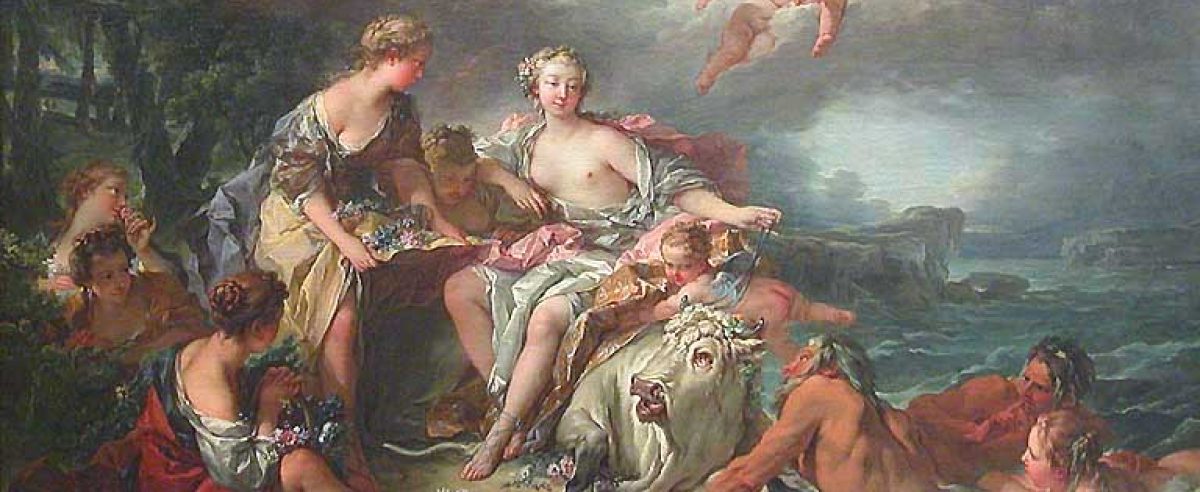
William Edward Frost: Venus and Cupid

Mathematics and Reality
Keith Ward on Materialism, 10 1 2 3 4 5 6 7 8 9
“Whatever all this means, it has left old-fashioned classical materialism far behind.” It is important to keep in mind that the whole of the argument this far is that science no longer believes in such materialism and that it “has become increasingly hard to say just what ‘matter’ is”. When Ward goes on to say that “The ultimate reality is beyond space-time as we know it, has a deep and complex mathematical structure, and is nothing like the world we see and touch and feel”, this is, on the other hand, a conclusion from the scientific theories cited that, as far as it goes, not only coincides entirely with idealism but represents a positive formulation of idealism as opposite to materialism. Ward does not discuss the meaning of the addition “as we know it”, which perhaps implies the possibility of space-time as we do not know it, space-time of a kind other than what we know or experience as such.
Idealism as I suggest it could be defended says more than this. By the world we see and touch and feel, Ward here, I think, means primarily what I called the world of common-sense materialism, but which he is disinclined to designate in this way since he wants to retain a common-sense position and defend the common-sense tradition with regard to the question of God and belief in God. Ultimate reality is certainly nothing like that. But neither is it the mere hypostasized abstraction that is the deep and complex mathematical structure. A mathematical structure is certainly part of it, or an aspect of it, as understood by idealism, but if it were only that, is it obvious that its reality would be ultimate, that it would be more real than the world we see and touch and feel in terms of concrete experience and content of consciousness? How could the mere mathematical structure as ultimate reality account for the appearance or phenomenon of that world? But again, although he states the conclusion in terms that overlap with those of philosophical idealism, Ward is here discussing only the aspect of ultimate reality that seems to be affirmed by contemporary physics.
“It is certainly not made of matter, in the sense of solid bits of stuff, precisely located in three dimensional space. Questions like, ‘Where are the fundamental laws of nature located?’, or ‘How much time do quantum fluctuations in a vacuum take?’ will be met with pitying looks by mathematical physicists. They (the laws and fluctuations, not the physicists) are not anywhere in our space, or at any point in what we ordinarily think of as time.” Ward again uses qualifications like “our” space and “what we ordinarily think of “ as time. As we shall see, he does not really develop their implications.
“This meas that the simple-minded materialism that insists that everything that exists must be somewhere, or that everything that exists must exist at some time, is just woefully ignorant of modern physics. There are supra-spatial and supra-temporal realities, realities beyond any and all spaces and times, and mathematical physics talks about them with an immense degree of sophistication and precision.” This paragraph could seem to contradict the preceding qualifications, inasmuch as the supra-spatial and supra-temporal realities are not just beyond space-time “as we know it”, “our” space and “what we ordinarily think of” as time, but “beyond any and all spaces and times”. If the latter formulation is true, possible other spaces and times cannot be the ultimate reality or “parts” or aspects of it.
But if we distinguish between the first formulation above about ultimate “reality” and this formulation about supra-spatial and supra-temporal “realities”, it is possible that ultimate reality could be conceived by Ward as including both the realities that are beyond also the space and time that is other than space and time as experienced by us, and that possible other space-time. If the supra-spatial and supra-temporal realities spoken of here are, in such an ultimate reality, considered superior to or “more ultimate” than the space-time that is not as we know it, it is of course not an ultimate reality; the other space-time aspect of it is not really an ultimate reality.
But again, this view requires that the mere mathematical structure can, as such, account for that as well as this (our) space-time as such. And if space-time as such, in itself, ours as well as other possible ones, cannot be apprehended at all, but is always apprehended along with the concrete experience which in turn requires or is defined in terms of content of consciousness, this requires that the mathematical structure can account for all of this content too.
Now, it does seem some mathematical physicists do indeed think it is able to do that, and this is certainly what Ward has in mind here. But at least until some mathematician has explained – and here, I think, we find a clear instance of the inevitability of philosophy for science – the nature of mathematics as being in principle and essence something quite different from what it has heretofore been considered to be, this seems to me philosophically untenable. It presupposes a new conception of mathematics which must be developed in philosophical terms.
The supra-temporal and supra-spatial realities of the mathematical model Ward speaks of, must be co-ultimate with other aspects of ultimate reality, which must perforce include that which accounts for phenomenal reality as experienced by us, and may or may not include alternate time-space. Since ultimate reality must account for all of reality, all degrees and levels of reality, it seems obvious that space-time as we know it as well as possible other space-time must somehow be accommodated in the ultimacy of the reality which, in the case of the former space-time, is experientially ascertainable as phenomenal appearance even by us as finite beings.
But there is also another problem here which I briefly pointed to above. When Ward referred to the findings regarding sub-atomic particles, waves, energy, probability-waves, virtual particles, a vacuum (lowest-energy) state, and quantum foam, he was not speaking exclusively of a deep and complex mathematical structure, as such. He was speaking of other entities described in mathematical terms but not in themselves exhaustively reducible to and identical with mathematics. The point was well taken that these entities did not correspond to matter as conceived by “old-fashioned materialists”, and this certainly confirmed the one basic claim Ward has this far made, namely that it has become increasingly difficult to say what “matter” is.
He also said that ultimate reality has a deep and complex mathematical structure. But when he spoke of reformulating the theory of forms as a theory of objective mathematical axioms, he did not just assert that ultimate reality has but that it is such a structure. But since the reference here is not to Plato’s mystic conception of real mathematical entities, but to the reformulation of the theory of forms in terms of the mathematical models of contemporary physics, it could, I think, be asked if a hypostasization is not involved which transforms what is in reality a mere pragmatic conception into something equivalent to the truly absolute conception of mathematics that we find in Plato.
I have suggested that the conception of the reducibility of ultimate reality to mathematics is problematic in general (and, I think, including mathematics as conceived by the later Plato), but the problem seems to be compounded when mathematics is conceived in the manner of contemporary physics, i.e. as defining a thoroughgoingly pragmatic science. Is this really what the majority of mathematical physicists claim? Don’t they rather conceive of their mathematics in terms similar to those described by Evola, “a net that draws ever tighter around a something that, in itself, remains incomprehensible, with the sole intention of subduing it for practical ends” – something, whatever it is, at least not being mathematics itself?
“In the light of these considerations”, Ward says, “it may seem that “matter” is just a sort of thin and abstract skeleton, a desiccated substructure, of the richly observed world of human perceptions.” The “richly observed world of human perceptions” is what I want to regard here as having its counterpart in ultimate reality, in accordance with Plotinus’ conception of Platonic logic in contradistinction to the Aristotelian, and with the version of idealism in general that I have discussed at length in other publications.
Although this richly observed world is phenomenal and appearance, it does not mean it is unreal. And although the degree of its reality is lower than that of ultimate reality, the reality is such that it must be matched by something in ultimate reality of which it is a phenomenon and appearance, and that this something cannot be a mathematical model only as such. The mere mathematical model of the kind that is discussed here by Ward as the opposite of matter as conceived by “old-fashioned classical materialism”, is described here as that which has replaced that conception of matter, namely “a sort of thin and abstract skeleton, a desiccated substructure”. But can such a substructure be rationally conceived as having by itself in any way produced “the richly observed world of human perceptions”? The latter, the apperarance, would be more than that of which it is the appearance.
But it seems the reason why “matter”, or the appearance of matter, has thus been reduced to a thin and abstract skeleton, a dessicated substructure, is simply the pragmatic nature of science, not any philosophical consideration. Bergson, Leroy, Poincaré, Meyerson, Brunschvicg and many others have, Evola writes, “brought to light the altogether practical and pragmatic character of scientific methods. The more ‘comfortable’ ideas and theories become ‘true’, in regard to the organization of the data of sensorial experience. A choice between such data is made consciously or instinctively, excluding systematically those that do not lend themselves to being controlled; thus also everything qualitative and unrepeatable that is not susceptible to being mathematized….Scientific ‘objectivity’ consists solely in being ready at any moment to abandon existing theories of hypotheses, as soon as the chance appears for the better control of reality.” Such science cannot yield as a result a philosophic conception of the substructure comparable to the Platonic forms even as conceived by Plato in his late, mathematical phase. Ward is right, for all I know, with regard to Penrose. But how representative is he?
Evola does hold that Einstein’s theory of relativity “has brought us…closer to absolute certainties”. “Only the profane”, he writes, “in hearing talk of relativity, could believe that the new theory had destroyed every certainty and almost sanctioned a kind of Pirandellian ‘thus it is, if you think so’.” “A coherent system of physics has been constructed to keep all relativity in check, to take every change and variation into account, with the greatest independence from points of reference and from everything bound to observations, to the evidence of direct experience, and to current perceptions of space, time, and speed.” However, the system is, first of all, “of a purely formal character“. And second of all, it “is ‘absolute'” only “through the flexibility granted to it by its exclusively mathematical and algebraic nature”.
Its pure formality in itself disqualifies the system as ultimate reality, and its pragmatic use implies that there is no aspiration on its behalf to that status. “This theory”, Evola continues, “though far from common or philosophical relativism, is willing to admit the most unlikely relativities, but arms itself against them, so to speak, from the start. It intends to supply certainties that either leave out or anticipate them, and thus from the formal point of view are almost absolute. And if reality should ever revolt against them, a suitable readjustment of dimensions will restore these certainties.” Again, how can such a purely formal system, put to exclusively pragmatic use, be ultimate reality? How can the Platonic forms be reformulated in its terms?
“This”, Ward writes, “is roughly what Niels Bohr, one of the great founding fathers of quantum theory, thought. Bishop Berkeley was not so far wrong when he claimed that Locke’s ‘primary qualities’ were in fact no more objectively real than the ‘secondary qualities’ that were admitted to be mental constructs, or appearances to human forms of sensibility. Primary qualities are a sort of abstracted and idealised mathematical ground-plan of the rich sensory world of experience.” The primary qualities being reconceived in terms of “a sort of abstracted and idealised mathematical ground-plan”, they seem to be identified with the ultimate reality as here considered to be conceived by contemporary physicists. But if they are “no more objectively real” than the secondary qualities, if they too are “mental constructs, or appearances to human forms of sensibility”, their ultimacy is of course problematic. The assertion that the mathematical ground-plan is the ultimate reality is a claim that it is precisely more objectively real than the world of secondary qualities.
How can such a structure, which Ward here himself describes as “abstracted” and “idealised”, as such explain “the rich sensory world of experience”? If the structure is abstracted, it must be abstracted from something or exist in relation to something non-abstract, and that something is, from the perspective of our knowledge as finite beings, the world of primary qualities, the rich sensory world of experience. Ward therefore in this passage seems in reality to make the case for more than he explicitly intends. The fact that the mathematical ground-plan is, for us, abstracted, would seem to indicate that in itself, it is not ultimate in the sense of primary in relation to that which constitutes the ultimate ground of the experience of the secondary qualities.
And again, the abstract, purely formal models of contemporary physics do not normally seem to be conceived of as an ultimately real ground-plan, but merely as a pragmatic tool. As I have already stressed, the pragmatic nature of modern science as such is what accounts for its abstract formalism in the first place; Evola points out that there is nothing new in “the type of ‘certainty’ and knowledge to which Einstein’s theory leads”, that “his theory represents only the latest and most accessible manifestation of the characteristic orientation of all modern science”. Only it is taken to extraordinary extremes:
“The cosmic constant is a purely mathematical concept; in using it to speak of the speed of light, one no longer imagines speed, light, or propagation, one must only have in mind numbers and symbols. If someone were to ask those scientists what is light, without accepting an answer in mathematical symbols, they would look stupefied and not even understand the request. Everything that in recent physics proceeds from that stronghold participates rigorously in its nature: physics is completely algebraized. With the introduction of the concept of a ‘multidimensional continuum’ even that final sensible intuitive basis that survived in yesterday’s physics in the pure, schematic categories of geometrical space is reduced to mathematical formulae. Space and time here are one and the same; they form a ‘continuum’, itself expressed by algebraic functions. Together with the current, intuitive notion of space and time, that of force, energy, and movement also disappears…As in this algebraic scheme nothing remains of the concrete idea of force, even less so can there be room for cause.”
The mathematical structure, being purely formal and pragmatically used, does not support the “‘spiritualization’ alleged by the popularizers…due to the disappearance of the idea of matter and the reduction of the concept of mass to that of energy”. This is “an absurdity, because mass and energy are made interchangeable values by an abstract formula. The only result of all this is a practical one: the application of the formula in order to control atomic forces. Apart from that, everything is consumed by the fire of algebraic abstraction associated with a radical experimentalism, that is, with a recording of simple phenomena.”
What Evola says here is that the Platonic interpretation is invalidated not just by the conception and use of the mathematical structure as a mere pragmatic instrument, but already by its abstract formality. Classical materialism’s idea of matter has indeed disappeared, and, as we have seen, there is more to the pragmatic concepts of contemporary physics than pure mathematics. But if the further, non-pragmatic, Platonic interpretation of the mathematization is to be legitimate, it would seem to follow from Evola’s analysis that something even more than the Penrosian interpretation would be required.
“[Q]uantum physics”, Ward continues, “seems to show that all that we really know of [a real physical world in existence long before any human consciousness came into being] is how it appears to human consciousness, whether in perception or in mathematics or in some combination of both.” The “something” that, as Evola explained, is incomprehensible in itself and which science intends to subdue for practical ends – a “something” that is not matter as conceived by classical materialism – is still clearly in evidence in the last passage I cited from him (“atomic forces”, “simple phenomena”), alongside the pragmatically instrumentalized mathematical structure. Its being there must mean that this structure cannot in itself be the ultimate reality. “According to the most recent theory”, Evola writes, “purely mathematical entities that on the one hand magically spring forth in full irrationality, but on the other are ordered in a completely formal system of algebraic ‘production’, exhaustively account for everything that can be positively checked and formularized regarding the ultimate basis of sensible reality.” The ultimate basis is there, distinct from the (non-Platonic) “mathematical entities” which cannot really reach it, only “formularize”.
On Evola’s interpretation, with its particular evaluation of pragmatic science, we stand before the “definitive liquidation of all knowledge in the proper sense“, and Heisenberg “explicitly admitted this”: it is all “about a formal knowledge enclosed in itself, extremely precise in its practical consequences, in which, however, one cannot speak of knowledge of the real. For modern science, he says, ‘the object of research is no longer the object in itself, but nature as a function of the problems that man sets himself’; the logical conclusion in such science being that ‘henceforth man only meets himself’.”
As I remember it, Einstein too made statements to the same effect with regard to the relation between formal knowledge and reality. But again, the latter, the “something”, remains, on Evola’s own account, even as in the physics discussed by him man only meets himself. And Ward returns to it in terms of “perception” alongside or in combination with mathematics. But he also makes the important idealistic point, not discussed by Evola, about the appearance in human consciousness which he finds confirmed by the recent developments in physics. Properly understood, what this implies is not that man only meets himself. It remains true in forms of idealism that go far beyond such limited, albeit at least methodologically collectivized (as it were) subjectivism and relativism.
And my general interpretation seems confirmed. The perspective of human experience and knowledge does not provide any grounds for conceiving the mathematical, abstracted, at least originally, from rich, sensory perception, as alone representing ultimate reality and being a sufficient ground of it, of what Ward calls the “real”, “physical” world. If it is a “ground-plan” in some respects, as I doubt that the majority of physicists affirm it must be, something must yet be added to it in order to account for concrete experience, and that something must be such as to make it inadmissible to conceive of it as less of a ground than that part of the plan to which it is added. It seems it must, as I put it, be co-ultimate.
Ward’s argument points in the direction of the more complete idealistic case that he does not himself make. What we know of what Ward calls the “real”, “physical” world is certainly how it appears to human consciousness. Or rather, how that which appears appears to human consciousness, that which appears not in reality being the non-ultimately real, “physical” world, which is precisely the phenomenon-for-us alone, but ultimate reality itself. And that ultimate reality, conceived by us both through our reflection on perception (including the kind of inner perception that Ward does not consider here) and mathematics, must certainly be “more objectively real” than this phenomenal world; its very ultimacy is of course defined by its not being our “mental constructs” or “appearances to our forms of sensibility”. It cannot in itself be “abstracted and idealised”, but must be concretely ideal.
“We apprehend what our human faculties of sense and mathematical creativity allow us to apprehend. And we have strong reason to think that things as they are in themselves do not correspond neatly to things as we apprehend them.” What we have “strong reason to think that tings as they are in themselves do not correspond neatly to” is matter as conceived by “old-fashioned classical materialism”. But things being appearances to our finite consciousness (“mental constructs” has misleading connotations unless it is defined in terms of an adequately understood larger metaphysical position with regard to who does the constructing and how) does not entail that they are merely subjective and relative, although objectivity or gradually increased objectivity with regard to them, which is in reality an approximation to the absolute perspective, is an achievement of human thought in the process of knowledge.
“Things as we apprehend them” are real but not ultimately real. In one sense or on one level, they are in fact in reality as we apprehend them, once we have freed the apprehension from the illusion of common-sense materialism. The “rich sensory world” is not illusion, but real. But when we move beyond the Lockean meaning, “things as they are in themselves” can be understood to refer to their ideal ground, the ground of which they are, for us, an appearance. That ground, however, that ideal reality, must “correspond neatly” to the way we apprehend them inasmuch as it has to contain that which can account for the concrete richness that even the mere appearance possesses. Only thus do we reach the requisite completeness of our conception of the ideal ground-plan or ontic logos of reality. And that ground-plan or ontic logos must be conceived in strictly Platonic terms. Contemporary mathematical physicists who do accept that of course thereby support more of the case for idealism than the part of it that deals merely with contemporary physics’ abandonmet of classical materialism’s concept of matter. But the ground-plan or ontic logos cannot be confused with the merely pragmatically used mathematical models of other such physicists. Evola ends his chapter on modern physics by clearly bringing out the difference between it’s position and that of what I summarize as the Platonic one:
“There is an aspect in which this latest natural science represents a type of inversion or counterfeit of that concept of catharsis, or purification, that in the traditional world was extended from the moral and ritual field to the intellectual; it referred to an intellectual discipline that, through overcoming the perceptions furnished by the animal senses and more or less mixed with the reactions of the I, would lead to a higher knowledge, to true knowledge. In effect, we have something similar in modern algebraized physics. Not only has it gradually freed itself from any immediate data of sense experience and common sense, but even from all that which imagination could offer as support…Everything that can be suggested by the direct and living relationship of the observer to the observed is made unreal, irrelevant, and negligible. It is then like the catharsis that consumes every residue of the sensory, not in order to lead to a higher world, the ‘intelligible world’ or a ‘world of ideas’, as in the ancient schools of wisdom, but rather to the realm of pure mathematical thought, of number, of undifferentiated quantity, as opposed to the realm of quality, of meaningful forms and living forces: a spectral…world, an extreme intensification of the abstract intellect, where it is no longer a matter of things or phenomena, but almost of their shadows reduced to their common denominator, gray and indistinguishable. One may well speak of a falsification of the elevation of the mind above human sense-experience, which in the traditional world had as its effect not the destruction of the evidences of that experience, but their integration: the potentizing of the ordinary, concrete perception of natural phenomena by also experiencing their symbolic and intelligible aspects.”
The analysis of the basic character of contemporary physics here set forth is the basis of my questioning – for instance in an essay on Roger Kimball in Humanitas in 2001 – of the accounts of some philosophers of science as representing the truth and the “deep” perspective on reality. We find the acceptance of that view of science also in philosophers whose work aims primarily at saving the world of of human experience from the effects of the scientific worldview, like Roger Scruton. There is certainly a deeper structure, but the one conceived of by contemporary physics is not it. Both because of its pure formality and because of its pragmatic instrumentality, that mathematical structure simply does not represent a deeper truth than even ordinary human experience. But this does not mean that it has no value, and that it cannot be reinterpreted and reformulated, as it perhaps is by Penrose, in strictly Platonic terms and thereby come to represent one side of a real theory of forms or ontic logos.
Mathematical physics does at present certainly support the part of the case against materialism that is Ward’s main point this far. I have found it necessary also to point out that mathematical physics does not in itself represent an adequate and complete idealist position. But that was of course not at all to be expected. Physics cannot take the place of metaphysics.
Charles Follen McKim: Boston Public Library

Interioritet och individualitet hos Augustinus
Om samsyn råder mellan Augustinus och Thomas ifråga om Gudsbegreppet, skapelsen och den ontokontinuiteten, skiljer de sig när det gäller själen och förhållandet mellan det allmänna och enskilda.
Hos Augustinus kan tydligt studeras spänningen mellan å ena sidan den av kyrkan fasthamrade dogmatiken, läran om människans enhet, och å andra sidan den platonska dualismen. Augustinus betonade inte bara själens skapade natur, utan också dess föränderlighet, men han kvarhöll distinktionen mellan själen och kroppen i substantiellt avseende. Han liknade själen vid en harpospelare, och kroppen vid en harpa. Taylor konstaterar att “for Augustine, the Christian opposition between spirit and flesh was…understood with the aid of the Platonic distinction between the bodily and the non-bodily”. [Sources of the Self (1989), 127.]
Såtillvida avviker alltså Augustinus från Paulus. Samtidigt nödgades han ändå insistera på kroppens och själens ömsesidiga beroende och oskiljaktighet. Men som Benjamin framhåller, Augustinus “affirme cette unité sans pouvoir la justifier”. Det är först Thomas av Aquino som, tillgripande Aristoteles form-materiadistinktion, enligt Benjamin lyckas filosofiskt grundlägga den av ortodoxin fordrade enheten. [Notion de personne et personnalisme chrétien (1971), 39.] Själen skulle visserligen även senare betraktas som substantiellt skild från kroppen (om än ej oskapad), men när man i Thomas’ läroutformning såg själen som odödlig förstod man dess åtskillnad från kroppen vid döden som endast temporär: själen förblir på något sätt nödvändigt orienterad mot kroppen även i det åtskilda tillståndet, och återförenas i sinom tid, vid dess uppståndelse, oundvikligen med denna.
Istället för den mer öppna kropp-själdualismen framstår hos Augustinus skillnaden mellan den “inre” och den “yttre” människan som den centrala. Distinktionen hade gjorts av Paulus, [2 Kor 4:16.] och orienteringen mot det inre hade kontinuerligt utvecklats i medel- och nyplatonismen. Men Taylor vill hos Augustinus se en distinkt fördjupning av denna från individualitets- och personlighetsfrågorna såväl som från kunskapsteorin oskiljaktiga orientering, som är så specifik att den är att betrakta som Augustinus’ distinkta idéhistoriska novitet. Det är väl litet överdrivet, såtillvida som medel- och nyplatonismens kunskapssyn och metafysik i sig implicerar en avsevärd, ny interiorisering. Men de platonska distinktionerna mellan ande och materia, högre och lägre, evigt och timligt, oföränderligt och föränderligt, beskrivs nu förvisso “centrally and essentially” i termer av distinktionen mellan inre och yttre. [Sources of the Self, 128 f.]
Augustinus bekänner som vi ska se sin förvirring inför det nu med termen person betecknade personbegreppet, och formellt är hans tänkande kring interioriteten inte alltid knutet till detta. Men det är det ibland och i viktiga avseenden, och jag ska därför återvända till detta tema hos Augustinus när jag närmare diskuterat personbegreppets introduktion på det mänskliga planet. Redan här bör dock interioritetstänkandet tas upp. I sak är det i högsta grad förbundet med det även med andra termer uttryckta personbegreppet, och det bidrar framför allt till att tydliggöra Augustinus’ uppfattning av själen. Den skiljer sig väsentligt från Thomas’ aristoteliska form, som varken är individuationsprincip eller person.
Augustinus hade formats av den nyplatonska traditionen, och djupare än någon annan kristen tänkare förefaller han, som vi skall se, ha uppfattat de nya subjektivitetsaspekterna i denna. Augustinus föregriper åtskilligt av den tolkning av idébegreppet i subjektiva kunskapsteoretiska termer som vidareutvecklas under den nya tiden. Men idésfärens karaktär av en andlig, intelligibel “värld” (nu: mundus intelligibilis), som nominellt bibehålls av Augustinus, torde väl kunna sägas behöva tänkas rymma den filonska, plotinska och origenesiska åskådningens individuellt-verkliga själar för att bli ett meningsfullt begrepp. Härstammande från medelplatonismen och gnosticismen är de noga taget inte förenliga med kyrkdogmatiken och kyrkkanon. Därför träder de också tillbaka i den kristna medeltidens övertagande av idéläran. Vad som kunde utväljas som en allmän platonsk version av den hade ju dock redan tidigt förenats med det bibliska Gudsbegreppet, och varierats i olika former. Denna förening kvarhålles av Augustinus, men “världkaraktären” i ovan angiven mening uppges och är sedan inte längre förhanden i de kristna versionerna av läran.
Medelplatonikernas utveckling av Platons abstrakta värld av allmänbegreppen och deras “ideellt-reella” motsvarigheter till en hel transcendent “värld” i Guds sinne, och hos Filon också utom Guds sinne, Filons förfullständigande av denna värld som en värld av själsligt individuell mångfald, och Plotinos’ ytterligare komplettering denna värld till en värld som också rymde individuella idéer – detta kunde inte accepteras av kyrkmakten, emedan det enligt den bibliska exoläran endast finns en värld, den skapade, materiella världen.
Men med den intelligibla världen tycktes kristendomen i de flesta fall tappa bort också läran om den intelligibla och andligt existerande individualiteten, och därmed var den tillbaka i den blott abstrakt begreppsrealistiskt förstådda platonismen och aristotelismen. På grund av läran om försynens omsorg om individen upptar och vidareför visserligen också medeltidens kristna tänkare i viss begränsad utsträckning läran om individuella idéer i Gud, men någon kunskapsteoretisk eller ontologisk utveckling av tanken sker knappast inom den traditionella idélärans ram. [Copleston, A History of Philosophy, III (1953), 49.]
Trots den nya åtskillnaden mellan det skapade och det oskapade bibehåller Augustinus även “kunskapsteoretiskt” vissa platonska element i sin lära om den mänskliga själens och det mänskliga förnuftets förmåga till av sinneserfarenheten oberoende kunskap. Enligt Augustinus äger människan dock inte direkt tillgång till Guds tänkande, idésfären är inte för det mänskliga förnuftet direkt intelligibel. Han hävdar istället att människan, på rent inre väg, i djupet av sitt eget väsen möter det ljus som samtidigt strömmar från Gud, och som genom illumination delger henne kunskap om idéerna. Genom denna lösning undgår Augustinus också den med den nya dogmkristna läran oförenliga anamnesis-läran, som förutsätter själens preexistens i den oskapade “världen”.
Vad människan möter i denna inre upplysning inte bara är en verklighet av generell sanning utan också ett personligt mysterium – sitt eget såväl som Guds. När Augustinus uppställer ett Gudsbevis, är det ett bevis genom det som är givet i individens eget inre medvetande. Detta är någonting nytt. Augustinus övertar nyplatonismens interioritet, och Taylor vill framlyfta hans bidrag som en fördjupning. Augustinus har sitt eget sätt, färgat av kristendomen, att personligt uppleva och beskriva interioriteten. Eftersom han i sitt inre upplever en individuell, outgrundlig, subjektiv verklighet, innebär denna ståndpunkt ett genombrytande av generalismen. Enheten av hans tanke och erfarenhet uttrycks teologiskt och filosofiskt på ett nytt och självständigt sätt.
Den platonska traditionens förening av den ontologiska och noetiskt kunskapsteoretiska dimensionen av idéläran kvarstår under medeltiden, men under universaliestridens gång förskjuts tonvikten i riktning mot kunskapsfrågorna – här dock ännu icke som “subjektiva” – samtidigt som de konceptualistiska och nominalistiska riktningarna börjar vinna terräng. Det blir alltmer blott allmänbegreppen i vårt tänkande, inte deras reella (reellt ideella) transcendenta motsvarigheter, som står i centrum.
Thomas förnekar både att våra begrepp är återerinrade och att de är medfödda och i det inre av vårt väsen slumrande. Därmed förnekar han också att vi via dem och/eller i förening med gudd illumination äger vad som kanske kan kallas kunskapsmässig direktkontakt med de ideella urbilderna eller med Gud. Likafullt antas vi äga en strikt rationell, analogisk kunskap om denna Guds allmänna natur. Det är först hos Duns Scotus och när vi i nominalismen börjar röra oss utanför den traditionella generalistiska idélärans ramar som tänkandet kring individualiteten på detta plan åter mer entydigt utvecklas. [Alain de Libera, La querelle des universaux: De Platon à la fin du Moyen Age (1996), behandlar utvecklingen från den platonska idéläran till den skolastiska begreppsrealismen och den scotistiska och nominalistiska kritiken.]
Om Augustinus representerar ett slags kristen platonism som, genom inre erfarenhet, med nyplatonismen rör sig utöver den gamla platonismens generalism, bevarades alltså idéläran också i dess rena generalistiska form inom kristen ram under hela medeltiden. I den allmänna platonismen kom generalismen att balanseras av själens och i kristendomen av den ettade kropp-själens individualitet. Men under medeltiden förmådde ingen av dessa individualitetsuppfattningar balansera den bestående generalism vars impersonalism stod i direkt proportion till dess ensidiga dominans.
Generalismen med dess lära om en objektiv ordning är givetvis i sig väsentlig, inte minst för etiken och rätten. Men även på dessa områden uppvisade den under medeltiden de typiska begränsningar som helt enkelt härrörde ur dess ensidighet, ur frånvaron av filosofisk förståelse av det individuella. Och det är just denna ensidighet som de franciskanska filosoferna allt starkare förnimmer mot medeltidens slut. Aristotelismen hade lika litet som under antiken förmått häva den i sig. Men inte heller nu, under senmedeltiden, nådde man fram till någon fördjupad förståelse av det allmännas och det individuellas nödvändiga dialektik och förening. I stället tenderade man snabbt att vältra över i generalismens individualistiska motsats och ett uppgivande av det ontiska logos. Men i väsentliga avseenden började åtminstone själva frågeställningen formuleras tydligt.
En filosofisk uppfattning av såväl individualiteten som den subjektiva interioriteten hade börjat utvecklas under antiken fram till Augustinus, men under medeltiden blev det alltså ändå generaliteten och exterioriteten som kom att dominera. Thomas utgår i sina Gudsbevis från den “klassiska”, yttre kosmiska ordningens rationalitet och orsakssammanhang, och går därmed förbi Augustinus’ bevetna individuella subjekt och dess upplevelse av Gud i självnärvarons inre ljus. [Taylor, Sources of the Self, 141.]
Detta är en del av den bild där vi ser hur den förnyade generalistiska ensidigheten kunde bli dominerande under denna kristna epok trots att kristendomen i så hög grad fördjupat känslan för och värderingen av det individuella och personliga på såväl det gudda som det mänskliga planet. Bibelns El brottades med Jakob. Skolastikens Gud brottas verkligen inte med människorna. Den alternativa, augustinska linjen, fastän i viss mån upprätthållen eller återupptagen av franciskanerna, förmår icke övervinna den ensidigt generalistiska, rationalistiska och objektivistiska. Det filosofiska arvet i växelverkan med den religiösa organisationens och det medeltida samhällets struktur gör att att medeltidens dramatiska huvudrollsinnehavare, som i den kända moraliteten, blir – Envar.
Julius Kronberg: Perseus and Andromeda

Paul Brunton: Perspectives
The Timeless Way of Wisdom
Volume One
The Notebooks of Paul Brunton
A Creative Synthesis of Eastern and Western Ideas

Larson, 1984
Back Cover:
Those immense silences of the Himalayas…helped me to quet the mind as nothing else…The sharp air freshened the mind, the endless space gave it new perspectives.
Paul Brunton
Perspectives is an inspiring insight into the essence of East-West spiritual philosophy. Going to the heart of virtually every aspect of the spiritual quest, it introduces a major series: The Notebooks of Paul Brunton.
Paul Brunton (1898-1981) was one of this century’s most dynamic spiritual authors. His ten early books (1934-1952) awakened millions in the West to the treasures of oriental wisdom and mystical practice. From 1952 to 1981 he sought relative anonymity and compiled extensive notebooks dedicated to synthesizing Eastern and Western, ancient and modern approaches to the discovery of the Soul. Perspectives is an introductory survey of those mature writings, which he reserved for posthumous publication.
“His ‘Notebooks’ provide a veritable treasure trove of philosophic-spiritual wisdom.”
Elisabeth Kübler-Ross
“A simple, straightforward guide to how philosophical insights of East and West can help to create beauty, joy, and meaning in our lives.”
East-West Journal
“…a person of rare intelligence…thoroughly alive, and whole in the most significant, ‘holy’ sense of the word.”
Yoga Journal
“Sensible and compelling. His work can stand beside that of such East-West ‘bridges’ as Merton, Suzuki, Watts, and Radhakrishnan.”
Choice
Pietro Avoscani: Khedivial Opera House, Cairo

Jacopo Bassano: Adorazione dei pastori