2007
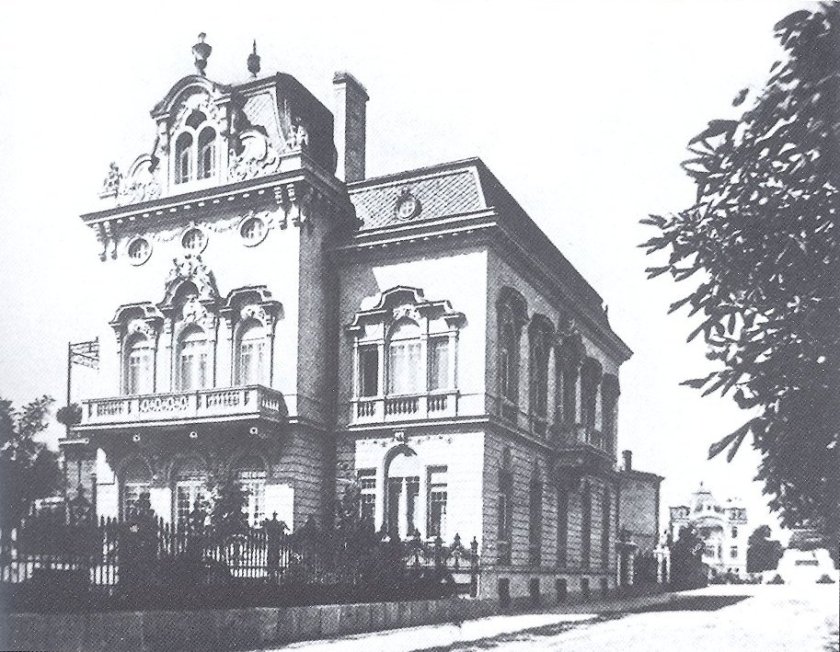
Yablanski House, Sofia
Den värdecentrerade historicismens syntes
Ryn erkänner att Strauss inser otillräckligheten i en statisk och fix uppfattning av naturrätten som blott allmänna regler. Aristoteles själv, som Strauss räknar till försvararna av en naturligtvis från de moderna naturrätten vitt skild “natural right” (och detta är begripligt endast mot bakgrund av de resonemang jag fört om idealismen, och av aristotelismen i förhållande till den), hade hävdat att “[n]atural right must be mutable”. [‘History and the Moral Order’, i Francis J. Canavan, ed., The Ethical Dimension of Political Life (1983), 93.] Strauss skriver:
“The variability of the demands of that justice which men can practice was recognized not only by Aristotle but by Plato as well. Both avoided the Scylla of ‘absolutism’ and the Charybdis of ‘relativism’ by holding a view which one may venture to express as follows: There is a universally valid hierarchy of ends, but there are no universally valid rules of action.” [Natural Right and History (1953), 162.]
Strauss har emellertid enligt Ryn icke på tillfredsställande sätt fullbordat brytningen med den regelorienterade tolkningen av det etiska imperativet. Han tenderar å ena sidan stundom att acceptera en tolkning av Aristoteles som innebär att “[a]ll action is concerned with particular situations. Hence justice and natural right reside, as it were, in concrete decisions rather than in general rules”, och att “[i]n every human conflict there exists the possibility of a just decision based on full consideration of all the circumstances, a decision demanded by the situation. Natural right consists of such decisions. Natural right thus understood is obviously mutable.” [Cit. i Ryn, ibid., 91, från Strauss, ibid., 159.] Men å andra sidan återfaller han ständigt till uppfattningen att “there cannot be natural right if the principles of right are not unchangeable”, och att “one can hardly deny that in all concrete decisions general principles are implied and presupposed.” [Cit. i Ryn, ibid., 95 (Ryns kursiv.), från Strauss, ibid.]
Även Babbitt uppfattade klart att Burkes motstånd mot franska revolutionens ideologi och principer inte enbart var motiverat av insikterna i det lokala, organiska, historiska samhällets värden utan lika mycket av en etisk människosyn som ytterst härstammar från den klassisk-kristna traditionen. Men Babbitt utvecklade inte sina insikter i anslutning till den klassisk-kristna naturrätten. Med bruk av vad som i realiteten delvis är moderna insikter härrörande från romantiken och idealismen utgår han i stället bland annat från en analys av distinktionen mellan den “idylliska” fantasi som återfinns hos Rousseau och den “moraliska” fantasi som präglar Burke. [Democracy and Leadership (1924), kap. 2 och 3.] Fastän Burke skrev om estetik tydligt influerad av den nya romantiska strömningen är det för Babbitt uppenbart att hans allmänna människosyn och moraluppfattning tillhör den klassisk-kristna traditionen snarare än just den romantik vars skilda panteistiska och subjektivistiska aspekter Babbitt är en av de mest betydande filosofiska utforskarna och kritikerna av.
Den babbittska analysen utvecklas som vi sett av Leander och Ryn i anslutning till Croces hegelianska logik, historiesyn och förnuftsuppfattning, men dessa teoretiska utbyggnader innebär inte att deras filosofiska grundtematik i sak fjärmar sig mycket från den av Stanlis påvisade allmänna sammanvägning av historicismens och den klassisk-kristna naturrättens perspektiv som Burke anses vara en mer eller mindre medveten praktisk tillämpare av. Tvärtom syftar den bara till att utveckla och fördjupa just denna sammanvägning.
Hos Ryn framträder och formuleras den burkeska komplementariteten hos historicismen och naturrätten huvudsakligen som en förening av historicism och vad som snarare kan beskrivas som en universalistisk värdeobjektivism, men som jag framhållit måste vi komma ihåg de djupare åskådningsmässiga enheten bakom dessa olika uttryck eller nivåer. Ryn betecknar alltså sin och Leanders filosofiska ståndpunkt, som tillika i en mening är ett slags metodologi, som värdecentrerad historicism, och med hjälp av dess precisa teoretiska instrument angriper han vad han – i detta arbete tog Leander ej del – menar vara Strauss’ alltför fixa och statiska uppfattning av naturrätten och värdena. Även om Ryn är fullt medveten om de principiella skillnaderna mellan den klassisk-kristna och den moderna naturrätten ser han dock, som vi sett, till skillnad från Stanlis även den förras åtminstone implicita motstånd mot historicismens delsanningar som problematiskt. Oaktat skillnaderna rörande plikter/rättigheter och helhet/individualism o.s.v., kan också den klassisk-kristna naturrätten formuleras på det för konkreta historiska omständigheter och variationer vanskliga abstrakt-universella sätt som enligt de konservativa tänkarna i Burkes linje kännetecknar den moderna naturrätten.
Erkännandet av en objektiv värdeordning måste enligt Leander och Ryn förenas med förståelsen för hur de transcendenta, allmänna och universella värdena manifesterar sig i konkreta, historiska enskildheter. Men den precisa filosofiska förståelsen av detta kräver de konceptuella resurser som de specifika moderna riktningar de bygger på tillhandahåller. Utöver den croceanska hegelianismens dialektik härrör de viktigaste inslagen från Babbitt, och utöver dennes innovativa bruk av fantasins kategori är det mest centrala dennes betoning av viljan, och en vilja som på avgörande punkter förstås på ett sätt som skiljer sig från det vanliga i annan och inte minst med Babbitt samtida filosofisk voluntarism: en högre, moralisk vilja, oskiljaktig från “the inner check”.
Hela den moraliska ordningen bör, menar Leander och Ryn med Babbitt, förstås i termer av vilja snarare än förnuft eller förstånd. Strauss’ problem uppkommer enligt dem i mycket genom fasthållandet vid uppfattningen av naturrätten och den moraliska och övriga universaliteten i exklusivt rationalistiska termer. Den högre viljan och det etiska samvetet, är, enligt deras filosofiska utläggning av Babbitt, partikularistiska och föränderliga i det att de verkar i individuella människor under unika omständigheter, men de är också universella och oföränderliga genom att är desamma för alla, riktar allas liv mot samma transcendenta mål. De behärskar destruktiva impulser och ordnar handlandet i enlighet med den moraliska ordningens krav, och förlänar därmed det individuella livet mening och värde. Således kan enligt Ryn hävdas att “[i]n moral action, individuality and universality, immanent and transcendent, merge. The good is ‘incarnated’.” [Ibid., 98.]
Babbitts uppfattning av den högre viljans funktion är enligt Ryn jämförbar med den klassisk-kristna naturrätten. Skillnaden är att medan den senare erkänner en norm för det goda som är tillgänglig för förnuftet (utan hjälp av den “särskilda” uppenbarelsen), uppfattar vi enligt Babbitt denna universella norm i viljetermer. Den moraliska ordningen uttrycks därför icke genom “a set of conceptual propositions”, utan den högsta etiska auktoriteten blir istället den högre viljekraft som inte uttömmande kan intellektuellt definieras och ytterst är ett mysterium. [Will, Imagination and Reason (1986), 29 f.] Ingenting av detta betyder emellertid att historicismen nödvändigtvis måste leda till relativism:
“In a different form it points toward a deeper understanding of what is permanent in man’s existence. Stress on life’s historicity and the uniqueness of circumstances need not, as is often arbitrarily assumed, exclude recognition of universal ordering values. In particular, it need not rule out acceptance of an ethical universal. As combined with such an acceptance, historicism becomes an appreciation of the infinite richness and adaptability of the good, of the possible merging of the universal with the particular, most especially with the uniqueness of human personalities and their circumstances. Of course, individual uniqueness refusing all discipline becomes the bearer of gross or even diabolical egotism. But as ordered by the higher will it is the source of the continuous renewal and expansion of the good life in changing circumstances.” [’History and the Moral Order’, i Canavan, 101.]
Gentemot Strauss på den klassisk-kristna naturrätten baserade innehållsbestämda konservatism – den som principiellt skulle möjliggöra en “konservativ revolution” – uppställer Ryn historicismens delsanningar utan att hamna i den motsatta ovan beskrivna ytterlighetspositionen, den som skulle möjliggöra ett konservativt försvar för varje bestående samhällsordning oavsett innehåll enbart av det skälet att den är bestående: “While the good philosopher, and the good statesman, know in advance something about the general form and direction that life should always assume, they cannot predefine the specific content of actions that are demanded by new and varied circumstances.” [Ibid. 102.]
Ryn hävdar med Stanlis att det är rimligare att betrakta Burkes argument att konstitutioner måste “växa” fram och inte kan “skapas” som ett steg i riktning mot en vidgad förståelse av förnuftet än som ett enkelt avståndstagande från förnuftet, motiverat av de den blinda rationalismens excesser som den franska revolutionen uppvisade. Ryn framhåller Platons och Aristoteles relativa omedvetenhet om den historiska dimensionen, om kunskapens historicitet och om deras eget tänkandes förutsättningar i traditionen eller det fäderneärvda (the ancestral). Egentlig kunskap om det individuella och partikulära var enligt dem djupast sett omöjlig. Insikter som i verkligheten förmedlades av den intellektuella traditionens “levande förflutna” tillskrev de istället det ahistoriska förnuft som verkade i den enskilde tänkaren.
Men i deras betoning av människans sociala natur fanns enligt Ryn likafullt redan i fröform insikterna att det goda samhällets potential och filosofins insikter i lika hög grad är produkten av de förenade ansträngningarna hos många generationer. Men det först är det moderna tänkandet som artikulerat dessa insikter i filosofisk form. Burke själv behandlade visserligen inte de epistemologiska och logiska aspekterna av människans historiska väsen, men hans historicism innebar icke desto mindre en vidgad föreställning av förnuftet som både universellt och historiskt, ett förnuftsbegrepp som möjliggjorde uppfattningen av det konkret universella, av “the transcendent incarnate in history.” [Ibid. 104.]
Till skillnad från Strauss menar Ryn att Burke i sitt motstånd mot “metafysiken” endast vänder sig mot den rationalitet som ignorerar den insikt och de möjligheter som vidareförs genom traditionen och finns förkroppsligad i den konkreta historiska verkligheten, den rationalitet som förnekar beroendet av det samlade kulturella arvet. En sådan förnuftsuppfattning, som förespråkar abstrakt rationell planering, är förmäten, ja potentiellt diabolisk.
Utan att inta en empiristisk ståndpunkt hävdar Leander och Ryn att själva den transcendenta ordningen uppfattas genom de historiskt givna manifestationsformerna. Det är denna ståndpunkt som möjliggörs inte minst genom selektiv croceansk hegelianism. Det universella och det partikulära, den klassisk-kristna naturrätten eller värdeuniversaliteten och den historicistiska partikulariteten förenas i den moraliskt viljande och handlande individen. Ytterst sett onödiggörs här distinktionen mellan empirisk kunskap och rationellt/intellektiv, emedan vårt mänskliga tänkande och uppfattande av de transcendenta värdenas manifestation djupast sett och rätt förstått är det absoluta tänkandet och uppfattandet. Ryn understryker emellertid att detta inte behöver innebära någon hybris i religiös mening eller någon immanentistisk panteism. Den förenade babbittska burkeanismen och croceanska hegelianismen innebär inte att vad som sker alltid är rätt, utan blott en nödvändig vidgning av förnuftsbegreppet. Det är inte minst i detta sammanhang som finner vi många uttryck för Ryns nominella acceptans av en transcendent verklighet. “A value-centered historicism”, heter det exempelvis,
“does not have to deteriorate into morally indiscriminate pantheism or Hegelian metaphysics. Burke is but one early example showing that this danger can be avoided. Value-centered historicism as here understood is perfectly compatible with this central truth: The ethical will is continuously threatened by the anarchic, merely particularistic will which is also a part of the human self; whatever progress lies within man’s reach is achieved through constant struggle against life’s potential for evil. And while the transcendent good enters human experience in concretized form, it is for us always a straining toward, not the perfect achievement of, the universal. The latter is immanent and transcendent. The goodness of the ethical will is never exhausted by its particular manifestations.” [Ibid. 106.]
Den värdecentrerade historicismens syntes kan sägas ha utvecklats delvis som ett försök att lösa och förklara den ursprungliga spänningen och möjligen skenbara motsägelsen i Burkes – och konservatismens över huvud – ståndpunkt, och Ryn refererar ständigt ånyo tillbaka till Burke som en i mycket åtminstone praktisk om än ej teoretiskt fullständig tillämpare av syntesens sanningar. Den allmänna klassisk-kristna naturrättens och värdeobjektivismens uppfattning om den objektiva, ytterst sett transcendenta moraliska ordningen, den voluntaristiska förståelsen av denna moraliska ordning hos Babbitt, dennes användning av fantasikategorin, den croceanska varianten av hegelianismen och av föreningen av det enskilda och det universella, och den burkeska historicismen rymmer tillsammans, enligt den syntes och utveckling Leander och Ryn presterar, en filosofisk potential för övervinnandet av motsättningen mellan den aprioriska, principiella naturrätten och den historicistiska relativismen. Och därmed även mellan de två motstridiga grundtendenserna inom konservatismen i allmänhet som svarar mot denna dikotomi.
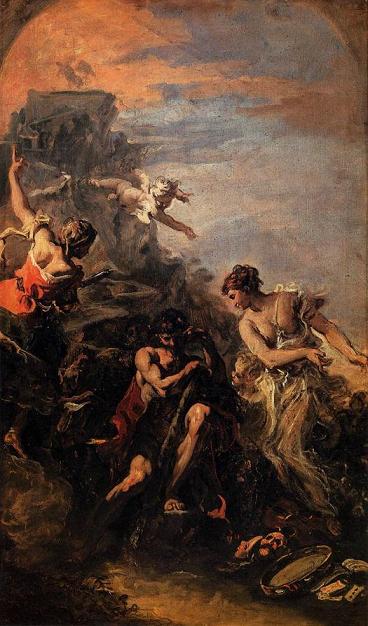
Sebastiano Ricci: Ercole al bivio
Individualiteten enligt Plotinos
Plotinos’ intelligibla värld rymmer något nytt, något som den medelplatonska idévärlden i Guds sinne, inklusive Filons, inte ägde: individuella idéer, d.v.s. idéer om eller för det individuella och enskilda.
Liksom platonikerna Antiochos från Askalon, Albinos och Filon hade även den kvardröjande aristotelikern Alexander från Afrodisias vid tvåhundratalets början i linje med den aristoteliska läran att formerna endast kunde existera i något annat än sig själva tolkat Aristoteles’ högsta intelligens som rymmande en intelligibel värld och hävdat att det intelligibla i denna värld var ett med denna intelligens’ intellektion. Därmed förstärkte han platonikernas uppfattning om det intelligiblas immanens i intelligensen.
Plotinos övertar denna ståndpunkt. Men Alexander lärde också, i enligthet med en vanlig nominalistisk tolkning av Aristoteles, att endast det enskilda kunde sägas i egentlig mening existera (även om ingen begreppslig kunskap om det var möjlig för oss), varför också de transcendenta intelligibilierna som enligt Alexander alltså i motsats till platonikerna före och efter honom tänks av den högre, gudartade aktiva intelligens som dock tillfälligt förenat sig med oss och på något sätt också låter oss ta del av dess förnimmande, måste vara individuella. Plotinos föreställer sig överhuvud inte idéerna som universalier, varför Alexanders individuella transcendenta intelligibilier för honom utan svårighet torde ha låtit sig identifieras med idébegreppet. De idéer om och för det individuella, som Plotinos ävenledes erkänner, måste ju med nödvändighet också själva vara individuella.
Plotinos utvecklar så den filosofiska argumentationen för uppfattningen att den intelligibla världen, intelligensen, den andra hypostasen, måste rymma den mångfald av bestämningar som också innefattar det unika och individuella. Men dessa argument tar, menar Emile Bréhier, sin utgångspunkt i skillnaden mellan den platonska dialektikens icke-formella logik och den aristoteliska logiken. Platons dialektik är en innehållslig logik som speglar verklighetens struktur, medan Aristoteles’ logik är ett system av formella tankelagar. I vad gäller definitionen bestämmer Aristoteles species genom att till de abstraktare och innehållsfattigare genera lägga differentia specifica (med den senare terminologin), d.v.s. genom addition, under det Platon utgår från genus som konkret helhet, och når fram till species genom division, genom att uppdela denna helhet, varför fortgången från genus till species o.s.v. icke innebär att något läggs till, utan endast en övergång från helhet till del, där delarna bevarar helhetens konkreta bestämdhet.
Den aristoteliska logiken är oförmögen att förstå det individuella, såväl på det empiriskt-sinnliga planet som på den intelligibla verklighetens plan. Men i sinnevärlden är formen förhanden i och genom de konkreta bestämningar som är givna med dess förverkligande i materien – i den aristoteliska meningen – och som konstituerar och utgör individualiteten: materien är individuationsprincip. Det är denna bestämdhet som icke kan förstås med den aristoteliska logiken: man kan tänka människan, men man kan inte tänka Sokrates.
Enligt Plotinos är det emellertid otänkbart att den sinnliga världen skulle kunna rymma något som den intelligibla världen saknar, att den sinnliga världen i något avseende skulle kunna vara mer än den intelligibla. Man måste därför enligt Plotinos istället utgå från den konkreta helheten, vilket innebär att individualiteten är en realitet i den intelligibla världen, att det gives individuella idéer eller att det individuella som sådant har ideella motsvarigheter. Den intelligibla världen måste rymma all rikedom av positiva bestämningar. [Bréhier, Histoire de la philosophie, I:2, (1931 (1961)), 460 f. Om Platons logik, se även exempelvis Copleston, A History of Philosophy, I, 185 f.]
Därför finner vi i den intelligibla “världen” en “intelligibel materia”, ett begrepp som dock såvitt jag förstår har att göra med föreställningen om materien som individualiserande negation. P.g.a. denna behöver ingenting läggas till “formen” för att denna skall kunna realiseras i sinnevärlden. Och inte heller den sinnlighet som levande varelser äger i sinnevärlden får tydligen enligt Plotinos förstås som blott materiell: den bevarar alltid sitt andliga och immateriella väsen, den är ytterst andlig och immateriell. Den vanliga, icke-intelligibelt materiella sinnligheten och dess organ förblir alltid för Plotinos, och med dialektisk-logisk nödvändighet, blott en lägre imitation av en högre konkret verklighet. [Bréhier, 461 f.] Här går Plotinos ståndpunkt utöver även Filons och innehåller, underbyggd med nya egna bidrag, i sak det som Severus’ lära om den förnuftiga och sinnliga själens oupplösliga enhet hävdade: de två själar som ofta åtskildes inom platonismen var en enhet emedan även den sinnliga förklarades äga samma grad av ontologisk “andlighet” som den förnuftiga. Det är inte uppenbart hur denna sinnlighet förhåller sig till de ur den tredje hypostasens världssjäl manifesterade individuella själarnas i förhållande till deras materieindividualiserade fenomenella erfarenheten.
Den intelligibla världen är förvisso kontemplation av enheten, men också av den helhet som ytterst är eller sammanhålls av den enhet som dock, som sådan, transcenderar helheten som bestämd av mångfald. I det varje individuell intelligens kontemplerar sig själv kontemplerar den också alla andra intelligenser som delar av den enhetenliga helheten, men på den andra hypostasens plan är mångfalden, den ideella och andliga mångfalden, också liksom enheten verklig, och lika mångfaldig som den materiellt-sinnliga, mindre verkliga mångfalden. I den intelligibla världen är universalitet och partikularitet nödvändigt förenade. Emedan allt är i allt, helheten är i varje del, är åtskillnaden samtidigt nödvändigt enhet, till skillnad från åtskillnaden i sinnevärlden, som är nödvändigt förbunden med tid och rum. Bréhier säger att “la conception la plus profonde que l’on puisse avoir du monde intelligible est celle d’une societé d’intelligences ou, si l’on veut, d’esprits dont chacun, en se pensant, pense tous les autres et qui ne forment donc qu’une Intelligence ou Esprit unique.” [Ibid. 463 f.] Denna “societé” bortom tid och rum är en enhet-i-mångfald av intelligenser som ömsesidigt uppfattar varandra och sig själva i och genom sina respektive förhållanden till helheten och vart och ett på sitt sätt förnimmer och i viss mening rymmer helheten. Eftersom allt hänger samman i enheten måste dessa intelligenser också vara förbundna med eller ett med de på lägre nivå manifesterade individuella själarna högsta intellektiva nivå.
Härvidlag innebär nyplatonismen en filosofisk och logisk utveckling som i några avseenden förefaller ligga närmare den kristna religiösa betoningen av såväl Guds som människans individualitet och konkretion än den äldre idealistisk-filosofiska generalismen. Då den individuella själen på sitt sätt bär helheten är den förvisso också universell, en del av den universella själen, och det är strävan till avskiljande och isolering från denna universalitet, till begränsning i den partikularitet som utesluter universaliteten, som för Plotinos leder till materiellt förkroppsligande genom den “lägre”, temporära själens frambringande. Men samtidigt ska alltså ett mått av unicitet förefinnas t.o.m. på den intelligibla nivån, som inte heller den ur världssjälen individualiserade själen är avskuren från all förbindelse eller rentav identitet med.
Men det är väl oberoende av den judisk-kristna påverkan eller av accepterande av dess specifika omtolkningar av idealismen som den filosofiska idealismen här har utvecklat en känsla för och filosofisk uppfattning av individualiteten. Men som vi ska se lyckas paradoxalt nog denna utveckling av idéläran varken i dess judisk-kristna eller rent platonska variant slå igenom under den kristna medeltiden. Kristendomen med sin nya starka betoning av individualiteten anammade i mycket den grekiska filosofin, men huvudsakligen i dess äldre, generalistiska form. Det tenderade fram till senmedeltiden att förbli de abstrakta allmänbegreppen, de exemplariska urbilderna, gemensamma för alla individuella avbilder i den skapade världen, som utgjorde idéernas innebörd, innehållet i Guds tänkande.
Nyplatonismen var den klassiska filosofins sista stora uppblomstring före kristendomens etablering, för lång tid framöver, av sitt läromässiga monopol. Denna uppblomstring förenade således inslag från flera riktningar i den äldre grekiska, den hellenistiska och den romerska filosofiska traditionen: inte bara platonism och aristotelism, utan också pythagorism och vissa inslag från stoicismen, som också arbetat vidare med förnuftsbegreppet, och med tänkare som Poseidonios, Cicero, Seneca och Marcus Aurelius upptagit väsentliga platonska element. I denna utveckling har redan uppnåtts en väl utvecklad idealistisk individualitetsuppfattning.
New Sub-Categories
I have added some new sub-categories to the categories Philosophy and Politics, and also to the sub-category Music, which are thus the first third-level categories in this blog. The system of categories will probably be further developed as the number of posts continues to grow and it becomes necessary for the readers’ overview and orientation. The new sub-categories are of course also found on the Contents page.
Ibn Arabi

Jean Litoux: Sagerska husen, Hamngatan, Stockholm

1968, två år före rivningen Wikipedia
Compactness and Differentiation
I suggest the culture of Voegelin’s cosmological, compact civilizations as well as Jaspers’s pre-axial ones could in some respects and for some purposes be designated with the term early pantheism. This seems legitimate not least since according to Voegelin the central differentiating experience – through philosophical speculation, in the sense of higher vision, in the case of Plato, or through what was presented as revelation, in the case of Moses and the subsequent prophets – is an experience through which the ‘all’ (pan), or ‘everything’, including nature, the state, worldly power, was no longer considered to be ‘God’ (theos), to be divine, as in a certain sense it had been in these civilizations.
Again, it has to be pointed out that the validity of Voegelin’s account of compactness is limited to only some Near Eastern civilizations, and that Jaspers’s account of pre-axial civilization – on the contrast of which the whole analysis depends – must to a considerable extent remain purely speculative. My argument therefore, as well as for other reasons, does not involve the acceptance of the implied view of Voegelin, for instance, that Greek philosophy and Israelite revelation represent unique and historically unsurpassed levels of human insight into the nature of transcendence and thus of human and social reality in relation to it, although I of course accept that the process of differentiation in the extended sense I will focus on here developed in a particular way and produced specific concrete results in the West (something which can hardly be exhaustively explained by the nature of the experience of transcendence as such).
I am therefore inclined to regard the account of the compact and pre-axial age more as a typological one which must be applied more flexibly and selectively to other civilizations than the ones Voegelin focuses on as differentiated, and to other ages than the ones Jaspers describes as axial. Yet the partial truth of both accounts is important enough to warrant extesive use of them in the historical and other analysis not only of the development of the consciousness of personality but also of classical idealism and biblical religion themselves.
It is certainly true to say about some of the civilizations Voegelin studies that while early pantheism as found there is not characterized by the absence of all of the differentiated opposites or polarities, the consequences of the decisive spiritual experience, this experience itself seems to have been relatively fragementary and undeveloped. They are therefore present only in compact form. The distinctions characteristic of differentiations have not yet been fully or clearly made because of the lack of the requisite religious or spiritual, and concomitant moral and intellectual, experience.
The chief characteristic of the axial age was the opening of a space for individuation, and this was also one of the results of the differentiational experience. The individual was dissociated from the pantheistic unity with society, with the necessary, cosmic, holistic, traditional order. The individual and society or the state were differentiated, in the ordinary sense which is also an extended sense of the term as used by Voegelin.
Experienced as situated between transcendent perfection and immanent imperfection, in what Voegelin calls, with Plato, the metaxy, the ‘betweenness’, the individual was also experienced as free to a decisive extent. As finite and imperfect, two opposite directions were open for him to take, and he was responsible for this and related moral choices. Distanced from the closed cosmic-social unity, the individual was capable of critical judgement on the contingencies of immanent and historical human and social reality. In pre- and non-differentiational society, the dictates of the divine king, the laws, and the customs tended to be always sanctioned by the pantheistic and mythological worldview. Perspectives which would have made an appeal to a higher authority possible were not available.
With differentiation, the individual had access to a new conceptual framework, which allowed him to assert such an authority. When world and self were separated, he even became himself the seat of some real authority, by virtue of his relation to God, his own nature, and his rational conclusions as corresponding to a higher order or reality. The philosopher could question, compare, and rationally assess different social and political systems, and the prophet could denounce the king on the authority of the revealed Word of God. The moral law, it was discovered, derived from divine transcendence; it was superior to and independent of physical nature, community, worldly power, the human self, and human choice. With reference to its new standard of right and wrong, it was possible to reconsider and criticize the worldly state of affairs.
Both philosophical idealism and prophetic monotheism thus promoted individual liberty. In time, it became clear to Western philosophers that for freedom in the strict sense to exist, the individual must not be reducible to a closed, causally determined order of nature. But before that, the moral space for the exercise of freedom had already to some extent been opened. Thus freedom and necessity were differentiated.
The new focus on the individual did not imply that the superhuman divine and moral order was denied or that it receded into the background. Quite the opposite. The new experience of transcendence being the central differentiating experience, such order was affirmed in stronger terms. It was just that the relation between this order and the immanent realities was seen in a new light. The new distance of the individual from the worldly order, his new, higher, and larger perspective, the possibility of deliberation, the criteria of judgement – they all derived precisely from his new and deeper awareness of transcendence and its order of values. The social institutions and their history, the existing structures and relations of power, the forms of worship of the gods, were no longer direct expressions of or identical with the all-inclusive, absolute, necessary, divine order. What is and what ought to be – and, in this sense, facts and values – were differentiated.
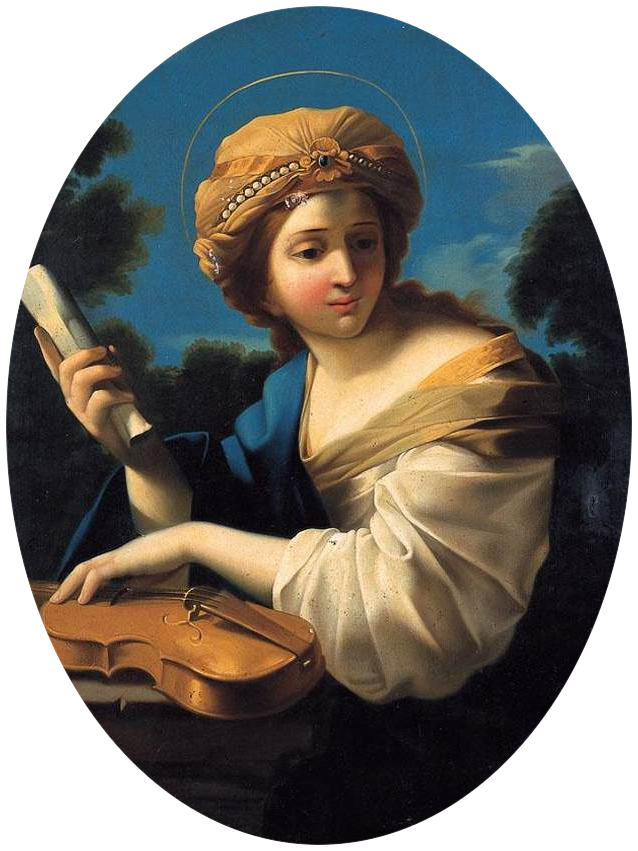
Giovanni Francesco Romanelli: Santa Cecilia
 Olle Bengtsson