Bowne’s Idealistic Personalism, 2
Personal “Reason” and Impersonal “Understanding”
Since my purpose is to demonstrate that it is the pre-Lotzean, European personalistic tradition that Bowne takes over and develops further, I will focus less on the original contributions of Bowne than on the features that establish his personalism as belonging to the older philosophical and theological current. With the American personalism of Bowne, we come to the work on which the definitions of personalism that I have looked at in Chapter 1 were for the most part based. The purpose of this section on American personalism and those in the following chapters is to show by reference to and by a more detailed treatment of Bowne’s work itself – and drawing also on Knudson, one of the most faithful followers of Bowne, to the extent that his formulations bring out better than Bowne’s own the similarities with early European personalism – that these definitions indeed do describe the same personalist movement as the one we have now, in one aspect, studied in its earlier European development.
It is in the preface to Personalism that Bowne makes the historical observation I mentioned in Chapter 1: Comte, he says, was right that explanation in terms of personality was historically primary, and also in his view of abstract metaphysics as merely ‘the ghost of earlier personal explanations’. ‘[T]he conceptions of impersonal metaphysics’ are now seen to be ‘only the abstract forms of the self-conscious life’, which ‘apart from that life…are empty and illusory’. Where Comte went wrong was in his failure to understand the meaning of the primordial personalism, the ‘personal beginning of all speculation’. It is this meaning, obscured throughout most of the history of philosophy, that Bowne sets out to explain. If we do not understand ‘the primacy of the personal world from the start’, we are led ultimately to naturalism and the ‘elimination of personality altogether’ through the notions of objective space and time, matter, force, ‘impersonal substances’ – all of which are ‘abstractions broken from the system of living experience’. Accepting them as reality is to transcend experience through the ‘crude metaphysics’ of common sense. Bowne’s position, as that of all earlier personalists, is that the experiential element in common sense must be retained, but that if it is not combined with critical idealism it will soon lead to the mistaken view of reality represented by realistic empiricism, given the common proneness to the fallacies of abstraction. Experience must be ‘accepted as trustworthy as far as it goes’. Science studies the laws of experiential phenomena in space and time and legitimately introduces a limited range of hypothetical inferential interpretation within its own sphere. Comte was right in his restriction of science to ‘the investigation and registration of the orders of coexistence and sequence in experience’. But spatiotemporal, phenomenal experience as a whole must be transcended for its ultimate explanation, and this can be properly done only through the interpretation of philosophy. This implies ‘a personal interpretation of experience’, the first step to which ‘consists in the insight that we are in a personal world from the start, and that the first, last, and only duty of philosophy is to interpret this world of personal life and relations. Any other view can only lead to the misleading abstractions and aberrations with which the history of thought abounds.’ [1]
If we do not understand the ‘concrete process’ of knowing as ‘necessarily individual’, the result will be a ‘confounding of all distinctions’ which may lead to the conclusion that ‘the subject of the universal experience is the same as the subject of the particular experience – a dark saying, to which unfortunately no key has been furnished’. [2]
The first experiential fact is for Bowne ‘the validity of our personal knowledge’, which includes ‘our mutual understanding of one another’. [3] A doctrine which overlooks this fact, a doctrine which fails, as Kant’s does, to consider the given ‘plurality of persons’, relying only on the process of knowledge in abstraction from it, ‘must end in solipsism’:
[Block quotation:] [I]f we make the world of things subjective presentations because the knowledge of them arises through our mental construction, we must do the same thing with the world of persons, for the knowledge of them has an equally subjective character. Kant passes from the “me” to “us” without telling us how he makes the transition. He really begins with “us” – not merely with the individual self, but with the whole collection of individual human beings – and gets an experience valid for us all in exceedingly obscure ways. But what Kant did not do the critic must do, and we must inquire into the relation of these many minds to one another ina system of phenomenal knowledge. [4]
Pringle-Pattison and others before him had reached their personalistic conclusions after having begun with the analysis of the impersonalist idealists’ absolute, universal ‘Self’, operative in all the finite and supposedly merely phenomenal ones, and of the problematic trajectory through which Kant’s transcendental ego was developed into this conception. They had then pointed to its problems in the face of the experiential givenness and reality of finite persons. But some had also tended to start directly from the epistemological significance of the concrete plurality of the latter. Although he too gives an account of the development of absolute idealism, [5] this is the method preferred by Bowne:
[Block quotation:] [T]he basal certainties in knowledge are not the ontological existence of material and mechanical things, but rather the coexistence of persons, the community of intelligence and the system of common experience. And these are not given as speculative deductions, but as unshakable practical certainties. We cannot live intellectually at all without recognizing other persons than ourselves, and without assuming that the laws of intelligence are valid for all alike, and that all have the same general objects in experience…These are the deepest facts and presuppositions, and they involve some profound mysteries; but they cannot be questioned without immediate practical absurdity. [6]
But again, it is not that the self is dependent on other finite selves for its identity, as in Hegel’s process of Anerkennung. The experienced ‘living, conscious, active’ empirical self is not a phenomenon, but the most concrete reality. It is the transcendental ego, understood as separate from this self, that is a mere ‘fiction’. Kant’s phenomenalism is an abstract deduction contrary to experience. It is not needed to refute the claims of the rational psychologists, nor is it proved by their paralogisms. Things may be regarded as phenomenal, but it is impossible to understand the self as phenomenal in the same sense: the certainty of self-existence, of the self ‘as the subject of the mental life and knowing and experienceing itself as living, and as one and the same throughout its changing experiences, is the surest item of knowledge we possess’. [7]
In his brief summary of his own position cited in Chapter 1, Bowne stressed not least his combination of a certain kind of realism with idealism – the non-Hegelian combination which, as we have seen, in more or less developed forms was definitional of the development of personalism from a very early stage. In Bowne’s works, this synthesis or interplay of transcendentalism and empiricism, activity and passivity of the mind, creativity and receptivity, mediation and immediacy, are explained at length.
It might perhaps look as if Bowne’s stress on the active contributions of the mind is stronger than that of earlier European personalists, and that in this respect he is more of a Kantian and less of a Platonist than they. But this is not necessarily the case. The new partial insights of Kant in this field were assimilated by all nineteenth-century personalists – and modified in a manner similar to that of Bowne. For Bowne too reinserts Kantian mental activity into a broader idealistic and partly Platonic framework. The notion of the active mind can be found to some extent already in the Plotinian and the Augustinian tradition. Knudson argues – somewhat sweepingly – that the Platonic and Kantian traditions are essentially the same in their insistence on the reality of the self, the independence of reason, and the creative activity of thought; it is only the method of argument that differs. Plato’s reason is ‘not concerned with the data of sense, nor even general notions abstracted from them, but with an independent realm of ideas’; both traditions vindicate the claims of reason, the higher interests of man. What is important for the personalist in the doctrine of the creative activity of the self is primarily its metaphysical implications: the reality of the self, its identity, unity and permanence, holding together the experiential complexity and flow. [8]
Experience goes beyond sense experience to include ‘the data of self-consciousness’, ‘the inner experience of the conscious self’. In the inner world, there is immediacy of experience. Although for Kant the categories derived concrete meaning from experience, he neglected or misunderstood inner, personal experience. For Bowne the latter becomes the key to the interpretation of the categories, and since in contradistinction to outer perception it is immediate, the categories become categories of reality. While remaining preconditions of experience, their true meaning can be realized only in ‘living self-experience’. [9] Providing elaborate analyses of the categories thus understood, he concludes, with regard to the category of identity, that it ‘is given as the self-equality of intelligence throughout experience’ and that ‘any other conception destroys itself’. The category of unity similarly
[Block quotation:] may be purely formal, as when we call a thing one; but when we come to real unity only experience can tell us whether it be possible and what form it must take on. There can be no real unity in anything existing in space and time, for in that case everything would be dispersed in infinite divisibility. We find the problem solved only in the unity of a conscious self, which is the only concrete unity that escapes the infinite dispersion of space and time. [10]
The category of causality cannot be thought ‘abstractly and impersonally’, for we then ‘find ourselves lost in the infinite regress, and if we escape it we have no means of telling whether there is anything corresponding to our ideas or not’. In general, ‘[i]t is absolutely necessary to find in experience something that will insure that our ideas have some corresponding concrete existence; or else we are simply shuffling verbal counters’. The meaning of causality can only be found in ‘the self-conscious causality of free intelligence’. [11]
The problem of change and identity eludes us or vanishes in contradiction when we transfer it to ‘the impersonal world of space and time and abstract principles’; it has to be referred to the experiential world of the self-conscious subject, the ‘fixed point’ which is the ‘origin of ordinates in this field’. [12] And so with the problem of unity and plurality. In concrete, conscious experience, the unity of the self is inseparable from plurality, although it does not produce or explain it: the plurality is an aspect of the unity: not of ‘an abstract unity without distinction or difference’, but of ‘a living, conscious unity, which is one in its manifoldness and manifold in its oneness’. This is contradictory only for formal, discursive thought; ‘taken concretely it is the fact of consciousness’. [13]
All of this illustrates what Bowne in his brief Selbstdarstellung termed ‘transcendental empiricism’. It is the doctrine that
[Block quotation:] all thought about reality must be rooted in experience and that apart from experience we never can be sure whether our conceptions represent any actual fact or not. The categories themselves are not something which precede the mind and found its possibility. They are rather modes of mental operation. They are the forms which the mind gives to its experience, but the mind is not to be understood through them. Rather they are to be understood through the mind’s living experience of itself. [14]
Through this transcendental empiricism, the extra-mental universe of common-sense realism, the unknowables of agnosticism, the ‘transfigured realism’ which defines reality ‘apart from intelligence and ends by presenting us with a set of barren and worthless abstractions as the truly real, while the whole system of living experience is excluded from reality altogether’, and the ‘static universe which eludes knowledge’, are all refuted. [15]
Although there is no immediacy in outer perception, as naturalism asserts, there is yet in it a given ‘other’. It is a phenomenon, but not of an unknowable noumenon. It is a real appearance, an appearance of reality through which we have real knowledge of it. [16] Fichte had rejected Kant’s thing in itself as unaffirmable; Bowne, with all personalists, asserted that it was not only affirmable but knowable, albeit not in any simple, non-idealist manner. That which shall explain the given experiential world must to some extent be knowable through its causal relations to it, whereas that which is ‘truly extra-mental’, which is ‘beyond thought and independent of it and in no way amenable to it’, is according to Bowne ‘an impossible conception’. [17]
Kantianism had failed to refute the scepticism engendered by Cartesian radical dualism (just as, it might be added, this Cartesian dualism had thus itself obviously failed to refute the scepticism engenderd by late mediaeval radical, nominalistic voluntarism [18]), and epistemological monism, both of the absolute idealist and the neorealist variety, had succeeded it. Personalism, in its resistance to the polarized yet interconnected and interdependent extremisms of modernity, returns, in a limited sense, to a pre-Cartesian position. For Bowne, epistemological monism not only makes knowledge impossible. It also destroys ‘the independence and distinctive worth of personality’: ‘If personality is to maintain its integrity, it must be kept “a handbreadh off”, both from the Absolute and from things; and this means an epistemological dualism, no matter what one’s theory of things or of the Absolute may be.’ But the dualism of personalism is different from the Cartesian; it steers a ‘middle course between agnostic dualism and an impossible identification of thought and thing’. [19] Rejecting Cartesian dualism as well as the monistic reactions against it, personalism’s positive alternative, while drawing on premodern traditions, is still a modern synthesis. The experienced phenomenal order mediates a real content knowable by our categories, but the precondition of this is that behind it is ‘a Supreme Intelligence which manifests his thought through it and thus founds that objective unity of the system of experience which is presupposed in all our knowing’. [20] The necessary dualism on which personalism insists against absolute idealism is explained and made possible by the parallelism of a ‘theistic monism’, where God is the source of the thing-series as well as the thought-series. Things are knowable since minds are created in the image of the underlying intelligence. [21] The ‘theistic suggestion’ that the phenomenal world of things originates in and expresses thought brings it ‘within the thought sphere’. The Berkeleyan streak in Bowne’s personalism appears: things are ‘independent of our existence’ but not of ‘all thinking’: it is as in this sense situated ‘within the thought sphere’ that they are knowable. Significantly, after having excluded a priori reasons for the unknowability of things, Bowne continues, in the same sentence, by saying that this solution ‘assimilates the problem of knowledge to that of mutual understanding among persons’. [22]
Bowne’s personalist epistemology is a late product of the development that started with the late eighteenth-century distinction between Vernunft and Verstand. [23] Reason in a broad sense, as the whole field of conviction and insight, is distinguished from reason in a narrow sense, as the faculty of inference through argument; and the misuse of ‘the understanding’, which Bowne uses in a largely Coleridgean sense, is criticized. When the understanding oversteps the limits of its proper sphere and moves into metaphysics, claiming to provide in its geometrically and numerically expressed concepts and laws ‘veritable transcripts of reality’, it errs, sometimes falling into ‘the pernicious errors of materialism and atheism’. It cannot account for ‘the essential dynamism’ of the metaphysical system; and the science based on it has ‘neither the call nor the power to penetrate’ into the realm of ‘true efficient causality’. [24]
In the chapter in Personalism entitled ‘The Failure of Impersonalism’, Bowne compresses and restates the detailed arguments in his Theory of Thought and Knowledge and his Metaphysics regarding the untenability of the two forms of impersonalism against which all personalism turns: that of naturalism and that of absolute idealism. They both have the same principal epistemological point of departure:
[Block quotation:] Uncritical minds always attempt to explain the explanation, thus unwittingly committing themselves to the infinite regress. Accordingly when they come to living intelligence as the explanation of the world, they fancy that they must go behind even this. We have the categories of being, cause, identity, change, the absolute, and the like; and intelligence at best is only a specification or particular case of these more general principles. These principles, then, lie behind all personal or other existence, as its presupposition and source, and constitute a set of true first principles, from which all definite and concrete reality is derived by some sort of logical process or implication. [25]
In typical personalist fashion, Bowne points to the consequences of this view, which had been amply demonstrated in the actual historical development in Germany. ‘[I]dealistic impersonalism’ is in ‘its origin…antipodal to naturalism, but in the outcome the two often coincide’. Bowne mentions that D. F. Strauss said that the difference between Hegelianism and materialism ‘was only one of words’; this, Bowne adds, ‘was certainly true of Hegelianism of the left wing’. [26] The monism of neorealism, which reduces thoughts to things (or aggregates of sense-qualities), is parallel to that of absolute idealism, which reduces things to thoughts; and just as rationalistic materialism has historically developed into rationalistic absolute idealism, so the latter has led back to naturalism. [27] Impersonalism ‘is a failure whether in the low form of materialistic mechanism or in the abstract form of idealistic notions…personality is the real and only principle of philosophy which will enable us to take any rational step whatever’. [28] Bowne analyses the confusion of logic and ontology, the progression from abstraction to deduction, in terms identical with those of Jacobi and the earlier personalists. [29]
The onesided theoretical approach to metaphysics overlooks the importance of will and active causality, reducing things to objects of knowledge, to ideas; and since the mind too is such an object, it is likewise reduced to an idea or collection of ideas; next ‘the personal implication’ is eliminated from these ideas, and mind is regarded as ‘a function of impersonal ideas’. The purely epistemological interest ‘seeks to make ideas all-embracing’, making us ‘unwilling to admit anything that cannot be conceptually grasped’. We are left with ‘a tissue of abstractions’. [30] In absolute idealism, everything is generated within thought itself, thought is made all-inclusive. [31] But ‘[t]he impersonal idea is a pure fiction. All actual ideas are owned, or belong to some one, and mean nothing as floating free.’ Impersonalistic idealism assumes that the categories can be conceived in themselves, that they are ‘in a measure the preconditions of concrete existence’, so that ‘we might almost suppose that a personal being is compounded of being plus unity plus identity plus causality, etc.’ [32]
The problem can be solved only if raised to the personal plane, where ‘we take the terms in the meaning they have in living experience’. Abstractly conceived, the categories are easily made contradictory and worthless – as, we add, was evident in Bradley. But philosophy is concerned only with the forms the categories ‘take on’ in concrete, ‘living experience’. There, they turn out to be compatible. [33] In sum, personality
[Block quotation:] can never be construed as a product or compound; it can only be experienced as a fact. It must be possible because it is given as actual…When we have lived and described the personal life we have done all that is possible in sane and sober speculation. If we try to do more we only fall a prey to abstractions. This self-conscious existence is the truly ultimate fact. [34]
We should note this presence of the language of life in Bowne, who lived in the era of the life-philosophy of which Jacobi and the later Schelling were distant pioneers. Beyond the understanding, self-knowledge rests on ‘our living self-consciousness’. We conceive, but we also live: ‘This living indeed cannot be realized without the conception, but the conception is formal and empty without the living. In this sense intelligence must accept itself as a datum, and yet not as something given from without, but as the self-recognition of itself by itself.’ [35] Life proceeds on ‘a vast deal of informal and instinctive inference’. ‘If one were called upon to formally justify his confidence in another, he would not succeed. The formal statements would seem cold and equivocal alongside of the confidence of friendship.’ Logic cannot fully reproduce this intuitive immediacy. This is especially true with regard to the ‘highest and deepest things’: ‘Here the whole man enters into the argument, and not simply the understanding as an isolated faculty.’ Moral action must supplement passive contemplation. And the matter of arguments which ‘root in life itself’ often ‘elude definite and adequate statement’, there is ‘an unformulated activity of the mind which is the real gist of the reasoning’. Because of this primacy of the person and the life of the person, the relation of character and belief familiar from Jacobi, Fichte and Schelling must still be taken into account: ‘Since the belief expresses the life, it must vary with it’; this explains ‘the peculiar moral quality that attaches to certain beliefs. It would be quite absurd to hold one responsible for belief, if it were always the passionless conclusion of a syllogism. But some beliefs express the believer himself, what he loves, what he stands for, what he desires to be. Such beliefs have personal and moral quality.’ A man’s beliefs depend upon what he is rather than upon logic; arguments are often ‘little more than pretexts, or excuses, for a foregone conclusion’; the ‘living movement of conviction’ is determined by the underlying ‘vital process’. It is through this personal life that we reach insight not only into reality in general, but also, and inseparably, into the nature of God; humanity’s faith in divine righteousness is discovered through ‘open field’ study of ‘the entire movement and manifestation of humanity’, ‘the historical drama of humanity’; and feeling the force, the meaning, and the profundity of ‘the ethical demand for an ethical Creator’ is possible only through ‘living participation in the moral effort and struggle of humanity’. [36] As we saw in the discussion of Lavely’s article on personalism in the last chapter, with Brightman, it became possible to find a personalist version of the ‘dialectical movement toward wholeness’ in philosophy; it is easy to see the need, for the pusposes of the philosophical assimilation and elaboration of the historical experience gained in the way Bowne describes, for an adequate form of dialectical reason. Of course, to some extent, such reason is in reality already operative in the personalists’ account of the limits of the ‘understanding’ and what lies beyond them.
Knudson dwells the consequences of the intellectualism of the Greeks, which did not allow a full understanding of the significance of the will and the emotions for knowledge. Even Plato’s Good was intellectualistically conceived. This intellectualism was taken over by mediaeval thought. Against the impersonal reason of the tradition of natural theology stood only outer, religious authority. Natural theology relied merely on the perceptual and logical facultiles. [37] Truth was either factually or logically established, or asserted by authority. Practical reason, will, and emotion had no standing within philosophy and philosophical theology. Yet in the ‘proofs’ of God and immortality, valuational elements were smuggled in – as a residue, it might be added, of the pre- and early-scholastic tradition. [38] With the rise of modern rationalism and empiricism, however, such elements were increasingly separated from the perceptual and logical faculties, so that, for instance, teleology was rejected.
Knudson significantly focuses exclusively on Kant’s reaction against this development, and thus misses Jacobi’s analysis of the emergence of the worldview of enlightenment rationalism and its distinctly modern kind of impersonal pantheism. Only with Kant there appeared for Knudson in the course of modernity a position which not only harmonizes with religion but ‘also with that type of philosophy which sees in personality something deeper, broader, and more divine than the perceptual or logical faculty’. The ‘deepest truth of reality’ is ‘derived from our ethical and spiritual nature, from that practical and vital experience that lies back of all purely intellectual processes’; ‘life is deeper than logic’. Yet Knudson is of course perfectly clear about the respects in which Kant’s position is insufficient and mistaken from the personalist point of view. Personalism goes beyond Kant in its understanding of the cognitive function of the volitional and emotional aspects of our nature, their warrant for affirmations about ultimate reality. Kant’s distinction between faith and knowledge is too sharp. Knowledge is not confined to phenomena, and theoretical reason itself implies faith: it demands for its satisfaction to pass beyond the phenomenal, it cannot dispense with the metaphysical categories, or eliminate value. Since mechanical causality is always incomplete, for reality to become a coherent whole, knowledge must rise to free, non-mechanical causality, guided by purpose. Theoretical and practical reason thus cannot be separated in the Kantian fashion; practical reason is theoretically necessary. [39] It should be added that Fichte too had transcended the Kantian distinction, but only in the context of his general modern constructivist development of idealism; personalism’s fusion of theoretical and practical reason was in some respects, and mutatis mutandis, rather a renewal and variation of the Platonic and Augustinian traditions.
The many sides of the life of the mind are developed into separate aspects of Bowne’s epistemology. Their postulates and assumptions are not speculative constructions or logical deductions but expressions, implicit in life, of our ‘practical and ideal interests and necessities’, representing ‘the conditions of our fullest life’. [40] Faith is implicit or immanent in reason. It is not a question of outside validation of knowledge, as in pragmatism. The faith of reason, Knudson explains, is an ultimate, underived, undeduced, ‘axiomatic act’, an autonomously valid, self-certified, immediate practical assumption and presupposition. In addition to the intellect it ‘embraces also the aesthetic, the moral, and the religious faculty, and affirms the autonomous validity of each’. [41] These are independent yet co-ordinate forms of mental activity:
[Block quotation:] [T]he interests of truth, goodness, beauty and God belong together. To cast discredit on one is to weaken faith in all. Hence personalism insists on the trustworthiness of both the theoretical and the practical reason…Both, when thought through, involve faith in the ideal, and faith in one form of the ideal is as valid as faith in any other form…The conflict between intellectualism and voluntarism…turns out to be a conflict between two types of faith or value; and the solution of the conflict lies in the recognition of the validity of both. [42]
The cognitive, moral, and religious ideal tendencies, interests, and postulates, arising from our total nature and experience, are logically clarified and harmonized by philosophy. [43] The various ‘faculties’ are expressions of ‘a deeper underlying reason’, deeper than the formal understanding. Ultimately, it is ‘that deepest of all rational unities, the personal spirit. Personality with its fundamental needs and interests is the fountain-head of all that passes under the name of reason, whether it be theoretical or practical’. [44]
Religion is part of experience, and thus ‘must receive its recognition and interpretation as belonging to reality’; it is ‘[t]his fact preëminently’ that ‘leads to a personal conception of existence’. [45] Religion is ‘a function of the entire man’: Purely metaphysical arguments do not give ‘the full religious conception of God’, the actual grounds being not only intellectual but ‘emotional, aesthetic, and ethical’; ‘The needs of the intellect, the demands and forebodings of conscience, the cravings of the affections, the impulses of the aesthetic nature, and the ideals of the will, – all enter into the problem, apart from words of revelation, or any direct influence of God on the soul.’ The idea of God is not demonstrable by anything, yet it is implicit in everything. [46] But religion is more than ideas of theoretical and even practical reason, it is a path that demands ‘practical realization of [the] divine presence’: beliefs ‘must be lived to acquire any real substance or controlling character’; we must ‘build them into life and organize our lives around them’; ‘If we ignore them practically we may soon accost them skeptically; and they vanish like a fading gleam.’ [47] Typically, along with the onesided rationalism which leads to naturalism, irrational fideism is also rejected. Religious impulse or instinct is not enough. Conscience is emphasized, and the role assigned by personalism to the understanding and to logic and metaphysics is certainly important too. [48]
The faith that is immanent in reason is also free; the presence of faith and volition at the basis of reason is itself evinced by the possibility and reality of doubt and error. ‘Our faculties are made for truth, but this alone does not secure truth’, and the laws of thought ‘do not of themselves secure obedience’. [49] The facts of doubt and error disprove the unity of thought and thing. It is here that Bowne makes his contribution of explaining the theoretical and not merely practical significance of freedom. [50] Error is accountable for only by freedom. Necessitarian systems can make no distinction between true and false and between rational and irrational beliefs, since both must be equally ineluctable effects, regardless of whether they are produced by a spiritual or a material mechanism. ‘Any system which makes error necessary and cosmic destroys itself’. [51] Determinism leads to scepticism and irrationalism. Since for necessitarianism truth and error have the same source, it is mere accident that the one is called true and the other false. [52] ‘[T]he actual is all’. If they are both necessary, there is no means of or rational standard for distinguishing between them. And even if there were such a standard, we would not be able to use it without freedom. [53] Without freedom, argument and persuasion are absurd. Thus only on the plane of freedom do truth and error acquire significance; only to free agents, persons, is rationality possible. [54] Freedom is not opposed to reason, or to a ‘modest’ science of phenomena, but only to ‘some absolute “Science”, that is, that speculative theory which ignores the indications of experience and the practical aim and foundation of concrete science, and seeks to bind all things together in a scheme of necessity’; this is ‘only inconsistent and illiterate dogmatism, a pseudo-science and an enemy of humanity’. Necessitarian speculation, arising out of abstractive rationalism of the idealist or materialist variety, only begs the question, telling us nothing about what will happen but only that what happens is necessary. [55]
Rejecting necessitarianism, Bowne, as we will by now expect, at the same time rejects ‘the opposite abyss of lawless caprice’. [56] Freedom is not ‘pure lawlessness’. [57] The mistaken idea that this is the only alternative has been a support of necessitarianism, but the mind must then ‘vacillate between the two extremes, being driven out from either as soon as it grasps its implications’. The solution is to carry ‘everything back to intelligence, while resolutely eschewing every attempt to comprehend intelligence as the result of its own categories, or to do anything with it but experience and use it’. [58] Freedom is the concretely experienced power of self-direction. It is not a matter of freedom from motives, but of choice among motives not wholly determined by the motives themselves. Of this ‘mystery of self-determination’, Bowne writes that it is ‘the central factor of personality, the condition of responsibility, and the basis of the moral life’. It canot be ‘mechanically analyzed’ or deduced as necessary; ‘The attempt to analyze it contradicts it’; ‘it can only be experienced’. Freedom presupposes for its meaningfulness ‘a basis of fixity or uniformity’. Yet their coexistence is not a compound of them as abstractly preexistent: as such, and thus as contradictory, freedom and uniformity or necessity simply do not exist. As in the case of unity and plurality, reality is immediately and concretely given under these dual aspects. We find this in the experience of our own thought: the laws of thought are given in the fixed nature of reason, but they are not necessarily obeyed. Only by our free act of accepting them do we become rational. [59]
Although Bowne’s special contribution was this exposition of the theoretical meaning of freedom, there was for him a definite parallel betwen theoretical and moral freedom. In Knudson’s words: ‘Rationality…implies the possibility of error as morality does the possibility of sin. But if error and sin are necessary, there is manifestly an end to faith in reason and conscience.’ [60]
By means of the consistent development of personalist thought, Jacobi’s form of ‘realism’ has in Bowne’s philosophy been retrieved and consolidated within a rational idealism. The essential elements of Jacobi’s criticisms and positive suggestions seem to be preserved at a higher philosophical level. We ‘conserve the sense of reality and validity in knowledge, and at the same time recognize the results of criticism. We remain where we began, in the world of personal experience, and with the strengthened conviction that this world can never be explained on any impersonal plane.’ This lays the foundation for the achievement of Jacobi’s objectives: saving ‘life and mind and morals and society’. [61]
—
[1] Bowne, Personalism, p. vi, 25-6, 32-6, 45-53.
[2] Ibid., 59-60.
[3] Ibid., 80.
[4] Ibid., 84.
[5] See, for instance, Bowne, Theory of Thought and Knowledge, 302-4.
[6] Bowne, Theism, 127-8.
[7] Bowne, Personalism, 86, 88.
[8] Knudson, The Philosophy of Personalism, 124, 136-8.
[9] Bowne, Personalism, 99-102.
[10] Ibid., 103.
[11] Ibid., 103-4.
[12] Ibid., 124.
[13] Ibid., 261-2.
[14] Ibid., 104-5.
[15] Ibid., 109-10.
[16] Knudson, The Philosophy of Personalism, 146.
[17] Bowne, Personalism, 91-2.
[18] The kind of voluntarism which, as Knudson elsewhere makes clear, personalism rejects; Knudson, The Philosophy of Personalism, 166.
[19] Knudson, The Philosophy of Personalism, 113-14, 166.
[20] Bowne, Personalism, 78, 89.
[21] Knudson, The Philosophy of Personalism, 153.
[22] Bowne, Personalism, 92-3.
[23] The ‘pragmatism’ attributed to Bowne by James and others seems to me to be limited to his view of the scientific use of Verstand; Bowne, Personalism, 97-9, 117, 151-2.
[24] Ibid., 26, 32, 152-3.
[25] Ibid., 218-19.
[26] Ibid., 219.
[27] If ‘we regard the divine thought as identical with cosmic thought and as constituting a logical process, sufficient in itself, without a guiding or realizing will, we lose ourselves in a wholly abstract conception of reality and fall into a devastating pantheism or naturalism. This is the peril that confronts absolute idealism, and we can escape it only by surrendering its monistic epistemology.’ Knudson, The Philosophy of Personalism, 107-8.
[28] Bowne, Personalism, 263.
[29] Ibid., 238-9.
[30] Ibid., 253.
[31] Knudson, The Philosophy of Personalism, 103-4, 106-7.
[32] Bowne, Personalism, 253-4.
[33] Ibid., 260-1; cf. 253-4.
[34] Ibid., 264-5.
[35] Ibid., 258.
[36] Bowne, Theism, 36, 259-62.
[37] Knudson, The Philosophy of Personalism, 159.
[38] Knudson significantly discusses this whole subject, from Plato to Kant, in terms of ‘value’.
[39] Knudson, The Philosophy of Personalism, 98, 155, 161-2.
[40] Bowne, Theism, 17-18; cf. 38.
[41] Knudson, The Philosophy of Personalism, 147-8, 162.
[42] Ibid., 166-7.
[43] Bowne, Theism, 22-3, 29, 31.
[44] Knudson, The Philosophy of Personalism, 164-5.
[45] Bowne, Personalism, 292.
[46] Bowne, Theism, 9, 15, 48.
[47] Bowne, Personalism, 325-6.
[48] Bowne, Theism, 9, 28, 33, 39.
[49] Bowne, Theory of Thought and Knowledge, 143.
[50] The central formulations are found in chs. 10 and 11 of Theory of Thought and Knowledge, and in part 3, ch. 4, of Metaphysics.
[51] Bowne, Theory of Thought and Knowledge, 239.
[52] Knudson, The Philosophy of Personalism, 149; cf. Bowne, Personalism, 200-2, where Bowne extends the argument to include all ‘materialistic, atheistic, necessitarian, and mechanical philosophies’.
[53] Bowne, Theory of Thought and Knowledge, 242-3.
[54] Knudson, The Philosophy of Personalism, 151.
[55] Bowne, Personalism, 209, 211-12.
[56] Bowne, Metaphysics, 417.
[57] Bowne, Personalism, 204-6.
[58] Bowne, Metaphysics, 417-18.
[59] Bowne, Personalism, 199-200, 205-6, 209-10.
[60] Knudson, The Philosophy of Personalism, 154.
[61] Bowne, Personalism, 110, 235-6.
Giuseppe Mengoni: Galleria Vittorio Emanuele II, Milano

Srdja Trifkovic: Eastern Europe vs the “Open Society”
Bowne’s Idealistic Personalism, 1
Introduction
Some reviewers and other readers of my book The Worldview of Personalism: Origins and Early Development (2006) expressed the view that I should have added sections on Borden Parker Bowne to each of the three thematic chapters, ‘Personal “reason” and impersonal “understanding”‘, ‘The personal absolute’, and ‘Personal unity-in-diversity’, instead of just providing a summary of his philosophy in chapter 1, ‘The current view of personalism and its origins’.
The reason why I did not do so was that I found it was not needed for the historical argument I set forth in the book. According to my thesis, Bowne represents a relatively late form of personalism; and this thesis of course required that the emphasis be placed on the earlier development which it claims is the early development precisely of personalism.
For the purpose of this argument, for the purpuse of demonstrating the continuity of Bowne’s personalism with the personalism I traced from the late eighteenth century and through the nineteenth, I found the summary, in combination with the presentation of other, more general accounts of American personalism (as well as of American accounts of personalism in general) to be quite sufficient.
Moreover, it was evident that if I included sections of Bowne in the thematic chapters, the book would have become not only too long (this was, in particular, the view expressed by the publisher), but also too repetitive. Bowne’s formulations of the themes of the earlier philosophers I deal with, while certainly contributing some developments of his own, also often use almost precisely the same Words.
But in fact, I did consider adding such sections, and wrote drafts of them. They were never fully developed in terms of my own comments and analyses in the way I would have liked to develop them had they been included; I left them at the stage where they are primarily mere compilations of some relevant formulations and passages from Bowne and one or two later American personalists of his school (the sections, following those called ‘British personal idealism’ in each of the mentioned chapters, would probably have been called ‘American personalism’). These are, however, tied together by a minimal narrative which does explain further and emphasize the mentioned continuity, and thus continues to make the various points of the book’s general historical argument.
It must be kept in mind that these drafts, like the book as a whole, only set forth this historical argument, a thesis in the history of philosophy. Various positions are described, explained and analysed only to the extent that it is necessary for this thesis. Although in the fifth chapter of the book, I indicate briefly and in general terms the lasting relevance of “early personalism”, I am not at all, in the book or in these as yet unpublished drafts, making the case for idealistic personalism in strict philosophical terms. (I do make that case elsewhere.)
The drafts, taken together, are too long to be reworked into an article or even a book chapter. But they are also too short to be reworked into a new and separate book. They could be published in a collection of articles and/or book chapters, but at the moment I do not plan to publish any such book. Awaiting a suitable occasion for such publication, I therefore now publish them here, beginning with the section belonging to the first thematic chapter, chapter 2, ‘Personal “reason” and impersonal “understanding”‘.
Hopefully, this could be of use to scholars who want further exemplification and corroboration of my thesis with regard to Bowne – although all who have read the book will, I think, easily see the redundance of the sections that these drafts could have been developed into.
The drafts, as they exist now, are written as direct continuations of the respective chapters in the book and thus make frequent reference to it. The book is also where the publication details for all cited works are found.
Borden Parker Bowne
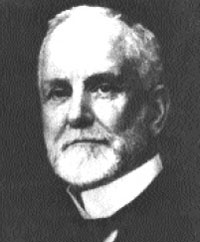
Borden Parker Bowne (1847-1910) was the founder of American personalism, or the Boston school of personalism. This is an idealistic form of personalism, what is often called personal idealism.
Charles Baugniet: Les arrivants du printemps

Begreppet den nya världsordningen
En märklig del av diskussionen på Flashback som jag i några tidigare inlägg kommenterat är den som handlar om min användning av uttrycket “den nya världsordningen”, ”the new world order”. Samtliga deltagare tycks, oavsett tolkning och värdering av vad jag säger, uppfatta denna term som betecknande enbart innehållet i en extrem form av konspirationsteori av den typ som ser en liten grupp illuminati, frimurare, Rothschilds, Sions åldermän, bilderbergare eller liknande kontrollera världen bakom kulisserna.
Det är en felaktig uppfattning. Termen har använts av ledande politiker, ideologer, analytiker, kommetatorer och organisationer under mycket lång tid. Och begreppet kan, trots att det naturligtvis uppvisar en viss variation i definitionen, sägas ha kommit att sammanfatta en lång rad genom hela 1900-talets historia centrala politiska och ekonomiska utvecklingslinjer, såväl som planer för fortsatt utveckling i samma riktning, enligt samma linjer. I stor utsträckning är de åsyftade historiska förändringarna redan – och sedan lång tid – förverkligade och institutionellt etablerade.
Men den speciella, konspirationistiska användning som åsyftas i Flashback innebär naturligtvis i stor utsträckning en bestämd tolkning och spekulativ förklaring av samma fenomen och utvecklingslinjer som den vanliga användningen beskriver. Såtillvida är referenten gemensam.
Jag förnekar självklart inte att konspirationer förekommer. Historien är full av dem, och varje historiker måste ta dem i beaktande. Det finns en enfaldig tendens bland många journalister och andra icke-historiker att avfärda konspirationsteoretiker som sådana, som i sig med nödvändighet icke-trovärdiga. Det har naturligtvis att göra med den frekventa knäppheten hos teorierna och de tvivelaktiga psykologiska, sociala och andra funktioner de ofta kan visas fylla. Men det måste betonas att konspirationer självklart är en realitet och att historiker såväl som andra legitimt uppställer teorier om dem. Konspirationsteorier kan inte avfärdas en tant que telles.
Weishaupts Illuminatorden har förvisso existerat i verkligheten, och den utövade ett signifikativt inflytande även om det är oklart exakt vilket arv den lämnade till senare hemliga sällskap; det har också utan tvekan funnits och finns fortfarande problematiska riktningar bland frimurarna; den funktion de privata internationella bankerna mycket länge haft i det ekonomiska systemet måste ifrågasättas; Bilderberggruppen diskuterar verkligen tvivelaktiga idéer; och det finns slutligen bevisligen ledande judar som exempelvis, i linje med judendomens profetism, eskatologi o.s.v, föreställer sig en världsregering med Jerusalem som huvudstad. Allt detta är okontroversiella och väl dokumenterade fakta.
Problemet med de typiska konspirationsteorierna är det sätt på vilket de oproportionerligt överbetonar en eller flera av dessa faktorer och blir otillbörligt spekulativa ifråga om dess/deras inflytande och/eller arbetssätt. Därmed reducerar de förenklande hela det centrala historiska skeende och hela det framtidsvisionerande som den vidare användningen av termen eller det vidare definierade begreppet den nya världsordningen söker fånga. Det finns en oerhörd mängd andra faktorer av olika slag och inom olika områden som måste tas i beaktande för att den komplexa historiska helhet som begreppet söker beskriva ska kunna rätt förstås.
Särskilt problematisk blir den extrema konspirationistiska användningen naturligtvis när den leder till att exempelvis alla frimurare eller judar misstänkliggörs. (En avsevärd del av Flashback-diskussionen, tar jag här tillfället att nämna, upptas av frågan om vad jag anser om judiskt inflytande, sionismen och Israel. Även i en kommentar här i bloggen har jag upplysts om att många här ”väntar spänt på att få besked om min inställning”. Men detta är stora och svåra frågor som det inte är helt lätt, i sak, att bara börja uttala sig om i största allmänhet på det sätt som tycks efterfrågas – för att inte tala om att det i diskussionen också klagas över att mina blogginlägg är för långa! Jag uttalar mig gärna i den utsträckning mina uppfattningar är tillräckligt klara för att det ska kunna anses meningsfullt, men det vore tacknämligt om det hela kunde uppdelas i mindre och mer precisa frågor.)
I vilken utsträckning och i vilken mening är det rimligt att tala om de centrala historiska utvecklingslinjerna, ideologierna, planerna och strävandena under långt över ett århundrade, fenomen som är i hög grad institutionaliserade på det mest påtagliga, ja påträngande sätt, i termer av en konspiration?
Det finns egentligen mycket litet som idag är hemligt ifråga om den nya världsordningen, även om mycket förvisso är otillräckligt känt av allmänheten och i den allmänna debatten; t.o.m. historiker uppvisar ofta brister här. Icke oväsentliga enskilda moment av konspiratorisk karaktär har förekommit i den nya världsordningens framväxt och förekommer fortfarande. Men inte minst dessa blir alltmer uppmärksammade, och inte bara genom konspirationsteoretikernas försorg. Det mesta tycks mig på det hela taget på olika sätt ha öppet redovisats. Ja, en del har rentav förpackats, presenterats och marknadsförts i kostsamma kampanjer för att vinna världsopinionen. Det blir inte mindre problematiskt bara för att det inte i dess helhet eller ens huvudsakligen kan beskrivas som en konspiration.
Termen den nya världsordningen – som har idéhistoriska föregångare på andra språk – användes redan vid 1900-talets början av Woodrow Wilson och i samband med hans strävan att inte minst genom Nationernas Förbund etablera en ny världsordning efter det första världskriget. Och linjen från hans politik och de ideologiska, politiska och finansiella kretsar som influerade honom, fram till dagens globalism, är uppenbar, trots den skillnad som ligger i hans betoning av nationalitetsprincipen (en betoning som dock främst var riktad mot de gamla europeiska imperierna, som var ett större hinder för den nya ordingen än nationalstaterna).
H. G. Wells’ bok The New World Order från 1940 fördömer ”nationalist individualism” som ”the world’s disease” och förespråkar en ”collectivist world-state”. Wells var Fabian, och Fabianernas religiösa typ av socialism har sedan långt före Wells utövat ett mycket stort inflytade på Labourpartiet och dess politik.
Termen återkom, använd av Attlee (Churchill talade om “world order”), med förnyad styrka efter det andra världskriget när de nya institutioner skapades som jag i några inlägg nämnt, och som ”lyckades” bättre än NF: FN, Bretton Woods-systemet med bl.a. Internationella Valutafonden, NATO, o.s.v.
Nelson Rockefeller attackerade i sina Godkin-föreläsningar vid Harvard 1962 (publicerade två år senare under titeln The Future of Federalism) nationalstaterna, och beskrev de ekonomiska, militära och politiska faktorer som enligt honom pressade USA att kraftfullt leda utvecklingen ”toward the true building of a new world order”.
Richard N. Gardner publicerade 1964 In Pursuit of World Order: U.S. Foreign Policy and International Organizations, och återkom tio år senare med den mycket uppmärksammade artikeln ’The Hard Road to World Order’ i den av Council on Foreign Relations utgivna Foreign Affairs, där han hävdade att eftersom förhoppningen om ”instant world government” genom FN-systemet inte uppfyllts, ”the house of world order” i stället måste byggas genom ”an end run around national sovereignty, eroding it piece by piece”.
Grundaren av Worldwatch Institute och Earth Policy Institute, Lester R. Brown, förklarade i sin bok World Without Borders från 1972 hur ”the existing international system…must be replaced by a new world order”. I samband med FNs Earth Summit i Rio 1992 förklarade han att ”ecological sustainability will become the new organising principle, the foundation of the ’new world order’”.
Historikern Henry Steele Commager författade 1975 för World Affairs Council i Philadelphia en ’Declaration of INTERdependence’, i vilken hävdades att ”To establish a new world orderof compassion, peace, justice and security, it is essential that mankind free itself from the limitations of national prejudice, and acknowledge…that all people are part of one global community”. Deklarationen kallade ”all nations to strengthen and to sustain the United Nations and its specialized agencies, and other institutions of world order”.
Även en lång rad andra institutioner och organisationer som verkar för denna nya världsordnings förverkligande har funnits och finns, exempelvis Fund for Education Concerning World Peace through World Law, som sammanslogs med The Institute for International Order – som utgav tidskriften Transition – och senare kom att kallas World Policy Institute.
Grenville Clarks och Louis B. Sohns bok World Peace Through World Law från 1958 har pekats på som det viktigaste enskilda verket för den nya världsordningens försvarare. Den förespråkar en socialistisk världsregering byggd på FN som ”world police force”, ”a coercive force of overwhelming power”; ”This world police force”, förklaras det, ”would be the only military force permitted anywhere in the world after the process of national disarmament has been completed.”
Alla använder naturligtvis inte själva termen den nya världsordningen, men när man talar om världsfederalism och världsregering o.s.v. är det för det mesta bara en terminologisk och inte en begreppslig skillnad. En term som idag blivit mycket dominerande i G20- och andra sammahang är ”global governance”, och världsregeringsfrågan och tänkandet kring den är något som alla studenter i statskunskap numera självklart tar del av och som behandlas i all grundläggande kurslitteratur.
Viktigt för begreppet den nya världsordningens spridning tycks Michail Gorbatjovs tal i FNs generalförsamling 1988, som analyserades med stor utförlighet i ledande media, ha varit. Även Malta-toppmötet mellan George H. W. Bush och Gorbatjov 1989 lär ha bidragit till begreppets etablering. Under 1980-talet hade begreppet också använts av exempelvis Rajiv Gandhi och NATOs generalsekreterare Manfred Wörner; Carter använde på sjuttiotalet den vanliga kortare formuleringen “world order” med samma begreppsliga innebörd.
Det var ”kalla krigets” slut som gjorde uttrycket den nya världsordningen verkligt känt, och framför allt genom två tal av Bush inför kongressen 1990 och 1991 i samband med det första Gulfkriget. I analyserna av både Gorbatjovs och Bushs tal drogs linjerna korrekt tillbaka till Wilson och F. D. Roosevelt. Även i andra sammanhang än de här nämnda talade både Bush och Gorbatjov om den nya världsordningen.
USAs FN-ambassadör Jeanne Kirkpatrick förklarade att ett av syftena med den s.k. Desert Storm-operationen var att visa världen hur ett “reinvigorated United Nations could serve as a global policeman in the New World Order”.
Vid denna tid, och i hög grad i anslutning till Bushs tal, användes termen i mycket stor utsträckning i debatt och media. Bruce Russett och James Sutterlin använde 1991 begreppet i en artikel i Foreign Affairs betitlad ’The UN in a New World Order’, och Sherle R. Swenninger skrev i World Policy Journal 1992 om ’The United States in the New World Order’.
Joseph S. Nye beskrev i en kolumn i New York Times hur FNs toppmöte i New York i januari 1992 skulle kunna leda till etableringen av ”a new world order”, och i en ledare drev samma tidning på för att Bushs vision skulle konkretiseras och förverkligas. Begreppet stod i centrum vid akademiska seminarier och konferenser.
Den nya världsordningen kritiserades av den akademiska högern i Samuel Huntingtons The Clash of Civilizations and the Remaking of World Order (1996, byggd på en artikel i Foreign Affairs från 1993), såväl som av den akademiska vänstern i Noam Chomskys World Order and its Rules (1993) och World Orders Old and New (1994).
Termen den nya världsordningen har också använts av exempelvis Kissinger Kissinger Kissinger Kissinger, Clinton och Gordon Brown. Den demokratiske senatorn Gary Hart hävdade att 911 kunde användas av George W. Bush för att “carry out” den nya världsordning hans far talat om. Denna typ av kritik har också framförts av många andra, inklusive Claes Ryn, som också använt termen.
Vad jag, med Ryn och många andra, har sagt är att det finns oerhörda och uppenbara problem med denna nya världsordning och planerna för dess vidareutveckling, problem som har att göra med såväl det ideologiska tänkande som de maktpolitiska, ekonomiska och andra intressen som utöver de ideologiska motiven ligger till grund för dem. Det innebär inte att allt som sagts och skrivits av de personer och i de sammanhang jag här nämnt är fel, dåligt, farligt. Internationellt samarbete och adekvata former för det är självklart nödvändigheter i dagens och morgondagens värld.
Mitt syfte i detta inlägg är bara att förklara att det inte finns något som helst kontroversiellt i min användning av begreppet den nya världsordningen. Jag behöver inte upprepa min analys och problematisering av fenomenet, utan hänvisar för dessa till de inlägg som citerats i Flashback-diskussionen.
Karajan: Beauty As I See It
New Article
 My ‘Second Reply to Phillip Ferreira’ is now available in the new issue of the philosophical journal The Pluralist. It is a reply to Ferreira’s article ‘On the Imperviousness of Persons: A Reply to Jan Olof Bengtsson’ in the same issue, which, in turn, is a reply to my ‘Reply to Phillip Ferreira’ in the issue of The Pluralist devoted to my book The Worldview of Personalism, a reply to Ferreira’s essay on the book, ‘Absolute and Personal Idealism’, in that issue. In other words, this is a long and ongoing discussion. Shorter versions of both of Ferreira’s articles have also been presented as papers at conferences which I too have attended and where I have commented briefly on them.
 Olle Bengtsson