
Category: Idealism
Vitalis Norström
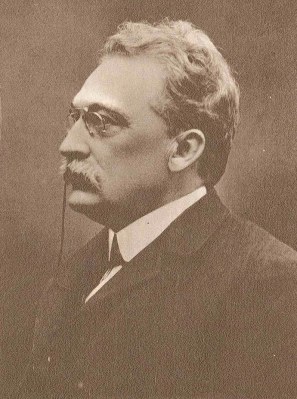
Vitalis Norström (1856-1916), professor i Göteborg från 1891, ledamot av Svenska Akademien från 1907, var en av de mest kända svenska filosoferna under det tidiga 1900-talet.
I min serie inlägg om svenska filosofer har jag ur första upplagan av Alf Ahlbergs Filosofiskt lexikon (1925) återgivit dels Ahlbergs egna artiklar om äldre sådana, dels Selbstdarstellungen av då ännu levande. I Norströms fall avstår jag dock från huvudframställningen, av Norstöms rent filosofiska utveckling efter brytningen med boströmianismen. Visserligen upptog han då, utöver nykantianismen i Windelbands och Rickerts form, i likhet med många idealistiska filosofer väsentliga moment av den vid denna tid mycket inflytelserika pragmatisk-fiktionalistiska riktningen, men han gjorde det på ett problematiskt sätt som lät den påverka hela hans tidigare idealistiska åskådning och därmed framtvinga den nämnda brytningen. Vi finner hos Norström inte distinktionen mellan den naturvetenskapliga begreppsbildningen å ena sidan och den filosofiska å den andra genomförd på samma sätt som hos den i detta avseende croceansk-hegelianska värdecentrerade historicismen, som jag diskuterar i en särskild kategori. Fastän Norström tar avstånd från pragmatismen som sådan i dess amerikanska form, som han uppfattar som utilistisk, innebär detta att vad han kallade sin “moderna ståndpunkt i filosofin” blev ohållbar och pekade i en problematisk riktning.
Norströms betydelse ligger därför huvudsakligen på ett annat område, nämligen hans kulturkritik. “Till någon systematisk avrundning har han knappast nått fram”, avslutar Ahlberg sin framställning, “men hans av ett glödande temperament burna skriftställarskap har verkat kraftigt stimulerande på svenskt tankeliv.” Men detta gällde till helt övervägande del kulturkritiken. Det var den som gjorde honom till en allmänt känd kulturpersonlighet med inflytande långt utöver den akademiska filosofin. Ahlbergs stycke om just detta kan återges:
“Jämsides med [hans] mera teoretiskt-vetenskapliga undersökningar går i N:s tänkande en kulturkritisk strömning, som får sitt uttryck i skrifter såsom Ellen Keys tredje rike (1902), Radikalismen ännu en gång (1903), och Masskultur (1910). I denna kritik är N. starkt påverkad av Nietzsche, som han även ägnat en särskild skrift. Men han betraktar Nietzsches filosofi såsom ett visserligen storslaget men misslyckat försök att bryta sig ut ur naturalismen; Nietzsche har strukit övervärlds- och evighetsperspektivet ur sin livsåskådning och brottas därför förgäves. Han har sett den moderna kulturens ihålighet, men har intet att sätta i stället. Den livssyn, som N. under namnet ‘radikalismen’ bekämpar, är den, som avskurit kontakten med denna övervärld. Sedlighet och plikt upplösa sig då i illusioner, livet förflackas och förytligas, och den lycka, efter vilken man rastlöst jagar, flyr ständigt undan. Det moderna livet rör sig kring de båda polerna lidande och njutning, medan den djupaste spänningen ligger mellan de båda motsättningarna förnuft och mening – oförnuft och meningslöshet i tillvaron.”
Norström var p.g.a. denna kulturkritik utan tvekan en av våra mer framstående konservativa tänkare. Trots den rent filosofiskt försvagade grunden för hans åskådning i jämförelse med de övriga svenska filosofer jag här försökt lyfta fram, kvarhåller han alltså inte bara “övervärlds- och evighetsperspektivet” (även i sin kunskapsteori ville han ge religionen eller tron en ny teoretisk roll, men på annat sätt, och som förstådda på annat sätt, än i den äldre idealismen), utan också flera av den svenska personlighetsfilosofins distinkta temata i på visst sätt varierad form. Ahlberg menar rentav att hans filosofi “kan karaktäriseras” – d.v.s. huvudsakligen karaktäriseras – “som ett försök att på grundval av en starkt personlig livssyn gjuta samman den svenska personlighetsidealismen med den tyska transcendentalismen (särskilt nykantianismens…)”. Det är något ensidigt, och den svenska personlighetsidealismen växte ju från början fram som just en variation och delvis självständig vidareutveckling av den tyska transcendentalismen (den ursprungliga kantianismen och dess idealistiska efterföljare), men det fäster ändå uppmärksamheten på ett viktigt moment i Norströms tänkande. Brytningen med boströmianismen – som ju trots dess dominans under andra hälften av 1800-talet bara representerade en gren i den svenska personlighetsidealismen – hindrade inte att Norström fortfarande tillhörde och ville tillhöra denna vidare svenska tradition.
Schelling
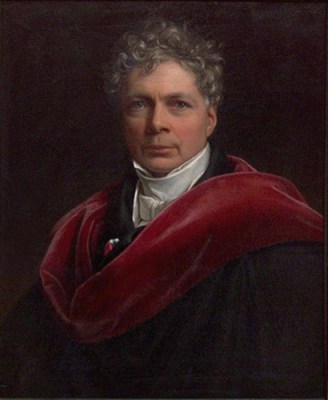
Joseph Karl Stieler, 1835
Idealism and the Renewal of Humanistic Philosophy, 7
Idealism and the Renewal of Humanistic Philosophy, 1
Idealism and the Renewal of Humanistic Philosophy, 2
Idealism and the Renewal of Humanistic Philosophy, 3
Idealism and the Renewal of Humanistic Philosophy, 4
Idealism and the Renewal of Humanistic Philosophy, 5
Idealism and the Renewal of Humanistic Philosophy, 6
The experiential whole and the reason that is adequate to it is the whole and the reason of individual finite beings, even as we, as such beings, understand that in explicating, as it were, the whole of experience we also explicate the larger whole of which we are “parts”. The necessary reference of the absolute as distinct from our relative perspectives and eternally complete, is of course easily conceivable for non-“modal” philosophical purposes, and even when still merely a regulative idea, as more objective than any realist conception that we may work out of correspondence with an independent, external physical structure could ever be.
Yet even Croce’s understanding of intrinsic rationality is connected with a version of the calamitous older idealist ambiguity concerning the relation between the finite subject and the absolute, or, put more simply, the lack of a clear understanding of the necessity of distinction between them – the weakness which British absolute idealism inherited from the pantheistic Germans. It is not necessary to exemplify further this position according to which the individual lacks independent reality from the perspective of the absolute and even, ideally, in some respects from his own, and his separateness and integrity is reduced to a relative, temporary fragment of the comprehensive historical self-actualization of the absolute, to a passing contribution to the absolute experience, or to a presupposition of the mode of practice, to be cultivated for what it is worth as a feature of everyday experience.
It is not just from the perspective of an anti-pantheistic traditionalism that a humanist philosophy taken to this point of anti-essentialism must be rejected – even as in some ways expressed by such a traditionalist as Burke, for all the insight he possessed into the difference between the classico-Christian understanding of human nature and the moral order and the modern rationalist one. It is also because of the nature of the historical genesis of this conception of the absolute in the first post-Kantian idealists and Green, as critically analysed by Pringle-Pattison. Yet as Pringle-Pattison immediately makes clear, this does not mean that the concept of the absolute itself, even as in other respects understood in absolute idealism, should be rejected. There are certainly ways leading from consciousness to the absolute, or from the finite to the infinite consciousness. But these ways are other than the standard absolute idealist one. My consciousness and experience are not the absolute’s consciousness and experience, although I may indeed fragmentarily share them through their piecemeal communication and reproduction; philosophical progress takes place only in some finite individuals. Philosophy is only ideally and potentially a system in development, and even where this ideal is realized, there is, again, for philosophy, in contradistinction to modern gnosticism, no general historical progress toward a final, immanent redemptive consummation.
A deeper view of the finite centres as distinct persons is necessary for many reasons, not least for the understanding of perspectival relativity and of how precisely the modes of experience are not in every respect independent either of each other or of philosophy. Experience has its modes, we ourselves, as subjects of experience, are not modes. In one sense, we are of course part of the absolute experience, but as Bradley had to admit, the absolute must comprise both unity and diversity, it must, no matter how paradoxical it might seem from the standpoint of a reifying logic, be relational.
The closed immanentism of idealism as part of the pantheistic revolution, with a number of typical concomitant philosophical positions, must be rejected. I cannot see that there is any problem with saying that there is a transcendent dimension to the absolute, even if we hold merely that the absolute is absolute experience and that this experience, distinct from ours, has a subject conceived in the terms of personal idealism. If the personal idealists are right that our experience never exhaustively coincides with that of the absolute, there would still be no need to insist on the strict Kantian meaning of transcendence. Oakeshott’s putting religion on a par with scientism, Marxism, and Freudianism as a rationalism claiming to yield knowledge of how reality is apart from how we experience it, as well as his own later doubts about idealism itself as rationalism, can, I think, be shown to be superficial even from the position of idealism’s own emphasis on experience, as including religious experience.
But of course the absolute is both immanent and transcendent, and since there is both unity and diversity in the whole, even our ordinary experience can partly coincide with or participate in it to various degrees, depending not only on philosophical insight but also on the moral preconditions of such insight. To that extent it would be more correct to say that in relation to our experience the absolute is “implicit”, in Oakeshott’s sense, than “unconscious” or beyond anyone’s possible experience and conception.
To a degree that I think it is today possible to see is problematic, the understanding of the nature and the order or sequence of the modes in both early and later idealists was determined by the in some respects, as it were, substitute culturalism of the nineteenth-century secular humanist world of Wissenschaft and its modified perpetuation in the early twentieth century. But the more general idealist positions I have pointed to represent lasting contributions and insights of nineteenth- and early twentieth-century humanistic Bildung, apart from what could perhaps be called the management of knowledge and its sometimes too context-specific divisions. Idealism in its highest forms represents this culture at its best, restoring badly needed elements of philosophy as the love of, and the quest for, wisdom. The potential for retrieving elements of the pre-pantheist synthesis, for rethinking the modes and their relations to each other and to philosophy, and for further thought on the complex issues associated with some of the positions I have defended, is considerable within the general framework of idealism.
Apart from its contribution to all of the branches of philosophy which it uniquely and organically connects, idealism could contribute to the renewal of humanistic philosophy especially by demonstrating anew the partial, modal nature of “non-humanistic” thought, and indeed by explaining the deeper significance and value of the humanistic modes: by explaining, when they are invaded and distorted by rationalism and scientism, why and how they must again be conceived as humanistic. It could thus contribute to the restoration of the larger context and framework of human culture and practice which sustains philosophy even as philosophy dialectically transcends it, and which both analytic and continental philosophy have undermined in the twentieth century through different yet not unrelated forms of nihilism.
As a description of the current state of philosophy, the distinction between Anglo-American analytic philosophy and continental philosophy is, increasingly, at least geographically obsolete. This marks a step forward. Although it has long been clear to me that “non-humanistic” philosophy in any of the forms produced by the two wings of the pantheistic revolution is going nowhere and has indeed been disastrous, there are of course still many partial truths floating about in contemporary philosophy that are humanistic and relevant to humanistic philosophy in the deeper, integral sense that idealism at its best represents.
It seems to me, for instance, that even the insights into the nature of intersubjectivity and alterity of dialogical philosophy are not, as is the common understanding, incompatible with idealism – namely, if idealism is conceived in the terms of personal idealism. For as I have tried to show elsewhere, these insights first arose long before twentieth-century continental philosophy in the thinkers and currents of thought that are the origin precisely of personal idealism. In order not to be lost, such truths need to be taken up in idealism thus conceived. And it seems that for this purpose, and for the purpose of their necessary supplementation, the forgotten resources of idealism must be made available and comprehensible through a revised restatement of the kind I have tried to suggest in outline.
R. T. Wallis: Neoplatonism
Foreword and Bibliography by Lloyd P. Gerson
Hackett, 1995 (1972) Amazon.com
Book Description:
 Neoplatonism, a development of Plato’s metaphysical and religious teaching, whose best-known representatives were Plotinus, Porphyry, Iamblichus and Proclus, was the dominant philosophical school of the later Roman Empire and has been a major influence of European and Near Eastern thought and culture ever since. Yet the school’s philosophy is only now coming to be studied in detail by historians of philosophy, largely because of the difficulty of the Neoplatonists’ writings and the lack of a good summary exposition. This defect Dr. Wallis sought to remedy in this, the first full-length study of the school by a single author to appear for over half a century. Lloyd Gerson’s new Foreword sets that contribution in context; he also provides an up-dated Bibliography.
Table of Contents:
1 The Aims of Neoplatonism
2 The Sources of Neoplatonism
3 Plotinus
– Life and Writings
– The Three Hypostases
– Emanation, Logos, Sympathy
– The Individual Soul
– Return to the One
– Plotinus and Later Neoplatonism
4 Porphyry and Iamblichus
– Neoplatonism from Plotinus to the Death of Julian
– Anti-Christian Polemic and the Problem of Theurgy
– The Three Hypostases in Porphyry and the Parmenides Commentator
– Iamblichus’ Counter-Attack; The Soul and Her Salvation
– The Structure of Late Neoplatonic Metaphysics
– Textual Exegesis According to Porphyry and Iamblichus
5 The Athenian School
– Neoplatonism at Athens and Alexandria
– Some Basic Doctrines of the Athenian School
– Damascius and the End of the Academy
6 The Influence of Neoplatonism
About the Author:
R. T. Wallis was Associate Professor of Classics at the University of Oklahoma. (Lloyd P. Gerson is Professor of Philosophy at the University of Toronto.)
Idealism and the Renewal of Humanistic Philosophy, 6
Idealism and the Renewal of Humanistic Philosophy, 1
Idealism and the Renewal of Humanistic Philosophy, 2
Idealism and the Renewal of Humanistic Philosophy, 3
Idealism and the Renewal of Humanistic Philosophy, 4
Idealism and the Renewal of Humanistic Philosophy, 5
We are talking about the nature and role of philosophy, then, as conceived by idealism, apart from but in relation to the various “modes” in Oakeshott’s general sense. In order to be made clear, distinctions and definitions must be explained by philosophical reason within the categories of systematic thought. Idealism insists that true philosophy is systematic: even though closed, final, complete systems are of course unattainable, systematicity is necessary, and categorial systematicity is not “modal”. Whenever we properly think, we think the whole, and since no premature arrests of experience and philosophical articulation are justified, the idea of the absolute is not only legitimate but necessary.
Even if thought never ends in static fixity apart from the flow of history, Ryn explains, philosophical thought makes qualitative and not merely additive advance in reflecting on and making clearer through further conceptual articulation what we already confusedly know experientially – intuitively, or imaginatively, or more or less within the modes. The categorial distinctions and the permanent structures are perceived through a more or less limited historical perspective, through the weeding out of remaining pragmatic interpretations.
This is certainly true in the case of finite beings, although as I have on a few occasions argued, Ryn, even though he asserts the possibility of the apprehension of such permanent structures in and through historical thought and historical existence, goes too far in constitutively subordinating the human subject in every respect to history. Affirming the possibility also of other and higher access to transhistorical truth and reality does not invalidate his general analysis of the process of conceptual knowledge.
Cognition, he thus rightly goes on to assert, is not achievement of perfect clarity but dialectical straining towards it. Knowledge advances through continuous refinement of concepts. Lasting and, I would add, even absolute truth is apprehended, and certainly also in the midst of history. As old insights are absorbed, adjustment is made to new challenges. The philosophical enterprise is an ongoing quest for deeper, more comprehensive truth. Actual thought, conceptual thought on the level Ryn is here talking about, clearly never displays stable identity, its logic is dialectical in that concepts develop, grow, broaden, deepen, and become increasingly clarified into greater self-identity. The whole chapter from Will, Imagination and Reason: Babbitt, Croce and the Problem of Reality (1997 (1986)) which I am here citing eloquently sets forth the Crocean-Hegelian position: concepts move toward identity with themselves, but inasmuch as they never achieve it, A is both A and non-A. Philosophical reason is thus attuned to the experienced duality of actual life, and provides the logic of the thought-processes through which we reach knowledge of reality.
With reference to concrete experience and thought, the principle of identity or non-contradiction in itself is merely the formula of the reification of abstractions. It is dialectical reason which truly establishes relations and connections, which progressively widens contexts, which relates aspects of experience to the whole and through this process attempts to understand both the aspects and the whole, which moves towards greater coherence and comprehensiveness, which makes consistent what in its immediacy appears disparate and contradictory, and which increasingly resolves it in its ascent towards the whole through the achievement of higher syntheses.
Ryn (and when I now say Ryn I mean also Leander, on whose work Ryn builds) also discusses another form of idealism in this context, namely Bradley’s. Despite their awareness of the reality of the concrete universal and of unity in diversity, it seems that the British and, I think, also the American idealists did not often treat separately and at length the question of reason as such, or the different kinds of reason. The lingering perception of a contradiction between experience and rationality which accounts for the limitation of the role of philosophy as conceived by some of the later idealists can be studied in a different aspect in Bradley. For having rightly analysed the nature of abstraction, and classical logic as dealing with abstractions, with universal “ideal contents”, not separate, individual “ideas”, and thus never exhausting individual reality, “the manifold shades and the sensous wealth”, and having consistently tried to reconceive both “judgement” and inference, Bradley gives no account of his analysis in terms of the kind of reason which perceives its truths.
The whole analysis of in Bradley’s sense contradictory appearances and concepts – on the most general level, of terms and relations – concerns reified and from Ryn’s dialectical perspective merely relatively valid abstractions. He is certainly right that the real is not rational in the sense of the rationality that produces such concepts. But what is in reality operative in the analysis is an incipient supplementary articulation in terms of a distinct philosophical perception of the process of abstraction and of what has been left out, of the individualized qualia of the whole, each of which implicate the others and the whole as given in experience. Caught in Aristotelian logic, Bradley’s articulation, to the extent that it is there, of the self-sufficient reality to which the “ideal contents” must be referred, seems in Hegelian light insufficiently self-conscious and reflective, and the account thus incomplete and inconclusive. For Bradley, dialectical logic too is a spectral woof of impalpable abstractions.
Ryn’s Hegelian criticism also in fact has considerable bearing on the specific positions of personal idealism. While Bradley insists that the ultimate, unitary reality must be non-contradictory – “Ultimate reality is such that it does not contradict itself” – he also rightly notes both that it “divides itself into centres”, and that “[w]e do not know why or how” it does so or “the way in which, so divided, it still remains one”. In one sense, it is of course true that the absolute does not contradict itself, even as divided into centres. But if the non-contradictoriness of the absolute is to be compatible with the concrete experience, the immediate feeling, in which it is considered by Bradley to some extent to be accessible, if the absolute has an experiential basis at all, both unity and diversity must be admitted. And this can be articulated or thought only by a concrete reason, in terms of a logic that is attuned to, indeed one with, experience and intuition.
Clearly the judgements and inferences of discursive, abstractive rationality cannot grasp reality as concretely determined; clearly the latter transcends such thought. Knowing this, Bradley nonetheless tries to use it to understand ultimate reality, and thus impossibly insists the absolute must be simply a non-relational unity. Having analysed the limitations of the reason and logic which are incapable of giving adequate conceptual accounts of the experienced duality, there is missing an account of the reason which, immanent to consciousness, could think and express the inseparability and mutual implication in concrete experience of the abstractly contradictory terms. In view of all this, it is at least no mystery that it has been possible to describe Bradley’s thought as a combination of scepticism and fideism.
Kant
by Christian Daniel Rauch

Jeremy Dunham, Iain Hamilton Grant, & Shaun Watson: Idealism
The History of a Philosophy
McGill Queens University Press, 2011 Amazon.co.uk
Book Description:
 The rediscovery of Idealism is an unmistakable feature of contemporary philosophy. Heavily criticised by the dominant philosophies of the twentieth century, it is being reconsidered in the twenty-first as a rich and untapped resource for contemporary philosophical arguments and concepts. This volume provides a comprehensive portrait of the major arguments and philosophers in the Idealist tradition. Idealism is philosophy on a grand scale, combining micro and macroscopic problems into systematic accounts of everything from the nature of the universe to the particulars of human feeling. In consequence, it offers perspectives on everything from the natural to the social sciences, from ecology to critical theory. Since Idealism is sometimes considered anti-science, however, this book places particular emphasis on its naturalism. Written for a broad readership, the book provides the fullest possible introduction to this most philosophical of philosophical movements.
Contents:
Introduction: Why Idealism Matters
Part 1: Ancient Idealism
1. Parmenides and the Birth of Ancient Idealism
2. Plato and Neoplatonism
Part 2: Early Modern Idealism
3. Phenomenalism and Idealism I: Descartes and Malebranche
4. Phenomenalism and Idealism II: Leibniz and Berkeley
Part 3: German Idealism
5. Immanuel Kant: Cognition, Freedom and Teleology
6. Fichte and the System of Freedom
7. Philosophy of Nature and the Birth of Absolute Idealism: Schelling
8. Hegel and Hegelianism: Mind, Nature and Logic
Part 4: British Idealism
9. British Absolute Idealism: From Green to Bradley
10. Personal Idealism: From Ward to McTaggart
11. Naturalist Idealism: Bernard Bosanquet
12. Criticisms and Persistent Misconceptions of Idealism
13. Actual Occasions and Eternal Objects: The Process Metaphysics of Alfred North Whitehead.
Part 5: Contemporary Idealisms
14. Autopoiesis: Idealist Biology I
15. Autonomous Agents: Idealist Biology II
16. Contemporary Philosophical Idealisms
About the Authors:
Jeremy Dunham, Iain Hamilton Grant, and Sean Watson are all members of the philosophy department at the University of the West of England.
JOB’s Comment:
I find “naturalism” to be a somewhat misleading term for what the authors have in mind in using it, given its normal philosophical connotations; and I do so quite regardless of the fact that I do not accept all of what they have in mind. They are not alone in this usage, I think, but a better word should be found for what they mean. Idealism certainly takes nature and science seriously. But nature is not according to idealism what it is according to naturalism as commonly understood. The totality of what exists, which idealism is concerned with, includes more than nature; and according to idealism, nature as understood by naturalism as commonly understood, if I may put it that way, does not really exist at all. This in no way implies disrespect for or disregard of science; quite the opposite.
One strength of the book is that it discusses many forms of idealism, including ancient idealism, not just modern idealism in the German tradition.
Idealism and the Renewal of Humanistic Philosophy, 5
Idealism and the Renewal of Humanistic Philosophy, 1
Idealism and the Renewal of Humanistic Philosophy, 2
Idealism and the Renewal of Humanistic Philosophy, 3
Idealism and the Renewal of Humanistic Philosophy, 4
Bradley’s account of the relational stages through which experience develops is problematic in some respects – and I will return to this shortly – but it does seek to describe the philosophical approximation to the absolute through the increasing grasp of the connectedness of things, their constitution through their relations to each other, and the vision of contradictions as reconciled in the absolute.
Bradley also outlines modes of experience as distinguished by content, independent of each other and neither hierarchically related nor successive. Collingwood gave a more systematic account of these modes, although partly under the influence of Croce he retained the Hegelian view of succession. While Croce’s absolute historicism, taken over by Collingwood, is problematic, Croce had a clearer understanding of the precise role of philosophy in relation to the modes. It is true that the modes are not wholly autonomous or independent of each other.
Like Green, Caird, and Bosanquet, Collingwood is also right that philosophy can to some extent and in a certain sense throw its own light on the modes. In this sense he retains idealism’s general claims on behalf of philosophy which had been challenged since the mid-nineteenth century and were again raised in a different mode by phenomenology, existentialism, hermeneutics. But this means that it is not clear that, as some of these thinkers hold, the mind can know itself only through the modes, or that the absolute is merely the modes taken together. This would still be the familiar consequence of philosophy’s resignation or surrender. Clearly philosophy does not simply supplant the modes, but neither is it wholly reducible to the function of their cartographer and intrinsic explicator.
Oakeshott again insists that the modes must be autonomous. The presuppositions and methods, or the “reason” appropriate to one of them, cannot be applied to any of the others. But although he rejects the interference of philosophy in the operations of the modes, in his early work he also insists on the independent nature of the distinct perspective of philosophy, which preserves the wholeness of the flow of experience in the course of its advance in reflection on the mutually independent modes. But since he defines rationalism as the belief in one uniform kind of independently valid reason which is externally applied to or imposed on modes which because of its externality it can never adequately know, and which thus, for the purpose of reorganization, overrides their own postulates and rationalities, it is no mystery that Oakeshott, who from the beginning rejected the absolute as “beyond conception and outside of the world of experience”, later tended to think that this independence of philosophy and its higher or larger perspective vis-à-vis the modes in itself implied a return of rationalism, and that after all it had to lead to the imposition not of the rationality of one mode upon another but of that of philosophy upon all of them.
The reason why I think Oakeshott was wrong in moving in this direction is the problem with the understanding, which motivated it, of the distinct perspective of philosophy and of the absolute, and not least of the nature of the reason which is specific to philosophy. Like Collingwood, Oakeshott relinquished too much of his basic idealist inspirations. It is time to reconnect to them.
Along with the discovery of the experiential whole there came in early idealism the discovery of the distinct speculative reason of philosophy, Vernunft, the reason which, as was gradually understood, discerns and describes the conditional modes of experience and is critically aware of the nature of the other kind of reason, Verstand, which produces abstract classificatory fictions and indeed constitutes some of the modal discourses (Vernunft can also have different meanings in idealism, meanings which, however, do not invalidate this one and are also distinct from Verstand). Only through this distinct, philosophical reason is it possible to perceive the modes qua modes, their nature, their limits, and their relations to each other and to the whole.
Against the kind of realist empiricism that emphasizes sense experience as giving access to objective reality independent of it, idealism teaches not only that both sense experience and reason are experience, but that, as such, they are reality. Oakeshott, with other British idealists, was aware that there is reason in sense experience, that sense experience is not distinct from judgements. But it seems to me that this awareness needs to be deepened and sharpened. Not only does the simplest perception of a “table” include the judgement “this is a table”. Leander and Ryn also uphold the position that any such simple perception also involves the judgement “this is something perceived”, in contradistinction to something merely imagined. Perception is a unity of immediacy and thought, or concrete thought. This becomes especially evident in the observations of the self-knowledge which Leander’s and Ryn’s kind of idealism accepts as fundamental in philosophy. Empirical observation is inseparable from self-observation in the same act. I can know a modal arrest, an abstractive découpage or pragmatic fiction only if I am aware of the context from which it is made.
It is thus not, Ryn continues to explain in accordance with Crocean Hegelianism, merely a question of classificatory reason being applied to sense experience. The reason operative in sense experience is a distinct kind of reason, a concrete reason in which experience and concept coincide, inseparable from the experientially given, from the content on which it works, a philosophical or historical reason with a logic of its own. It is through this reason that experience is intrinsically rational and acquires conceptual self-awareness. Perception implies concrete, historical thought, which is inseparable from philosophical reflection, the ideally evolving phenomenology of mind that is human self-knowledge and that carries with it the evidence of its own completeness.
The advance of philosophy proper is thus not only the identification of the place of the modes in what Oakeshott calls “the spectrum of knowledge as a whole”. It is also, negatively, the progressive elimination, for specifically philosophical purposes, of merely pragmatic classifications and the partialities, limits and incoherencies of modal thought, and, positively, the gradual, tentative discernment, identification, and formulation of what Croce calls categorial realities and distinctions, the permanent structure and order of experience and reality.
This is not a matter of the rationalist or explorative hypothesizing about the hidden structures of the modes. Humanistic philosophy seeks the universal as concretely experienced. It necessarily combines its own pre-theoretical language, interpretive and explicative, with a language that could be said to be explanatory in the “speculative” sense. Its improvement upon its concepts is an infinite task, but the structures it begins to discern if properly pursued are real, and they are what is presupposed in the formation also of such concepts as concept, mode, abstraction, pragmatic thought, perception, imagination, explication, categorial thought, exploration, fact, hypothesis, and verification. Ryn also accepts the position that philosophical reason is the reason which can articulate the experience of freedom, whereas abstractive reason or Verstand, left to itself, invariably produces deterministic theories.
W. J. Mander: British Idealism
A History
Oxford University Press, 2011 Amazon.com
From the publisher’s website:
 – The first history of British Idealism to be written
– Establishes detailed historical context for this philosophical movement
– Presents philosophical positions clearly and accurately
– Covers a wide range of thinkers and philosophical fields
– Includes detailed notes and bibliography
W. J. Mander presents the first ever synoptic history of British Idealism, the philosophical school which dominated English-language philosophy from the 1860s through to the early years of the following century. Offering detailed examination of the origins, growth, development, and decline of this mode of thinking, British Idealism: A History restores to its proper place this now almost wholly forgotten period of philosophical history. Through clear explanation of its characteristic concepts and doctrines, and paying close attention to the published works of its philosophers, the volume provides a full-length history of this vital school for those wishing to fill a gap in their knowledge of the history of British Philosophy, while its detailed notes and bibliography will guide the more dedicated scholar who wishes to examine further their distinctive brand of philosophy. By covering all major philosophers involved in the movement (not merely the most famous ones like Bradley, Green, McTaggart, and Bosanquet but the lesser known figures like the Caird brothers, Henry Jones, A. S. Pringle-Pattison, and R. B. Haldane) and by looking at all branches of philosophy (not just the familiar topics of ethics, political thought, and metaphysics but also the less well documented work on logic, religion, aesthetics, and the history of philosophy), British Idealism: A History brings out the movement’s complex living pattern of unity and difference; something which other more superficial accounts have tended to obscure.
Table of Contents:
Preface
1 Introduction
2 Beginnings and Influences
3 The History of Philosophy
4 The Metaphysics of the Absolute
5 Idealist Philosophy of Religion
6 The Idealist Ethic of Social Self-Realisation
7 Idealist Political and Social Philosophy
8 Idealist Logic
9 Aesthetics and Literature
10 Developments in Idealist Metaphysics
11 Developments in Idealist Philosophy of Religion
12 Developments in Idealist Logic
13 Developments in Idealist Ethics
14 Developments in Idealist Political and Social Philosophy
15 The After-Life of Idealism
Bibliography
Index
Review:
“The first really comprehensive and systematic overview of the British Idealist movement to date…an authoritative and immensely detailed synopsis of the movement as a whole, including, for any potential research students, a splendid
biographical resource…a welcome and extremely well-done history…it provides a valuable and detailed corrective to the way British philosophy has constructed its own historical self-image in the later twentieth century.” Andrew Vincent, Notre Dame Philosophical Reviews
Author Information:
W. J. Mander was educated at University College London and Corpus Christi College Oxford. After holding a Junior Research Fellowship at St Anne’s College, he became a Fellow of Harris Manchester College. Although he is also interested in Early Modern Philosophy, his main area of research is in Nineteenth Century British Philosophy.
 Olle Bengtsson