Idealism and the Renewal of Humanistic Philosophy, 1
Idealism and the Renewal of Humanistic Philosophy, 2
Idealism and the Renewal of Humanistic Philosophy, 3
Idealism and the Renewal of Humanistic Philosophy, 4
Idealism and the Renewal of Humanistic Philosophy, 5
We are talking about the nature and role of philosophy, then, as conceived by idealism, apart from but in relation to the various “modes” in Oakeshott’s general sense. In order to be made clear, distinctions and definitions must be explained by philosophical reason within the categories of systematic thought. Idealism insists that true philosophy is systematic: even though closed, final, complete systems are of course unattainable, systematicity is necessary, and categorial systematicity is not “modal”. Whenever we properly think, we think the whole, and since no premature arrests of experience and philosophical articulation are justified, the idea of the absolute is not only legitimate but necessary.
Even if thought never ends in static fixity apart from the flow of history, Ryn explains, philosophical thought makes qualitative and not merely additive advance in reflecting on and making clearer through further conceptual articulation what we already confusedly know experientially – intuitively, or imaginatively, or more or less within the modes. The categorial distinctions and the permanent structures are perceived through a more or less limited historical perspective, through the weeding out of remaining pragmatic interpretations.
This is certainly true in the case of finite beings, although as I have on a few occasions argued, Ryn, even though he asserts the possibility of the apprehension of such permanent structures in and through historical thought and historical existence, goes too far in constitutively subordinating the human subject in every respect to history. Affirming the possibility also of other and higher access to transhistorical truth and reality does not invalidate his general analysis of the process of conceptual knowledge.
Cognition, he thus rightly goes on to assert, is not achievement of perfect clarity but dialectical straining towards it. Knowledge advances through continuous refinement of concepts. Lasting and, I would add, even absolute truth is apprehended, and certainly also in the midst of history. As old insights are absorbed, adjustment is made to new challenges. The philosophical enterprise is an ongoing quest for deeper, more comprehensive truth. Actual thought, conceptual thought on the level Ryn is here talking about, clearly never displays stable identity, its logic is dialectical in that concepts develop, grow, broaden, deepen, and become increasingly clarified into greater self-identity. The whole chapter from Will, Imagination and Reason: Babbitt, Croce and the Problem of Reality (1997 (1986)) which I am here citing eloquently sets forth the Crocean-Hegelian position: concepts move toward identity with themselves, but inasmuch as they never achieve it, A is both A and non-A. Philosophical reason is thus attuned to the experienced duality of actual life, and provides the logic of the thought-processes through which we reach knowledge of reality.
With reference to concrete experience and thought, the principle of identity or non-contradiction in itself is merely the formula of the reification of abstractions. It is dialectical reason which truly establishes relations and connections, which progressively widens contexts, which relates aspects of experience to the whole and through this process attempts to understand both the aspects and the whole, which moves towards greater coherence and comprehensiveness, which makes consistent what in its immediacy appears disparate and contradictory, and which increasingly resolves it in its ascent towards the whole through the achievement of higher syntheses.
Ryn (and when I now say Ryn I mean also Leander, on whose work Ryn builds) also discusses another form of idealism in this context, namely Bradley’s. Despite their awareness of the reality of the concrete universal and of unity in diversity, it seems that the British and, I think, also the American idealists did not often treat separately and at length the question of reason as such, or the different kinds of reason. The lingering perception of a contradiction between experience and rationality which accounts for the limitation of the role of philosophy as conceived by some of the later idealists can be studied in a different aspect in Bradley. For having rightly analysed the nature of abstraction, and classical logic as dealing with abstractions, with universal “ideal contents”, not separate, individual “ideas”, and thus never exhausting individual reality, “the manifold shades and the sensous wealth”, and having consistently tried to reconceive both “judgement” and inference, Bradley gives no account of his analysis in terms of the kind of reason which perceives its truths.
The whole analysis of in Bradley’s sense contradictory appearances and concepts – on the most general level, of terms and relations – concerns reified and from Ryn’s dialectical perspective merely relatively valid abstractions. He is certainly right that the real is not rational in the sense of the rationality that produces such concepts. But what is in reality operative in the analysis is an incipient supplementary articulation in terms of a distinct philosophical perception of the process of abstraction and of what has been left out, of the individualized qualia of the whole, each of which implicate the others and the whole as given in experience. Caught in Aristotelian logic, Bradley’s articulation, to the extent that it is there, of the self-sufficient reality to which the “ideal contents” must be referred, seems in Hegelian light insufficiently self-conscious and reflective, and the account thus incomplete and inconclusive. For Bradley, dialectical logic too is a spectral woof of impalpable abstractions.
Ryn’s Hegelian criticism also in fact has considerable bearing on the specific positions of personal idealism. While Bradley insists that the ultimate, unitary reality must be non-contradictory – “Ultimate reality is such that it does not contradict itself” – he also rightly notes both that it “divides itself into centres”, and that “[w]e do not know why or how” it does so or “the way in which, so divided, it still remains one”. In one sense, it is of course true that the absolute does not contradict itself, even as divided into centres. But if the non-contradictoriness of the absolute is to be compatible with the concrete experience, the immediate feeling, in which it is considered by Bradley to some extent to be accessible, if the absolute has an experiential basis at all, both unity and diversity must be admitted. And this can be articulated or thought only by a concrete reason, in terms of a logic that is attuned to, indeed one with, experience and intuition.
Clearly the judgements and inferences of discursive, abstractive rationality cannot grasp reality as concretely determined; clearly the latter transcends such thought. Knowing this, Bradley nonetheless tries to use it to understand ultimate reality, and thus impossibly insists the absolute must be simply a non-relational unity. Having analysed the limitations of the reason and logic which are incapable of giving adequate conceptual accounts of the experienced duality, there is missing an account of the reason which, immanent to consciousness, could think and express the inseparability and mutual implication in concrete experience of the abstractly contradictory terms. In view of all this, it is at least no mystery that it has been possible to describe Bradley’s thought as a combination of scepticism and fideism.

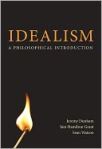 The rediscovery of Idealism is an unmistakable feature of contemporary philosophy. Heavily criticised by the dominant philosophies of the twentieth century, it is being reconsidered in the twenty-first as a rich and untapped resource for contemporary philosophical arguments and concepts. This volume provides a comprehensive portrait of the major arguments and philosophers in the Idealist tradition. Idealism is philosophy on a grand scale, combining micro and macroscopic problems into systematic accounts of everything from the nature of the universe to the particulars of human feeling. In consequence, it offers perspectives on everything from the natural to the social sciences, from ecology to critical theory. Since Idealism is sometimes considered anti-science, however, this book places particular emphasis on its naturalism. Written for a broad readership, the book provides the fullest possible introduction to this most philosophical of philosophical movements.
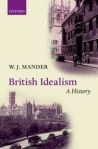 – The first history of British Idealism to be written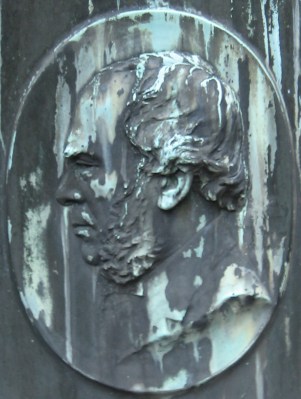
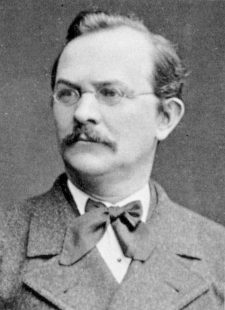 [Carl Rupert] N., universitetslärare, konstkännare, skald, f. 29 mars 1832 i Uppsala, d. 30 maj 1907 i Stockholm, var son af en finskfödd skräddarmästare och rådman, som intog en aktad ställning bland universitetsstadens borgerskap. N. fick egna sig åt studier och väckte redan som gymnasist i Uppsala katedralskola uppmärksamhet för sin skicklighet i som författare af latinsk vers. Han blef 1850 student, erhöll genom filosofen Boströms bemedling kondition hos bruksegaren Rönnqvist på Åkers bruk, där särskildt värdinnan, en dotter af P. Westerstrand, främjade den begåfvade studentens vittra och musikaliska utveckling. Särskildt grundlades då N:s rika musikaliska bildning. Under informatorstiden på Åker vann han ock sin första framgång, då han 1853 erhöll Svenska akad:s andra pris för dikten Arion, efter förord af Atterbom och B. E. Malmström. 1854-56 beredde han sig i Uppsala till filosofiska graden och promoverades 1857 till filos, doktor efter att ha försvarat en afh. Om det komiska och dess förhållande till humorn samt blef lä- rare vid katedralskolan. Han var under 1850-talets senare år Uppsalaungdomens poetiska tolk vid högtidliga tillfällen, deltog ock med lif och lust i den glada studentorden S. H. T., i hvars utveckling till ett litterär-musikaliskt sällskap han hade stor andel, diktade många skämtkväden (t. ex. den i fa exemplar tryckta “Mina studier”), stundom tonsatta af honom själf, var en ifrig deltagare i studentsången ’särskildt i dess elitkör O. D.) och senare en verksam och intresserad medlem af Namnlösa studentsamfundet (se d. o.). I den af fyra unga skalder 1855 utg. kalendern “Qvartetten” offentliggjorde N. ett antal dikter, utgaf 1858 öfv. af T h. Moores “Irländska melodier” och 1860 en större samling Dikter, som uppenbarade en ypperlig verskonst. S. å. blef han docent i estetik under Malmström. Med riksstatens resestipendium, ökadt genom gåfva af en mecenat, företog han 1861 en längre utrikes resa, som vidgade hans syn och skänkte honom djup inblick i konstens värld. Kosan ställdes först till Paris, där han bedref konststudier. Därefter vistades han ett år i Italien och knöt där i de skandinaviska konstnärskretsarna kära bekantskaper, bl. a. med den utmärkte danske målaren Koed, hvars dotter blef hans trolofvade. Som resultat af dessa resor föreligga dels Konststudier i Paris (1863), dels skriften Om den antika konsten och dess pånyttfödelse (1864), dels, och framför allt, den samling af hans urspr, i pressen meddelade resebref, som kallats Bilder från Italien af Carlino (1864, ny tillökt uppl. 1883 under titeln Ett år i södern– dansk öfv. s. å.), hvilken utmärkes för frisk och personlig uppfattning af söderns natur, folklif och konst. Efter hemkomsten fick N. fullt upp att göra. Han föreläste 1864 i Stockholm öfver konst, utgaf Nya dikter (1865), hvaribland de präktiga grafdikterna öfver fadern och öfver Malmström samt ett antal erotiska dikter. 1865-68 utgaf han “Svensk litteraturtidskrift”, där han meddelade ett antal estetiska uppsatser och litterära kritiker, ihärdigt förande “den sunda realismens” talan. Efter Malmströms död (1865) förordnades N. att uppehålla den estetiska professuren och utnämndes, efter att ha utgett afh. Om innehåll och form i konsten (1866) samt Två profföreläsningar, 1867 till professor i estetik, litteratur- och konsthistoria vid Uppsala universitet, en befattning, som han innehade till 1897. N:s lärarverksamhet var utomordentligt framgångsrik. Han var en sällsynt liffull föreläsare, hans föredrag var väckande, det hvilade en konstnärlig friskhet däröfver; han blef aldrig pedant. Särskildt intresserade honom de konsthistoriska föreläsningarna, och på detta område betecknade hans undervisning en nyhet i svenskt universitetsväsen. Djupare specialforskning var icke egentligen hans sak, men han intresserade sin åhörarkrets för sitt ämnes stora drag och intresserades själf, så snart någon af hans lärjungar kom med något nytt uppslag, och långt ifrån att strängt vidhålla de äldre spekulativt estetiska synpunkterna i ämnets studium, som gällde under hans egen studietid, visade han förstående för dess utveckling till en öfvervägande historisk vetenskap. Vid sidan af sin verksamhet i Uppsala höll han populära föreläsningsserier i Stockholm och Göteborg. Han företog studieresor till Finland, Tyskland, Frankrike (1809), Italien QS77), Holland och Belgien (1884) samt Paris och London (1886).
 Ingen artikel om Leander finns ens i första upplagan av Alf Ahlbergs filosofiska lexikon, vars artiklar jag återgivit i tidigare inlägg om svenska filosofer. Därför citerar jag här i stället några stycken ur Svante Nordins Den Boströmska skolan och den svenska idealismens fall från 1981 (s. 77-80):
