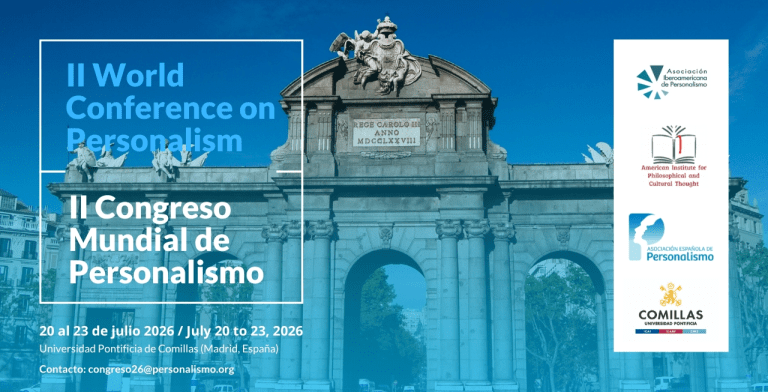
“El Segundo Congreso Mundial de Personalismo está abierto a todos los investigadores del mundo que trabajan en torno a la noción de persona y a la filosofía personalista. El Congreso quiere ser un lugar para compartir investigaciones y proyectos y potenciar así nuestra comunidad científica.
Son bienvenidas todas aquellas investigaciones que se ocupen de las nociones de persona, personalidad y personalismo en el ámbito filosófico, teológico, psicológico, social o político.
El Congreso será híbrido: presencial y online.
Las lenguas oficiales del Congreso son el español y el inglés.
Este Congreso se organiza mediante la unión del VIII Congreso Iberoamericano de Personalismo, coordinado por la Asociación Iberoamericana de Personalismo y la 18 International Conference on Persons coordinada por el American Institute for Philosophical and Cultural Thought.”
Dylan Shaul introducerar den tyska s.k. panteismstriden i tre presentationer på den av Holm rekommenderade kanalen Seekers of Unity.
Del 1: Spinoza, Lessing, Jacobi, Mendelssohn
Del 2: Kant
Del 3: Hegel
Striden är central i min historiska argumentation rörande personalismens ursprung och tidiga utveckling, och man vill ibland ropa “stopp” och tillfoga kommentarer av olika slag, inte minst ifråga om den moderna panteismens mer fullständiga innebörd och förstås just personalismens framväxt, Jacobis fullständiga filosofi, och den sene (eller mellerste och sene) Schelling.
Spinozismen är en typ av brytning med den allmänabrahamitiska exoterismen och dess ortodoxa teologiska utläggning, och som sådan sofiskt partiellt giltig, men den uppvisar distinkt moderna särdrag som skiljer den från den platonska traditionen, och som blir än tydligare om man betraktar Hegels profanhumanistiskt-immanistiska system (delvis baserat, förutom på det exokristna generalmörkret ifråga om Skapelsen, Människan och Historien, på särutvecklingar inom den specifikt västerländska esoterismen enligt vilka Gud själv verkligar sig i Historien) som slutresultat av panteismstriden och lösning av dess “problem”.
Jacobis åskådning har drag av exoterismen, men kan inte reduceras till den, i synnerhet som han utöver sin exofideistiska salto mortale utvecklar en högre förnuftsuppfattning mer i linje med platonismen och de former av den postkantianska idealismen som närmar sig den. Tonvikten läggs dock av Jacobi på förnuftet som förnimmande, som en fakultet av högre perception. Analysen är som i all västerländsk filosofi litet oklar och primitiv i det att den inte fokuserar på och inte har, eller utvecklar, ett tillräckligt begrepp om bevetenheten, varheten, i sig: denna förblir i huvudsak blott implicit och något som måste förutsättas. Men genom att ta fasta på och införliva detta – och en del andra – moment hos Jacobi nådde den personalistiska idealism som utvecklades parallellt med och efter hegelianismen fram till en position som utan att avvisa panteismen som brytning med bokstavsexoterismen höjde sig över den till vad som kunde uppfattas som en ny form av idealistisk teism.
Shaul beaktar inte denna aspekt eller dimension av panteismstriden och dess utgång, utan kvarstannar i det vanliga perspektivet på dess huvudaktörer. Men det innebär inte alls att hans framställning är dålig i sig, så långt den når.
Shaul är assistant professor i filosofi vid University of California, Riverside.
Utmärkt session om – främst sene – Schelling med två doktorander, Ariën Voogt från Protestantiska teologiska universitetet i Utrecht och Vittorio Alves från Leuven (katolska), på 17th International Conference on Persons i Berlin i somras.
At three of our international conferences on persons we have had presentations on what in my paper at the last one, in Mexico City in 2022, I called “Vedantic personalism”. I focused on the identification of the difference between the Vedantic understanding of the identity of the self, on a general level, and the basic characteristics of the original Christian understanding of the human being that is accepted in most western personalism. But is there really such a thing as Vedantic personalism? Personalism and the term person have not normally been associated with Hinduism and especially not with Vedanta. In this paper, I analyse and explain, in a broad historical perspective, how it has become possible to speak of Vedantic personalism, how it seems to me it should be understood, and what sets it apart not only from Christian personalism but from the main current of Vedanta.
This is the abstract of my paper, ‘What Is Vedantic Personalism?’, which follows up the one at the 16th conference in Mexico City two years ago, ‘Christian and Vedantic Personalism’:
At three of our international conferences on persons we have had presentations on what in my paper at the last one, in Mexico City in 2022, I called “Vedantic personalism”. I focused on the identification of the difference between the Vedantic understanding of the identity of the self, on a general level, and the basic characteristics of the original Christian understanding of the human being that is accepted in most western personalism. But is there really such a thing as Vedantic personalism? Personalism and the term person have not normally been associated with Hinduism and especially not with Vedanta. In this paper, I analyse and explain, in a broad historical perspective, how it has become possible to speak of Vedantic personalism, how it seems to me it should be understood, and what sets it apart not only from Christian personalism but from the main current of Vedanta.
Han är eller har varit verksam i danska Kristendemokraterne, och Cura är helt inriktad på kristdemokratisk ideologi: personalism, naturrätt, s.k. “sfaeresuveraenitet”, subsidiaritet, broderskapstanke, förvaltarskap.
På Curas förlag har han givit ut flera böcker om personalismen, och senast publicerade Cura en översättning av Emmanuel Mounier. Det hela framstår som imponerande ambitiöst och mycket sympatiskt.
Det visar sig att Maria Marić på svenska kristdemokratiska idéinstitutet Civitas härom året intervjuade Bjarke Friis på Cura. Även han kan ha varit med på någon av personkonferenserna; jag tror Norgaard Mortensen någon gång tagit med sig kolleger på Cura dit.
This is the abstract of my paper, ‘Christian and Vedantic Personalism’:
What could perhaps, with proper explanations, be called “Vedantic personalism” has been introduced on a few occasions at the International Conference on Persons, and most fully in a panel at Lund in Sweden in 2013; it has also in fact been briefly mentioned by a few Western personalist thinkers ever since the 19th century. In this paper, I will point to what I find to be the central difference between western, Christian personalism and such Vedantic personalism, and provide a basic account of what I regard as its main historical cause, namely the specific features which define the general view of the human being in at least “exoteric”, orthodox Abrahamitic and, in some respects, specifically Christian religion and theology. This will be a kind of introduction to a further exploration of some manifestations of this difference and of its influence throughout the western theology and philosophy that have been relevant to personalism, an exploration that will also highlight points or moments which nonetheless, due in large part to the different influence of Greek idealism, to some extent approximate Vedantic personalism.
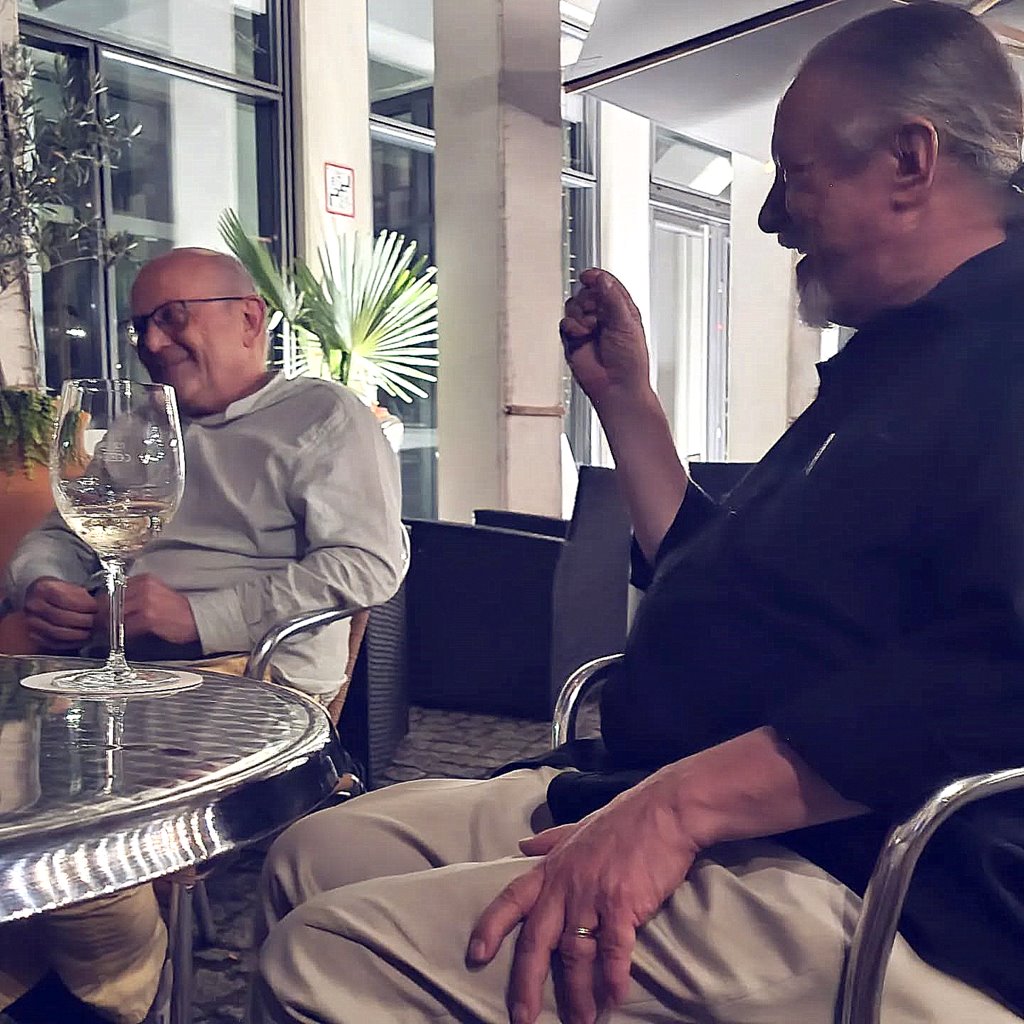
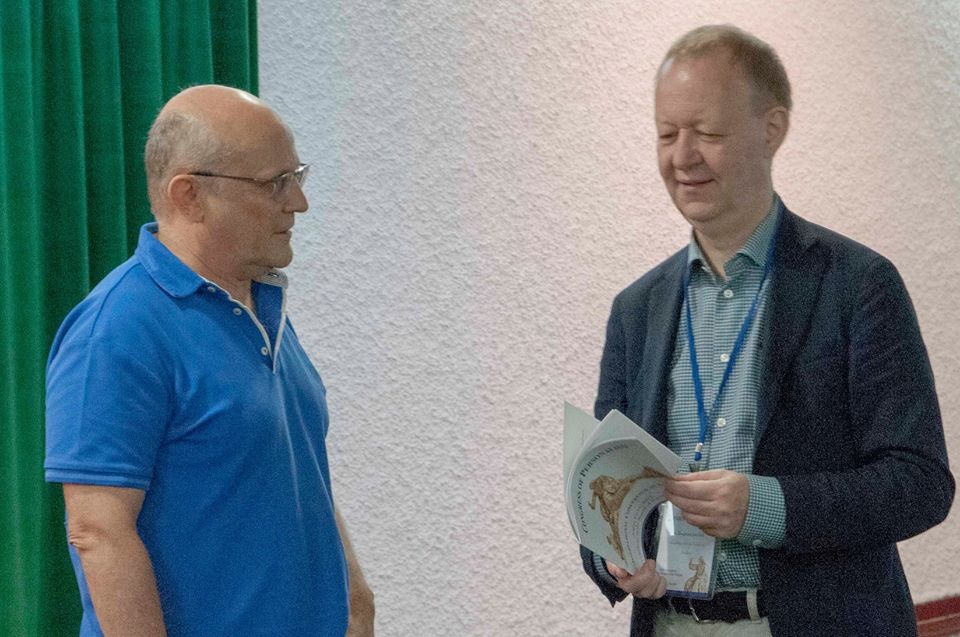
I recently received some photos (by Ewa Smołka, or perhaps by Ewa Barczentewicz, and sent to me by Ewa Smołka) from the 15th International Conference on Persons in Israel last year. Here I am with Spanish personalist Juan Manuel Burgos.




 Olle Bengtsson