Konservativ socialism mot liberalvänstern

Carlos Garrido (för nytillkomna läsare: en av den amerikanska tänktanken Midwestern Marx’ tre ledare och även American Conservative Partys utbildningsansvarige, nu – tror jag – med doktorsexamen i filosofi från Southern Illinois University Carbondale) illustrerar aspekter av den konservativa marxismen i ett karaktäristiskt bemötande av typiska woke-anklagelser om “reaktion” (“fascism” är förstås också vanligt).

Oavsett hur vi bedömer helheten av ACP:s och MWM:s politik är det, upprepar jag, viktigt att uppmärksamma och förstå just deras inriktning av socialismen som en framkomlig politisk väg. Vi äger ännu inte någon motsvarighet till den i Sverige, vilket den senaste tiden blivit tydligt inte minst genom inte bara Vänsterpartiets utan samtliga kommunistiska partiers tragiskt-katastrofala hållning gentemot Iran inför det nya atlantsionistiska imperieanfallskriget.

Vi har inte ens någon svensk motsvarighet till Sahra Wagenknechts betydligt mindre långtgående tyska parti, BSW. Det är beklagligt eftersom en sådan för inte länge sedan såg ut att vara fullt möjlig och på väg. En seriös vänsterversion av den populistnationalistiska rörelsen tycktes kunna utvecklas, varmed några av de nödvändiga ideologiska korrigeringarna och kompletteringarna rimligen skulle gjorts och nationalismen nedtonats. I stället sjönk initiativen av detta slag snabbt ned i den vanliga, som entydigt otillräcklig avslöjade populistnationalismen, ja t.o.m. radikalnationalismen, eller fortlevde som vad som mest ser ut som förvirrade och fragmentariska halvmesyrer som Örebropartiet och Malmölistan. Man kan hoppas att man är orättvis, ja man vill ha fel på denna sista punkt, men man har hittills inte sett några övertygande tecken på det.

Denna situation måste därför förändras. Endast ett tydligt profilerat och genomtänkt politiskt alternativ på samma linje som BSW kan indikera och representera åtminstone den enda allmänna riktning i vilken en meningsfull konservativ politik kan vinna framgång. Riktningen utöver hela det atlanticistiska ekonomisk-politiska system som är att förstå som imperialistiskt i såväl den babbittianska som leninistiska meningen. Riktningen mot ett förnyat, självständigt Europa i en framväxande multipolär och post-imperialistisk värld.

Vid behov, eller när behov, kan BSW:s rätta väg fortsättas genom den verkliga konservativa revolution i enlighet med vad jag isolerat från det myckna vildvuxet ohållbara som ett bestående giltigt minimum i Alexandr Dugins fjärde politiska teori.
The Warmongers will Never Admit they were Wrong and will Never Learn from their Mistakes

By Caitlin Johnstone

Trump’s former national security advisor John Bolton has a tweet that’s got me absolutely fuming right now.

“In 2018–2019, I made the case for regime change in Iran as often as I could. Voices in Trump’s orbit often cited Iran’s capacity to close the Strait of Hormuz as a reason against regime change. Trump has been fully aware this is a possibility, and yet did not prepare,” Bolton posted.

Can you believe this shit? Dude’s like “Hey, Trump should have known this war would be hard because people tried to warn him not to listen to me!”

Motherfucker this was your war. You were the “bomb Iran” guy! You made it your entire personality for decades. Over the years I’ve used your name God knows how many times whenever I needed an example of a Beltway swamp monster who’s got a throbbing hard-on for war with Iran. Now you’ve finally got it and it’s going exactly as badly as everyone said it would, and you’re like “Yeah well he should’ve known better, people tried to warn him about the Strait of Hormuz”? Fuck you.

These professional warmongers never, ever learn from their errors. Many years after the Iraq invasion turned out to be a disaster, John Bolton was still out there telling the media he believed it was a “resounding success,” conceding only “mistakes that were made subsequently” to the ousting of Saddam Hussein.

They never admit they were wrong. They never admit that their war was a bad idea. They only ever acknowledge that it didn’t happen in exactly the way they imagined it happening in their minds. They live in this fantasy world where all their war agendas would unfold beautifully so long as they could personally control every molecule of matter involved in how it happens, completely ignoring that this is impossible and any war is always going to have an unfathomable number of moving parts you can’t control.

In their eyes the wars are never wrong, they’re only ever executed incorrectly. US military interventionism can never fail, it can only be failed.

Bolton doesn’t even seem to have any idea what Trump could have done differently to stop Iran from closing the Strait of Hormuz. I listened to an NPR interview the other day where he slammed Trump for not having “done the planning in advance” to prevent the Iranian blockade, but he never at any time outlined what Trump could have done to accomplish this. He just said there was “a huge hole in the planning” and that “they apparently didn’t take as seriously as they should have the potential to mine the Strait of Hormuz,” without ever saying what they could have done.

He doesn’t know. He himself, Mister Iran War, had no plan for how to carry out this war without disastrous consequences for the US and its allies. He’s spent his entire blood-soaked career pushing for a war he never had any idea how to actually carry out.

These are the kinds of minds they have spearheading the US empire’s wars.

All the worst people are getting exactly what they want, and it turns out they don’t even want it, like Elon Musk tweeting “Whoever said ‘money can’t buy happiness’ really knew what they were talking about” last month. They’re getting everything they asked for and it’s making everyone miserable, and it’s not even making them happy.

The imperial status quo elevates the worst among us. The least wise. The least insightful. The least compassionate. The least deserving. The least qualified.

We need drastic revolutionary change, and we need it now.

Knulltexter av Catelina Johnstone

Kapitalismen, den organiserade brottsligheten och sionismen

Utmärkte Aaron Good ger under rubriken ‘The Wars of the Epstein Class’ och med en bild med texten The Mafia State en historisk överblick av det amerikanska djupstatliga systemet i samtal med Pascal Lottaz på Neutrality Studies. Större delen av hans framställning är mycket klar, men när han kommer fram till andra hälften av 60-talet blir den plötsligt komplex, och det kan därför finnas anledning att lyssna igenom denna sista del två gånger; den är inte mindre viktig.

“Crime in the united states is not a bug, it’s a feature. That explains actually a lot also about its illegal foreign policies. The US as a political entity is deeply intertwined with crime syndicates and explicitly illegal acts under international and local law. Epstein was not at all an exception. These shady dealers are part and parcel of how US politics works. Luckily, there are great academics who work on the hidden power structures. One of them is with me today. Dr. Aaron Good, author of American Exception: Empire and the Deep State.”

Aaron Good: American Exception

Vem kontrollerar USA:s Mellanösternpolitik?

Iran is Forcing the World to Care about US-Israeli Warmongering

By Caitlin Johnstone

Westerners are about to start paying a lot more attention to the war in Iran as massive US-Israeli escalations point to a coming energy crisis set to impact the whole world.

Israel has bombed the world’s largest natural gas field in southwestern Iran, reportedly in coordination with the United States. Now that a major red line for Tehran has been crossed, retaliatory strikes have already begun pummeling the energy infrastructure of US allies in the region, with Qatar reporting that its primary gas facility has sustained “significant damage” from an attack after Iran issued evacuation warnings for energy facilities in Qatar, Saudi Arabia and the UAE.

Fuel prices are already surging. If middle eastern energy infrastructure starts taking extensive damage on top of the already hugely significant Iranian blockade on the Strait of Hormuz, this war could end up affecting virtually every corner of human civilization in one way or another.

Westerners are largely apathetic about US military explosives landing on populations on other continents. But once it starts having a direct impact on their personal bank accounts, you can expect them to get a lot more interested in US foreign policy.

This war has been a bit odd for me because as an anti-imperialist peacemonger I’m not yet entirely sure what my role is in my commentary here.

Normally I’d be begging westerners to care about another horrific act by the US war machine, but as things stand it looks like westerners are going to be forced to care about this one whether they want to or not.

Normally I’d be writing furiously about how people should not support this war, but the war has exceptionally low public support already.

Normally I’d be trying to help everyone open their eyes and recognize the US warmongers for the psychopaths that they are, but the Trumpanyahu administration is openly waging an unprovoked war of aggression while constantly thumping its chest and boasting about how it’s showing the Iranians “no quarter, no mercy” and saying it can kill whoever it wants with impunity.

Normally I’d be writing about how the mass media are churning out war propaganda to manufacture consent for more US military butchery, but the mass media keep putting out stories about how the US government is lying about a war that should never have happened while Trump administration figures have public tantrums about how the media isn’t churning out war propaganda for them.

President Trump is on social media babbling about how news outlets “should be brought up on Charges for treason” for not reporting on an embarrassing story about a US aircraft carrier fire the way he wants, while Secretary of War Pete Hegseth gave one of his fire-and-brimstone podium sermons bitching about how “an actual patriotic press” would be framing this war in a more positive light.

Do you see what I mean? What am I supposed to do with this? Where does that leave dissident fringesters like myself? All I can do is clear my throat and sheepishly go “Uh, yeah, I uh… agree with CNN.”

With Ukraine the mass media fell all over themselves to hide the west’s role in provoking the conflict, framing Putin as an evil maniacal Hitler figure who just spontaneously flipped out and invaded a country on Russia’s border because he hates freedom. With Gaza the western press gave nonstop narrative cover to Israel’s genocidal atrocities, constantly dragging public attention into an endless conversation about antisemitism and Jewish feelings whenever opposition to the slaughter got too hot.

That’s just not happening with Iran. It’s the first US war I’ve ever seen where a big chunk of the imperial power structure just refuses to get on board. The media’s not playing along, US allies are telling Trump to get stuffed when he asks for military assistance with the Strait of Hormuz, and the public’s not buying the lies.

This is a frightening time to be alive  –  but you can’t say we’re in a period of stasis. Things are moving faster and faster. They might get a whole lot worse. They might get a whole lot better. They might get a whole lot worse and then get a whole lot better. But it seems a safe bet that the situation won’t remain the same.

Texter av Catelina Johnstone

Politiska inlägg januari-mars

Ett utdrag från avdelningen för Politics-kategorin på Contents-sidan, alltså sidan med klickbara rubriker på inlägg med mitt eget skrivande, och liksom där med de senaste först eller högst upp:

Grönheten, konservatismen och högern

Iran: Alla vet redan allt

Dissident-MAGA

Epstein och vår tids centrala politiska insikt

Paleokonservatismens slut?

Krig och upprustning: De konservativas svar

Iran och kommunisterna

Om protesterna i Iran

På vad jag i brist på bättre namn kallar References-sidan finns till skillnad från Contents-sidan klickbara rubriker på inlägg med annat innehåll; tanken med termen “references” är att det där handlar om typ källor och annat material som underbygger och illustrerar min argumentation i de egna texterna och som jag i dem hänvisar och länkar till. Men termens dålighet blir uppenbar i synnerhet i beaktande av den huvuddel av konstkategorin med dess underavdelningar som hamnar där, och vars innehåll går långt utöver detta.

Mitt eget skrivande återfinns dock ofta även i inläggen på References-sidan. Det handlar då endast om jämförelsevis korta kommentarer till det andra innehåll som där är det huvudsakliga. Men ibland säger även dessa kommentarer väsentliga egna saker, t.o.m. i en utsträckning som gör att det kunnat vara litet svårt att avgöra på vilken av dessa sidor, Contents eller References, som deras rubriker bör listas.

Martinez om Europas val

I ett utdrag, utlagt på sin kanal Invent the Future, ur ett avsnitt av Jason Smiths The Bridge to China Podcast, beskriver Martinez det val han anser är nödvändigt för Europa att göra:

“British Prime Minister Keir Starmer’s recent visit to Beijing is part of an emerging diplomatic pattern: in recent weeks China has hosted a succession of Western leaders – Canada’s Mark Carney, Ireland’s Micheál Martin, Finland’s Petteri Orpo and Germany’s Friedrich Merz.

After nearly a decade in which Britain aligned itself almost entirely with Washington’s strategy of containment and decoupling, often at the cost of its own economic interests, the Starmer visit signals a reassessment. China is Britain’s fourth-largest trading partner and an indispensable node in global supply chains for green technology, electric vehicles and advanced manufacturing. For a post-Brexit Britain still searching for its economic role, the notion that growth is achievable while excluding serious engagement with China is simply implausible.

The broader context is Washington’s deepening estrangement from its own allies. Trump’s tariff threats, his hostility to European strategic autonomy and his territorial designs on Greenland have made the sustainability of unconditional Atlanticism increasingly difficult to defend. China, meanwhile, has consistently offered what the US no longer reliably provides: adherence to international law, respect for sovereignty, and mutually beneficial cooperation.

The ‘decoupling’ consensus is collapsing under the weight of economic reality, and even Washington’s closest allies now acknowledge it. What these visits ultimately reflect is the growing pains of a multipolar world: as the old Cold War alignment fractures, countries like Britain face a fundamental choice between clinging to US hegemony or adapting to the world that is actually emerging.

Full interview on ‪@thebridgetoChina‬ here: Why Does the West Fear China?” 

My Enemies are Not in Iran

By Caitlin Johnstone

My enemies are not in Iran. My enemies are in Washington and Tel Aviv. In London and Canberra.

My enemies are the western oligarchs and empire managers who are poisoning my society and making everything awful while slaughtering human beings with the help of my tax dollars.

My enemies are the tyrants who are turning our civilization into a mind-controlled dystopia where it is increasingly illegal to criticize the abuses of my government and its allies, and increasingly difficult to find information which runs counter to the imperial narrative.

My enemies are the empire apologists and the hasbarists. The propagandists and spinmeisters. Those who side with Israel and the United States against basic human interests.

Imperial bootlickers always accuse me of writing “propaganda” for the “enemy”, with “enemy” meaning whoever the US-centralized empire happens to be attacking or preparing to attack on any given day. I always want to tell them “Motherfucker you are my enemy. You. You and the empire you simp for.”

The Iranians have never done anything to me. The Iranians pose no threat to me. They didn’t bring war to my country. The empire I live under brought war to theirs.

The Iranians haven’t robbed me and my fellow westerners of all democratic political agency to create an oligarchy run by megalomaniacal plutocrats and psychopathic government agencies.

The Iranians haven’t locked down all political systems throughout western society making it impossible to vote our way into peace, economic justice, and government transparency.

The Iranians aren’t working tirelessly to brainwash and manipulate everyone in my society to turn us all into apathetic flag-waving morons who care more about sports and celebrities than the fact that their government is committing horrifying war crimes.

The Iranians aren’t trying to make it illegal for me to criticize Israel and its abuses, or working to imprison my countrymen for uttering normal political slogans in opposition to a genocidal apartheid state.

The Iranians aren’t making my society crazy, stupid and evil while we hurtle toward ecological disaster, nuclear armageddon and AI tech dystopia.

I haven’t spent years watching a live-streamed genocide in Gaza being perpetrated by the Iranians.

I’m not frightened that the Iranians will try to draft my son to fight and die in a crazy, evil war.

The Iranians are not doing any of these things to me. These are things the western power structure is doing.

I have no loyalty to that power structure. I have loyalty to my species, to my family, and to the values I hold sacred in my heart of hearts.

The US empire can get fucked.

Knulltexter av Catelina Johnstone

Hur högern drog ned väst

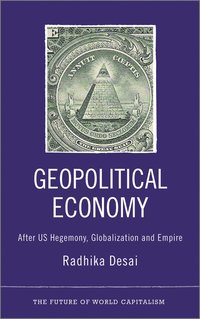
Kända nationalekonomen och statsvetaren Radhika Desai vid University of Manitoba är den s.k. geopolitiska ekonomins pionjärteoretiker, och författare till bl.a. Geopolitical Economy: After US Hegemony, Globalization and Empire (2013).

Hon dyker ofta upp i popularisatorn Ben Nortons ledande politiska kanal Geopolitical Economy Report på YouTube, och har nu dessutom startat en egen kanal där, som hon beskriver på följande sätt: “As dizzying yet historically deeply-rooted developments transform the political economy of key countries and the world’s geopolitical economy, we provide ongoing analyses of the foundations being laid for a multi-polar world beyond capitalism.”

Det finns kanske, anar jag, mycket att säga om vissa enskilda moment i hennes forskningsriktning, men i en ny intervy med Pascal Lottaz på hans viktiga kanal Neutrality Studies sammanfattar hon kort åtminstone huvudsakligen mer allmänaccepterade aspekter av vad som sedan länge självklart är den enda möjliga meningsfulla konservativa – och för den delen nationella – analysen av “västs kapitalistiska slut”.

Så här beskriver Lottaz avsnittet: “The illegal attack on Iran – as many illegal wars before – is not a bug but a system feature. One, however, that is doomed to self-destruct its host. It is the inevitable outcome of the rent-seeking and society corrupting logic of the capitalist system the West is built around. The expansionary and often genocidal logic embedded in the core of the US empire drives entire classes within the West toward the ruthless application of force. But in a multipolar world this approach finds its ultimate – and eventually tragic – end. Today I’m discussing the Iran war with Professor Radhika Desai (‪@RadDesai‬) from Manitoba University. One of the world’s leading Political Geoconomists, Professor Desai explains the system-inherent aspects of the war.”

Carlos Martinez om vänstern och Iran

Catelina Johnstone anklagar i sin typiska stilistiska modalitet den vänster av olika schatteringar som inför det nya Irankriget ägnade sig åt att driva på protesterna mot den islamiska republiken och dess styre: “Can’t get over how many leftists bought into the ‘we support the Iran protests’ schtick. Where the fuck did you idiots think this was headed? What did you think you were promoting when you assisted the US empire’s regime change sloganeering throughout the west? Fucking morons.”

Carlos Martinez kommer däremot med en kort argumentation av annat slag. Han förklarar hur antiimperialistiska marxister bör förstå dagens Iran – en argumentation som mer i sak bemöter deras insisterande på sina inte bara katastrofalt inopportuna och de facto krigsbefrämjande utan faktiskt felaktiga och abstrakt-schematiskt och kontextokänsligt ohistoriska och geografiskt och kulturellt malplacerade beskrivningar av landet. De framställer det som bara en reaktionär teokrati som terroriserar alla och i synnerhet kvinnor, eller, alternativt, en borgerlig kapitalistisk regim som förtrycker och starkt har försämrat villkoren för arbetarna. Martinez argumentation överensstämmer med den beskrivning Maupin under alla år givit utifrån sin icke obetydliga egna erfarenhet på plats i landet. Även ordförande Haz och ACP delar den givetvis fullständigt.

Såvitt jag förstår är Martinez son till förra året bortgångne Harpal Brar, grundare av Mckays parti CPGB-ML, och far till flera andra barn som bär hans namn, bl.a. den framträdande debattören Joti, som samarbetat med Maupin (det finns även en lång serie avsnitt på hans YouTube-kanal där förutom dessa två även Harpal Brar, under sina sista år, medverkar). Det är för mig oklart varför Carlos skiljer sig från dessa andra Brarar och heter Martinez (och för den delen även Carlos), men detta är ju oviktigt i jämförelse med det förhållandet att något slags ideologisk skillnad mellan dem tycks föreligga. Jag är dock inte tillräckligt förtrogen med Carlos för att ännu med någon större precision ha lyckats identifiera den. En viktig ledtråd är i alla fall att han i sin bok The East is Still Red: Chinese Socialism in the 21st Century (2023) har en högre värdering än Harpal i sin bok Socialism with Chinese Characteristics: Marketisation of the Chinese Economy (2020).

Beskrivning på YouTube:

“Understanding modern Iran requires the type of anti-imperialist analytical tools Michael Parenti developed – in particular, his insight that demonisation is a weapon of war. In works like To Kill a Nation, Parenti showed how the machinery of propaganda constructs a target country as a rogue state, a menace to its neighbours, a threat to its own people – a process he exposed with devastating precision in relation to the Soviet Union, Yugoslavia, Cuba and elsewhere. The same playbook is now being run against Iran (indeed it has been for 47 years).

What does an honest assessment of the Islamic Republic actually show? Under the Shah’s dictatorship, Iran was a close ally of Israel and apartheid South Africa, its energy wealth concentrated in the hands of a few and placed at the service of foreign multinationals. The 1979 Revolution transformed all of that. Revolutionary Iran became the staunchest supporter of the Palestinian cause, providing extensive financial, military and logistical support to the resistance. It severed relations with the apartheid regime and supported the South African liberation struggle.

It brought its natural resources under public ownership and directed the revenues towards people’s welfare. And it repositioned itself internationally: today Iran is a member of BRICS, a member of the SCO, a crucial node in the Belt and Road Initiative, and a close partner of China, Russia, Venezuela and Cuba.

On the social front, the picture is again striking. People often assume that Iran is a hugely backward society, and yet women’s literacy has risen from 30 to 99 percent. Women make up 60 percent of university students, 40 percent of doctors and 70 percent of STEM graduates. Healthcare and education indicators are excellent.

None of this means an anti-imperialist has to share the governing ideology of the Islamic Republic. One can be a Marxist and still recognise the plain truth: the revolution transformed Iran for the better, dramatically improved the lives of its people, and asserted genuine national sovereignty. That is precisely why it is hated in the West – and precisely why anti-imperialists must understand and defend it.

This video is a clip from a detailed interview with ‪‪@thereal99media‬. You can see the full interview here: What are the real reasons behind US wars against Venezuela and Iran? Feat. Carlos Martinez.”

Bruno Kreisky

Viktig artikel om Österrikes gamle förbundskansler på 70-talet Bruno Kreisky i Jacobin, Bruno Kreisky, a Social Democrat From a Different World, översatt från tidskriftens tyska utgåva där den publicerades under den likaledes signifikativa rubriken Ein Bruno Kreisky fällt nicht vom Himmel.

Det är många som idag tänker på den där “annorlunda världen”, även efter att ett parti som SD slutat göra det och i stället blivit ett vanligt krigshetsande atlanthögerparti – eller snarare ett extremt sådant i den vanliga borgerliga kretsen. En bred, allmän vänster, den som vänstersocialdemokratiska Jacobin vänder sig till, tänker av naturliga skäl gärna på den.

Det finns risker med det, risker som i Sverige tydligt kan identifieras i folkhemsnostalgin, såväl i SD:s gamla som dagens allmänna och moderata vänsters form. Men det är riktigt att det verkligen var en annan värld, och i många avseenden en bättre sådan – bättre från en de överordnade värdenas konservativa perspektiv. En värld med en helt annan långsiktig utvecklingspotential än den nyliberala Epstein-världs, som ersatte den.

Därför är det också rätt och viktigt att dröja vid den, på det sätt den aktuella artikeln gör. Kreiskys samarbete med Willy Brandt tas upp; båda hade ju nära band till Sverige efter att ha bott här under kriget. Till samarbetet slöt sig därför senare naturligt Palme. Det socialdemokrati de representerade kom, trots alla brister och kompromisser, åtminstone närmare ett självständigt Europa med en självständig roll i världen än vad den europeiska högern – trots, eller man vill nästan gärna säga med undantag för de Gaulle – någonsin gjort efter andra världskriget.

Artikelns tyska titel säger lika mycket väsentligt som den engelska. Kreisky och den politik han förde, den värld han var med om att forma, föll inte från himlen, utan växte ur en bred arbetarrörelses jord, konstaterar författaren. Det implicita budskapet är att en sådan rörelse åter måste byggas upp, och, anar man, på ett sätt som i centrala avseenden liknar det sätt på vilket detta historiskt skedde i västvärlden, det sätt som ledde fram till och möjliggjorde just en Kreisky.

Men är det möjligt under de villkor det alltmer illiberala tillstånd nyliberalismen visat sig leda fram till? Den annorlunda värld Kreisky symboliserar bars upp av mer än den starka och breda samtida arbetarrörelsen i länder som Österrike, Tyskland och Sverige. Hur mycket denna än tog avstånd från kommunismen är det ett faktum att den under hela sin existens, d.v.s. under hela kalla kriget, också på avgörande sätt indirekt bars upp av det samlade – om än av interna skiljaktigheter präglade – globala socialistiska blocket, inklusive inte bara Östeuropa och Sovjetunionen utan också, och i kontinuerligt ökad utsträckning, det utomeuropeiska.

Utan den maktbalans det tillhandahöll, utan dess närvaro och alternativa väg, hade de kapitalismens defensiva eftergifter som till stor del var den västerländska socialdemokratiska reformismens förutsättning eller rentav innebörd varit omöjliga. Ingenstans i världen har efter kalla kriget Kreiskys annorlunda värld förmått motstå nyliberalismen, allstans har den i stället tvingats anpassa sig och ansluta sig till den. Till och med ett före detta kommunistiskt parti som dagens svenska V står numera till höger om den annorlunda världens socialdemokrati. Strukturella hinder för en traditionell socialdemokratisk reformism har skapats, som var antingen tillfälligt historiskt övervunna eller helt okända på 70-talet.

Det väcker frågor rörande socialismens strategi som en vänster av Jacobins typ sällan ställer på adekvat sätt. Frågor som Kreiskys gamla värld väl redan gjorde sig oförmögen att ställa, eftersom den illusion av historiskt nödvändigt säkerställd makt som präglade den inte gav den någon anledning att göra det. Här krävs mycket nytänkande, i väst såväl som i öst och syd.