Scott Horton: Provoked

How Washington Started the New Cold War with Russia and the Catastrophe in Ukraine
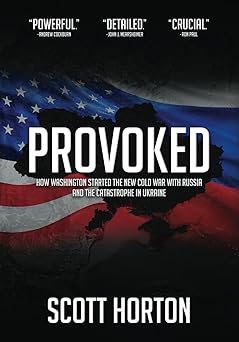
The Libertarian Institute, 2024

Amazon.com

Publisher’s Description:

Over and over, U.S. government officials and their mainstream media allies called Russia’s 2022 invasion of Ukraine an “unprovoked attack.” The slogan became so overused that people began to ask the obvious question: Why do they protest so much?

In Provoked: How Washington Started the New Cold War with Russia and the Catastrophe in Ukraine, Scott Horton explains how since the end of the last Cold War and the fall of the Soviet Union, successive U.S. administrations pressed their advantage against the new Russian Federation to the point that it finally blew up into a full-scale war between Russia and Ukraine.

From NATO expansion into Eastern Europe, to “shock therapy” economic policy, the Balkan and Chechen wars, color-coded revolutions, new missile defense systems, assassinations, Russiagate and ultimately the brutal conflict in Ukraine, Provoked shows what really happened and why it did not have to be this way.

From the Inside Flap:

Over and over, U.S. government officials and their mainstream media allies called Russia’s 2022 invasion of Ukraine an “unprovoked attack.” The slogan became so overused that people began to ask the obvious question: Why do they protest so much?

In Provoked: How Washington Started the New Cold War with Russia and the Catastrophe in Ukraine, Scott Horton explains how since the end of the last Cold War and the fall of the Soviet Union, successive U.S. administrations pressed their advantage against the new Russian Federation to the point that it finally blew up into a full-scale war between Russia and Ukraine.

From NATO expansion into Eastern Europe, to “shock therapy” economic policy, the Balkan and Chechen wars, color-coded revolutions, new missile defense systems, assassinations, Russiagate and ultimately the brutal conflict in Ukraine, Provoked shows what really happened and why it did not have to be this way.

Blurbs/Reviews:

“Scott Horton has become an invaluable chronicler of the destruction wrought by our interventionist foreign policy. With his new book Provoked, Scott blows the lid off the mountains of lies used to justify Washington’s waste of billions of dollars and countless Ukrainian lives in a futile proxy war with Russia. Truth is the greatest disinfectant and Scott Horton’s crucial account of this awful chapter in U.S. foreign policy is like a spring cleaning. Read this book and pick up copies for your friends…and adversaries!”

Dr. Ron Paul, former Texas congressman, chairman and founder of the Ron Paul Institute for Peace and Prosperity and co-host of The Liberty Report

Provoked is manna from heaven for anyone who wants to know where the extreme Russophobia in the West came from, as well as the central role the United States played in causing the Ukraine war. Horton provides a detailed account of America’s foolish and dishonest behavior toward Russia in the years since the Cold War ended.”

John J. Mearsheimer, R. Wendell Harrison Distinguished Service Professor of Political Science at the University of Chicago

“Scott Horton’s important new book traces America’s journey to war and intervention through a succession of presidencies and builds a case that points to a frightening, potential final destination for the United States: isolation and alienation from most of the world. Scott’s message is simple. Stop now before it’s too late.”

Col. Douglas Macgregor, U.S. Army (ret.), CEO, Our Country Our Choice

“Scott Horton is a treasure. He is also the neocons’ nightmare. He knows their deceptions and lies and he is fearless in exposing the disasters they have wrought. Provoked is the most thoroughly researched, rationally grounded, and compellingly presented assault on war and defense of peace written in English in the post-9/11 era. It will become the standard against which all similar works are measured, and indispensable reading for all who need to understand how the American government has time and again brought civilization to a terrifying precipice.”

Judge Andrew P. Napolitano, New York Times best-selling author and commentator, host of the Judging Freedom Podcast

“Scott Horton’s new book is one of the rare literary works that is impeccably sourced, unimpeachable in its logical conclusions – and fearless in presenting the truth, regardless of how unpopular or inconvenient it may be. It’s a hard read, though. Not because of its length – its very thorough – but for its revelations and implications: our country has some ugly warts that must be addressed and some sins for which it must atone. If we honestly look ourselves in the mirror and make necessary changes, we can avoid some of the worst outcomes. Ignore Scott’s sage observations, however, and we could be in for a rough future.”

Lt. Col. Daniel L. Davis, U.S. Army (ret.), author of Eleventh Hour in 2020 America: How America’s Foreign Policy Got Jacked Up – and How the Next Administration Can Fix It and host of Daniel Davis – Deep Dive

“Delving deep into the record of how the U.S. national security machine lied and conspired to birth a new Cold War that grows hotter by the day, Scott Horton has once again done us a fantastic service. Never has the axiom that the devil is in the details been more powerfully demonstrated. His account, powerful because it is so detailed, covering the serial cynical maneuvers that expanded and transformed Nato into an instrument of aggression all the way to the promotion of the war that has destroyed Ukraine is a resource that apologists for these feckless policies will find it hard to answer.” 

Andrew Cockburn, Washington editor, Harper’s Magazine, author of The Spoils of War: Power, Profit and the American War Machine

About the Author:

Scott Horton is director of The Libertarian Institute, editorial director of the online written publication Antiwar, host of Antiwar Radio for Pacifica, 90.7 FM KPFK in Los Angeles, California and host of the Scott Horton Show podcast. He has conducted more than 6,000 interviews since 2003. He is the author of Provoked: How Washington Started the New Cold War With Russia and the Catastrophe in Ukraine (2024), Enough Already: Time to End the War on Terrorism (2021), Fool’s Errand: Time to End the War in Afghanistan (2017) and editor of The Great Ron Paul: The Scott Horton Show Interviews 2004-2019 (2019) and Hotter than the Sun: Time to Abolish Nuclear Weapons (2022). He lives in Austin, Texas with his wife, Larisa Alexandrovna Horton.

Agon

En annan sionism, en annan judendom

Göran Rosenberg diskuterade igår sin bok Marcus Ehrenpreis obesvarade kärlek i ett evenemang på ABF. På Facebook nämner han att boken i år också utgivits i engelsk översättning, och som han påpekar “under en titel som kanske mer än den svenska säger vad den handlar om”: Another Zionism, Another Judaism.

Här är ABF:s presentation:

“Marcus Ehrenpreis var överrabbin i Stockholm mellan 1914-1948, en minst sagt turbulent period i Europa och världen. Ehrenpreis som var född i Lviv, som idag ligger i Ukraina, hade gjort en snabb rabbin-karriär i Kroatien och Bulgarien innan han kom till Stockholm för att leda den judiska församlingen i Stockholm 1914. 

Göran Rosenbergs bok ‘Marcus Ehrenpreis obesvarade kärlek’ (Bonniers 2021) belyser Ehrenpreis livsgärning för judiskt liv och kultur samt hans intellektuella gärning. Rosenberg finner i Ehrenpreis, med hans tankevärld om den kulturella sionismen  – där judisk kultur, religion och filosofi är en potential för att stärka det mångfacetterade samhället globalt, istället för fokus på den nationella sionismen – en vän och följeslagare. 

Vilken roll hade Ehrenpreis under den sionistiska rörelsen i slutet av 1800- och i början av 1900-talet? Hur agerade han för att stärka judiskt liv i Sverige? Vilken roll spelade han för att rädda judar undan förintelsen? Och vad hade Ehrenpreis sagt om utvecklingen av Israel om han hade levt idag? 

Om detta talar Göran Rosenberg med Calle Nathanson den 27 november kl 18:00-19:30 i ABF-huset.”

Och här blurbar och citat från recensioner av den engelska utgåvan på Amazon:

“Ehrenpreis has faded into history, but Rosenberg here ably revives him as a contrarian voice who speaks to present events…A capably told life of a religious leader who envisioned the whole world as a safe haven for his people.”

Kirkus Reviews

“Beautifully written…a calm, detailed book, transformed by a fast-paced final chapter.”

Manhattan Book Review

“Never before have Jews so desperately needed alternative visions, ways of imagining that we can flourish without dominating others. By resuscitating Rabbi Marcus Ehrenpreis, Göran Rosenberg shows how we might envision a different future by reclaiming a lost past. In this dark and shameful time, figures like Ehrenpreis, and authors like Rosenberg, offer a source of light.”

Peter Beinart author of The Crisis of Zionism

“Marcus Ehrenpreis, a long-serving leader of Sweden’s Jewish community, worked for a renaissance of Jewish life during one of the darkest periods of his people’s history. In telling the story of this admirable man, Göran Rosenberg shows that the questions Ehrenpreis grappled with – about Zionism, assimilation, anti-Semitism, and the possibility of a Jewish future in Europe – could not be more relevant today.”

Adam Kirsch, author of The People and the Books and The Blessing and the Curse

“In this powerful, passionate book, Göran Rosenberg rescues Marcus Ehrenpreis from obscurity and places him in the pantheon of great Jewish thinkers and leaders. This is a deeply moving study of the tensions in twentieth-century Europe between Jews and Christians, Zionism and universalism, the love of community and the love of humanity.”

Derek Penslar, author of Theodor Herzl: The Charismatic Leader

“The extraordinary life of Rabbi Marcus Ehrenpreis opens a window to the momentous twentieth century of Jewish history. From Ukraine to the Balkans to Scandinavia, Ehrenpreis was at the forefront of political and intellectual debates. Göran Rosenberg presents a gripping account of his life and a fascinating account of the broad sweep of Jewish history, from the glowing hopes of the late nineteenth century through the horrors of the Holocaust and the passionate disputes over Zionism.”

Susannah Heschel, editor of Moral Grandeur and Spiritual Audacity: Essays of Abraham Joshua Heschel

“A finely grained, meticulously researched portrait of a twentieth-century communal rabbi who was ever attentive to the Judennot – the ‘distress’ posed to European Jewry by virulent racial antisemitism – but also no less to the Not des Judentums – the ‘distress’ to which Judaism as a spiritual and ethical calling was subject by the pull of ethnic nationalism as a response to the Judennot. Göran Rosenberg deftly presents Rabbi Marcus Ehrenpreis as exemplifying how modern Jewry may meet the existential challenge of an unyielding commitment to securing the political dignity of Jewry while unwaveringly affirming the spiritual patrimony of Judaism as a prophetic universal voice transcending the limits of national politics and territorial loyalties.”

Paul Mendes-Flohr, author of Martin Buber: A Life of Faith and Dissent

“The search for the forgotten precedes the search for the better. Göran Rosenberg’s gripping story of Rabbi Marcus Ehrenpreis’s spiritual and political endeavor in the fateful time of the Jewish state’s establishment is a strong building block for such a future.”

Dan Diner, The Hebrew University of Jerusalem

Rosenbergs klassiska bok om Israel med den oöversättbart ordlekande titeln Det förlorade landet: En personlig historia från 1996, tidigare översatt till franska, tyska och en rad andra språk, har också just utkommit i engelsk översättning: Israel: A Personal History.

Rosenberg, Ruin och Ehrenpreis

Rosenberg och folket

Rosenberg, demokratin och minoriteterna

Filosofisk modernisering?

“Genom sina egentliga lärare i filosofi under Uppsalatiden, C. Y. Sahlin och E. O. Burman, står L. i historiskt samband med den idealistiska personlighetsfilosofien, sådan denna utvecklat sig från Daniel Boëthius’ och Benjamin Höijers dagar fram till Christopher Jacob Boström, Sahlins företrädare på den praktisk-filosofiska lärostolen i Uppsala. Jämlikt sagda personlighetsfilosofis organiska utvecklingssyn på kulturlivets företeelser har L. från början fattat det ‘filosofiska arvet’, om man så får säga, som en pliktbetonad uppgift att levande, under kritisk prövning och sovring, förvalta samt eventuellt fort- och ombilda: växling av ståndpunkter utan den tidigare historiskt givna ståndpunktens övervinnande inifrån kan icke betyda verklig utveckling och framsteg.”

Så skrev Efraim Liljeqvist, den siste boströmianske professorn, i sin Selbstdarstellung i första upplagan av Alf Ahlbergs Filosofiskt lexikon 1925.

Den modernisering som hans samtida kolleger, inte bara i Sverige utan i hela västvärlden, ägnade sig åt – vissa former av nykantianism, positivism, psykologi, “livsfilosofi”, pragmatism, Hägerströms och Phaléns nya Uppsalaskola, analytisk filosofi, i mycket radikalneoteriskt famlande fenomenologi, marxism – var, föreslår jag, knappast en modernisering av filosofin eller en filosofins modernisering av samhället och kulturen, som den dubbeltydiga titeln på Carl-Göran Heidegrens avhandling i idé- och lärdomshistoria från 1999, Filosofisk modernisering: Studier i nordisk filosofihistoria (1860-1910), implicerar i högre grad än hans senare boks något mer adekvat och korrekt sociologiska med den gamla litteraturhistoriska termen, Det moderna genombrottet i nordisk universitetsfilosofi 1860-1915.

I det större perspektivet tror jag den främst måste förstås som ett spatiotemporalt provinsiellt införande av nya tankeformer som modernitetens samhälle och kultur för tillfället krävde för helt andra syften. Inte enbart, givetvis, men i stora drag. Det som i störst utsträckning kan sägas vara ett undantag är här fenomenologin, inklusive dess vidareutbildning utöver Husserl hos främst Heidegger.

Men det är inte uppenbart hur filosofin, rätt förstådd, överhuvudtaget låter sig helt enkelt moderniseras eller själv kan modernisera. Modernisering är s.a.s. i sig ett ickefilosofiskt begrepp, som lätt blir direkt antifilosofiskt, hur viktigt det än kan vara på andra områden. T.o.m. de av Liljeqvist själv använda termerna “utveckling” och “framsteg” är ofta problematiska som generella och universella beskrivningar inom filosofin. Åtminstone hans egen politiska tillämpning av den sahlinska och egna utvecklingen av Boströms statslära – som i och för sig nödvändigt krävde revidering – representerade inte något sådant; den var tvärtom en beklaglig, tidstypisk anpassning till en karaktäristisk manifestation av just den modernisering han i övrigt på så goda grunder ifrågasatte.

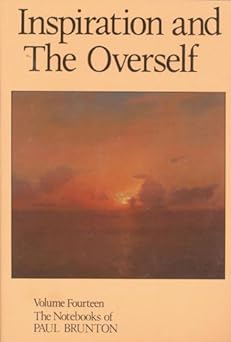
Paul Brunton: Inspiration and the Overself

The Notebooks of Paul Brunton

Volume Fourteen

Larson, 1988

Amazon.com

Back Cover:

“There are swift elusive moments that every real artist knows, and every deep lover experiences, when the faculty of concentration unites with the emotion of joy, and creates an indescribable sense of balanced being. Such moments are of a mystical character.”

“If one learns to cultivate these brief intuitive momets aright, there can develop ou t of them in time mystical moods of much longer duration and much deeper intensity. Still later, there could come to maturity the ripe fruit of all these moods – an ecstatic experience wherein grace descends with life-changing results.”

– Paul Brunton

Nearly everyone has brief moments of exalting contact with his or her own divine Soul: this book shows how to make the most of those moments; how to recognize, develop, test, and follow through on intuitions; how to contact the source of inspiration and make its vitalizing power a continuous presence.

Konservatismens modernism

På den trevliga och höginformativa kanal om Sovjetunionen, driven av personer uppvuxna där, från vilken Kjölstad delade det viktiga avsnittet om Stalinerans arkitektur, finns också ett om den efterföljande modernistiska perioden under Chrusjtjov, med fokus på dess bostadsområden. Även dessa framstår på det hela taget som ursprungligen mycket attraktiva:

“In the shadow of the Cold War, Soviet urban planners created something remarkable – cities designed not just for efficiency, but for human connection. While the West embraced sprawling suburbs and car dependency, the USSR developed a revolutionary approach to urban living that, despite its flaws, solved problems we still struggle with today.

This video explores how Soviet microdistricts created walkable, community-centered neighborhoods where everything from schools to clinics was within a 15-minute walk. We’ll reveal how standardized housing construction achieved the impossible – building entire apartment blocks in just days while providing homes for millions of families emerging from postwar devastation.

Discover:

– The truth about how Soviet children had more freedom than American kids today

– Why these ‘concrete boxes’ fostered stronger communities than modern luxury developments

– How architects built entire apartment buildings in just 57 hours – a feat still impressive today

– What happened when urban planners prioritized human needs over profit margins

– The hidden wisdom in these ‘dreary’ Soviet neighborhoods that could transform our cities

What if the solution to our modern urban crisis has been hiding behind the Iron Curtain all along? In our increasingly disconnected world, perhaps it’s time to reconsider this approach – not to replicate it exactly, but to find a balance between community connection and personal comfort.”

Man får en utmärt förståelse av de goda idéer som låg till grund också för detta slags byggnation. Den starka kommunionistiska orienteringen ger den en sant human prägel, inte minst i jämförelse med den isolerande och opersonliga amerikanska kapitalistindividualismens samtida typ av förorter, som pekas på som dess motsats.

Man inser hur mycket mer värdekonservativ Sovjetunionen i några avseenden var även här, inom ramen för det modernistiska formspråket. En nyskapande traditionalistisk samhälls- och lokalgemenskap befrämjades under modernitetens villkor.

En del av ideologin känns igen från våra s.k. ABC-städer, och man vill gärna försöka tänka sig hur både dessa och miljonprogrammets områden (de senare i stället för att rivas, som vissa socialdemokrater tycks vilja) skulle kunna räddas och förnyas i linje med den utmärkta sovjetiska planering som här beskrivs.

Men det kräver förstås att den amerikanska, virtuella internät- och AI-baserade surrogatsocialiteten begränsas hos nya generationers yngre genom en kraftfull konservativ kulturförnyelse med tillhörande politiskt ledarskap. Här krävs mycket nytt, på kvalificerad humanistisk filosofi baserat kreativt tänkande i den postliberala framtidens avancerade samhällsplanering.