Polen, Ungern och SD

Svar till Maja Hagerman

Författaren och journalisten Maja Hagerman sammankopplar i en ledare i Dagens Nyheter i måndags med rubriken ‘Kritiska röster tvingas till tystnad’ åtgärderna från regeringarna i Polen och Ungern mot vänsterdominansen inom statliga media och rättsväsendet med SD:s åtgärder mot intern kritik. De senare visar, menar hon, att SD i regeringsställning skulle vidta samma åtgärder och i största allmänhet driva samma politik som dessa. När hon bland exemplen på tystande av internkritik kommer in på förra årets strider om partiets Stockholmsdistrikt och SDU anförs även jag som exempel.

“Det är förbjudet”, skriver Hagerman, “att föra fram internkritik öppet inom SD. Den som bryter mot kommunikationsplanen och kritiserar partiets hantering av utrensningar och meningsmotsättningar löper risk att bli ett ‘personärende’ i partiets medlemsutskott.” Så är fallet. Men detta var inte, som Hagerman tycks mena, vad som hände i mitt fall.

Jag “blev ett personärende” på grund av tidskriftens Expos påhopp på bl.a. mig inför SD Stockholms stads årsmöte förra året. När partiledningen begick det senare åtminstone till hälften erkända misstaget att offentligt sätta tilltro till Expos uppgifter och peka ut mig, och därmed själv bröt mot kommunikationsplanen och “förbudet” mot “öppen internkritik”, blev jag tvungen att själv offentligt bemöta anklagelserna. Och när partiledningens “öppna internkritik” också drabbade andra på ett sätt som nära berörde mig, och enligt mig var sakligt felaktig, riktade jag ytterligare kritik mot den.

Partiledningen har inte bara avstått från att väcka något personärende mot mig p.g.a. detta – den har inte heller på något annat sätt ingripit mot mitt offentliga bemötande av de offentliga anklagelserna eller min därpå följande, utvidgade kritik. Tvärtom har jag kunnat föra en intern och åtminstone delvis fruktbar dialog om dessa ting med åtminstone några i denna ledning. Det visar att det, även om man tycker att takhöjden för intern debatt borde höjas, är att gå för långt att säga att offentlig kritik av partiets hantering av “utrensningar” och meningsmotsättningar helt enkelt är förbjuden i SD. Men mycket beror självfallet på hur sådan kritik framförs och vilka de bakomliggande motiven, principerna, ståndpunkterna och värderingarna är.

Rätt har Hagerman däremot när hon – utan att notera hur jag stavar mitt namn – fortsätter: ”Partimedlemmen Jan-Olov Bengtsson berättar i sin blogg den 4 december om hur han som anklagad av utskottet hade att försvara sig mot anonyma beskyllningar och ‘uppgifter’. Bengtsson fanns med i William Hahnes styrelseförslag för SD Stockholm.”

Hagerman nämner här, liksom DN tidigare minst två gånger gjort, anklagelsen om “antisemitism”, och hon gör det på ett märkligt dunkelt sätt: “Enligt citat ur hans blogg hade han även yttrat sig antisemitiskt.” Vilka citat åsyftas? Det finns inga “antisemitiska” formuleringar i min blogg, om inte detta begrepp definieras på ett helt bisarrt sätt som jag fullständigt förkastar. Däremot finns citat från Expo och DN där de felaktigt beskriver vissa av mina formuleringar på detta sätt, i enlighet med just en sådan oacceptabel definition. Hagermans formulering kan tolkas antingen som att även hon anklagar mig för “antisemitism”, eller som att hon bara syftar på Expos och DN:s av mig återgivna påståenden.

Förvisso fanns jag med i William Hahnes styrelseförslag, och enligt en vanlig tolkning bland partiledningens kritiker var det i själva verket bara av just det skälet som jag efter Expos angrepp på mig och en rad andra blev föremål för en utredning av medlemsutskottet och tvingades besvara anonyma beskyllningar och “uppgifter”. Men som Hagerman noterar: “Utskottet beslutade ändå att inte utesluta honom”. De kom nämligen själva fram till att uppgifterna var grundlösa. Här bör tilläggas att jag inte bara inte uteslöts ur partiet, utan att jag fortfarande är ledamot av vad som, efter uteslutningen av Hahne själv och Anton Stigermark, Adam Bergs försvinnande i samband med avskiljandet av SDU, Urban Lindströms frivilliga avhopp omedelbart efter attackerna strax före årsmötet, och Jonas Malmgrens senare avgång bland annat på grund av missnöje med partiledningens agerande, är återstoden av den inte bara av Hahne föreslagna utan även förra året av medlemmarna faktiskt valda distriktsstyrelsen för SD Stockholms stad (jag ställer dock inte upp för omval på årsmötet nu i mars).

Kritiken mot Hahne och SDU delar jag alltså inte i alla avseenden, även om jag också själv riktade viss kritik mot dem. Och jag stödde inte heller åtgärderna mot dem; resultatet av dem blev inte minst att Stockholmsstyrelsen på allvarligt sätt försvagades. Noteras bör i detta sammanhang att Hagermans ledare är ett exempel på det såvitt jag kunnat se vanliga fenomenet med media som är benägna att ta ställning mot partiledningen och för de uteslutna SDU:arna och andra kritiker. Men den bild Hagerman utmålar av partiledningen som drakoniskt intolerant och ett hot mot demokratin är orättvis.

Mer direkt relevant för jämförelsen mellan SD å ena sidan och Polen och Ungern å den andra är att Hagerman också tar upp att man i stället för att utesluta mig “sköt in sig på att han [jag] skulle följa ’sverigedemokratisk politik’. Medlemsutskottet förmanade honom att även i sin verksamhet som akademiker och vid föreläsningar på universitetet rätta sig efter SD:s partiprogram.”

Detta är riktigt, och den inte minst viktiga delen av den kritik av medlemsutskottet som jag slutligen – när utskottets ordförande Magnus Olsson valdes in i partistyrelsen – blev tvungen att ta upp offentligt handlade om just detta. Att ett parti kräver av egna företrädare som också är verksamma inom akademin att de inte får skilja mellan dessa roller utan att det är partiets politik som gäller även i den senare rollen är givetvis mycket allvarligt. De som fortfarande inte har förstått det, utan efter allt jag sagt och skrivit om detta fortsätter försvara utskottet och dess agerande borde, kan man tycka, snarast förmås att lämna sina uppdrag.

“I Polen och Ungern”, skriver Hagerman, ”har nationalkonservativa regeringar försökt säkra sitt framtida maktinnehav genom att kontrollera medier, domstolar och andra demokratiska institutioner. Nya lagar riktar sig mot rättsväsendets oavhängighet och mediernas frihet och kritiska uppdrag. Demokratins grundpelare har attackerats. Kritiska röster har tvingats eller skrämts till tystnad.”

Det besvärande är att Hagerman utan tvekan har en poäng här. “Det är”, skriver hon, “samma mekanismer som redan verkar vara satta i arbete inom Sverigedemokraterna.” Så skulle åtminstone medlemsutskottets agerande (Hagerman ger också vad hon menar vara andra exempel) kunna förstås. Men samtidigt måste sägas att hennes argumentation även här är överdriven och missvisande. Agerandet stod givetvis inte i överensstämmelse med partiprogrammet eller några andra åsiktsdokument eller officiella uttalanden från partiet. Det berodde med all sannolikhet enbart på en kombination av grov okunnighet, omdömeslöshet och allmän inkompetens hos enskilda personer, vilket i och för sig är illa nog. Den objektiva innebörden av utskottets krav var verkligen den Hagerman beskriver. Men den var inte att icke-partiföreträdare skulle bedriva SD:s politik vid akademin, att akademin i dess helhet skulle partipolitiseras. Kravet var absurt och illavarslande, men det var förstås, sett utifrån partiets egna ståndpunkter, ett misstag. Ett allvarligt misstag, men, allt vägt och mätt, ett misstag av tragikomiskt slag, som nu kan och måste rättas till. Det var inte jämförbart med den beskrivning Hagerman ger av Polen och Ungern.

Frågan inställer sig emellertid också om denna senare beskrivning är riktig. Om man i det senast citerade stycket från Hagermans ledare ovan byter ut ”nationalkonservativa regeringar” mot ”socialistiska och liberala regeringar, radikala vänsterorganisationer och -individer, och privata mediaägare med radikal ideologisk agenda”, och kommer ihåg de många medel utöver lagstiftning, såväl grova som subtila, som också används för upprätthållandet av den ideologiska, kulturradikala och politisk-korrekta hegemonin och indoktrineringen, beskriver det i högre grad situationen i Sverige, andra västeuropeiska länder och USA än den i Polen och Ungern.

Medels ständigt utvidgad lagstiftning och andra åtgärder tvingas och skräms kritiska röster till tystnad. Organiserade intressen trycker oavbrutet på för att obekväma alternativmedia ska bekämpas, “hatbrotts”-lagstiftningen utvidgas, påstådd “rasism”, “extremism”, “antisemitism” o.s.v. förbjudas, internätet censureras. Jag själv har, som man kunde ha förväntat sig att Hagerman uppmärksammat, avstängts från att undervisa vid Lunds universitet på grund av Expos av DN tidigare och nu Hagerman själv upprepade eller åtminstone omnämnda anklagelser.

Över hela västvärlden begås i ständigt växande utsträckning skrämmande, inhumana rättsövergrepp mot kritiska röster. Meningen med rättsväsendets oavhängighet upphävs i stor utsträckning genom själva lagstiftningens politiska styrning. De gamla media har för länge sedan svikit sitt kritiska uppdrag och blivit åsiktsförtryckets främsta instrument. Vårt samhälle befinner sig i ett tragiskt protototalitärt tillstånd, som gör den sverigedemokratiska frihetsrörelsen och dess motsvarigheter i andra länder absolut nödvändiga.

Är inte vad de nationalkonservativa regeringarna i Östeuropa gjort bara att de försökt komma till rätta med eller åtminstone förebygga en situation som är just så oacceptabel som det på detta sätt lästa stycket i Hagermans artikel beskriver? Det har knappast någon avgörande betydelse att Hagerman, trots att hon anför mitt exempel, inte särskilt nämner åtgärder mot universiteten. Mot medlemsutskottets ukas försvarade jag den akademiska frihetens ideal. Och jag nämnde att denna, alltid naturligtvis hotad och ofullkomligt förverkligad, också sedan länge i stor utsträckning redan upphävts och förstörts av den principiellt lika felaktiga politiseringen från vänster.

Jag kan inte uttala mig med sakkunskap om de polska och ungerska regeringarnas åtgärder. Men det jag hoppas att de i verkligheten inskränker sig till är vad jag anser att även SD i regeringsställning borde göra ifråga om våra egna statliga media och vissa andra institutioner. Innebörden av detta skulle vara rakt motsatt den Hagerman beskriver. Vad jag, även utifrån min socialkonservativa åskådning, försvarar mot Expo, DN, Lunds universitet och SD:s medlemsutskott sådant det för närvarande råkar vara sammansatt, men givetvis med mitt parti och dess principprogram, är just de “demokratins grundpelare” som Hagerman nämner.

Problemet med Magnus Olsson

Lunds universitet och min ideologi

Simon O. Pettersson om Lund, DN och mig

In Defence of the Personal Idealist Conception of the Finite Self, 1

In the writing of British idealists on the finite self, there was no terminological uniformity. The same conceptual issues were discussed under different terminologies. But it is important to keep in mind the conceptual differences between self, individual, subject, and person, which, I suggest, must be understood, even for purely philosophical purposes, partly in terms of the process of historical development and definition, i.e., in terms of conceptual history.

Above all, we should keep in mind their conceptual complementarity, the way in which they supplement each other and describe different aspects of the same thing. But it is a fact that the British idealists often did use these different terms – in the sense of words – in a more vague and general manner for the same concept. Hence we find to this day an unnecessary confusion produced by an insufficient conceptual differentiation. The finite self was often used synonymously with the finite individual, the finite person, and the finite subject. Yet the conceptual complementarity is not only necessary for the full articulation and comprehension of the position of the personal idealists in a way they are not always in the case of their non-personal or impersonal idealist opponents. Properly defined, the terms can perhaps even to some extent in themselves be said to contribute to settling the philosophical disputes.

Bosanquet and Seth Pringle-Pattison [Hereinafter: Pringle-Pattison] debated the “finite individual”, a terminological preference that, as William Mander emphasizes in his analysis of their debate, [W. J. Mander, ‘Life and Finite Individuality: The Bosanquet/Pringle-Pattison Debate’, British Journal of the History of Philosophy, 13:1, 2005.] is explained by Bosanquet’s general definition of the individual. Maintaining both the etymological and Aristotelian meanings, the individual is for him that which is indivisibly one, and the primary substance. But this is strictly, according to Bosanquet, “in the ultimate sense” applicable only to the whole, the absolute. [Bernard Bosanquet, The Principle of Individuality and Value (1912), 72.] The true individual cannot be finite since the finite is that which is limited from outside. Yet the totality is for Bosanquet not really unlimited, but limited from within, as it were, as exclusively self-de-fining. When the term infinite is still used in this connection, it thus seems at the very least terminologically infelicitous inasmuch as, etymologically, unlimited and infinite mean the same thing.

The finite individual, as finitized from without, cannot really be accepted as a true individual at all. For Bosanquet, only the individual that is the absolute is ultimately real; the finite individual Bosanquet accepts as individual only in a secondary sense; it has only an “adjectival” mode of existence, it is an “adjective” of the real individual that is the totality. But here we may see merely the misleadingly reductive effects of the terminological preference, which leaves out some distinctive conceptual content of the supplementary terms.

The finite individual does not have to be a self, a subject, a person. If it is not, it is of course more easily reducible to an adjective, a property, a determination of the whole, and the adjectivity constituting its only significant identity, intelligibility and indeed mode of existence. Even the application of this analysis to the kind of finite individual that is also a self, a subject, and a person is certainly valid in itself as far as it goes, although it is incomplete and only one perspective among others that are equally necessary for its full comprehension. Pringle-Pattison says, for instance, that he accepts the adjectival theory inasmuch as its meaning is the “denial of unrelated reals”. [Andrew Seth Pringle-Pattison, The Idea of God in the Light of Recent Philosophy (1920 (1917)), 274.] It is obvious that any individual thing qualifies or characterizes the whole, and it is indeed true that any finite phenomenon can only be properly understood as a part of the whole, in the sense that it is a property, a quality of that whole, part of a scale of parts and partial wholes leading up to the totality. Here, as in the general progress of conscious experience and knowledge, any arrest in its continuously broadened and simultaneously deepened apprehension is certainly merely provisional and conventionally motivated for experientially and epistemologically “modal” purposes in Oakeshott’s sense. [Michael Oakeshott, Experience and Its Modes (1933).]

For this reason, if the basic understanding of the perspectival complementarity is accepted and preserved, and the “individual” perspective as this far discussed is included as one of many – this being of course fully coherent with the most basic assumptions of idealism in general – my impression is that the personal idealist position does not even require the rejection that we find in Pringle-Pattison of Bosanquet’s theory of judgement. In the latter, the totality is said to be the only logical subject: “Reality is such that at or in S it is P” does say more than “S is P”, even in the case where S, or P, is not only an individual but a self, a subject, and a person. Mander uses this as a summary description of Bosanquet’s position regarding his basic understanding of the ultimate nature of judgement; [Mander, op.cit.] but many complementary formulations of it are found in Bosanquet’s works. What I find important here, and in reality congruent with personal idealism, is the general idealist understanding expressed in Bosanquet’s formulation of the importance of the process of thought as approximation of the totality. I am not making any claims about the details of Bosanquet’s specific understanding of judgement, induction, or indeed logic in general; this general understanding is better discussed, in line with Pringle-Pattison’s own earlier practice, in terms of “Hegelianism” in general. [See Andrew Seth Pringle-Pattison, Hegelianism and Personality (1887), published under the name Andrew Seth.]

The general understanding might become problematic, however, when, as in Bosanquet, all finite individuals are said to have their main being and value as mere qualifications of the whole. For then, in line with Bosanquet’s understanding of the totality in terms of individuality, the radical monistic tendency that follows from the definitional emphasis on indivisibility could bring with it contradictions familiar from earlier monist systems. The parts of the whole become merely apparent individuals, reduced to adjectives or properties in a way that makes this more than one perspective among others, that makes it an exclusive one which exhaustively defines them.

Bosanquet’s theory of judgement claims to reveal what judgement really is, but his exposition, regardless of the details of his logic, involves a far-reaching criticism of the non-idealist view in the context of a different understanding of the whole nature of thought. The latter in turn involves what could be called a general idealist conception of the apprehension of the reality or totality that is accepted by him as the logical subject. It is in such general idealistic terms that the singular judgement “S is P” is rightly seen as a superficial, immediate, and, in Hegel’s sense, “abstract” one compared with “reality is such that in S it is P” as a fuller, concrete judgement involving an understanding of “reality” that, in more strictly Hegelian accounts, is reached through a dialectical development.

But the whole point of this development could be distorted if the “being and value” of S, or P, is mainly as adjectives of reality as the whole – and this might be the case even where S, or P, is the kind of finite individual that is not also a self, a subject, a person. For the indivisibility might then begin to conflict with the differentiation within the absolute which Bosanquet must of course accept, as appearance in a distinct British idealist sense. If, as this view of the being and value suggests, the totality qua totality is not just always the only logical subject, if the partial independence, the initial, finite concreteness and the distinctive value, as it were, of the finite individual are denied, if the real dialectical process is slurred over, and if the final synthetic view that makes the judgement “reality is such that in S it is P” in the indicated full meaning important, thus becomes tantamount to an emphasis on the indivisibility as being rather undifferentiated unity, the judgement seems in reality to become another one. It appears it is then reduced to a mere empty propositional affirmation of reality being as it is, the affirmation that it is as it is – saying very little about S and P and exposing the general idealist position to familiar yet otherwise unwarranted criticisms. The incorrect ascent to the totality seems inevitably to deprive the descent to the particulars of its explanatory power.

This warrants Pringle-Pattison’s objections even before the supplementary conceptual meanings of selfhood, subjectivity and personality are brought in. The finite individual can certainly be properly understood as an individual; there is no contradiction in being limited from without and being indivisible. And such individuality is in no way by necessary implication the self-contained unit of strict pluralism. [Pringle-Pattison, The Idea of God, 256-60.] G. F. Stout agreed that the nature of a thing is “nothing” apart from its relatedness. But he also asserted the inverse truth that the relatedness of a thing is nothing apart from its nature. [Mander, op.cit., note 11.]

But here the supplementary perspectives on finite individuality in general could, I suggest, be sufficient to refute the exclusivist claim. And the problem with Bosanquet’s position appears to be compounded when we bring in these fuller definitions of the self, the subject, and the person, which are what the personal idealists are primarily talking about, in contradistinction to Bosanquet, who, although his position too in reality presupposes them, seems not fully to admit or clearly identify their implications.

This leads us to another point on which I think Pringle-Pattison’s position and argument are in need of revision and supplementation. Both Bosanquet’s denial of the unity of the self as experienced and his affirmation of this incomplete self’s achievement of unity through the inclusion of broader “contents of the universe” seem confused simply because no proper distinction is made between the experiencer and the experienced. The unity of selfhood even as immediately experienced is, it seems to me, due to the unity of the experiencer, whereas no phenomenal contents of experience whatsoever, no matter how comprehensive, and quite regardless of its significance for the self in other respects, can, in principle, as phenomenal, allow the self to attain it.

Bosanquet’s view that the self owes its reality to the experienced phenomenal world and possesses itself in proportion to its incorporation seems to imply a simple identification of the self with this phenomenal world or the knowledge of it, clothed in a partly misleading redefinitional language of the self. If the implied, ultimate perspectivelessness is what accounts for the self, if apart from it the self can only be conceived in terms of abstraction, empty form, or degrees of unreality, how is it that, as is also claimed by Mander, Bosanquet does not simply deny the self in the personal idealist sense, but merely reconceives its ultimate reality and value?

The finite self as described by the personal idealists is not what it is for Bosanquet, and it is more than the abstract quality of numerical identity. Moreover, it is possible to admit the validity of almost everything Bosanquet says – and Mander says Bosanqueet says – about its appropriation of the “contents of the universe” and its other possible ways of existing, if this is only reconceived in terms of the phenomenal contents of experience or the self’s knowledge, or the modes of existence of the self in relation to these things. The self could perhaps for some purposes and on some levels be said to identify itself with them, although the distinction between the identifier and that with which it identifies cannot be suspended. The phenomenal existence of the finite self should indeed, from the perspective of knowledge, morality, and other values, comprise many of the dimensions conceived by Bosanquet as parts of its proper identity. But in describing them, Bosanquet is clearly describing something different from selfhood and subjectivity in themselves as properly conceived on this level, or in the personal idealist sense.

Yuri Slezkine: The Jewish Century

Princeton University Press, 2006 (2004)

SlezkineWinner of the 2005 National Jewish Book Award, Ronald S. Lauder Award in Eastern European Studies, Jewish Book Council
Winner of the 2005 Wayne S. Vucinich Book Prize, American Association for the Advancement of Slavic Studies

Winner of the 2004 Award for Best Professional/Scholarly Book in Religion, Association of American Publishers

This masterwork of interpretative history begins with a bold declaration: The Modern Age is the Jewish Age – and we are all, to varying degrees, Jews.

The assertion is, of course, metaphorical. But it underscores Yuri Slezkine’s provocative thesis. Not only have Jews adapted better than many other groups to living in the modern world, they have become the premiere symbol and standard of modern life everywhere.

Slezkine argues that the Jews were, in effect, among the world’s first free agents. They traditionally belonged to a social and anthropological category known as “service nomads”, an outsider group specializing in the delivery of goods and services. Their role, Slezkine argues, was part of a broader division of human labor between what he calls Mercurians – entrepreneurial minorities – and Apollonians – food-producing majorities.

Since the dawning of the Modern Age, Mercurians have taken center stage. In fact, Slezkine argues, modernity is all about Apollonians becoming Mercurians – urban, mobile, literate, articulate, intellectually intricate, physically fastidious, and occupationally flexible. Since no group has been more adept at Mercurianism than the Jews, he contends, these exemplary ancients are now model moderns.

The book concentrates on the drama of the Russian Jews, including émigrés and their offspring in America, Palestine, and the Soviet Union. But Slezkine has as much to say about the many faces of modernity – nationalism, socialism, capitalism, and liberalism – as he does about Jewry. Marxism and Freudianism, for example, sprang largely from the Jewish predicament, Slezkine notes, and both Soviet Bolshevism and American liberalism were affected in fundamental ways by the Jewish exodus from the Pale of Settlement.

Rich in its insight, sweeping in its chronology, and fearless in its analysis, this sure-to-be-controversial work is an important contribution not only to Jewish and Russian history but to the history of Europe and America as well.

Table of Contents:

Preface

Acknowledgments

Introduction

1  Mercury’s Sandals: The Jews and Other Nomads

2  Swann’s Nose: The Jews and Other Moderns

3  Babel’s First Love: The Jews and the Russian Revolution

4  Hodl’s Choice: The Jews and Three Promised Lands

Notes

Index

Reviews:

“One of the most innovative and intellectually stimulating books in Jewish studies in years… [An] idiosyncratic, fascinating and at times marvelously infuriating study of the evolution of Jewish cultural and political sensibility in the 20th century… Nearly every page of Slezkine’s exegesis presents fascinating arguments or facts.”  Publishers Weekly

“Jews are not unique, [Yuri Slezkine] maintains in his fascinating new study, and it is only European provincialism that makes them seem that way… Slezkine’s interpretation of Jewish history…is wonderfully antiparochial not only vis-à-vis the Jews but vis-à-vis America, which, he reminds us, not everyone saw as a promised land and which large portions of the huddled masses struggled to avoid.”  Daniel Lazare, The Nation

“To come across a daring, original, sweeping work of history in this age of narrow specialization is not just a welcome event; it is almost a sensation.”  Walter Laqueur, Los Angeles Times

“If Osama Bin Laden ever reads this book, he will be spinning in his cave.”  Gene Sosin, The New Leader

“For Slezkine, Jews, urban, mobile, literate, flexible, have been role models of adaptability in a changing modern landscape.”  Joel Yanofsky, National Post

“Brilliant… The Jewish Century is history on a majestic scale… [It] is fresh, compelling and frequently startling… The clarity of analysis is extraordinary, and the relatively simple conceptual tools Slezkine provides are unexpectedly powerful.”  Noah Efron, Jerusalem Report

“This book is witty, sardonic and clever, written with zest and brilliant imagination and presents us with remarkable images of our recent past.”  John Levi, Australian Jewish News

Yuri Slezkine’s The Jewish Century defies standard categorization, and this makes it a masterly work of history.”  Marc Dollinger, Journal of American History

“[T]his is a brilliant book – it is extremely well written… Slezkine’s book joins a very small number of first-rate studies of the modernization of the ‘Jews’ seen through the lens of eastern rather than western history… Buy the book; read the book; use the book in Russian history and Jewish culture classes.”  Sander L. Gilman, Slavic Review

The Jewish Century revives, with intellectual sophistication and stylistic verve, an old perception of the Jew’s centrality to modernity.”  Hillel Halkin, Commentary

“Reading Yuri Slezkine’s scholarly arguments…may make for difficult reading but it also provides intriguing ventures into highly original thinking.”  Jewish Book World

“Yuri Slezkine’s work…is a serious scholarly study of East European Jewry in the modern age, but dressed up in an eccentric and nonconventional style… [An] immensely entertaining and diputatious book… It is a work which will simultaneously inform, irritate, and entertain any reader with an interest in Russian, the Soviet, or modern Jewish history.”  John D. Klier, Russian Review

“This brilliant essay may significantly alter how we think about twentieth-century history… The part that the Jews played in Soviet Russia, or, perhaps better, the part that Soviet Russia played in the cultural imagination of the Jews, lies at the heart of the book.”  Angus Walker, Central Europe

“Yuri Slezkine has written an extraordinary book with continual surprises. A landmark work.”  Ronald Suny, University of Chicago

“I can think of few works that match the conceptual range, polemical sharpness, and sheer élan of The Jewish Century. An extraordinary book: analytically acute, lyrical, witty, and disturbing all at once.”  Benjamin Nathans, author of Beyond the Pale: The Jewish Encounter with Late Imperial Russia

“Yuri Slezkine’s book is at the same time very personal and very erudite. A blend of political and cultural history at its best, it is a splendid work, beautifully written. A true accomplishment by a master historian.”  Jan T. Gross, author of Neighbors

“Once every few decades, a book forces a reevaluation of basic assumptions in a field. Yuri Slezkine’s passionate and brilliant tour de force not only challenges received wisdom about Russian and Soviet Jews, but just as provocatively overturns the uniqueness that many ascribe to Jewish history altogether. The Jewish Century is a work sure to spark heated debate not only about the Jews, but also about what it means to be modern.”  David Biale, editor, Cultures of the Jews: A New History

The Jewish Century is an extraordinarily stimulating and ambitious piece of work that invites debate and controversy. Slezkine’s account is subtle, beautifully written, and very moving; it combines humor, irony, and understated passion.”  Tim McDaniel, author of The Agony of the Russian Idea

“This is a strong, well-documented, passionately argued, original, and bold essay on history, or the ideology of history, in what I called ‘a Jewish century’ (see my Language in Time of Revolution). One wants to argue with the author on many pages of the manuscript, but it is such a powerful, sweeping statement that it must be left whole and intact, as a central position in future arguments on modernity, the twentieth century, and the history of the Jews.”  Benjamin Harshav, Yale University

About the Author:

Wikipedia

Simon O. Pettersson om Lund, DN och mig

Germanisten, kulturskribenten och poeten Simon O. Pettersson i Uppsala skriver i Samtiden under rubriken Den akademiska åsiktsfriheten är avskaffad om Lunds universitets agerande mot mig och om Björn af Kleens uppgifter i DN:

Pettersson
Simon O. Pettersson

“Björn af Kleens artikel ‘Den nya högern ett eko från trettiotalet’ (DN 19/12) innehöll inte mycket av intresse. En mängd personer och företeelser blandades samman utan tillstymmelse till analys (påtaglig är också mängden av rena trivialiteter – vem intresserar sig för William Hahnes högskoleprovsresultat eller för Tino Sanandajis eventuella kärleksrelationer?). Informationsvärdet tycks vara närmast noll. En uppgift, som af Kleen inte närmare verkar reflektera över, fick mig dock att sätta kaffet i vrångstrupen. Den tycks innebära att den akademiska friheten i Sverige är ett minne blott.”   Läs mer

Se även mitt svar till Kleen, Lunds universitet och min ideologi.

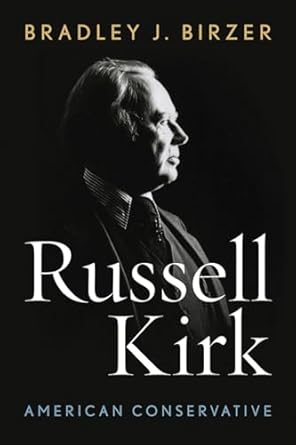
Bradley J. Birzer: Russell Kirk

American Conservative

University Press of Kentucky, 2015

Amazon.com

Emerging from two decades of the Great Depression and the New Deal and facing the rise of radical ideologies abroad, the American Right seemed beaten, broken, and adrift in the early 1950s. Although conservative luminaries such as T. S. Eliot, William F. Buckley Jr., Leo Strauss, and Eric Voegelin all published important works at this time, none of their writings would match the influence of Russell Kirk’s 1953 masterpiece The Conservative Mind. This seminal book became the intellectual touchstone for a reinvigorated movement and began a sea change in Americans’ attitudes toward traditionalism.

In Russell Kirk, Bradley J. Birzer investigates the life and work of the man known as the founder of postwar conservatism in America. Drawing on papers and diaries that have only recently become available to the public, Birzer presents a thorough exploration of Kirk’s intellectual roots and development. The first to examine the theorist’s prolific writings on literature and culture, this magisterial study illuminates Kirk’s lasting influence on figures such as T. S. Eliot, William F. Buckley Jr., and Senator Barry Goldwater – who persuaded a reluctant Kirk to participate in his campaign for the presidency in 1964.

While several books examine the evolution of postwar conservatism and libertarianism, surprisingly few works explore Kirk’s life and thought in detail. This engaging biography not only offers a fresh and thorough assessment of one of America’s most influential thinkers but also reasserts his humane vision in an increasingly inhumane time.

Reviews:

“An extraordinary book. Birzer has written a capacious and deeply humane treatment of an important thinker, writer, and actor who has been largely forgotten by an America that once regarded him as a singular and important voice. This lively and fascinating book will be read and talked about.”  Patrick Deneen, author of Democratic Faith

“Bradley J. Birzer’s Russell Kirk will blow away the stereotypes of what it means to be a conservative in modern America. Kirk’s thinking is sharp, his writing is rich, and the fruits of his imagination retain their power to strike even the most skeptical of readers. Birzer has produced an essential introduction to this towering figure.”  Gary L. Gregg, Mitch McConnell Chair in Leadership, University of Louisville

Russell Kirk: American Conservative [is] a beautifully written and deeply insightful biography…Birzer traces the development of Kirk’s ideas, especially the influence Burke, Dawson, Eliot and (surprise) the political philosopher Leo Strauss. He explores Kirk’s concept of the transcendent, which moved from Stoicism to ‘full communion with the Catholic Church.’ And he considers Kirk’s forays in the public square, not least his association with Barry Goldwater, the 1964 presidential candidate.”  Wall Street Journal

“Given the confused and dispirited state of American conservatism at the present moment, it is high time for a Russell Kirk revival. The very thought of such a revival is appealing, even exhilarating, and the appearance of Bradley J. Birzer’s splendid and exhaustively researched biography of Kirk just might provide the catalyst needed to set it in motion.”  National Review

“Birzer covers it all, from Kirk’s family life and Catholic conversion to his disputes with Jaffa and other Straussians over the meaning of the Declaration of Independence…At last, we have the definitive book about this important, fascinating, and good man.”  Claremont Review

About the Author:

Bradley J. Birzer is Russell Amos Kirk Chair in American Studies and professor of history at Hillsdale College. He is also the second Visiting Scholar of Conservative Thought and Policy, Colorado University–Boulder. He is the author of American Cicero: The Life of Charles Carroll and Sanctifying the World: The Augustinian Life and Mind of Christopher Dawson.