

Jonas Hansson & Svante Nordin: Ernst Cassirer – The Swedish Years
Peter Lang, 2006 Amazon.com
Back Cover:
 Ernst Cassirer was professor in Göteborg from 1935 to 1941. This episode of his life is little known, even though the Swedish years were very important. During that time of political turmoil he wrote several books and most of the papers that are now being published posthumously.
This book – based on recently discovered sources – gives a detailed picture of Cassirer’s life and work in Sweden. It explains how he was invited to Sweden and why he became a Swedish citizen. The analyses show how Cassirer’s exchange with Swedish philosophers influenced his work and shed new light on his development during exile.
This study also contains an introduction by John Michael Krois, a chronology of the Swedish years and a description of the long lost manuscript of Das Erkenntnisproblem, volume four.
Contents:
John Michael Krois: Ernst Cassirer’s Philosophical Development in Sweden – An Unknown Chapter in Intellectual History
Preface
The Swedish Years
The Philosophical Scene in Sweden at Cassirer’s time
Konrad Marc-Wogau and the Logic of Symbolic Forms
Axel Hägerström and Uppsala Philosophy
Descartes and Queen Christina
Thomas Thorild and 18th Century Philosophy
Cassirer in Göteborg
Appendix 1: The Manuscript of Das Erkenntnisproblem, Volume 4
Appendix 2: Chronology
Appendix 3: Cassirer’s Lectures in Sweden
Appendix 4: Cssirer’s Lectures and Seminars at Göteborg 1935-1941
Appendix 5: Cassirer’s Academic Writings during his Swedish Years
Bibliography
About the Authors:
Jonas Hansson, born in 1967, is Lecturer in the History of Science and Ideas at the universities of Lund and Halmstad.
Svante Nordin, born in 1946, is Professor of the History of Science and Ideas at the University of Lund.
JOB’s Comment:
This book is of considerable importance for understanding the origins of value-centered historicism as developed by Claes Ryn and his teacher Folke Leander, inasmuch as it contains an extensive discussion of the relation between Leander and Cassirer, who supported Leander at Gothenburg against the representatives of the dominant trend of Swedish philosophy at the time. Leander was the only Swedish philosopher who contributed to the volume devoted to Cassirer in The Library of Living Philosophers in 1949.
Lilli Lehmann: Non mi dir
1907
Gustav Kasselstrand i Alvik
Ordförande för Sverigedemokratisk Ungdom, förespråkare för William Hahnes styrelseförslag, och nu kandidat till styrelsen för SD Stockholms län.

Foto: Per Åkesson
Karlsson och Motpol
Mattias Karlsson kommer i ett nytt inlägg på Facebook med information som stödjer hans beteckning av Motpol och kretsen kring Motpol som “nyfascistisk”. En del, rörande enskilda Motpol-skribenter, är, trots att jag verkligen försökt sätta mig in i detta, nytt för mig.
De belägg Karlsson presenterar är inte oviktiga för den samlade bedömningen. De bekräftar min egen kritik av det jag identifierade som innehåll av fascistisk karaktär när jag först upptäckte vad som då var en “bloggportal”, genom dåvarande bloggaren Jonas De Geers tillbakablick på Samtidsmagasinet Salt (numera är Motpol en mer enhetlig “tankesmedja”). Även senare har jag återkommit till och påpekat denna koppling till fascismen.
Det kan knappast förnekas att det finns skribenter på Motpol eller i kretsen kring Motpol som åtminstone i viss mån är direkt influerande av den egentliga, historiskt existerande fascismen. Såtillvida har, som jag också framhållit, Karlsson rätt, även om jag inte kan se att det är fråga om någon distinkt “nyfascism” utan helt enkelt om den gamla vanliga.
Mina anspråkslösa reservationer har bara gällt följande punkter:
1) Att man bör vara försiktig med terminologin när det gäller den mångfald av ofta ganska vitt skilda tankeströmningar som Motpol-kretsen, med motsvarande variation hos enskilda skribenter, bygger på;
2) Att alla dessa inte kan betecknas som nyfascistiska;
3) Att man i dessa strömningar kan ifrågasätta saker på andra grunder än att de skulle vara just nyfascistiska;
4) Att det också finns innehåll av helt annat slag på Motpol, såsom exempelvis huvudströmningen av den traditionalistiska skolan (d.v.s. den strömning Evola på problematiskt sätt avviker från), selektiva vänsteranalyser, eller rent konservativa inslag som är vitt skilda från och oförenliga med fascismen;
5) Att Motpol under de senaste åren i någon mån gett intryck av att röra sig i en från mitt perspektiv positiv riktning, d.v.s. haft mer av den under punkt 4 angivna typen av innehåll; och
6) Att en mer ingående diskussion av allt detta är önskvärd.
Tilläggas kan väl att personer som råkar läsa enstaka, icke-fascistiska artiklar på Motpol och kanske “gillar” dem eller Motpols egen sida på Facebook inte kan förväntas känna till vare sig det fascistiska eller ens det på annat sätt från sverigedemokratisk ståndpunkt problematiska innehållet, och därför inte rimligen kan betecknas som ideologiskt avvikande enbart på denna grund.
Per Ossmer i Alvik
Advokat, poet och ledamot av Stockholms kommunfullmäktige och SD Stockholms stads nya styrelse.
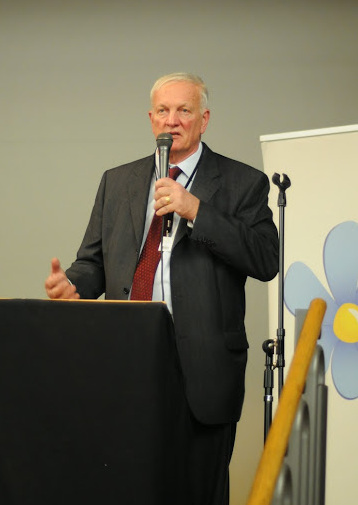
Foto: Per Åkesson
Eric Voegelin: From Enlightenment to Revolution
Edited by John H. Hallowell
Duke University Press, 1975
Back Cover:
 “This book is of dramatic significance on two levels: it represents an incisive analysis of one of the most critical periods in the unfolding of Western European consciousness, and it provides illuminating insights into the developing perspective of a man who by any criteria is one of the leading philosophers and political theorists of the 20th century.
There is great value in this work for all serious students of man in search of order; for those interested in the Enlightenment and the development of Voegelin’s thought it is indispensable.”
Journal of Church and State
“An intransigent and independent thinker of complete intellectual integrity, Voegelin seeks to interpret the historical record and to follow the trail of equivalent symbols wherever it leads.
His documentation is vast and impressive; his interpretations are sensitive and philosophically profound. His extraordinary interpretive and philosophical gifts serve to transform a familiar period in the history of political thought into a truly original and significant historical work, a work which is also the best introduction for the general reader to Voegelin’s c omplex philosophy of politics and history.
The implications of this volume for Contemporary historical existence are immense.”
Dante Germino, Journal of Modern History
Contents:
Editor’s Preface
1 The Emergence of Secularized History: Bossuet and Voltaire
2 Helvétius and the Genealogy of Passions
3 Helvétius and the Heritage of Pascal
4 Positivism and Its Antecedents
5 The Conflict Between Progress and Political Existence After Turgot
6 The Apocalypse of Man: Comte
7 The Religion of Humanity and the French Revolution
8 Revolutionary Existence: Bakunin
9 Bakunin: The Anarchist
10 Marx: Inverted Dialectics
11 Marx: The Genesis of Gnostic Socialism
Eric Voegelin (Wikipedia) Eric Voegelin Institute
JOB’s Comment:
This is an edition of a part of Voegelin’s long manuscript on the history of political ideas. The latter was never published by Voegelin in its entirety, since he abandoned its particular philosophical approach for the one found in Order and History. But the importance of this difference is hardly as great as Voegelin himself thought it was; although written from a position less fully developed than his later ones (in the course of writing the volumes of Order and History, he changed and developed his approach further), the work has considerable value, and the complete text is now available as volumes 19-26 of the Collected Works.
Richard Lucae, Friedrich Hitzig & Julius Carl Raschdorff: Königliche Technische Hochschule, Charlottenburg

Jonas Hansson: Humanismens kris
Bildningsideal och kulturkritik i Sverige 1848-1933
Brutus Östlings bokförlag Symposion, 1999
Baksida:
 Ett av de centrala honnörsorden i den västerländska traditionen är humanism. Men vad betyder det egentligen? Sedan 1800-talets början har humanismens problematik varit ständigt aktuell. Man har frågat sig hur humanismen förhåller sig till den moderna utvecklingen, om det går att förena humanism och religion och om humanismen kan existera utan en klassisk bildning. Det hävdas också ofta att humanismen befinner sig i kris, men vilket är då ursprunget till denna kris? Finns det ett samband mellan humanismens kris och en kris för bildningen?
I Humanismens kris klargör Jonas Hansson de olika betydelser som begreppet humanism haft alltsedan det lanserades i början av 1800-talet. Mot en internationell bakgrund skildras hur begreppet humanism slår igenom i Sverige och hur latinets vänner, radikala skribenter och kristna kritiker diskuterar humanismen på 1800-talet. Genombrottet för slagordet humanism i början av 1900-talet sätts i samband med upplevelsen av en allmän kulturkris. Samtidigt ger Jonas Hansson i sin studie en bild av en epok i svensk idéhistoria då inflytande från Tyskland var starkt och begrepp som bildning och kultur representerade samhällets högsta värden.
Om författaren:
Jonas Hansson (f. 1967) är docent i idé- och lärdomshistoria vid Lunds universitet.
Maria Danielsson i Alvik
Ledamot av och SDs gruppledare i Stockholms kommunfullmäktige, och avgående ordförande för SD Stockholms stad.

Foto: Per Åkesson
 Olle Bengtsson