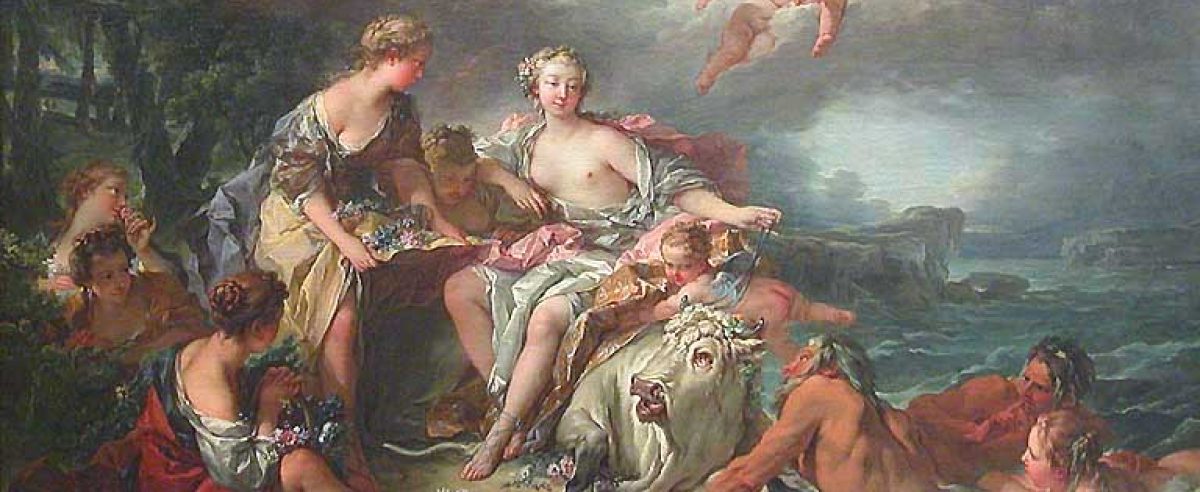

Personlighetsidealet, romantiken och rationalismen
Ur Rousseaus läror utkristalliseras ett nytt personlighetsideal, la belle âme, den ofördärvade naturen som, i sig moralisk och ren, endast behöver följa sin spontana instinkt och känsla, den överlägsna natur som icke får bedömas med filistrarnas futtiga och förvända måttstock. Babbitt framhåller hur denna typ är nära befryndad med “the original genius”, och följer hur idealet snabbt upptogs och utvecklades av Schiller och andra i Tyskland och där fick sin största betydelse.
Tyvärr hör emellertid till Babbitts avstånd från den tyska utvecklingen att han nästan helt förbiser den modifikation i riktning mot etisk fördjupning som detta ideal också genomgick i Tyskland (där det dessutom äger andra rötter), och i stället koncentrerar sig helt på en rad franska poeter (en uppsats om Schiller återfinns dock i samlingen On Being Creative (1932)). Idealet har, som vi redan sett, i Tyskland föregångare i deistisk och pietistisk kristendom. Den etiska fördjupning det erhåller med Kant innefattar i en utsträckning som Babbitt förbiser just den dualism som den från Rousseau utgående, uteslutande romantiska – och hos Babbitt företrädesvis “franska” – sköna själen utmärker sig just genom att uppge till förmån för blott av yttre oegentliga faktorer störd godhetsmonism. Babbitt ser endast en skarp kontrast gentemot den äldre kristendomens – som han ju dock inte som helhet försvarar – personlighetsideal. Den sköna själen är enligt honom samtidigt en förnekelse av och en parodi på läran om nåden. Rättfärdigheten förvandlas till egenrättfärdighet, ödmjukheten försvinner, icke ens inför uppenbara diskrepanser mellan ideal och verklighet uppger den sköna själen övertygelsen om sin egen förträfflighet och älskvärdhet. [Rousseau and Romanticism, 131-5.] I klassiska och mönstergilla formuleringar fångar Babbitt förvisso en av utvecklingslinjerna från Rousseau:
“If we wish to see the psychology of Rousseau writ large we should turn to the French Revolution. That period abounds in persons whose goodness is in theory so superlative that it overflows in a love for all men, but who in practice are filled like Rousseau in his later years with universal suspicion…Both Rousseau and his disciple Robespierre were reformers in the modern sense, – that is they are concerned not with reforming themselves, but other men. Inasmuch as there is no conflict between good and evil in the breast of the beautiful soul he is free to devote all his efforts to the improvement of mankind, and he proposes to achieve this great end by diffusing the spirit of brotherhood. All the traditional forms that stand in the way of this free emotional expansion he denounces as mere ‘prejudices’, and inclines to look on those who administer these forms as a gang of conspirators who are imposing an arbitrary and artificial restraint on the natural goodness of man and so keeping it from manifesting itself. With the final disappearance of the prejudices of the past and those who base their usurped authority upon them, the Golden Age will be ushered in at last; everybody will be boundlessly self-assertive and at the same time temper this self-assertion by an equally boundless sympathy for others, whose sympathy and self-assertion likewise know no bounds. The world of Walt Whitman will be realized, a world in which there is neither inferior nor superior but only comrades. This vision (such for example as appears at the end of Shelleys’s ‘Prometheus’) of a humanity released from all evil artificially imposed from without, a humanity ‘where all things flow to all, as rivers to the sea’ and ‘whose nature is its own divine control’, is the true religion of the Rousseauist. It is this image of a humanity glorified through love that he sets up for worship in the sanctuary left vacant by ‘the great absence of God’.” [Ibid. 135 ff.]
Denna förening av panteism, narcissism och revolutionärt-utopisk socialsentimentalism har de största konsekvenser för mina huvudtemata, idealismen, personlighetsidealet, och den filosofiska förståelsen för vad en person är. Vi ser också hur den redan inledda förändringen av historieuppfattningen dramatiskt vidareförs med tydliga konsekvenser för samma temata: det är icke längre blott det gradvisa förnuftsframsteget som leder till det tillstånd som enligt kristendomen åvägabragtes endast genom apokalyps. Detta återställda paradistillstånd utbyggs nu med det framdrömda primitiva naturtillståndet, tolkat i enlighet med antikens cykliska tidsåldrar som en ny guldålder, och t.o.m. apokalypsen återkommer, om än med hjälp av mänskliga revolutionärer i stället för Gud och Jesus. Vi står inför en sluten naturalistisk immanentism, om än ofta fortfarande utlagd i högstämd andlig och ideell retorik.
I detta perspektiv måste Gud, förstådd såsom inkluderande något slags i förterminologisk biblisk och modern mening personlig aspekt på det transcendenta planet, oundvikligen tona bort. Och den “sköna själens” entré i detta sammanhang innebär förvisso inte någon återkomst för antikens den transcendenta verkligheten tillhöriga själspersonlighet, som redan kristendomen tillbakaträngt. Snarast är, som jag redan berört, själsepitetet här blott en smickrande benämning för det alltmer narcissistiska och sentimentalistiska känslolivets förmenta sublimitet. I den idealismen (i de båda nya meningarna: sentimentalmoralens och den tyska filosofiska) ledsagande liberala och kulturprotestantiska teologin ersätts alltmer såväl evangeliernas bakom ortodoxin dolda, fragmentariskt identifierbara esoterism som ortodoxin själv av förståelsen av kristendomen och Kristi budskap som en human etik.
Den här beskrivna riktningen är förvisso verklig nog, och inom kort skulle även på ytan mycket annorlunda former av romantik, mörkare, demoniska, uppvisande den fulla omfattningen av rousseauismens lägre potential och avskalade all förskönande retorik, komma att följa den. Romantiken som helhet har bestämt världshistorien ända till idag. Men 1800-talets olika omgångar av klassicistiska, i striktare mening idealistiska, religiösa och konservativa reaktioner gör dock att dess idéhistoria blir någonting långt mer komplicerat än bara historien om dess olika vidareutvecklingar, förgreningar och varianter. [Babbitts analys bygger som vi sett delvis på Burke (se även Peter J. Stanlis’ uppsats ‘Babbitt, Burke and Rousseau: The Moral Nature of Man’, i George A. Panichas & Claes G. Ryn, utg., Irving Babbitt in Our Time (1986)), och är även påverkad av Seillières och andra samtida franska klassicister, fastän den också, som Leander framhållit, också är i hög grad självständig i förhållande till deras.]
Det är inte bara så att den efterföljande, förnyade klassicismen av Weimartyp icke kan reduceras till rousseauansk romantik. Ej heller den efterföljande romantiken som sådan kan reduceras till rousseauism. De komplikationer den tyska linjen rymmer har i alltför hög grad försvunnit i Babbitts franska och amerikanska (Whitman!) perspektiv. Kant tillhandahåller ett etiskt perspektiv som i mycket är motsatt Rousseaus, och den konservativa romantiken hade också helt andra källflöden. I den mån den byggde även på Rousseau, byggde den på valda och omtolkade delar: den lyckades s.a.s., liksom väsentliga delar av den filosofiska idealismen, tämja honom till överensstämmelse med från övriga inspiratörer hämtade övertygelser.
Herders natur- och organismtänkande kunde förvisso inspirera såväl den revolutionära som den konservativa romantiken. Men när Franklin L. Baumer hävdar att Rousseau och Burke inte är “so opposed to each other in political mood as the latter liked to think”, så framstår detta som lätt överdrivet och vilseledande. [Modern European Thought: Continuity and Change in Ideas, 1600-1950 (1977).] Stanlis har i Edmund Burke and the Natural Law (1954), nyttjande Leo Strauss’ och andras distinktion mellan klassisk och modern naturrätt, försökt visa att Burke ingalunda var endast en romantisk historicist. [Burketolkningen har dock, och just av de skäl jag antytt (begreppens subtila omdefinition under detta skede av modernitetens utveckling) blivit ett oerhört komplext område inom forskningen (liberal eller konservativ, för eller mot imperiet o.s.v.), som jag här inte kan gå närmare in på.] Ingen tvekan kan dock, tror jag, råda rörande de allmänna idéhistoriska ursprungen till den utopistiska och messianska romantiken, alltifrån Shelley och Michelet, som Baumer otillräckligt beskriver. [Ibid. 292 ff.]
Vad som emellertid blir än tydligare under 1800-talet – och som kan framhållas redan här, eftersom historiskt efterföljande verkningar icke sällan kastar ett förklarande ljus över sitt upphov – och inte minst med den radikala upplysningens förstärkta återkomst, [Delvis vad Baumer kallade “the new enlightenment”.] är hur de två moderna, från såväl den klassiska som den kristna traditionen skilda riktningarna ingår en förening och stöder varandra. Inte bara den naturalistiska scientismen och utilitarismen utan även den rousseauanskt inspirerade sentimentala humanitarianismen (som Babbitt kontrasterar mot den klassiska humanismen) hyser exempelvis den distinkta, nya tron på Mänsklighetens framsteg. De förra vill befrämja detta genom att förbättra samhällsmaskineriet, den senare genom att utbreda broderskapskänslor, men ingen anser inre etisk och andlig strävan och disciplin av det traditionella slaget nödvändig.
Prometheus blir den samlande symbolen: samtidigt rebell, det materiella framstegets befrämjare, och människoälskare. [Rousseau and Romanticism, 137 f.] Vi inträder i en tid av “Promethean individualism”: “Cain and Satan are both romantic heroes. To meet the full romantic requirement, however, the insurgent must also be tender-hearted.” [Ibid. 139.] Den explosiva urkraften i attackerna mot den etablerade ordningen måste förenas med sympatin för denna ordnings offer. [Ibid. 140.] Kärleken är för rousseauanen inte lagens fullbordan utan dess ersättning. Själsskönhet återfinns företrädesvis hos de av samhället ogillade: “personal virtue, the virtues that imply self-control, count as nothing compared with the fraternal spirit and the readiness to sacrifice one’s self for others”. [Ibid. 140 f.]
I den mån den relativt sett ytliga konflikten mellan sentimentalismen och rationalismen kvarstår hos de romantiska poeterna och de tidiga socialisterna i deras kamp mot den inbrytande industrialismen, spelar de naturligtvis mot denna icke ut den klassicistiska poesins avrundade allsidighet, utan i stället i närmast ostentativ ensidighet de arkaiskt idylliserade bönderna. Redan från början avslöjades en del av denna ensidighets revolutionära avsikter i det att även det blott och bart låga började hyllas med realismens nya detaljskärpa. Åter ligger föreningen med den naturvetenskapliga empirismen nära, och resultatet börjar kunna närma sig personlighetsidealets – som ju också är bildningsidealets – kollaps i en nybarbariets disproportionerlighet.
Den puritanska liberalismens individualistiska inomvärldslighet omformas när dess disciplin upplöses. Utopismen och tron på människans naturliga godhet närs av de vetenskapliga framstegen och ersätter samtidigt ofta för naturvetenskapsmannen och ingenjören den sanna klassiciteten och kristendomen med de världsåskådningsmässiga kompletteringar hans strävan att reducera verkligheten och kunskapen till det med matematikens och logikens hjälp uppbyggda slutna systemet av positivistiska fakta kräver. [Ibid. 217 f.] Denna den naturalistiska modernitetens förening och syntes har som vi sett djupa idéhistoriska rötter och har framvuxit under lång tid. Och såväl dess personlighetsideal som dess personlighetsverklighet är åter entydigt kroppspersonligt – om än med sina rationella och emotionella fakulteter tänjda till bristningsgränsen i form- och normlös inomvärldslig expansion.
Samtidigt påminner Babbitt om att en skillnad självfallet också kvarstår mellan den sentimentalt-romantiska och den scientistisk-rationalistiska naturalismen. Genom hela 1800-talet, ja hela 1900-talet, har den kunnat kvarstå också som en motsättning. De båda förenas i avfärdandet av det överrationella, men de skiljer sig i uppfattningen av den rationella nivån. Den förra naturalismen förblir i vissa varianter kritisk mot den senares abstrakta intellektualism, reflexion och analys. I Rousseaus kritik framstår inte blott klassicisten utan också rationalisten som en typisk dekadent produkt av den artificiella övercivilisationen. Han har avfallit från sitt väsens ursprungliga, spontana, omedelbara enhet. Det är i kraft av den känslomässiga kontakten med den senare som han nu attackeras av Rousseau. De traditionella distinktionerna rörande gott och ont, de traditionella definitionerna av dygden, samhället o.s.v. upphävs, och de gamla termerna brukas för radikalt nya innebörder, samtidigt som alla föregående typer av förnuft, med vilka det varit möjligt att överhuvud göra distinktioner, börjar förkastas i namn av en urskillningslös emotionalism. [Ibid. 179.]
Men vid närmare betraktande visar det sig att rationalitetens urskillning blott överförs från människans egentliga högre själv, den specifikt mänskliga, etiska och andliga verklighetsdimensionen, till naturens lägre sfär. Det känslomässiga förkastandet av de traditionella förnuftsdistinktionerna rörande det högre livet kunde i själva verket desto lättare accepteras emedan den analytiska rationaliteten och en avsevärd del av den från traditionens religiösa symboler och klassisk-humanistiska mönster frisläppta fantasin nu förenade sina krafter i den lägre-empiriska perceptionens tjänst och därmed på uppenbart framgångsrikt sätt befrämjade människans makt och nytta. [Ibid. 179, 217 f.]
Babbitts slutsats måste därför ändå bli att “Emotional romanticists and scientific utilitarians have thus, in spite of their surface clashes, coöperated during the past century in the dehumanizing of man.” [Ibid.] Vi får därmed anledning att undra i vilken utsträckning vi nu helt enkelt ställs inför frågorna om subjektivitet, individualitet och personlighet på en avhumaniserad nivå, där allt det som tidigare varit nödvändiga beståndsdelar både i definitionen av människans reella personskap och i idealet för hennes personlighets utveckling ifrågasätts eller förnekas. Vilka andliga och moraliska motkrafter lyckas det slutande 1700-talets och det begynnande 1800-talets kultur uppställa mot denna utveckling?
Hermes Logios

Renaming the New Right?
”The fourth political theory”, Alexander Dugin explains in his new book with this title, is a collaborative project involving also the French intellectual leader of la nouvelle droite, Alain de Benoist, with whom Dugin has apparently reestablished his former close relation. The two thinkers seem to have met for a prolonged period in Moscow to discuss the concept, and in connection with this, Dugin also published a Russian translation of a collection of essays by de Benoist, the title of which, in English, is Against Liberalism: Towards the Fourth Political Theory – a title which could be said to be simply a more precise indication of the content of Dugin’s own book.
This indicates that what we have to do with here is an attempt on the part of Dugin and de Benoist to launch the concept of the fourth political theory as the most adequate designation of their shared positions. But this in turn raises the question if this is all simply a matter of renaming the New Right. If that is the case, there are, to begin with, two things that must be said about it.
First, there is the obvious advantage that the fourth political theory is for several reasons a better designation than the New Right. de Benoist and other New Rightists themselves have always complained about the latter, inasmuch as it was first used by the French media and in no way indicated the ambitions of GRECE to reject and transcend the left-right distinction. Although it was indeed clear they often did try to do this, the objections were sometimes hard to understand in view of the fact that de Benoist was, and, I think, to this day remains best known for his early book Vu de droite. Anthologie critique des idées contemporaines (1977), awarded by the French Academy with its grand prix de l’essai, and his thinking seemed to incorporate or overlap more obviously with various strands in what had always correctly been classified as rightist thought than with leftist thought. He also seems to have finally accepted the term New Right.
Still, the categorization of his intellectual groupement as simply beloning to the right is insufficient and partly misleading in view of the distinct whole of its philosophical position and interpretation of history. The right, and the term right, are too closely associated with conservatism in the forms in which it has historically existed in Europe, and it is, I believe (I have discussed this elsewhere), a correct insight of de Benoist’s that those conservatisms are not only insufficient in various respects in the present, but have shown themselves to be so in the past as well. The fourth political theory is a much better term, which, while purely formal and abstract, does greater justice to the ambitious GRECE project and communicates better its true nature.
On a general level, it must be said that both the term conservatism and the term right are philosophically and historically inadequate. Insofar as the term right is ever associated with the French National Assembly during the revolution, there is, at the very least, something disproportionate even in Evola’s use of the term “the true Right” for the uncompromising, integral “traditionalist” position as he conceives it.
Now, some will probably think that inasmuch as in the shallow and propagandistic discourse of the Left (including liberalism), the third political theory as described by Dugin and, I suppose, de Benoist, namely fascism broadly and, it must be said, somewhat imprecisely conceived, is almost always simplistically associated with the Right, described as a “right wing extremism” or “radicalism”, serving the interests of or behind the Right in a new historical situation etc., de Benoist regards the use of the term the fourth political theory as particularly suited to serving the need of marking and signaling the differences between this theory and the third, which have been deliberately obscured and downplayed by ideological opponents. But in this connection, it must perhaps be kept in mind that his objections to fascism are such as in substance are in fact rather associated with the historical European right and not new or specifically New Right ones, so that contrary to other parts of the fourth political theory where there is some substantial agreement with the (socialist) left, in this particular respect the need to disown the term right would at least not seem to have to be paramount. Needless to say, this does not imply that de Benoist shares all of the historical right’s objections to fascism.
The advantages of the new designation are, as I have indicated, much more general. The introduction of it, and the consensus regarding it between de Benoist and Dugin, are to be welcomed. But the second thing that must initially be said about it as amounting simply to a renaming of the New Right is that it inevitably raises again the question of the problems and limitations of the New Right as it has historically existed. If the fourth political theory is in substanc simply the New Right, it does not represent any advance in relation to it. The term would connote and express not only the same strengths but also the same weaknesses. I have briefly indicated elsewhere what I find those weaknesses to be, and will not develop or even repeat this here, but I hope to return to it shortly. The weaknesses are, from my position, serious. As I have had to emphasize, the New Right has in central respects always been quite far from my own positions, especially with regard to what I include as defining the concept of the alternative modernity (which, I add, is not the same as that with which all others who may also use it prefer to define it). I have found this regrettable, since there are also several strengths, valuable parts of a body of work that is by now enormous, which I would have liked to be able to support.
One obvious thing that must be asked here is whether the renewed collaboration between Dugin and de Benoist implies that the former has simply accepted all the New Right’s positions. The fact that this is unlikely speaks against interpreting the forth political theory as simply a new name for an old thing. Dugin is much closer to the traditionalist school than de Benoist, and he has related traditionalism to Russian identity in a way that makes it hard to see how he could relinquish it. For me as partly a Lindbomian, this is, prima facie, in some central respects a strength in Dugin’s thinking in comparison with de Benoist’s, and signifies, in the perspective of the resumed collaboration, at least a potential for one needed modification and development of the New Right legacy. On the other hand, it is of course not clear to what extent de Benoist has been prepared to adapt to Dugin.
But that the fourth political theory is not intended as a mere new name also is suggested by the way Dugin describes it in terms of “a correctly posed question” rather than a set of ready answers, and invites us to a constructive dialogue instead of awaiting a response to an already elaborated theory as a finished result. For many, this is undoubtedly promising, after decades of the New Right’s consistent alienation of large groups of important potential supporters by their insistence on its more outlandish elements as essential and fundamental programmatic points (in the sense in which things can for them be essential and fundamental). By this, they seem unnecessarily to have marginalized themselves in a way that sometimes went so far as to border on sectarian irrelevance.
On the other hand, it might seem a little far-fetched to hope that Dugin, known for a number of rather extreme and problematic positions of his own, different from those of the New Right, will be able to correct and improve on the New Right positions in these respects. But with the new name and some of the new formulations, they – he and de Benoist together – now at least to some extent appear to be signalling a new openness. It seems it is not impossible that this could finally hold out the promise of another rapprochement, namely with the kinds of positions and traditions I have tried to point to as necessary to uphold and defend. This would mark a decisive, historic shift. We certainly need a fourth political theory, but we also need this theory to go beyond the New Right. The new name should signal a new philosophy, or a philosophy in some important respects different from that of the New Right. I will come back to the question of the extent to which Dugin’s book bears out as reasonable the hopes for such a development.
Tamara Karsavina
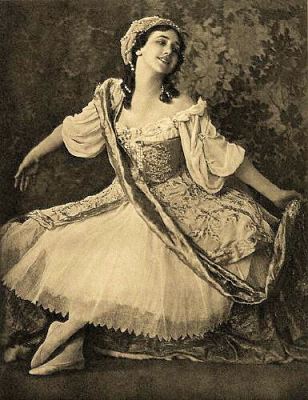
Russian ballerina, 1885-1978.
Konsekvenser av idealismens omtolkning
En här viktig dimension av Babbitts analys är hans framhållande av den betydelse Rousseaus naturuppfattning och idylliska fantasi kom att få för den förändrade innebörden av begreppet idealism. Det är nödvändigt att ständigt hålla denna nya betydelsedimension i minnet när man studerar romantikens, nyklassicismens, nyhumanismens och idealismens idévärld: utan att helt ersätta de äldre betydelserna av idealism, som ofta delvis återuppväcks, kommer den nämligen att på subtila sätt modifiera och samexistera med dessa. Vad vi har att göra med är inte minst åter vad Babbitt kallade Rousseaus pseudoplatonism.
Alla oskyldiga arkadiska drömmare blev visserligen inte farliga utopister efter Rousseau. Några fortsatte bara att drömma i mer outrerade former och med mer melodramatiskt känslomättade lamentationer över verklighetens avstånd från drömmen. Men många blev förvisso också farliga utopister. Gemensamt hade de dock alla just avståndet mellan drömmen och verkligheten – motsatsen blev snart ofta terminologiskt till den mellan idealet och verkligheten. “Where the Rousseauist goes beyond the ordinary dreamer is in his proneness to regard his retirement into some land of chimeras as a proof of his nobility and distinction. Poetry and life he feels are irreconcilably opposed to each other, and he for his part is on the side of poetry and the ‘ideal’.” [Rousseau and Romanticism, 84 f.]
Här är icke blott fråga om den egna väsenskärnans natur contra de civilisationens konventioner som hindrar dess autentiska livsuttryck, utan också om ett drömt samhälle som står i skarp kontrast mot det förhandenvarande och som utmålas som naturligt och idealt. Vi finner här en term och ett begrepp, idealet, som skiljer sig såväl från Platons icke blott universella utan också transcendenta idéer som från Berkeleys förnumna medvetandeinnehåll under samma benämning. Det nya idealet skiljer sig från dessa icke minst genom att huvudsakligen hänföra sig till den nya ursprungliga, goda naturens tillstånd i dess kontrast mot civilisationens artificiella förfall.
Klassicistens etiskt centrerade idealism bestod i en förmåga att urskilja, uppfatta och, om konstnär, gestalta det sant normativa och därmed i högre grad verkliga – med eller utan transcendent sanktion – i den förhandenvarande aktualitetens förbiflimrande multiplicitet. Den bestod med andra ord just i det den sanna klassicismens program som Babbitt vill sammanfatta som “the imaginative perception of the universal”.
Babbitt betonar dock inte alltid med tillräcklig tydlighet hur det universella, enligt vad vi ovan antytt, också enligt klassicismen måste vara riktat mot det högre och förebildliga som den egentliga idealismen i mer traditionell mening förstår som det ideella, för att också äga den etiska normativitet han räknar med. Här synes exempelvis Eduard Sprangers definition av “bildningsideal” behöva mobiliseras som komplement: “die anschauliche Phantasievorstellung von einem Menschen, in dem die allgemein menschlichen Merkmale so verwirklicht sind, dass nicht nur das Normale, sondern auch das teleologisch Wertwolle desselben in der höchsten denkbaren Form ausgeprägt ist.” [Cit. i Historisches Wörterbuch der Philosophie, ’Bildung’.] Här finns också det viktiga fokus på den personliga bäraren eller manifestationen, även om man bör lägga märke till att icke heller denna formulering fångar den betydelse den “högre romantiken” tillägger det individuella i bildningens resultat. Utöver universalitetens konkreta manifestationer i allmänhet ägnar Leander och Ryn just detta större uppmärksamhet, utan att för den skull bygga på en strikt personalistisk filosofi.
För Rousseau finns emellertid inte på något uppenbart sätt en μέθεξις, den aktuella realiteten har knappast någon direkt, partiell delaktighet ens i det drömda, “naturliga” idealet: förhållandena kan bara förändras till det bättre medels de mest drastiska och radikala pedagogiska och politiska åtgärder. Mot den klassiske idealistens μέθεξις ställs därför hos Rousseau en mer radikal dikotomi mellan hans annorartade motsatser.
Men detta innebär också att Rousseau kan vara något annat än verklighetsfrämmande drömmare, att han också kan vara något annat som är motsatt drömmandet, men som lika mycket som detta står i motsats till den klassiska idealismens hållning. Babbitt återger Schillers omdöme att Rousseau antingen skildrar naturens behag eller agerar som dess hämnare – d.v.s. Rousseau är antingen idyllisk eller satirisk: [Rousseau and Romanticism, 102 f.] “Rousseau oscillates between an Arcadian vision that is radiant but unreal, and a photographic and literal and often sordid reality. He does not so use his imagination as to disengage the real from the welter of the actual and so achieve something that strikes one still as nature but a selected and ennobled nature”. [Ibid. 102 f.; Babbitt söker här uttrycka, men återger också direkt, Goethes “very classical definition of genius: Du nur, Genius, mehrst in der Natur die Natur”; 103, not 2.]
En central typ av romantik utvecklar således en pseudoidealism som istället för att fånga det verkliga i det halvverkliga kontrasterar det halvverkliga mot det overkliga. Och mer: samtidigt som det sanna ideal klassicismen urskiljer i och extraherar ur den halvverkliga aktualiteten ersätts med drömmen, uppstår en den radikala dikotomins pendling mellan ytterligheter, i vilken även det halvverkligas återstående mått av verklighet prisgives till en på drömmen motsatt sätt overklig ”realism”. Liksom den empiriska vetenskapens gradvis utvecklade naturalism genom modernitetens hela historia på olika sätt växelverkar med och stödjer den till synes motsatta sentimentala romantikens naturalism, finns här ursprunget till den ofrånkomliga dialektik mellan romantik av detta slag å ena sidan och realism och naturalism å den andra som skulle synliggöras inte minst hos 1800-talets med tiden trötta cyniker av Flauberts typ: “realism of this type is, as has been said, only romanticism going on all fours”. [Ibid. 128.]
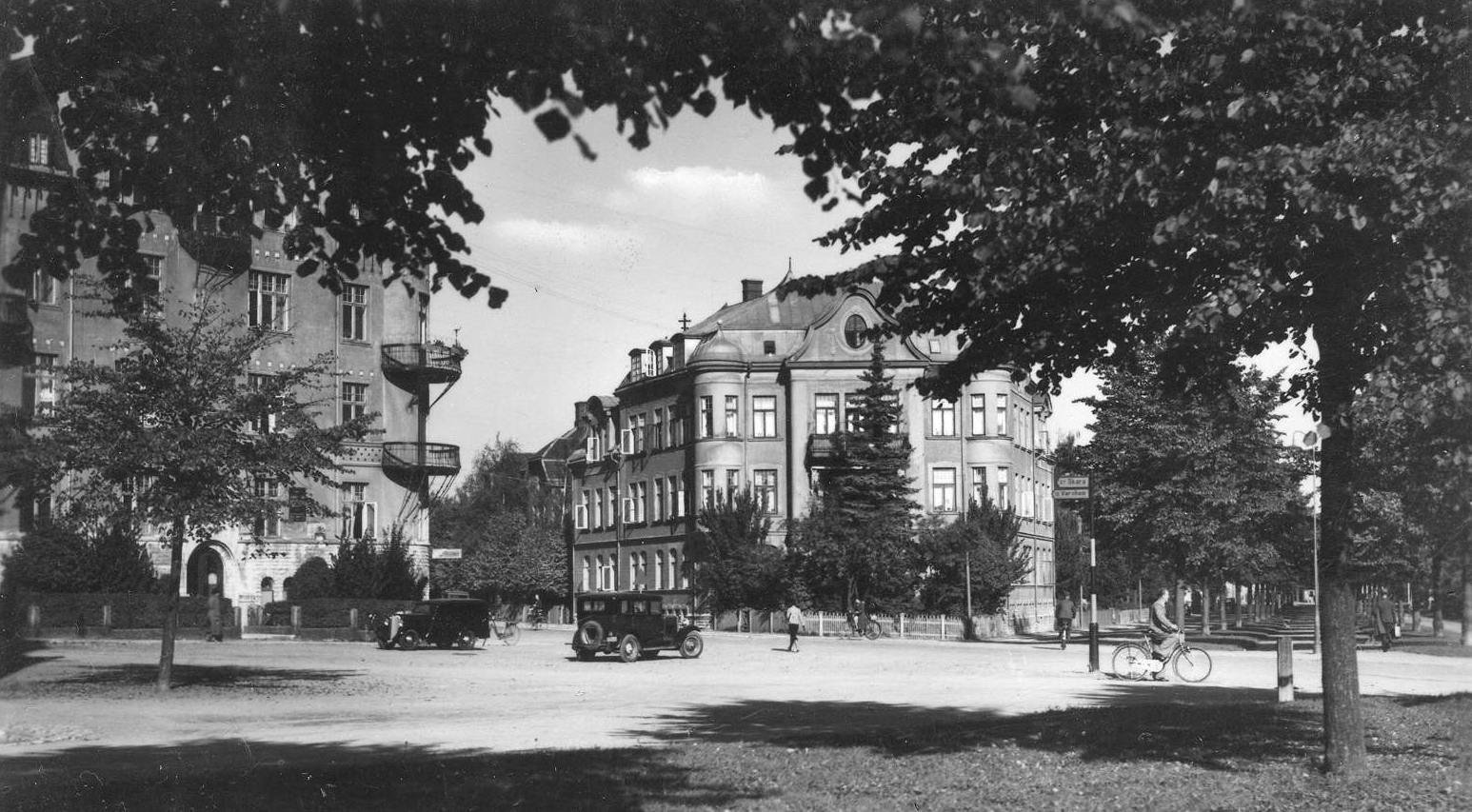
Vasaplatsen, Skövde
Suspecting Suspicion
What Ricoeur called “les hermeneutiques du soupçon” cannot of course be dismissed simply of an assortment of extreme, radical theoretical positions, unfounded speculations, ideological (in the non-Marxist or partly non-Marxist sense) strategies, or as some kind of conspiracy theory. In revealing hidden motivations, forces, and interests of various kinds behind the surface of articulated ideas, philosophies, figures of thought, they have sometimes added considerably to our historical understanding. This is one of the reasons why I am against the tendency of some historians to simply reject theory.
What has always been obvious to many scholars, however, is the extent to which the advocates and practitioners of the hermeneutics of suspicion are themselves unaware of or deliberately hide the motivations, forces and interests behind the hermeneutics of suspicion. The hermeneutics of suspicion as they were understood by Ricoeur – the Marxist, the Nietzschean, the Freudian – need to be applied to Marxism, Nietzscheanism and Freudianism themselves. But beyond that, what is also needed is further versions of such hermeneutics; other theoretical – or philosophical – as well as historical perspectives and dimensions must be applied in order for us to be able to understand their hidden dimensions.
The motives, forces, and interests behind the demasking of motives, forces and interests as it has long been practiced in academia, with much support of the media, need to be demasked. It is, as it were, absurdly, grotesquely evident to many who are not Marxists, Nietzscheans and Freudians that there are such motives, forces and interests at work also in Marx, Nietzsche and Freud, as well as in the countless variations, combinations, and further developments of their work. And that, unbelievable as it may seem after over a century, it is still a vital scholarly interest to unveil them, or rather, to make their unveiling better known.
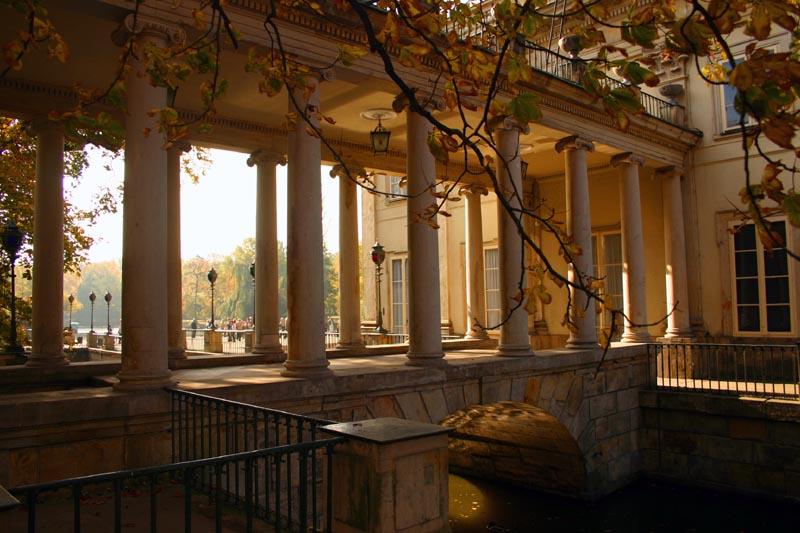
Domenico Merlini: Łazienki Palace, Warsaw
Chantal Delsol: La grande méprise
Justice internationale, gouvernement mondial, guerre juste…
La Table Ronde, 2004 Amazon.fr
Présentation de l’éditeur:
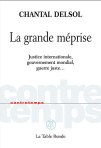 Idée séduisante après les crimes massifs du XXe siècle, la justice internationale ne trouve pas de légitimité théorique, en tout cas au regard de nos propres références. Faire justice, est-ce toujours prioritaire pour restaurer le vivre-ensemble après une catastrophe? Pouvons-nous imposer à tous les peuples la même hiérarchie des malheurs et la même hiérarchie des priorités? Aucune justice ne peut s’exercer sans la reconnaissance. Il faudrait donc, auparavant, convaincre. Peut-on juger de loin et hors contexte? Peut-on faire si bon marché de l’autorité politique, en plaçant directement les citoyens sous une loi mondiale? La loi naturelle, qui préside à la justice internationale, peut-elle s’instaurer en loi positive? Et, dans ce cas, dans quel recoin peut encore se loger l’esprit d’Antigone? La justice internationale ne pourra exister que sous un gouvernement mondial. Elle porte en elle la tare rédhibitoire de l’uniformité et du despotisme. En invoquant Montesquieu, Grotius, Kant, on défendra ici, face aux crimes d’État, la guerre d’ingérence comme décision politique.
Biographie de l’auteur:
Chantal Delsol est professeur de philosophie à l’Université Paris-Est. Auteur d’ouvrages de philosophie, d’essais, de romans, traduits en treize langues. Lauréate du prix Mousquetaire, du prix de l’Académie des sciences morales et politiques et du prix de l’Académie française.
 Olle Bengtsson