Monaden och helheten

Hauser förtydligar hur Leibniz utöver perceptio – det enda i detta sammanhang aktuella begrepp som Renaut behandlar, dock utan att uppehålla sig vid dess helhetliga begreppssammanhang och därmed dess fulla innebörd – ursprungligen också använder begreppen representatio och expressio, och framlyfter, bl.a. ur Monadologin, centrala formleringar av typen “toute substance est comme un monde entier et comme un miroir de Dieu ou bien de tout l’univers, qu’elle exprime chacune à sa façon”, “chaque substance simple a des rapports qui expriment toutes les autres, et…elle est par consequent un miroir vivant perpetuel de l’univers”, och “chaque Monade creée represente tout l’univers”. [Cit. i op.cit. 63, Hausers kursiv.] Här framstår väl spegeln i mindre grad som analogi, och de högst utvecklade monaderna ska naturligtvis förstås som samtidigt speglande och själva medvetet seende det speglade.

Genom formuleringar som dessa, och genom att Leibniz har ett begrepp om helhetens enhet, som väl dock ska vara det som, om än på unika sätt, avspeglas av monaderna, motverkas, tycker man, den rena individualism som Renaut framläser. Med Hausers ord: “die Monaden [können] als Teile (partes totales) des Universums als des einen Ganzen aufgefasst werden…wobei jeder dieser Teile das Ganze repräsentiert und es in sich konzentriert”; “der Repräsentationscharakter jeder Monade qua ‘miroir de Dieu’ [ist] in ontologischer Hinsicht eine infinitesimale Konkretion der einen Ur-Monade Gott”; “jede Monade [ist] prinzipiell – wenn auch in erkenntnistheoretischer Hinsicht in je gewissem Grade verworren – in jedem infinitesimal kleinen Moment Darstellung oder Ausdruck des einen, unendlichen Weltganzen”. [Ibid. 64 f.; Hauser framhåller också hur Leibniz använder repraesentatio i sammanhang med en medeltida teologisk och naturteleologisk uppfattning av de skapade varelserna som återgivande och delaktiga i det gudoma.] Och denna framställning eller detta uttryck sker enligt “[die] erkenntnistheoretisch [fundierte] Beschränkung der geschaffenen Substanzen gemäss ihrer jeweiligen individuellen und perspektivischen Konkretion als perceptio“. [Ibid. 68.]

Det ändligas förhållande till det oändliga, det relativas till det absoluta, förstås av Leibniz i enlighet med den monadernas gradering som följer ur den varierande distinktheten i deras respektive uppfattningar av helheten; alla monaders uppfattning, utom den högsta urmonadens, är underkastade ändlighetens och relativitetens perspektiviska och klarhetsmässiga gränser. Vissa nimmer helheten i högre grad eller s.a.s. bättre än andra, men alla nimmer dock helheten, och i det även de som nimmer den i lägre grad eller sämre dock nimmer den på ett unikt sätt, är även dessa nödvändiga i helheten.

Den centrala visionen blir väl så en vision som i lika hög grad betonar det allmänna och enheten som det enskilda och mångfalden, varvid helhetens status belyses: allmän i förhållande till de underordnade monaderna, men samtidigt i sig, som allmänhet, identisk med den högsta monaden, som, som sådan, ju också förstås är individuell.

I rörelsen mot fördjupad individualitetsuppfattning kvarhålles också delvis, om än i distinkt förnyad, delvis nyplatonsk omformning, den äldre generalistiska traditionen, men den allmänna helhet som de underordnade monaderna speglar är ju också den högsta monadens individualitet. Helheten kunde därför synas uppfattas som allmän blott ur ett relativt perspektiv. Eller: endast den högsta monaden är, just som sådan, med nödvändighet samtidigt individuell och allmän. Hauser framhåller med rätta att den av Josef König framställda tanken att “das metaphysische Individuum zugleich das Allgemeine, und umgekehrt, das das metaphysisch Allgemeine zugleich das Individuum ist, findet seine Erfüllung…erst in dem Begriff Gottes.” [Hauser, 73, not 57.]

Uppfattningen om perceptionens olikhet som utöver inifrånbestämd och i sig sluten individuell utveckling även perspektivisk mångfald och hierarkisk fullkomlighetsgradation präglar också Leibniz’ förståelse av filosofins historia: fastän de skilda systemen ej i samma utsträckning rymmer sanning, utgör de dock en nödvändig perspektivisk komplementaritet.

Det förblir dock i mycket oklart vari de individuella karaktäristika i monadens transcendenta ursprunglighet, skild från den succesion av tillstånd som är blott fenomenell, består. Leibniz tycks växla mellan de två perspektiven. Hausers framställning fördunklas mot slutet därigenom att han delvis förefaller börja sammanblanda frågan om förhållandet mellan de underordnade monadernas fenomenella och egentliga tillstånd med frågan om förhållandet mellan de underordnade monadernas och Guds, den högsta monadens, perspektiv. I viss mening är naturligtvis de underordnade monaderna i sin icke-fenomenella aspekt “absoluta” i det de är ursprungliga delar av i-sig-verkligheten. Men detta innebär inte att deras eget egentliga perspektiv är Guds, utan endast att de i denna aspekt äger ett egentligt och ursprungligt perspektiv och innehåll som är skilt från det fenomenella.

Rätt verkar Hauser dock ha i att Leibniz växlar även mellan den andra frågans två perspektiv, i det hela hans filosofi förutsätter en förmåga att i någon mån skildra verklighetens totalitet också utifrån Guds perspektiv, och att frågan om hur detta kan uppnås och uttryckas förblir outredd. Rätt har han väl även i att Leibniz “nyckelbegrepp”, den preetablerade harmonin, vill förklara hur också monadens fenomenella erfarenhet nödvändigt följer ur dess ursprungliga väsen och position och med dessa givna innehåll. [Ibid. 91-6.]
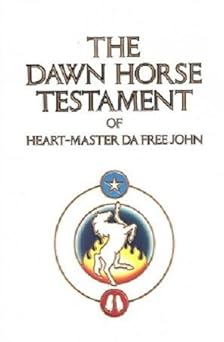
The Dawn Horse Testament of Heart-Master Da Free John

The Dawn Horse Press, 1985

Back Cover:

Master Da Free John says The Dawn Horse Testament is a c onversation he is always having with everyone:

“In making this book I have been bediating everykone, contacting everyone, dealing with psychic forces everywhere, in all time. It is a living conversation with absolutely everyone, personally.”

In his Dawn Horse Testament, Master Da Free John’s revelation of the Way of the Heartfinds ecstatic expression. It is a Blessed Covenant, his personal Testament to each and every person who would hear him. He addresses his listener as “Beloved” and, speaking from the Heart, he announces perhaps the greatest commitment to the Liberation of living beings by any Divinely Inspired personage – “This Is The Final Truth. You Are God, In God, Of God. My Devotee Is The God I Have Come To Serve.”

Heart Master Da’s Dawn Horse Testament is the meeting place of human longing and Divine Grace. It is the universal Upanishad for the Common Era, a Master-Teaching, profound in its meaning, yet simple to comprehend, beautifully articulating in the midst of our modern madness the ancient Love-Yoga of Communion with the Divine Being.

Mankind is indeed fortunate to be the recipient in such generous measure of the Blessings of the Heart-Master of the Dawn Horse, whose Testament Reveals the Exalted Poet, Truth-Realizer, and Love-Master, the Heart-Friend speaking Secrets, his Heart yearning for the meeting, indeed the marriage and final reconciliation, of human longing and Divine Grace.

Within the pages of this mighty book the reader will surely find one of the greatest and most beautifully written scriptural revelations of any age or faith. In exstasy Heart Master Da spoke his Dawn H orse Message to gatherings of devotees, and in ecstasy he wrote The Dawn Horse Testament, the “Eternal Conversation” through which he continues to speak to every one.

The Dawn Horse Testament abounds with the Mysteries of the Heart, which, previous to the Incarnation of Master Da Free John, have never been fully Revealed on Earth. There is an essential Wisdom in this book that will be lauded for centuries to come, or as long as th e Fire of Truth remains burning in this world. Indeed, in spite of our troubled times, The Dawn Horse Testament and Master Da Free John, who created it, are that Eternal Fire, Burning Bright.

“This Testament is my Intention to Awaken the Transcendental Self of every being to the Real Divine Condition. To read and understand this Testament is to be released from the egoic vision. Let it be so.” – Da Free John

Blurb by Ken Wilber:

The Dawn Horse Testament is the most ecstatic, most profound, most complete, most radical, and most comprehensive single spiritual text ever to be penned and confessed by the Human-Transcendental Spirit.”

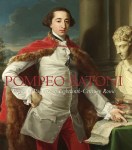
Edgar Peter Bowron & Peter Bjorn Kerber: Pompeo Batoni

Prince of Painters in Eighteenth-Century Rome

Yale University Press, 2007     Amazon.com

Book Description:

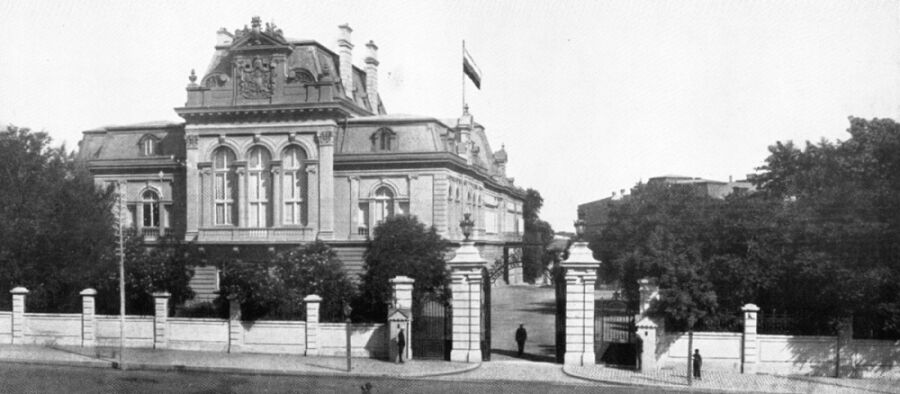
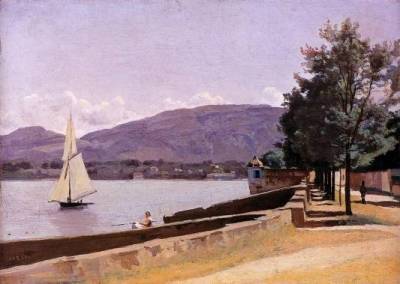
Pompeo Batoni (1708-1787) was the most celebrated painter in Rome in his day. For nearly half a century, he recorded the visits of international travellers on the Grand Tour, and these portraits remain among the most memorable artistic accomplishments of the period. His history, religious, and mythological paintings were also highly prized by great patrons and collectors in Britain and on the Continent. This book, published in celebration of the tercentenary of Batoni’s birth, offers a vivid appreciation of his work. More than 150 full-colour illustrations represent the finest examples of his paintings from public and private collections in Europe and the United States. Some of these works are newly discovered and some have never before been on public display. A series of illuminating essays explores Batoni’s art, his various patrons, his working methods and techniques, his final years, and his historiography and critical reception.
About the Authors:
Edgar Peters Bowron is Audrey Jones Beck Curator of European Art at the Museum of Fine Arts, Houston, and a specialist in eighteenth-century Italian art.
Peter Bjorn Kerber completed his doctoral thesis on Pompeo Batoni at the University of Munich.

Pantheism, Postmodernism, Pop, 3

Pantheism, Postmodernism, Pop, 1

Pantheism, Postmodernism, Pop, 2

Making a case for the vulgarity that has already triumphed (and possibly simply because it has already triumphed, considering it inevitable), Pattison endeavours to see its strenghts: “Vulgar pantheism is abysmally indiscriminate – or said another way, it is infinitely tolerant. The vulgar pantheist finds room in his universe for the atheist and the witchdoctor as well as the Pope and the rabbi. Professing no one religion, he accepts and rejects them all.” [The Triumph of Vulgarity, 27.]

This unqualified pluralism and tolerance is part of what Babbitt analysed as the “sham spirituality” of romanticism and modernity, and what orthodox Christians criticized as the sentimental watering down of the truths of their religion by liberal theology. [There is no implication here that I accept a literalist position of orthodox Christianity.] It is a phenomenon which through the subtle reinterpretations of countless leading thinkers, novelists and political ideologists gradually guided Western culture away from the objective dualisms of classicism and Christianity. It was supported by progressivist adaptations of ancient wisdom in the form of theosophy and of monistic vedanta in the streamlined form of the pop-gurus of the sixties, issuing today in the combined individualism and metaphysical impersonalism of  New Age spirituality, to which I will return shortly. It can hardly be doubted that its love and its oneness were often as vague and as thin as – empty space.

To use Lasserre’s words about pantheism, postmodernism displayed an “insouciance supérieure de s’accorder avec soi-même, de s’astreindre à la conséquence, incapacité d’opter entre deux contradictoires, bien plus, complaisance satisfaite à prêter également à l’un et à l’autre son sentiment et son jugement, délices de penser dans une région si indéterminée et si fluide qu’il ne s’y saurait, à vrai dire, rencontrer de contradictions.” There was in postmodernism no longer any cooperative quest for the infinite, yet once again, shelter from the destruction threatened by the self-aggrandizement of desire was sought in a regressive state of alternating narcissism and self-extinction. And the experience of the irreducible irrationality and difference, of the resistance of the opaque, intractable elements of reality, and the resulting acceptance of ultimate irrationality, now had as a consequence that philosophy itself was given up. Like romanticism, postmodernism was “le plus profond dissolvant intellectuel. [Il donnait] une mystérieuse valeur métaphysique à toutes les libertés, à tous les relâchements, au bout desquels la pensée trouve sa propre décomposition.” [See the note about Lasserre’s book and page numbers above.] Its subjectless subjectivity no longer aspired to or claimed to be objective. The common world dissolved, there were many conflicting realities with no shared, underlying deep structure. In this multiverse, all relations were reduced to power.

Postmodernism’s subjectivism without a subject emerged in the wake of avant-garde modernist literature and art, which, ever since Proust and Joyce, under the influence of changing perceptions of space and time, dissolved the “bourgeois” subject and its character development, but nonetheless  retained the subject in new distorted forms. In postmodernism, as for Heraclitus, men are really “flames” and things are really “processes”, there are “no transcendent values”, “all ideas are equally valid”; “the truth is infinite and comprehensive, not narrow and exclusive. The best religion is eclecticism taken to its limit.” Pattison’s description of pantheism holds in almost every detail for postmodernism. Postmodernism was indeed

“a garbage-pail philosophy, indiscriminately mixing scraps of everything. Fine distinctions between right and wrong, high and low, true and false, the worthy and unworthy, disappear in [postmodernism’s] tolerant and eclectic one that refuses to scorn any particular of the many. The [postmodernist] may be fascinated or bemused by the castes, religions, and ethics of a various world, but he denies to each in turn transcendent validity. There is no transcendent validity. There is only the swarming many…[Postmodernism] is necessarily vulgar because it rejects the transcendence from which refinement springs, because it delights in the noisy confusion of life, and because it sacrifices discrimination to eclecticism…it professes to include all philosophies, religions, and ideologies…[Postmodernism] naturally encompasses all the disparate energies loosed by the Romantic revolution. It embraces the mass…makes room for all paradoxical contraries, and reveres the energy of process.” [Op.cit., 23-5.]

Postmodernism, in short, was a further secularized pantheism which no longer endeavoured to elevate or refine itself to monism, and it was evidence of the extent of the failure of such attempts under the circumstances of the modern world.

That postmodernism has produced extreme subjectivism without a subject is only seemingly paradoxical. In the contemporary fragmented mass-culture, the avant-garde of modernist literature and art which systematically sought to dissolve everything “bourgeois” was gradually reduced to nonsense as postmodernism programmatically removed the final barrier against the trivial and the popular. Yet many intellectuals tried hard to find ways to defend it all as the adequate contemporary form of cultural criticism.

Many rock musicians have drawn inspiration directly from Blake, the romantic arch-equivocator, and some have made recordings of his poems. The British trajectory from the culture of classicism and Christianity in its nineteenth-century version to the anti-essentialist, romantic kitsch satanism of today, from, say, Matthew Arnold, who upheld some objective values of classicism and Christianity in a Victorianized form based on a general liberal understanding of religion, over his pupil Walter Pater and Pater’s pupil Oscar Wilde, to Wilde’s pupil David Bowie, is clear and unambiguous. David Buckley’s Strange Fascination. David Bowie: The Definitive Story (1999) was in many respects a representative, 600-page mise au point on the state Western culture as shaped by postmodernism and radical modernism. Pattison, and, for instance, the British philosopher Anthony O’Hear, express the increasingly common insight that popular culture is today the dominant culture – in America, it has even been considered the only culture. More interestingly, Pattison and O’Hear both claim that it is today also the most significant and original culture. [See O’Hear, After Progress: Finding the Old Way Forward (1999).] By the analysis of the pantheistic revolution, it is possible to see also much of the dominant rational bourgeois culture as not only dialectically related to the romantic counterculture, but as itself largely defined by romanticism, not least in the optimistic shallowness of the understanding of man and his motives that has shaped classical liberal economic theory from Adam Smith to this day.

Almost all leading intellectuals, novelists, and artists are now themselves shaped by what was once the isolated subculture, and share a single imaginative and emotional universe. The trend in the postmodern and post-postmodern academia of yesterday and today (which has reached its fullest development in the United States, although it has there also produced a sometimes rather consistent reaction) to extol what is held to be some original and primitive pantheism and compare it unfavourably to the dualistic, patriarcal, exploiting, hierarchical, white, repressive, unequal, logocentric worldview of the Greeks, the Bible, and modern rationalism, can be analysed as a typical product of that exclusively modern phenomenon that is romantic pantheism. Deconstruction  seems to have been at least partly driven by the yearning for the primitive sensual unity of romanticism, and this and other specifically philosophical formulations of poststructuralism and postmodernism in France, a mere continuation of the French romanticism as analysed by Lasserre, have been systematically and precisely traced to German sources by Luc Ferry and Alain Renaut, although they of course do not share Lasserre’s deeper analysis from a more strictly “classicist” perspective but are part of much of the underlying modern dynamic that he criticizes. [La pensée ’68. Essai sur l’anti-humanisme contemporain (1986).]

When seen as developed from its logical and historical roots in romantic pantheism, it is clear that all this is a worldview, precisely in its fragmented, kaleidoscopically changing, and inconsistent quality. For these characteristics are all ultimately “meaningful”, no matter how unconsciously they are  manifested, as the actualization of what from the positions of classical reason can be seen to be the timeless potentiality of dissolution in chaos and of sophistry’s termination of thought. This potentiality could only be actualized in a dominant movement under the unique conditions provided by modern romantic pantheism.

Even if we can seemingly change worldviews every day – as the Protean personalities of postmodern culture changes identities, clothes, sex, and lifestyles – this very state of affairs can be shown logically and historically to be an expression or a consequence of the worldview of romanticized pantheism taken to the extreme of sophistic self-dissolution. This is not only a worldview; as Pattison insists, it is increasingly the worldview of contemporary liberal democracy. This worldview stands opposed in principle not only to original classicism, Christianity, and, mutatis mutandis, the other major cultural traditions of humanity properly understood, but also to an alternative understanding of modernity itself that affirms the partial truths of rationalism and romanticism as congruent with a discerning, creative form of traditionalism.

Leszek Kołakowski: Modernity on Endless Trial

University of Chicago Press, 1997 (1990)     Amazon.com

Back Cover:

Leszek Kolakowski delves into some of the most intellectually vigorous questions of our time in this remarkable collection of essays garnished with his characteristic wit. His writings cover nature and the limits of modernity, Christianity in the modern world, politics and ideology, and the question of the claim to knowledge of the human science. Taken together, these essays represent an overview of the problems and dilemmas facing modern reason and modern man.
“Exemplary…It should be celebrated.”  Arthur C. Danto, New York Times Book Review
“This book…express[es] Kolakowski’s thought on God, man, reason, history, moral truth and original sin, prompted by observation of the dramatic struggle among Christianity, the Enlightenment and modern totalitarianism. It is a wonderful collection of topics.”  Thomas Nagel, Times Literary Supplement
“No better antidote to bumper-sticker thinking exists than this collection of 24 ‘appeals for moderation in consistency,’ and never has such an antidote been needed more than it is now.”  Joseph Coates, Chicago Tribune
“Whether learned or humorous, these essays offer gems in prose of diamond hardness, precision, and brilliance.”  Thomas D’Evelyn, The Christian Science Monitor
A “Notable Books of the Year 1991” selection, New York Times Book Review; a “Noted with Pleasure” selection, New York Times Book Review; a “Summer Reading 1991” selection, New York Times Book Review; a “Books of the Year” selection, The Times.
About the Author:
JOB’s Comment:
Some strange formulations on the back cover, of a kind that one doesn’t expect from Chicago. The human science? And doesn’t “vigorous questions” refer rather to the manner in which questions are asked – in this case, the way Kołakowski delves into them – than the questions themselves? But be that as it may. Kołakowski was a vastly influential Polish philosopher, not least in the late 1970s and the 1980s due to his magisterial Main Currents of Marxism in three volumes. But having moved beyond Marxism with that criticism, his later work is even more interesting and important.

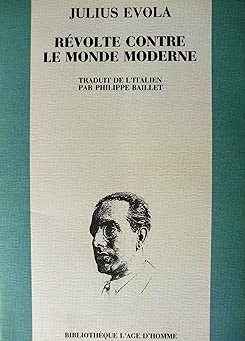
Julius Evola: Révolte contre le monde moderne

Bibliothèque L’Age d’Homme, 1991

Amazon.fr

Résumé de l’éditeur:

Initialement paru en 1934, traduit en allemand un an après, Révolte contre le monde moderne est considéré comme l’ouvrage le plus important de Julius Evola (1898-1974). Ce livre prouve que déjá à cette époque, les bases d’une révolte globale entre la civilisation contemporaine avaient été posées, révolte en comparaison de laquelle la “contestation” qui s’est exprimée à la fin des années soixante apparaît chaotique et invertébrée. Au-delà des derniers aspects du monde moderne – hypertrophie de la technique, société de consommation, conditionnement de masse, etc. -, ce livre remonte aux causes, analyse les processus qui, depuis des siècles, ont exercé une action destructrice sur toute valeur authentique et toute forme supérieure d’organisation de l’existence, ont soustrait le monde des hommes aux influences spirituelles pour le livrer à l’individualisme, au materialisme, à l’irréalisme et à sa rhétorique spectrale.

La première partie du livre, “Le monde de la Tradition”, définit, à travers une étude comparée embrassant les civilisations les plus variées, une doctrine des catégories fondamentales du monde raditionnel: la royauté sacrée, la paix et la justice, l’Etat et l’Empire, le rite, la contemplation et l’action, l’initiation et le sacre, la guerre, les “jeux”, le statut de l’homme et de la femme, etc. Ainsi sont indiquées les voies qui conduisaient parfois au-delà de la condition humaine, ou bienqui lui assuraient une stabilité inébranlable. A l’inverse, l’homme moderne apparaît comme un cas aberrant d’être non plus relié aux forces d’en haut et emporté par la “démonie” du collectif vers de nouvelles formes de barbarie.

La deuxième partie du livre, “Genèse et visage du monde moderne”, développe une “métaphysique de l’histoire”, à travers l’exposition de la doctrine traditionelle des cycles, des considérations sur le symbolisme du pôle, l’habitat hyperboréen originel, la “Lumière du Nord” et la “Lumière du Sud”, le matriarcat, etc. Elle se poursuit par l’analy se des cycles de la décadence, depuis les grandes cultures préchrétiennes jusqu’à la Russie et l’Amérique contemporaines, en passant par le monde gréco-romain et le Moyen Age.

En 1935, le poète Gottfried Benn salua ce livre comme “une oeuvre dont l’importance exceptionelle apparaîtra clairement dans les prochanes années” et écrivit qu’en la lisant “on regardera l’Europe d’une autre manière”.

Cette nouvelle traduction française intégrale et précédée d’une introduction du traducteur consacrée aux sources d’Evola (notamment le mythologue J. J. Bachofen) et suivie d’une bibliographie française de Julius Evola, établie par Alain de Benoist.