Totalitär demokrati och militaristisk nationalism

Rousseaus nya politiska generalism tar sig motsägelsefulla uttryck i hans konstitutionella idéer och hans uppfattning av lagar och lagstiftning. Understrykas bör kanske främst att uppfattningen om den genom majoritetens direktdemokratiska vilja utrönade allmänviljan som uttryck för folkets mänskliga kollektivitet som suverän och som bärare av naturens godhet och moral leder Rousseau att urgera dess restlösa förverkligande i såväl lagstiftning som politiskt verkställande i och genom staten. Ingen appell bortom statens totala politiska auktoritet är därmed längre möjlig, ett väsentligt resultat av den klassiska differentieringsprocessen är upphävt, absolutismen är på nytt sätt teoretiskt legitimerad samtidigt som den också fått en ny form.

Vad vi redan sett Lindbom beskriva, vad J. P. Talmon kallade den ”totalitära demokratin” är född – eller åtminstone dess teori. Ryn sammanfattar:

“Nothing must stop the people from making whatever changes it wants at any time. Significantly, Rousseau is assuming that it would never occur to the citizens of the new state to protect the general will against the immoral will of all by means of constitutional rules. Apparently the sovereign needs and wants complete freedom of movement. Even an attempt to restrain illegitimate political wishes would dangerously circumscribe the ability of the general will to manifest itself.” [Democracy and the Ethical Life, 130 f.]

All rätt och moral springer för Rousseau ur den ursprungliga godheten och självkärleken, och ur denna springer i sin tur den naturliga sympatin för andra. Men i det civila och politiska samhällstillstånd som genom Rousseaus politiska arrangemang inte träffas av hans civilisationsnegativism och som mobiliserar också förnuftets resurser är moralen också liktydig med den enskilda viljans överensstämmelse med allmänviljan, varför, som vi sett, en ny dramatisk form av vad vi tidigare kallat generalism uppstår i Rousseaus politiska filosofi: det enskilda måste helt underordnas den av staten burna “verkliga” demokratiska folkviljans allmänhet.

Lindbom och Ryn visar hur denna nya generalism helt tar överhanden över Rousseaus individualism. I Émile finner vi den ena extremen: den idylliska skildringen av det egoistiska, individualistiska självförverkligandet. I Du contrat social finner vi den andra: “den samhälleliga kollektivitetens diktatur över den enskilde, ehuru kamouflerad genom begreppet ‘allmänviljan'”. [Lindbom, Mellan himmel och jord (1970), 71, not 1.] Men Rousseau säger i ett brev t.o.m. uttryckligen att Du contrat social skall betraktas som ett slags appendix till Émile och att de båda verken tillsammans utgör en enhetlig helhet. [Citerat i Ryn, 97.] Samhällskontraktet utgår från och bygger på en individualism, men leder oundvikligen till en kollektivism. Ryn skriver:

“While Rousseau’s egalitarian individualism leads to the endorsement of universal suffrage, it does not involve a recognition of the uniqueness of the person and of that uniqueness as an argument for limiting state control of the citizens. Universal suffrage is for Rousseau primarily a means of assuring maximum cohesion in the body politic. He is not concerned with giving the individual considerable freedom to decide his own role in society. That role is to be defined by the will of the sovereign, from which the individual is to receive ‘his life and his being’. The citizens should be ‘early accustomed to regard their individuality only in its relation to the body of the State, and to be aware, so to speak, of their own existence merely as a part of that of the State’.” [Ibid. 138.]

Vill vi här se likheter med äldre uppfattningar av naturrätt, helhet och organicitet bör vi påminna oss att vad Rousseau promulgerar är en folkets, den mytiska allmänviljans och den “organiska” publika personens, den totala statens generalism, som hämtar sin moraliska kraft ur en immanent, som alltigenom god förstådd mänsklig natur och egoism, och som utesluter all transcendent moralisk auktoritet. Rousseau delar inte upplysningens civilisationsoptimism, men han delar dess uppfattning att människan nu är fri från i skapelsen nedlagda ordningsprinciper och hierarkier, fri från en bindande, transcendent moralisk ordning, fri från ansvar inför en högre makt, fri att skapa en egen, autonom samhällsordning. Det är inte heller bara enligt Rousseau som denna nya ordning bör präglas av jämlikhet. Och när det traditionella samhällets generella hierarkiska rollidentiteter faller måste människan söka sin identitet annorstädes, definiera sig själv på egen hand – en utveckling som börjat redan under renässansen, men som nu blir allas, d.v.s. även tredje ståndets, angelägenhet. Moderniteten uppvisar här både en ny möjlighet och ett nytt hinder för den djupare individualitetsförståelsen.

Den “organiska” statslära som Rousseau utvecklade med hjälp av föreställningen om allmänviljan präglades av samma moraliska tvetydighet som denna, och den blev inte mindre när Rousseau i opposition mot upplysningens kosmopolitism plötsligt partikularistiskt ställde folk och nationer mot varandra utan överordnad förenande allmänhet. Här blev allmänviljans immanenta, relativa partikularitet uppenbar: vi har redan sett att den inte var transcendent – nu ser vi att den är inte ens var transnationell. Det civila tillståndet hade hos Rousseau tillvaratagit naturtillståndets förmenta godhet, men mellan staterna/nationerna/folken råder hos Rousseau, visade det sig, ett naturtillstånd som mer påminner om det hobbeskas ondska. Endast inom respektive stat är allmänviljan allmän – i relation till andra stater blir den just det Rousseau inom respektive stat bekämpar: individuellt partikulär.

Vad som i verkligheten skett är att den individuella människans naturliga och privata frihet upphört inom respektive stat och istället överförts på de olika staterna som publika personer. [Ibid. 142.] I Du contrat social heter det uttryckligen att även stater som är konstruerade enligt Rousseaus egen ideala modell har en expansiv tendens och därmed ständigt tenderar att hamna i konflikt med varandra, och att de svagare därvid alltid riskerar att uppslukas av de starkare. Frihet och jämlikhet kan därför omöjligen finnas också mellan staterna. På åtskilliga ställen i Rousseaus skrifter finner man en rent militaristisk nationalism. Den frugalitet som präglar Rousseaus uppfattning av det naturliga är i själva verket direkt kopplad också till de spartanska militära dygderna. I det historiska sammanhanget av modernitetens aktuella historiska utveckling är detta verkligen inte lyckobådande.
Mark Sedgwick on Sylvain Lévi’s Criticism of Guénon’s Thesis

In his book Against the Modern World: Traditionalism and the Secret Intellectual History of the Twentieth Century (2004), Mark Sedgwick lists Sylvain Lévi’s three main reasons for rejecting the Sorbonne “thesis form” of René Guénon’s Introduction générale à l’étude des doctrines hindoues. Sedgwick cites Lévi’s report to Dean Ferdinand Brunot as quoted in Marie-France James, Ésoterisme et Christianisme: Autour de René Guénon (1981). The first reason (I will comment on the other reasons later) is that the thesis “ma[de] light of history and historical criticism”.

Sedgwick remarks that this was “a criticism of Guénon’s methodology that was in many ways justified”, and that Guénon “made no pretense of following the standard scholarly methods of Indology: for reasons examined later, his approach was theological rather than anthropological or sociological. For Guénon, Hinduism was a repository of spiritual truth, not the body of beliefs and practices modified over time that late nineteenth-century Western scholarship recognized.” [Sedgwick, 22-3; James, 194.]

Having only read the book published in 1921, I don’t know what the difference is between it and the thesis form. Sedgwick does not – as far as I can see right now – say anything about this. It is hard to think there could be no difference. The book does not have the form of a doctoral thesis at all. But if there is no difference, or if there is no difference with regard to what Lévi criticized and Sedgwick discusses, Sedgwick’s formulations, while certainly true, are at the same time a little strange in view of the nature of the thesis.

For reasons discussed in the thesis/book, Guénon would have objected to the description of his approach as “theological”. He would not even have accepted that his approach is a “methodology” at all: not only did he not make any “pretense of following the standard scholarly methods of Indology” – he did not follow any standard modern scholarly methods. And something needs to be said about the relation between “history and historical criticism” on the one hand and an anthropological or sociological approach. But these are not the main reasons why I find Sedgwick’s formulations somewhat curious.

The reader unfamiliar with Guénon’s work would, I think, be inclined to take Sedgwick to mean that Lévi’s criticism, the criticism from the position of historical criticism, is justified “in many ways” but not in every way since Guénon does not only “make light of” historical criticism but also to some extent, alongside the theological approach, himself correctly applies or practices historical criticism.

The problem for such a reader is that this interpretation is impossible in light of Sedgwick’s other formulation that Guénon “made no pretense of following the standard scholarly methods of Indology”. If, or since, this is so, i.e. since there is in Guénon’s book no historical criticism but only a “theological” approach, Sedgwick must mean something else.

The reader might then think that what Sedgwick means to say is that criticism from the point of view of historical criticism is not in every way justified, that it is in some ways acceptable to make light of historical criticism, that a “theological” approach is also in some ways valid, and that Lévi is wrong not to allow this. Lévi’s criticism is thus justified “in many ways” but not in every way.

Unfortunately, Sedgwick does not make clear that this is what he means, and, left to itself, there is nothing in the formulation except the barest semantic possibility to indicate that this could indeed be what he means. It is not a natural interpretation.

If, quite regardless of the legitimacy of other approaches, it is not acceptable to make light of historical criticism, Lévi’s criticism is justified in every possible way. Probably there were also other formulations in Lévi’s report, which Sedgwick and perhaps James do not cite. But taken alone, even Lévi’s formulation that Guénon’s thesis just “makes light of” historical criticism is a little surprising.

For the thesis, if the same as the book or the same as the book in the respects here discussed, cannot be said to be one that simply applies a “theological” “methodology” and that also, alongside it, “makes light of” historical criticism. The thesis is a Guénonian traditionalist exposition of Hinduism related to a continuous, extensive polemic against the non-traditionalist approach of modern scholarly methodologies, primarily historical criticism. There is almost as much criticism of historical criticism as traditionalist exposition. The criticism, the “making light” of historical criticism, is a basic theme. Throughout the book, Guénon seeks to show that, how, and why the historical critics have failed to understand the “spiritual truth” of which Hinduism is “a repository”. Indeed, several separate chapters are devoted to this subject alone.

Thus, it is not just the case that Lévi’s criticism is justified in every possible way if making light of historical criticism is inadmissible. It is also the case that the statement that the thesis makes light of historical criticism is justified in every possible way as a description of the thesis. There is no way in which it is not justified to say this about the thesis. The statement that it is “in many ways” justified to say by way of description that it “makes light of” historical criticism while adopting instead a “theological” approach would be much too weak, absurdly weak. Lévy must have rejected the thesis as the totally uncompromising, elaborate attack on historical criticism that in reality it is.

Of course, one cannot doubt that Sedgwick must be thoroughly familiar with the thesis, the foundational work in the whole intellectual current which his book is about. It is a little difficult to understand how he could describe it in the way I have discussed. But this is a minor criticism. After all, his book is not a philosophical or theological study of traditionalism, nor does the lack of philosophical and theological and other analysis qualify it as a proper work in intellectual history. Rather, it is an ambitious piece of a kind of journalism (as is signalled already in the subtitle’s sensationalist use of the word “secret” – at the most, the intellectual history he writes about could be said to be comparatively “unknown”); but in that genre, it sometimes does a good job.

The real, substantial questions that must be asked here are related to what, if Sedgwick had meant it, he would have made much clearer. To what extent – in how many ways and in which ways – is the justified descriptive statement about Guénon’s thesis also justified as criticism, and to what extent it is not? And these are important questions indeed, which I hope to be able to return to shortly.

Uppfostringsprogram, personlighetstyp, mänsklig natur

Det dröjer innan Rousseaus idéer på allvar slår igenom som dominerande pedagogiskt ideal i något institutionaliserat utbildningsväsende. Den tyska humanitetskultur som nu börjar utvecklas vill förena subjektiviteten och individualiteten med en förnyad klassicism och en ny idealism. Ändå är det avgörande att förstå hur väsentliga moment av Rousseaus verklighetsuppfattning, främst hans “naturindividualism” men också den frigörelsetematik som ju är å det närmaste förbunden med naturindividualismen, återfinns i större eller mindre utsträckning, mer eller mindre tydligt förändrande de övriga momentens innebörd, även i den humanism, klassicism och idealism som efterträder Sturm und Drang-rörelsen.

Viktigt är dock här också att den enligt Rousseaus program fritt uppfostrade och utvecklade individens instinkt på grund av den förment resulterande styrkan och godheten anses spontant bringas i överensstämmelse med plikten – i vilken senare vi inte torde ha att göra blott med allmänviljans tillfälliga konkreta uttryck utan också med själva grundprinciperna för samhällskontraktet och dess resultat, exempelvis vad Lindbom kallar jämlikhetens arketyp. Uppfostringsprogrammet tillhandahåller på intet sätt någon lösning av den samhällsfördragets och allmänviljans ekvation vars svårigheter Lindbom och Ryn – i en lång tradition av Rousseaukritik – framlyfter. Men det ingår som en väsentlig faktor i den. Hur Rousseau tänker sig det individuellas och det allmännas, det privatas och det offentligas konvergens måste förstås i termer av den personlighetstyp i modern mening som antas bli resultatet av detta program.

Detta tema, den rousseauanska personlighetstypens ideal, skall jag strax återkomma till i samband med Rousseaus självbiografiska skrifter, i vilka dock åter skönjes paradoxen att personlighetstypen bara tycks kunna förverkligas som resultatet av de reformer den själv endast som redan förverkligad kan initiera. Även Émile och de självbiografiska verken bekräftar Lindboms och Ryns analys såtillvida som denna personlighetstyp explicit förklaras behöva minimera sin individualitet: samtidigt med uttrycken för Rousseaus egen individualism och hans obestridliga, faktiska bidrag till individualitetsförståelsen i dessa skrifter, är det en ny allmän mänsklig natur som lanseras, en Rousseaus nya generalism.

I vissa avseenden vidareutvecklar, som Gillespie framhåller, Rousseau den nya läran om människans frihet gentemot naturen. Tidigare kunde endast Gud initiera nya kausalkedjor i den yttre verkligheten – nu kan även människan göra det. Rousseau förnekar överhuvud den materialistisk-mekaniska människosynen, och tillskriver människan, fastän ursprungligen god, förmåga till självförbättring och perfektion. Men denna frihet sammankopplas med läran om allmänviljan. Och när denna av Rousseau ofta identifieras med folkkollektivitetens tillfälliga, genom majoritetsval fastställda känslomässiga uttryck för “godhet”, innebär det att ingen annan lag finns för den “mänskliga” friheten än den på godtyckligt sätt manifesterade allmänviljans.

Här är åter den tappade voluntaristiska tråden från Descartes upptagen. Gillespie hävdar som vi sett att Occams nya absolut fria och potentiellt nyckfulla Gudsvilja via Descartes åtminstone potentiellt överförs till “människan” – genom insikten om att Gud icke bedrar och därmed ger människan “fria händer” i förhållande till naturen. Gillespie uppehåller sig inte vid hur hos Rousseau denna Guds vilja blivit kollektiviserad i den i folkdjupet dolda känslomässiga allmänviljan. Men han framhåller själva viljans och frihetens irrationella natur och potentiella nyckfullhet även i den nya form den erhåller hos Rousseau: de drag som den cartesianska rationalismen i sin grundintention ville övervinna men som nu åter tydligt framträder. [Nihilism Before Nietzsche, 72, 86, 99 f., 104 f.; utförligare än Gillespie om de idéhistoriska viljelinjerna bakåt från just Rousseau är Patrick Riley, The General Will Before Rousseau: The Transformation of the Divine into the Civic (1986).]

Vi ser här inte bara, på nytt sätt, hur den klassicistiska objektivismen har vikit för romantiken, och hur rationalismen har övergått i sentimentalism, utan också hur den teistiska subjektivistiska voluntarismen (hur vi nu teologiskt skall bedöma den) trätt tillbaka till förmån för mänskligt-kollektivistisk subjektivistisk voluntarism. Tvivelsutan var friheten ett av de temata i Rousseaus tänkande som mest uppmärksammades av samtid och eftervärld. Lika uppenbart är emellertid att hans frihetsuppfattning på grund av det oskiljaktiga sammanhanget med hans övriga ståndpunkter blev problematisk. Och en irrationell och ur “naturgodheten” sprungen rent mänsklig spontanitet är för övrigt naturligtvis, som moralens garant, oacceptabel även ur den biblisk-teistiska, teologiska tolknings perspektiv som i vissa avseenden även Lindbom och Gillespie måste finna lika problematiskt. Vi befinner oss här redan långt inne i vad Lindbom kallar Människorikets nya overklighet, den nya drömvärlden av sagor om den psykofysiska Människan.

Ferdinando Sardella: Modern Hindu Personalism

The History, Life, and Thought of Bhaktisiddhanta Sarasvati

Oxford University Press, December 2012 (estimated)     Amazon.com

From the publisher’s website:

– This is the first monograph about the life and thought of a key religious figure of modern Hinduism

– It questions the perception of an alleged nondualistic (monistic) essence within modern Hinduism and presents an alternative view

– It contributes to a global history of bhakti movements in the modern period

– It presents an important aspect of the modern development of Vaishnavism in Bengal based on little known or previously unknown primary sources in Bengali and other languages

– It provides a comprehensive history of the roots in Bengal of the Hare Krishna movement

– It fills a gap in the history of the interactions between India and the West during the colonial period with particular reference to Britain and Germany

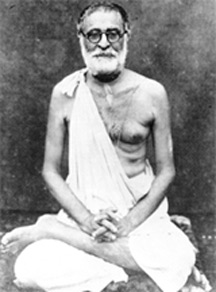
Modern Hindu Personalism explores the life and works of Bhaktisiddhanta Sarasvati (1874-1937), a Vaishnava guru of the Chaitanya school of Bengal. Ferdinando Sardella examines Bhaktisiddhanta’s background, motivation and thought, especially as it relates to his forging of a modern traditionalist institution for the successful revival of Chaitanya Vaishnava bhakti. Originally known as the Gaudiya Math, that institution not only established centers in both London (1933) and Berlin (1934), but also has been indirectly responsible for the development of a number of contemporary global offshoots, including the International Society for Krishna Consciousness (Hare Krishna movement). Sardella provides the historical background as well as the contemporary context of the India in which Bhaktisiddhanta lived and functioned, in the process shedding light on such topics as colonial culture and sensibilities, the emergence of an educated middle-class, the rise of the Bengal Renaissance, and the challenge posed by Protestant missionaries. Bhaktisiddhanta’s childhood, education and major influences are examined, as well as his involvement with Chaitanya Vaishnavism and the practice of bhakti. Sardella depicts Bhaktisiddhanta’s attempt to propagate Chaitanya Vaishnavism internationally by sending disciples to London and Berlin, and offers a detailed description of their encounters with Imperial Britain and Nazi Germany. He goes on to consider Bhaktisiddhanta’s philosophical perspective on religion and society as well as on Chaitanya Vaishnavism, exploring the interaction between philosophical and social concerns and showing how they formed the basis for the restructuring of his movement in terms of bhakti. Sardella places Bhaktisiddhanta’s life and work within a taxonomy of modern Hinduism and compares the significance of his work to the contributions of other major figures such as Swami Vivekananda. Finally, Bhaktisiddhanta’s work is linked to the development of a worldwide movement that today involves thousands of American and European practitioners, many of whom have become respected representatives of Chaitanya bhakti in India itself.

Author Information:

Ferdinando Sardella is a researcher and the Director for the Forum for South Asia Studies for the Humanities and Social Sciences at Uppsala University. He is a fellow at the Oxford Centre for Hindu Studies. In 2010 he received the Donner Institute Prize for outstanding research in the field of Religious Studies at the Åbo Akademi University in Finland.

Idealism and the Renewal of Humanistic Philosophy, 5

Idealism and the Renewal of Humanistic Philosophy, 1

Idealism and the Renewal of Humanistic Philosophy, 2

Idealism and the Renewal of Humanistic Philosophy, 3

Idealism and the Renewal of Humanistic Philosophy, 4

Bradley’s account of the relational stages through which experience develops is problematic in some respects – and I will return to this shortly – but it does seek to describe the philosophical approximation to the absolute through the increasing grasp of the connectedness of things, their constitution through their relations to each other, and the vision of contradictions as reconciled in the absolute.

Bradley also outlines modes of experience as distinguished by content, independent of each other and neither hierarchically related nor successive. Collingwood gave a more systematic account of these modes, although partly under the influence of Croce he retained the Hegelian view of succession. While Croce’s absolute historicism, taken over by Collingwood, is problematic, Croce had a clearer understanding of the precise role of philosophy in relation to the modes. It is true that the modes are not wholly autonomous or independent of each other.

Like Green, Caird, and Bosanquet, Collingwood is also right that philosophy can to some extent and in a certain sense throw its own light on the modes. In this sense he retains idealism’s general claims on behalf of philosophy which had been challenged since the mid-nineteenth century and were again raised in a different mode by phenomenology, existentialism, hermeneutics. But this means that it is not clear that, as some of these thinkers hold, the mind can know itself only through the modes, or that the absolute is merely the modes taken together. This would still be the familiar consequence of philosophy’s resignation or surrender. Clearly philosophy does not simply supplant the modes, but neither is it wholly reducible to the function of their cartographer and intrinsic explicator.

Oakeshott again insists that the modes must be autonomous. The presuppositions and methods, or the “reason” appropriate to one of them, cannot be applied to any of the others. But although he rejects the interference of philosophy in the operations of the modes, in his early work he also insists on the independent nature of the distinct perspective of philosophy, which preserves the wholeness of the flow of experience in the course of its advance in reflection on the mutually independent modes. But since he defines rationalism as the belief in one uniform kind of independently valid reason which is externally applied to or imposed on modes which because of its externality it can never adequately know, and which thus, for the purpose of reorganization, overrides their own postulates and rationalities, it is no mystery that Oakeshott, who from the beginning rejected the absolute as “beyond conception and outside of the world of experience”, later tended to think that this independence of philosophy and its higher or larger perspective vis-à-vis the modes in itself implied a return of rationalism, and that after all it had to lead to the imposition not of the rationality of one mode upon another but of that of philosophy upon all of them.

The reason why I think Oakeshott was wrong in moving in this direction is the problem with the understanding, which motivated it, of the distinct perspective of philosophy and of the absolute, and not least of the nature of the reason which is specific to philosophy. Like Collingwood, Oakeshott relinquished too much of his basic idealist inspirations. It is time to reconnect to them.

Along with the discovery of the experiential whole there came in early idealism the discovery of the distinct speculative reason of philosophy, Vernunft, the reason which, as was gradually understood, discerns and describes the conditional modes of experience and is critically aware of the nature of the other kind of reason, Verstand, which produces abstract classificatory fictions and indeed constitutes some of the modal discourses (Vernunft can also have different meanings in idealism, meanings which, however, do not invalidate this one and are also distinct from Verstand). Only through this distinct, philosophical reason is it possible to perceive the modes qua modes, their nature, their limits, and their relations to each other and to the whole.

Against the kind of realist empiricism that emphasizes sense experience as giving access to objective reality independent of it, idealism teaches not only that both sense experience and reason are experience, but that, as such, they are reality. Oakeshott, with other British idealists, was aware that there is reason in sense experience, that sense experience is not distinct from judgements. But it seems to me that this awareness needs to be deepened and sharpened. Not only does the simplest perception of a “table” include the judgement “this is a table”. Leander and Ryn also uphold the position that any such simple perception also involves the judgement “this is something perceived”, in contradistinction to something merely imagined. Perception is a unity of immediacy and thought, or concrete thought. This becomes especially evident in the observations of the self-knowledge which Leander’s and Ryn’s kind of idealism accepts as fundamental in philosophy. Empirical observation is inseparable from self-observation in the same act. I can know a modal arrest, an abstractive découpage or pragmatic fiction only if I am aware of the context from which it is made.

It is thus not, Ryn continues to explain in accordance with Crocean Hegelianism, merely a question of classificatory reason being applied to sense experience. The reason operative in sense experience is a distinct kind of reason, a concrete reason in which experience and concept coincide, inseparable from the experientially given, from the content on which it works, a philosophical or historical reason with a logic of its own. It is through this reason that experience is intrinsically rational and acquires conceptual self-awareness. Perception implies concrete, historical thought, which is inseparable from philosophical reflection, the ideally evolving phenomenology of mind that is human self-knowledge and that carries with it the evidence of its own completeness.

The advance of philosophy proper is thus not only the identification of the place of the modes in what Oakeshott calls “the spectrum of knowledge as a whole”. It is also, negatively, the progressive elimination, for specifically philosophical purposes, of merely pragmatic classifications and the partialities, limits and incoherencies of modal thought, and, positively, the gradual, tentative discernment, identification, and formulation of what Croce calls categorial realities and distinctions, the permanent structure and order of experience and reality.

This is not a matter of the rationalist or explorative hypothesizing about the hidden structures of the modes. Humanistic philosophy seeks the universal as concretely experienced. It necessarily combines its own pre-theoretical language, interpretive and explicative, with a language that could be said to be explanatory in the “speculative” sense. Its improvement upon its concepts is an infinite task, but the structures it begins to discern if properly pursued are real, and they are what is presupposed in the formation also of such concepts as concept, mode, abstraction, pragmatic thought, perception, imagination, explication, categorial thought, exploration, fact, hypothesis, and verification. Ryn also accepts the position that philosophical reason is the reason which can articulate the experience of freedom, whereas abstractive reason or Verstand, left to itself, invariably produces deterministic theories.