Många har ifrågasatt den skarpa uppdelningen i kontinental rationalism och engelsk empirism i 16- och 1700-talens filosofi. “Entspannung ist…erwünscht hinsichtlich jener geistigen Kontinentalsperre, die seit dem Beginn der Neuzeit bis heute fortwirkt”, skriver exempelvis Christian Hauser i inledningen till Selbstbewusstsein und personale Identität. Positionen und Aporien ihrer vorkantischen Geschichte. Locke, Leibniz, Hume und Tetens (1994). [Op. cit., 23.] Louis E. Loeb inordnar i From Descartes to Hume: Continental Metaphysics and the Development of Modern Philosophy (1981) liksom även Alain Renaut Berkeley i traditionen Descartes-Spinoza-Malebranche-Leibniz, och vänder sig liksom Hauser även i övrigt mot den överdrivna uppdelningen. Även i Ernest Sosa, ed., Essays on the Philosophy of George Berkeley (1987) koncentreras på förhållandet mellan Berkeley och Leibniz, och även på Berkeleys reception i Tyskland. Som Hauser visar, är det inte minst ifråga om självmedvetandet och personbegreppet som problemsammanhangen mellan empirismen och rationalismen blir uppenbara.
Michel Chossudovsky on the Banker Bailouts etc.
2009
Michel Chossudovsky & Andrew Gavin Marshall, eds: The Global Economic Crisis
The Great Depression of the XXI Century
Global Research, 2010 Amazon.com
Book Description:
 In all major regions of the world, the economic recession is deep-seated, resulting in mass unemployment, the collapse of state social programs and the impoverishment of millions of people. The meltdown of financial markets was the result of institutionalized fraud and financial manipulation. The economic crisis is accompanied by a worldwide process of militarization, a war without borders led by the U.S. and its NATO allies. This book takes the reader through the corridors of the Federal Reserve, into the plush corporate boardrooms on Wall Street where far-reaching financial transactions are routinely undertaken. Each of the authors in this timely collection digs beneath the gilded surface to reveal a complex web of deceit and media distortion which serves to conceal the workings of the global economic system and its devastating impacts on people`s lives.
Reviews:
“This important collection offers the reader a most comprehensive analysis of the various facets especially the financial, social and military ramifications from an outstanding list of world-class social thinkers.” Mario Seccareccia, Professor of Economics, University of Ottawa
“In-depth investigations of the inner workings of the plutocracy in crisis, presented by some of our best politico-economic analysts. This book should help put to rest the hallucinations of free market ideology.” Michael Parenti, author of God and His Demons and Contrary Notions
“Provides a very readable exposé of a global economic system, manipulated by a handful of extremely powerful economic actors for their own benefit, to enrich a few at the expense of an ever-growing majority.” David Ray Griffin, author of The New Pearl Harbor Revisited
About the Author:
Michel Chossudovsky is an award-winning author, Professor of Economics (Emeritus) at the University of Ottawa and Director of the Centre for Research on Globalization (CRG), Montreal. He is the author of The Globalization of Poverty and The New World Order (2003) and America s War on Terrorism (2005). He is also a contributor to the Encyclopaedia Britannica. His writings have been published in more than twenty languages. Andrew Gavin Marshall is an independent writer both on the contemporary structures of capitalism as well as on the history of the global political economy. He is a Research Associate with the Centre for Research on Globalization (CRG).
JOB’s Comment:
Important leftist perspective and analysis. See also ‘Michel Chossudovsky: America’s “War on Terrorism”‘, with my comment.
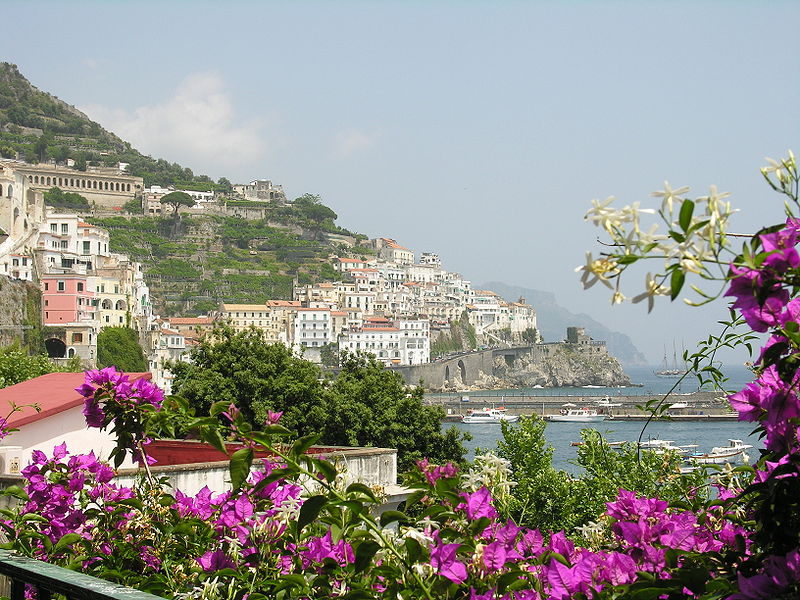
Amalfi
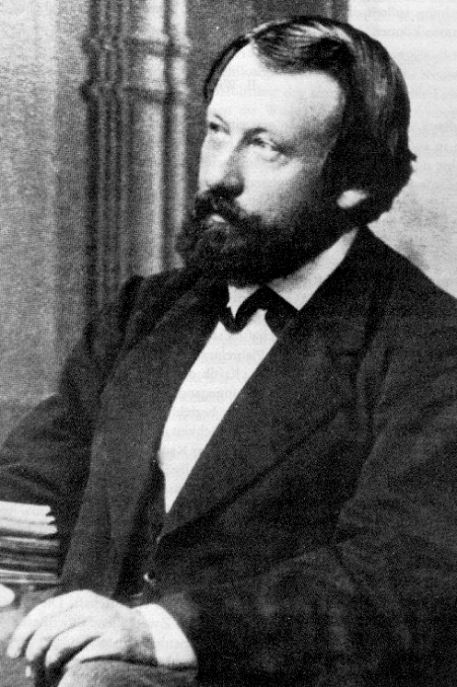
Wilhelm Dilthey
Hermeneutik
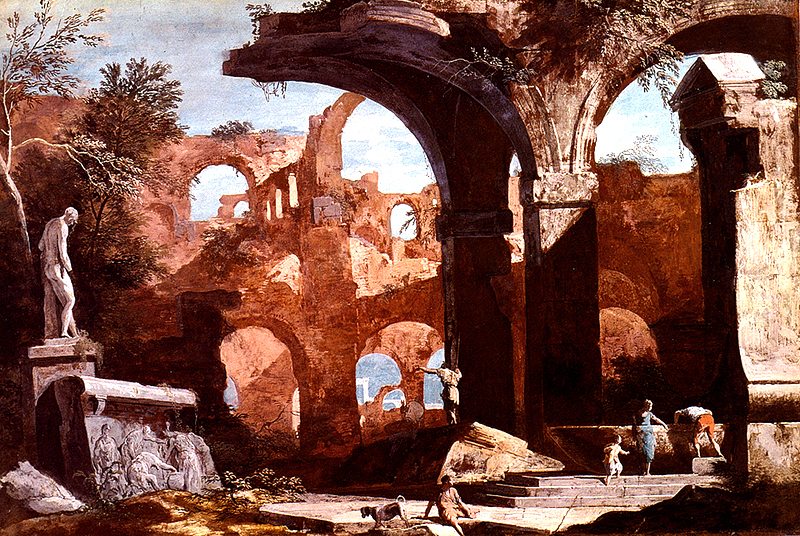
Marco Ricci: Capriccio architettonico
Pantheism, Postmodernism, Pop, 2
Pantheism, Postmodernism, Pop, 1
A romantic counterculture has existed since the early nineteenth-century Parisian Bohemia. Its continued relation to the dominant bourgeois culture was analysed by Daniel Bell in The Cultural Contradictions of Capitalism (1976), and Gertrude Himmelfarb showed how its sensibilities have today largely conquered the establishment and what used to be polite society. Analysis in terms of the pantheistic revolution makes it easier to understand this dialectic between the counterculture and the establishment. Under the influence of a single blurred ideology of rights and enjoyment, and a uniform imaginative and emotional universe, not only what C.S. Lewis called the “large, well-meant statements” of popular pantheism, but an ever-intensifying, renewed romanticism of the outcast and a growing fascination for evil shapes graduate seminars, art galleries, and novels to the same extent that they control the world of pure entertainment.
In the secular revolution of immanent utopianism, guided by radical Enlightenment and radical Romanticism, the traditional differential structure of Western order, and especially the relation and balance between them, are finally abandoned altogether. The distinction between spiritual and secular power, as well as the distinction between the independent learned community of the university and the power of the state and the Church – and, we could add, the bourgeois world of commerce – are, for instance, replaced by the distinction between the evil, repressive forces of the past, deceiving the People, or rather, increasingly, the oppressed minorities by masking its selfish exercise of power behind false, hypocritical moralism and religiosity, on the one hand, and the radical, progressive intellectual on the other. But the role of the intellectual is really obsolete too. Today, the ranks of politicians, academics, artists, Churchmen and -women, business tycoons and popular entertainers become indistinguishable. In the terms of my analysis, it could be said that all people of all classes and walks of life are ever more closely joined in the ubiquitous pantheistic cult.
In the dominance of electronic media, computers, and technology in general, the interdependence of romanticism on the one hand and scientific rationalism and empiricism on the other reappears. The romantic, narcissistic ego, ever torn between self-assertion and self-annihilation, which, weakened by pseudo-idealism, was an easy prey of the brutal outer forces of the emerging new external world, which in the nihilism of its self-exaltation was only seemingly paradoxically never far from self-extinction in the bosom of nature or in the void, and which in its unavoidable bitter disillusion readily accepted cynical and extreme versions of the naturalistic worldview, today reasserts itself in the mode of a popular culture unquestioningly adopting all the new wonders of technology.
It is hard to see any decisive difference between the practices of Michel Foucault – at his death, according to James Miller, “perhaps the single most famous intellectual in the world” – and the messages conveyed by the grosser and more violent films and music of today’s popular culture, except that Foucault still took his practices far more seriously and invested them more portentously with philosophical, cultural, and political meaning. Foucault
“joined…in the orgies of torture, trembling with ‘the most exquisite agonies’, voluntarily effacing himself, exploding the limits of consciousness, letting real, corporeal pain insensibly melt into pleasure through the alchemy of eroticism…Through intoxication, reverie, the Dionysian abandon of the artist, the most punishing of ascetic practices, and an uninhibited exploration of sadomasochistic eroticism, it seemed possible to breach, however briefly, the boundaries separating the conscious and unconscious, reason and unreason, pleasure and pain – and, at the ultimate limit, life and death – thus starkly revealing how distinctions central to the play of true and false are pliable, uncertain, contingent.” [Cited in Roger Kimball, Experiments Against Reality (2000), 248.]
But the serious revolutionary satanism of the pantheistic revolution has long been transformed by the tendency of its expression in the remaining forms of the avant-garde to be increasingly reduced to mere entertainment. Art and literature are merged with advertisement and fashion. Politics is reduced to a manipulation of images and phrases by the media. Historical revolts were earnest enough to the extent that they were the products of real material destitution which to some extent interacted with ideological convictions that were earnestly held. Not that this was the whole explanation of historical revolutions, but there often was at least one factor of this kind. In the postmodern age, a revolutionary ideology was, as it were, earnestly held only as far as earnestness is at all possible in a pantheistic universe. At our stage in the history of the romantic revolution, earnestness tends to dissolve in the inherent nonsensicality of its fully realized pantheism.
For pantheism itself necessarily disintegrates in its triumph. Traditionalists argue that however legitimate the revolts against the corruption of the government of favour and the religion of grace may have been, in the long run, turning against the order of reality itself, revolutions of empty space cannot succeed. The process of pantheism swallows up all critical vantage-points, including those of radical modernism. Were it not for the implicit tendency towards nonsensicality, some rock concerts today resemble the radical political mass meeting, which in turn can be seen as a further development of the ceremonies on the Champs de Mars and the hysteria of Jacobin decapitations. The rebellious punk movement was ever close to more or less anarchic political activism. Perhaps the new religion could be said to be the religion of what J. L. Talmon in the title of his best-known book called “totalitarian democracy”, the dictatorship based not only on ideology but on popular enthusiasm.
Of course, postmodern “fun” and entertainment could be sinister enough. If they couldn’t reach the suprapersonal ecstacy of joy, they could at least sink to the subpersonal ecstacy of the Dionysian orgy. In one aspect, the recent trends of our culture would seem to land us in endless triviality and banality, with, in Allan Bloom’s words, some “[a]nti-bourgeois ire” as “the opiate of the last man”. [The Closing of the American Mind (1987), 78.] In reality, it simply weakens the discernment of evil and the resistance against it.
As we have seen, in its seemingly disparate currents the pantheistic revolution is intelligible as a single movement of interrelated forces. In the postmodern carnival of micronarratives, objective theoretical and moral truth was replaced by consent alone, [Dennis McCallum, ed, The Death of Truth (1996); Robert H. Knight, The Age of Consent: The Rise of Relativism and the Corruption of Popular Culture (1998).] but the aim and direction of the whole movement was unambiguous, and its meaning, even as it rejects meaning as such, was clear. It is highly significant that so much in Lasserre’s formulations precisely describes postmodern criticism:
“C’est la destruction de la critique…un art équivoque de délayer tout dans tout, de parler de tout à faux, de faire dire aux philosophies, aux religions l’opposé de ce qu’elles disent, de ramener l’affirmation à une négation, et plus encore de hausser la négation à la dignité d’affirmation, d’apprécier les positions intellectuelles et morales le plus nettement prises par les hommes du passé, selon l’indécision d’une pensée qui se croit la plus grande, parce qu’elle ne s’arrête nulle part.” [See the note about Lasserre’s book and page numbers above.]
In postmodernism’s non-hierarchical, differential play, all forces and perspectives were relative to each other, but of course no longer parts of a whole in relation to which they had to be understood. Identities were fractured, ephemeral, contingent, ever-changing, insubstantial constructs and fictions. It was a carnival of fluctuating “appearences” alone, with nothing of which it was appearances. But this situation too was the ultimate consequence of pantheistic monism and of the nihilism that is never far from it, for an empty principle disappears easier than a principle full of spiritual content. Postmodernism was the ultimate blurring of distinctions: everything was indiscriminately included, everything of a lower character was legitimized – not any longer in the dialectical movement of the World-Spirit, but in the multivalent process of chaotic play.
As already in the early romantics, pantheistic “love” was all-inclusive, yet intrinsically linked to the hate of the rebel-heroes whose satanistic excess, notorious in entertainment in a spectacular form which, in accord with the evaporation of seriousness in postmodernism, ever verges on self-parody, was embraced as just and legitimate in the face of the oppression of the only enemy, non-pantheist differentiationalism. At least to some extent, the latter, however faded and diffuse it may have become, must somehow be mythically retained and its injustices ceremonially rehearsed for the indiscriminate cult of liberation, a central ingredient of the pantheistic revolution, to preserve credibility and motivation.
Pattison argues that democracy is pantheism’s political form. “The refined seek to rise above the ubiquitous democracy of the grass, but Whitman answers: ‘I exist as I am, that is enough’. Pantheistic democracy’s ‘common language’ is ‘sensation’, and ‘its boundaries are the universe’”: “There is no evil in the pantheist democracy because the transcendent vantage to distinguish good and evil has been gobbled up in the whole. Every act, no matter how loathsome by traditional standards, is valid, since the one knows itself by assuming the infinite forms of the many. To understand this process is ‘to live beyond the difference’ between good and evil, refinement and vulgarity.” [The Triumph of Vulgarity, 26-7.]
For this reason, even the enemy would, it seems, ultimately have to be included in the pantheistic universe. But that is impossible as long as the enemy preserves his own identity and refuses to accept his redefinition in pantheist terms.
Lessing
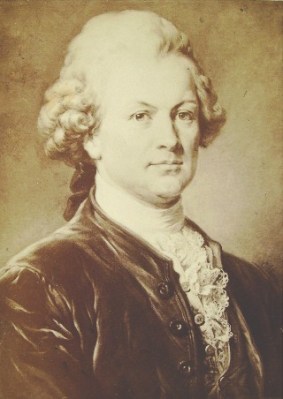
Preface to The New Laokoon
I publish Irving Babbitt’s preface to his book The New Laokoon: An Essay on the Confusion of the Arts (1910).
–
The title I have taken for this book expresses my sense of what needs doing rather than what I myself would claim to have done. I have suffered, both in selecting a title and in treating my subject itself, from a certain poverty in our English critical vocabulary. The word genre seems to be gaining some currency in English. The same can scarcely be said of the mélange des genres; and yet it is around the mélange des genres that my main argument revolves. Napoleon is reported to have said to Goethe in the course of a conversation on a problem very similar to the one I have attempted, “Je m’étonne qu’un aussi grand esprit que vous n’aime pas les genres tranchés”. I have often been forced to borrow Napoleon’s term and speak of the genre tranché, for lack of a suitable English equivalent.
Lessing published his “Laokoon” in 1766, toward the very end of the neo-classical movement. The period of nearly a century and a half that has since elapsed has seen the rise of the great romantic and naturalistic movement that fills the whole of the nineteenth century and is now showing signs of decrepitude in its turn. Does the “Laokoon” really meet the questions that have arisen in this period as to the proper boundaries of the arts, especially the boundaries of painting and writing? Most Germans would probably say that it does. They have surrounded Lessing, as one of their great classics, with a sort of conventional admiration. From this conventional admiration Hugo Blümmer, to whom we owe the standard edition of the “Laokoon”, is by no means free. Thus he says: “The tendency toward descriptive poetry…received through it [the “Laokoon”] its death-blow…We may indeed affirm that the law forbidding the poet to paint has nowadays become a universally accepted doctrine.” [Laokoon, ed. H. Blümmer, 1880, p. 138.] We doubt whether this is true even for Germany; it certainly is not true for other countries. If the “Laokoon” really covers the ground as completely as Blümmer would have us suppose, we can only say that no teaching has ever been so wilfully disregarded. The nineteenth century witnessed the greatest debauch of descriptive writing the world has ever known. It witnessed moreover a general confusion of the arts, as well as of the different genres within the confines of each art. To take examples almost at random, we have Gautier’s transpositions d’art, Rossetti’s attempts to paint his sonnets and write his pictures, Mallarmé’s ambition to compose symphonies with words. Confusions of this kind were already rampant within a few years of Lessing’s death, in the writings of Novalis, Tieck, and Friedrich Schlegel.
Now what I have tried to do is to study the “Laokoon”, not primarily as a German classic, but as a problem in comparative literature; to show that the confusion with which Lessing is dealing is a pseudo-classical confusion, and that to understand it clearly we must go back to the beginnings of the whole movement in the critics of the Renaissance; and then, in contrast to this pseudo-classical confusion, I have traced in writers like Rousseau and Diderot the beginnings of an entirely different confusion of the arts – a romantic confusion as we may term it – which Lessing has not met in the “Laokoon” and has not tried to meet. I have followed out to some extent this romantic confusion in the nineteenth century – especially the attempts to get with words the effects of music and painting. Finally, I have searched for principles that may be opposed to this modern confusion. Throughout I have done my utmost to avoid the selva oscura of aesthetic theory, and have kept as close as I could to the concrete example. I hope I have at least made clear that an inquirey into the nature of the genres and the boundaries of the arts ramifies out in every direction, and involves one’s attitude not merely toward literature but life.
It involves especially a careful defining of certain large literary movements. In making his protest against the confusion of poetry and painting, Lessing was led to discriminate sharply between what he conceived to be the truly classic and the pseudo-classic. Any one who makes a similar protest to-day will need rather to discriminate between the truly classic and the romantic. Taken in both its older and more recent aspects, perhaps no question calls for more careful defining of such words as classic, pseudo-classic, and romantic. I confess that this is one of the reasons why it attracted me. A more searching definition of these words seems urgently needed. One of the ways in which comparative literature may justify itself is by making possible definitions of this kind that shall be at once broader and more accurate. Many people are inclined to see in the popularity of this new subject a mere university fad. They will not be far wrong unless it can become something more than an endless study of sources and influences and minute relationships. Neo-classicism and romanticism are both world-movements. It should be the ambition of the student of comparative literature to make all attempts to define these movements in terms of one literature seem one-sided and ill-informed.
The trouble with most attempts to define the word romantic, in particular, is that they have been partisan as well as provincial. The makers of the definitions have been themselves too much a part of what they were trying to define. They have opposed to their idea of the romantic a notion of the classic that would scarcely be avowed by a respectable pseudo-classicist. Indeed, the classical point of view has had about as much a chance of a fair hearing during the past century as we may suppose the romantic point of view to have had in a Queen Anne coffee-house, or at the court of Louis XIV. The perspectives opened up by comparative literature will make it easier to achieve a feat that was achieved by few in the nineteenth century – that of seeing the romantic and naturalistic movement from the outside.
This feat is already becoming somewhat easier of achievement, even without the help of comparative literature. It was in France, in the writings of Rousseau, that certain romantic and naturalistic points of view first found powerful expression. It is in France, the most intellectually sensitive of modern nations, that we now see the beginnings of reaction against the fundamental postulates of Rousseauism. M. Lasserre, whose brilliant and virulent attack on French romanticism [Le romantisme français, par P. Lasserre (1907).] has already gone through several editions, says that his aim is not so much to attack this movement in its flowers and fruit as to pour a little poison about its roots. Unfortunately M. Lasserre’s book tends to be extreme, and in the French sense reactionary. A year or so ago I chanced to be strolling along one of the narrow streets that skirt the Quartier Saint-Germain, and came on a bookshop entirely devoted to reactionary literature; and there in the window, along with books recommending the restoration of the monarchy, was the volume of M. Lasserre and other anti-romantic publications. Now I for one regret that a legitimate protest against certain tendencies of nineteenth-century life and literature should be thus mixed up with what we may very well deem an impossible political and religious reaction. A movement would sem needed that shall be somewhat less negative and more genuinely constructive than the one M. Lasserre and his friends are trying to start in France; a movement that shall preserve even in its severest questionings of the nineteenth century a certain balance and moderation, a certain breadth of knowledge and sympathy, and so seem an advance and not a retrogression. But with this reservation we must recognize that M. Lasserre’s attack on the romantic and naturalistic point of view is very timely. With the spread of impressionism literature has lost standards and discipline, and at the same time virility and seriousness; it has fallen into the hands of aesthetes and dilettantes, the last effete representatives of romanticism, who have proved utterly unequal to the task of maintaining its great traditions against the scientific positivists. The hope of the humanities is in defenders who will have something of Lessing’s virile emphasis on action, and scorn mere revery – who will not be content with wailing more or less melodiously from their towers of ivory.
Much that I have said in this book is a development of what I have already said in my book on “Literature and the American College”, especially of the definition I have there attempted of the word humanism. Many of the views, again, that are expressed in the following pages, on the romantic movement, will need to be more fully developed, and this I hope to do at some future time in a book to be entitled “Rousseau and Romanticism”. I should add that for the last eight or ten years I have been giving the main conclusions of the present volume to the students of one of my Harvard courses.
Cambridge, Massachusetts,
March 15, 1910
Irving Babbitt: The New Laokoon
An Essay on the Confusion of the Arts
Houghton Mifflin, 1910
JOB’s Comment:
This is probably Babbitt’s most “specialized” study of literature, but most of his major larger themes can be found here too.
 Olle Bengtsson