Personproblemet kom också till uttryck i de kristologiska striderna, d.v.s. under utformningen av läran om inkarnationen och föreningen av mänskligt och gudigt hos Jesus/Kristus, där det väl fanns lika många olika ståndpunkter som ifråga om treenighetsläran. Jesus var Gud/son, men samtidigt måste han ju som inkarnerad, och även på grund av dogmen om den kroppsliga uppståndelsen, nu anses ha också en andra, mänsklig natur.
Ett läger menade dock att även Kristi mänskliga natur i själva verket måste vara gudd, ett “himmelskt kött”. Kristus ägde, hävdade man, endast en natur och en hypostas, och hans personskap var endast förenligt med den gudda naturen/substansen. En person kan inte ha två naturer. Hade Kristus ägt två naturer, skulle detta innebära att han också var två personer.
Ett annat läger hävdade att Kristus även ägde en mänsklig natur, och att hans personskap även avsåg den mänskliga naturen. Här menade man sig se mer strikt historiskt på uppenbarelsen, och man lade vikt vid Kristi mänskliga, jordiska gärning. Den gudda naturen hade, bibehållen, iklätt sig och förenats med den mänskliga, varvid ettheten bestod i viljan, ej i naturen.
Av filosofisk hävd var det snarast förnuftssjälen, νούς, som konstituerade personskapet. När Apollinaris konstaterar att det hos människan är νούς och inte ψυχή eller σῶμα som utgör den aktiva principen, stod han helt under det grekisk-filosofiska inflytandet. Men han tycks också ha sammankopplat denna grekiska mänskliga förnuftsnatur med termen person när han betraktar den som personkonstituerande. [Jean Daniélou, ‘La personne chez les pères grecs’, i I. Meyerson, utg., Problèmes de la personne (1973), 118.]
Men i Kristus skulle detta förnuft istället utgöras av det gudda λόγος. [Ibid.] Νούς som allmänt förnuft och λόγος kunde visserligen i några grekisk-filosofiska formuleringar vara identiska, men vad vi här har att göra med är det individualiserade νούς, förnuftssjälen. Det kristna λόγος, det gudda νούς, ansågs väl också vara någonting mer gutt än det platonska. Frågan uppstår då om Kristus, som endast äger de iklädda σῶμα och ψυχή gemensamt med människan men har ersatt det mänskliga νούς med det gudda λόγος, verkligen kan sägs fullt ha blivit människa. Det är den ännu dominerande grekisk-filosofiska uppfattningen som ger upphov till problemet. [Ibid.]
Apollinaris ville se mänsklig personkonstituerande νούς-natur ersatt av gudd personkonstituerande νούς-natur, som var identisk med λόγος. Men det kristna λόγος-begreppet har med kappadokierna tappat sina betydelseförbindelser med det platonska νούς och t. o. m. med det filonska λόγος-begreppet. Λόγος har blivit synonymt med Sonens gudda hypostas/person i treenighetsläran. [Frederick Copleston, A History of Philosophy, II (1950), 35.]
Stödd, som det ser ut, på moderna teologer vill Daniélou hävda att den lösning man fann på det kristologiska problemet låg i att person principiellt, d.v.s. såväl ifråga om Gud som människan, frigjordes som rent existensmoment från all natur, förstådd som rent essentiellt innehåll. Person som rent existensmoment skall ha uppfattats som “rent” subjekt. [Daniélou i Meyerson, 118 f.]
Det är svårt att förstå detta. Såvitt jag kan se bevarar ännu den nicenska formeln varat på etthetsplanet, de aristoteliska utläggningarna fördunklar det, och det återupprättas av Augustinus. Men även om man håller sig inom den aristoteliska förklaringen är ju enligt denna personerna alltid essensens konkreta manifestation. Essensen är blott en generaliserande abstraktion ur den existerande personen. Förvisso kan därvid det existerande i sig, enligt den aristoteliska logiken, förena flera naturer/essenser. Och förvisso kan kanske också en existerande person vars natur genom abstraktion förstås som gudd, bli person också för en annan natur, en annan naturs person. Men vad är ett rent existensmoment som skulle vara självständigt gentemot båda dessa naturer, och som, som sådant, i lika hög grad eller på samma sätt skulle vara bådas person och stå i samma förhållande till båda?
Åtminstone accepteras det inte av synoderna i Kalcedon 451 och Konstantinopel 553, som fastslår som resultat av de kristologiska striderna att Kristi personskap entydigt hänförs till λόγος och dess gudda natur, men att samtidigt naturerna förblir två och åtskilda i det Kristi person av gudd natur i tiden antar och förenar sig med den mänskliga. Om för treenigheten gällde “en natur, tre personer”, gällde för Kristus istället δύο φύσεις μία ὑπόστασις , “två naturer, en person”. Men stor vikt läggs vid förklaringen att personen är av gudd natur. Λόγος är detsamma som Sonen, en av den gudda naturens (φύσις/natura = οὐσία/substantia) hypostaser/personer. Denne antar nu också den mänskliga naturen och blir dess hypostas/person (enhypostasiläran).
Som en efterdyning uppblossade sedan denna strid bilagts snart en ny, denna gång om Kristi vilja. Den uppmärksamhet som viljan nu, efter Augustinus, ägnas som självständigt problem är signifikativ. Den ena sidan hävdade att Kristi vilja var oskiljaktig från hans personskap och därmed hans gudda natur. Den andra sidan menade att Kristi mänskliga natur också innefattade en mänsklig vilja. Vid ett koncilium mot slutet av 600-talet, som icke erkändes av reformatorerna, antogs Maximus Confessors lära att Kristus ägde två viljor, av vilka den till personskapet och den gudda naturen hörande dock dominerade den som hörde till den mänskliga naturen. [Pierre Hadot, ’De Tertullien à Boèce. Le développement de la notion de personne dans les controverses théologiques’, i Meyerson, 130 f.]
 Current mainstream opinion in psychology, neuroscience, and philosophy of mind holds that all aspects of human mind and consciousness are generated by physical processes occurring in brains. Views of this sort have dominated recent scholarly publication. The present volume, however, demonstrates empirically that this reductive materialism is not only incomplete but false. The authors systematically marshal evidence for a variety of psychological phenomena that are extremely difficult, and in some cases clearly impossible, to account for in conventional physicalist terms. Topics addressed include phenomena of extreme psychophysical influence, memory, psychological automatisms and secondary personality, near-death experiences and allied phenomena, genius-level creativity, and ‘mystical’ states of consciousness both spontaneous and drug-induced. The authors further show that these rogue phenomena are more readily accommodated by an alternative ‘transmission’ or ‘filter’ theory of mind/brain relations advanced over a century ago by a largely forgotten genius, F. W. H. Myers, and developed further by his friend and colleague William James. This theory, moreover, ratifies the commonsense conception of human beings as causally effective conscious agents, and is fully compatible with leading-edge physics and neuroscience. The book should command the attention of all open-minded persons concerned with the still-unsolved mysteries of the mind.
 We Who Dared to Say No to War uncovers some of the forgotten but compelling body of work from the American antiwar tradition – speeches, articles, poetry, book excerpts, political cartoons, and more – from people throughout our history who have opposed war. Beginning with the War of 1812, these selections cover every major American war up to the present and come from both the left and the right, from religious and secular viewpoints. There are many surprises, including a forgotten letter from a Christian theologian urging Confederate President Jefferson Davis to exempt Christians from the draft and a speech by Abraham Lincoln opposing the 1848 Mexican War. Among others, Daniel Webster, Mark Twain, Andrew Carnegie, Grover Cleveland, Eugene Debs, Robert Taft, Paul Craig Roberts, Patrick Buchanan, and Country Joe and the Fish make an appearance. This first-ever anthology of American antiwar writing offers the full range of the subject’s richness and variety.

 Today the idea of natural law as the basic ingredient in moral, legal, and political thought presents a challenge not faced for almost two hundred years. On the surface, there would appear to be little room in the contemporary world for a widespread belief in natural law. The basic philosophies of the opposition – the rationalism of the philosophes, the utilitarianism of Bentham, the materialism of Marx – appear to have made prior philosophies irrelevant. Yet these newer philosophies themselves have been overtaken by disillusionment born of conflicts between “might” and “right.” Many thoughtful people who were loyal to secular belief have become dissatisfied with the lack of normative principles and have turned once more to natural law.
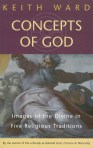 Is there a universal concept of God? Do all the great faiths of the world share a vision of the same supreme reality? In an attempt to answer these questions, Keith Ward considers the doctrine of an ultimate reality within five world religions – Hinduism, Buddhism, Islam, Judaism and Christianity. He studies closely the works of definitive, orthodox writers from each tradition – Sankara, Ramanuja, Asvaghosa, Maimonides, Al-Ghazzali and Aquinas – to build up a series of ‘images’ of God, a common core of belief. Ward discovers that while the great religious traditions of the world retain their differences, there are convergences of thought at the deepest level, with a broad similarity of structure in concepts of God. He concludes that a recognition of these beliefs, as well as encouraging a clearer acceptance of the mystery of the divine, might also lead to an increase in understanding and tolerance of other faiths, to the enrichment of one’s own.
 Olle Bengtsson