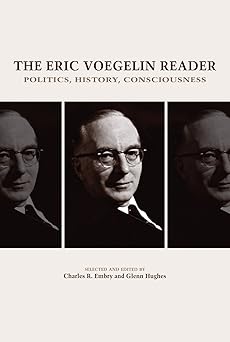
Charles R. Embry & Glenn Hughes, eds.: The Eric Voegelin Reader

Politics, History, Consciousness

University of Missouri Press, 2017

Amazon.com

Publisher’s Description:

By the time Eric Voegelin fled Hitler’s regime and made his way to the United States in 1938, he had already written four books criticizing Nazi racism, establishing what would be the focus of his life’s work: to account for the endemic political violence of the twentieth century. One of the most original political philosophers of the period, Voegelin has largely avoided ideological labels or categorizations of his work. Because of this, however, and because no one work or volume of his can do justice to his overall project, his work has been seen as difficult to approach.
 
Drawing from the University of Missouri Press’s thirty-four-volume edition of The Collected Works of Eric Voegelin (1990-2009)Charles Embry and Glenn Hughes have assembled a selection of representative works of Voegelin, satisfying a longstanding need for a single volume that can serve as a general introduction to Voegelin’s philosophy. The collection includes writings that demonstrate the range and creativity of Voegelin’s thought as it developed from 1956 until his death in 1985 in his search for the history of order in human society.
 
The Reader begins with excerpts from Autobiographical Reflections (1973), which include an orienting mixture of biographical information, philosophical motivations, and the scope of Voegelin’s project. It reflects key periods of Voegelin’s philosophical development, pivoting on his flight from the Gestapo.
 
The next section focuses on Voegelin’s understanding of the contemporary need to re-ground political science in a non-positivistic, post-Weberian outlook and method. It begins with Voegelin’s historical survey of science and scientism, followed by his explanation of what political science now requires in his introduction to The New Science of Politics. Also included are two essays that exemplify the practice of this “new science.” Voegelin started his academic career as a political scientist, and these early essays indicate his wide philosophical vision.
 
Voegelin recognized that a fully responsible “new science of politics” would require the development of a philosophy of history. This led to the writing of his magnum opus, the five-volume Order and History (1956–1985). This section of the Reader includes his introductions to volumes 1, 2 and 4 and his most essential accounts of the theoretical requirements and historical scope of a philosophy of history adequate to present-day scholarship and historical discoveries.
 
In the course of his career, Voegelin came to understand that political science, political philosophy, and philosophy of history must have as their theoretical nucleus a sound philosophical anthropology based on an accurate philosophy of human consciousness. The next set of writings consists of one late lecture and four late essays that exemplify how Voegelin recovers the wisdom of classical philosophy and the Western religious tradition while criticizing modern misrepresentations of consciousness. The result is Voegelin’s contemporary accounts of the nature of reason, the challenge of truly rational discussion, and the search for divine origins and the life of the human spirit.
 
During his philosophical journey, Voegelin addressed the historical situatedness of human existence, explicating the historicity of human consciousness in a manner that gave full due to the challenges of acknowledging both human immersion in the story of history and the ability of consciousness to arrive at philosophically valid truths about existence that are transhistorical. The essays in this final section present the culmination of his philosophical meditation on history, consciousness, and reality.

Reviews:

“The achievement of this volume is superb. Through a selection of his writings perfectly chosen, it makes manifest to everyone the preeminent place of Eric Voegelin in the intellectual landscape of the twentieth century.”

Tilo Schabert, University of Erlangen, author of How World Politics Is Made

“Embry and Hughes have succeeded in presenting a thoroughly accessible and well-crafted introduction to the thought of Eric Voegelin. Providing philosophical readings of substance with erudite commentary, this volume ranges perspicaciously across the eras and interests of Voegelin’s writings and will open to a new audience the grandeur of one of the most penetrating and relevant minds of the twentieth century. The Eric Voegelin Reader is set to become the essential companion to the study of Voegelin’s work.”

James Greenaway, St. Mary’s University, author of The Differentiation of Authority: The Medieval Turn toward Existence

“Organized with meticulous care and framed with introductions of exceptional clarity, this reader provides the perfect entrée into Voegelin’s thought and the rich treasures of his thirty-four-volume Collected Works.  The readings capture, in concentrated form, the full scope of Voegelin’s political and philosophical vision, including the surprising turns in his intellectual development that were born of ever-deepening insights into the nature of reality and human history.  There is no contemporary point of view that cannot be enriched and challenged by Voegelin’s uniquely profound and original ideas. The Eric Voegelin Reader will greatly enhance the ease and quality of such encounters.”

Paul Kidder, Department of Philosophy, Seattle University

“Drawing on a broad variety of Voegelin’s work – memoirs, interview, lectures, essays, books – the editors present a very intelligent selection of materials that unfolds his main themes in a clear, logical sequence, and this is also greatly aided by their introduction and explanatory comments with reference to each selection.  This brilliant collection of Voegelin’s most luminous texts offers an excellent one-volume introduction to the full range and scope of a major thinker who might otherwise seem rather overwhelming to someone new to his work.”

Eugene Webb, University of Washington, author of In Search of the Triune God: The Christian Paths of East and West

About the Editors:

Charles R. Embry is Professor Emeritus of Political Science at Texas A&M University-Commerce. He holds a Bachelor of Arts degree in History from Louisiana Tech University, a Master of Arts degree in Government from Louisiana State University-Baton Rouge, and a PhD. in Political Science from Duke University. He has published articles in Liberal Education and News for Teachers of Political Science (A Publication of the American Political Science Association), as well as numerous poems. His book, Robert B. Heilman and Eric Voegelin: A Friendship in Letters, 1944-1984, was published in 2004 by the University of Missouri Press as a volume in the Eric Voegelin Institute Series in Political Philosophy. Also published by the University of Missouri Press are Philosophy, Literature and Politics: Essays Honoring Ellis Sandoz (2005), which he co-edited with Barry Cooper, The Philosopher and the Storyteller: Eric Voegelin and Twentieth-Century Literature (2008) and Voegelinian Readings of Modern Literature (2011). Professor Embry is married to Polly Detels, retired Associate Professor of History, Texas A&M-Commerce. They live in Bellingham, WA.

Glenn Hughes is Professor of Philosophy at St. Mary’s University in San Antonio, where he also holds the St. Mary’s Chair in Catholic Philosophy. He is the author of many articles and a number of books, including Mystery and Myth in the Philosophy of Eric Voegelin (1993), Transcendence and History (2003), and A More Beautiful Question: The Spiritual in Poetry and Art (2011), all published by the University of Missouri Press. His poetry has appeared in many national literary journals and two chapbooks; he has also edited or co-edited four volumes of work by the Northwest poet Robert Sund. He is a regular contributor of original scholarship at national conferences, and has been both a coordinator of and invited lecturer at international meetings and events. Forthcoming in spring, 2017 is a volume of essays co-edited with Charles R. Embry entitled The Timelessness of Proust: Reflections on In Search of Lost Time. Professor Hughes lives in San Antonio, Texas.

JOB’s Comment:

Voegelin in Swedish translation: Vetenskap, politik och gnosticism

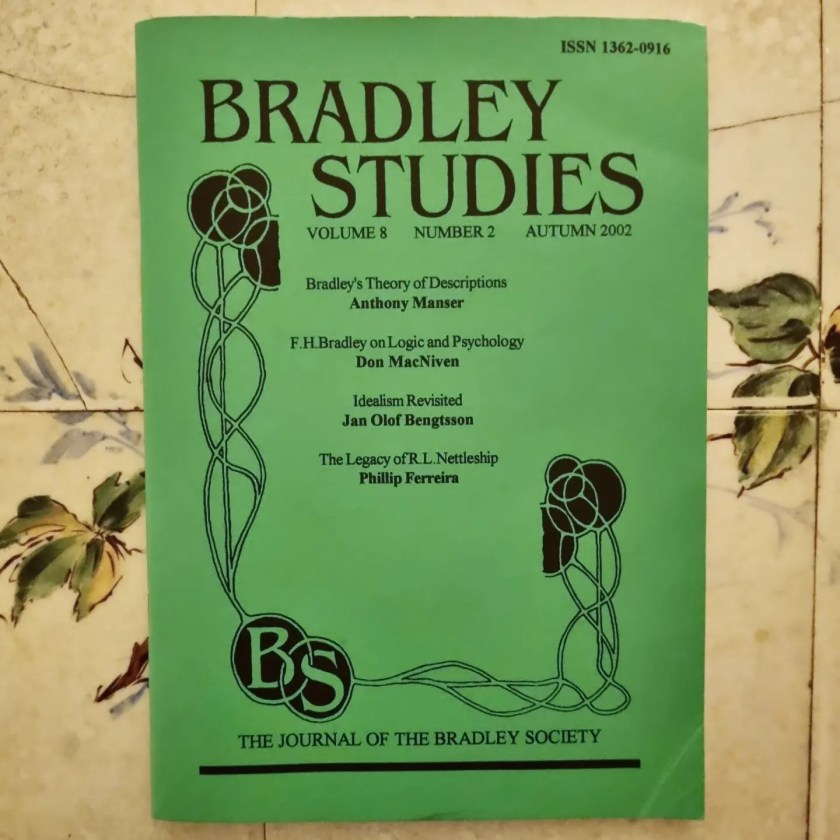
Idealism Revisited

Nummer av Bradley Studies med vad jag uppfattade som i några avseenden en av mina viktigare texter om den moderna filosofiska idealismen:

Det är en 26 sidor lång s.k. review article om en volym med papers från en konferens i Oxford 1997, i vilken jag tämligen ingående granskar bidragen från några samtida idealister och idealismforskare som Timothy Sprigge, William Sweet, James Allard, Avital Simhony och Geoffrey Thomas. Jag kommenterar också, kortare, redaktören William Manders inledning och Anthony Quintons, Phillip Ferreiras, Elizabeth Trotts, Leslie Armours, Ralph Walkers och David Holdcrofts papers. Allt handlar inte om just Bradley.

Ryn i SvD: Presidentmaktens stärkande igen

Claes Ryn återvänder till SvD med en viktig artikel om presidentmaktens ickekonstitutionella utvidgning och stärkande i USA, med rubriken ‘Var försiktig med vad du önskar’. Den motsvarar en annan, nyligen publicerad i The Hill (jag tror ursprungliga rubriken där var ‘Be careful what you wish for, liberals – you might just get Donald Trump’, d.v.s. lik SvD:s).

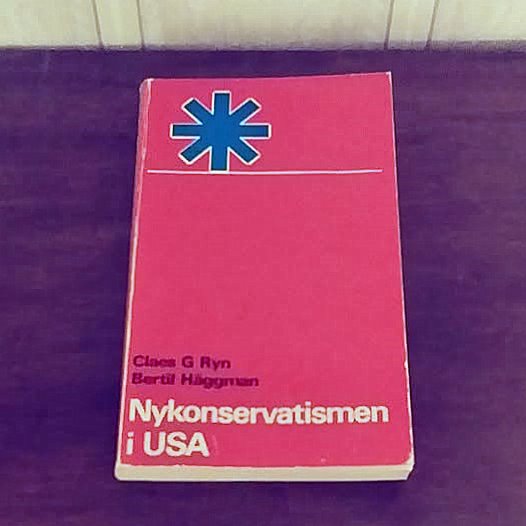
Ryn upprepar en huvudtes i sin första i USA publicerade bok, Democracy and the Ethical Life (1978). Ryn utgår från att den starka presidentmakten bärs fram av liberaler, vänstern och allmänt “progressiva” krafter, medan instanserna i det konstitutionella systemts checks and balances är en “konservativ” kraft i betydelsen representerande den högre etiska orienteringen.

Som jag påpekade redan under Trumps första presidentperiod uppkommer emellertid frågan hur situationen ska förstås när förhållandet är det omvända: när kongressen och högsta domstolen, och hela det politiska etablissemanget, domineras av i problematisk mening liberala krafter, inklusive neokonservativa, och det i stället på åtminstone vissa centrala områden är den starka presidentmaktens företrädare som, oaktat sin formella radikalism, i substans står för de modererande, mer konservativa värderingarna.

Vår tids populistnationalism gör frågan aktuell på ett sätt den inte var på 1970-talet – väl dock med visst undantag för Nixon, som Ryn nämner men inte i detta perspektiv. Det allmänna och äldre fenomenet bonapartismen kunde förtjäna att beröras mer i detta sammanhang, som del av Revolutionens paradigmatiska historiska utvecklingskurva, och med dess dubbla politiska innebörd och potential.

Tilläggas kan förstås även, som jag också diskuterat i några av mina texter om Ryns tänkande, att kravet på Konstitution ju en gång var den liberala Revolutionens stora fältrop, mot den absoluta furstemakten. Ryns konservatism, som bygger på en viss filosofisk uttolkning av den konstitutionella andan snarare än den exakta formuleringen av en bestämd existerande konstitution, är primärt en “sann liberalism” i Babbitts mening.

Literature and the American College

Nyutgåva av Babbitts första bok, publicerad av Claes Ryns National Humanities Insitute 1986, med inledning av Russell Kirk:

Irving Babbitt: Literature and the American College

Babbitts verk “will”, enligt Ryn, “always stand as a monument to American intellectual culture at its finest”.

Jag har tidigare publicerat ett av kapitlen, What Is Humanism?, uppdelat i fyra delar, och med en inledning där jag diskuterar varför denna fråga är viktig, och varför även just Babbitts svar är viktigt.

What Is Humanism?

Irving Babbitt: What Is Humanism? 1

Irving Babbitt: What Is Humanism? 2

Irving Babbitt: What Is Humanism? 3

Irving Babbitt: What Is Humanism? 4

Panteismstriden

Dylan Shaul introducerar den tyska s.k. panteismstriden i tre presentationer på den av Holm rekommenderade kanalen Seekers of Unity.

Del 1: Spinoza, Lessing, Jacobi, Mendelssohn

Del 2: Kant

Del 3: Hegel

Striden är central i min historiska argumentation rörande personalismens ursprung och tidiga utveckling, och man vill ibland ropa “stopp” och tillfoga kommentarer av olika slag, inte minst ifråga om den moderna panteismens mer fullständiga innebörd och förstås just personalismens framväxt, Jacobis fullständiga filosofi, och den sene (eller mellerste och sene) Schelling.

Spinozismen är en typ av brytning med den allmänabrahamitiska exoterismen och dess ortodoxa teologiska utläggning, och som sådan sofiskt partiellt giltig, men den uppvisar distinkt moderna särdrag som skiljer den från den platonska traditionen, och som blir än tydligare om man betraktar Hegels profanhumanistiskt-immanistiska system (delvis baserat, förutom på det exokristna generalmörkret ifråga om Skapelsen, Människan och Historien, på särutvecklingar inom den specifikt västerländska esoterismen enligt vilka Gud själv verkligar sig i Historien) som slutresultat av panteismstriden och lösning av dess “problem”.

Jacobis åskådning har drag av exoterismen, men kan inte reduceras till den, i synnerhet som han utöver sin exofideistiska salto mortale utvecklar en högre förnuftsuppfattning mer i linje med platonismen och de former av den postkantianska idealismen som närmar sig den. Tonvikten läggs dock av Jacobi på förnuftet som förnimmande, som en fakultet av högre perception. Analysen är som i all västerländsk filosofi litet oklar och primitiv i det att den inte fokuserar på och inte har, eller utvecklar, ett tillräckligt begrepp om bevetenheten, varheten, i sig: denna förblir i huvudsak blott implicit och något som måste förutsättas. Men genom att ta fasta på och införliva detta – och en del andra – moment hos Jacobi nådde den personalistiska idealism som utvecklades parallellt med och efter hegelianismen fram till en position som utan att avvisa panteismen som brytning med bokstavsexoterismen höjde sig över den till vad som kunde uppfattas som en ny form av idealistisk teism.

Shaul beaktar inte denna aspekt eller dimension av panteismstriden och dess utgång, utan kvarstannar i det vanliga perspektivet på dess huvudaktörer. Men det innebär inte alls att hans framställning är dålig i sig, så långt den når.

Shaul är assistant professor i filosofi vid University of California, Riverside.