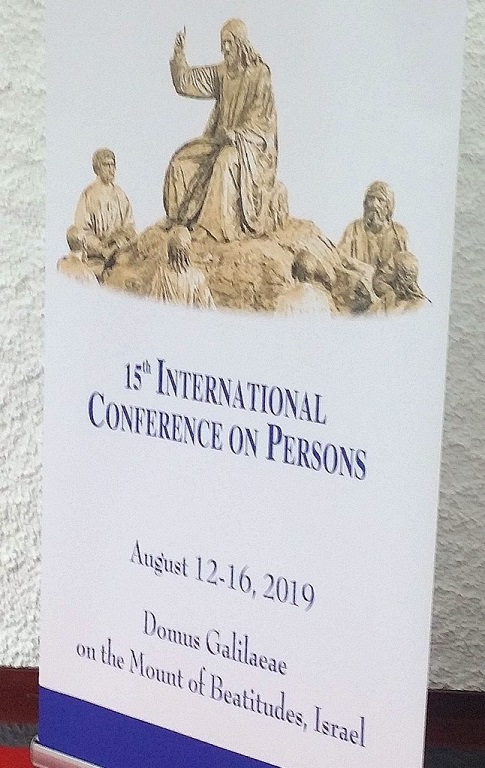
On Instagram (janolofbengtsson) now: Photos from the 15th International Conference on Persons – with more in the next few weeks. For more on the ICP, scroll down to Personalism on the Contents page.
On Instagram (janolofbengtsson) now: Photos from the 15th International Conference on Persons – with more in the next few weeks. For more on the ICP, scroll down to Personalism on the Contents page.
En hel del återstår, tror jag, att säga om förhållandet mellan den idealistiska personalismen, eller den i sak i mycket personalistiska strömning som genom hela 1800-talet utvecklas mer eller mindre inom, och oftast som en egen variant av, den idealistiska filosofin, å ena sidan, och 1900-talets fenomenologiska personalism å den andra. I själva verket har nästan ingenting sagts om det, utöver påvisandet av vissa tematiska likheter.
Jag har brukat uttrycka det så att hos en tidig fenomenolog som Scheler, framför allt i hans tidiga huvudverk Der Formalismus in der Ethik und die formale Wertethik, återfinns ett slags fenomenologisk transposition av flera av de karaktäristiska temata i 1800-talets proto-personalism, och ställt frågan i vilken utsträckning han kan tänkas ha upptagit dessa som sådana, som förhandenvarande i den äldre traditionen utan att där ha nåtts fram till genom den nya fenomenologins distinkta metod, genom direkt kontakt med den tyska senidealismens opposition mot Hegel, exempelvis genom sin lärare Eucken.
Ursprunget till denna tematik återfinns ju också hos betydligt mer kända tänkare som Schelling och Jacobi, även om, som jag uppfattat det, inte minst Schelers senare utveckling knappast uppvisar något som bekräftar ett djupare och mer bestående inflytande från dem i detta avseende. Det är signifikativt att en tänkare som Buber först sent i livet, när han redan självständigt utvecklat sin dialogiska personalism, upptäckte de personalistiska inslagen hos Jacobi. I sak hade det förstås legat närmare till hands om de tidiga fenomenologerna upptäckt den hundra år tidigare proto-personalismen hos de mer distinkt idealismkritiska tänkarna än hos deras partiella efterföljare bland senidealisterna.
Det föreligger således ett filosofihistoriskt glapp här, mellan proto-personalismen under 1800-talet, med dess hos de enskilda tänkarna varierande spänningsfält i förhållandet till idealismen, och den tidiga fenomenologin. Å ena sidan är likheterna, oaktat skillnaderna i filosofiska utgångspunkter, ofta mycket påfallande och väsentliga. Å den andra framstår den direkta påverkan hittills som närmast obefintlig. Det upplevda behovet av en ny början och frigörelsen inte bara från den då dominerande nykantianismen utan från hela den idealistiska traditionen var alltför starkt, åtminstone fram till den punkt när fenomenologin självständigt utvecklats i sådan utsträckning att Heidegger från dess färdigetablerade positioner kunde på nytt sätt tänka igenom vissa ansatser i den.
Denna diskontinuitet mellan proto-personalismen och den personalism som, i allt väsentligt byggande på fenomenologin, i Europa betecknas som sådan och som själv började använda termen som självbeteckning är dock något mindre i USA, eftersom den idealistiska 1800-talstraditionen av personalistisk idealism genom Borden Parker Bownes lärjungar levde vidare i högre grad än i Europa och därmed med tiden kunde möta och ingå synteser med den nya fenomenologin. (Detta hade naturligtvis varit teoretiskt möjligt även för de sena representanterna för den personalistiska idealismen i Europa, men så skedde tyvärr mig veterligen inte.) Till detta bidrog även det faktum att vad som måste betecknas som personalistiska ståndpunkter i så stor utsträckning återfanns hos andra ledande tänkare, och mer kända sådana än Bowne under den amerikanska filosofins “Golden Age”, tänkare som aldrig förlorat sin aktualitet som de typiska representanterna för den amerikanska filosofin, och hos vilka man ofta finner gradvisa och subtila övergångar inte minst mellan idealismen, pragmatismen, pluralismen och personalismen.
Ny forskning behövs för att belysa frågan om brott och kontinuitet i Europa. Inte minst i Sverige, där den s.k. personlighetsfilosofin ansågs som den helt dominerande svenska tankeströmningen under 1800-talet, framstår diskontinuiteten som anmärkningsvärt stor. Det beror förstås delvis på att det, liksom i andra länder, dröjde länge innan fenomenologin överhuvudtaget systematiskt introducerades. Under den första hälften av 1900-talet fanns visserligen en avsevärd mottaglighet. Om vi ser till de personalistiska exemplen på detta kunde John Cullberg producera ett s.a.s. tidsenligt arbete som byggde även på hans djupa förtrogenhet med den svenska tidiga 1800-talstraditionen, Das Du und die Wirklichkeit: Zum ontologischen Hintergrund der Gemeinschaftskategorie (1933). Även för John Landquist var Geijer central, och hans vidareförande av dennes personalism förenades och utbyggdes med samtida influenser. Men någon mer fullständigt genomförd integration med just fenomenologin i mer distinkt mening skedde inte under denna period – och ännu mindre under efterkrigstiden.
I samband med 150-årsminnet av Geijers död 1997 införde Ord & Bild en temasektion om denne med en lång rad kortare bidrag (nr 3-4, 1997). Cullbergs avsnitt om Geijer återges i svensk översättning. I övrigt representeras det filosofiska perspektivet av Jan Bengtsson, väl en av de första svenskar som fullt tillägnat sig fenomenologins huvudströmning, och som bl.a. skrivit den fenomenologiska rörelsens historia – och lika mycket icke-historia – i Sverige. “Vad är fortfarande levande av Geijers verk?” frågas det i ingressen till hans bidrag, ‘Ut ur solipsismens mörka hörn…: Geijers personlighetsfilosofi’. “Personlighetsfilosofin är…högst aktuell”, lyder svaret. “Moderna tänkare bearbetar idag teman som Geijer utforskat långt tidigare.”
Men efter att kort ha pekat på Buber, Heideggers tänkande kring “medvaron”, Lévinas’ båda huvudverk, K.E. Løgstrups begrepp “interdependens” i hans Den etiske fordring, Michael Theunissens Der Andere, sin egen lärare Bernhard Waldenfels’ Das Zwischenreich des Dialogs, och Mounier, tvingas Bengtsson signifikativt nog konstatera följande rörande vårt förhållande till Geijer: “För alla som finner stimulans i Buber, Levinas, Løgstrup eller någon av alla andra filosofer världen över som ägnat sig åt intersubjektivitetens grundläggande frågor – och svarens sprängkraft för andra filosofiska problem – kan Geijer säkert också berika. Det ligger nära till hands att tänka på det gamla ordspråket att man inte ska gå över ån efter vatten. Men egentligen förhåller det sig precis omvänt. Geijers personlighetsfilosofi har i stor utsträckning blivit främmande, för att inte säga obekant. Den rinner fram i ett annat rike. De internationella storheterna kan vi däremot utantill.”
Och sådan förblir situationen än idag, tjugo år senare. För att förstå varför det förhåller sig så räcker det inte att konstatera att vi ännu inte har någon kontinuerlig, avancerad filosofihistorisk forskning om våra egna filosofiska klassiker, på samma sätt som man självklart har i Tyskland – och stora delar av den övriga världen – om den tyska idealismen, eller ens en forskning av den omfattning som i den angloamerikanska världen vuxit fram om 1800-tals- och den tidiga 1900-talsidealismen i Storbritannien och USA. Av detta skäl förblir exempelvis, förskräckligt nog, ett enormt handskriftsmaterial av en på sin tid och för 1800-talets svenska eftervärld så betydelsefull tänkare som Nils Fredrik Biberg i Lunds universitetsbibliotek än idag helt outforskat, aldrig någonsin läst.
Men det finns en annan faktor som jag tror i lika hög grad förklarar Geijers bortglömdhet och det förhållandet att hans i verkligheten så aktuella personalistiska insikter inte hänvisas till och sammankopplas med vår tids filosofiskt helt centrala intersubjektivistiska fenomenologi. Bengtsson skriver om Geijers filosofiska utgångspunkter:
“Geijers filosofi rörde sig till en början inom ramarna för de idealistiska strömningar som var filosofiskt allmängods i hans samtid. Men med åren utvecklade han en ståndpunkt som både till innehåll och form var relativt självständig. Till sitt innehåll vände den sig mot idealismens utgångspunkt i det ensamma självmedvetandet. På svensk mark företräddes en sådan filosofi av Benjamin Höijer. Men den vände sig också mot idealismens intellektuella åskådning, bland annat så som den hade utvecklats av Nils Fredrik Biberg och Samuel Grubbe, och dess historielöshet. Till sin form var Geijers senare filosofi mer intresserad av den konkreta verkligheten än av logiska egenskaper hos ett tankesystem. Det senare synsättet var utmärkande för svensk idealism och rationalism.”
Detta är något förenklat och orättvist ifråga om Geijers föregångare, i synnerhet Biberg och Grubbe men även i viss mån Höijer, och de kvarstående momenten av idealism hos Geijer underskattas. Trots diskontinuiteter av den typ Svante Nordin, pekat på i Romantikens filosofi: Från Höijer till Hegelianerna (1987) finns också verkligen viktig kontinuitet i den tidiga utvecklingen av vad som kom att kallas den svenska personlighetsfilosofin. Det är signifikativt att Nyblaeus talar om “den svenska personlighetsidealismen” – “personlighetsfilosofin” blev, tror jag, den vanliga beteckningen först under 1900-talets första hälft, när idealismen befann sig på tillbakagång eller redan hade ersatts av andra skolor. Men det som är sant i Bengtssons beskrivning kan i viss icke betydelselös utsträckning, om än med viktiga modifikationer om vi går närmare in på och och utvecklar hans karaktäristik, sägas både om Geijer och om hans efterträdare. Och det är här vi finner vad som antagligen är den viktigaste förklaringen till det anmärkningsvärda avståndet mellan Geijer och vår tids mer eller mindre personalistiska fenomenologi.
Geijers efterföljare – och inte bara enligt Nyblaeus’ teleologiska framställning – är nämligen Boström och boströmianerna, som kom att dominera den svenska filosofin under resten av 1800-talet. Den boströmska skolan uppvisade förvisso en mer renodlad idealism, en högre grad av rationalism, och, i en mening eller på ett plan, ett mått av “historielöshet”, som väl delvis kan beskrivas som en återgång till motsvarande tendenser hos vissa av Geijers föregångare och samtida.
Men även Bengtsson beskriver faktiskt Boström som representerande en personalism, om än med en “metafysisk utformning” som gör att den skiljer sig från Geijers, liksom Renouviers personalism skiljer sig från hans genom sin “individualistiska” utformning. Det “metafysiska” framställs här som något som direkt, i sig, strider mot det personalistiska, även när även det senare erkänns som sådant. Det är denna bild av boströmianismen som en från Geijer radikalt skild metafysik, en extrem, ohistorisk idealism och rationalism, ja i sin förmenta tidsotypiskhet närmast en filosofisk fantasmagori och kuriositet, som skapat en unik svensk effekt av distansering och alienation i förhållande till hela det filosofiska 1800-talsarvet, inklusive det tidiga, ja t.o.m. inklusive boströmianernas motståndare hegelianerna, som först genom Nordins senare forskning återupptäcktes.
Den svenska personlighetsfilosofin förvaltades och förmedlades under andra hälften av 1800-talet och början av 1900-talet av den boströmska skolan, och kom därför trots sin personalistiska särart att bekämpas som blott idealism. Och i den begränsade svenska kulturradikala optiken alltifrån 1880-talet var idealismen uteslutande konservativ, föråldrad, en del av det förhatliga etablissemanget. Det är anmärkningsvärt hur annorlunda situationen i detta avseende var i Sverige i jämförelse med Frankrike, Storbritannien och USA, där idealismen just vid denna tid upplevde sina glansdagar och ingalunda alltid bedömdes i samma politiska termer. Utan tvekan är det Boströms speciella statslära som, trots lärjungarnas avsevärda revisioner, i hög grad förklarar den exceptionella utsträckning i vilken idealismen som sådan, även i dess erkänt personalistiska form, kom att tillbakavisas i Sverige. Boströmianismen har av positivister, marxister och andra kunnat avfärdas som blott en rationalisering av den svenska statsmakten i dess dåvarande konstitutionella form, en ämbetsmannafilosofi, ja blott ideologisk legitimering av den svenska statliga byråkratin, en “statsidealism”.
Som sådan har den ofta kommit att uppfattas som fallande utanför filosofin överhuvudtaget, som en märklig, långvarig parentes. Även det som föregick partentesen blev fördunklat av den, föll i glömska p.g.a. dess långvarighet och massiva dominans. Endast det nya som frigjorde sig från den kom att räknas som av betydelse för den svenska filosofin och dess historia.
Det är, menar jag, en mycket beklaglig situation, en situation som fortfarande råder, efter långt över hundra år. Nordins Den Boströmska skolan och den svenska idealismens fall (1981) gjorde tyvärr inte mycket för att förändra den dominerande analytisk-filosofiska och marxistiska bild som präglade denna förvrängda svenska filosofihistoriska självförståelse. Den historicistiska och hermeneutiska marxism Nordin vid denna tid omfattade var nyanserad och sofistikerad, men detta var inte tillräckligt för någon större inlevelse i och förståelse för idealismen i allmänhet. Bokens värde låg i att den slutligen tog sig an hela denna försummade period, Boströmianismen som helhetlig skolbilnding. Men dess regurgitation av de gamla, vid det här laget slitna kulturradikala klichéerna, de enkla, förutsägbara historiematerialistiskt-reduktiva förklaringarna, de trötta, råa sarkasmerna, hela den grova naturalistiska sensibilitet, jargong och attityd som kommit att bli obligatorisk inom vänstern, uppvisade ingenting nytt och originellt. Den mer strikt idealistiska varianten av den svenska personlighetsfilosofin avfärdades alltfort i dess helhet som en typisk och restlöst kontextspecifik produkt av ett av det skinande nya radikalmodernistiska Sverige ersatt och en gång för alla övervunnet samhälle.
Vad som hade behövts var en historisk fördjupning och nyansering som förmådde i större utsträckning skilja den politiska, sociala och kulturella radikalismens allmänna åskådning och strider från den filosofiska bedömningen och värderingen, och som åtminstone uppnådde den typ av partiellt erkännande även av boströmianismens förtjänster som vi återfinner hos liberala och i vid mening “80-” och “90-talistiska” filosofer under det tidiga 1900-talet som Hans Larsson och hans lärjunge Alf Ahlberg. Men bara några år senare visade sig Nordins genuina teoretiska insikter komma till sin rätt i hans nästa filosofihistoriska arbete. Faktum är att Från Hägerström till Hedenius (1984) uppvisar ett annat men ofta nästan lika stort sarkastiskt förringande av den svenska idealismens motståndare och efterträdare, Hägerström och Phalén och deras skola, såväl som, och framför allt, av den därpå följande analytiska filosofin. Här började nu, även om boken kritiseras av Bengtsson för att förbise fenomenologins inflytande, Nordins verkliga självständighet och betydelse som filosofihistoriker med stor tydlighet framträda – för att efter ytterligare några år rikligen bekräftas i Romantikens filosofi, där de förfelade analyserna, förklaringarna och värderingarna från Den Boströmska skolan redan i stort är försvunna.
Kvar står dock det olyckliga resultatet att just ifråga om den boströmska skolan det helt otillräckliga, genom hela 1900-talet vidareförda och vidareutvecklade s.a.s. “80-talistiska” perspektivet fortfarande är förhärskande. Det är, tror jag, framför allt detta som fortsätter göra det värdefulla svenska personlighetsfilosofiska arvet, i vilket Geijers bidrag är centralt, i praktiken oåtkomligt, generation efter generation.
Jag har länge hoppats att inte bara den ständigt pågående och aktuella tyska och internationella forskningen om den tyska idealismen, utan kanske i ännu hög grad de senaste årtiondenas nya, rika forskning om idealismen i Storbritannien, där man senare under 1900-talet p.g.a. den analytiska filosofins dominans kom att få en liknande negativ syn på idealism i allmänhet som i Sverige, skulle kunna bidra till att förändra den svenska förståelsen på detta område. Den moderna idealismen, och inte bara Hegel, är en integrerande del av den moderna filosofihistorien, och förtjänar studium, i många av dess varianter. På vägen mot en återupptäckt av Geijer och den svenska personlighetsfilosofin kunde dagens filosofistudenter passa på att ta del av den sedan mycket länge akut behövliga och idag möjliggjorda återupptäckten och återupprättelsen av idealismen som sådan.
Och det gäller även fenomenologerna, som ju ofta kvarhåller den tidiga ansatsen att, liksom analytikerna, “börja om” med en helt ny ansats för filosofin, med kritisk udd bland annat mot 1800-talsidealismen. Förvisso lyckades de med sin specifika nystart att rädda filosofin undan och utöver inte minst den tidiga, innehållsbestämda analytismens i verkligheten antifilosofiska och delvis ideologiska projekt, och på ett sätt som med tiden också skapade ett nytt, fruktbart förhållande till filosofihistorien – och inte bara filosofins första början hos grekerna. Dock kvarstår från den ursprungliga fenomenologins tidssituation och som nödvändig upplevda polemiska negation en disproportionerlig Verfremdung i förhållande till senare former av idealism och inte minst av personalistisk eller proto-personalistisk idealism. Och även när andra aspekter av den sene Schelling (alltsedan en relativt tidig Heidegger) och väl också Jacobi nu tillägnas förblir kanske just de för den senare idealistiska personalismen avgörande personalistiska dimensionerna av deras verk otillräckligt införlivade. Det är inte några enorma revisioner som skulle helt omkullstjälpa fenomenologins egna grundantaganden som jag här talar om, men vissa öppningar och nyläsningar framstår åtminstone från mitt perspektiv som önskvärda.
En annan sak som kunde bidra till ny insikt om att idealismens bestående relevans delvis gäller också den i flera avseenden faktiskt originella och unika boströmianismen är kanske läsning av en allmän introduktion skriven inifrån denna skola själv, av en boströmian – ett kort verk som Lawrence Heap Åbergs Den boströmska verldsåsigten från 1882. Åtminstone några av de grövsta och ytligaste karikatyrmässiga missuppfattningarna hos skolans många filosofiska och filosofihistoriska motståndare borde falla bort. Det borde bli synligt hur och i vilken usträckning även den boströmianska idealismen faktiskt tillhör filosofin och dess historia. Och på vilket sätt den faktiskt upptar och vidareför åtminstone åtskilligt även av de geijerska personlighetsfilosofiska insikterna på alla filosofins stora huvudområden sådana dessa definierades vid denna tid och ofta i mycket fortfarande definieras.
På så sätt kunde den boströmianska barriär som skiljer oss från Geijers personlighetsfilosofi brytas ned, genom ett nytt perspektiv på, en omtolkning av själva barriären: vi inte bara bryter ned den, utan vi förstår att den i själva verket kan vara något helt annat än en barriär, att även denna period i den svenska filosofihistorien faktiskt kan vara en framkomlig väg till personlighetsfilosofins väsentliga innehåll. Och på så sätt kunde, för att återknyta till Bengtsson, den egna åns vatten åter rinna fram i vårt eget rike, och blandas med det vatten vi hämtar från den internationella fenomenologiska debatt han refererar.
This year the International Conference on Persons will take place in late May (24-29), instead of early August as has been the norm. The reason for this is that it will be held at the Università della Calabria, just outside Cosenza, and some of the non-Italian organizers thought southern Italy would be too hot in August.
The local organizer this year is Giusy Gallo, who first attended the ICP at the University of Nottingham in 2009 and also participated at Lund in 2013. She is a philosopher of language who came in contact with personalism through her work on the relation between linguistics and Michael Polanyi’s concept of tacit knowledge, and she is the editor of the Rivista Italiana di Filosofia del Linguaggio (rifl.unical.it).
The conference website is found at icp2017italy.it (there is something wrong with the links function here right now).
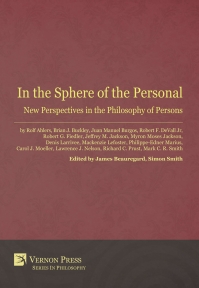
Some of the papers from the 13th International Conference on Persons in Boston in 2015 have now been published in the Vernon Press Series in Philosophy under the title In the Sphere of the Personal: New Perspectives in the Philosophy of Persons. The volume is edited by James Beauregard and Simon Smith, who both first joined the ICP at the 12th meeting at Lund in 2013, and, I am pleased to note, have now become leading forces in the institution that is the ICP. At least one volume of ICP papers have been published in the past, but it was a long time ago; the Lund papers should, as I understood it, have been published by two of the American participants, but this never happened. My friends and colleagues Jim and Simon deserve all credit for reviving ICP proceedings publication and bringing together this valuable volume. They also provide a long introduction, and there is a foreword by Thomas O. Buford, one of the ICP’s founders.
All conference papers are seldom included in volumes like this, which are almost always selections only. Yet it is somewhat surprising that the papers by Ralph Ellis, James McLachlan, and Phillip Ferreira are missing, as is Robert Cummings Neville’s introduction to the closing panel which, as far as I can remember, would have been quite possible to publish in this volume.
In this connection, I should perhaps explain why I declined to have my own paper – which was presented in a plenary session, together with Phillip Ferreira, on idealistic personalism – included. The reason is that I have discontinued all adademic publication after the decision last year of Prof. Thomas Kaiserfeld and Dr Monica Libell in the department of the history of ideas at Lund University that I can no longer teach there because of what they call my ideology, by which they mean my political views, and their public announcement of this in the biggest Swedish daily newspaper, Dagens Nyheter.
It is not just that this decision left me without any academic institutional affiliation, so that I no longer know how to present myself in connection with publication. More important is the unacceptable reason given by them for this measure taken against me. Except for my writing in this very modest blog, I have in fact withdrawn from all publication, teaching and lecturing because of the appalling things that are suddenly being said or suggested about me by some people who do not approve of my political positions.
It could have been the case that Lund had found someone more competent to take my place, and if so, I would not have protested in any way. I never held a formal position in the university. Given the strange political control of the academy in Sweden, it always seemed to me impossible to obtain such a position, and I hardly even tried. I taught regularly for twelve years, but only as an adjunct, and very little. In that sense at least, my teaching was not of any importance whatsoever for the university. My protest concerns only the violation of the principle of academic freedom that Lund’s decision represents as explained by them with regard to its motive, and not least the public announcement of this motive.
As to what they meant by my ideology, no explanation was given, although it was clear from Dagens Nyheter’s article that they shared its view of what my ideology was, and I had also been privately informed that this was the case. The background of and the reason for Lund’s decision and statement was the attack on me and a few others by the Expo foundation in Sweden, published on the website of their magazine in February 2015, an attack which had been referred to and repeated several times by Dagens Nyheter elsewhere in the press. But Expo has since withdrawn their article (written by Jonathan Leman) under threat of legal action.
It is not only that Expo’s and Dagens Nyheter’s allegations are untrue, as is obvious to anyone who has actually read what I have written on politics. The university’s motive, and statement about this motive, i.e. about my political positions, are unacceptable quite regardless of this. There has, to my knowledge, never been any complaint from either students or colleagues about my limited teaching, my few publications, or any other of my minor contributions to the life and work of the university, and none of this has ever been considered to have been unduly influenced by my political views.
Libell’s public statement to Dagens Nyheter – about Kaiserfeld’s decision and motive – means that what we have to do with here is an indefensible, explicitly political act on their part. I wish to draw attention to this fact, and to insist that this kind of measures from professors, department heads and university administrators must not be accepted or tolerated, even in such insignificant cases as mine. Their ideology should be rejected, they should not, in their academic capacities, embrace the ideology that is the basis of their action against me, they should be dismissed from the university.
I wish to thank those of my colleagues in the academic community as represented in other countries who have shown support in this new situation, and to thank them also for the kind interest in and great appreciation of my work that they have shown in the past. I may continue to attend the ICP because of my organizational responsibilities there, and perhaps also other conferences, but I don’t plan to present papers.
Whether or not my paper would have added anything of value to the present volume, it seems clear that the papers of the others mentioned above would. But even without them, there are several important ones, not least those contributed by Juan Manuel Burgos who also joined the ICP at Lund, and the ICP veteran Richard Prust. One of the papers on which I was the commentator in Boston is indeed so important that I should devote a separate post to it. Among arguments related to a misleading title, we find Rolf Ahlers discussing recent German scholarship on Jacobi – one of the central figures in my book The Worldview of Personalism – that confirms my own argument about the relation between him and German idealism, and is of considerable importance not only for personalism but for idealism studies.
This is the abstract of my paper, ‘Further Considerations on Personalism and Idealism’, at the 13th International Conference on Persons in Boston earlier this month:

Boston personalism was originally, and has to some extent remained, an idealistic philosophy. Borden Parker Bowne’s work represents, as does that of his British contemporary, Andrew Seth Pringle-Pattison, not least a further, independent development of central themes in German Spätidealismus in the 19th century. In this respect it differs considerably from the – often converging – main forms of European personalism, which are related to distinctly non-idealist currents such as phenomenology, existentialism, and neo-Thomism. In this paper I reexamine some aspects of the question of the relationship between personalism and idealism in the light of recent idealism scholarship and of a partial assessment of what can be considered to be of lasting value and relevance in idealism. Taking into account the European background of idealistic personalism, it is necessary to raise anew the fundamental issue of the definition of idealism, and to distinguish between some of its main versions, including a brief recapitulation of its transformations in the 20th century. My conclusion is that, whether or not personalism, as Bowne argued, is intrinsically and necessarily idealistic, the insights and resources of idealism remain not just valid but important and badly needed precisely for personalism.
Min gamle filosofiske vän och interlokutör, absolute idealisten Phillip Ferreira, i ännu en gemensam session med mig på 13:e ICP i Boston i förra veckan.
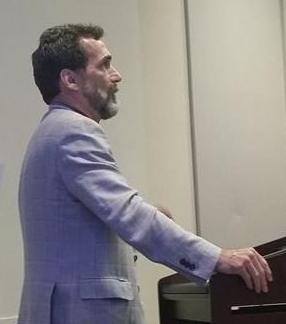
MONDAY, August 3
–
OPENING KEYNOTE ADDRESSES, 7:00 PM (CAS B12)
Knowledge and the Person
Wecome and Conference Information:
Randall Auxier, Southern Illinois University Carbondale (USA)
Chair and Introductions:
James Beauregard, Rivier University (Nashua, NH, USA)
“Apprehending the Person: Two Approaches”
Grzgorz Hołub, Pontifical University of John Paul II (Krakow, Poland)
“The Comprehensive Experience (Experiencia Integral): A New Proposal on the Beginning of Knowledge”
Juan Manuel Burgos, Universidad CEU San Pablo (Madrid, Spain)
–
TUESDAY, August 4
–
SESSION 1, 9:00-10:30
1A (Room B23): The Concept of the Person
Chair, Richard C. Prust, St. Andrews Presbyterian College
“Love, Identification and Equality: Rational Problems in Harry Frankfurt’s Concept of Person”
Jorge Martin Montoya, University of Navarra (Pamplona, Spain)
“Persons, Animals, and Clinical Normality”
William Jaworski, Fordham University (New York, NY, USA)
Commentator: Eleanor Wittrup, University of the Pacific (Stockton, CA, USA)
1B (Room B24): Person, Mind, Brain
Chair, Grzgorz Hołub, Pontifical University of John Paul II
“Neuroethics and Impersonalism: Value Revelation in Subjective Disclosure”
Denis Larrivee, International Association of Catholic Bioethicists (Ottawa, ON, Canada)
“Why Cognitivist Accounts of Personhood Fall Short”
Nils-Frederic Wagner, University of Ottawa (ON, Canada)
Commentator: Ralph Ellis, Clark Atlanta University (Atlanta, GA, USA)
1C (Room STH325): Moral Personhood
Chair, Randall Auxier, Southern Illinois University Carbondale
“Moral Personhood”
Sari Kisilevsky, City University of New York, Queens College (USA)
“The Linguistic Bounds of Personhood”
Ray E. Jennings, Simon Fraser University (Vancouver, BC, Canada), David McIntyre, Simon Fraser University (Vancouver, BC, Canada)
Commentator: Genevieve Wallace, Sacramento State University (CA, USA)
SESSION 2, 10:40-12:10
2A (Room B23): Personal Identity
Chair, Richard C. Prust, St. Andrews Presbyterian College
“Agency, Personhood, and Personal Identity”
Benjamin Yelle, Mt. Holyoke College (South Hadley, MA, USA)
“Pratical Concerns and Numerical Identity”
Maxwell Suffis, Rice University (Houston, TX, USA)
Commentator: Ben Abelson, City University of New York, Graduate Center (USA)
2B (Room B24): Ontological Dignity and Virtuous Knowing
Chair, Randall Auxier, Southern Illinois University Carbondale
“Wang Yangming on Personal Awareness as World-Awareness”
Joshua Hall, Emory University (Atlanta, GA, USA)
“A Process Ontology of Dignity”
John W. August III, Southern Illinois University Carbondale (USA)
Commentator: Robert C. Neville, Boston University (USA)
2C (Room STH325): The Self and the “I”
Chair, James McLachlan, Western Carolina University
“Imagining the Self: Lacan and Levinas on the Formation of the ‘I’”
Christopher Lucibella, University of Memphis (TN, USA)
“The Socio-historical Ordeal of Personhood: Remarks on Later Nietzsche and Freud”
Jeffrey M. Jackson, University of Houston, Dowtown (TX, USA)
Commentator: James McLachlan, Western Carolina University (Cullowhee, NC, USA)
PLENARY SESSION, 2:00-3:10 (CAS B12)
Chair: Richard C. Prust, St. Andrews Presbyterian College (Laurinberg, NC, USA)
“Teleology and Consciousness Theory”
Ralph D. Ellis, Clark Atlanta University (Atlanta, GA, USA)
3:10-3:40 Break
SESSION 3, 3:40-5:10
3A (Room B23): Psychological/Physical Continuity and Personhood
Chair, Jan Olof Bengtsson, Lund University
“Personal Identity in Alzheimer’s Disease: What Supports the Self When Memory Fails?”
Marie-Christine Nizzi, Harvard University (Cambridge, MA, USA)
Commentator: Michelle Maiese, Emmanuel College (Boston, MA, USA)
3B (Room B24): Higher Education, Race, and Societal Change
Chair, James Beauregard, Rivier University
“Dialectical Adherence to the Beloved Community: John G. Fee and the Founding of Berea College”
Eli Orner Kramer, Southern Illinois University Carbondale (USA)
“Pedagogical Personalism at Morehouse College from Benjamin E. Mays and Howard Thurman to Martin Luther King, Jr.”
Kipton Jensen, Morehouse College (Atlanta, GA, USA)
Commentator: Thomas O. Buford, Furman University (Greenville, SC, USA)
3C (Room STH325): Early 20th Century Personalism
Chair, Randall Auxier, Southern Illinois University Carbondale
“Phenomenological Resistance to Tyranny”
Jason M. Bell, Assumption College (Worcester, MA, USA)
“The Personalism of John MacMurray”
Fr. Bogumił Gacka, Cardinal Stefan Wyszyński University (Warsaw, Poland)
Commentator: John Hofbauer, Mount St. Mary’s College (Newburgh, NY, USA)
PLENARY SESSION, 5:30-7:15 (CAS B12)
Chair, Ralph D. Ellis, Clark Atlanta University (Atlanta, GA, USA)
“‘We Are Not Disposable’: People with Psycho-social Disorders and Social Justice”
Carol Moeller, Moravian College (Bethlehem, PA, USA)
“Dissociative Identity Disorder, Personhood, and Responsibility”
Michelle Maiese, Emmanuel College (Boston, MA, USA)
–
WEDNESDAY, August 5
–
SPECIAL SESSION, 9:00-11:30
4A (Room STH325): The Life and Work of Thomas O. Buford
Chair, Christopher Williams, University of Nevada
“Buford, Kohák, and a Renewed Understanding of the Personal Nature of Time”
John Scott Gray, Ferris State University (Big Rapids, MI, USA)
“Christianity and Intellectual Seriousness”
Mason Marshall, Pepperdine University (Malibu, CA, USA)
“Personalism and Global Bioethics”
James Beauregard, Rivier University (Nashua, NH, USA)
Commentator: Thomas O. Buford, Furman University (Greenville, SC, USA)
SPECIAL SESSIONS, 9:00-10:30
4B (Room B23): The Next Generation, Session Alpha
Chair, Fr. Bogumił Gacka, Cardinal Stefan Wyszyński University
“Eudaimonia, Catholicism, Sex, and the Person”
Madison Forbes, Bridgewater State University (Bridgewater, MA, USA)
“The Consolation of Philosophers: Recovering Dignity and the Self After Sexual Assault ”
Mackenzie Lefoster, Belmont University (Nashville, TN, USA)
Commentator: Grzgorz Hołub, Pontifical University of John Paul II (Krakow, Poland)
4C (Room B24): The Next Generation, Session Beta
Chair, William Jaworski, Fordham University
“Freedoms Undone: Domination by Agents and Structures in Pettit’s Republicanism”
Mariela Libedinsky, University of Toronto, St. George-Woodsworth College (ON, Canada)
“The Emergence of Personhood and its Importance in the Experience of the Sublime”
Leslie Micheal Murray, Southern Illinois University Carbondale (USA)
Commentator: Sofia Inês Albornoz Stein, Universidade do Vale do Rio dos Sinos (São Leopoldo, Brazil)
SESSION 5, 10:40-11:30
5A (Room B23): Howard Thurman’s Personalism
Chair, Thurman Todd Willison, Union Theological Seminary
“Reading Thurman as a Philosophical Personalist”
Kipton Jensen, Morehouse College
Commentator: Myron M. Jackson, Grand Valley State University (Allendale, MI, USA)
5B (Room B24): Is the Universe the Work of a Person?
Chair, Jan Olof Bengtsson, Lund University
“Persons, Theology, and Cosmology”
Gilbert Fulmer, Texas State University (San Marcos, TX, USA)
Commentator: Wesley J. Wildman, Boston University (USA)
SESSION 6, 11:40-12:30
6A (Room B23): Person and Emotion
Chair and Commentator, Ralph D. Ellis, Clark Atlanta University
“Emotion Makes the Person”
Eleanor Wittrup, University of the Pacific (Stockton, CA, USA)
6B (Room B24): Climate Change
Chair, Wesley J. Wildman, Boston University
“Personalism and Climate Change”
Thurman Todd Willison, Union Theological Seminary (New York, NY, USA)
Commentator: John W. August, III, Southern Illinois University Carbondale (USA)
6C (Room STH325): Personalism and Monotheism
Chair, Randall Auxier, Southern Illinois University Carbondale
“Personal Identity with and without Monotheism”
Richard C. Prust, St. Andrews Presbyterian College (Laurinberg, NC, USA)
Commentator: Kipton Jensen, Morehouse College (Atlanta, GA, USA)
AFTERNOON FREE
Optional group trip to Concord, MA (home of Emerson, Thoreau, Hawthorne’s Old Manse, Walden Pond, etc., site of the Battle of Concord).
–
THURSDAY, August 6
–
SESSION 7, 9:00-10:30
7A (Room B23): Self, Person, and Process
Chair, Richard C. Prust, St. Andrews Presbyterian College
“On the Mistaken Lexical Liberty of Conflating ‘Self’ and ‘Person’ in Philosophy”
Megan Roehll, University at Buffalo (NY, USA)
“Self and Person: Distinctions in Bergson”
Robert G. Fiedler, Southern Illinois University Carbondale (USA)
Commentator: Gilbert Fulmer, Texas State University (San Marcos, TX, USA)
7B (Room B24): Descartes and Locke
Chair, Ralph Ellis, Clark Atlanta University
“Persons and Passions: The Late Cartesian Account”
Mark C.R. Smith, Queens University (Kingston, ON, Canada)
“Mixed Modes and the Non-Existence of Lockean Persons”
Sam N. Johnson, University of Arkansas (Fayetteville, AR, USA)
Commentator: Laura J. Mueller, Luther College (Decorah, IA, USA)
7C (Room STH325): Hegel and Personhood
Chair, Phillip Ferreira, Kutztown University
“A Limit to the Market: Hegel and Personhood”
Victoria I. Burke, University of Guelph (ON, Canada)
“Holy Robot: Early German Idealism on Persons”
Rolf Ahlers, The Sage Colleges (Albany, NY, USA)
Commentator: Jan Olof Bengtsson, Lund University, Sweden
SESSION 8, 10:40-12:10
8A (Room B23): The Concept of Person
Chair, Jorge Martin Montoya, University of Navarra
“Salvaging a Concept of a ‘Person’”
Ben Abelson, City University of New York Graduate Center (USA)
“Looking into Objects, Dispositions and the Lockean Person-Making Properties”
Mihretu Guta, Durham University (Durham, England)
Commentator: Benjamin Yelle, Mt. Holyoke College (South Hadley, MA, USA)
8Bi (10:40-11:30) (Room B24): Law and Culture
Chair, Lawrence Nelson, Santa Clara University
“Roma-Integration: The Existential Tension Between Public Policy and the Person”
Philippe-Edner Marius, Legislative Fellow, Sate of New York (Albany, NY, USA)
Commentator: Jonas Norgaard Mortensen, think tank Cura
8Bii (11.30-12.10) (Room B24):
Chair, James Beauregard, Rivier University
“On Buford on Trust”
Nathan Riley, Independent Scholar (St. John’s, FL, USA)
Commentator: Thomas O. Buford, Furman University
8C (Room STH325): Schelling and Boehme
Chair, Randall Auxier, Southern Illinois University Carbondale
“Personhood in the Board Room: A Schellingian Account of Corporate Agency”
Myron M. Jackson, Grand Valley State University (Allendale, MI, USA)
“The Person and the Demon: Personality and the Possibility of Demonic Evil in Jacob Boehme”
James McLachlan, Western Carolina University (Cullowhee, NC, USA)
Commentator: Rolf Ahlers, The Sage Colleges (Albany, NY, USA)
PLENARY SESSION, 2:00-3:30 (CAS B12)
Chair: James McLachlan, Western Carolina University (Cullowhee, NC, USA)
“Further Considerations on Personalism and Idealism”
Jan Olof Bengtsson, Lund University (Sweden)
“Who Are the Real Impersonalists?”
Phillip Ferreira, Kutztown University (PA, USA)
SESSION 9, 3:40-5:10
9A (Room B23): The Metaphysics of Person
Chair, Ralph Ellis, Clark Atlanta University
“Personal Identity and the gumnos kókkos”
Thom Atkinson, University of Liverpool (England)
“Person and Incarnation”
Randall Johnson, Northern Illinois University (DeKalb, IL, USA)
Commentator: Matthew Donnelly, Southern Illinois University Carbondale (USA)
9B (Room B24): Law and Punishment
Chair, Joseph Harry, Slippery Rock University
“Returning to Redemption as a Theory for Justifying Punishment”
Brian J. Buckley, Santa Clara University (Santa Clara, CA, USA)
“An Ethical Perspective on Legal Personhood, Prenatal Humans, and Feticide Laws”
Lawrence Nelson, Santa Clara University (Santa Clara, CA, USA)
Commentator: Randall Auxier, Southern Illinois University Carbondale (USA)
9C (Room STH325): British Idealism
Chair, Jan Olof Bengtsson, Lund University
“No Free Lunch: Pringle-Pattison’s Ideas on Personhood, the Soul, and Personal Immortality”
Robert Devall, West Chester University (West Chester, PA, USA)
“Expression and Self-Knowledge”
Christopher Williams, University of Nevada (Reno, NV, USA)
Commentator: Phillip Ferreira, Kutztown University, PA, USA
CONFERENCE DINNER, 7:00 PM
Filippo’s Italian Ristorante, Boston’s North End
–
FRIDAY, August 7
–
SESSION 10, 9:00-10:30
10A (Room B23): Intention and the Person
Chair, John W. August III, Southern Illinois University Carbondale
“The Indexing Ego”
Matthew Z. Donnelly, Southern Illinois University Carbondale (USA)
Commentator: Mihretu Guta, Durham University (England)
10B (Room B24): Kant
Chair, Randall Auxier, Southern Illinois University Carbondale
“Imagination, Unfettered: Breaking the Sensuous Chains in Kant’s Critical Philosophy”
Laura J. Mueller, Luther College (Decorah, IA, USA), Randall E. Auxier, Southern Illinois University Carbondale (USA)
“Freedom and Value in Kant’s Practical Philosophy: the Core of Personhood”
Adriano Naves de Brito, Universidade do Vale do Rio dos Sinos (São Leopoldo, Brazil), Sofia Inês Albornoz Stein, Universidade do Vale do Rio dos Sinos (São Leopoldo, Brazil)
Commentator: Eli Orner Kramer, Southern Illinois University Carbondale (USA)
10C (Room STH 325): The Sign of the Person
Chair, Robert C. Neville, Boston University
“Quotational Characters: Subjectivity, Journalists, and the Persons Portrayed in News Journalism”
Joseph Harry, Slippery Rock University (Slippery Rock, PA, USA)
“Peirce on Person: Peirce’s Theory of Determination and Personality”
Cheongho Lee, Southern Illinois University Carbondale (USA)
Commentator: Christopher Williams, University of Nevada (Reno, NV, USA)
CLOSING PLENARY SESSION, 10:40-12:10 (CAS B12)
Chair: Jan Olof Bengtsson, Lund University (Sweden)
The Future of Persons and Personalism?
Randall Auxier, Southern Illinois University Carbondale (USA)
Robert C. Neville, Boston University (MA, USA)
 Michelle Maiese is Associate Professor of Philosophy at Emmanuel College in Boston. Her research focuses on issues in philosophy of mind, philosophy of psychiatry, and the emotions. In recent work, she has examined enactivism, the integration of emotion and cognition, and the nature of psychopathology. She is the author of Embodied Minds in Action (co-written with Robert Hanna, 2009) and Embodiment, Emotion, and Cognition (2011).
 Juan Manuel Burgos is a leading personalist philosopher in the Spanish-speaking world with a growing influence in Europe and America. He is Profesor Titular at the University San Pablo CEU in Madrid and has been a guest professor and delivered conferences in Britain, USA, Poland, Mexico, Sweden, Argentina, Chile, Colombia and many other countries. He is also the founder and president of the Spanish Association of Personalism and of the Asociación Iberoamericana de Personalismo, and founder and editor of Quién. Revista de Filosofía personalista. Burgos specializes in anthropology and personalism; among his books are Antropología: una guía para la existencia, Repensar la naturaleza humana, and Introducción al personalismo. Some of them have been published in Polish and Portuguese translations, and the last mentioned is currently being translated into English. Studies of Burgos’s philosophy have been published by Beauregard, Bermeo, Seifert and others.
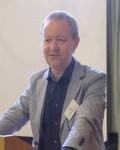 Jan Olof Bengtsson teaches the history of ideas at Lund University in Sweden. He is best known for his book The Worldview of Personalism: Origins and Early Development, to which a special issue of the journal The Pluralist was devoted in 2008. He has published articles and book chapters on personalism, idealism, and so-called value-centered historicism, the most recent being a chapter on the origins and meaning of the German concept of “late idealism” (Spätidealismus). He is the author of the entries on personalism in The Stanford Encyclopedia of Philosophy (with Thomas D. Williams) and Springer’s Encyclopedia of Sciences and Religions. He has also published a Swedish introduction to and translation of Eric Voegelin’s Wissenschaft, Politik und Gnosis. He regularly attends conferences on personalism and idealism in Europe and America, and, in 2013, organized the 12th International Conference on Persons at Lund.
 Olle Bengtsson