The conference venue is one of the several buildings of the new, administratively rationalized mega-department of “Arts and Cultural Sciences”. It is the work of the architect Salomon Eberhard Sörensen (1856-1937), and was built in 1896 in Neo-Renaissance style. The interior is dominated by a huge staircase which connects three of the four floors, but there is also a lift connecting all four floors. There are excellent spaces for coffee breaks, but no meals will be served here. We expect all to prefer to go out in beautiful Lund to choose their own restaurants for lunches and dinners (except for the Conference Dinner which will be advertised later). The address is Biskopsgatan 7.
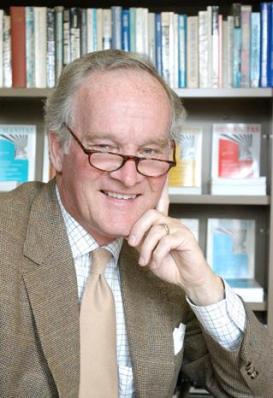
Claes G. Ryn is Professor of Politics at the Catholic University of America, Chairman of the National Humanities Institute in Washington, D.C., editor of Humanitas, former President of the Philadelphia Society, President of the Academy of Philosophy and Letters, and Honorary Professor at Beijing Normal University. Born and raised in Sweden, he is widely published on both sides of the Atlantic and in China. He lectures widely and is a frequent guest on television and radio. In 2000 he gave the Distinguished Foreign Scholar Lectures at Beijing University. Among his books are Democracy and the Ethical Life, Will, Imagination and Reason, The New Jacobinism, America the Virtuous, and A Common Human Ground. He recently published the novel A Desperate Man.
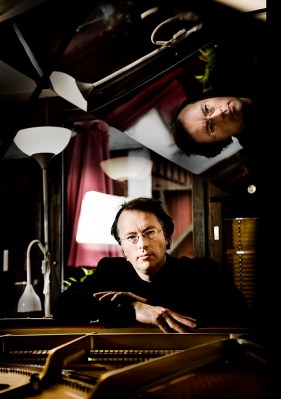
Fredrik Ullén is professor of cognitive neuroscience at Karolinska Institutet in Stockholm, whose Nobel Assembly awards the Nobel Prize in Physiology or Medicine. His research focuses on neurobiological mechanisms of expertise, learning, and creativity, with special emphasis on musical expertise and musicianship. A major current effort is to analyse various questions related to the biology of music from a neurogenetic perspective, in collaboration with the Swedish Twin Registry.
Ullén is also an internationally well-known pianist, whose repertoire includes many of the most complex and demanding works in the piano literature, such as Ligeti’s complete piano études, Reger’s Spezialstudien and Sorabji’s Études transcendantes, but who is also interested in creative programming with couplings of new and traditional literature.His solo CDs have been enthusiastically praised by internationally renowned critics and have received a number of prestigious awards. Ullén is a member of the Royal Swedish Academy of Music.
Among cheaper hotels (i.e., cheaper than Concordia, which offers the special conference rate mentioned in the Call for Papers) are Ahlström and Sparta.
Some links to websites providing information about Lund and Lund University have been added in the sidebar on the conference site: one to Lund’s Tourist Office, one to InfoLund, and one to the official website of Lund University. Two Wikipedia articles which have been deemed passable have also been added, one about the city and one about the university.
We have the pleasure to advertise the internationally well-known philosopher – primarily but not exclusively philosopher of religion – Keith Ward as our keynote speaker.
Ward has not only written much on personhood and its meaning, but has also done pioneering work in comparative philosophy and comparative theology, studying most of the world’s major traditions of thought. The latter too is relevant since we seek to make comparative perspectives on personhood one theme of this conference (not to the exclusion of anything else!), hoping to have more scholars – and also representatives – of non-Western traditions as speakers.
Ward has been F. D. Maurice Professor of Moral and Social Theology and Professor of the History and Philosophy of Religion at the University of London, and Regius Professor of Divinity at Oxford. After retiring from the last of these posts in 2004, Ward has taught at Gresham College in London as Gresham Professor of Divinity; this is one of his lectures there (1-6):
By the 1970s Personalism of the Boston University, Harvard, and California varieties had all but disappeared from discussions in the American philosophical community. The only exceptions were the Personalistic Discussion Group meeting each year at the American Philosophical Association, Eastern Division and the Society for the Advancement of American Philosophy. Tom Buford at Furman University, was confident teachers of philosophy across the United States were discussing in their classes themes close to the heart of Personalism. In 1983 at the APA in Baltimore, Maryland, Buford over lunch with Erazim Kohak, Boston University, discussed bringing Personalism back into the American philosophical community with a journal that Tom Buford would edit, publish, and distribute at Furman University. The Personalist Forum, named by Kohak, began publication in 1985. But, Buford wanted the conversation to include philosophers in Europe. He dreamed of an international meeting alternating between the United States and Europe and widening the discussion to include any area of philosophy that took persons seriously. But, how do that? A contact in Europe was the key.
In the Fall of 1987 Charles Conti of the University of Sussex visited a friend in Clemson, South Carolina. John Lavely, Professor of Philosophy at Boston University, encouraged Charles to contact Buford. They made arrangements for Conti to drop by Buford’s home in Greenville, a city close to Clemson. After the game Conti and Buford met; over a plate of tacos Buford shared his dream. They agreed informal discussions were taking place and that both a journal and an informal institutional setting was needed. Buford proposed a conference, Conti suggested his college at Oxford, Mansfield, and they agreed to hold it in the summer of 1989. The next summer, 1988, Buford visited Conti at his home in Brighton, England to formulate a call for papers.
By that time Conti had made arrangements with Mansfield College to hold the conference the following summer. The conception was to focus on and limit the scope to serious discussions of persons, whatever the philosophical tradition or framework. Within that broad umbrella personalists could discuss themes important to them and clarify, modify, and defend their thought in conversations with philosophers from other persuasions. The first call for papers expressed that conception. Buford and Conti agreed to call the meeting “International Conference on Persons.” Buford handled the program, and Conti local arrangements.
The first International Conference on Persons was held at Mansfield College, Oxford in the summer of 1989 with approximately 90 in attendance.
Papers in any area or discipline are welcome, so long as their themes are relevant to the ideas and concepts of persons, personhood, and personality as a philosophical, theological, psychological, social, political, historical, creative, or linguistic concern.
Papers must not exceed a length of 3000 words and should be prepared for blind review.
In the e-mail sent with the submission, we require the following eight items:
1. word count – 3000 words maximum
2. author’s name
3. academic status (professor, unaffiliated, graduate student)
4. institutional affiliation (if any)
5. mailing address
6. e-mail address
7. the paper’s title
8. an abstract – 200 words maximum
Submission deadline for abstracts is MAY 1, 2013. Full papers will be reviewed on a rolling basis, since travel plans for some need to be made well in advance. Submissions of complete papers will be refereed as soon as they are submitted. Those who submit abstracts will receive preliminary approval of the abstract, but full acceptance depends upon the complete text, due by JUNE 1, 2013.
No more than one submission by the same author will be considered.
Email as an attachment a copy of your paper and/or abstract in rich text format to:
Each paper will have a commentator. Persons whose papers are accepted will be expected to serve as commentators, if asked. Others interested in commenting should send a note to the conference e-mail address above by June 15 detailing availability and areas of interest. Copies of papers will be available by July 1 or earlier. E-mails of authors will also be available for purposes of sending your commentary in advance of the conference.
WEBSITE
The conference website provides information about travel, accommodation, registration, confirmed speakers etc. as it becomes available:





 Olle Bengtsson