The Mandarins and the Masses
Ivan R. Dee, 2005 Amazon.com
Back Cover:
 This new collection of essays by the author of Life at the Bottom bears the unmistakable stamp of Theodore Dalrymple’s bracingly clearsighted view of the human condition. It suggests comparison with the work of George Orwell. In these twenty-six pieces, Dr. Dalrymple ranges over literature and ideas, from Shakespeare to Marx, from the breakdown of Islam to the legalization of drugs. Informed by years of medical practice in a wide variety of settings, his acquaintance with the outer limits of human experience allows him to discover the universal in the local and the particular, and makes him impatient with the humbug and obscurantism that have too long marred our social and political life. His writings are incisive yet undogmatic, beautifully composed and devoid of disfiguring jargon.
Reviews:
“Dalrymple writes a clear and considered prose that makes him formidable indeed.” David Pryce-Jones, Book Review Digest
“Theodore Dalrymple has succeeded (once more) in publishing a book that is both thoughtful and absorbing.” Paul Hollander, New York Sun
“Dalrymple is a writer of genius: lucid, unsentimental, and profoundly honest…He is one of the great essayists of our time…The brutal, penetrating honesty of his thinking and the vividness of his prose make Theodore Dalrymple the George Orwell of our time.” Denis Dutton, Editor Arts and Letters Daily
“His gift for storytelling will keep readers turning pages.” The Christian Century
“Theodore Dalrymple is the best doctor-writer since William Carlos Williams.” Peggy Noonan
“There is so much learning and unconventional wisdom in it that you want to make the reading last.” Norman Stone
“Theodore Dalrymple is the Edmund Burke of our age.…Our Culture, What’s Left of It is not simply an important book, it is a necessary one.” Roger Kimball
“Dalrymple’s moral courage shines through the most. Compelling reading; highly recommended.” Library Journal
“Engrossing. Dalrymple is intelligent, witty, uncommonly perceptive about human affairs, and scathingly honest about human folly.” Edward J. Sozanski, Philadelphia Inquirer
“It’s rare for someone to produce a work on social issues that is so readable.” Kevin Walker, Tampa Tribune
“Insightful….[Dalrymple is a] profound British social critic.” Thomas Sowell, Nationally Syndicated Columnist
“Striking. Most collections of essays are lackluster affairs, but Dalrymple’s is an exception.” Jacob Heilbrunn, The New York Times
“Penetrating analysis and literary eloquence make the book a worthy read for anyone concerned with the fate of civilization.” Andrew Martin, Courier-Journal
“The manner in which Dalrymple wields his critical scalpel fixes our attention…he makes no promise to fix our condition.” Jay Martin, Antioch Review
“It’s rare to find such a morally coherent, historically informed and human account as Our Culture, What’s Left of It.” Rev. Johannes L. Jacobse, Town Hall
“Whether you find Dalrymple refreshing or infuriating will depend on your political point of view. Dalrymple calls them as he sees them, and there is not an ounce of political correctness in him.” Bruce Ramsey, The Seattle Times
“Ridiculously prolific and a favorite of bloggers…He’s one of the very best social critics of our age.” Brothersjudd.Com
“The book is elegantly written, conscientiously argued, provocative and fiercely committed…measured polemics arouse disgust, shame and despair: they will shake many readers’ views of their physical surroundings and cultural assumptions, and have an enriching power to improve the way that people think and act.” Richard Davenport-Hines, Times Literary Supplement
“Theodore Dalrymple makes a devastating diagnosis of liberalism’s recent ills.” Randy Boyagoda, Globe and Mail
“Dalrymple has acquired a following on the sarcastic right; if anything, the thoughtful left should be reading him.” Geoffrey Wheatcroft, Newstatesman.Com
“Terrific….Dalrymple is direct and his judgments are so true.” Stanley Crouch, New York Daily News
“[This book] depicts the crucial problems in western culture in beautifully rich prose.” Gregory L. Schneider, Topeka Capital–Journal
“Dalrymple is able to say things with an authority few have.” Michael Platt, Society
“The sobering, fiery and ominous truth.” Stanley Crouch, Tulsa World
“This highly intelligent and perceptive writer never hesitates to ‘tell it like it is’.” Angela Ellis-Jones, Salisbury Review
“These bracing essays horrify, irritate, enlighten, amuse. They also stir you to remember, as Dalrymple puts it, what we have to lose.” Roger Kimball, New York Sun
“Read the words of a man who has been on the street…who brings a vast intelligence to his conclusions.” Stanley Crouch, Independent
“A clear-eyed assessment of the human condition at the beginning of the 21st century.” H. J. Kirchhoff, Globe and Mail
“Surgically incisive essays by a British psychiatrist who deserves to be considered the George Orwell of the right.” Charlotte Observer
“Dalrymple paints a chilling portrait of what is happening these days in France.” James K. Fitzpatrick, Wanderer
“Another classic book…by Theodore Dalrymple.” Thomas Sowell, Post Chronicle
 Mrs. Graglia traces the origins of modern feminism to the post-war exaltation of marketplace achievement, which bred dissatisfaction with women’s domestic roles. In a masterly analysis of seminal feminist texts, she reveals a conscious campaign of ostracism of the housewife as a childish “parasite”. Turning to the feminist understanding of sexuality, now pervasive in our culture, she shows how it has distorted and impoverished sex by stripping it of its true significance. Finally, after exposing feminism’s totalitarian impulse and its contribution to the “tangle of pathologies” that have left marriage and family life in tatters, she argues for a renewed appreciation of the transforming experience of motherhood and the value of the domestic vocation. The Wall Street Journal extols Domestic Tranquility as “a thinking woman’s argument for putting family first.” William Kristol calls the book “a stunningly bold and deep assault on the most powerful movement of our time-feminism. A genuinely thought-provoking book.” Danielle Crittenden of The Women’s Quarterly praises it as “a stunning indictment of the women’s movement and its radical vision of female equality. Carolyn Graglia is a courageous thinker.”
 Julius Evola’s writing covered a vast range of subjects, from a distinctive and categorical ideological outlook and has been extremely influential on a significant number of extreme right thinkers, activists and organisations. This book is the first full length study in English to present his political thought to a wider audience, beyond that of his followers and sympathisers, and to bring into the open the study of a neglected strand of contemporary Western thought, that of traditionalism.
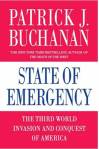 “The one absolutely certain way of bringing this nation to ruin, of preventing all possibility of its continuing to be a nation at all, would be to permit it to become a tangle of squabbling nationalities,” said Theodore Roosevelt. State of Emergency will demonstrate that this is exactly what is happening to America and may now be unstoppable.
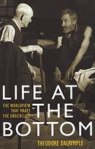 Here is a searing account of life in the underclass and why it persists as it does, written by a British psychiatrist who treats the poor in a slum hospital and a prison in England. Dr. Dalrymple’s key insight in Life at the Bottom is that long-term poverty is caused not by economics but by a dysfunctional set of values, one that is continually reinforced by an elite culture searching for victims. His book draws upon scores of eye-opening, true-life vignettes that are by turns hilariously funny, chillingly horrifying, and all too revealing – sometimes all at once. And he writes in prose that transcends journalism and achieves the quality of literature.
