
Photo: Elke Wetzig Click to enlarge
Photo: Elke Wetzig Click to enlarge
Voegelin is controversial to some Christians in that he locates some of the sources of the immanentizing reinterpretations in the New Testament itself, notably in some passages of St Paul and in the Revelation of St John. He points to Augustine as the one who saved the differentiational insights through his rejection of literalistic interpretations and the applications of the Biblical prophecies and visions to the course of worldly history which had been practiced by some of the earlier Fathers: the prophecies and visions must be considered mysteries, man cannot know precisely what they mean, they refer rather to events in relation to transcendence than to worldly history, and knowledge of the future course of the latter is beyond man.
Yet there can of course be no doubt about the novelty of the early modern immanentizers’ interpretive ingenuity. Francis Bacon and the British radical Puritans and their European advisors set about fulfilling the prophecies through scientific discovery, technical inventions, social engineering, and military conquest. The new elements were so prominent that the description of the new heavens and the new earth with the help of the Biblical texts was soon no longer credible. In the course of secularization, the apocalyptic disruptivity of divine intervention and the establishment of the Kingdom of God was replaced by a peaceful and gradual providential guidance of the individual, not to salvation through Christ but, through the use of the new worldly instruments, towards the realization of a secular, materialistic kingdom of human happiness defined in terms of sensual pleasure. Calculating, unaided human reason on the one hand, and increasingly sentimental human emotion on the other, could reach predictive knowledge of the providential plan, of God’s will.
The role of the esoteric tradition in the rise of modern science has become a commonplace in the history of science; during the scientific revolution and the Enlightenment it was to a considerable extent magic modes of thought, not least their impetus towards exploitative power and control, that came to dominate Western culture through official, political sanction and institutional embodiment. But other aspects of the influence of esotericism on Western modernity have only recently been better understood. The precise connections between the various strands of modern thought and the underlying, impersonalistic, pantheistic revolution have become much more easily visible.
It has become clearer, for instance, how in decisive respects the radical Enlightenment started already in the seventeenth century, mainly inspired by Spinoza. [See Jonathan I. Israel, Radical Enlightenment: Philosophy and the Making of Modernity, 1650-1750 (2001).] With a better understanding of Spinoza’s esoteric connection, it has become possible to some extent to see him, like Hegel, as a link between Western esotericism and a secular modernity characterized by closed immanentism and moral relativism. In the emergence of the radical Enlightenment, the proclamations of atheism both alternate with and are prepared by a process of ingenious hermeneutic compromise, ambiguity, and dissimulation. Before the triumph of Newtonianism, Hobbes was forced to devote much of his Leviathan to scriptural exegesis, thus becoming a pioneer of the characteristic strategic devices of liberal Christian scriptural interpretation. And also more generally, the rejection of the differentiational framework took place through reinterpretation and not through a clean break with the concepts of the past. Yet the rejection was none the less radical for being gradual and deceptively roundabout in its method. [This account of early modern developments is found also, with more references to and discussion of recent scholarship of the esoteric tradition in modernity, in my ‘Idealism and the Pantheistic Revolution: The “Big Picture” and Why it is Needed’, in James Connelly and Stamatoula Panagakou, eds, Anglo-American Idealism: Thinkers and Ideas (2010).]
From the perspective of personality and differentiation, Spinoza, who carried on Hobbes’ project not least with regard to the understanding of scripture, must certainy be seen as a key thinker of modernity, since in him so many of the decisive early modern developments converged and culminated, and since his influence was quite as strong on the romantic wing of modernity as on the subsequent development of the rationalism which he himself represented. He is one of the prime releasers of the metaxical tension, one of the master closers of the differentiational gap. With the new, fashionable esprit de géométrie that his wild forerunners had lacked, Spinoza sought to show that God and nature are identical and spirit and matter strictly nothing but two aspects of the same thing. This was the consummate pantheistic synthesis of the Gnostic and Hermetic currents with Descartes’ rationalism and Hobbes’ irrational-mechanistic anthropology and reinterpretive scriptural exegesis.
Official Music Video 1995
The Worldview that Makes the Underclass
Ivan R. Dee, 2003 (2001) Amazon.com
Back Cover:
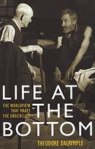 Here is a searing account of life in the underclass and why it persists as it does, written by a British psychiatrist who treats the poor in a slum hospital and a prison in England. Dr. Dalrymple’s key insight in Life at the Bottom is that long-term poverty is caused not by economics but by a dysfunctional set of values, one that is continually reinforced by an elite culture searching for victims. His book draws upon scores of eye-opening, true-life vignettes that are by turns hilariously funny, chillingly horrifying, and all too revealing – sometimes all at once. And he writes in prose that transcends journalism and achieves the quality of literature.
The United Nations and the Emerging New World Order
Western Islands, 1992 Amazon.com
Back Cover:
 “With the UN we are contending against not only the natural tendency toward the accumulation of power in government, but also a long-standing, organized conspiracy of powerful forces to build, piece by piece, step by step, an omnipotent global government.” William F. Jasper
Mr. Jasper’s carefully documented book demolishes the illusion that the world is safer following the apparent demise of communism. A new world order under the United Nations would mean:
– An end to your God-given rights guaranteed by the U.S. Constutition
– National and personal disarmament
– Conscription into a UN army of police force to serve at the pleasure of the UN hierarchy
– Loss of parental rights to raise your children according to your personal beliefs
– Coercive population control that will determine when – or if – you may have children
– Communist-style dictatorship and ruthless terror, torture, and extermination to cow all peoples into submission
Chapters:
1 The New World Army
2 In the Name of Peace
3 The UN Founders
4 Reds
5 The Drive for World Government
6 Treaties and Treason
7 The Gobal Green Regime
8 The UN Grab for Your Child
9 The UN War on Population
10 The New World Money System
11 The Compassion Con
12 The New World Religion
13 UN Regionalism – The European Community
14 Get US Out!
Review:
“Skeptics and doubters have met their match; there is no way to discredit William Jasper’s message. This remarkable book is far more than just a compendium of facts; Jasper offers instruction in political theory, the wisdom of our founding patriots, the essence of human nature, and world politics from 1900 to the present.
Jasper’s goal is not merely to present relevant facts, but to present them in such a comprehensive, related way that their full meaning and significance open the reader’s mind to what is really happening in our time. No other writer known to this reviewer has covered this material or this time span with both the devotion to incisive detail and the ability to pull all the threads together that Jasper demonstrates. His picture makes sense out of incoherence. After 45 years of misinformation and obfuscation about the UN, here at last its role becomes crystal clear.” The New American
About the Author:
William F. Jasper is a senior editor of The New American magazine and was a contributing editor to its predecessor, The Review of the News. He has written extensively on a wide array of topics, including the European Community, the United Nations, Central America, terrorism, espionage, Soviet disinformation, the new world order, subversive organizations, and abortion.
Mr. Jasper is a widely respected authority on education, immigration, and environmental issues. His articles from the UN Earth Summit in Rio de Janeiro provided some of the most informative and incisive reporting on that event available to American readers. He is in high demand as a speaker on many subjects and is a regular guest on radio and television programs across America.
A native of Idaho and a graduate of the University of Idaho, William Jasper joined The John Birch Society staff in 1976 and served as Director of Research for the West Coast office. He lives in California with his wife Carmen and two sons.
JOB’s Comment:
A revised and updated edition of this book was published in 2001 under the title The United Nations Exposed. Jasper is, as far as I have been able to see, the JBS’s best writer in recent decades. JBS’s publications are often characterized by the society’s onesided libertarianism and its too speculative interpretations and conspiracy theories. But these things are at a comparative minimum in this book. Jasper does overlook how it has in fact been possible in some cases to use the UN to oppose at least some aspects of and agents in the problematic kind of globalization that the organization often embodies and is a main vehicle of in today’s world. In some areas which are not among those extensively focused on by Jaspers, it is also important to note how his American perspective is different from and doesn’t always duly consider that of other and smaller nations. But the book (both the original and the updated edition) is quite well-written and well documented, although of course not without problematic interpretations. Much of the criticism of the UN is on target. This is a refined version of the JBS worldview, on a new and higher level, with a wealth of new facts. The countless naïve, ignorant, and thoughtless defenders of the UN must begin to take into account the kind of evidence here presented of at least part of the ideological roots of, the interests behind, and the true nature and purpose of the organization.
In other words, I don’t think it can all be dismissed as the product of the ignorance and stupidity of lower-level American capitalists who cannot understand communism and just read the latest stages of the development of capitalism itself, which threatens their interests, as identical with it. There were real, problematic aspects of communism at the time the JBS was founded, inasmuch as it had not yet understood the relation between its general grasp, in the broad perspective of history, of the development of human society in material, technical, scientific, economic and political terms, on the one hand, and the legacy of valid and essential moral and cultural values, and especially spirituality, on the other. Humanity still needed the adequate revelation of and form for the great spiritual tradition that was adapted to our age. But the higher-level monopoly and finance capitalism, which the UN to such a great extent always served, was and is indeed part of the same problematic main current of modernity.
Samtidigt som för Ryn försvaret för de historiskt-organiskt framvuxna grupperna och mellanmakterna är en nödvändig beståndsdel i den kultur- och politisk-filosofiska förståelsen, är också försvaret av statsmaktens legitima uppgifter väsentligt. Men dessa uppgifter har inte med byråkratisk-centralistisk kontroll och reglering av medborgarnas liv att göra, utan med upprätthållande av den konstitutionella ordningen, den långsiktiga högre inriktningen, den offentliga moralen, den civiliserade “andan” i de offentliga affärerna, helhetens värden och normer, liksom de till dessa hörande och för dessa nödvändiga estetiska och stilmässiga former som i sig själva förmår förmedla något av förståelsen för det mänskliga livets högre mening, mål och värdighet.
Statsmaktens uppgift är självfallet också att ingripa mot och aktivt motverka partikularistiskt egoistiska missbruk av skilda slag i de lokala intressegrupperingarna, såväl som att på olika sätt uppmuntra dessas och enskilda individers helhetens moraliska intressen befrämjande strävanden. Dess intressen inskränker sig inte till det blott formella politiska och rättsliga reglerandet.
I motsats till en viss vanlig typ av försvarare av den amerikanska konstitutionen hävdar Ryn att ingen konstitution är fullkomlig och tidlöst giltig, utan måste kunna ändras och anpassas när nya insikter om hur den bättre kan tjäna det bestående moraliska målet framkommer. [Democracy and the Ethical Life, 175.] Men den konstitutionella demokratin upprätthåller strikta kriterier för hur en sådan förändring i sådana fall skall gå till. [Ibid. 159.]
Den plebiscitära demokratin tenderar enligt Ryn att rasera allt som står mellan den enskilde individen och staten. Hos Rousseau förenas individualismen och kollektivismen, individerna lösrycks från sina organiska sammanhang, men uppgår samtidigt som uniforma moment i folkets totalitet, och deras politiska vilja måste därvid också bli en: la volonté générale. Inget arrangemang finns längre för de mångfaldiga intressenas sammanjämkning och samexistens och för minoritetsopinionernas skydd. Majoritetens vilja är alltid den rätta. Till grund för denna ordning ligger en människosyn som innebär ett radikalt brott med den klassisk-kristna traditionen. Rousseau förnekar människans dubbla natur: människan är av naturen god, och om hon blott befrias från de bojor samhällets och kulturens organiska sammanhang fängslat henne i, skall den naturliga godheten av sig själv träda fram och skapa ett tillstånd av harmoni mellan individ och kollektiv. [Ibid. 102 ff.]
Med dess tilltro till de tillfälliga majoriteternas rätt och direktdemokratins moraliska överlägsenhet är den plebiscitära demokratin den politiska motsvarigheten till den lägre romantikens moraliska monism, urskillningslösa bejakande av spontana impulser, och illusoriska tro på människans naturliga godhet. Den konstitutionella demokratin är den politiska motsvarigheten till den klassisk-kristna traditionens etiska dualism och insikt i den moraliska och kulturella disciplinens och restriktionens nödvändighet.
Den plebiscitära demokratin leder, åtminstone på lång sikt, till omintetgörandet av samhällets moraliska mål och underminerar därmed folkstyret som sådant. [Ibid. 192.] Betoning av folkviljans obegränsade auktoritet förenas ofta med långtgående centralisering och t.o.m. totalitära styresskick. [Ibid. 191.] Endast på grund av sin monistiska tro på människans naturliga godhet kan Rousseau framställa sin lära om den tillfälliga majoritetens rättmätiga makt. Är den moraliska monismen falsk, måste istället det styresskick som befrämjar den i detta fall nödvändiga självdisciplinen sökas. [Ibid. 154, 161 f.]
Till skillnad från Lindbom och andra som helt enkelt avfärdar folksuveränitetsprincipen överhuvudtaget, eller som hållbar grund för demokratin, [Se förutom Lindbom även Christian Braws essä ‘Demokrati’, i Kulturkampen (1983, utg. under pseudonymen F. J. Nordstedt), särskilt s. 86-9.] vill Ryn främst, utan att dock särskilt betona begreppet, poängtera att den, och det folkliga självstyret i allmänhet, kan förstås antingen som att folket i varje ögonblick är fritt att handla som det vill, eller att det kan handla endast under vissa restriktioner. Om den första betydelsen skall vara den riktiga, utesluter detta icke folkets eget avskaffande av demokratin och dess införande av något annat statsskick. Historicisten Ryn säger naturligtvis inte att andra politiska system per definition är illegitima, och förvisso kan sådana vara överlägsna den plebiscitära demokratin, även om sådana som den plebiscitära demokratin själv tenderar att frambringa sannolikt inte är det. Vad Ryn säger är att den första betydelsen, som motsvarar plebiscitarismen, tenderar att antingen vara självmotsägande eller utopisk, och reducera demokratibegreppet till meningslöshet. Ty så snart man säger att folket inte ska kunna avskaffa demokratin själv har man redan accepterat den andra betydelsen. Och detta innebär i sin tur att den andra betydelsen i verkligheten är den enda som är förenlig med folksuveränitetens och det folkliga självstyrets begrepp sådana Ryn här räknar med att de flesta menar att dessa bör kvarhållas och försvaras. Demokrati är inte det enda legitima politiska systemet. Men ska vi försvara demokratin blir den, om vi tydligt håller plebiscitarismens ytterlighetskonsekvens närvarande som en reell möjlighet, liktydig med konstitutionell demokrati. Det populistiska direktstyret av de tillfälliga majoriteterna blir oförenligt med själva föreställningen om demokrati. [Democracy and the Ethical Life, 160 f.]
Men även om den plebiscitära demokratin inför denna enda inskränkning av folkstyret – att det icke äger rätt att avskaffa sig självt – visar Ryn hur detta är otillräckligt. Ytterligare restriktioner är nödvändiga, då de motsvarar krav som stammar ur individens eget moraliska samvete. [Ibid. 164.] På detta sätt söker Ryn definiera demokratin på ett sätt som ska undgå exempelvis en Lindboms kritik, och kunna upprätthålla en objektiv standard bortom den obegränsade folkviljans potentiellt relativistiska uttryck och konsekvenser.
Ryn kritiserar också nationalismens och militarismens moderna fenomen och deras försvar i Du contrat social. Hans organiska helhetstänkande är ett annat än den statsidealisms, med rötter i de moderna formerna av immanentistisk panteism och monism, för vilken nationen överordnades alla andra värden och rättsliga och moraliska principer. Historiskt tenderade under 1800-talet inte bara den sentimentala humanitarianismen utan även nationalismen ofta att förvanska den striktare och egentliga, klassiskt idealistiska humanismens tradition. Ryn tar avstånd från nationalism som ett karaktäristiskt uttryck för de moderna idéhistoriska och politisk-filosofiska strömningar han huvudsakligen vänder sig mot – även den kan exempelvis även i sig vara ett uttryck för lägre-romantisk eskapism – samtidigt som han försvarar som naturlig ett mått av sund, klassisk patriotism. [The New Jacobinism, kap. 6.]
Nödvändigheten att se den vetenskapliga rationaliteten i sitt sammanhang med fantasin, det filosofiska förnuftet, och viljan motsvaras inom Ryns politiska filosofi av nödvändigheten att förstå de formella demokratiska, konstitutionella arrangemangen och marknadens formella friheter i samband med den helhetliga kulturen, de organiskt framvuxna lokala gemenskaperna, utbildningen, den individuella livsföringen, samhällsandan, historiens kontinuitet. Dessa friheter måste relateras till kulturen, det räcker inte med isolerade, abstrakta rationella argument och kalkyler eller blott formella politiska och ekonomiska lösningar. Inte blott romantikens och konservatismens organismtanke utan också den klassiska tyska sociologins Gemeinschaft-Gesellschaft-tänkande lever här i viss mån vidare i modifierad form. Frikopplade från de organiska helheterna – moraliska, estetiska, filosofiska, samhälleliga, historiska – riskerar de formella operationerna, såväl intellektets som politikens, rättens och ekonomins, ofta att snarare tjäna destruktiva krafter. De mer specifika konstitutionella arrangemangen måste också anpassas till varje folks särpräglade kulturtraditioner och egenart. [Democracy and the Ethical Life, 181.]
För Burke måste konstitutionen växa fram, den kan ej skapas utifrån ett abstrakt, rationalistiskt schema. Det var givetvis en utmaning för Kirk och andra att uttolka den amerikanska konstitutionen i burkeanska termer, och den övertas också av Ryn. I hög grad handlar argumentationen om det s.a.s. allmänna konstitutionella resultatet, inte bara det skrivna dokumentet. I centrum står tonvikten på skillnaderna mellan den amerikanska och den franska revolutionen och deras följder, på de olika bakomliggande upplysningstraditionerna, på den amerikanska maktdelningen, senatens aristokratiska princip, den mer autentiska klassiska inspirationen, kopplingen till det av Burke försvarade arvet från 1688 – allt det som, återigen, gjorde att den amerikanska revolutionen rentav kunde försvaras som “a revolution not made, but prevented”. De allmänna konstitutionella resultaten ses också som en distinkt produkt av en mer allmän, historisk, till Amerika överflyttad och varierad kultur, i första hand brittisk. [Se om allt detta Kirk, The Conservative Mind (1953), Edmund Burke: A Genius Reconsidered (1967), The Roots of American Order (1974), America’s British Culture (1993), Rights and Duties: Reflections on Our Conservative Constitution (1997).] Hela denna karaktäristiska konservativa tolkning är förstås en fortsättning och amerikansk tillämpning av Burkes definierande projekt att tänka bort den borgerliga revolutionens radikalitet och läsa in ett maximum av historisk kontinuitet.
Om Hamilton, Madison och Jay för Ryn representerar den ursprungliga konstitutionella andan i USA, så står Jefferson – med de vanliga reservationerna för motstridiga tendenser också hos honom – för en plebiscitär tendens. [Democracy and the Ethical Life, 158, 183.] I jämförelsen mellan dagens amerikanska demokrati och äldre europeiska system, ibland exemplifierade av Sverige, framhåller Ryn, med de ovan nämnda reservationerna, och liksom andra inom den amerikanska efterkrigskonservatismen, de med en mer allmän europeisk antikärvd tradition delvis överensstämmande uppfattningar som präglade republikens och konstitutionens fäder. Även Jefferson trodde ju på den “naturliga aristokratin”.
De formella konstitutionella arrangemangen och procedurerna har både inom politiken och ekonomin sin begränsade plats endast inom kulturens, i vid mening, större helhet, och måste i sina funktioner vara på visst sätt bestämda av denna. Värst är självfallet om de formella principerna används i en degraderad kulturs tjänst – om den “omgivande” viljan, fantasin och allmänna mentaliteten är omoralisk (vilket för Ryn, i Babbitts efterföljd, i vår tid huvudsakligen måste betyda formad av den lägre romantiken), om den politiska majoriteten styrs av egoism, kortsynthet, opportunism, okunnighet, om bildningsnivån är låg, om samfundslivet är upplöst, om marknadens aktörer präglas av rövarkapitalistisk exploatering, rovdrift och profitbegär, om efterfrågan bestäms av en allmänt låg kulturell standard. [Dessa frågor diskuteras i synnerhet i The New Jacobinism, men även i andra delen av den nya efterskriften till andra upplagan (1990) av Democracy and the Ethical Life, ‘The State of Democracy’.]
Sakernas tillstånd på dessa områden måste noga beaktas för att de formella apparaternas – vetenskapens såväl som politikens och ekonomins – funktion, tillämpbarhet och gränser rätt skall kunna bedömas. De senare får aldrig betraktas i isolering. De måste styras av det moraliska omdöme och den filosofiska förståelse som Ryn vill visa endast kan fullt utvecklas inom de specifikt humanistiska disciplinerna. Endast den humanistiska filosofin, etiken och estetiken förmår göra de rätta distinktionerna och de nödvändiga värderingarna.
Många hävdar förvisso att vetenskap och teknik kan vara på både gott och ont. Men den fulla innebörden och vikten av att man även måste göra åtskillnad mellan den goda och den dåliga demokratin och den goda och den dåliga marknadsekonomin, den högre och den lägre viljan, den moraliska och den omoraliska fantasin – om detta är långt ifrån lika många medvetna. Den bristande urskillningen på dessa punkter, frånvaron av en adekvat och filosofiskt förankrad standard, gör enligt Ryn debatten simplistisk, torftig och irrelevant för vår tids avgörande problem. Och det är alltså också oviljan till djupgående humanistisk-filosofisk, värdecentrerad analys som enligt honom utgör det främsta hotet mot demokratin, friheten, humaniteten och kulturen överhuvud.
Försvaret för den konstitutionella demokratin på basis av den allmänna värdecentrerade historicismen är ett försök att rekonstruera, förstärka och återupprätta själva grundvalarna för dessa. Det kan inte ske medels blott partikularistiska, fragmentariska punktinsatser – det kräver ett helhetligt, systematiskt angreppssätt. Ensidigt specialiserad, rationalistisk och analytisk filosofi är den teoretiska motsvarigheten till den liberala atomistiska individualismen, och växelverkar nära men ofta på subtila och lätt förbisebara sätt med den monistisk-romantiska sentimentalismen och den uniformistiska, abstrakta kollektivismen.

 Olle Bengtsson