
Evola on the Adequacy of the Term “Right”
In my post Renaming the New Right, I wrote: “On a general level, it must be said that both the term conservatism and the term Right are philosophically and historically inadequate. Insofar as the term Right is ever associated with the French National Assembly during the revolution, there is, at the very least, something disproportionate even in an Evola’s use of the term ‘the true Right’ for the uncompromising, integral ‘traditionalist’ position as he conceives it.”
This gave the wrong impression that Evola was not himself aware of this problem. I would therefore like to cite a passage from Il fascismo: Saggio di un’analisi critica dal punto di vista della Destra (1964) in French translation (see my comment on my use of French translations of Evola here; in this case, there is to my knowledge not yet any English translation), where he identifies precisely the problem I had in mind:
“En toute rigueur, par rapport à ce que nous avons en vue et qui constituera notre point de référence, le terme de ’Droite’ est impropre. Ce terme, en effet, suppose une dualité: la Droite, pratiquement, se définit dans le cadre du régime démo-parlementaire des partis, par opposition à une ‘gauche’, donc dans un cadre différent du cadre traditionnel des régimes précédents. Ces régimes connurent tout au plus un système sur le modèle anglais dans ses formes originelles pré-victoriennes, c’est-à-dire avec un parti qui représentait le gouvernement (et celui-ci était, d’une certaine façon, la Droite), et une opposition, non pas comprise comme une opposition idéologique ou de principe, une opposition au système, mais comme une opposition dans le système (ou la structure) avec des fonctions de critique rectificatrice et intégratrice, sans que fût mise en question, de toute namière, l’idée, en quelque sorte transcendante et intangible, de l’État. Une telle opposition ‘fonctionelle’, bien délimité dans un contexte organique et toujours loyaliste, n’a rien à voir avec l’opposition que peut exercer tel ou tel des multiples partis, chacun pour son propre compte et voué à la conquête du pouvoir et de l’État, si ce n’est à l’institution de l’anti-État…Il faut donc concevoir la Droite, prise dans son meilleur sens, politique et non économique, comme quelque chose de lié à une phase déja involutive, à la phase marquée par l’avènement du parlementarisme démocratique avec le régime des nombreux partis. Dans cette phase, la Droite se présente fatalement comme l’antithèse des différentes gauches, pratiquement en compétition avec elles sur le même plan. Mais elle représente en principe, ou devrait représenter, une exigence plus élevée, elle devrait être la dépositaire et l’affirmatrice de valeurs directement rattachées à l’idée de l’État vrai: valeurs d’une certaine manière centrales, c’est-á-dire supérieures à toute opposition de partis, selon la supériorité comprise dans le comcept même d’autorité ou de souveraineté pris dans son sens le plus complet.” (Le fascisme vu de droite suivi de Notes sur le Troisième Reich (1993 (1981)), 15-16.)
What Evola has “en vue”, his “point de référence”, i.e. what I called “the uncompromising, integral ‘traditionalist’ position as he conceives it”, he considers it legitimate to describe in this context in terms of “la grande tradition politique européenne, non en pensant à un régime particulier comme modèle, mais bien à certaines idées fondamentales qui, en mode varié mais constant, ont été à la base de différents États”. (15)
It is likely – I cannot remember right now – that he has remarked on the inadequacy of the term Right and even true Right for this tradition and these “idées fondamentales” in other works too, most likely perhaps in Gli uomini e le rovine (one of the many works now published in English translation by Inner Traditions, Men Among the Ruins), to which he makes reference in this same chapter in Il fascismo for a systematic exposition of his doctrine of the state. I happened to find it now in the latter book, and the passage cited gives a sufficient account of his perception of the problem.
Having thus clearly explained the inadequacy of the term Right, Evola still chooses to use the term the true Right, and concludes by saying that “idéalement le concept de la vraie Droite, de la Droite telle que nous l’entendons, doit être défini en fonction des forces et des traditions qui agirent d’une maniére formatrice dans un groupe de nations et parfois aussi dans des unité supranationales, avant la Révolution française, avant l’avènement du tiers état et du monde des masses, avant la civilisation bourgeoise et industrielle, avec toutes leurs conséquences et les jeux d’actions et de réactions concordantes qui ont conduit au marasme actuel et à ce qui menace d’une destruction définitive le peu qui reste encore de la civilisation européenne et du prestige européen”. (17)
It might be said that speaking of the true Right does not remove the problem, when Evola has correctly defined the Right in historical terms. There is, it could be said, nothing “false” about the Right thus defined, since it simply is what the Right is. It is the true Right. En toute rigueur, the term true Right is therefore also impropre. What could at the most be said, it might seem, is that what Evola means to say is that there ought to be another Right, distinct from the real, historical Right, an alternative Right which truly defends and upholds the pre-right order which Evola calls the true Right.
But then it appears Evola does think there has been at least periodically in the historical Right, and, it would seem, even within “le cadre du régime démo-parlementaire des partis”, something similar to his true Right, something that has in fact not been exhaustively defined by that cadre and the “opposition à une ‘gauche’” in substantial terms by, most fundamentally, simply accepting their legitimacy. The “false” Right is then for Evola that which allows itself to be defined by the new duality of the “régime démo-parlementaire”, while the true Right is that which somehow resists or tries to resist it and to defend the pre-Right regime and its principles.
Much needs to be said of course about the relation between the “true right” thus defined and modernity, and not least what I prefer to speak of as an “alternative modernity”, an area where, as I have explained elsewhere, my understanding is in some important respects different from that of what Mark Sedgwick, introducing an important distinction, calls the “hard” traditionalists. But here the question is only the very limited one of the appropriateness of the terms Right and true Right; I wanted to do justice to Evola’s own reasoning and his awareness of the problem I mentioned in my earlier post.
Alte Nationalgalerie, Berlin

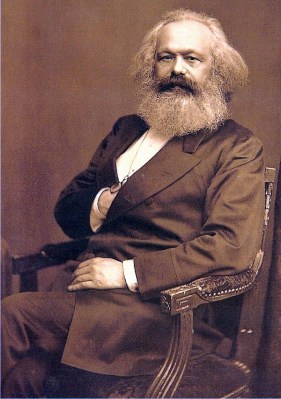
Terry Eagleton on Marx
I recently posted a public debate between Roger Scruton and Terry Eagleton at the Royal Institution in London last year. It seemed to me Eagleton had changed. Scruton himself hinted at this in the debate.
This was also confirmed when I read his recent, short book Why Marx Was Right (2011). It is the first book I have read about Marxism – including Marx’s own – which did not immediately strike me as presenting a system of thought and historical analysis that, while containing important partial truths, is almost absurd in its onesidedness and reductionism. It seems to me this is not Eagleton’s own Marxism as I first encountered it long ago.
Eagleton sets out to refute what he claims are the misunderstandings of the critics of Marxism. What he overlooks is that these misunderstandings are quite as much those of the Marxists themselves, of Marx’s own followers. But it is clear that what we have to do with here is a Marxist who has actually understood and absorbed criticism of Marxism from positions that used to be ignored and dismissed a priori. And this seems to be the result of a process of development of personal maturity, including deepened historical reflection. The nature of Eagleton’s defence of Marx strongly suggests that this could not have been achieved without his primary scholarly orientation, namely literature and the history of literature. As he says in the debate with Scruton, he has taught Shakespeare all of his life – and he has also of course written about him. Living with the classics during a long career does have its effects, even, in many cases, when that career is devoted to ideological reinterpretation.
It is highly significant that, in the book, Eagleton uses Scruton’s own formulation – several times repeated in his works – about the Communist Manifesto and Marx’s philosophy of history as there expressed. Eagleton does in fact also criticize Marx on a few points.
But it could, it seems to me, be argued that although he often does succeed in defending Marx against both critics and Marxists, what he primarily does is to present his own, more tenable version of Marxism, rather than defend Marx as he is. And he does it at least partly because he has finally realized the weight of and the need to assimilate kinds of criticism which were previously for the most part simply not understood at all among Marxists. One after another, most of the main points are taken up, in the way one always thought Marxists should have had the intelligence to do it long ago.
All of them are not taken up, and the defence is in many cases far from sufficient with regard to the ones that are. And quite apart from philosophical considerations, it seems far too late to save Marxism as such in a new and more reasonable form. Moreover, he still does not seem to have fully absorbed the Hegelian and phenomenological versions of Marxism, culminating perhaps in the work of Karel Kosík, which I always found to be philosophically the most important and tenable, although it was important and tenable not because of its specifically Marxist content but because of its retention, partly inspired by the early, “pre-Marxist” Marx (Kosík emphatically denied that this Marx was pre-Marxist), of central elements of idealism. As I said, all presentations of Marxism struck me as absurd in its basic philosophical premises, and although post-Marxism and postmodernism had already for a long time been overshadowing and even replacing it, at the time I started my academic studies one still, at least in the historically oriented humanities, had to go through and thoroughly familiarize oneself with most of its main currents.
Eagleton’s book is not a good introduction to Marx. He is still far too deeply absorbed in the erroneous positions of Marx and the general radical main current of modernity to be able to see clearly the nature of Marx’s thought and the currents in which he too was caught up. Most of the vast and fundamental issues here involved are still simply ignored, or, more precisely, simply not perceived by Eagleton.
But in some respects it is a better introduction to Marx than any other I have read (I should emphasize that it is not an extensive, scholarly work but only a brief essay presenting the outline of a defence). I remember how, when I was a young student, Marxists used to praise certain introductions to Marxism as brilliant, and how they seemed to think they must almost of necessity convince the reader. I found this totally incomprehensible. The effect they had on me was the opposite: they immediately made me see the monumental untruth of Marxism, and this impression was not changed by deeper familiarity with Marxism. They said all the things Eagleton now says Marx does not say, and often in a studiedly provocative manner which revealed everything about the true nature and motivation of their authors.
Many decades after the heyday of Marxism, Eagleton seems in these respects different indeed. With him, it is clearly possible to have an intelligent and meaningful discussion – which is what Scruton does, albeit somewhat awkwardly, having in the past had reason to sharply criticize his interlocutor.
If time allows, I will develop my argument here into a series of posts, in which I go through Eagleton’s main arguments in defence of Marx and emphasize what is new and important in them. Defending almost the entirety of Marx’s work or his positions is an impossible task, and Eagleton of course does not succeed in this. But what could be regarded as the in reality most important contribution Eagleton makes in Why Marx Was Right is that he facilitates the rescue, as it were, of Marx’s important partial truths. These seem, it seems to me, in some cases more easily assimilable by non-Marxists in the form in which they are here presented than in most other Marxists, and indeed Marx himself.
This rescue is not least important in the face of post-Marxism. For the partial truths of Marx, truths to some extent dissociable from his system as a whole, are the ones often found in his many-layered criticism of capitalism, and what characterizes post-Marxism is not least their loss. Even a (paleo)conservative critic of post-Marxism like Paul Gottfried, who does not focus on Marx’s criticism of capitalism, clearly perceives that post-Marxism is in important respects more problematic than Marxism and far less intellectually rigorous.
We find here a general tendency of convergence between paleoconservative and more or less paleomarxist analyses of post-Marxism. Like Fredric Jameson, Eagleton has, it seems, long criticized the development of post-Marxism (Why Marx Was Right prompted me to read also The Illusions of Postmodernism from 1996), whereby the relative theoretical strength of Marxism is clearly demonstrated and several overlappings with certain kinds of conservative analyses become visible, although at the same time the weaknesses in comparison with such analyses become obvious. Eagleton is always, like Jameson, for many reasons compelled to accept much in post-Marxism in a way a Gottfried is not. Eagleton and Jameson are simply part of the general, broader and deeper dynamic of modernity, the nature of which cannot be properly grasped from inside of it.
Of course, some branches of Marxism were always supported by capitalists, since the effects of the general cultural radicalism promoted by such branches and indeed in many cases socialism itself are in the interests of capitalists. But in post-Marxism, we tend to see a wholesale adoption on the part of the left of the long-standing schemes of global capitalism. With only few remaining exceptions, the left has become its faithful supporters and promoters, and not least much more openly funded by it. With Obama, the transformation described by Gottfried of the the anti-Americanism of the European Left into “extreme affection” during the Clinton years has only been intensified.
Unfortunately, Eagleton does not sufficiently distance himself from the current post-Marxist left, the global capitalist left, the American imperialist left, the war left. It remains unclear to me where exactly he stands with regard to the issues I have here briefly indicated. He cannot see things as clearly as Gottfried, a representative of the only real alternative America. But he also cannot see them as clearly as his fellow leftist Jean Bricmont – who wrote Impostures intellectuelles with Alan Sokal and who collaborates with the Chomsky who is now of course increasingly rejected by the left – in this recent mise au point.
Scruton too, being more attached to the old cold-war controversies between left and right (as he understood them) than Gottfried, unfortunately fails to perceive these things. He is, as it were, right in the Royal Institution debate that the left still dominates the universities, while at the same time Eagleton is right that they have been taken over by capitalism. None of them sees, or wants to see, the whole picture.
Gustave Caillebotte: Vue de toits (Effet de neige)

Paul Edward Gottfried: The Strange Death of Marxism
The European Left in the New Millennium
University of Missouri Press, 2005 Amazon.com
Front & Back Flaps:
 The Strange Death of Marxism seeks to refute certain misconceptions about the current European Left and its relation to Marxist and Marxist-Leninist parties that existed in the recent past. Among the misconceptions that the book treats critically and in detail is that the Post-Marxist Left (a term the book uses to describe this phenomenon) springs from a distinctly Marxist tradition of thought and that it represents an unqualified rejection of American capitalist values and practices.
Three distinctive features of the book are the attempts to dissociate the present European Left from Marxism, the presentation of this Left as something that developed independently of the fall of the Soviet empire, and the emphasis on the specifically American roots of the European Left. Gottfried examines the multicultural orientation of this Left and concludes that it has little or nothing to do with Marxism as an economic-historical theory. It does, however, owe a great deal to American social engineering and pluralist ideology and to the spread of American thought and political culture to Europe.
American culture and American political reform have foreshadowed related developments in Europe by years or even whole decades. Contrary to the impression that the United States has taken antibourgeois attitudes from Europeans, the author argues exactly the opposite. Since the end of World War II, Europe has lived in the shadow of an American empire that has affected the Old World, including its self-described anti-Americans. Gottfried believes that this influence goes back to who reads or watches whom more than to economic and military disparities. It is the awareness of American cultural as well as material dominance that fuels the anti-Americanism that is particularly strong on the European Left. That part of the European spectrum has, however, reproduced in a more extreme form what began as an American leap into multiculturalism. Hostility toward America, however, can be transformed quickly into extreme affection for the United States, which occurred during the Clinton administration and during the international efforts to bring a multicultural society to the Balkans.
Clearly written and well conceived, The Strange Death of Marxism will be of special interest to political scientists, historians of contemporary Europe, and those critical of multicultural trends, particularly among Euro-American conservatives.
About the Author:
Paul Edward Gottfried was Raffensperger Professor of Humanities at Elizabethtown College (now Emeritus), and is the leading paleoconservative thinker in America.
Katherine Tingley
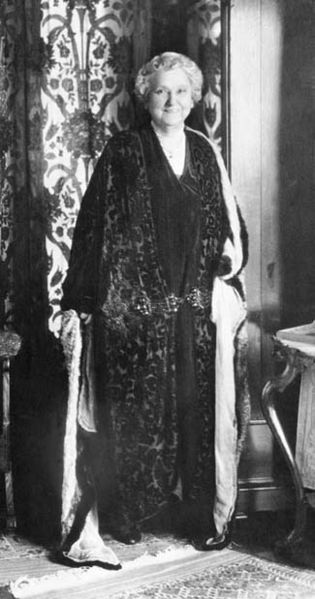
Tingley (1847-1929) skrev bl.a. Theosophy and Some of the Vital Problems of the Day, Marriage and the Home, och Theosophy, the Path of the Mystic.
Pantheism, Postmodernism, Pop, 5
Pantheism, Postmodernism, Pop, 1
Pantheism, Postmodernism, Pop, 2
Pantheism, Postmodernism, Pop, 3
Pantheism, Postmodernism, Pop, 4
All of the following Pattison theses about the nature of romantic pantheism and popular culture are convincing, in need of merely a few minor adjustments: “Ours is a more homogeneous culture than we generally allow, in which elite and popular cultures subscribe to a single set of ideas”; “Prominent among these ideas is Romantic pantheism”; “In its pure form, Romantic pantheism encourages vulgarity”; “American democracy provides an ideal setting for the growth of romantic pantheism” (this clearly depends on how American democracy is defined); “Poe’s Eureka and the Velvet Underground are products of a single cultural force”; “What separates elite from popular culture is its unwillingness to embrace the vulgarity inherent in its own premises”; “There is more ideological vigor and consistency in the music of the Talking Heads than in the paradoxes of the academy”; “Nineteenth-century Romanticism lives on in the mass culture of the twentieth century, and the Sex Pistols come to fulfill the prophecies of Shelley”; “Vulgarity is no better and no worse than the pantheism and the democracy out of which it grows” (the latter certainly imply the sanctioning of the former, but neither has to be accepted or sanctioned); “Believing in Whitman, the democrat should also glory in the Ramones” (the democrat does not have to believe in Whitman). [Op.cit. xi-xii.]
What is being described is increasingly the fate of the whole of radical modernist and postmodernist culture. Again, there is really no distinction between the new élites and the masses. Rock “recognizes no class boundaries. Rich and poor, well-bred and lumpenproletariat alike listen to rock, and in the age of vulgarity, Harvard Square shares its musical tastes with Peoria.” [Ibid. 9.] The institution of the romantic secular bard is sublated in the popular culture of romanticism. Judging from sales statistics, almost all citizens of the leading rocking country, the United States, from which the new cult has spread across the globe, must own copies of the records and CDs of at least some of the leading bards of democracy. Rock stars flock to the White House (and Downing Street), and presidents accede to the office cheered by 120-decibel court jesters.
Yet arguing that we should now accept the vulgarity that has already triumphed, it is in a new, desperate attempt at sophistication that Pattison, probably considering all of the previous ones of radical modernism and postmodernism to be by now hopelessly trite, takes his point of departure in classicist humanism’s definition of vulgarity, finds it still standing, and bluntly analyses his subject-matter in its terms:
“The romantic revolution has made vulgarity an ineluctable issue for this century as well as the last. In politics, the vulgar mob has wrested power from its genteel rulers. Youth, which is noisy and uncontemplative, has usurped the cultural privileges of maturity. The heroes of Romantic civilization are no longer the disciplined patriots of Horace’s odes but unrefined primitives who pledge allegiance to self or the universe. In the West, the masses now have the leisure to indulge their vulgarity, and they have done so.” [Ibid. 13-14.]
Pattison follows the same strategy in his book on Newman, The Great Dissent: John Henry Newman and the Liberal Heresy (1991). Having devoted the major part of it to demonstrating the possible validity of at least some aspects of Newman’s criticism of modernity, he simply asserts, without arguments, in one short sentence on one of the last pages that ”as [Newman] presents them, heresy is in every way superior to truth”. [Op.cit., 215.] One suspects that it is in fact not necessary to side with Newman in the more specific theological controversies and to accept his identification of truth with orthodox dogma in order to feel that, together with the celebration of Newman in the previous chapters (on Pattison’s own showing, much more was involved than the content of the Athanasian trinitology), this studied, defiant gesture signals a more general attitude on the part of some contemporary radical liberals, namely that they are now prepared to face, and deeply understand, any argument, any analysis, and perhaps even to admit that it is true, but that still they are never ever going to change their minds. But if so, it is of course just another version of the nihilistic end of academic discourse, brought about by the pantheistic revolution.
The aspect of the challenge against a non-pantheistic understanding of the person, inspired by classicism and Christianity, that on a superficial view stands at the opposite end from romanticism is the direct philosophical criticism produced today by the scientistically motivated physicalist materialism within the philosophy of mind – represented by the Churchlands and similar thinkers – which denies either the reality or the distinct quality of intentional agency, purposiveness, and nonphysical states of consciousness. Positivism having long since collapsed as a philosophy, this form of scientistic materialism has not only proved impervious to postmodern criticism, but, as in the work of Richard Rorty, compatible with it. [See my article ‘Richard Rortys filosofihistoriska program: Fysikalism och romantik i den amerikanska postmodernismen’ (‘Richard Rorty’s Program for the History of Philosophy: Physicalism and Romanticism in American Postmodernism’), in Att skriva filosofihistoria [Writing the History of Philosophy], Ugglan. Lund Studies in the History of Science and Ideas, VIII, 1998.]
Babbitt shows that it is a mistake to consider romanticism and naturalism to be opposites; in reality, they are mutually dependent and reinforce and support each other in countless subtle ways. Romanticism provides emotional “elevation” (Babbitt analysed an earlier historical period, but even then the elevation was merely that of romantic dreaming) and release for the hard-nosed technologist, while at the same time the latter provides the technologies for the former’s enhanced expression. [The interdependence is clearly – if indirectly – brought out also, for instance, in some of Neil Postman’s books.]
These currents in turn display central ingredient parts both of the psychological makeup and the ideological expression of what Eric Voegelin terms “gnosticism”. But I would add that this whole complex also tends inexorably in the direction of impersonalism. Christopher Lash analysed central aspects of contemporary culture in terms of “narcissism”. Personality, in this culture, tends to be reduced to a powerless escapist diversion as vicariously experienced in the stars of popular culture and sport – democracy’s version of the morally ambiguous personalism of romantic hero-worship. Or perhaps, stardom is democratically disseminated, as predicted by Andy Warhol, to everyone for fifteen minutes each.
For the rest of their lives, people are, as Rorty prescribes, to be allowed to dream in totally unrestrained relativistic subjectivism, but only in the strictest privacy that does not interfere with the workings of the public technological machinery. Today’s uncompromising scientistic reductionism can be shown to have been reached by the same concerted influence of lower romanticism, rationalism, empiricism, and a psychological disposition favouring “gnosticism” – all of which are not only inimical to the classical and Christian traditions in the general aspects that are relevant here, but also to the qualified modern understanding of the person and personal consciousness which is in harmony with these traditions not least in its retention, at least to some extent and in some form, of a spiritual dimension.
It is a commonplace in contemporary intellectual history that the individualism proclaimed by romanticism and liberalism was accompanied by an ever increasing social conformity and rational regimentation of man. In the connection here discussed, the partial truths of this perspective, introduced in the works of Michel Foucault, Norbert Elias, and others, are certainly relevant as a part of the historical and cultural perspective I try to introduce. But in recent scholarship it has unduly overshadowed other perspectives that are equally necessary for a deeper understanding. The common explanation of romanticism as a mere escapist reaction, powerless in the long run against the new historical realities of industrialism, true as it certainly is in many cases, also disastrously ignores the factual readiness of romanticism to accept and join the modernist forces of rationalism and technology, and the extent to which the whole of modernity, and postmodernity, are quintessentially if sometimes obliquely romantic phenomena. The specific romantic combination of pantheism and narcissism in what Pattison calls a vulgarized form, with no qualms about embracing the ever new marvels of rational technology, and enthusiastically surrendered to by the rational technologists themselves in leisure hours, is what determines what has been analysed by several critics as the conformity of the globalized mass-culture of liberal capitalist democracy. The nature of globalization makes my references to American literature increasingly relevant in other parts of the world, and not least of course in Europe.
Romantic pantheism which issued, not only in unison with but as including the forces of a renewed rationalism, in radical modernism and postmodernism, is, I suggest, the central underlying dynamic factor in the decline of the traditional Western culture that was shaped by the general aspects of the traditions of Christian theism and classical idealism and humanism that I have indicated loosely yet with sufficient precision for the limited purposes of the present argument. This decline has today assumed crisis-like forms and symptoms more acute and decisive than anything previously seen in the long undermining process in some respects philosophically and imaginatively set in motion centuries ago. But it is this same process that is being brought to a culmination. In a “physicalist” postmodernist like Rorty, the Babbittian analysis of the confluence of Rousseauism and Baconianism is irrefutably confirmed on all levels.
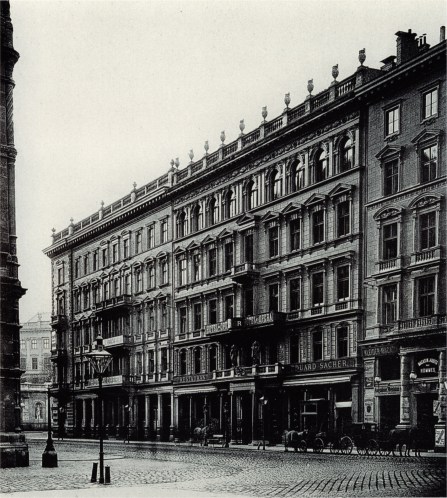
Hotel Sacher, Wien
One-Sided Differentiation and Spurious Re-Divinization
The process of differentiation established the anthropological, political, philosophical, and theological insights upon which structured order was founded in Western civilization: with the distinction – or the new kind of distinction – between immanence and transcendence, there followed not only a clearer awareness of the higher and lower potentialities of man, but, as we have seen, a number of other distinctions, dualities, opposites, and polar tensions which accounted for much of the spiritual, moral, and intellectual creativity of the West.
The various forms of modern pantheism, the mystical, the rationalistic, the romantic, the idealistic, and the materialistic, besides intermixing and engendering each other, have in common not only the loss of the metaxical status of the individual person but also a more general blurring of distinctions, a loss of hierarchy, structure, discernment, vertical dynamism. While the transcendence and the ontic logos of differentiated culture lay hidden in compact form in what, in the absence of full access to and comprehension of the great Eastern systems of thought could be perceived from what came to be the Western point of view as early pantheism, they were denied and rejected in the new pantheism of modernity. With them was denied the objective moral and axiological order which compact civilization too, in its own way, had affirmed, and which ultimately, in its differentiated apprehension, alone safeguards the moral space of the person.
The medieval tension of faith and reason was destroyed through the impact of the radical nominalism and the radical voluntarism which went far beyond the emphasis on individuality and will required by the insights regarding the person as the focus of differentiated existence. For the latter also required a synthesis with universality and rationality. Per definition, personhood united individuality with an element of universality. Radically separating the irrational transcendence of the deus absconditus from the immanent sphere and confining man to the latter, these late medieval currents, while correctly objecting to the onesidedly rationalist tendencies of scholasticism, led indirectly, in their extremism, rather to a new exclusive turning of man’s intellectual curiosity to the empirical manifold of sensual existence, and to the metaphysical scepticism that shaped the Renaissance. [The several different scholarly accounts of the nature and meaning of the transition from the ‘late medieval’ to the ‘early modern’ period that are discussed today are not always mutually contradictory.]
Modern rationalism was born as a response to or way out of this scepticism, and in stark opposition to late medieval and Reformation fideism. From the outset, it had the character of a voluntaristic reaction on the part of man to the new situation of radical uncertainty: human logical rationality was asserted as the standard and the organizing principle of a system of knowledge through which man was to control nature and his own worldly destiny. In Descartes’ system, God tended to be reduced to the role of guarantor of the validity of this system. And the rational, epistemological human subject that came to dominate modern philosophy was not as such or in itself the person; although some aspects of its focus on self-consciousness could be taken up by modern personalism, it normally represented, in exaggerated and distorted fashion, only one side of the rationality of personhood.
It is quite clear that nature de-divinized both by onesided or problematically elaborated differentiation and by the mentioned specific developments of early modernity was perceived to be open to the exploitation of modern science, and that this is one of the causes of the rise of the latter. But this analysis easily obscures the re-divinization that also entered as a decisive factor into the development of early modernity. Renaissance Hermeticism and Neo-Platonism was in many respects an important rediscovery or introduction in the West of traditional spirituality of the kind that ultimately has its roots in the Eastern tradition that remains imperfectly understood in the Voegelinian analysis of differentiation. Yet there was also often the tendency towards an affirmation of a too simple, and in some cases also a new kind of identification of God with nature and towards the unification of nature and man with the impersonal Godhead in these currents, as they sprang from traditions of onesided, more or less radical monistic mysticism. With regard to this, reinterpretation both of orthodox Christianity along the ancient Gnostic lines and of ancient Gnosticism itself was going on not only in the millenarian mass movements but also among the learned humanists.
By the time of the Reformation and the Counter-Reformation, the divergence from orthodoxy was clearly perceived by both sides in what became a sharp conflict. But then, the pantheistic revolution was unstoppable. The differentiational structure was increasingly difficult to preserve for the learned idealists, as men like Agrippa, Bruno, Campanella, and Bacon endorsed the scientific revolution as an essential part of the realization of their interpretations of Hermetic teachings of the deification of man and of their ideas of utopian immanent perfectibility and nature’s paradisical instauration.
 Olle Bengtsson