
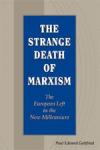
Paul Edward Gottfried: The Strange Death of Marxism
The European Left in the New Millennium
University of Missouri Press, 2005 Amazon.com
Front & Back Flaps:
 The Strange Death of Marxism seeks to refute certain misconceptions about the current European Left and its relation to Marxist and Marxist-Leninist parties that existed in the recent past. Among the misconceptions that the book treats critically and in detail is that the Post-Marxist Left (a term the book uses to describe this phenomenon) springs from a distinctly Marxist tradition of thought and that it represents an unqualified rejection of American capitalist values and practices.
Three distinctive features of the book are the attempts to dissociate the present European Left from Marxism, the presentation of this Left as something that developed independently of the fall of the Soviet empire, and the emphasis on the specifically American roots of the European Left. Gottfried examines the multicultural orientation of this Left and concludes that it has little or nothing to do with Marxism as an economic-historical theory. It does, however, owe a great deal to American social engineering and pluralist ideology and to the spread of American thought and political culture to Europe.
American culture and American political reform have foreshadowed related developments in Europe by years or even whole decades. Contrary to the impression that the United States has taken antibourgeois attitudes from Europeans, the author argues exactly the opposite. Since the end of World War II, Europe has lived in the shadow of an American empire that has affected the Old World, including its self-described anti-Americans. Gottfried believes that this influence goes back to who reads or watches whom more than to economic and military disparities. It is the awareness of American cultural as well as material dominance that fuels the anti-Americanism that is particularly strong on the European Left. That part of the European spectrum has, however, reproduced in a more extreme form what began as an American leap into multiculturalism. Hostility toward America, however, can be transformed quickly into extreme affection for the United States, which occurred during the Clinton administration and during the international efforts to bring a multicultural society to the Balkans.
Clearly written and well conceived, The Strange Death of Marxism will be of special interest to political scientists, historians of contemporary Europe, and those critical of multicultural trends, particularly among Euro-American conservatives.
About the Author:
Paul Edward Gottfried was Raffensperger Professor of Humanities at Elizabethtown College (now Emeritus), and is the leading paleoconservative thinker in America.
Katherine Tingley
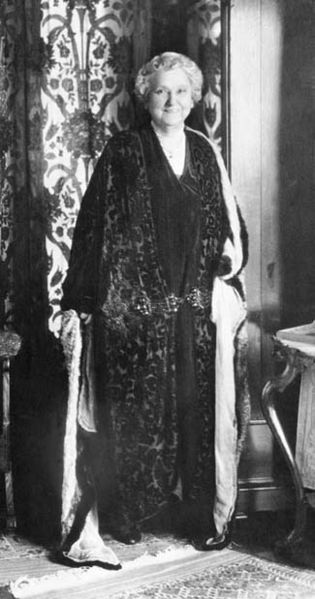
Tingley (1847-1929) skrev bl.a. Theosophy and Some of the Vital Problems of the Day, Marriage and the Home, och Theosophy, the Path of the Mystic.
Pantheism, Postmodernism, Pop, 5
Pantheism, Postmodernism, Pop, 1
Pantheism, Postmodernism, Pop, 2
Pantheism, Postmodernism, Pop, 3
Pantheism, Postmodernism, Pop, 4
All of the following Pattison theses about the nature of romantic pantheism and popular culture are convincing, in need of merely a few minor adjustments: “Ours is a more homogeneous culture than we generally allow, in which elite and popular cultures subscribe to a single set of ideas”; “Prominent among these ideas is Romantic pantheism”; “In its pure form, Romantic pantheism encourages vulgarity”; “American democracy provides an ideal setting for the growth of romantic pantheism” (this clearly depends on how American democracy is defined); “Poe’s Eureka and the Velvet Underground are products of a single cultural force”; “What separates elite from popular culture is its unwillingness to embrace the vulgarity inherent in its own premises”; “There is more ideological vigor and consistency in the music of the Talking Heads than in the paradoxes of the academy”; “Nineteenth-century Romanticism lives on in the mass culture of the twentieth century, and the Sex Pistols come to fulfill the prophecies of Shelley”; “Vulgarity is no better and no worse than the pantheism and the democracy out of which it grows” (the latter certainly imply the sanctioning of the former, but neither has to be accepted or sanctioned); “Believing in Whitman, the democrat should also glory in the Ramones” (the democrat does not have to believe in Whitman). [Op.cit. xi-xii.]
What is being described is increasingly the fate of the whole of radical modernist and postmodernist culture. Again, there is really no distinction between the new élites and the masses. Rock “recognizes no class boundaries. Rich and poor, well-bred and lumpenproletariat alike listen to rock, and in the age of vulgarity, Harvard Square shares its musical tastes with Peoria.” [Ibid. 9.] The institution of the romantic secular bard is sublated in the popular culture of romanticism. Judging from sales statistics, almost all citizens of the leading rocking country, the United States, from which the new cult has spread across the globe, must own copies of the records and CDs of at least some of the leading bards of democracy. Rock stars flock to the White House (and Downing Street), and presidents accede to the office cheered by 120-decibel court jesters.
Yet arguing that we should now accept the vulgarity that has already triumphed, it is in a new, desperate attempt at sophistication that Pattison, probably considering all of the previous ones of radical modernism and postmodernism to be by now hopelessly trite, takes his point of departure in classicist humanism’s definition of vulgarity, finds it still standing, and bluntly analyses his subject-matter in its terms:
“The romantic revolution has made vulgarity an ineluctable issue for this century as well as the last. In politics, the vulgar mob has wrested power from its genteel rulers. Youth, which is noisy and uncontemplative, has usurped the cultural privileges of maturity. The heroes of Romantic civilization are no longer the disciplined patriots of Horace’s odes but unrefined primitives who pledge allegiance to self or the universe. In the West, the masses now have the leisure to indulge their vulgarity, and they have done so.” [Ibid. 13-14.]
Pattison follows the same strategy in his book on Newman, The Great Dissent: John Henry Newman and the Liberal Heresy (1991). Having devoted the major part of it to demonstrating the possible validity of at least some aspects of Newman’s criticism of modernity, he simply asserts, without arguments, in one short sentence on one of the last pages that ”as [Newman] presents them, heresy is in every way superior to truth”. [Op.cit., 215.] One suspects that it is in fact not necessary to side with Newman in the more specific theological controversies and to accept his identification of truth with orthodox dogma in order to feel that, together with the celebration of Newman in the previous chapters (on Pattison’s own showing, much more was involved than the content of the Athanasian trinitology), this studied, defiant gesture signals a more general attitude on the part of some contemporary radical liberals, namely that they are now prepared to face, and deeply understand, any argument, any analysis, and perhaps even to admit that it is true, but that still they are never ever going to change their minds. But if so, it is of course just another version of the nihilistic end of academic discourse, brought about by the pantheistic revolution.
The aspect of the challenge against a non-pantheistic understanding of the person, inspired by classicism and Christianity, that on a superficial view stands at the opposite end from romanticism is the direct philosophical criticism produced today by the scientistically motivated physicalist materialism within the philosophy of mind – represented by the Churchlands and similar thinkers – which denies either the reality or the distinct quality of intentional agency, purposiveness, and nonphysical states of consciousness. Positivism having long since collapsed as a philosophy, this form of scientistic materialism has not only proved impervious to postmodern criticism, but, as in the work of Richard Rorty, compatible with it. [See my article ‘Richard Rortys filosofihistoriska program: Fysikalism och romantik i den amerikanska postmodernismen’ (‘Richard Rorty’s Program for the History of Philosophy: Physicalism and Romanticism in American Postmodernism’), in Att skriva filosofihistoria [Writing the History of Philosophy], Ugglan. Lund Studies in the History of Science and Ideas, VIII, 1998.]
Babbitt shows that it is a mistake to consider romanticism and naturalism to be opposites; in reality, they are mutually dependent and reinforce and support each other in countless subtle ways. Romanticism provides emotional “elevation” (Babbitt analysed an earlier historical period, but even then the elevation was merely that of romantic dreaming) and release for the hard-nosed technologist, while at the same time the latter provides the technologies for the former’s enhanced expression. [The interdependence is clearly – if indirectly – brought out also, for instance, in some of Neil Postman’s books.]
These currents in turn display central ingredient parts both of the psychological makeup and the ideological expression of what Eric Voegelin terms “gnosticism”. But I would add that this whole complex also tends inexorably in the direction of impersonalism. Christopher Lash analysed central aspects of contemporary culture in terms of “narcissism”. Personality, in this culture, tends to be reduced to a powerless escapist diversion as vicariously experienced in the stars of popular culture and sport – democracy’s version of the morally ambiguous personalism of romantic hero-worship. Or perhaps, stardom is democratically disseminated, as predicted by Andy Warhol, to everyone for fifteen minutes each.
For the rest of their lives, people are, as Rorty prescribes, to be allowed to dream in totally unrestrained relativistic subjectivism, but only in the strictest privacy that does not interfere with the workings of the public technological machinery. Today’s uncompromising scientistic reductionism can be shown to have been reached by the same concerted influence of lower romanticism, rationalism, empiricism, and a psychological disposition favouring “gnosticism” – all of which are not only inimical to the classical and Christian traditions in the general aspects that are relevant here, but also to the qualified modern understanding of the person and personal consciousness which is in harmony with these traditions not least in its retention, at least to some extent and in some form, of a spiritual dimension.
It is a commonplace in contemporary intellectual history that the individualism proclaimed by romanticism and liberalism was accompanied by an ever increasing social conformity and rational regimentation of man. In the connection here discussed, the partial truths of this perspective, introduced in the works of Michel Foucault, Norbert Elias, and others, are certainly relevant as a part of the historical and cultural perspective I try to introduce. But in recent scholarship it has unduly overshadowed other perspectives that are equally necessary for a deeper understanding. The common explanation of romanticism as a mere escapist reaction, powerless in the long run against the new historical realities of industrialism, true as it certainly is in many cases, also disastrously ignores the factual readiness of romanticism to accept and join the modernist forces of rationalism and technology, and the extent to which the whole of modernity, and postmodernity, are quintessentially if sometimes obliquely romantic phenomena. The specific romantic combination of pantheism and narcissism in what Pattison calls a vulgarized form, with no qualms about embracing the ever new marvels of rational technology, and enthusiastically surrendered to by the rational technologists themselves in leisure hours, is what determines what has been analysed by several critics as the conformity of the globalized mass-culture of liberal capitalist democracy. The nature of globalization makes my references to American literature increasingly relevant in other parts of the world, and not least of course in Europe.
Romantic pantheism which issued, not only in unison with but as including the forces of a renewed rationalism, in radical modernism and postmodernism, is, I suggest, the central underlying dynamic factor in the decline of the traditional Western culture that was shaped by the general aspects of the traditions of Christian theism and classical idealism and humanism that I have indicated loosely yet with sufficient precision for the limited purposes of the present argument. This decline has today assumed crisis-like forms and symptoms more acute and decisive than anything previously seen in the long undermining process in some respects philosophically and imaginatively set in motion centuries ago. But it is this same process that is being brought to a culmination. In a “physicalist” postmodernist like Rorty, the Babbittian analysis of the confluence of Rousseauism and Baconianism is irrefutably confirmed on all levels.
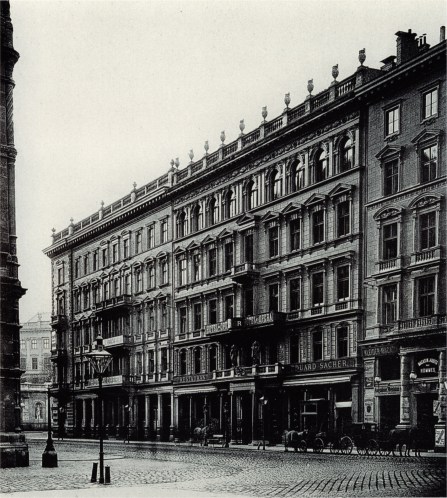
Hotel Sacher, Wien
One-Sided Differentiation and Spurious Re-Divinization
The process of differentiation established the anthropological, political, philosophical, and theological insights upon which structured order was founded in Western civilization: with the distinction – or the new kind of distinction – between immanence and transcendence, there followed not only a clearer awareness of the higher and lower potentialities of man, but, as we have seen, a number of other distinctions, dualities, opposites, and polar tensions which accounted for much of the spiritual, moral, and intellectual creativity of the West.
The various forms of modern pantheism, the mystical, the rationalistic, the romantic, the idealistic, and the materialistic, besides intermixing and engendering each other, have in common not only the loss of the metaxical status of the individual person but also a more general blurring of distinctions, a loss of hierarchy, structure, discernment, vertical dynamism. While the transcendence and the ontic logos of differentiated culture lay hidden in compact form in what, in the absence of full access to and comprehension of the great Eastern systems of thought could be perceived from what came to be the Western point of view as early pantheism, they were denied and rejected in the new pantheism of modernity. With them was denied the objective moral and axiological order which compact civilization too, in its own way, had affirmed, and which ultimately, in its differentiated apprehension, alone safeguards the moral space of the person.
The medieval tension of faith and reason was destroyed through the impact of the radical nominalism and the radical voluntarism which went far beyond the emphasis on individuality and will required by the insights regarding the person as the focus of differentiated existence. For the latter also required a synthesis with universality and rationality. Per definition, personhood united individuality with an element of universality. Radically separating the irrational transcendence of the deus absconditus from the immanent sphere and confining man to the latter, these late medieval currents, while correctly objecting to the onesidedly rationalist tendencies of scholasticism, led indirectly, in their extremism, rather to a new exclusive turning of man’s intellectual curiosity to the empirical manifold of sensual existence, and to the metaphysical scepticism that shaped the Renaissance. [The several different scholarly accounts of the nature and meaning of the transition from the ‘late medieval’ to the ‘early modern’ period that are discussed today are not always mutually contradictory.]
Modern rationalism was born as a response to or way out of this scepticism, and in stark opposition to late medieval and Reformation fideism. From the outset, it had the character of a voluntaristic reaction on the part of man to the new situation of radical uncertainty: human logical rationality was asserted as the standard and the organizing principle of a system of knowledge through which man was to control nature and his own worldly destiny. In Descartes’ system, God tended to be reduced to the role of guarantor of the validity of this system. And the rational, epistemological human subject that came to dominate modern philosophy was not as such or in itself the person; although some aspects of its focus on self-consciousness could be taken up by modern personalism, it normally represented, in exaggerated and distorted fashion, only one side of the rationality of personhood.
It is quite clear that nature de-divinized both by onesided or problematically elaborated differentiation and by the mentioned specific developments of early modernity was perceived to be open to the exploitation of modern science, and that this is one of the causes of the rise of the latter. But this analysis easily obscures the re-divinization that also entered as a decisive factor into the development of early modernity. Renaissance Hermeticism and Neo-Platonism was in many respects an important rediscovery or introduction in the West of traditional spirituality of the kind that ultimately has its roots in the Eastern tradition that remains imperfectly understood in the Voegelinian analysis of differentiation. Yet there was also often the tendency towards an affirmation of a too simple, and in some cases also a new kind of identification of God with nature and towards the unification of nature and man with the impersonal Godhead in these currents, as they sprang from traditions of onesided, more or less radical monistic mysticism. With regard to this, reinterpretation both of orthodox Christianity along the ancient Gnostic lines and of ancient Gnosticism itself was going on not only in the millenarian mass movements but also among the learned humanists.
By the time of the Reformation and the Counter-Reformation, the divergence from orthodoxy was clearly perceived by both sides in what became a sharp conflict. But then, the pantheistic revolution was unstoppable. The differentiational structure was increasingly difficult to preserve for the learned idealists, as men like Agrippa, Bruno, Campanella, and Bacon endorsed the scientific revolution as an essential part of the realization of their interpretations of Hermetic teachings of the deification of man and of their ideas of utopian immanent perfectibility and nature’s paradisical instauration.
Tony Banks: Siren
from Six Pieces for Orchestra
The City of Prague Philharmonic Orchestra, Paul Englishby
Banks now – beginning with the suite for orchestra called Seven (2004) – does what I have suggested progressive rock should do: he transcends progressive rock. But he does it by simply beginning to write in a different genre altogether, another existing genre. What I suggested, more precisely, was, as it were, rather that progressive rock itself progress beyond progressive rock, i.e., beyond its remaining rock elements, into a new genre that is a further development of progressive rock. But Banks’s orchestral work is interesting in its own right, and although it is not this new genre, it could certainly contribute indirectly to its development.
In Classic FM’s introduction here there is, again, the irritating use of the term “classical”, which seems to be interchangeable with “classic” in this context and is equally misleading. Banks is rightly uncomfortable with it in this interview.
Led Zeppelin: Kashmir
From their album Physical Graffiti (1975).
12th ICP: Alternative Accommodation
Among cheaper hotels (i.e., cheaper than Concordia, which offers the special conference rate mentioned in the Call for Papers) are Ahlström and Sparta.
All of these are right in the centre, with the exception of Sparta, which, however, is still within walking distance of the conference venue.
There are quite a few other hotels both in central Lund (like Lilla Hotellet, Oskar and Duxiana) and in the high-tech sprawl surrounding the centre.
Find more hotels, and compare prices, at Hotels.com or Booking.com.
Bed & Breakfast and private rooms are also available, at lower prices than the hotels.
See also:
Lavinia Fontana: Autoritratto

 Olle Bengtsson