A History of Semantics and Culture
Wiley-Blackwell, 2009 Amazon.co.uk
From the Back Cover:
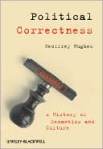 Political Correctness is now an everyday phrase and part of the modern mindset. Everyone thinks they know what it means, but its own meaning constantly shifts. Its surprising origins have led to it becoming integrated into contemporary culture in ways that are both idealistic and ridiculous. Originally grounded in respect for difference and sensitivity to suffering, it has often become a distraction and even a silencer of genuine issues, provoking satire and parody. In this carefully researched, thought-provoking book, Geoffrey Hughes examines the trajectory of political correctness and its impact on public life.
Exploring the origins, progress, content, and style of PC, Hughes’ journey leads us through authors as diverse as Chaucer, Shakespeare and Swift; Philip Larkin, David Mamet, and J.M. Coetzee; from nursery rhymes to Spike Lee films. Focusing on the historical, semantic, and cultural aspects of political correctness, this outstanding and unique work will intrigue anyone interested in this ongoing debate.
Reviews:
“Prof. Hughes′ Political Correctness deals with both its history and its use at present. And he deals with both aspects in a masterly fashion. Consequently, this book is highly recommendable because of what it says as well as, what is probably more important, because of the multitude of suggestions and questions it inspires.” Australian Journal of Linguistics
“Some books are written to be read, and other books are reference works. Political Correctness: A History of Semantics and Culture is unusual in that it is both jam-packed with detailed information and yet makes for a good read. Everyone should read this bookand also keep it on the shelf as an excellent reference work. This informative and well writtenbook covers more than just the notion of political correctness (PC) in the narrowsense. It encompasses far more than the problem of increased, PC kinds of concerns, as discussed in Part I, Political Correctness and Its Origins.” PsycCritiques
“Hughes ultimately comes down against artificiality, suggesting that political correctness is a form of social engineering that arises from good intentions coupled with Puritanism. A useful book for anyone interested in language and culture.” Choice
“Hughes′ book provides a wide-ranging examination of a phenomenon that has had an immense influence on our culture, for both good and ill. Political Correctness: A History of Semantics and Culture is an entertaining, thought-provoking foray into an interesting and important area. Hughes focuses mainly on the effect of P.C. in contemporary Britain, America and South Africa, but he looks at earlier historical periods (such as the Reformation) too. This is the best book written on the subject, and that by some distance. It is an essential study, rigorous and critical and absolutely indispensable.” Compulsive Reader
“Focusing on the historical, semantic, and cultural aspects of political correctness, this brilliant and unique work will intrigue anyone interested in this ongoing debate.” Lavoisier
“One must maintain a sense of humour when entering this arena, where voices of the global cultural elite sometimes present themselves as brave and daring for taking potshots at the sidelined or powerless. An emeritus ′historian of the English language′, Hughes knows a lot about dictionaries of every stripe, whether orthodox or slang. He can provide the history of innumerable words, enabling readers to follow semantic changes, neologisms and other evolutions in the ′word field.′” Times Higher Education
“Geoffrey Hughes has brought together with great panache the very many manifestations of political correctness, both absurd and vicious, and shown how they express a single collective mind-set. His book establishes beyond doubt that there is such a phenomenon, that it has become dominant in our culture, and that it represents a growing tendency to censor public debate and to prevent people from questioning orthodoxies which we all know to be false.” Roger Scruton, American Enterprise Institute
“What a joy this book is! Hughes’ study traces, with unflagging zest, the modern history of PC. Sumptuous in data, in judgment precise, this is the latest and fullest of Hughes’ series on the social history of language.” Walter Nash, Professor Emeritus, University of Nottingham
About the Author:
Geoffrey Hughes graduated from Oxford, was an Honorary Research Associate at Harvard, and is Emeritus Professor of the History of the English Language at the University of the Witwatersrand, Johannesburg. He is the author of An Encyclopedia of Swearing (2006), A History of English Words (Wiley–Blackwell, 2000), Swearing: A Social History of Foul Language, Oaths and Profanity in English (1998), and Words in Time (1988). He is currently Honorary Research Associate at the University of Cape Town.
JOB’s Comment:
I have defended my occasional use of the term political correctness in this post, where I refer to Hughes’s book.
 This classic work is here published for the first time in paperback in recognition of its enduring importance. Its theme is Modality: human experience recognized as a variety of independent, self-consistent worlds of discourse, each the invention of human intelligence, but each also to be understood as abstract and an arrest in human experience. The theme is pursued in a consideration of the practical, the historical and the scientific modes of understanding.

 I sin 1962 utgivna bok Sancho Panzas väderkvarnar analyserade fil. dr Tage Lindbom nutidsmänniskans situation. Mot idéhistorisk bakgrund underkastade han där det moderna samhällslivet en närgången granskning utifrån helt andra utgångspunkter än de som är gängse i folkhemmet och angrep särskilt de politiska jämlikhetssträvanden som endast leder till nivellering. Många brännande samhällsfrågor kom emellertid där att blott beröras antydningsvis. Under de år som gått sedan dess har författaren i tidskriftsartiklar och radioföredrag tagit upp vissa ämnesområden till närmare granskning, och det är dessa som han här samlat i bokform.
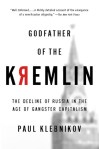 From nuclear superpower to impoverished nation, post-communist Russia has become one of the most corrupt regimes in the world. Paul Klebnikov pieces together the previous decade in Russian history, showing that a major piece of “the decline of Russia’ puzzle lies in the meteoric business career of Boris Berezovsky. Transforming himself from a research scientist to Russia’s most successful dealmaker, Berezovsky managed to seize control of Russia’s largest auto manufacturer, largest TV network, national airline, and one of the world’s biggest oil companies. When Moscow’s gangster families battled one another in the Great Mob War of 1993-1994, Berezovsky was in the thick of it. He was badly burned by a car bomb and his driver was decapitated. A year later, Berezovsky emerged as the prime suspect in the assassination of the director of the TV network he acquired. Although plagued by scandal, he enjoyed President Yeltsin’s support, serving as the personal financial “advisor” to both Yeltsin and his family. In 1996, Berezovsky organized the financing of Yeltsin’s re-election campaign-a campaign marred by fraud, embezzlement, and attempted murder. Berezovsky became the President’s most trusted political advisor-playing a key role in forming governments and dismissing prime ministers. Based on hundreds of taped interviews with top businessmen and government officials, secret police reports, contractual documents, and surveillance tapes, Godfather of the Kremlin is both a gripping story and a unique historical document.
 Olle Bengtsson