René Guénon: Introduction générale à l’étude des doctrines hindoues
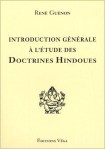 Éditions Véga, 2009 (1921) Amazon.fr
English translation:
Sophia Perennis, 2004 Amazon.com
Book Description:
René Guénon’s first book, Introduction to the Study of Hindu Doctrines, came (in the words of the eminent scholar S. H. Nasr) “like a sudden burst of lightning, an abrupt intrusion into the modern world of a body of knowledge and a perspective utterly alien to the prevalent climate and world view”. In this book Guénon establishes the criteria which formed the basis of his later works and set the tone for the Traditionalist School that came after him: the meaning of Tradition, the relationship between “religion”, “theology”, “metaphysics” etc. – all leading up to an exhaustive definition and comprehensive overview of Hinduism, which Guénon saw as the most ancient and most complete spiritual tradition on earth, embracing the most profound and explicit metaphysics. The West is now overrun with many brands of compromised Hinduism, whose “gurus” are considered charlatans by traditional Hindu authorities. For anyone drawn to the Hindu tradition, searching for a way to separate the wheat from the chaff and dedicated to gaining an understanding of the universe that is Hinduism in its own terms and not those imposed by modernist Western assumptions, this book is indispensable.
About the Author:
René Guénon (1886–1951) was one of the great luminaries of the twentieth century, whose critique of the modern world has stood fast against the shifting sands of intellectual fashion. His extensive writings, now finally available in English, are a providential treasure-trove for the modern seeker: while pointing ceaselessly to the perennial wisdom found in past cultures ranging from the Shamanistic to the Indian and Chinese, the Hellenic and Judaic, the Christian and Islamic, and including also Alchemy, Hermeticism, and other esoteric currents, they direct the reader also to the deepest level of religious praxis, emphasizing the need for affiliation with a revealed tradition even while acknowledging the final identity of all spiritual paths as they approach the summit of spiritual realization. René Guénon, of whom Jacob Needleman wrote in The Sword of Gnosis that “no other modern writer has so effectively communicated the absoluteness of truth”, is gradually being recognized by deeper thinkers as one of the few who have truly penetrated the seductive veil of the modern age. As an expositor of pure metaphysics and its application to the science of symbols, Guénon is without peer; and his extraordinarily prescient critique of the modern world is attracting more and more attention among cultural commentators. Little known in the English-speaking world till the recent appearance of his Collected Works in translation, Guénon has nevertheless long been recognized as a veritable criterion of truth by a vanguard of remarkable writers who evince that rare combination: intellectuality and spirituality. After a lonely childhood, often interrupted by ill health, Guénon navigated the seductive half-truths of occultism toward a deeper, unified vision offering a way out from the confusion and fragmentation of our time. Regarded by leading scholars as the first truly authentic interpreter of many Eastern doctrines in the West, Guénon never tired, in face of the seemingly inexorable process of dissolution in the twentieth century, of pointing to the transcendent unity of all religious faiths and the abiding Truth that contains them all.
JOB’s Comment:
The first and in my view the basic and perhaps even the most important text of the traditionalist “school”. Some corrections were, I think, included in the English translation, and it is possible that they are found also in this late French edition; other traditionalists rightly pointed out a few errors in Guénon’s interpretations.
Charles Gleyre
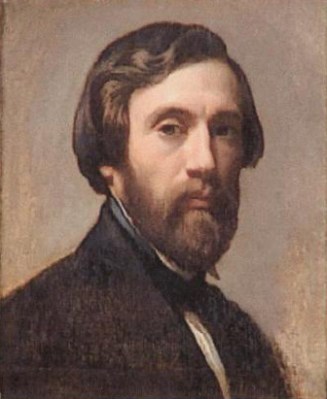
Autoportrait
Frågan om historiskt framsteg
Ett kvalificerat och partiellt filosofiskt försvar för moderniteten måste innebära ett erkännande av det mångtydiga och svårbedömbara i frågan om historiska “framsteg”: så många olika måttstockar måste användas, så olika resultat ernås på skilda områden och vid beaktande av olika så faktorer att i en kortare diskussion endast få entydiga slutsatser går att dra.
Det ligger närmast till hands för den alternativa modernitetens försvarare att framhålla vad många fortfarande är beredda att peka på som otvetydiga framsteg i humanitära och rättsliga principer och i politisk frihet (hur svåra de än varit att upprätthålla och tillämpa), såväl som inom naturvetenskapen och teknologin. Men detta är i grunden ett 1800-talsperspektiv, och med visst undantag för vetenskapen är situationen på dessa områden på intet sätt entydig efter 1900-talet. På den mer specifika kulturens områden är det knappast fråga om något generellt framsteg under de senaste hundra åren, även om det utan tvekan är det på vissa.
Inom filosofin är naturligtvis begreppet om ett framsteg komplext och kräver i sig just filosofisk behandling. Kan man tala om ett historiskt framsteg ifråga om personbegreppet? Med den filosofiska utvecklingen av de närliggande begrepp jag också tittat på, med den historiska tidsuppfattningen, med den framväxande psykologin erhåller detta begrepp nya teoretiska dimensioner. Men jag har också med viss utförlighet uppehållit oss vid den gamla religiösa och filosofiska föreställningen om l’âme-daimon, om die Seelenpersönlichkeit, som vidarefördes av Sokrates och Platon och som i olika varianter ingick som en beståndsdel i nyplatonisternas, nypythagoréernas, de judiska och kristna platonisternas och gnostikernas åskådningar. Naturligtvis fortlevde i hög grad, liksom under hela medeltiden, denna typ av föreställning om självet och den “personliga” identiteten i det allmänna medvetandet även under den nya tiden, och den gör det, som religionssociologerna kan vittna om, än idag. Självklart har varken Hume, La Mettrie, Marx eller the Churchlands någonsin varit representativa tänkare i detta avseende, på samma sätt som materialismen aldrig överhuvudtaget företrätts av någon mer betydande filosof. Vad de i själva verket är, är lätt att se om man bara går en liten bit i den riktning jag försöker peka ut. De är offer för en objektivistisk-realistisk illusion, betingad av deras egobaserade identifikation med den mänskliga psykofysiska apparaten.
Går man på djupet i uppfattningen om själen, personen, självet, subjektet o.s.v. under modernitetens utveckling är det slående hur starkt påverkad filosofin varit av och hur nära den trots alla förändringar ändå på olika sätt stått den bibliska och kristna ortodoxins exoteriska lära. Ofta nog är de nya lösningarna endast filosofiskt nya variationer av den bibliska kropp-själsliga enheten. Och om de inte, annat än med enstaka undantag i den radikala upplysningen, helt enkelt stannar vid “kroppspersonligheten”, stannar de dock oftast på ett för dess eget tänkande i mycket nytt och specifikt inomvärldsligt mellanplan, nivån för en subjektivitet som på sitt sätt ofta är minst lika tydligt åtskiljbar från l’âme-daimon som den kristna personförståelsen.
Varianterna är många och oändligt komplexa och subtila, men generellt måste det här i mycket stor utsträckning vara fråga om ett kvardröjande allmänkulturellt inflytande från ortodoxin. Men om den kristna ortodoxin på ett sätt och av ett skäl vände sig mot den platonska själv-, identitets- och “person”-förståelsen som “âme-daimon“, gör den ateistiska sekularismen det på ett annat sätt och av ett annat skäl. Vi skall få anledning att återkomma till dessa olika alternativ: temat utgör i mycket en nyckel till förståelsen av innebörden i det moderna personbegreppet och dess förändringar, tillsammans med de begrepp det är nödvändigt relaterat till och som successivt kommer att ingå i dess definition. Endast i det perspektiv det erbjuder, mot dess idéfond, blir den distinkta profil hos det moderna västerlandet på detta område synlig, som, föreslår jag, på flera sätt utgör en av de djupaste och av dagens modernitetstolkare mest oförstådda och förbisedda sanningarna om detsamma.
I detta avseende kan man alltså säga att en sekulariseringsteori – d.v.s. inte teorierna om en förändring från en kristen till en ateistisk-materialistisk världsuppfattning, utan teorierna om den omtolkade överföringen av ett bibliskt läroinnehåll – äger ett avsevärt förklaringsvärde. Men av det sagda framgår också att förlusten av den i den antika världens högre kultur förhärskande åskådningen som filosofiskt gällande lära – och i den platonska traditionen som helhet fram till senantiken nådde i flera avseenden västerlandet som högst ifråga om filosofisk, eller, mer exakt, sofisk insikt och andlighet – inte gjordes under den nya tiden, utan i mycket redan med den kristna ortodoxins etablering och med den kristna medeltidens på den exoteriska kyrkordningen till avgörande del baserade samhälleliga formation. Detta innebär också att sekulariseringen i den mer allmänna betydelsen av frigörelsen från den kristna ortodoxin historiskt sett inneburit en åtminstone principiell teoretisk möjlighet för den antika traditionens återuppväckande och nyformulering. Och sådana ansatser saknas ju förvisso inte heller i det moderna Europa alltifrån renässansen, även om ortodoxin också stundom skärpts i motstånd mot medeltidens platonska residuer och de olika ansatserna till platonistisk förnyelse.
Till detta kommer också den uppåtstigande liberala borgerlighetens näranog konstitutiva vilja till identifikation med den framför allt grekiska men också romerska antiken, dess ständigt förnyade vilja att lyfta fram den och vid behov spela ut den mot den kristna feodalismen återstoder. Dess differentiella brott med den mytologiska traditionen, filosofins, vetenskapens och demokratins begynnelse, den idealiserade Människan i sig och det rent humanistiska bildningstänkandet – allt detta sågs som en protomodernitet och den verkliga begynnelsen även av allt den själv stod för. Den borgerliga revolutionen i vid mening ville såtillvida ofta som helhet förstå sig själv som en Renässans.
Hur allt detta förhåller sig till den moderna idealismen i dess olika former förtjänar, som jag argumenterar, utförlig behandling även i sammanhanget av en diskussion som huvudsakligen fokuserar på personbegreppet. För t.o.m. i den moderna idealismen – som Lindbom korrekt framhållit normalt bara innebär en idealisering av Människan i sig i den klassiska humanismens anda även när det talas om Själen – läran om en alltid redan given ideell personlig identitet som endast ofullständigt motsvaras av den fenomenellt-temporära, stundom återkommer. När så sker aktualiseras givetvis åter frågan om förhållandet mellan dessa och blir, såväl metafysiskt som etiskt, en huvudsaklig filosofisk fråga.
Denna position blir dock nu inte alltid densamma som den antika läran om l’âme-daimon. Men den rymmer inte bara formella likheter utan närmar sig även innehållsligt denna i den mån den närmar sig dess typ av platonism och därmed filosofiskt börjar röra sig i riktning mot ett övervinnande inte bara av de nya tendenser i riktning mot “kroppspersonligheten” som utvecklats inom den radikala upplysningen utan också av den kristna ortodoxins och skolastikens lära om förhållandet mellan kropp och själ, form och materia, kött och ande.
I viss mån invecklar man sig som vi skall se i nya komplexiteter på grund av den moderna subjektsfilosofins nyheter. Men man sitter alltså också fortfarande i mycket fast i det kvardröjande direkta såväl som indirekta trycket av den exokristna ortodoxin, även efter det att de mer exakta dogmatiska lärosatserna övergivits eller åtminstone s.a.s. socialt, kulturellt och institutionellt avgränsats. De nya komplexiteterna möjliggör dock viktiga nya filosofiska konstellationer, som även de kan förstås endast mot bakgrund av och i deras samspel med de antika och de kristna traditionerna och deras olika perspektiv.
Det är också endast genom de senare perspektivens kvarhållande vid studiet av personbegreppets utveckling från den tidigmoderna perioden och framåt som det överhuvudtaget blir möjligt att på meningsfullt sätt ta sig an frågan om filosofiskt framsteg på detta område. Redan det lilla jag här sagt om några huvuddrag i utvecklingen visar varför det är så, och gör det möjligt att förstå att ingen entydighet föreligger.
Angela Gheorghiu: Casta Diva
2001
Pierre Hadot: Plotinus or The Simplicity of Vision
Translated by Michael Chase With an Introduction by Arnold I. Davidson
University of Chicago Press, 1993 Amazon.com
Publisher’s Description:
 Since its original publication in France in 1963, Pierre Hadot’s lively philosophical portrait of Plotinus remains the preeminent introduction to the man and his thought. Presented here is Michael Chase’s lucid translation – complete with a useful chronology and analytical bibliography.
Hadot carefully examines Plotinus’ views on the self, existence, love, virtue, gentlenes, and solitude. He shows that Plotinus, like other philosophers of his day, believed that Plato and Aristotle had already articulated the essential truths; for him, the purpose of philosophy was not to profess new truths but to help achieve a personal experience of the Eternal.
Blurbs:
“Without doubt this is the best introduction to the personal and spiritual side of Plotinian philosophy.” John Bussanich, International Journal of the Classical Tradition
“The significance of Hadot’s book is that it reflects simply, effectively, and brieflty upon some of the most important questions in Plotinus’ complex and difficult writings, and succeeds in revealing…the accessibility of Plotinus’ thought.” K. Corrigan, Ancient Philosophy
“The book’s great strength lies in the soundness of Hadot’s interpretation, which dispels many common misreadings.” Eric D. Perl, Review of Metaphysics
“Anyone interested in late Roman philosophy should read this book. It is a delight.” Edgar M. Krentz, Religious Studies Review
About the Author:
Pierre Hadot is professor emeritus of History of Hellenistic and Roman Thought at the Collège de France.
Arnold I. Davidson is professor of philosophy at the University of Chicago.
Michael Chase has studied under Pierre Hadot in Paris, lectured in the Department of Greek and Roman Studies at the University of Victoria, British Columbia, and conducted research at the University of California, King’s College in the University of London, and the National Centre of Scientific Research in Paris.
JOB’s Comment:
I advertise this English translation of Hadot’s beautiful early book on Plotinus because of the excellent introduction by Davidson. As Bussanich says, the book is an introduction to the “personal and spiritual side” of Plotinus’ philosophy, i.e., the emphasis is Hadot’s usual one of the central “spiritual exercise” element of ancient philosophy. Other introductions to Plotinus are preferable for those who are more interested in metaphysical exposition, but such students should not miss the dimension of spiritual practice stressed by Hadot in this and all of his other works.
Roger Scruton: Thinkers of the New Left
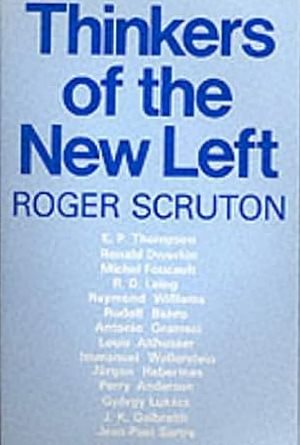
Longman, 1985
Publisher’s Description:
Fourteen of the thinkers most influential on the attitudes of the post-1960s New Left are analysed in this study by one of the leading critics of leftist orientations in modern Western civilization. The New Left thinkers discussed are E. P. Thompson, Ronald Dworkin, Michel Foucault, R. D. Laing, Raymond Williams, Rudolf Bahro, Antonio Gramsci, Louis Althusser, Immanuel Wallerstein, Jürgen Habermas, Perry Anderson, György Lukács, J. K. Galbraith and Jean-Paul Sartre.
In addition to assessments of these thinkers’ philosophical and political contributions, the book contains a biographical and bibliographical section summarizing their careers and most important writings. The author also contributes an introductory analysis of the nature of New Leftism and, as a conclusion to the individual studies, a critique of the key strands in its thinking.
JOB’s Comment:
This was the first book by Scruton that I read. I think I may have been the first to introduce Scruton in Sweden, through my review of it in Marknadsekonomisk Tidskrift (later taken over by Carl Rudbeck and renamed Smedjan), in an issue with a big picture of Margaret Thatcher on the cover; but it is quite possible that my friend Carl Johan Ljungberg had already reviewed The Meaning of Conservatism. The book is a collection of essays previously published in The Salisbury Review. Amazon gives product details for a second edition från Scruton’s own Claridge Press, but the customer image is of the first edition.
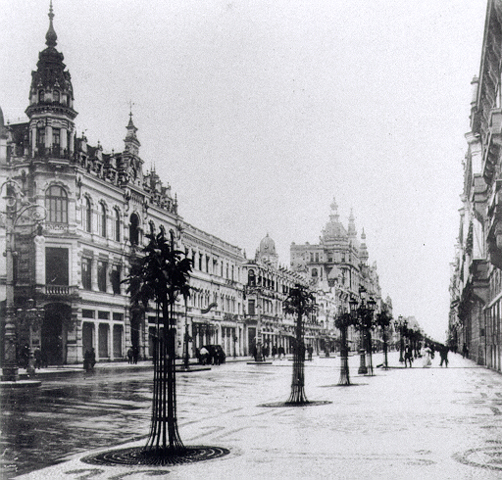
Avenida Central (Rio Branco), Rio de Janeiro
Biografins teori, litteraturförteckning
Ambjörnsson, Ronny, Förord till Roger Qvarsell, Kulturmiljö och idéspridning (1988)
Amigioni, David, Victorian Biography: Intellectuals and the Ordering of Discourse (1993)
Anderson, Perry, Om den västerländska marxismen (1984)
Ashley, Kathleen, Gilmore, Leigh & Peters, Gerald, eds, Autobiography and Postmodernism (1994)
Backscheider, Paula R., Reflections on Biography (1999)
Baron, Samuel H. & Pletsch, Carl, eds, Introspection in Biography: The Biographer’s Quest for Self-Awareness (1985)
Beckman, Svante, Utvecklingens hjältar. Om den innovativa individen i samhällstänkandet (1990)
Bengtsson, Jan Olof, ’Richard Rortys filosofihistoriska program: Fysikalism och romantik i den amerikanska postmodernismen’, Ugglan (Lund Studies in the History of Science and Ideas), 11 (1998)
Bentley, Eric Russell, A Century of Hero-Worship (1944)
Bosch, Michael, Hg., Persönlichkeit und Struktur in der Geschichte. Historische Bestandsaufnahme und didaktische Implikationen (1977)
Current Sociology, 43, 2-3 (1995)
Bowen, C. D., The Writing of Biography (1950)
Edel, Leon, Literary Biography (1957)
Edel, Leon, Writing Lives: Principia Biographica (1985)
Ellis, David, ed., Imitating Art: Essays in Biography (1993)
Elms, Alan C., Uncovering Lives: The Uneasy Alliance of Biography and Psychology (1994)
Emerson, Ralph Waldo, Essays: First Series. The Complete Essays and Other Writings (1940)
Epstein, William H., Contesting the Subject: Essays in the Postmodern Theory and Practice of Biography and Biographical Criticism (1991)
Ermarth, Michael, ’Transformation of Hermeneutics: 19th Century Ancients and 20th Century Moderns’, The Monist, 64, 2 (1981)
Garraty, John A., The Nature of Biography (1958)
Gurevich, Aaron, The Origins of European Individualism (1995)
Hillman, James, The Soul’s Code (1996) (svensk översättning, Själens kod (1998), med förord av Kurt Almqvist)
Hood, Edwin P., The Uses of Biography: Romantic, Philosophic, and Didactic (1852)
Hutch, Richard A., The Meaning of Lives: Biography, Autobiography, and the Spiritual Quest (1997)
Jenisch, T., Theorie der Lebensbeschreibung (1802)
Johansson, Alf W., ’Det biografiska i historien’, Arbetarhistoria, 3-4 (1986)
Johnston, James C., Biography: The Literature of Personality (1927)
Kendall, Paul M., The Art of Biography (1965)
Kirn, Paul, Das Bild des Menschen in der Geschichtsschreibung von Polybios bis Ranke (1955)
Klingenstein, Grete, Hg., Biographie und Geisteswissenschaft. Aufsätze zur Theorie und Praxis biographischer Arbeit (Wiener Beiträge zur Geschichte der Neuzeit 6) (1979)
Le Goff, Jacques, Saint Louis (1996)
Lönnroth, Erik, ’Det biografiska synsättet’, idem, Tidens flykt (1998)
Machann, Clinton, The Genre of Autobiography in Victorian Literature (1994)
Madelénat, D., La biographie (1984)
Maurois, André, Aspects de la biographie (1928)
Meyers, Jeffrey, ed., The Craft of Literary Biography (1985)
Nordin, Svante, ’En avslöjande konstform’ (rec av Magnus von Platen, red., Den litterära biografin (1990), Sydsvenska Dagbladet, 2/5 1990
Nordin, Svante, ’Den intellektuella biografin som idéhistorisk genre’, Kungl. Vitterhets Historie och Antikvitets Akademien, Konferenser 41 (1998)
Norton, David L., Personal Destinies: A Philosophy of Ethical Individualism (1976)
Pachter, Marc, ed., Telling Lives (1979)
Parke, Catherine E., Biography: Writing Lives (1996)
Platzhoff-Lejeune, E., Werk und Persönlichkeit: Zu einer Theorie der Biographie (1903)
Rhiel, Mary & Suchoff, David, eds, The Seductions of Biography (1996)
Romantisme. Revue du dix-neuvième siècle, 100 (1998)
Romein, Jan, Die Biographie. Einfuhrung in ihre Geschichte und ihre Problematik (1948)
Sardar, Ziauddin, Postmodernism and the Other: The New Imperialism of Western Culture (1998)
Scheuer, Helmut, Biographie. Studien zur Funktion und zum Wandel einer literarischen Gattung vom 18. Jahrhundert bis zur Gegenwart (1979)
Sève, Lucien, Marxisme et théorie de la personnalité (1969)
Sève, Lucien, Structuralisme et dialectique (1984)
Shortland, Michael & Yeo, Richard, eds, Telling Lives in Science (1996)
Sprigge, T. L. S., The Vindication of Absolute Idealism (1983)
Stanfield, James F., An Essay on the Study and Composition of Biography (1813)
Stolpe, Sven, Stefan George och andra studier (1956)
Söderqvist, Thomas, ’Forskerbiografins historie’, Slagmark, 1 (1999)
Thayer, William R, The Art of Biography (1920)
Tigerstedt, Roos, Vilkko, utg., Självbiografi, kultur, liv (1992)
Österberg, Eva, ’Individen i historien. En (o)möjlighet mellan Sartre och Foucault’, i Festskrift till Kjell Peterson (1996)
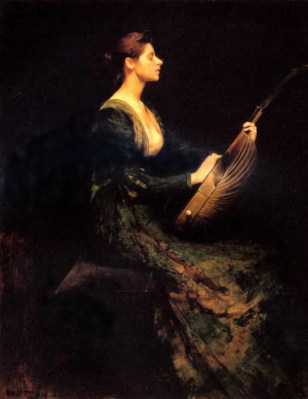
Thomas Wilmer Dewing: Lady with a Lute
 Olle Bengtsson