Author: Jan Olof Bengtsson
Spirituality - Arts & Humanities - Europe
The Pantheist Metaphysics of the Revolution
In the French Revolution, J. L. Talmon observed, rationalism itself had been transformed into a passionate faith. [The Origins of Totalitarian Democracy (1970 (1952), 6.] Already Lamartine noticed that Mirabeau managed to make reason passionate. The social and political consequences of the idea that the voice of the People was really the voice of God now had to be drawn. The Roman-inspired constitutional aspiration were swept aside by the Jacobins with the help of the new, militantly impersonalistic political concept of la volonté générale, as the revived generalistic paradigm of Greek political philosophy combined with the new centralism and nationalism to produce the first Gnostic dictatorship of modernity. The rights of the secular individual – in Robespierre’s rhetoric sometimes under the nominal designation of personality – were proclaimed alongside the rights of the abstract universal Humanity which was somehow embodied in the new republic.
Described as an explosion of divine wisdom, the Revolution was immediately seized upon and further theorized by the politically powerless German romantics and idealists. [The reactionary side of romanticism is not seldom a superficial, aesthetic phenomenon, under the surface of which hide the same radical ideas. When it is real, what we find is often the use of some of the new intellectual resources in the defence of pre-revolutionary social and political formations which were already characterized by the relapse from differentiation. A more balanced, selective, non-revolutionary use of romantic ideas is found in Burke and similar thinkers.] Kant wrote a treatise on eternal peace which was followed by the outbreak of the most extensive wars in history. If the people were only released, some Germans proclaimed, a magnificent, spontaneous, peaceful harmony of individually different nations would arise, like a wonderful symphony. This vision, however, already swerved significantly from the French form of universalism. Crushed by Napoleon, yet incapable of rejecting the Revolution, the Germans devised their own popular, pantheistic nationalism as an ideology of resistance.
Pantheism thus provided the metaphysics of the revolution. The People was the real divinity which advanced irrepressibly while the empty abstractions of the Supreme Being or Reason were formally worshipped. In the absence of the differentiational framework – the transcendent sphere of values, the ontic logos, and the objective moral order – the asserted freedom was of the distinctly modern kind: the freedom of mere self-assertion, either as guided by self-protection and rational calculation of the maximization of pleasure, or in the form of the new emotional expressionism of the romantics. It was no more qualified than the simultaneously asserted equality: both were normless, tending towards abstract absoluteness and limitlessness and thus the illusory. They corresponded to a universe in which All is God. And if All is God, God cannot be the Father, and if there is no father, the assertion of general human brotherhood is meaningless. German idealism, at one early stage, conceptualized it all in the form of a Transcendental Jacobinism.
Romanticism was the cultural expression of the state of affairs after the divine explosion, where differentiation and structured order were theoretically and practically rejected on all levels. Drawing on the accumulated legacy of the esoteric tradition, the romantics further transformed nature/God into an evolving, holistic, and vitalistic process in which the individual was to be merged through intuition and feeling. Everything was included in the becoming in which nature/God strove to realize all its potentials, in nature, history, and art, and in which it became conscious in Man. Nature was visible spirit and spirit invisible nature. Illustrating the continuity of rationalism and romanticism, Carlyle proclaimed that the Enlightenment philosophers were right in asserting that the supernatural was not distinct from the natural; but this, he held, meant that the natural must be elevated to the supernatural and not, as they had thought, the reverse. [See Franklin L. Baumer, Modern European Thought: Continuity and Change in Ideas, 1600-1950 (1977), 274-6.] But if they were not distinct, the meaning of this position was hardly clear. If All is God, there is no difference between high and low, up and down. The position that All is God, that God alone exists, turned out to be difficult to distinguish from the position that Nothing is God, that Man alone exists.
The new totality was without any structure, any hierarchy. It was without rules, auto-evolved, no longer created and ordered according to an ontic logos. The endeavour to preserve the traditional distinctions of morality, society, art and religion were powerless against the underlying blurring momentum of the pantheistic revolution.
Mendelssohn sought to show that pantheism, rightly conceived, was congruent with religion and morality. Throughout the ages, similar strategies could seem to have been devised by monists. Christian mystics had claimed to uphold the Trinitarian theism of orthodoxy, Sufi mystics had defended Allah and his law, and advaita vedantists retained on one level the ishvara, the personal deity. But that was before the pantheistic revolution of modernity. In the context of the latter, the elevation of a wholly ineffable, impersonal oneness to the highest, ultimate or only true reality assumed new meanings and had different consequences. Its often neglected metaphysical diffculties were reproduced on all levels of the respective philosophical systems. The efforts to preserve, under this condition of the relegation of the distinct focus of the personal aspect of the transcendent Godhead to a lower level in the hierarchy of being, the structured order of the still lower, phenomenal levels of reality all seemed somehow sooner or later to fail. As the transcendence of the unity was lost in the ever-growing metaphysical confusion, phenomenal reality dissolved into chaotic formlessness, increasingly exposed to the manipulations of arbitrary human will.
Ramana Maharshi, Paramahansa Yogananda, and Paul Brunton
1935
Maharishi Mahesh Yogi: Science of Being and Art of Living
Plume, 2001 (1963) Amazon.com
Back Cover:
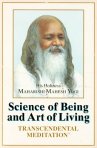 The Vedic knowledge of India has been the source of insight, inspiration, and enlightenment for mankind for countless generations. Maharishi Mahesh Yogi’s Science of Being and Art of Living is the modern expression of this ancient wisdom, presented with exceptional clarity, precision, and depth.
Here, Maharishi introduces the simple, natural, and effortless Transcendental Meditation technique, which is the “technology of consciousness” for directly experiencing the field of Being, the transcendental field of existence, the inner Self of everyone. Through the Transcendental Meditation technique any individual can easily harness the unlimited treasures of this field of Being – infinite happiness, energy, creativity, intelligence, and organizing power – bringing maximum success and fulfillment to daily life.
The experiences of fulfilling personal growth of more than six million people, along with the results of over 600 scientific research studies, show that the Transcendental Meditation program:
– Reduces stress and anxiety while increasing energy and vitality
– Improves health, lowers blood pressure, and promotes reversal of aging
– Increases memory, creativity, and intelligence
– Enriches and strengthens personal relationships
– Develops inner contentment, happiness, and fulfillment – the state of enlightenment
– Creates waves of peace and harmony in individual and collective consciousness – the basis of perpetual world peace
In this book, Maharishi unfolds his vision for bringing perfection to everyone’s life. The Transcendental Meditation program, he says, “will usher in a new era for a new humanity developed in all the values of life – physical, mental, material, and spiritual.”
Yes: Starship Trooper
Live in Philadelphia, 1979. From the album The Yes Album (1971). Wikipedia
Kulturtäthetens förlust: Rönnells nu hotat
I januari skrev jag i inlägget Kulturtäthet om Jones antikvariat och dess flytt från Norrtullsgatan nära Odenplan i Stockholm. “Tack och lov”, konstaterade jag då, fanns Rönnells – på Birger Jarlsgatan, nära Stureplan – fortfarande kvar. Det dröjde inte länge innan det rapporterades att även Rönnells var hotat. Allt jag skrev om Jones och mitt förhållande till det gäller i lika hög grad om Rönnells.
Expressen, Humlegården Fastigheter AB, Rasmus Fleischer 1, Rasmus Fleischer 2, DN, AB, NT.
Franz Richard Unterberger: Der Golf von Salerno
Vilja, fantasi, förnuft
Värdena och universaliteten uppfattas som vi sett enligt Ryn i den konkreta historiska erfarenheten, om än endast genom den av viljan och fantasin formade och som sådan av det rationellt opererande förnuftet bearbetade förnimmelsen. Den förmåga hos Vernunft-fakulteten som inom den Leander föregående epoken inom svensk filosofi förstods som förnuftig erfarenhet, och ägde direkta föregångare och motsvarigheter inom den klassiska idealismen, såväl hos Platon som Aristoteles, och därmed även i den kristna traditionen (nous, intellectus), och som vi snart ska återkomma till, beaktas överhuvudtaget inte trots att den alltid är primär och, kunde man föreslå, uppenbar och ovedersäglig i det att den nu, såväl genom vidare filosofiskt tänkande – delvis med hjälp av genom komparativt (öst-västligt) studium – som vetenskapens utveckling, visats ytterst vara medvetandet självt.
Leander formas filosofiskt vid en tid när detta redan försvunnit bortom horisonten p.g.a. de karaktäristiskt insnävade nya tankeriktningar som ensamma kom att uppfattas som moderna. Det är lätt att uppvisa vilka inte bara mentala och intellektuella utan även sociala mekanismer som åstadkom och förklarar detta skifte. I jämförelse med vissa av dessa nya riktningar, de som inte minst kom att dominera i Sverige, var Leanders ännu vidsynt och fördjupad på den humanistiska nivån, men även han skulle snart få stå tillbaka för dessa – tills genom Ryn och den amerikanska omvägen hans verk nu åter kanske kan uppskattas efter förtjänst. I perspektivet av den större kontinuitet i den svenska filosofin från 1800-talet, vars avbrytande jag föreslår i dess helhet var en beklaglig och onödig regression, delar Leander emellertid den här berörda centrala begränsningen med dem.
Närmast den här antydda högre nivån kommer som vi sett för Leander och Ryn inte det filosofiska förnuftet utan den högre, etiska viljan. Den värdecentrerade historicismen överskrider här inte de gränser för den teoretiska Vernunft-fakulteten som Kant uppställt, men dennes praktiska förnuft menar de sig däremot kunna visa i själva verket vara inte en förnuftsfakultet utan just denna etiska vilja. Tolkad som etisk intuition äger, som de också vill visa, även exempelvis Coleridges practical reason (”closer to a non-conceptual intuition of a higher will similar to Babbitt’s inner check than…to Kant’s practical reason” [Will, Imagination and Reason, 58.]) ett slags omedelbar tillgång till den i den värdecentrerade historicismen genom Ryn s.a.s. nominellt transcendenta ordningen, av den typ som inom den tidigare svenska idealismen tillkommer om inte uteslutande – även för den är naturligtvis den etiska viljan, det etiska medvetandet, samvetet centrala – så dock ofta främst det filosofiska förnuftet i den högre, utöver Kant och även Hegel gående meningen.
Här bör dock påpekas att distinktionen mellan denna typ av intuition, eller “sense” i denna mening, ett slags “högre empirism”, å ena sidan och religiös tro å den andra kunde vara inom vissa andra riktningar inom den idealistiska filosofin. Det förra var fortfarande en form av förnuftsuppfattning, det senare “trosfilosofi”. Distinktionen var dock inom den svenska personlighetsidealismen inte skarp, p.g.a. den utveckling förnuftsbegreppet genomgick redan hos den som trosfilosof uppfattade Jacobi själv. Det väsentliga här är emellertid just att för Ryn den etiska intuitionen och framför allt den etiska viljan står åtminstone närmare vad andra filosofer uppfattar som den reellt transcendenta ordningen, eller den transcendens i vilken de här behandlade ordningsprinciperna är förankrad, än det rent teoretiska förnuftet i Kants mening.
Viljans inriktning styr fantasins kvalitet, och fantasin är grundläggande för verklighetsuppfattningen, ja för hela arten av verklighetsupplevelsen och därmed också förnuftets verksamhet. Det är den etiska viljan och den av denna formade fantasin som uppfattar det universella och de gemensamma normerna, och ligger till grund för förnuftets, eller förståndets, rätta bruk.
Den systematiska, åskådningsmässigt helhetliga karaktären hos denna filosofi visar sig i att den moderna förståelsen av fantasin kopplas till samhällsfilosofin, den politiska filosofin, och uppfattningen av den konstitutionella demokratin. Här följer och vidareutvecklar Ryn en konservativ tradition. Romantiken hade, i dess s.a.s. filosofiskt hållbara former, övervunnit upplysningens ytligare och mer abstrakta rationalism, dess mekanism, impressionsempirism och individualistiska atomism. De av denna romantik belysta och förklarade syntetiska helheter som fantasin skapar svarar mot de större, organiska helheter i vilka individen är insatt i samhällslivet, de i tid och rum lokala sammanhangen, på den samhälleliga nivån exempelvis Nisbets intermediary groups: “The atomism of ‘impressions’ in eighteenth century philosophy corresponded to the atomism of isolated individuals in social thought. A ‘synthetic element’ was needed also in social philosophy.” [Ibid. 64.]
Mångfalden, det enskilda, unika och partikulära blev nu jämställda med enheten, det allmänna och universella – och fantasin gav oss ett organ med vilket deras inre, organiska och kvalitativa samband, i motsats till deras yttre, mekaniska och kvantitativa, kunde urskiljas, också i det mänskliga samhället. Detta återspeglas hos Burke. Och den upptäckt av helheternas primat som under romantiken ägde rum också inom samhällsfilosofin innebär även ett återupplivande och förstärkande av de klassiska insikterna om människans sociala natur. [Ibid. 52.]
Fantasin kan enligt Ryn beskrivas som “the fundamental social bond”. Människor förenas ursprungligen genom en intuitiv uppfattning av deras gemensamma mänsklighet, och utan denna uppfattning skulle de icke kunna bilda samhällen och interagera på ett meningsfullt sätt. I allt detta, liksom i den etiska viljan, är det “Självet” som är verksamt: det är detta som skänker oss en gemensam värld och en gemensam, om än också ständigt föränderlig, mänsklighet. [Ibid. 64.] Denna uppfattning av den gemensamma mänskligheten är uppfattningen av det universella i människan, och denna uppfattning är, också enligt Babbitt, prerationell. [Ibid. 63, 185.] Förutom av romantikernas och idealisternas fantasibegrepp är Leander och Ryn även i någon mån influerade av den symboliska interaktionens teoretiker inom den s.k. filosofiska antropologin, vars slutsatser samordnas med de nämnda referensernas.
För sin konkretion och för det fullständigare förverkligandet av sin godhetspotential behöver den etiska viljan stöd av fantasins kraft. Den “tekniska” filosofin – förnuftets verksamhet som förstånd, eller förståndets i motsats till förnuftets, enligt den vanliga och i sak nödvändiga men terminologiskt inte helt lyckliga distinktionen [The Worldview of Personalism, kap. 2.] – har självklart en oumbärlig uppgift, men dess fullbordan är endast möjlig i ljuset av och i tjänst hos vad den värdecentrerade historicismen åtminstone uppfattar som visdomen. [Will, Imagination and Reason. 159.] Den etiska viljan måste, heter det, uttrycka sina syften i fantasins magnetiska bildspråk för att kunna bli dominerande. Fantasin “holds the balance of power” i den ständiga kampen mellan högre och lägre existensmöjligheter – här delade Babbitt Napoleons uppfattning att fantasin styr mänskligheten. [Ibid. 148 f.]
Människor utvecklar den typ av fantasi som motsvarar, och behagar, deras underliggande karaktärers orientering. Liknande egenskaper hos fantasin och hela karaktären tenderar att frambringa och förstärka varandra. [Ibid.] Inte bara det moraliska handlandet och viljandet, utan också den moraliska fantasin ger människan en känsla av livets mening och essens; den “ultimate reality” i vilken människan är delaktig genom det etiska handlandet kan hon också känna genom den högsta formen av fantasi, den “moral imagination” som på sitt eget sätt uppfattar det universella.
Ursprunget till förvrängda eller ensidiga teorier och livsåskådningar är, argumenteras det, en förvrängd eller ensidig fantasi, som i sin tur är inspirerad av motsvarande egenskaper hos den primärt karaktärsformande viljan. Även en person av strålande intelligens kan resonera sig djupare och djupare in i missuppfattningar. [Ibid. 156.] Med ensidighetens förvrängningar i vilja och fantasi, skriver Ryn, driver en tänkare hjälplöst allt längre in i illusion, även om han har tillgång till encyklopedisk lärdom och ett skarpsinne som skulle ställa Euklides i skuggan. Och “errors in the perception of the nature of man and society can have terrible consequences: wars, tyranny and suffering without end”. Ryn illustrerar med Bertrand Russell, enligt filosofen Eliseo Vivas en politisk “imbecile”, och Marx och Engels, vilka visserligen också kan kritiseras på andra grunder, men vars avgörande brist var frånvaron av moralisk fantasi. [Ibid. 156 ff.]
Vivas menade att denna diskrepans var oförklarlig. Men denna oförmåga att förstå hur samexistensen av formell briljans och en förvrängd verklighetsuppfattning är möjlig avslöjar enligt Ryn “gapande hål” i kunskapsteorin och i förståelsen av den mänskliga naturen överhuvud. Och med denna brist är filosofin illa rustad för vad som också är dess nödvändiga humanistiska uppgift: att beskriva förutsättningarna för civilisationens försvar och förstärkande.
Babbitts bidrag till kunskapsteorin är insikten att en människas viljemässiga och intuitiva inriktning först måste göra henne mottaglig för verkligheten, om hon överhuvud ska vara öppen för sanningen på argumentens plan. Ryn framhåller hur även Voegelin insåg något av detta när han talade om det “motstånd mot sanningen” som gjorde att ingen ideolog på 1920-talet kunde bringas att ändra sin inställning genom blotta argument, trots att de moderna politiska ideologiernas fel redan då var tillräckligt kända och klarlagda. Ställningstagandena hade, som Voegelin förklarade, existentiella rötter som låg djupare än den debatt som fördes på ytan. [Ibid. 158 f.]
B. J. Gibbons: Spirituality and the Occult
Canal Grande, Trieste

Click to enlarge

