Live 1975. From their album For Your Pleasure (1973).
Category: Music
Lyrics (Ferry)
Denna bok motiverades bl.a. av Ferrys missnöje med att folk ofta fann hans sångtexter felaktigt återgivna på internätet; han ansåg en definitiv, auktoritativ utgåva nödvändig:
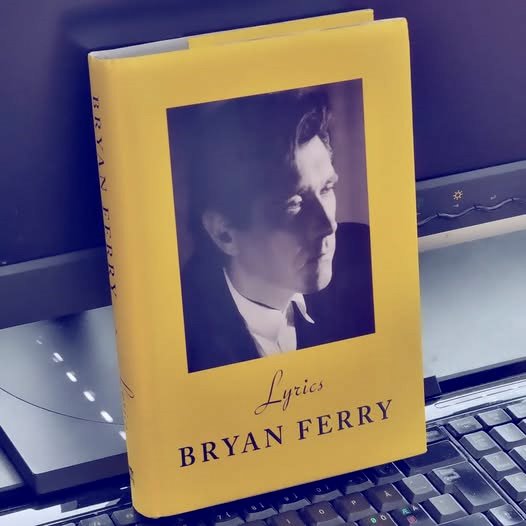
Den publicerades 2022 av Chatto & Windus – sedan länge, fusionerat med Jonathan Cape, en del av Random House och därefter Penguin Random House, men kanske ändå fortfarande i någon mening Aldous Huxleys gamla förlag – med en introduktion av James Truman (NYT, Condé Nast) och ett förord av Ferry.
Tito Schipa: Ombra mai fu
1926
Francesco Signorini: O muto asil del pianto
(Asile héréditaire) 1908
Luisa Tetrazzini: Vien, diletto
1912
Shivaree: The Fat Lady of Limbourg
From their album Who’s Got Trouble? (2005).
An intelligent cover of Eno’s song from his 1974 album Taking Tiger Mountain (By Strategy).
David Bowie: Cygnet Committee
From his eponymous second album (1969).
Brian Eno: Golden Hours
From his album Another Green World (1975).
Pink Floyd: Dogs
From their album Animals (1977).
Jethro Tull: Thick as a Brick
The full, one-song album (1972).
In an important interview with Prog, Ian Anderson explained the meaning of and the intentions behind this album, one of prog’s truly classic masterpieces, which had always been more or less misunderstood.
But characteristically, he still to some extent seems to misunderstand the nature and significance of the emerging new genre of progressive rock. Indeed, not least through the to a considerable extent irrelevant comparisons with Weather Report and Mahavishnu Orchestra, he underplays what it was all about, what it was developing into in the early 70s. This is unwarranted also with regard to his own and Tull’s brief, more purely prog period, of which this album is the pinnacle. He short-sells himself, the band, and the remarkable achievement that this period represents.
At the same time his misconception must clearly have to do with the fact that even at this time, Jethro Tull did not quite represent the fully distinctive, independent and deliberately and consciously developed prog of the kind that Genesis, for instance, had by then already attained. Only this album – considered as an objective result, irrespective of Anderson’s own understanding and intentions – reaches the same level. I.e., only on this album is it possible to hear clearly what this genre could be further developed into.