
This is a review which I unpublished – i.e., I changed its “visibility” – a few years after its publication, but decided to again make public. I have expanded it a little.
–
Since I reviewed Loreen’s winning contribution to the Eurovision Song Contest two years ago, I should say something about this year’s Swedish contribution too. It would be unfair not to mention Sanna Nielsen, for hers is a better song and even a better performance.
My first and basic criterion in this connection is the avoidance of melodic and compositional banality, a criterion which is basically negative, but which of course implies the standard of the opposite, positive quality. ‘Undo’, written by av Fredrik Kempe, David Kreuger, and Hamed “K-One” Pirouzpanah, passes this test. It has considerable melodic sophistication, gracefulness and elevation, and there’s a general benign sense of style about it all which counterbalance and mitigate the genre-defining, popular-romantic disproportion between the theme of the song and the emotional intensity of its performance and musical arrangement. The genre, of course, represents the art of ever reformulating the same basic experiences with only minor, peripheral variations. In life, their commonality of course does not reduce their intensity, doesn’t make them trivial or banal. Yet the present genre is of course almost defined by its non-avoidance of banality in their artistic expression. Still, even within it, the variations of the limited themes and their expression are considerable, and the ones we find in ‘Undo’ are far better than most at the ESC.
Sanna stands still, expressing, with some degree of real inspiration, the standard level of passion while refraining from dancing or other larger movement, something which has become increasingly uncommon and recalls typical songs and performances decades ago not in need of additional visual theatricality. There is also no one else on the stage dancing or doing anything else. Sanna is enough. Such absence of choreographic supplements and vulgar histrionics, such relative simplicity, relying solely on the quality of the song and on the singer’s voice and persona is – it seems to me – rare today. The number of elegant details and subtleties which Sanna’s flawless delivery is able to convey within this minimalism is impressive.
The lyrics are a little strange: in the chorus Sanna sings (as far as I can hear) “undo my sad”. And only twice, perhaps even just once, at the end, and in a way that is barely audible, she adds the – in itself of course hardly unexpected – word explaining what it is that is her “sad”, and must be undone: her “love”. But at least with regard to the meaning, this could perhaps be said to be an interesting effect of suspension, anticipation, postponement.
In sum, this is the best ESC contribution I’ve seen and heard in recent years. I admit I’ve missed most – but commentators who disagree must argue in reasonable critical terms their case for other songs.





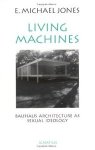 Following up his best selling books Degenerate Moderns and Dionysos Rising, E. Michael Jones completes the trilogy as he reveals in this book how modern architecture arose out of disordered lives of its creators.
